CONTEMPORARY INNOVATIVE
PRACTICES IN MANAGEMENT
Vijay Page
Director General, MET’s Schools of
Management
Flow of the Paper
• Successful innovations – Western
• Country-wise ranking of Innovations
• Successful innovations – Indian
• Future scope: Three models - Venkatakrishnan
Balasubramanian, Olivier Serrat, Gary Hamel
et. al.
• Drivers of future innovations
• Conclusion
Placing in Perspective
• India, US, Europe and the economic crisis
• Current technological innovations in the time
of economic upheaval
• Future organisations and the role of
innovation
Distinction between Innovation and
Invention
• Defining Invention: The creation of a product or the
introduction of a process for the first time
• Defining Innovation: Improvement or significant
contribution to an existing product, process or
service
• John Kalperis’ distinction between Innovation and
Invention
• Tom Grasty’s analogy on the distinction between
Innovation and Invention
Factors involved in Innovation
• Improvisation is the basis of Innovation and
Invention
• Definition of Management Innovation: The invention
and implementation of a management practice,
process, structure, or technique that is new to the
state of the art and is intended to further
organisational goals
• Four Processes in Innovation: Motivation, Invention,
Implementation and Theorisation and Labeling
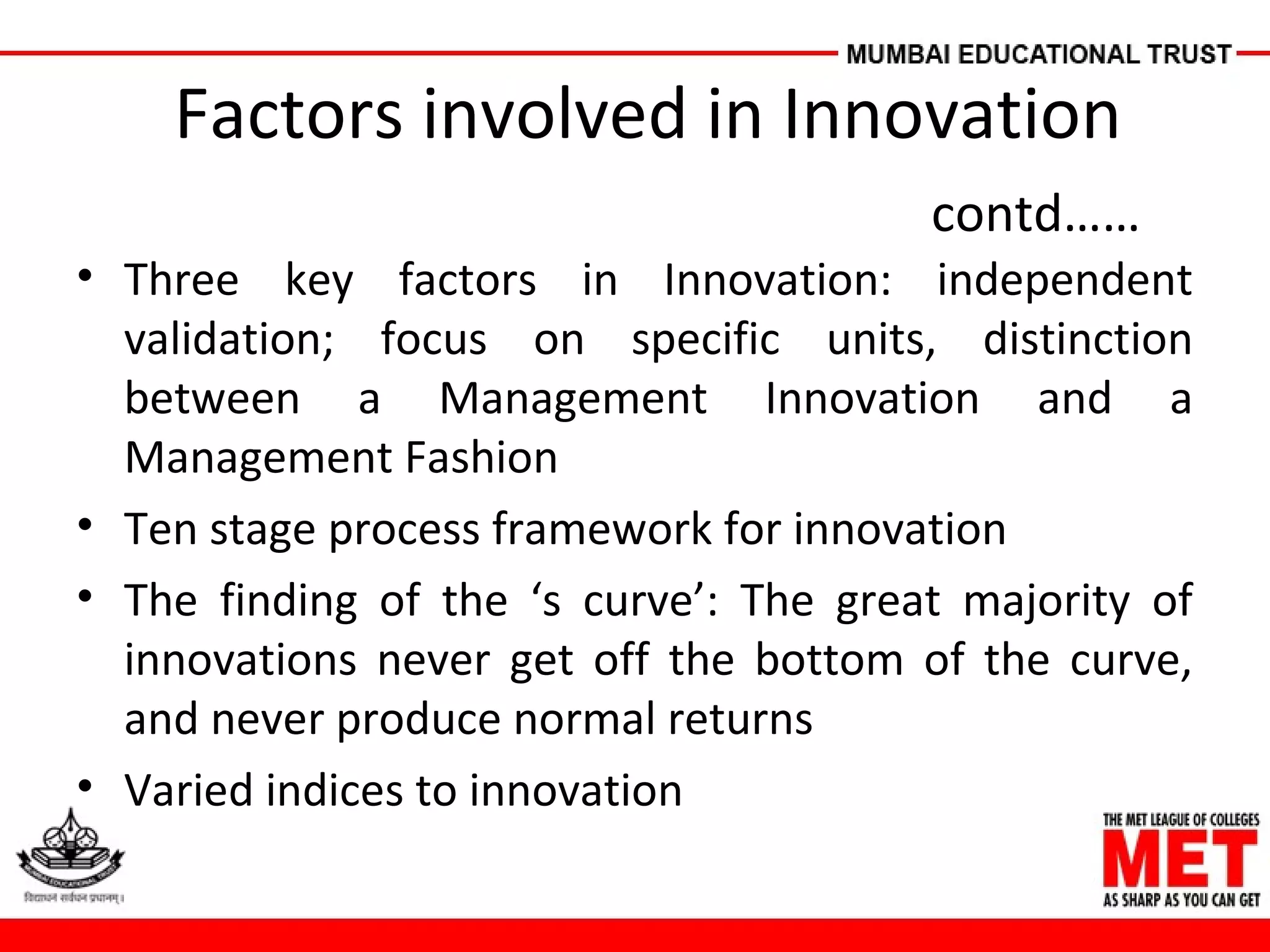
Factors involved in Innovation
contd……
• Three key factors in Innovation: independent
validation; focus on specific units, distinction
between a Management Innovation and a
Management Fashion
• Ten stage process framework for innovation
• The finding of the ‘s curve’: The great majority of
innovations never get off the bottom of the curve,
and never produce normal returns
• Varied indices to innovation
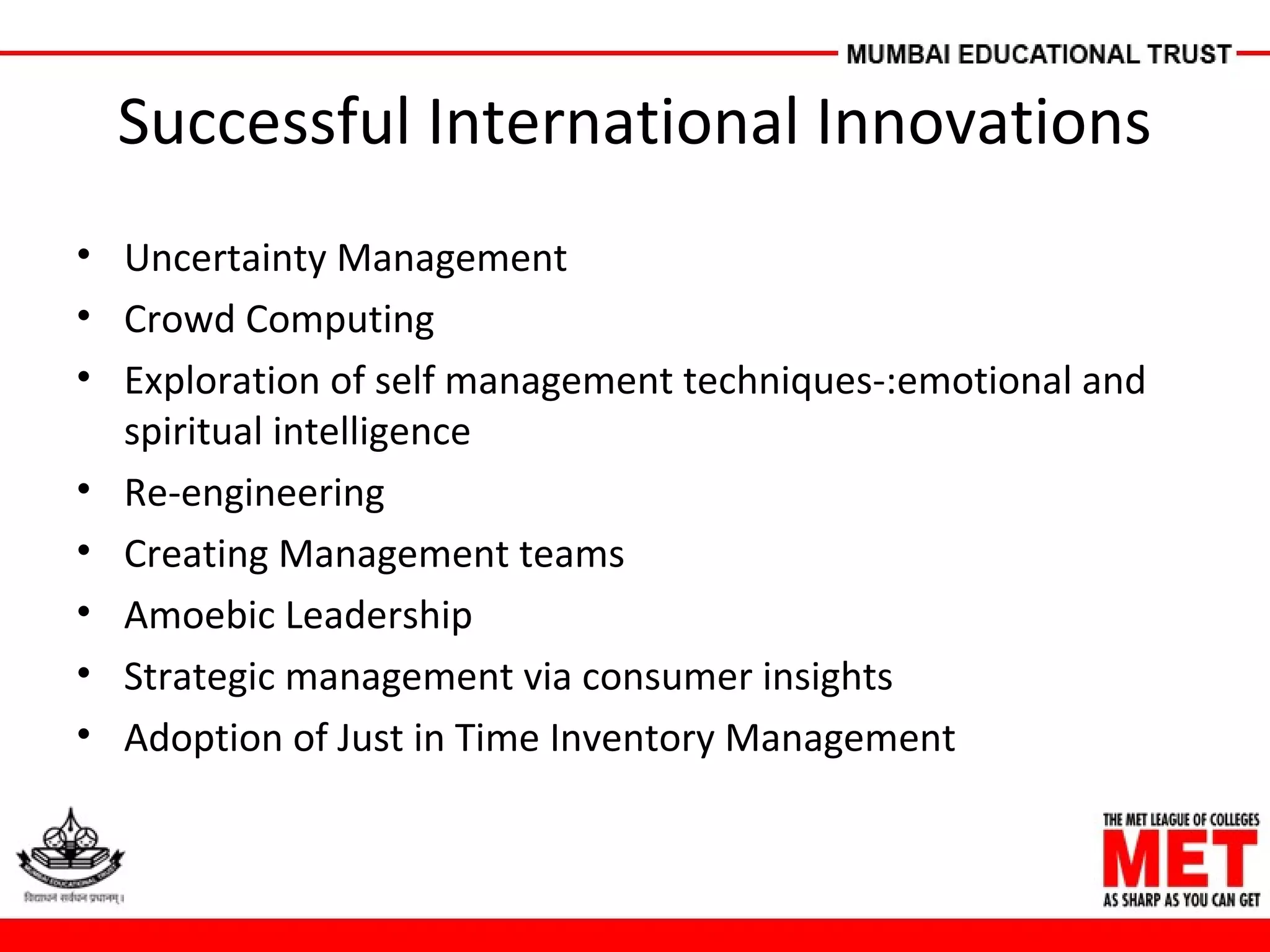
Successful International Innovations
• Uncertainty Management
• Crowd Computing
• Exploration of self management techniques-:emotional and
spiritual intelligence
• Re-engineering
• Creating Management teams
• Amoebic Leadership
• Strategic management via consumer insights
• Adoption of Just in Time Inventory Management
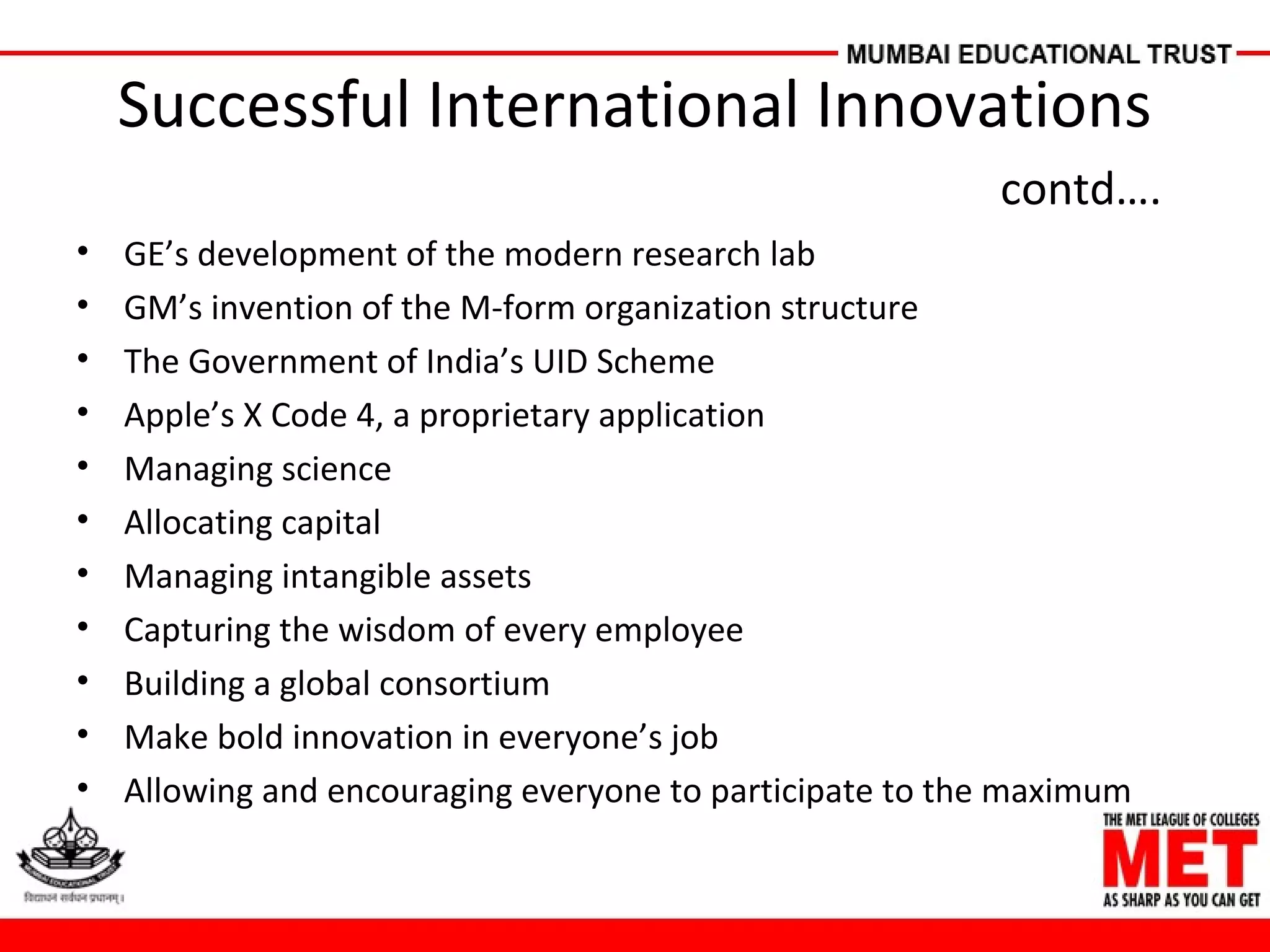
Successful International Innovations
contd….
• GE’s development of the modern research lab
• GM’s invention of the M-form organization structure
• The Government of India’s UID Scheme
• Apple’s X Code 4, a proprietary application
• Managing science
• Allocating capital
• Managing intangible assets
• Capturing the wisdom of every employee
• Building a global consortium
• Make bold innovation in everyone’s job
• Allowing and encouraging everyone to participate to the maximum
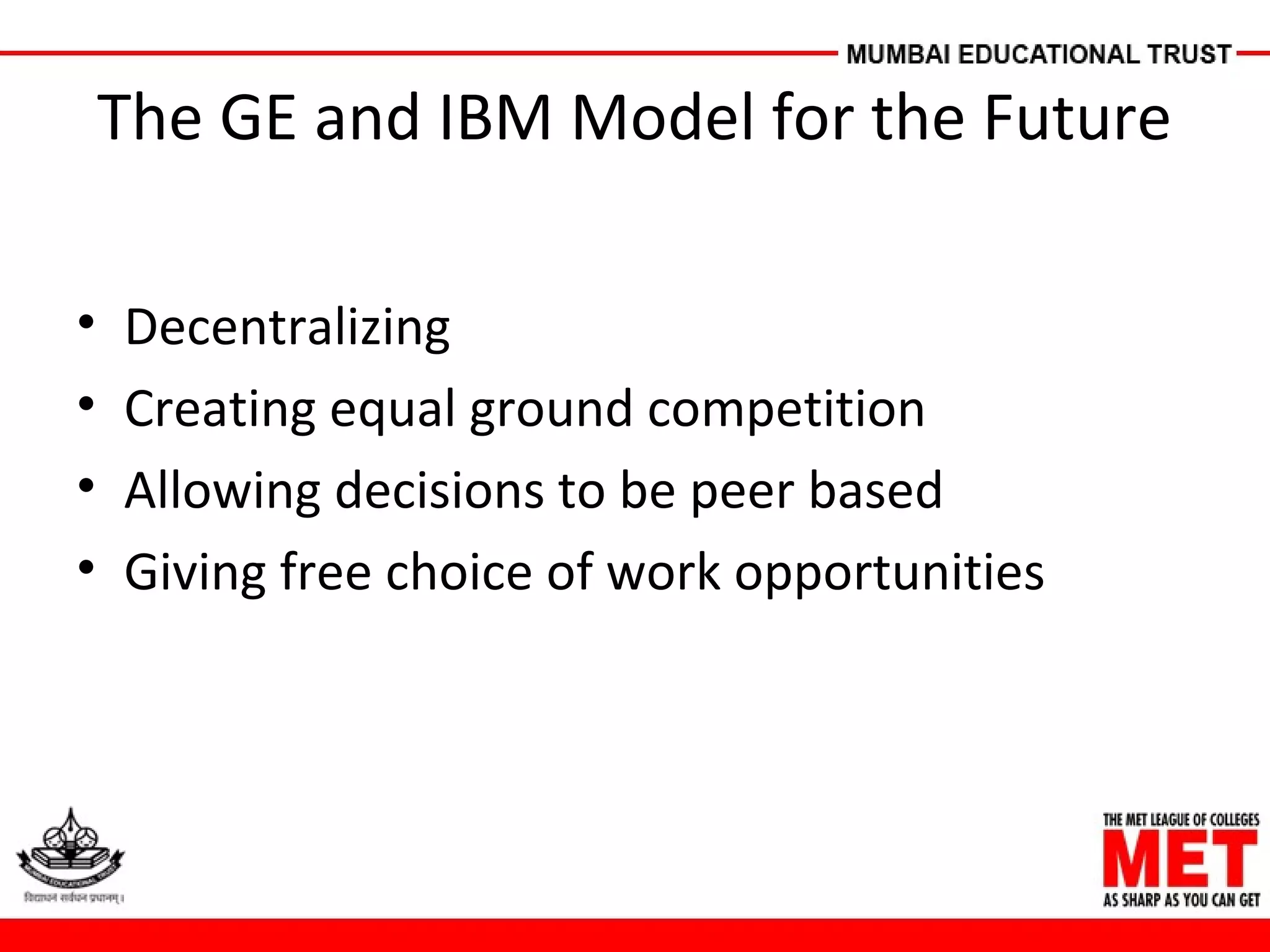
The GE and IBM Model for the Future
• Decentralizing
• Creating equal ground competition
• Allowing decisions to be peer based
• Giving free choice of work opportunities
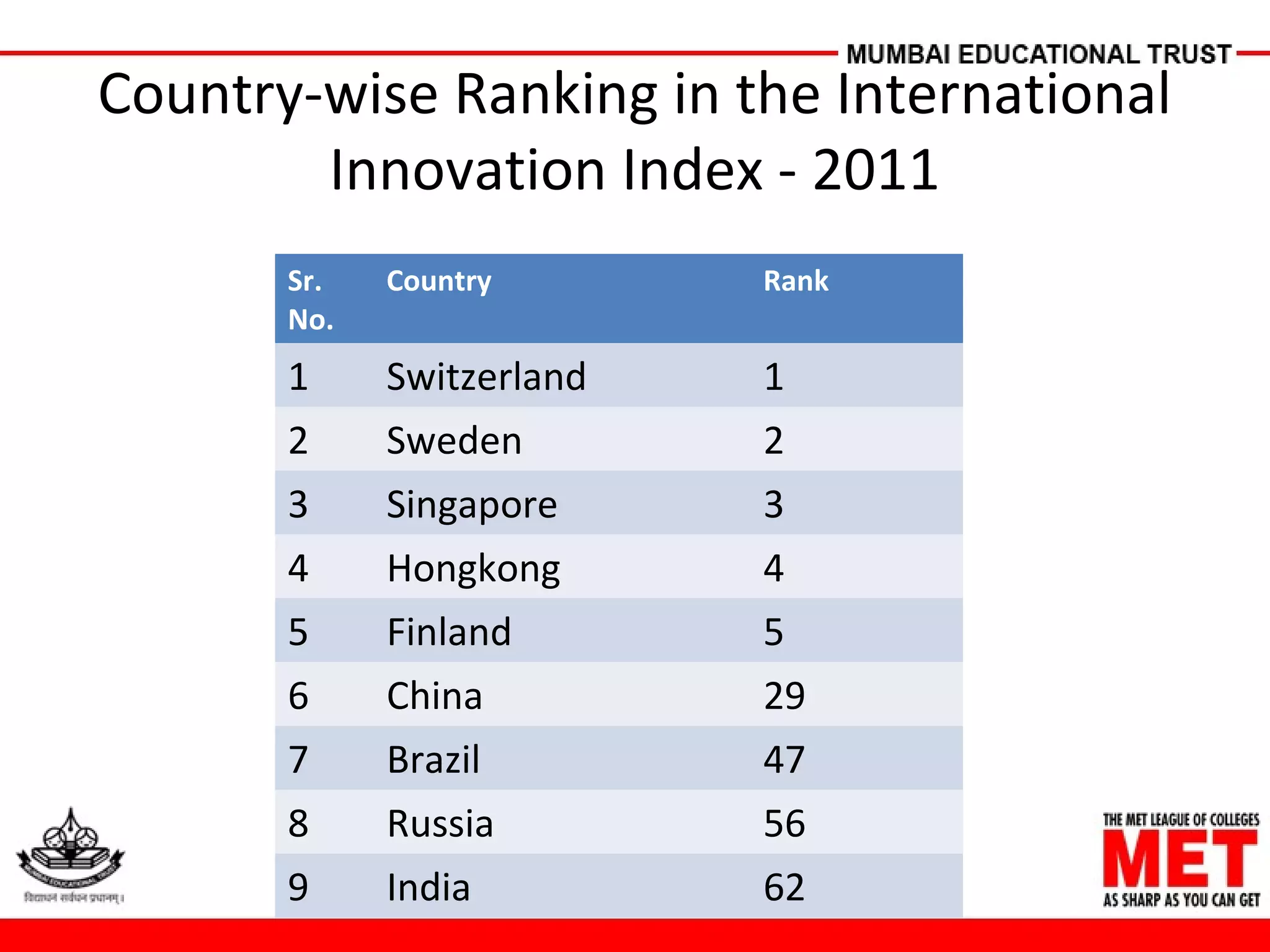
Country-wise Ranking in the International
Innovation Index - 2011
Sr.
No.
Country Rank
1 Switzerland 1
2 Sweden 2
3 Singapore 3
4 Hongkong 4
5 Finland 5
6 China 29
7 Brazil 47
8 Russia 56
9 India 62
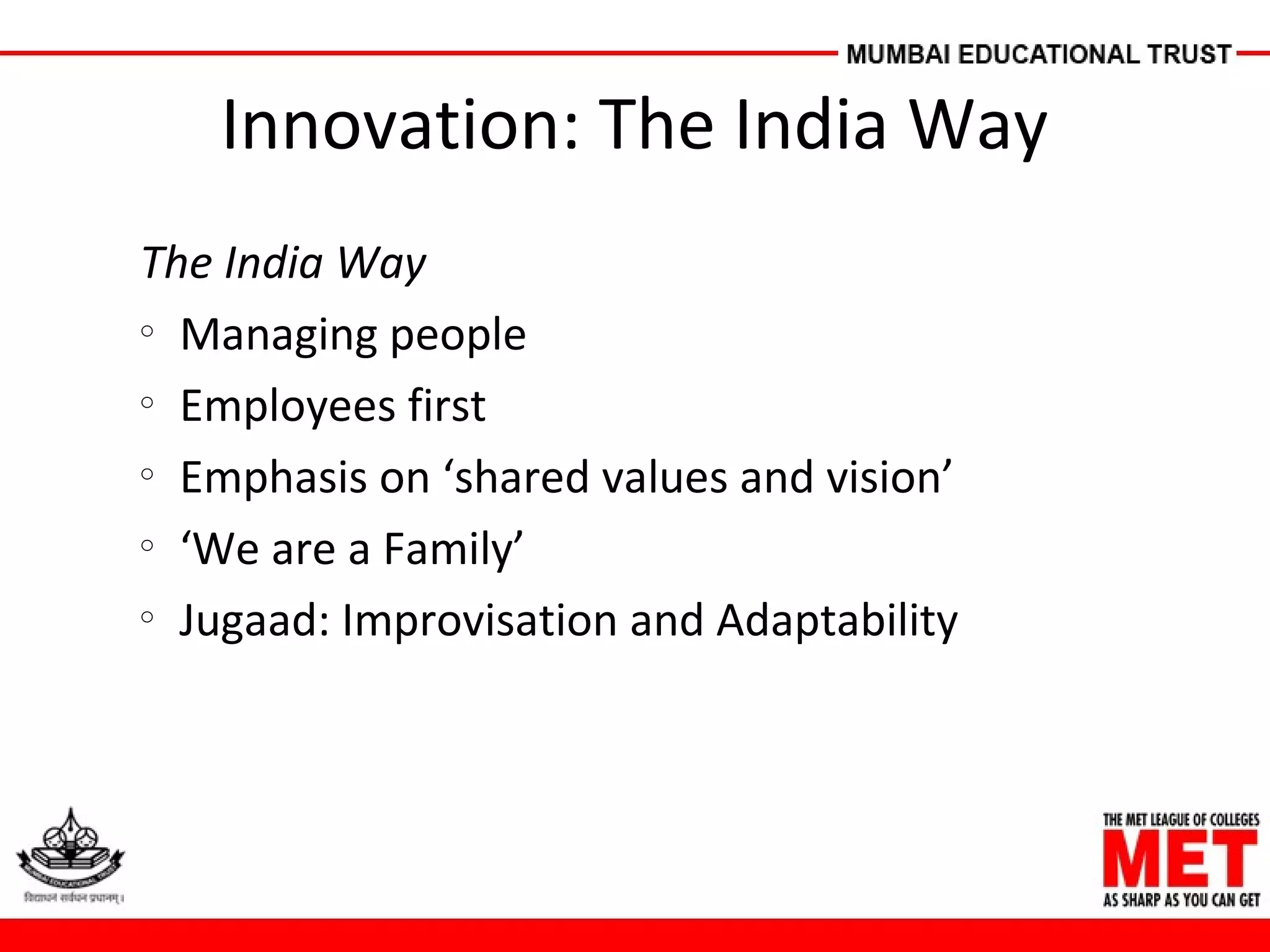
Innovation: The India Way
The India Way
o
Managing people
o
Employees first
o
Emphasis on ‘shared values and vision’
o
‘We are a Family’
o
Jugaad: Improvisation and Adaptability
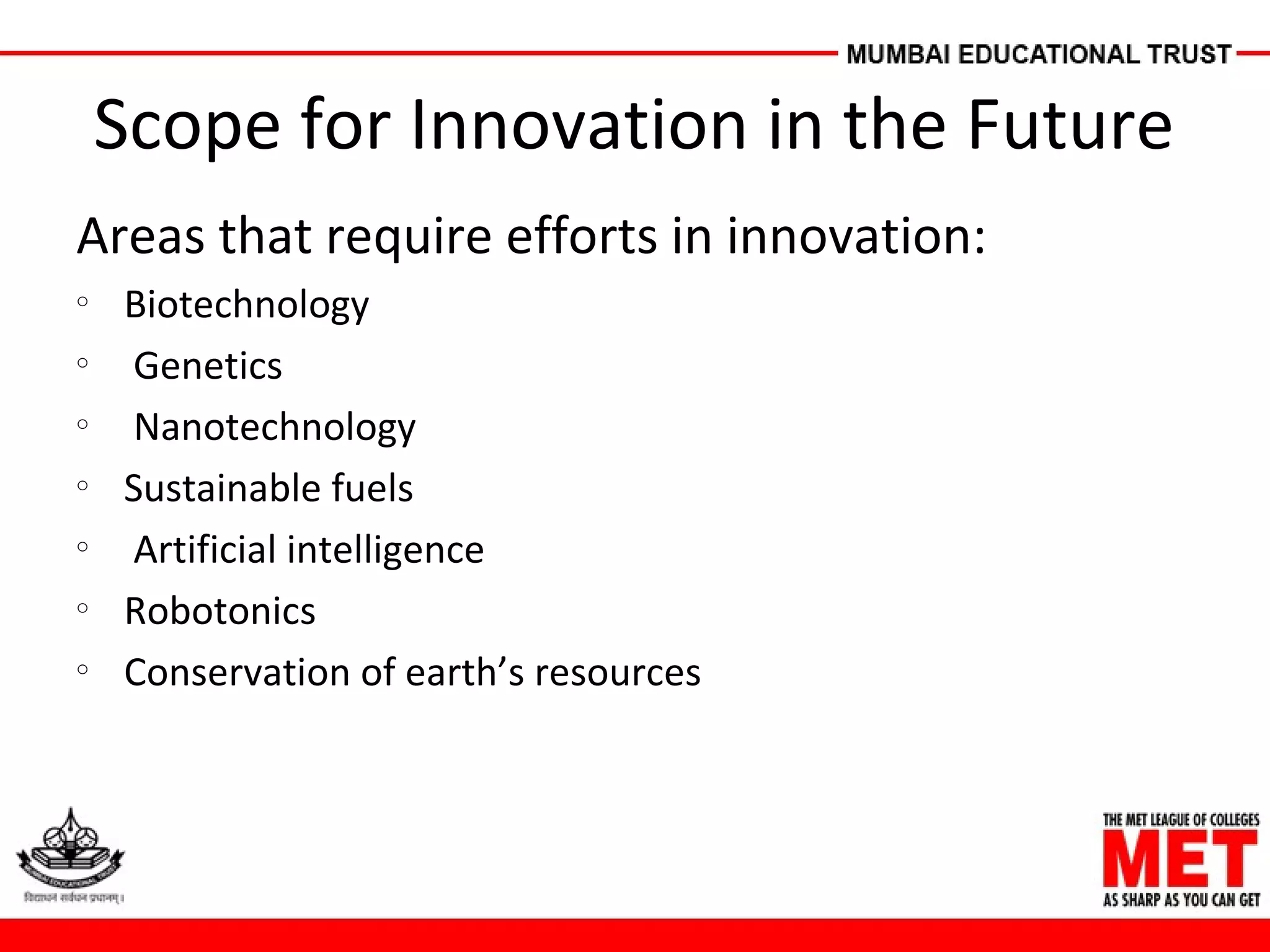
Scope for Innovation in the Future
Areas that require efforts in innovation:
o
Biotechnology
o
Genetics
o
Nanotechnology
o
Sustainable fuels
o
Artificial intelligence
o
Robotonics
o
Conservation of earth’s resources
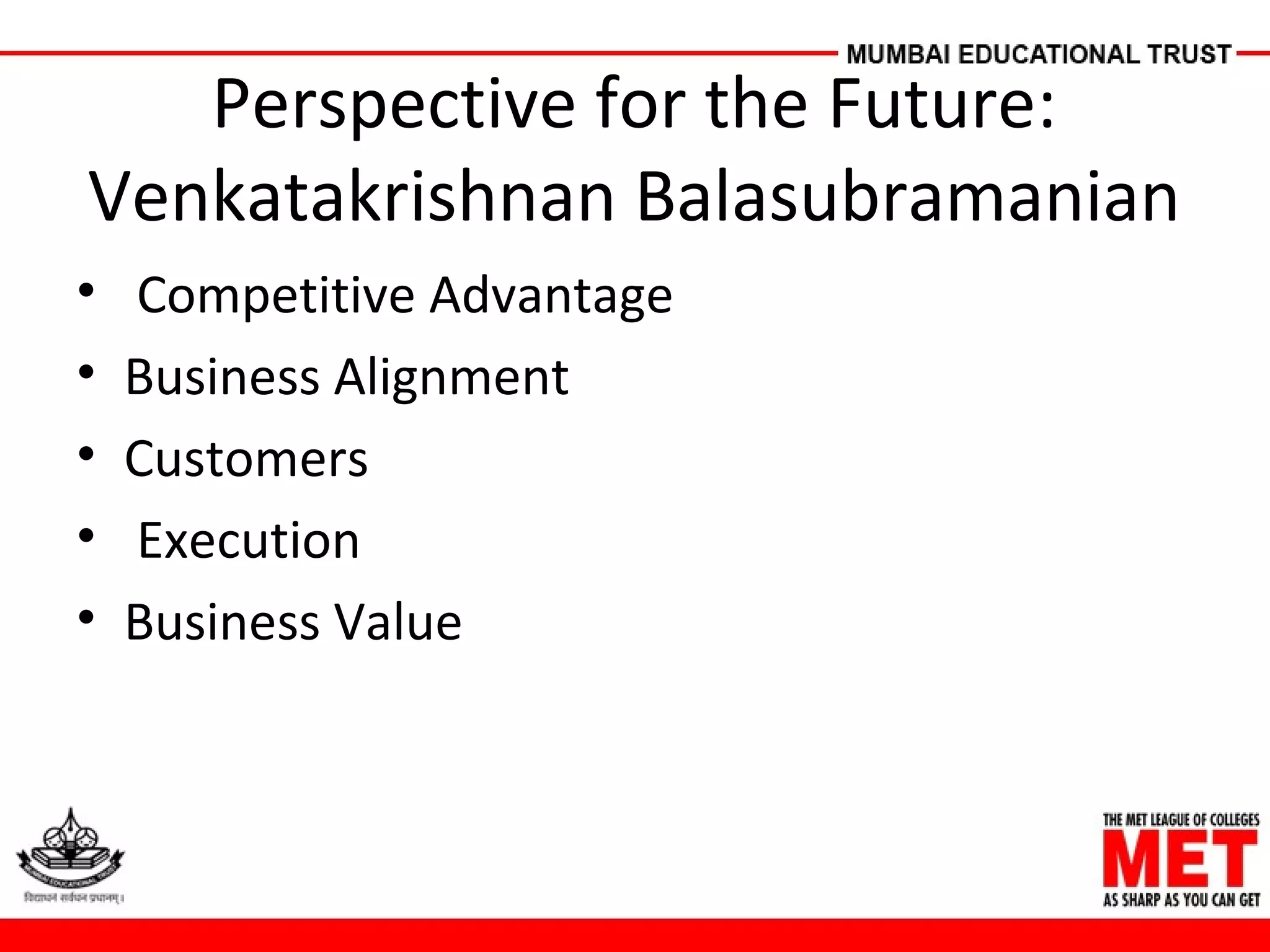
Perspective for the Future:
Venkatakrishnan Balasubramanian
• Competitive Advantage
• Business Alignment
• Customers
• Execution
• Business Value
Perspective for the Future:
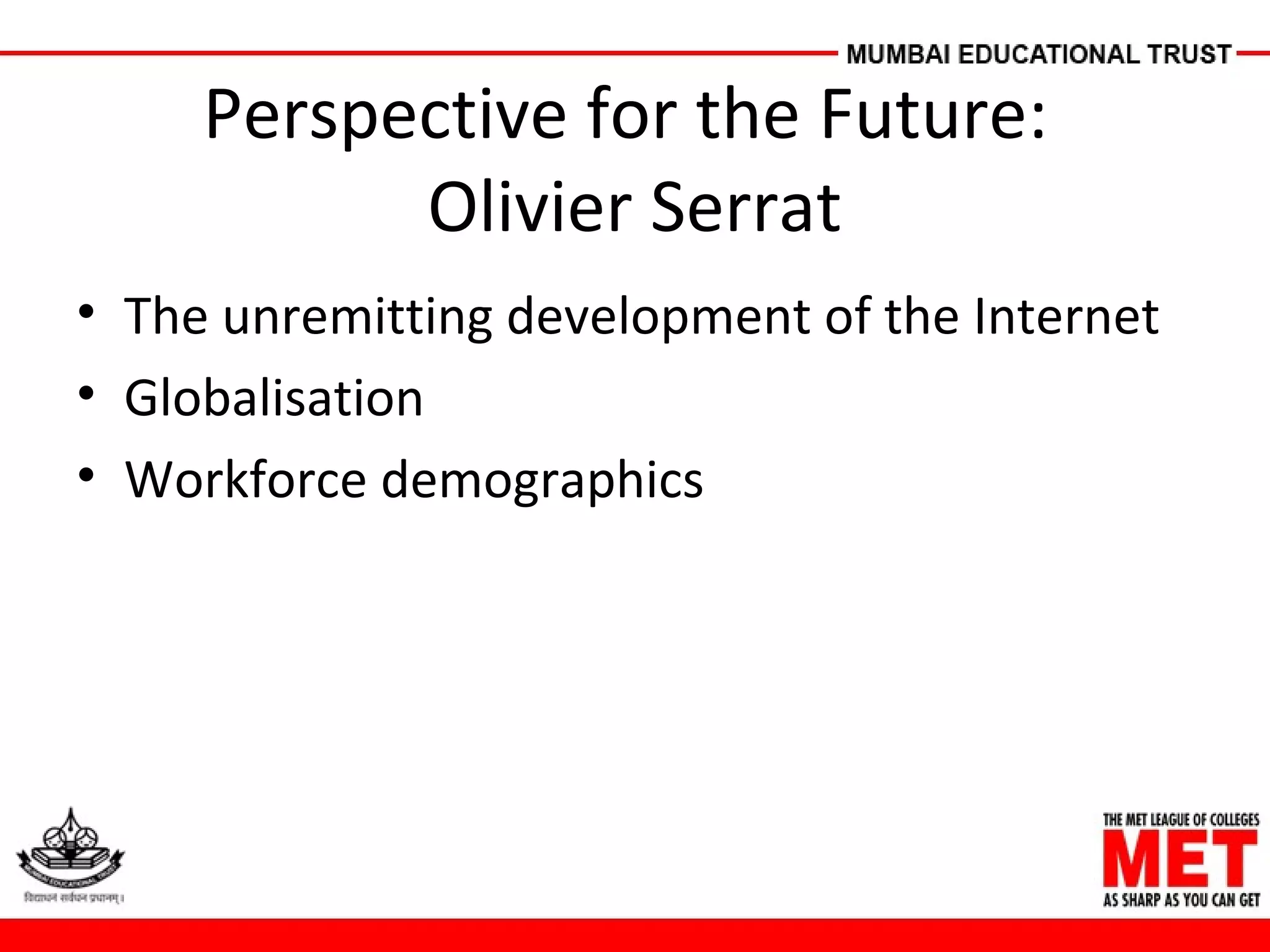
Olivier Serrat
• The unremitting development of the Internet
• Globalisation
• Workforce demographics
Perspective for the Future:
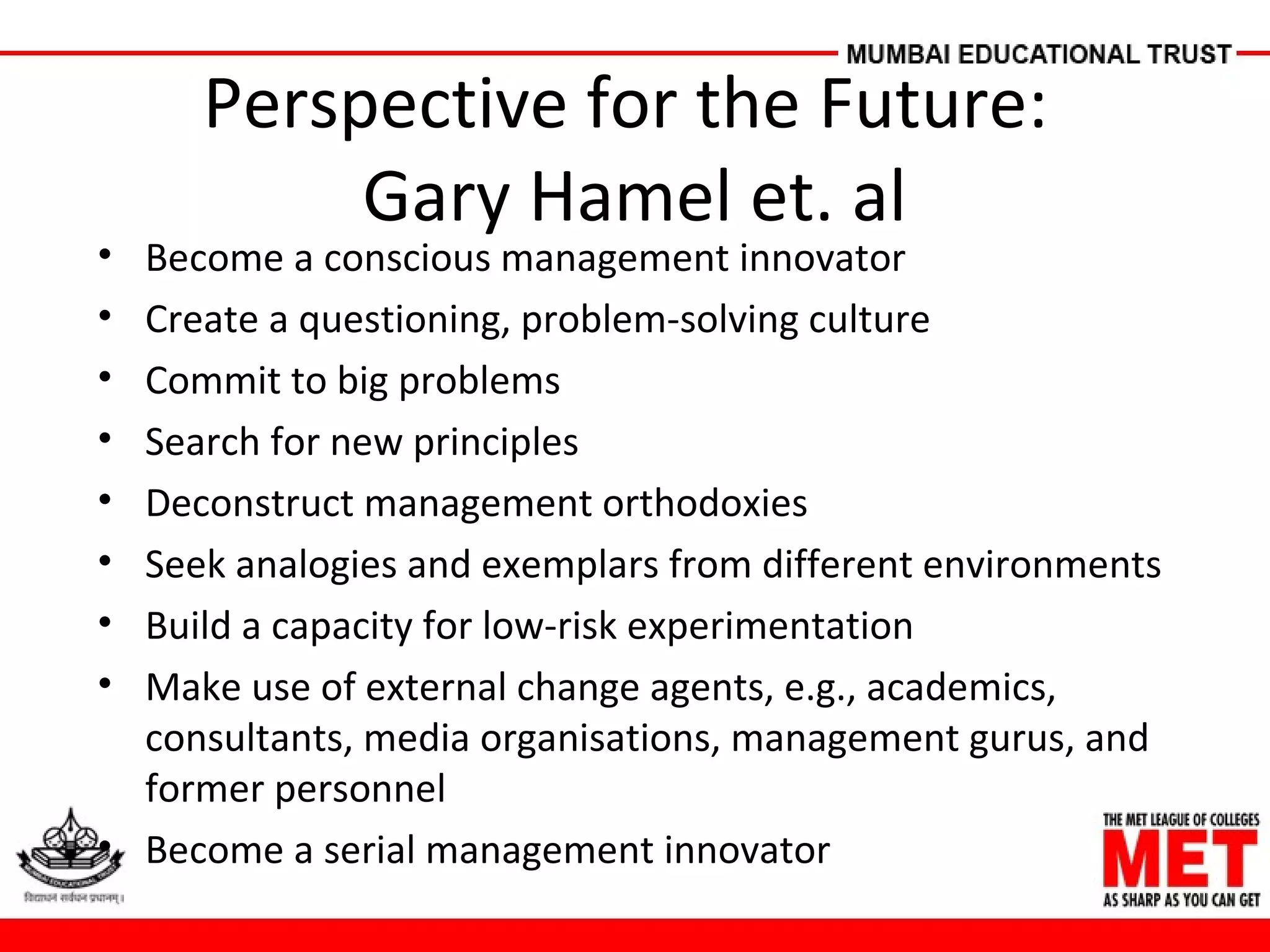
Gary Hamel et. al
• Become a conscious management innovator
• Create a questioning, problem-solving culture
• Commit to big problems
• Search for new principles
• Deconstruct management orthodoxies
• Seek analogies and exemplars from different environments
• Build a capacity for low-risk experimentation
• Make use of external change agents, e.g., academics,
consultants, media organisations, management gurus, and
former personnel
• Become a serial management innovator
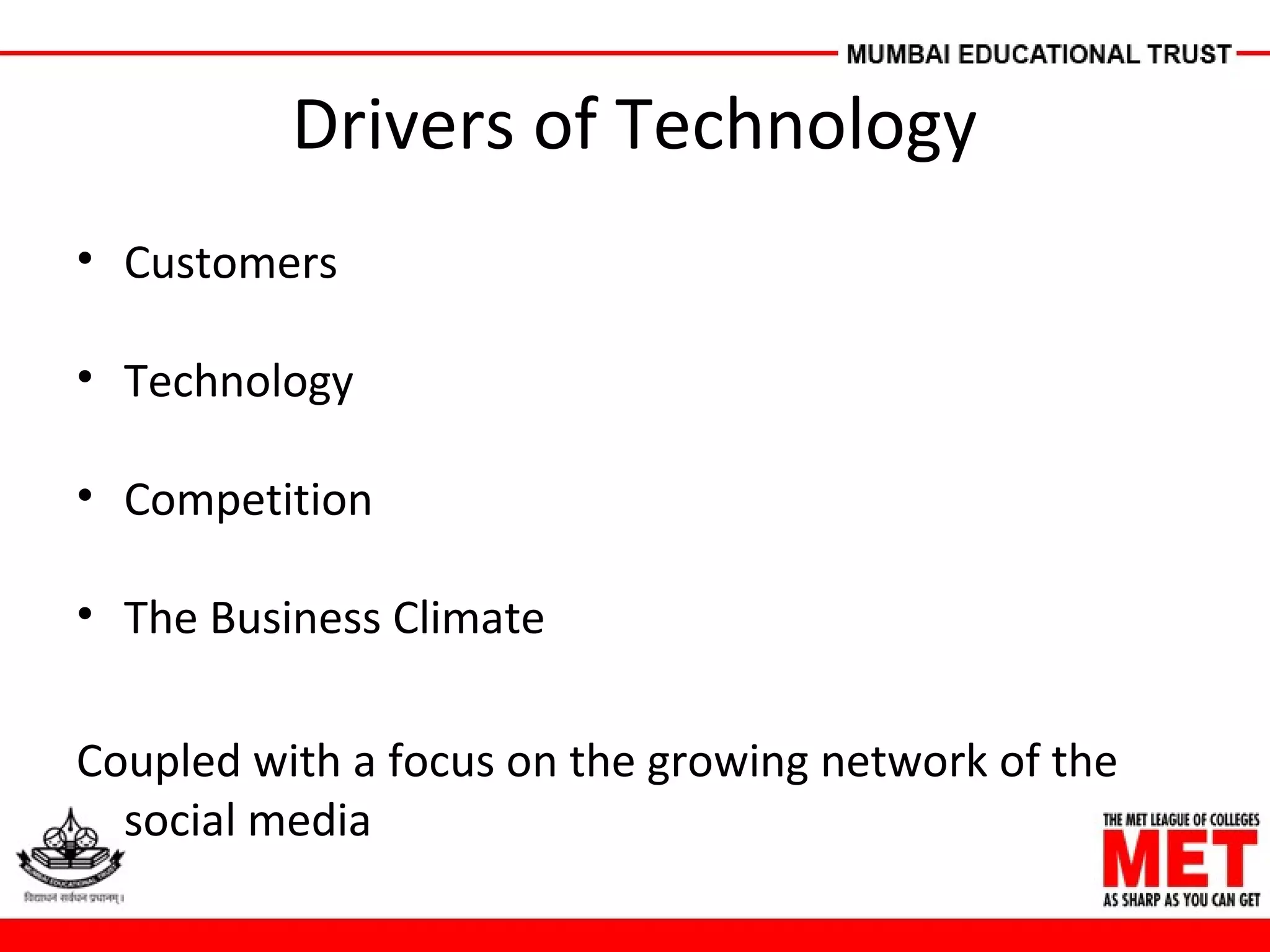
Drivers of Technology
• Customers
• Technology
• Competition
• The Business Climate
Coupled with a focus on the growing network of the
social media
In Conclusion
Coming together of the corporate world
and the academia: The Pacific University
contribution
Thank You

Contemporary Innovative Practices in Managemet

  • 1.
    CONTEMPORARY INNOVATIVE PRACTICES INMANAGEMENT Vijay Page Director General, MET’s Schools of Management
  • 2.
    Flow of thePaper • Successful innovations – Western • Country-wise ranking of Innovations • Successful innovations – Indian • Future scope: Three models - Venkatakrishnan Balasubramanian, Olivier Serrat, Gary Hamel et. al. • Drivers of future innovations • Conclusion
  • 3.
    Placing in Perspective •India, US, Europe and the economic crisis • Current technological innovations in the time of economic upheaval • Future organisations and the role of innovation
  • 4.
    Distinction between Innovationand Invention • Defining Invention: The creation of a product or the introduction of a process for the first time • Defining Innovation: Improvement or significant contribution to an existing product, process or service • John Kalperis’ distinction between Innovation and Invention • Tom Grasty’s analogy on the distinction between Innovation and Invention
  • 5.
    Factors involved inInnovation • Improvisation is the basis of Innovation and Invention • Definition of Management Innovation: The invention and implementation of a management practice, process, structure, or technique that is new to the state of the art and is intended to further organisational goals • Four Processes in Innovation: Motivation, Invention, Implementation and Theorisation and Labeling
  • 6.
    Factors involved inInnovation contd…… • Three key factors in Innovation: independent validation; focus on specific units, distinction between a Management Innovation and a Management Fashion • Ten stage process framework for innovation • The finding of the ‘s curve’: The great majority of innovations never get off the bottom of the curve, and never produce normal returns • Varied indices to innovation
  • 7.
    Successful International Innovations •Uncertainty Management • Crowd Computing • Exploration of self management techniques-:emotional and spiritual intelligence • Re-engineering • Creating Management teams • Amoebic Leadership • Strategic management via consumer insights • Adoption of Just in Time Inventory Management
  • 8.
    Successful International Innovations contd…. •GE’s development of the modern research lab • GM’s invention of the M-form organization structure • The Government of India’s UID Scheme • Apple’s X Code 4, a proprietary application • Managing science • Allocating capital • Managing intangible assets • Capturing the wisdom of every employee • Building a global consortium • Make bold innovation in everyone’s job • Allowing and encouraging everyone to participate to the maximum
  • 9.
    The GE andIBM Model for the Future • Decentralizing • Creating equal ground competition • Allowing decisions to be peer based • Giving free choice of work opportunities
  • 10.
    Country-wise Ranking inthe International Innovation Index - 2011 Sr. No. Country Rank 1 Switzerland 1 2 Sweden 2 3 Singapore 3 4 Hongkong 4 5 Finland 5 6 China 29 7 Brazil 47 8 Russia 56 9 India 62
  • 11.
    Innovation: The IndiaWay The India Way o Managing people o Employees first o Emphasis on ‘shared values and vision’ o ‘We are a Family’ o Jugaad: Improvisation and Adaptability
  • 12.
    Scope for Innovationin the Future Areas that require efforts in innovation: o Biotechnology o Genetics o Nanotechnology o Sustainable fuels o Artificial intelligence o Robotonics o Conservation of earth’s resources
  • 13.
    Perspective for theFuture: Venkatakrishnan Balasubramanian • Competitive Advantage • Business Alignment • Customers • Execution • Business Value
  • 14.
    Perspective for theFuture: Olivier Serrat • The unremitting development of the Internet • Globalisation • Workforce demographics
  • 15.
    Perspective for theFuture: Gary Hamel et. al • Become a conscious management innovator • Create a questioning, problem-solving culture • Commit to big problems • Search for new principles • Deconstruct management orthodoxies • Seek analogies and exemplars from different environments • Build a capacity for low-risk experimentation • Make use of external change agents, e.g., academics, consultants, media organisations, management gurus, and former personnel • Become a serial management innovator
  • 16.
    Drivers of Technology •Customers • Technology • Competition • The Business Climate Coupled with a focus on the growing network of the social media
  • 17.
    In Conclusion Coming togetherof the corporate world and the academia: The Pacific University contribution
  • 18.