(NU) - Today, nearly 41 mil-
lion adults in the U.S -- that’s 1-
in-10 -- wear contact lenses, a safe
and popular form of vision cor-
rection. However, when they do
not use lenses as directed by an
eye doctor, the consequences
can be dangerous and can even
damage the eyes.
Many contact lens wearers
are guilty of a number of serious
bad habits. According to the
American Optometric Associa-
tion’s (AOA) 2015 American
Eye-Q consumer survey, 59 per-
cent of contact lens wearers ad-
mit to wearing their disposable
contact lenses longer than they
should. Not following an eye
doctor’s recommended changing
schedule can cause permanent
eye damage from bacterial in-
fections and oxygen deprivation.
Taking proper steps when
wearing and caring for contacts
helps keep the eyes healthy. The
AOA recommends wearers:
• Wash and dry hands before
handling contact lenses;
• Use cleaning solution to rub
the lenses with fingers and rinse
thoroughly before soaking lens-
es overnight in multi-purpose
disinfectant solution;
• Store lenses in a proper lens
storage case and replace it every
three months;
• Use fresh solution to clean
and store contact lenses -- never
reuse old solution;
• Use products recommended
by your eye doctor to clean and
disinfect your lenses;
• Follow the recommended
contact lens replacement schedule
prescribed by your eye doctor; and
• Remove contact lenses be-
fore exposing them to water.
Another thing to remember is
contact lenses aren’t just for
adults. Eye doctors agree most
children between the ages of 10
and 12 are mature enough to wear
and care for contact lenses, but
even some younger children are
capable, especially with daily dis-
posable contact lenses.
The AOA is also warning
about the risks of wearing non-
corrective, decorative contact
lenses that often times are ac-
quired illegally through vendors
that don’t meet quality or safety
standards. While many people
may consider these lenses a fash-
ion or costume accessory, in real-
ity, they are also classified as med-
ical devices and pose the same
safety and health issues as cor-
rective contact lenses. Eye doctors
urge wearing only decorative con-
tact lenses that are prescribed
through an eye doctor. Illegally
purchased lenses can result in sig-
nificant eye damage, which could
lead to irreversible sight loss.
For more information about
contact lens hygiene and safety,
as well as the risks associated
with decorative contact lenses,
visit www.aoa.org.
Contact Lenses: Focus on Proper
Care to Reduce Risk of Infections
HEALTH
NewsUSA
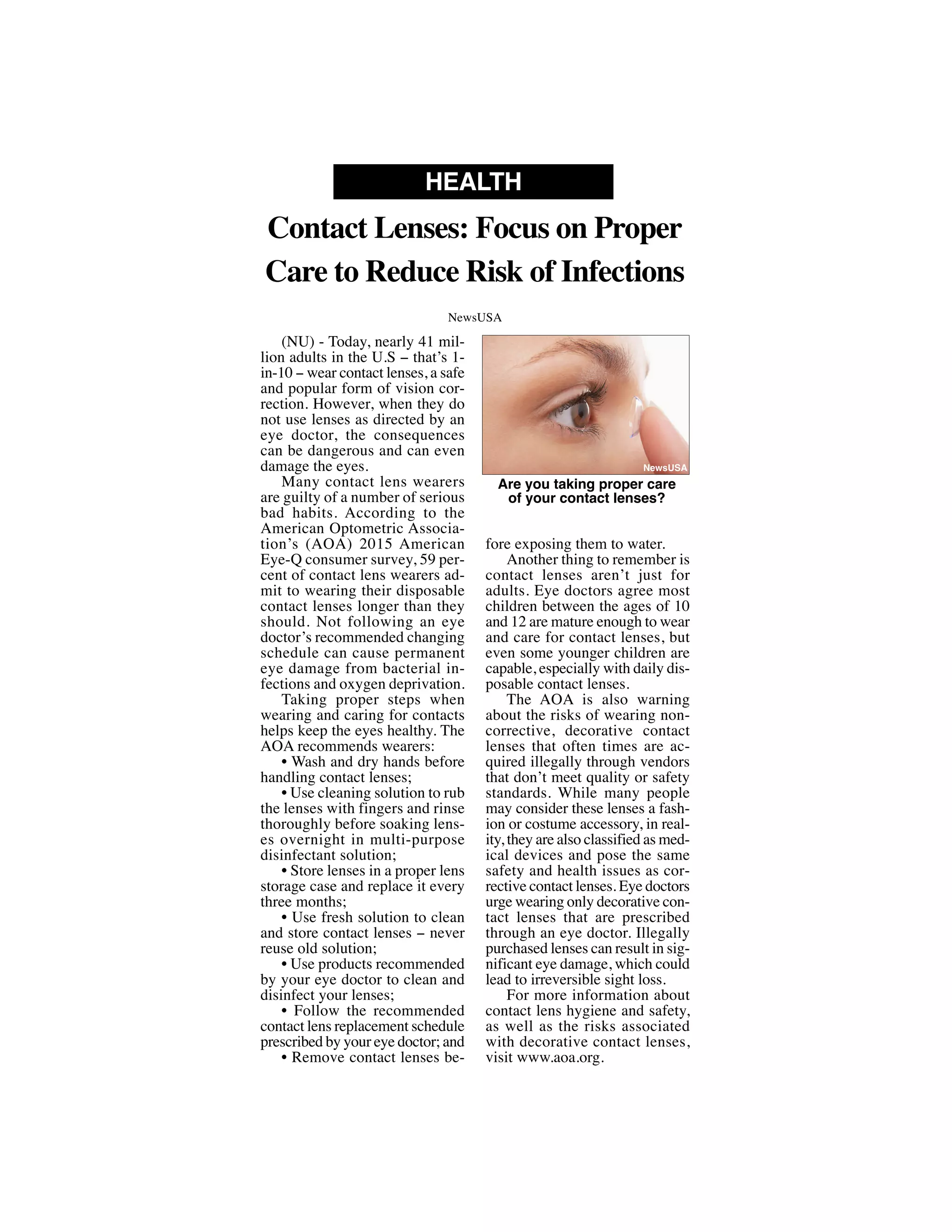
Are you taking proper care
of your contact lenses?
NewsUSA

ContactLenseRisks

  • 1.
    (NU) - Today,nearly 41 mil- lion adults in the U.S -- that’s 1- in-10 -- wear contact lenses, a safe and popular form of vision cor- rection. However, when they do not use lenses as directed by an eye doctor, the consequences can be dangerous and can even damage the eyes. Many contact lens wearers are guilty of a number of serious bad habits. According to the American Optometric Associa- tion’s (AOA) 2015 American Eye-Q consumer survey, 59 per- cent of contact lens wearers ad- mit to wearing their disposable contact lenses longer than they should. Not following an eye doctor’s recommended changing schedule can cause permanent eye damage from bacterial in- fections and oxygen deprivation. Taking proper steps when wearing and caring for contacts helps keep the eyes healthy. The AOA recommends wearers: • Wash and dry hands before handling contact lenses; • Use cleaning solution to rub the lenses with fingers and rinse thoroughly before soaking lens- es overnight in multi-purpose disinfectant solution; • Store lenses in a proper lens storage case and replace it every three months; • Use fresh solution to clean and store contact lenses -- never reuse old solution; • Use products recommended by your eye doctor to clean and disinfect your lenses; • Follow the recommended contact lens replacement schedule prescribed by your eye doctor; and • Remove contact lenses be- fore exposing them to water. Another thing to remember is contact lenses aren’t just for adults. Eye doctors agree most children between the ages of 10 and 12 are mature enough to wear and care for contact lenses, but even some younger children are capable, especially with daily dis- posable contact lenses. The AOA is also warning about the risks of wearing non- corrective, decorative contact lenses that often times are ac- quired illegally through vendors that don’t meet quality or safety standards. While many people may consider these lenses a fash- ion or costume accessory, in real- ity, they are also classified as med- ical devices and pose the same safety and health issues as cor- rective contact lenses. Eye doctors urge wearing only decorative con- tact lenses that are prescribed through an eye doctor. Illegally purchased lenses can result in sig- nificant eye damage, which could lead to irreversible sight loss. For more information about contact lens hygiene and safety, as well as the risks associated with decorative contact lenses, visit www.aoa.org. Contact Lenses: Focus on Proper Care to Reduce Risk of Infections HEALTH NewsUSA Are you taking proper care of your contact lenses? NewsUSA