CONSUMER BEHAVIOR IN
SERVICE ENCOUNTERS: IV
Dr. Priyadarshini Nagori
SOS Mangement
Jiwaji University, Gwalior
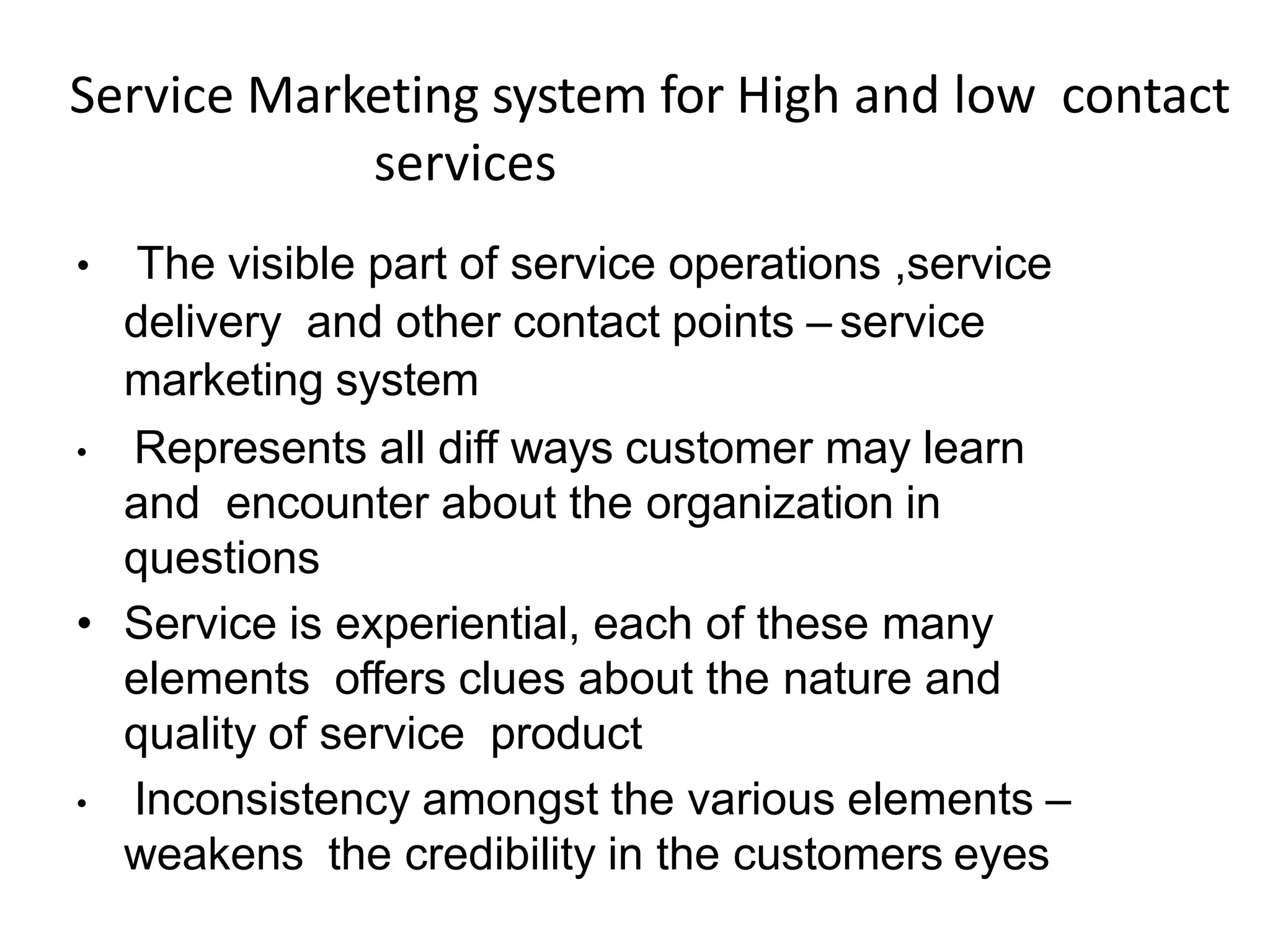
Service Marketing system for High and low contact
services
• The visible part of service operations ,service
delivery and other contact points – service
marketing system
• Represents all diff ways customer may learn
and encounter about the organization in
questions
• Service is experiential, each of these many
elements offers clues about the nature and
quality of service product
• Inconsistency amongst the various elements –
weakens the credibility in the customers eyes
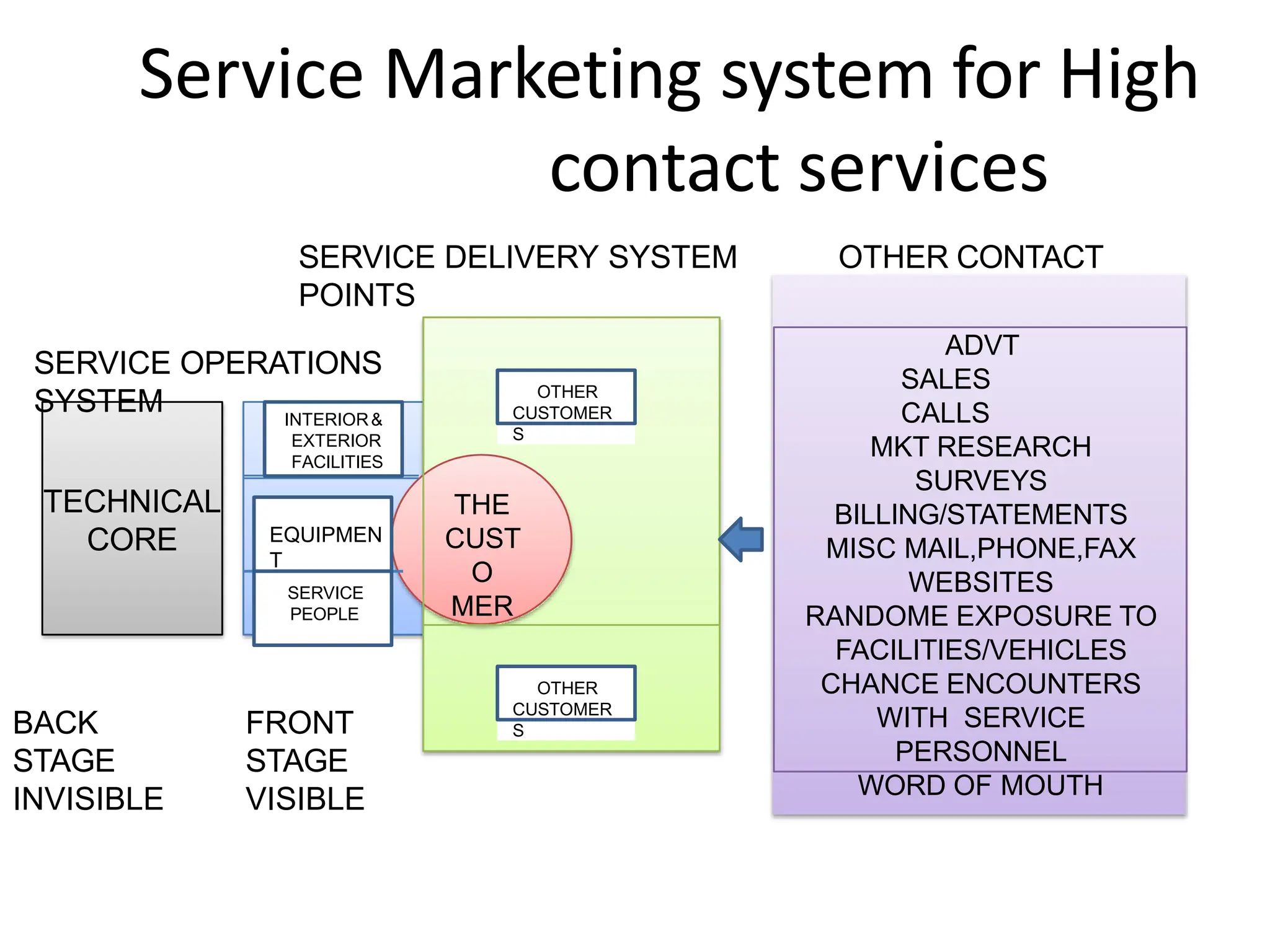
Service Marketing system for High
contact services
TECHNICAL
CORE
THE
CUST
O
MER
ADVT
SALES
CALLS
MKT RESEARCH
SURVEYS
BILLING/STATEMENTS
MISC MAIL,PHONE,FAX
WEBSITES
RANDOME EXPOSURE TO
FACILITIES/VEHICLES
CHANCE ENCOUNTERS
WITH SERVICE
PERSONNEL
WORD OF MOUTH
SERVICE DELIVERY SYSTEM OTHER CONTACT
POINTS
SERVICE OPERATIONS
SYSTEM
BACK
STAGE
INVISIBLE
FRONT
STAGE
VISIBLE
INTERIOR&
EXTERIOR
FACILITIES
EQUIPMEN
T
SERVICE
PEOPLE
OTHER
CUSTOMER
S
OTHER
CUSTOMER
S
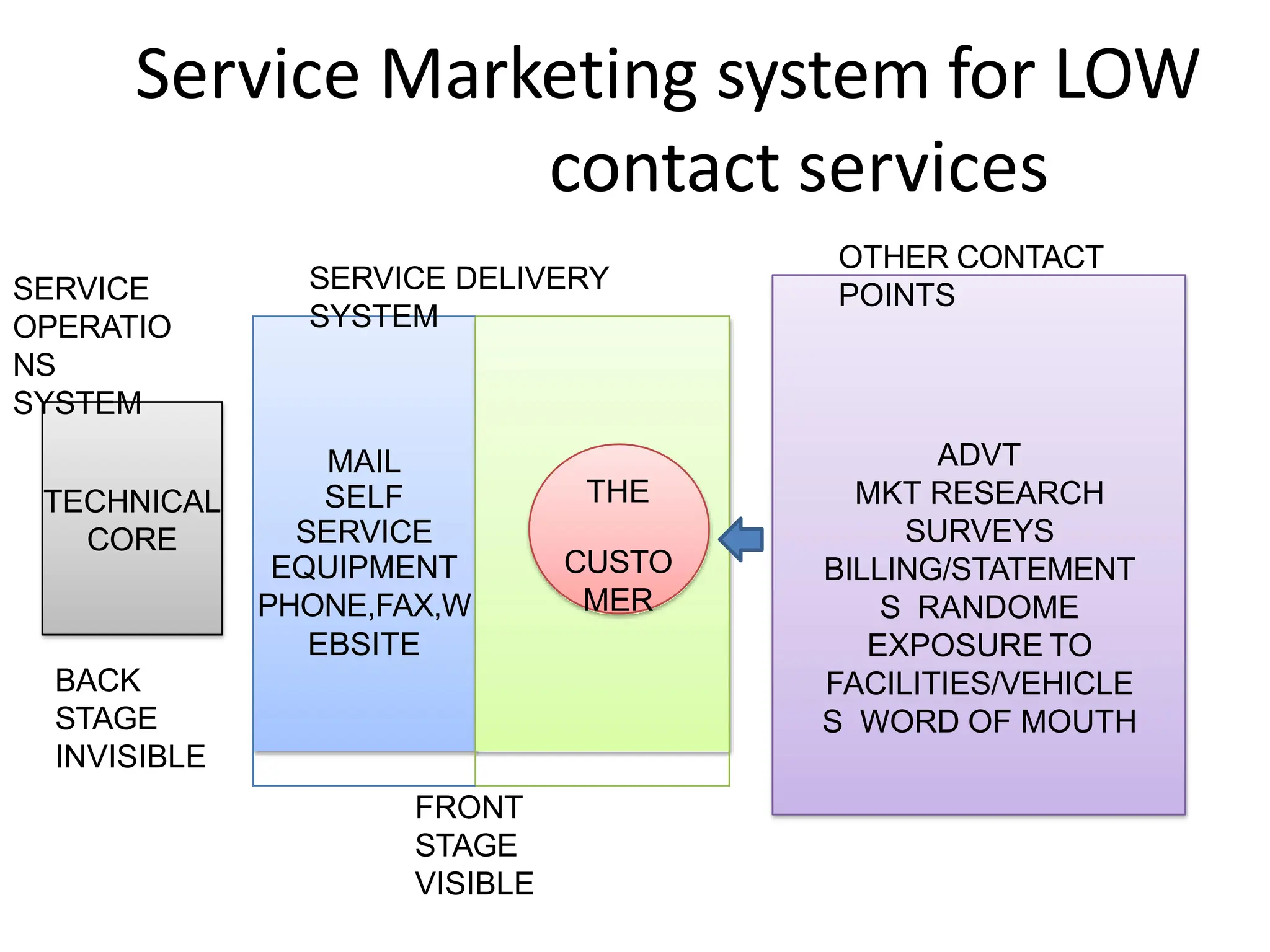
Service Marketing system for LOW
contact services
TECHNICAL
CORE
MAIL
SELF
SERVICE
THE
EQUIPMENT CUSTO
PHONE,FAX,W MER
EBSITE
ADVT
MKT RESEARCH
SURVEYS
BILLING/STATEMENT
S RANDOME
EXPOSURE TO
FACILITIES/VEHICLE
S WORD OF MOUTH
OTHER CONTACT
POINTS
SERVICE DELIVERY
SYSTEM
SERVICE
OPERATIO
NS
SYSTEM
BACK
STAGE
INVISIBLE
FRONT
STAGE
VISIBLE
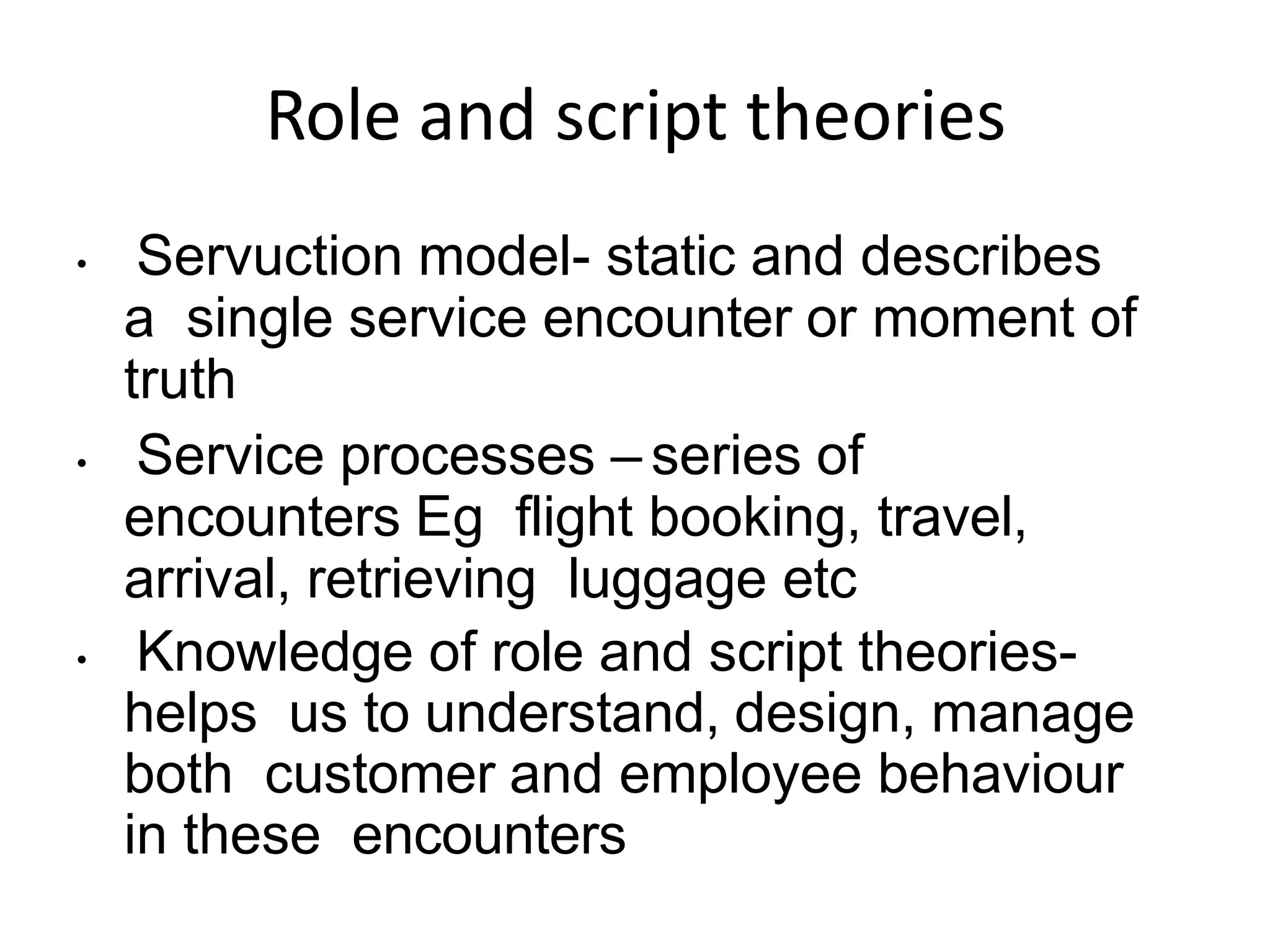
Role and script theories
• Servuction model- static and describes
a single service encounter or moment of
truth
• Service processes – series of
encounters Eg flight booking, travel,
arrival, retrieving luggage etc
• Knowledge of role and script theories-
helps us to understand, design, manage
both customer and employee behaviour
in these encounters
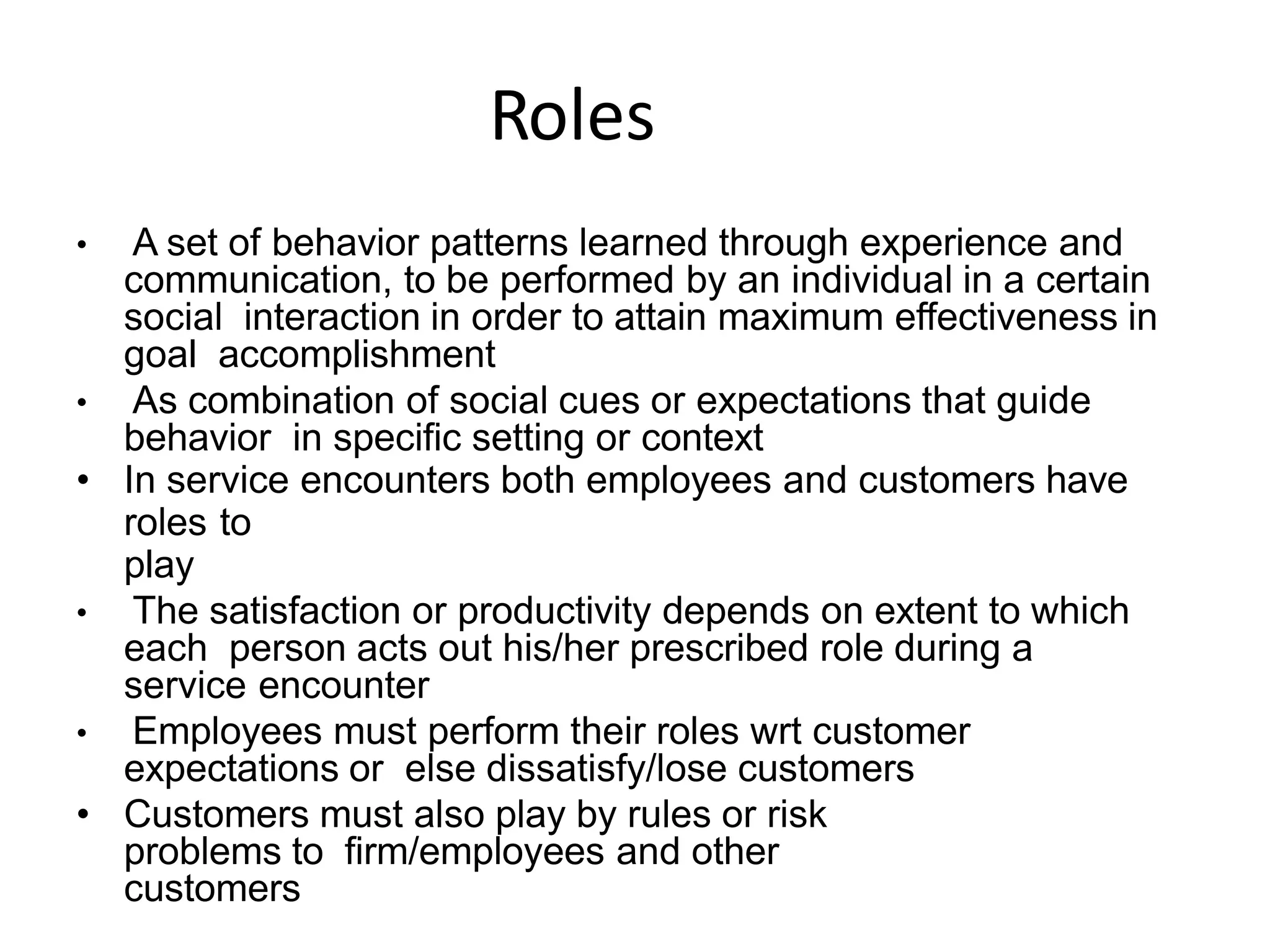
Roles
• A set of behavior patterns learned through experience and
communication, to be performed by an individual in a certain
social interaction in order to attain maximum effectiveness in
goal accomplishment
• As combination of social cues or expectations that guide
behavior in specific setting or context
• In service encounters both employees and customers have
roles to
play
• The satisfaction or productivity depends on extent to which
each person acts out his/her prescribed role during a
service encounter
• Employees must perform their roles wrt customer
expectations or else dissatisfy/lose customers
• Customers must also play by rules or risk
problems to firm/employees and other
customers
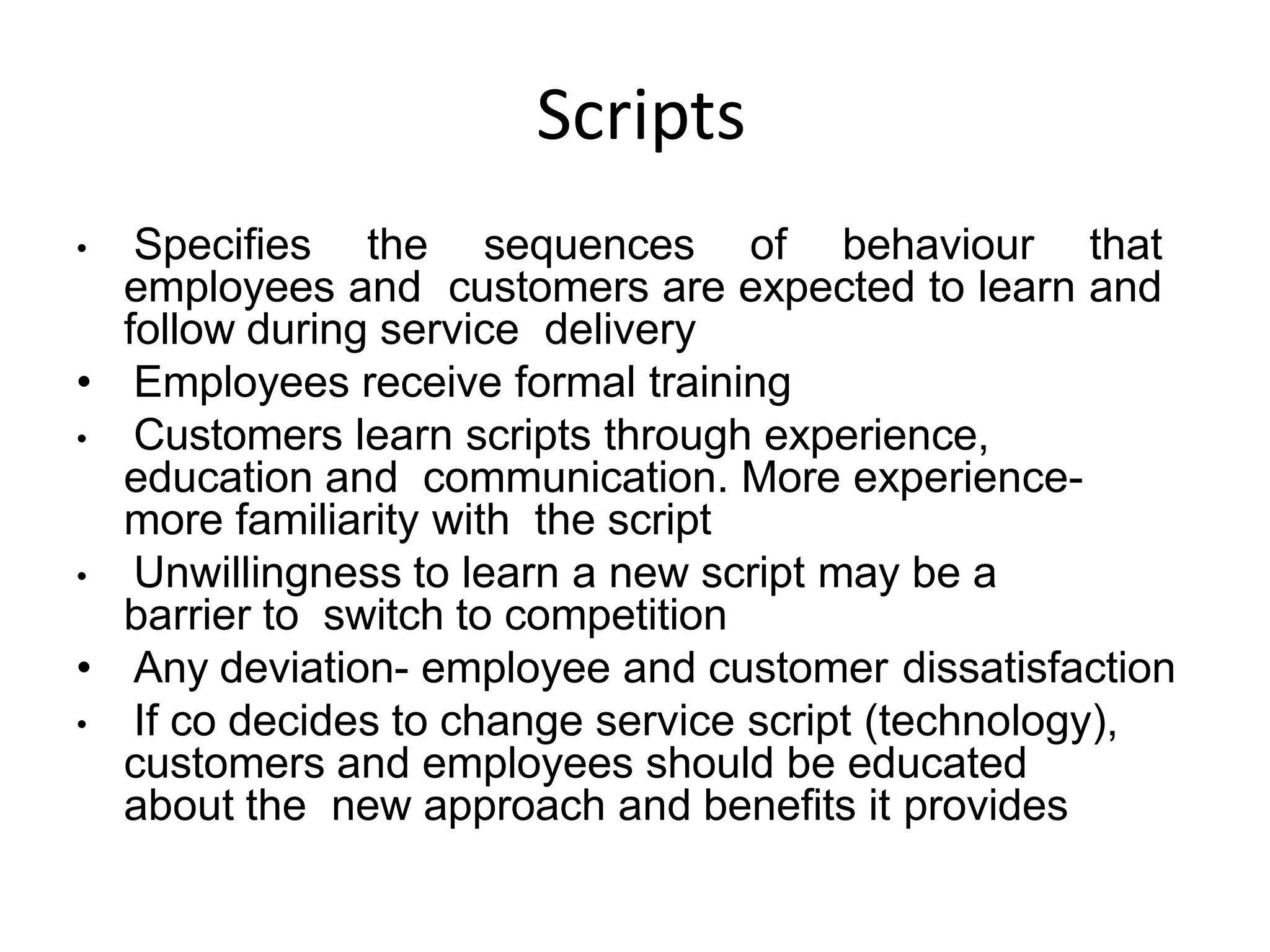
Scripts
• Specifies the sequences of behaviour that
employees and customers are expected to learn and
follow during service delivery
• Employees receive formal training
• Customers learn scripts through experience,
education and communication. More experience-
more familiarity with the script
• Unwillingness to learn a new script may be a
barrier to switch to competition
• Any deviation- employee and customer dissatisfaction
• If co decides to change service script (technology),
customers and employees should be educated
about the new approach and benefits it provides
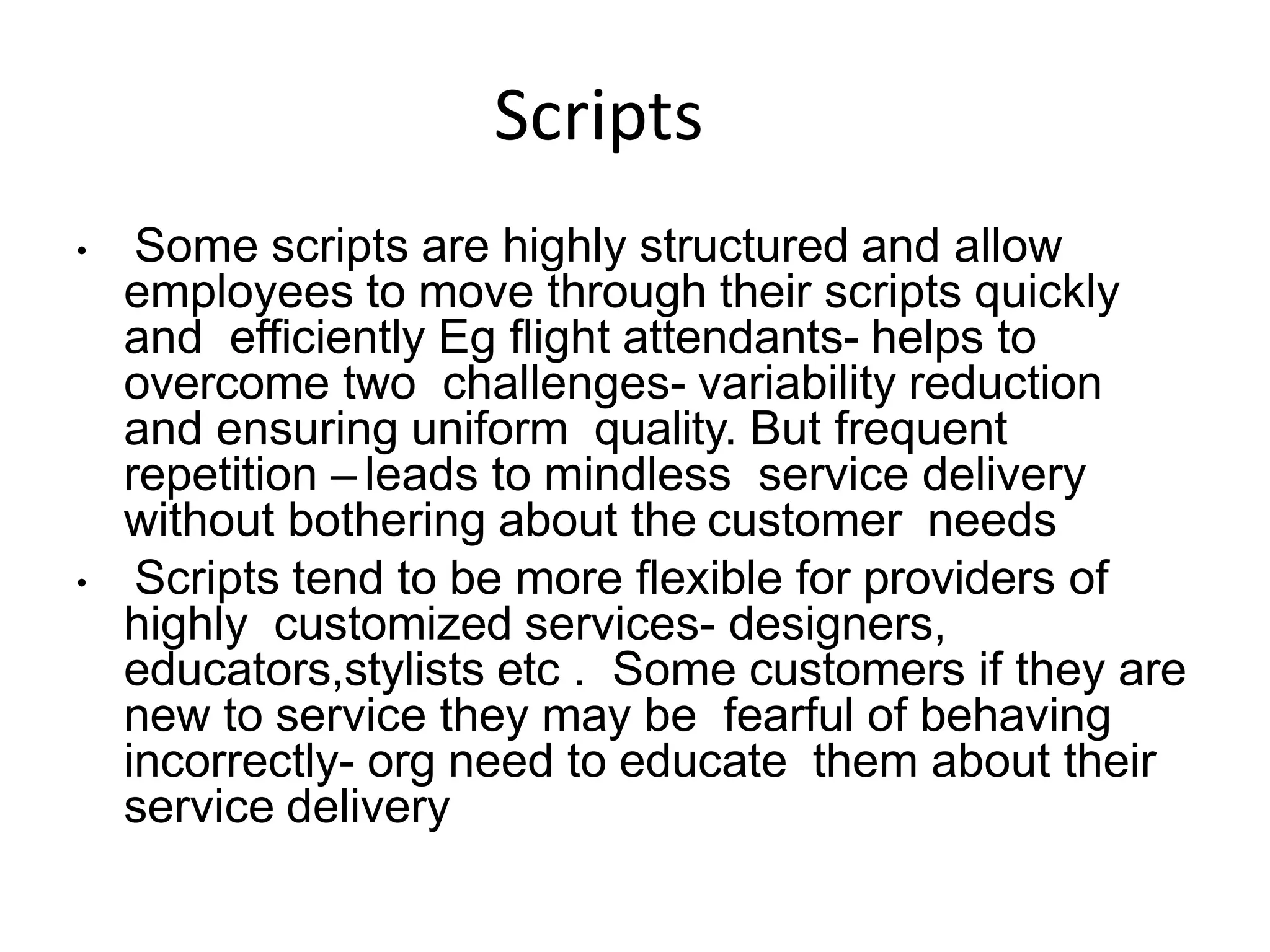
Scripts
• Some scripts are highly structured and allow
employees to move through their scripts quickly
and efficiently Eg flight attendants- helps to
overcome two challenges- variability reduction
and ensuring uniform quality. But frequent
repetition – leads to mindless service delivery
without bothering about the customer needs
• Scripts tend to be more flexible for providers of
highly customized services- designers,
educators,stylists etc . Some customers if they are
new to service they may be fearful of behaving
incorrectly- org need to educate them about their
service delivery
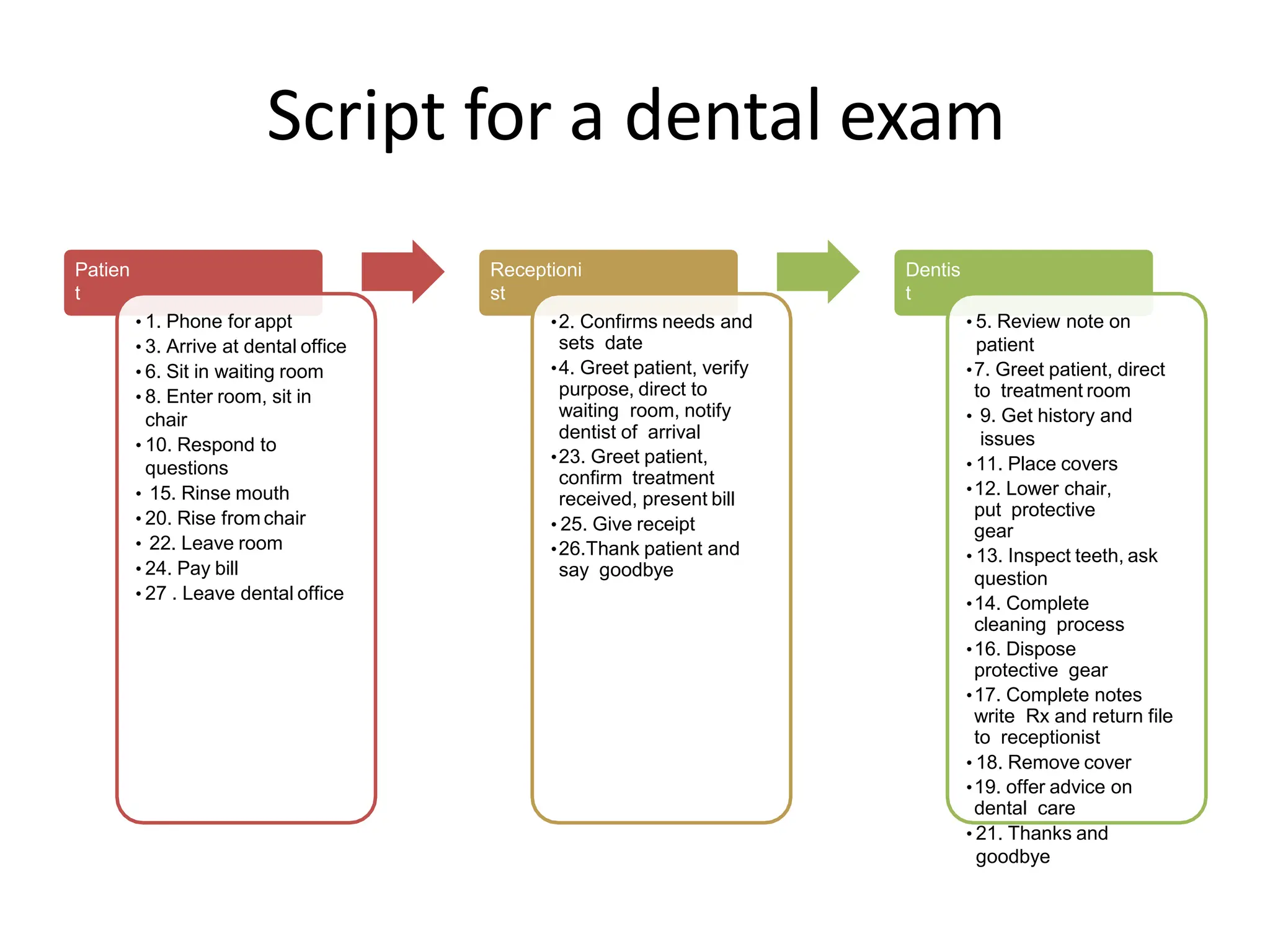
Script for a dental exam
Patien
t
• 1. Phone for appt
• 3. Arrive at dental office
• 6. Sit in waiting room
• 8. Enter room, sit in
chair
• 10. Respond to
questions
• 15. Rinse mouth
• 20. Rise from chair
• 22. Leave room
• 24. Pay bill
• 27 . Leave dental office
Receptioni
st
•2. Confirms needs and
sets date
•4. Greet patient, verify
purpose, direct to
waiting room, notify
dentist of arrival
•23. Greet patient,
confirm treatment
received, present bill
• 25. Give receipt
•26.Thank patient and
say goodbye
Dentis
t
• 5. Review note on
patient
•7. Greet patient, direct
to treatment room
• 9. Get history and
issues
• 11. Place covers
•12. Lower chair,
put protective
gear
• 13. Inspect teeth, ask
question
•14. Complete
cleaning process
•16. Dispose
protective gear
•17. Complete notes
write Rx and return file
to receptionist
• 18. Remove cover
•19. offer advice on
dental care
• 21. Thanks and
goodbye
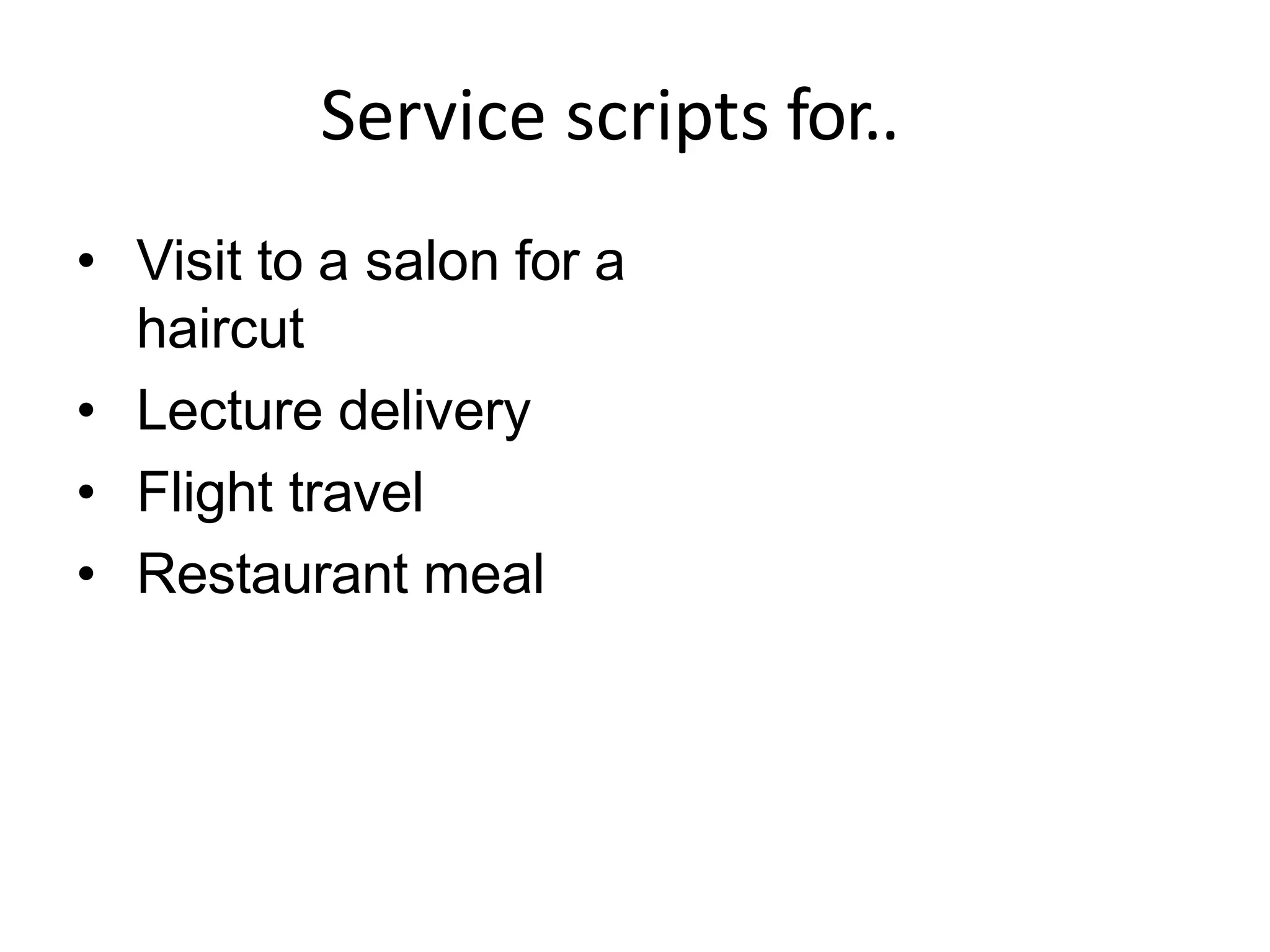
Service scripts for..
• Visit to a salon for a
haircut
• Lecture delivery
• Flight travel
• Restaurant meal
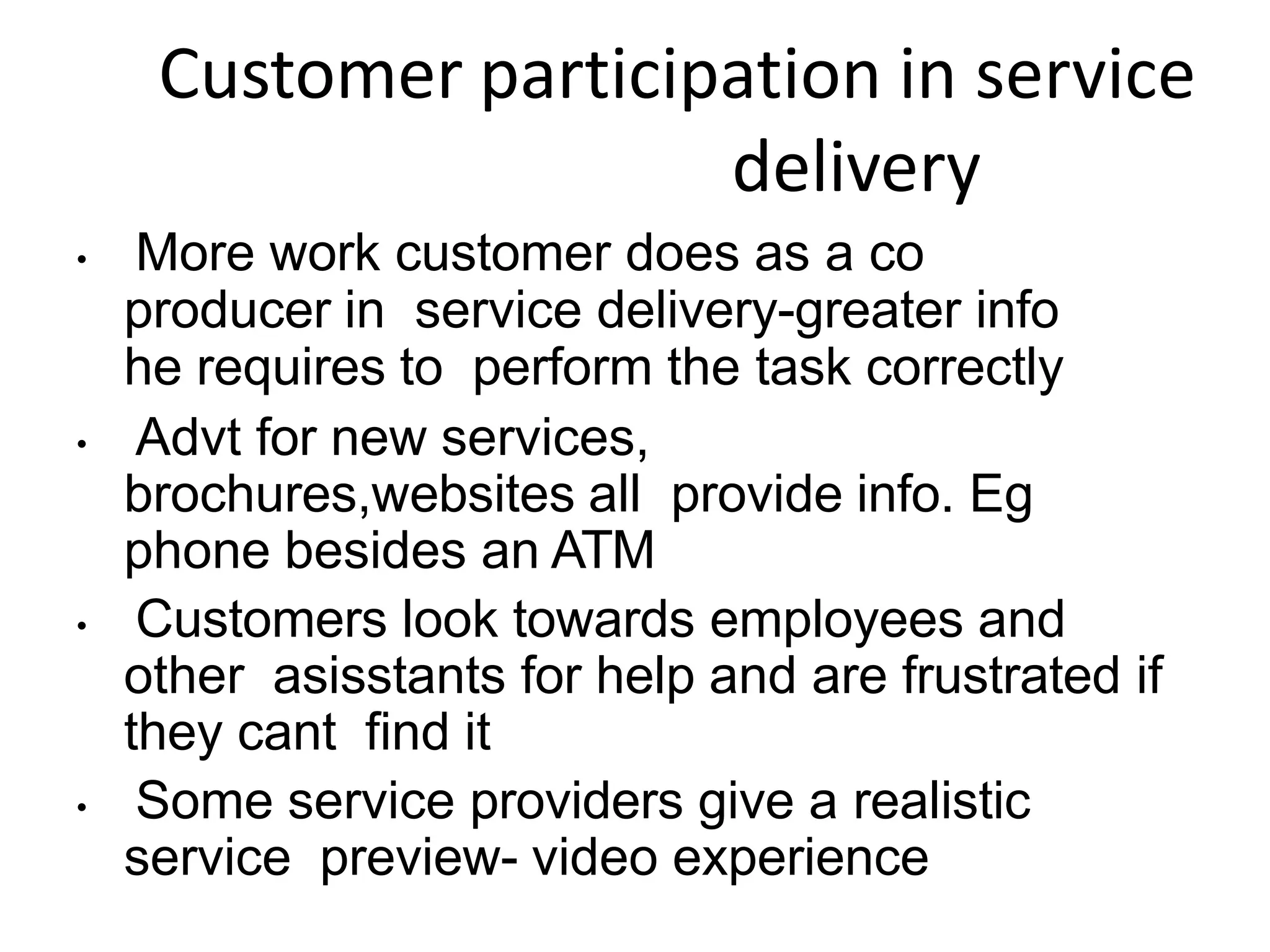
Customer participation in service
delivery
• More work customer does as a co
producer in service delivery-greater info
he requires to perform the task correctly
• Advt for new services,
brochures,websites all provide info. Eg
phone besides an ATM
• Customers look towards employees and
other asisstants for help and are frustrated if
they cant find it
• Some service providers give a realistic
service preview- video experience
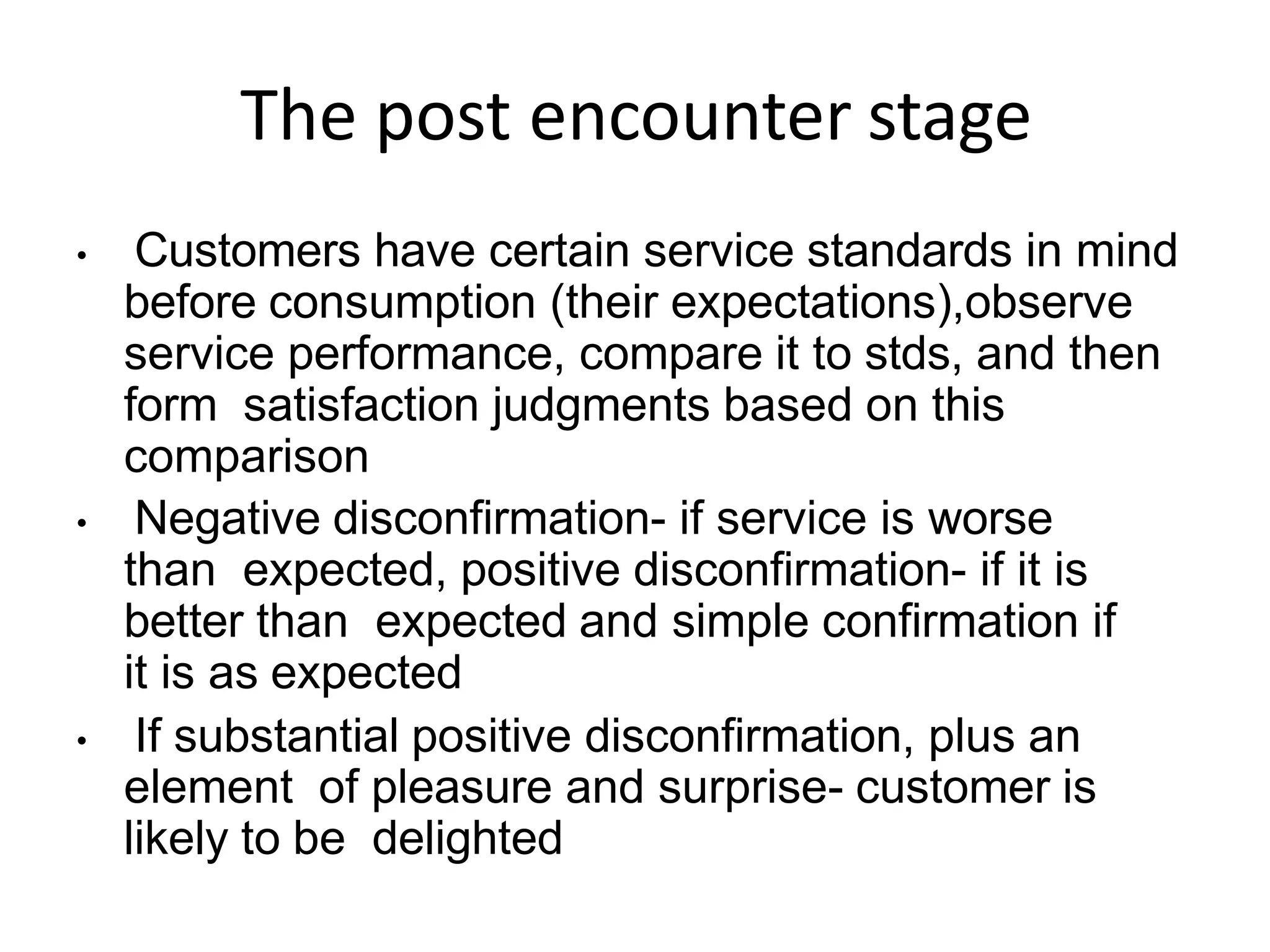
The post encounter stage
• Customers have certain service standards in mind
before consumption (their expectations),observe
service performance, compare it to stds, and then
form satisfaction judgments based on this
comparison
• Negative disconfirmation- if service is worse
than expected, positive disconfirmation- if it is
better than expected and simple confirmation if
it is as expected
• If substantial positive disconfirmation, plus an
element of pleasure and surprise- customer is
likely to be delighted
Feedback during service delivery
• Service personnel can be trained to be
more observant so that they can identify
customers who appear having difficulties
,look frustrated or ill at ease if they need
assistance .
• If experience shows that customers are
perpetually discomforted by a particular
aspect of service encounter- indicates a
need for redesign and improvement

Consumer Behavior in Service Encounters_4.pdf

  • 1.
    CONSUMER BEHAVIOR IN SERVICEENCOUNTERS: IV Dr. Priyadarshini Nagori SOS Mangement Jiwaji University, Gwalior
  • 2.
    Service Marketing systemfor High and low contact services • The visible part of service operations ,service delivery and other contact points – service marketing system • Represents all diff ways customer may learn and encounter about the organization in questions • Service is experiential, each of these many elements offers clues about the nature and quality of service product • Inconsistency amongst the various elements – weakens the credibility in the customers eyes
  • 3.
    Service Marketing systemfor High contact services TECHNICAL CORE THE CUST O MER ADVT SALES CALLS MKT RESEARCH SURVEYS BILLING/STATEMENTS MISC MAIL,PHONE,FAX WEBSITES RANDOME EXPOSURE TO FACILITIES/VEHICLES CHANCE ENCOUNTERS WITH SERVICE PERSONNEL WORD OF MOUTH SERVICE DELIVERY SYSTEM OTHER CONTACT POINTS SERVICE OPERATIONS SYSTEM BACK STAGE INVISIBLE FRONT STAGE VISIBLE INTERIOR& EXTERIOR FACILITIES EQUIPMEN T SERVICE PEOPLE OTHER CUSTOMER S OTHER CUSTOMER S
  • 4.
    Service Marketing systemfor LOW contact services TECHNICAL CORE MAIL SELF SERVICE THE EQUIPMENT CUSTO PHONE,FAX,W MER EBSITE ADVT MKT RESEARCH SURVEYS BILLING/STATEMENT S RANDOME EXPOSURE TO FACILITIES/VEHICLE S WORD OF MOUTH OTHER CONTACT POINTS SERVICE DELIVERY SYSTEM SERVICE OPERATIO NS SYSTEM BACK STAGE INVISIBLE FRONT STAGE VISIBLE
  • 5.
    Role and scripttheories • Servuction model- static and describes a single service encounter or moment of truth • Service processes – series of encounters Eg flight booking, travel, arrival, retrieving luggage etc • Knowledge of role and script theories- helps us to understand, design, manage both customer and employee behaviour in these encounters
  • 6.
    Roles • A setof behavior patterns learned through experience and communication, to be performed by an individual in a certain social interaction in order to attain maximum effectiveness in goal accomplishment • As combination of social cues or expectations that guide behavior in specific setting or context • In service encounters both employees and customers have roles to play • The satisfaction or productivity depends on extent to which each person acts out his/her prescribed role during a service encounter • Employees must perform their roles wrt customer expectations or else dissatisfy/lose customers • Customers must also play by rules or risk problems to firm/employees and other customers
  • 7.
    Scripts • Specifies thesequences of behaviour that employees and customers are expected to learn and follow during service delivery • Employees receive formal training • Customers learn scripts through experience, education and communication. More experience- more familiarity with the script • Unwillingness to learn a new script may be a barrier to switch to competition • Any deviation- employee and customer dissatisfaction • If co decides to change service script (technology), customers and employees should be educated about the new approach and benefits it provides
  • 8.
    Scripts • Some scriptsare highly structured and allow employees to move through their scripts quickly and efficiently Eg flight attendants- helps to overcome two challenges- variability reduction and ensuring uniform quality. But frequent repetition – leads to mindless service delivery without bothering about the customer needs • Scripts tend to be more flexible for providers of highly customized services- designers, educators,stylists etc . Some customers if they are new to service they may be fearful of behaving incorrectly- org need to educate them about their service delivery
  • 9.
    Script for adental exam Patien t • 1. Phone for appt • 3. Arrive at dental office • 6. Sit in waiting room • 8. Enter room, sit in chair • 10. Respond to questions • 15. Rinse mouth • 20. Rise from chair • 22. Leave room • 24. Pay bill • 27 . Leave dental office Receptioni st •2. Confirms needs and sets date •4. Greet patient, verify purpose, direct to waiting room, notify dentist of arrival •23. Greet patient, confirm treatment received, present bill • 25. Give receipt •26.Thank patient and say goodbye Dentis t • 5. Review note on patient •7. Greet patient, direct to treatment room • 9. Get history and issues • 11. Place covers •12. Lower chair, put protective gear • 13. Inspect teeth, ask question •14. Complete cleaning process •16. Dispose protective gear •17. Complete notes write Rx and return file to receptionist • 18. Remove cover •19. offer advice on dental care • 21. Thanks and goodbye
  • 10.
    Service scripts for.. •Visit to a salon for a haircut • Lecture delivery • Flight travel • Restaurant meal
  • 11.
    Customer participation inservice delivery • More work customer does as a co producer in service delivery-greater info he requires to perform the task correctly • Advt for new services, brochures,websites all provide info. Eg phone besides an ATM • Customers look towards employees and other asisstants for help and are frustrated if they cant find it • Some service providers give a realistic service preview- video experience
  • 12.
    The post encounterstage • Customers have certain service standards in mind before consumption (their expectations),observe service performance, compare it to stds, and then form satisfaction judgments based on this comparison • Negative disconfirmation- if service is worse than expected, positive disconfirmation- if it is better than expected and simple confirmation if it is as expected • If substantial positive disconfirmation, plus an element of pleasure and surprise- customer is likely to be delighted
  • 13.
    Feedback during servicedelivery • Service personnel can be trained to be more observant so that they can identify customers who appear having difficulties ,look frustrated or ill at ease if they need assistance . • If experience shows that customers are perpetually discomforted by a particular aspect of service encounter- indicates a need for redesign and improvement