Constructors
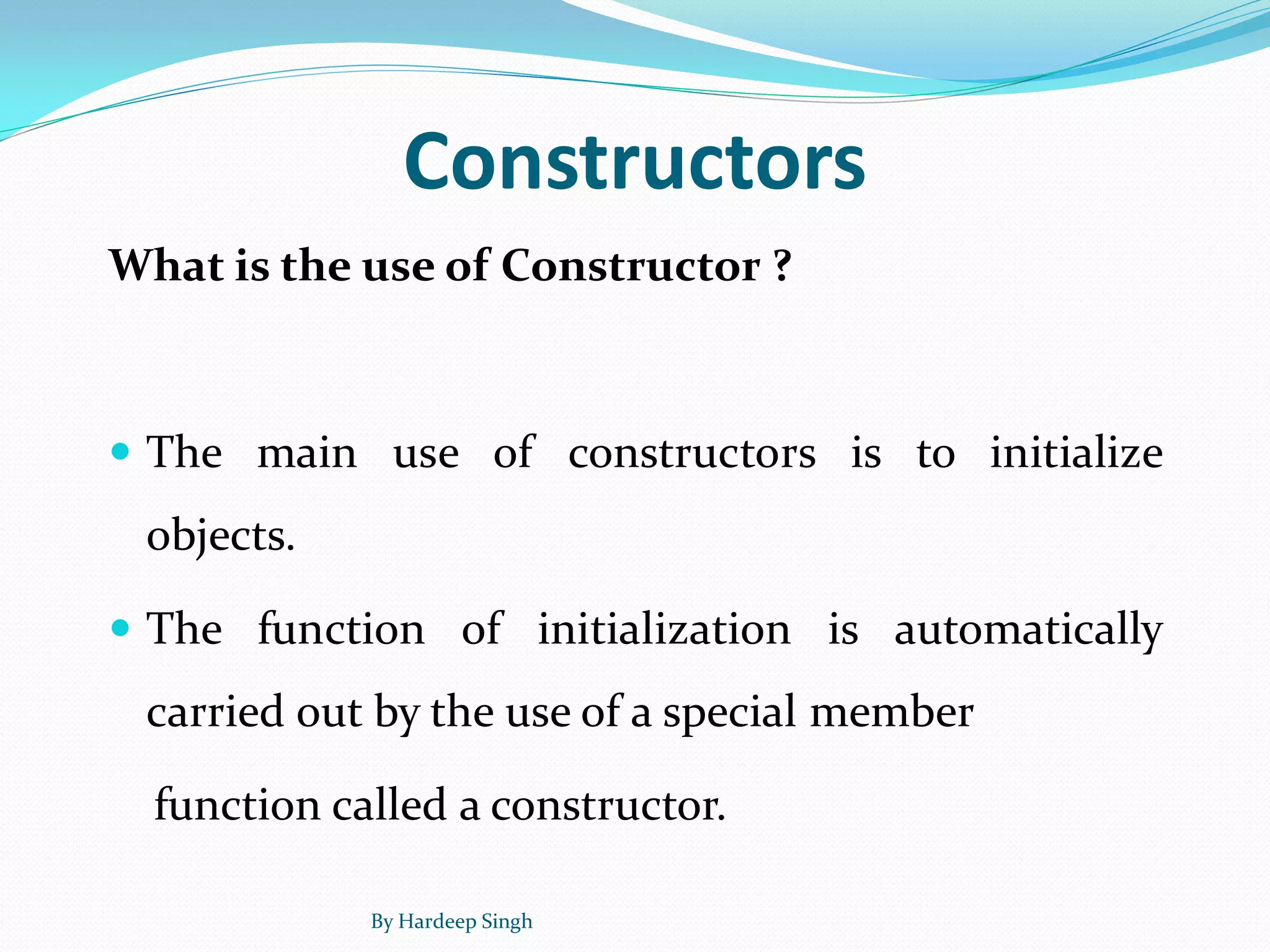
What is the use of Constructor ?
 The main use of constructors is to initialize
objects.
 The function of initialization is automatically
carried out by the use of a special member
function called a constructor.
By Hardeep Singh
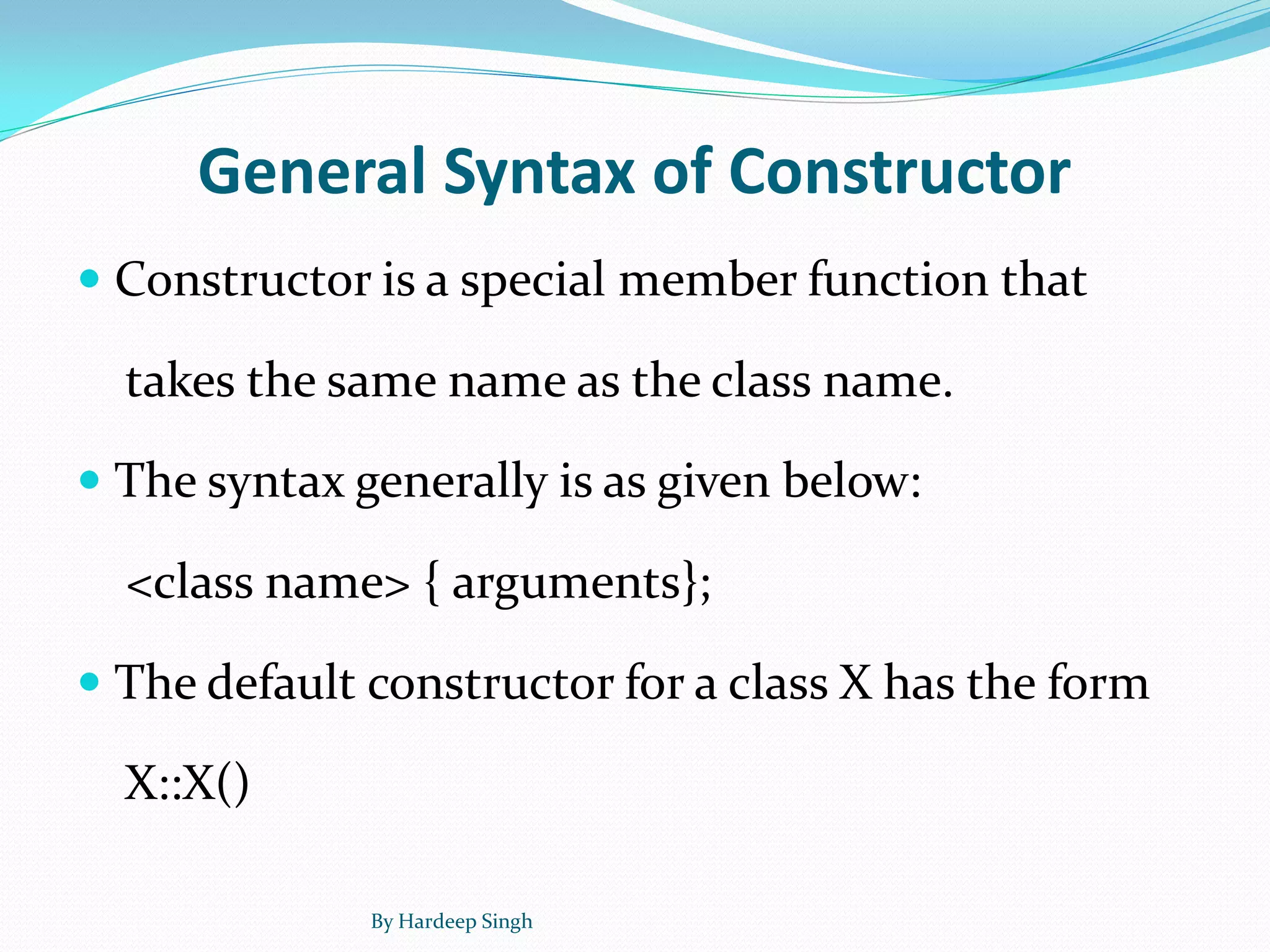
General Syntax of Constructor
 Constructor is a special member function that
takes the same name as the class name.
 The syntax generally is as given below:
<class name> { arguments};
 The default constructor for a class X has the form
X::X()
By Hardeep Singh
Cont……
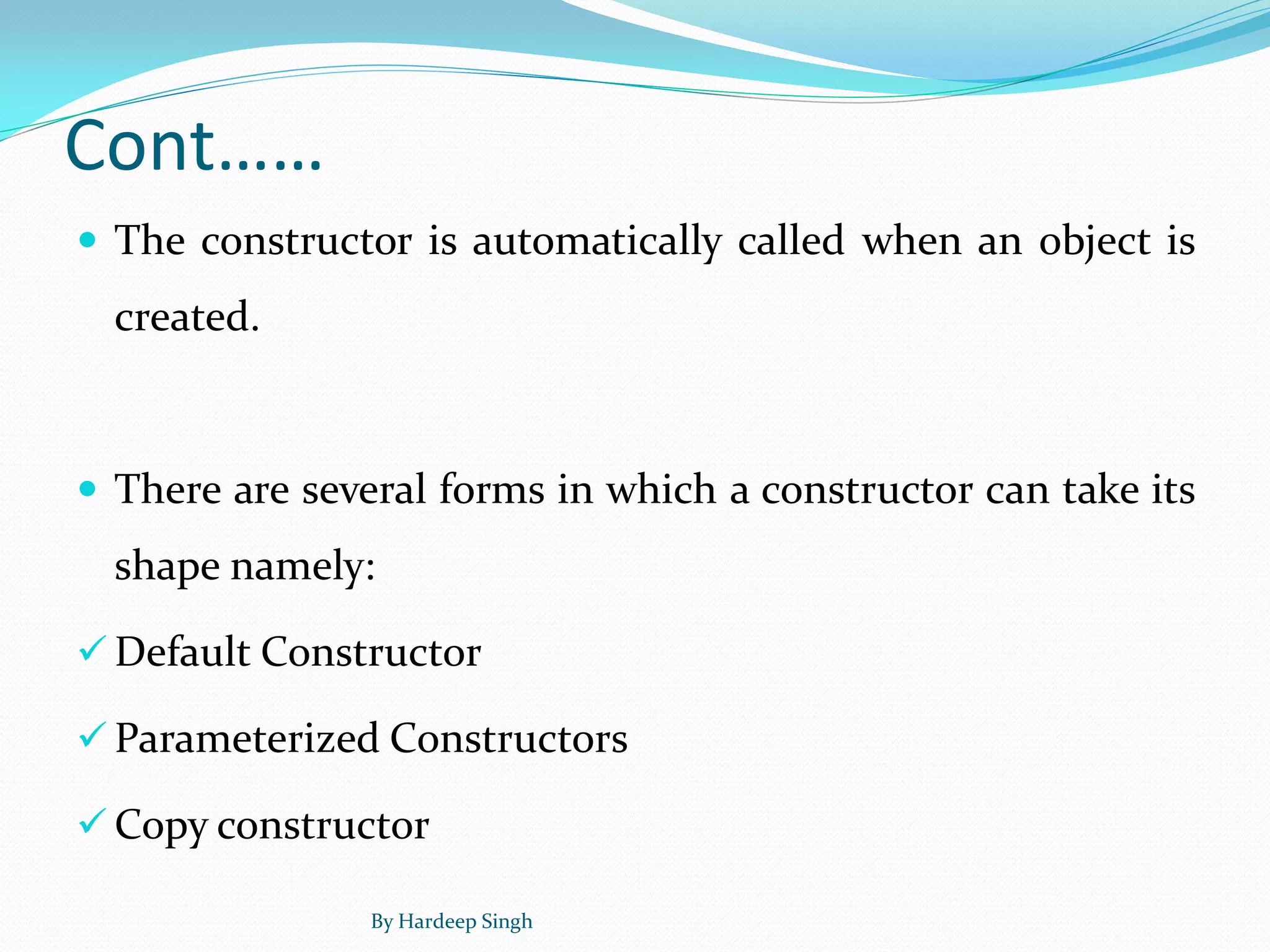
 The constructor is automatically called when an object is
created.
 There are several forms in which a constructor can take its
shape namely:
 Default Constructor
 Parameterized Constructors
 Copy constructor
By Hardeep Singh
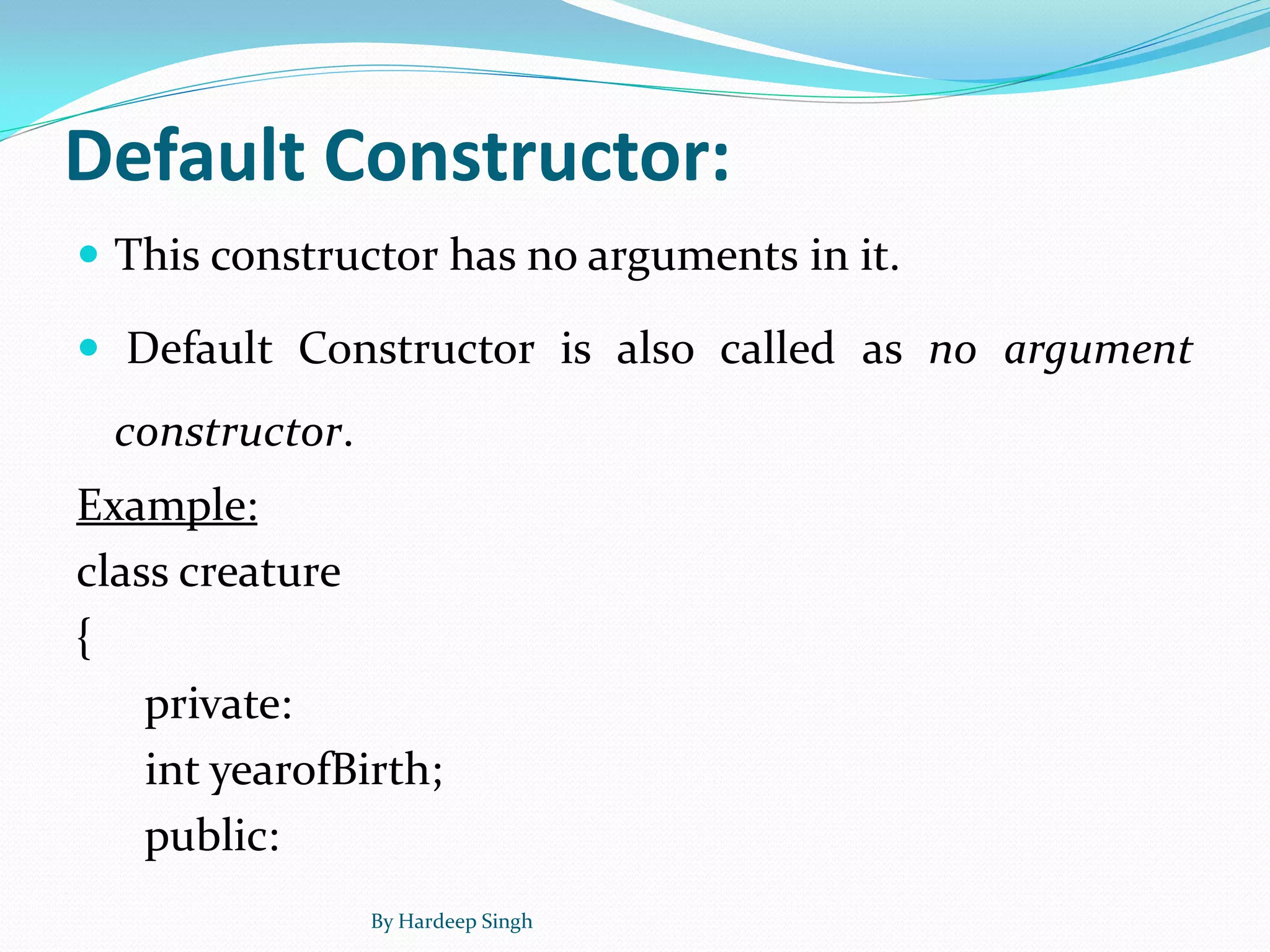
Default Constructor:
 This constructor has no arguments in it.
 Default Constructor is also called as no argument
constructor.
Example:
class creature
{
private:
int yearofBirth;
public:
By Hardeep Singh
Cont…..
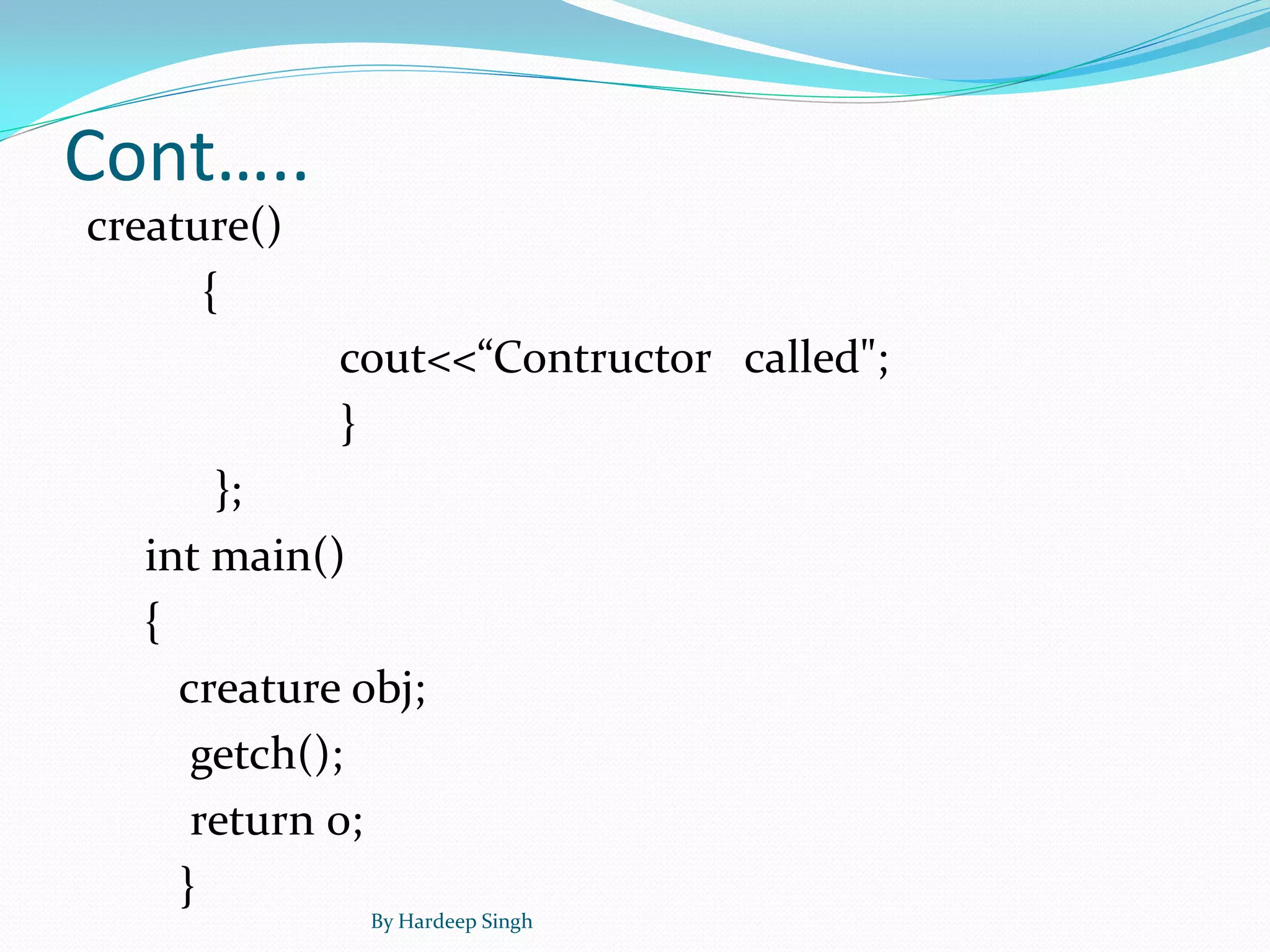
creature()
{
cout<<“Contructor called";
}
};
int main()
{
creature obj;
getch();
return 0;
}
By Hardeep Singh
Parameterized Constructors:
 A parameterized constructor is just one that has
parameters specified in it.
 We can pass the arguments to constructor function
when object are created.
 A constructor that can take arguments are called
parameterized constructors.
By Hardeep Singh
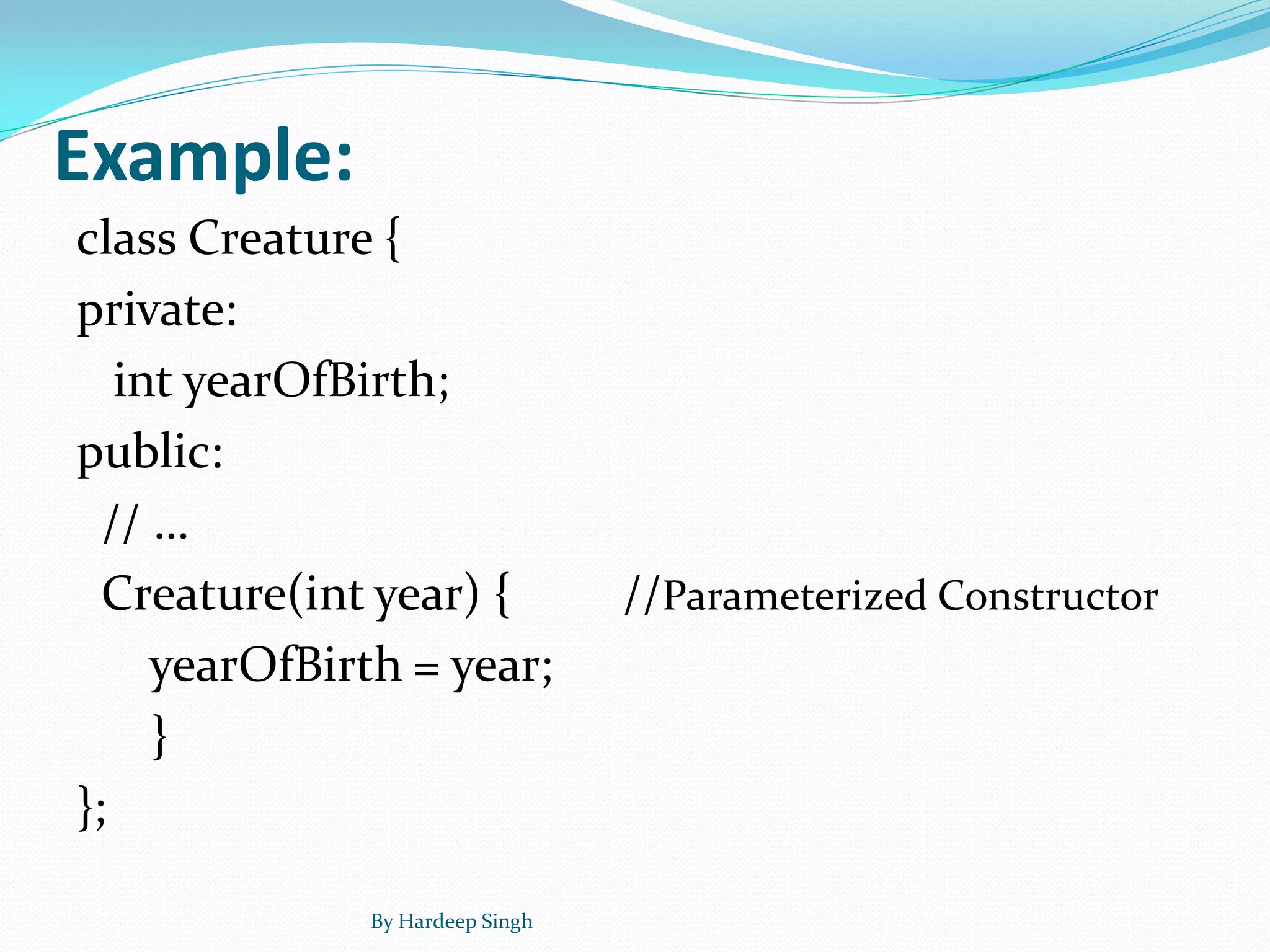
Example:
class Creature {
private:
int yearOfBirth;
public:
// …
Creature(int year) { //Parameterized Constructor
yearOfBirth = year;
}
};
By Hardeep Singh
Copy Constructor:
 Copy Constructor is used to declare and initialize an object
from another object.
 For example the statement:
abc c2(c1);
would define the object c2 and at the same time initialize it
to the value of c1.
 The process of initializing through a copy constructor is
known as copy initialization.
By Hardeep Singh
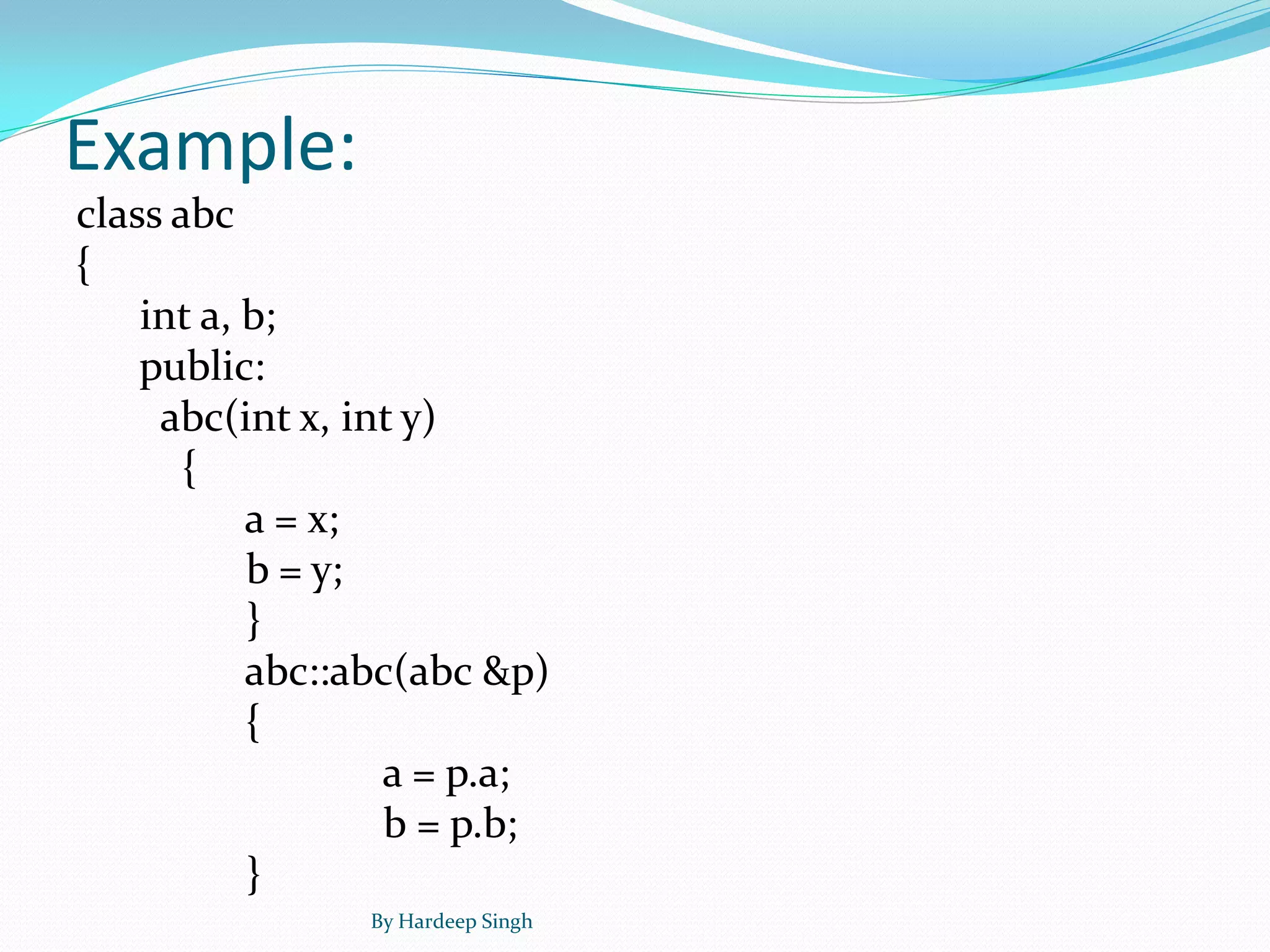
Example:
class abc
{
int a, b;
public:
abc(int x, int y)
{
a = x;
b = y;
}
abc::abc(abc &p)
{
a = p.a;
b = p.b;
}
By Hardeep Singh
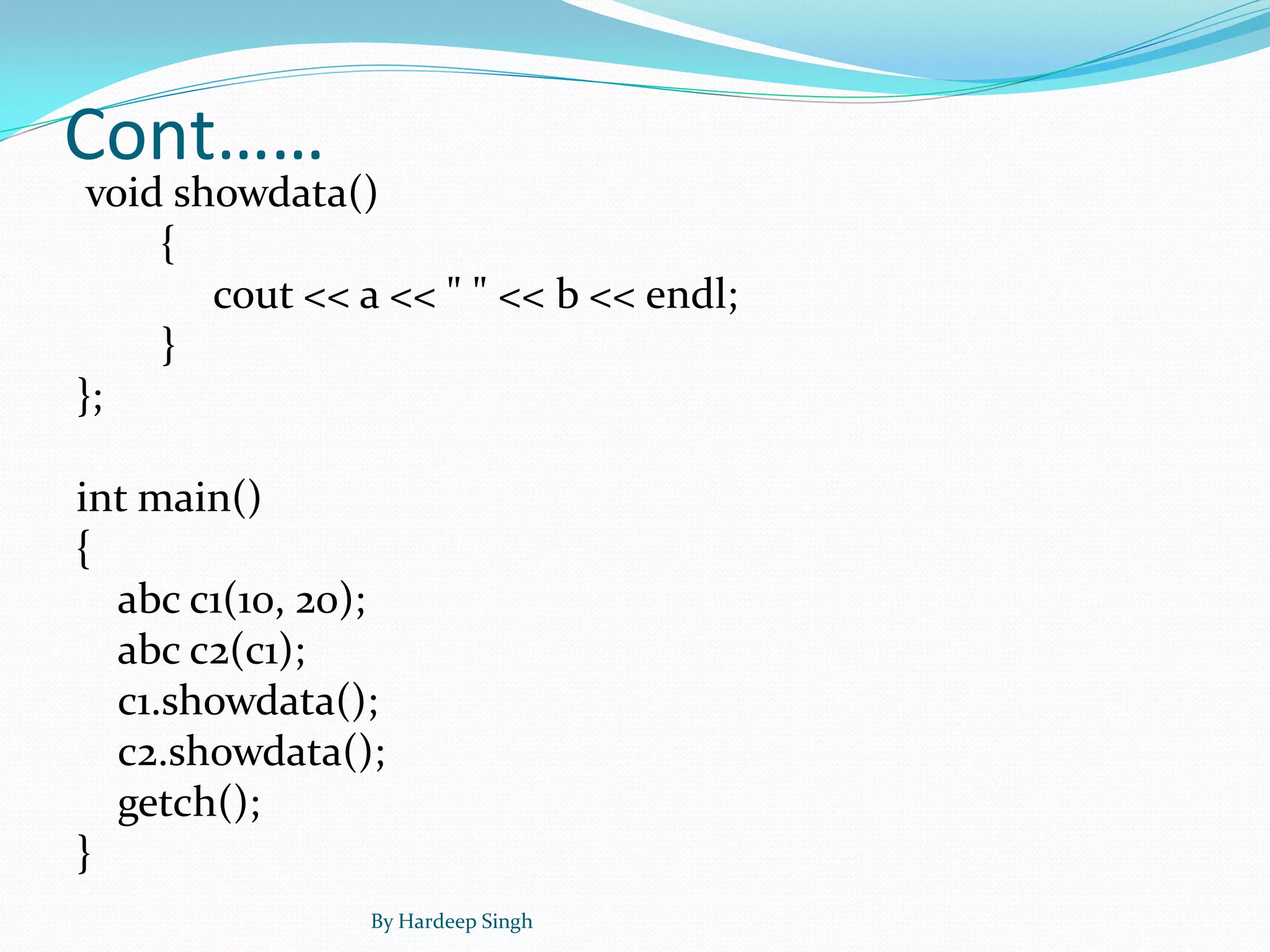
Cont……
void showdata()
{
cout << a << " " << b << endl;
}
};
int main()
{
abc c1(10, 20);
abc c2(c1);
c1.showdata();
c2.showdata();
getch();
}
By Hardeep Singh
Default Arguments
 Default argument is an argument to a function that a
programmer is not required to specify.
 C++ allow the programmer to specify default arguments
that always have a value, even if one is not specified
when calling the function.
 For example, in the following function declaration:
int MyFunc(int a, int b, int c=12);
By Hardeep Singh
Cont……
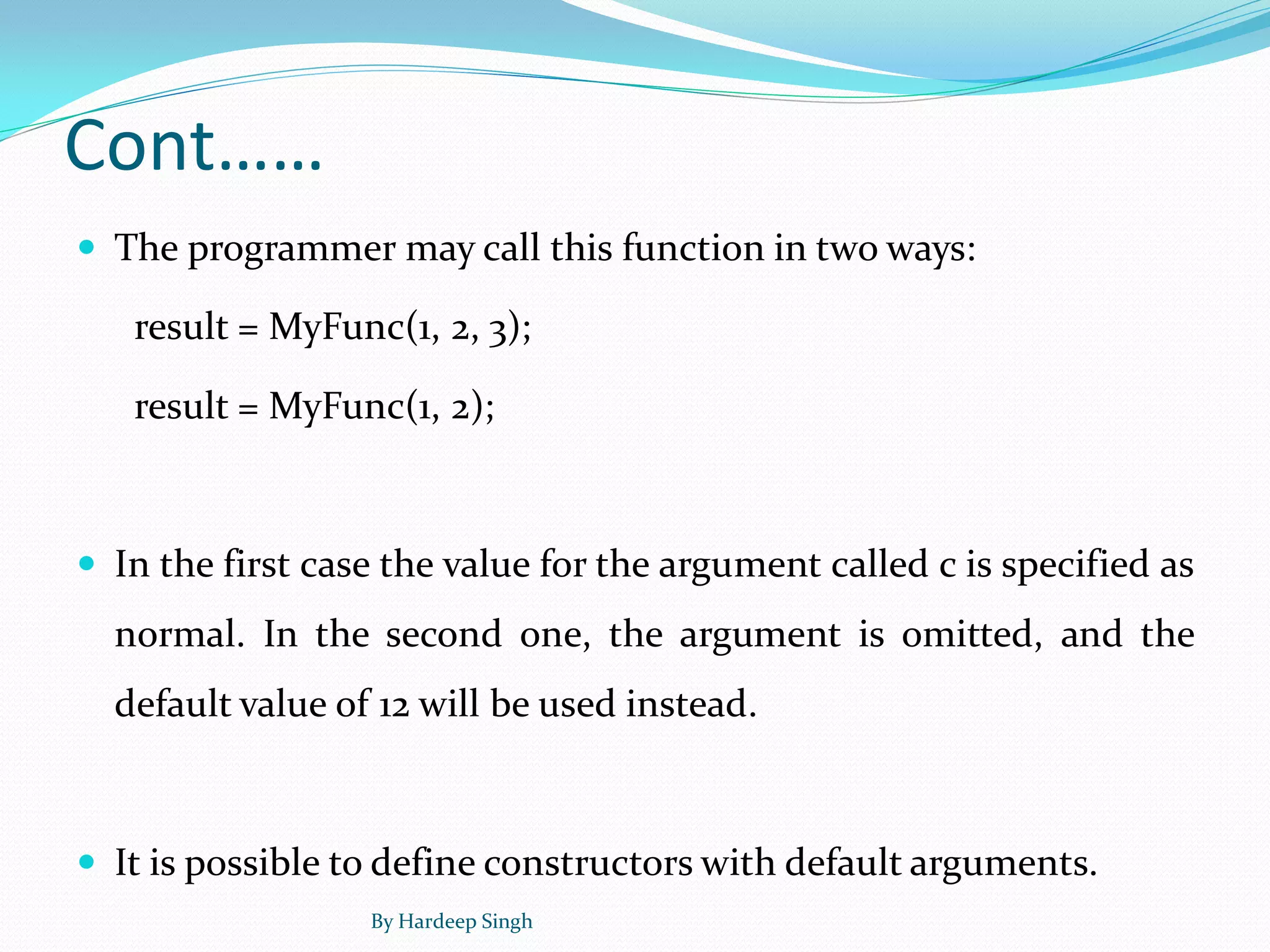
 The programmer may call this function in two ways:
result = MyFunc(1, 2, 3);
result = MyFunc(1, 2);
 In the first case the value for the argument called c is specified as
normal. In the second one, the argument is omitted, and the
default value of 12 will be used instead.
 It is possible to define constructors with default arguments.
By Hardeep Singh
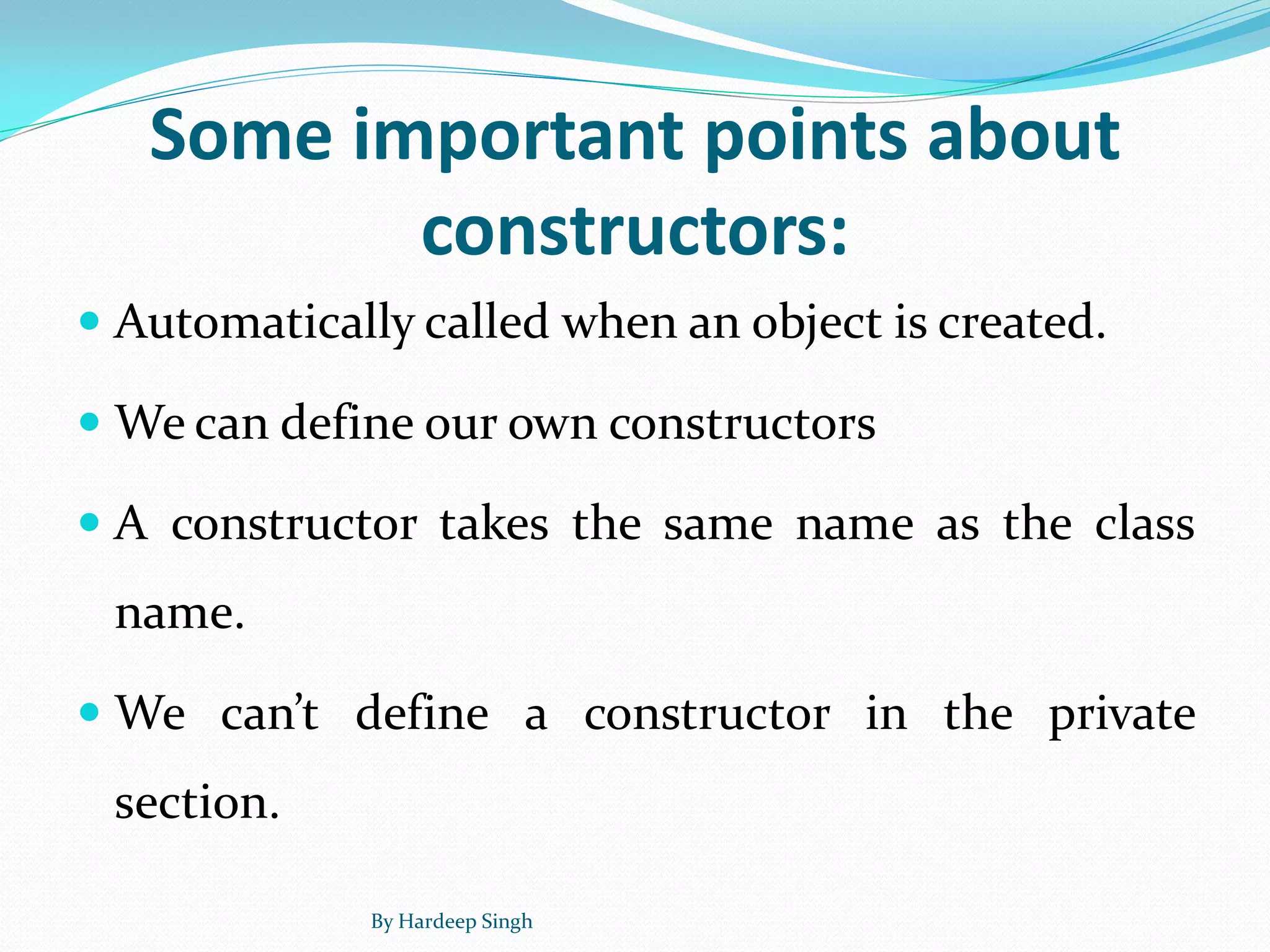
Some important points about
constructors:
 Automatically called when an object is created.
 We can define our own constructors
 A constructor takes the same name as the class
name.
 We can’t define a constructor in the private
section.
By Hardeep Singh
Cont…..
 No return type is specified for a constructor.
 Constructor must be defined in the public. The
constructor must be a public member.
 Overloading of constructors is possible.
 If an object is copied from another object then the
copy constructor is called.
By Hardeep Singh
Destructors
 Destructors are special member functions.
 Release dynamic allocated memory.
 Destructors are automatically named.
 Takes the same name of class name.
By Hardeep Singh
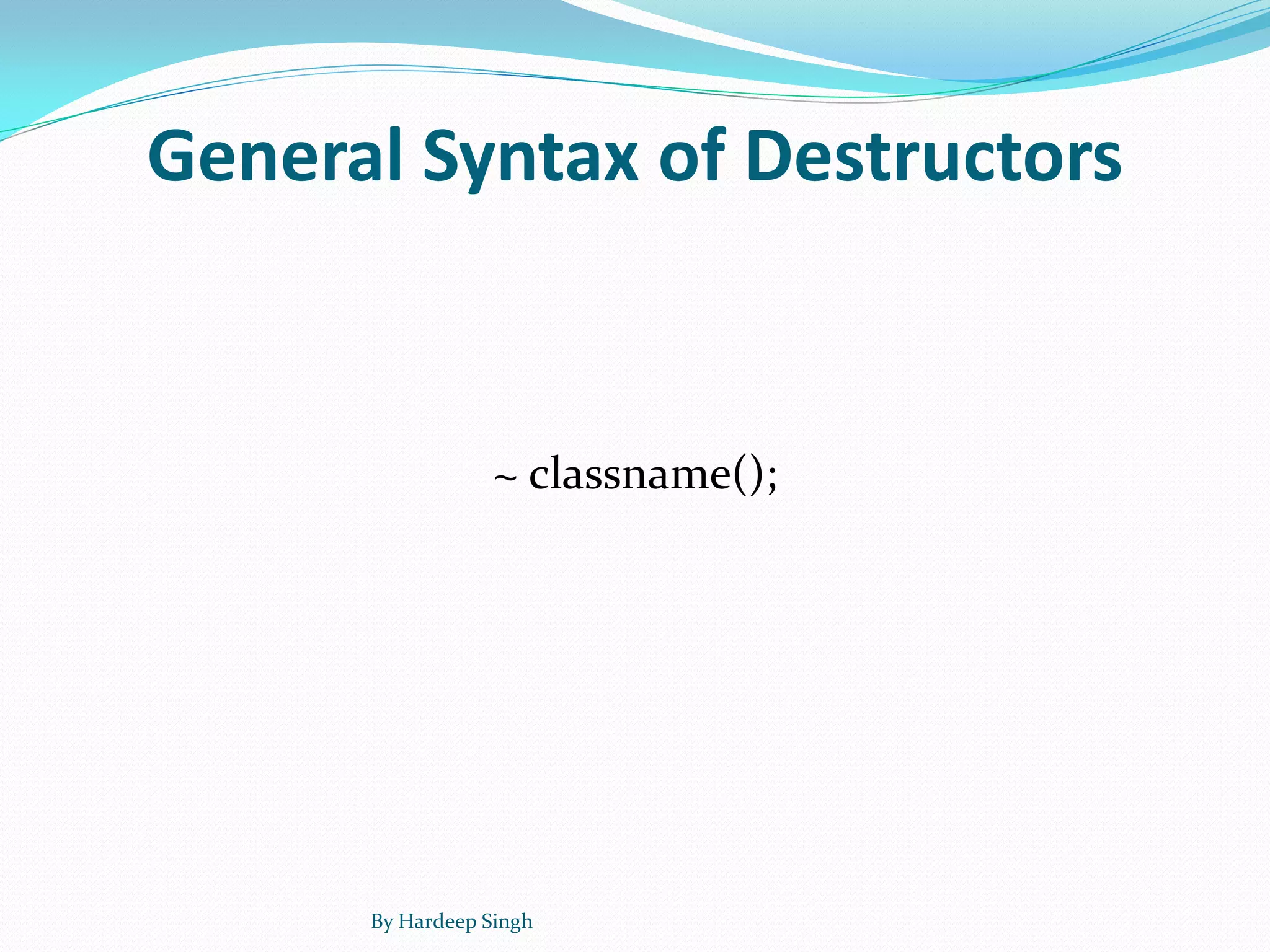
General Syntax of Destructors
~ classname();
By Hardeep Singh
Some important points about
destructors:
 Take the same name as class name.
 Defined in the public.
 Destructors cannot be overloaded.
 No return type is specified.
By Hardeep Singh
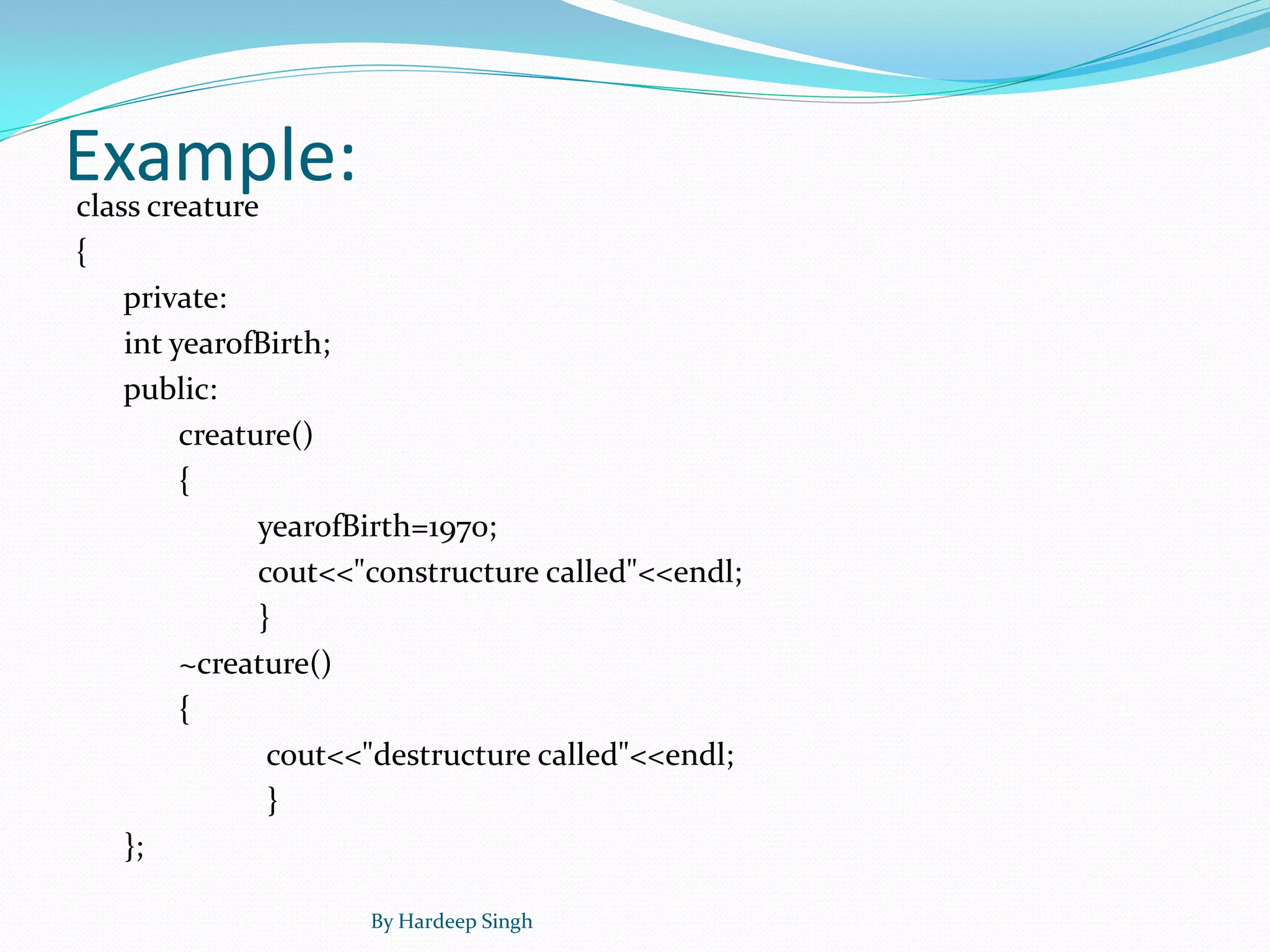
Example:
class creature
{
private:
int yearofBirth;
public:
creature()
{
yearofBirth=1970;
cout<<"constructure called"<<endl;
}
~creature()
{
cout<<"destructure called"<<endl;
}
};
By Hardeep Singh
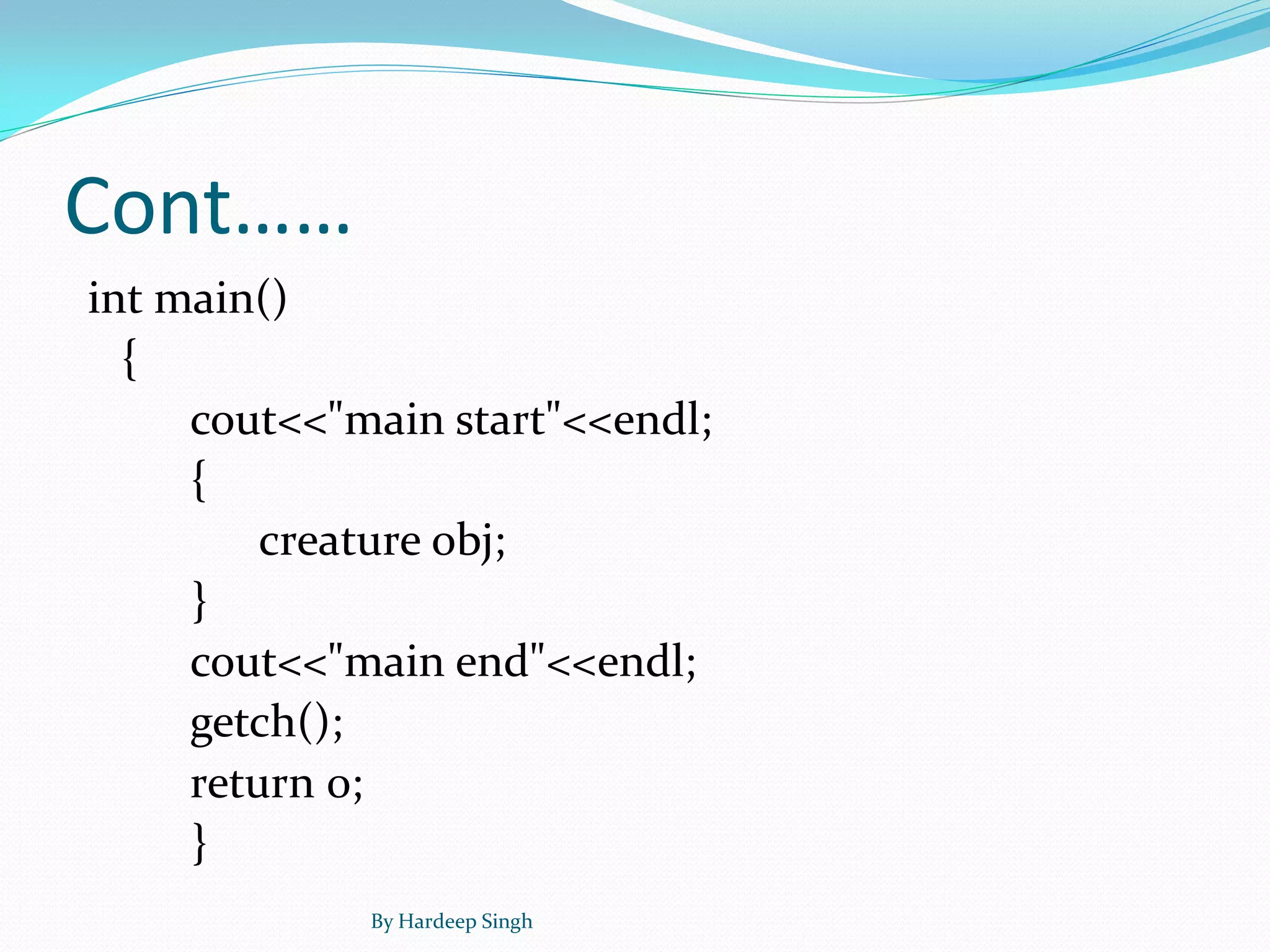
Cont……
int main()
{
cout<<"main start"<<endl;
{
creature obj;
}
cout<<"main end"<<endl;
getch();
return 0;
}
By Hardeep Singh
By Hardeep Singh

constructor destructor.pdf

  • 1.
    Constructors What is theuse of Constructor ?  The main use of constructors is to initialize objects.  The function of initialization is automatically carried out by the use of a special member function called a constructor. By Hardeep Singh
  • 2.
    General Syntax ofConstructor  Constructor is a special member function that takes the same name as the class name.  The syntax generally is as given below: <class name> { arguments};  The default constructor for a class X has the form X::X() By Hardeep Singh
  • 3.
    Cont……  The constructoris automatically called when an object is created.  There are several forms in which a constructor can take its shape namely:  Default Constructor  Parameterized Constructors  Copy constructor By Hardeep Singh
  • 4.
    Default Constructor:  Thisconstructor has no arguments in it.  Default Constructor is also called as no argument constructor. Example: class creature { private: int yearofBirth; public: By Hardeep Singh
  • 5.
  • 6.
    Parameterized Constructors:  Aparameterized constructor is just one that has parameters specified in it.  We can pass the arguments to constructor function when object are created.  A constructor that can take arguments are called parameterized constructors. By Hardeep Singh
  • 7.
    Example: class Creature { private: intyearOfBirth; public: // … Creature(int year) { //Parameterized Constructor yearOfBirth = year; } }; By Hardeep Singh
  • 8.
    Copy Constructor:  CopyConstructor is used to declare and initialize an object from another object.  For example the statement: abc c2(c1); would define the object c2 and at the same time initialize it to the value of c1.  The process of initializing through a copy constructor is known as copy initialization. By Hardeep Singh
  • 9.
    Example: class abc { int a,b; public: abc(int x, int y) { a = x; b = y; } abc::abc(abc &p) { a = p.a; b = p.b; } By Hardeep Singh
  • 10.
    Cont…… void showdata() { cout <<a << " " << b << endl; } }; int main() { abc c1(10, 20); abc c2(c1); c1.showdata(); c2.showdata(); getch(); } By Hardeep Singh
  • 11.
    Default Arguments  Defaultargument is an argument to a function that a programmer is not required to specify.  C++ allow the programmer to specify default arguments that always have a value, even if one is not specified when calling the function.  For example, in the following function declaration: int MyFunc(int a, int b, int c=12); By Hardeep Singh
  • 12.
    Cont……  The programmermay call this function in two ways: result = MyFunc(1, 2, 3); result = MyFunc(1, 2);  In the first case the value for the argument called c is specified as normal. In the second one, the argument is omitted, and the default value of 12 will be used instead.  It is possible to define constructors with default arguments. By Hardeep Singh
  • 13.
    Some important pointsabout constructors:  Automatically called when an object is created.  We can define our own constructors  A constructor takes the same name as the class name.  We can’t define a constructor in the private section. By Hardeep Singh
  • 14.
    Cont…..  No returntype is specified for a constructor.  Constructor must be defined in the public. The constructor must be a public member.  Overloading of constructors is possible.  If an object is copied from another object then the copy constructor is called. By Hardeep Singh
  • 15.
    Destructors  Destructors arespecial member functions.  Release dynamic allocated memory.  Destructors are automatically named.  Takes the same name of class name. By Hardeep Singh
  • 16.
    General Syntax ofDestructors ~ classname(); By Hardeep Singh
  • 17.
    Some important pointsabout destructors:  Take the same name as class name.  Defined in the public.  Destructors cannot be overloaded.  No return type is specified. By Hardeep Singh
  • 18.
    Example: class creature { private: int yearofBirth; public: creature() { yearofBirth=1970; cout<<"constructurecalled"<<endl; } ~creature() { cout<<"destructure called"<<endl; } }; By Hardeep Singh
  • 19.
    Cont…… int main() { cout<<"main start"<<endl; { creatureobj; } cout<<"main end"<<endl; getch(); return 0; } By Hardeep Singh
  • 20.