Construction
Example
Illustrating SDLC
Phases
Building a New House
Preliminary
Investigation
Research and feasibility study:
• Identify the need for a new house
• Determine the budget and timeline
• Research different architectural
styles and locations
Example: A family decides to build a
new house, determines their budget
and timeline, and researches
different architectural styles.
System Analysis
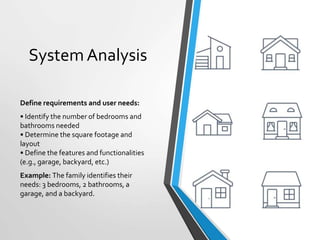
Define requirements and user needs:
• Identify the number of bedrooms and
bathrooms needed
• Determine the square footage and
layout
• Define the features and functionalities
(e.g., garage, backyard, etc.)
Example: The family identifies their
needs: 3 bedrooms, 2 bathrooms, a
garage, and a backyard.
System Design
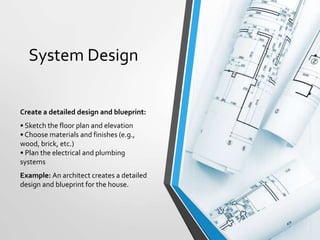
Create a detailed design and blueprint:
• Sketch the floor plan and elevation
• Choose materials and finishes (e.g.,
wood, brick, etc.)
• Plan the electrical and plumbing
systems
Example: An architect creates a detailed
design and blueprint for the house.
System Coding
Construct the house:
• Build the foundation and frame
• Install electrical, plumbing, and HVAC systems
• Add finishes (e.g., drywall, flooring, etc.)
Example: A contractor builds the house, installing all
necessary systems and finishes.
SystemTesting
Inspect and test the house:
• Conduct a thorough inspection to ensure quality and
safety
•Test all systems (e.g., plumbing, electrical, etc.)
Example: A building inspector ensures the house meets
safety and quality standards.
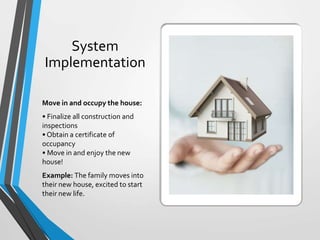
System
Implementation
Move in and occupy the house:
• Finalize all construction and
inspections
• Obtain a certificate of
occupancy
• Move in and enjoy the new
house!
Example: The family moves into
their new house, excited to start
their new life.
System Maintenance
Maintain and update the house:
• Perform regular maintenance (e.g.,
repairs, cleaning, etc.)
• Make updates and renovations as
needed
Example:The family regularly
maintains their house, making updates
and repairs as needed.

Construction_Example_SDLC house building example

  • 1.
  • 2.
    Preliminary Investigation Research and feasibilitystudy: • Identify the need for a new house • Determine the budget and timeline • Research different architectural styles and locations Example: A family decides to build a new house, determines their budget and timeline, and researches different architectural styles.
  • 3.
    System Analysis Define requirementsand user needs: • Identify the number of bedrooms and bathrooms needed • Determine the square footage and layout • Define the features and functionalities (e.g., garage, backyard, etc.) Example: The family identifies their needs: 3 bedrooms, 2 bathrooms, a garage, and a backyard.
  • 4.
    System Design Create adetailed design and blueprint: • Sketch the floor plan and elevation • Choose materials and finishes (e.g., wood, brick, etc.) • Plan the electrical and plumbing systems Example: An architect creates a detailed design and blueprint for the house.
  • 5.
    System Coding Construct thehouse: • Build the foundation and frame • Install electrical, plumbing, and HVAC systems • Add finishes (e.g., drywall, flooring, etc.) Example: A contractor builds the house, installing all necessary systems and finishes.
  • 6.
    SystemTesting Inspect and testthe house: • Conduct a thorough inspection to ensure quality and safety •Test all systems (e.g., plumbing, electrical, etc.) Example: A building inspector ensures the house meets safety and quality standards.
  • 7.
    System Implementation Move in andoccupy the house: • Finalize all construction and inspections • Obtain a certificate of occupancy • Move in and enjoy the new house! Example: The family moves into their new house, excited to start their new life.
  • 8.
    System Maintenance Maintain andupdate the house: • Perform regular maintenance (e.g., repairs, cleaning, etc.) • Make updates and renovations as needed Example:The family regularly maintains their house, making updates and repairs as needed.