Download as PDF, PPTX
![U.S. Constitutional Law Page 4
Legislative Powers
Necessary & Proper Clause
[The Congress shall have the Power] To make all
Laws which shall be necessary and propernecessary and proper for carrying
into Execution the foregoing Powers [those listed in
the Constitution], and all other Powers vested by this
Constitution in the Government of the United States,
or in any Department thereof.
- Article I, Section 8, cl 18](https://image.slidesharecdn.com/04necessaryandproper-190731065733/75/Congressional-Power-Necessary-and-Proper-Clause-4-2048.jpg)
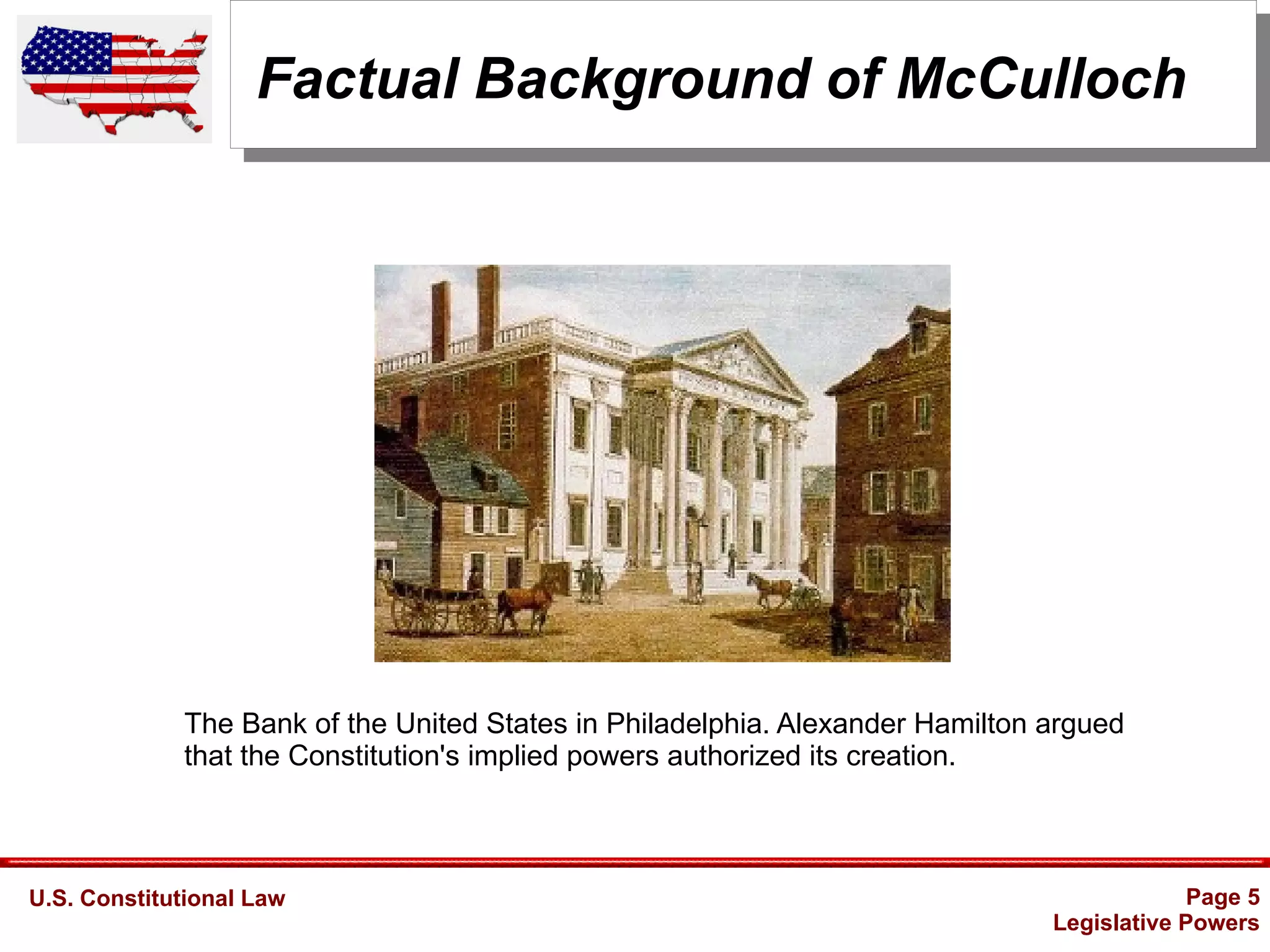
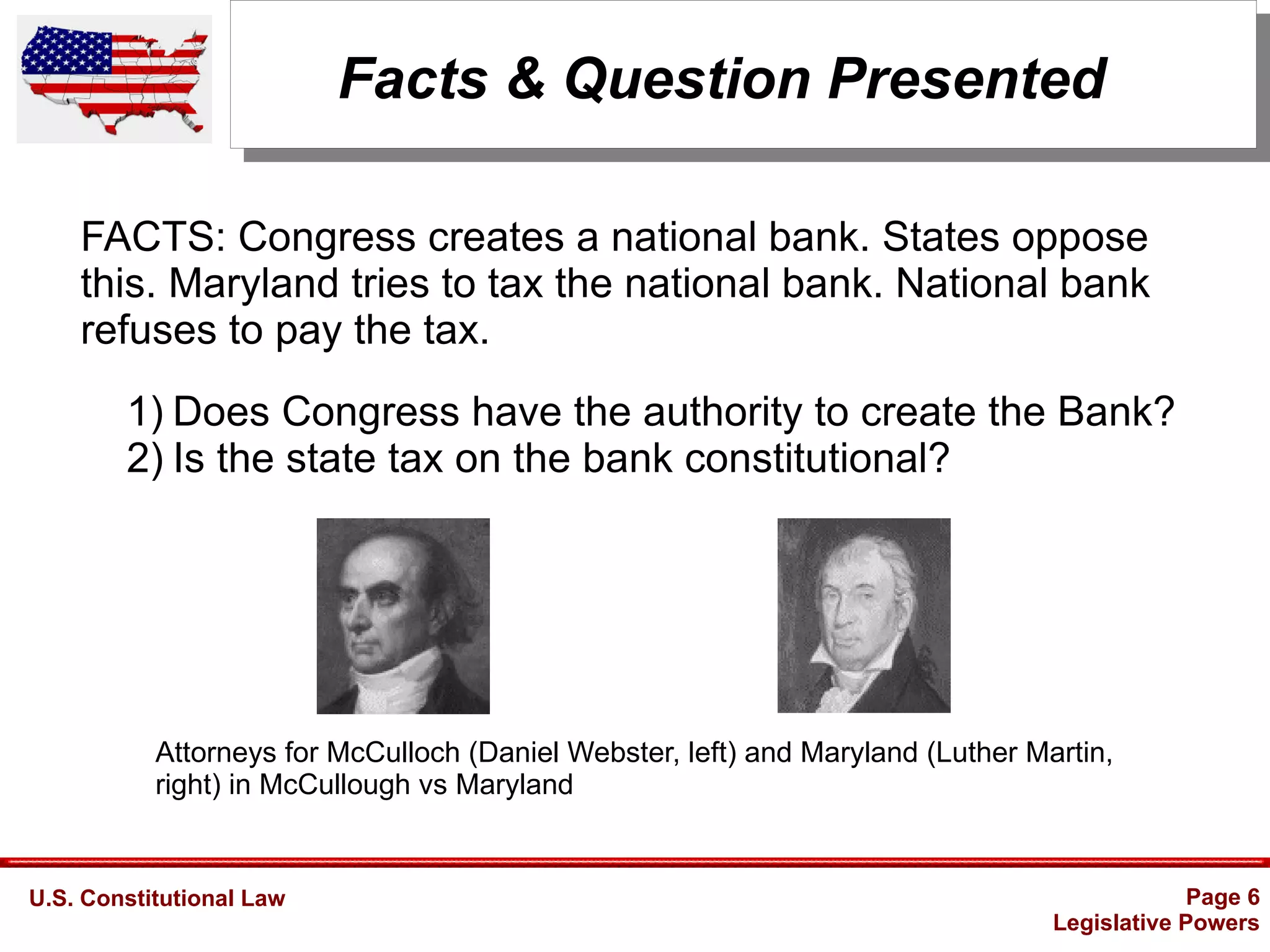
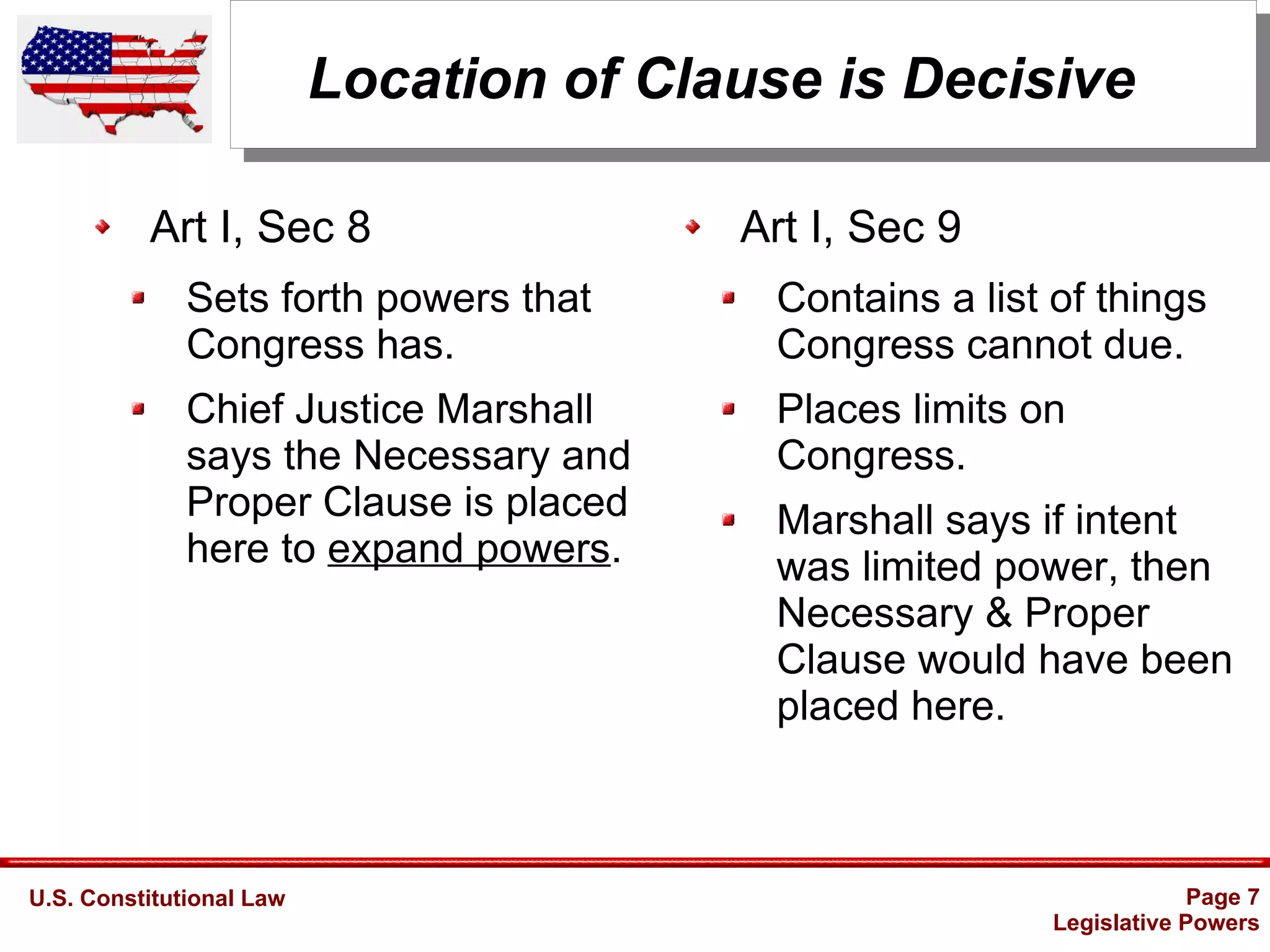
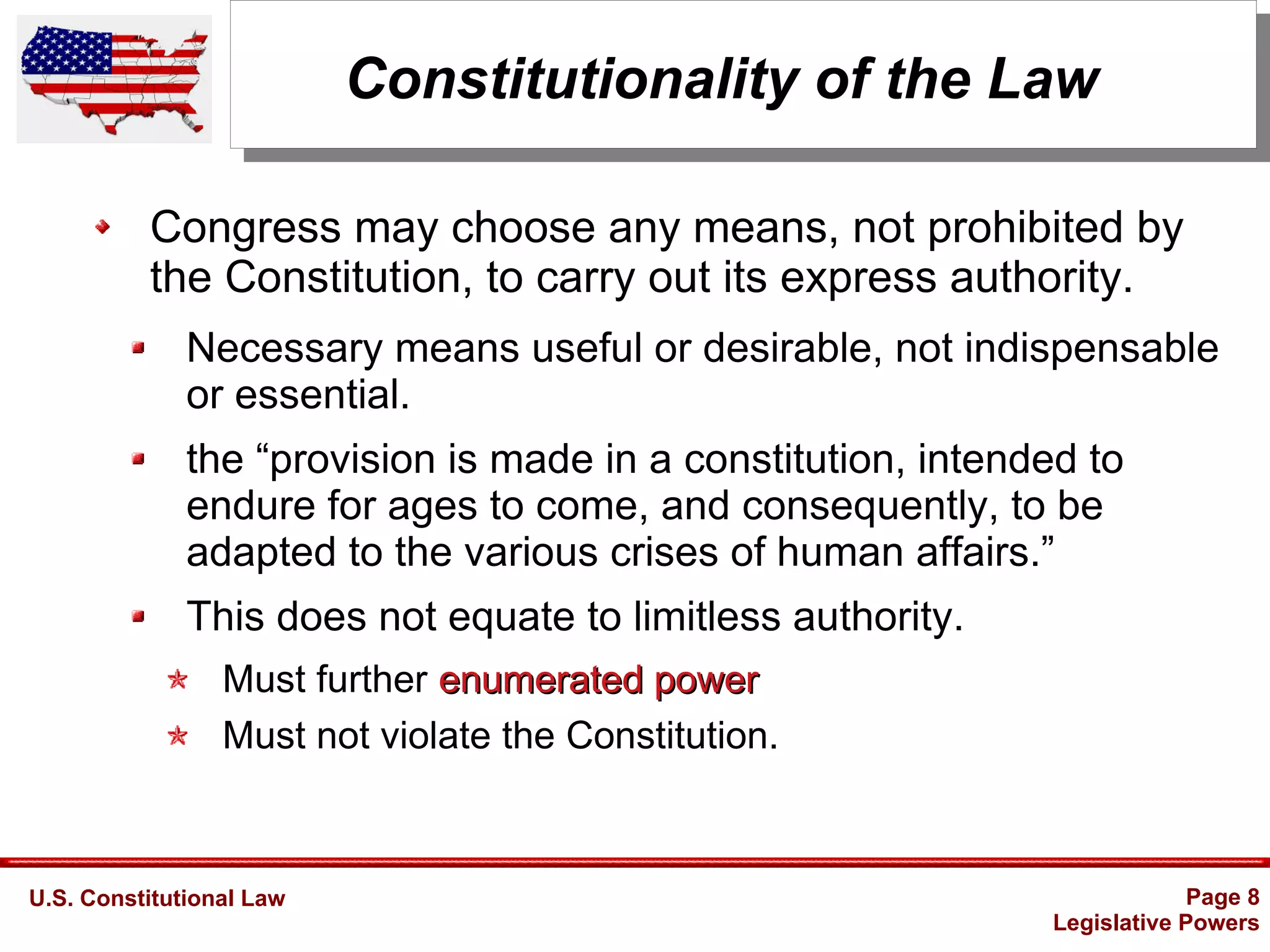
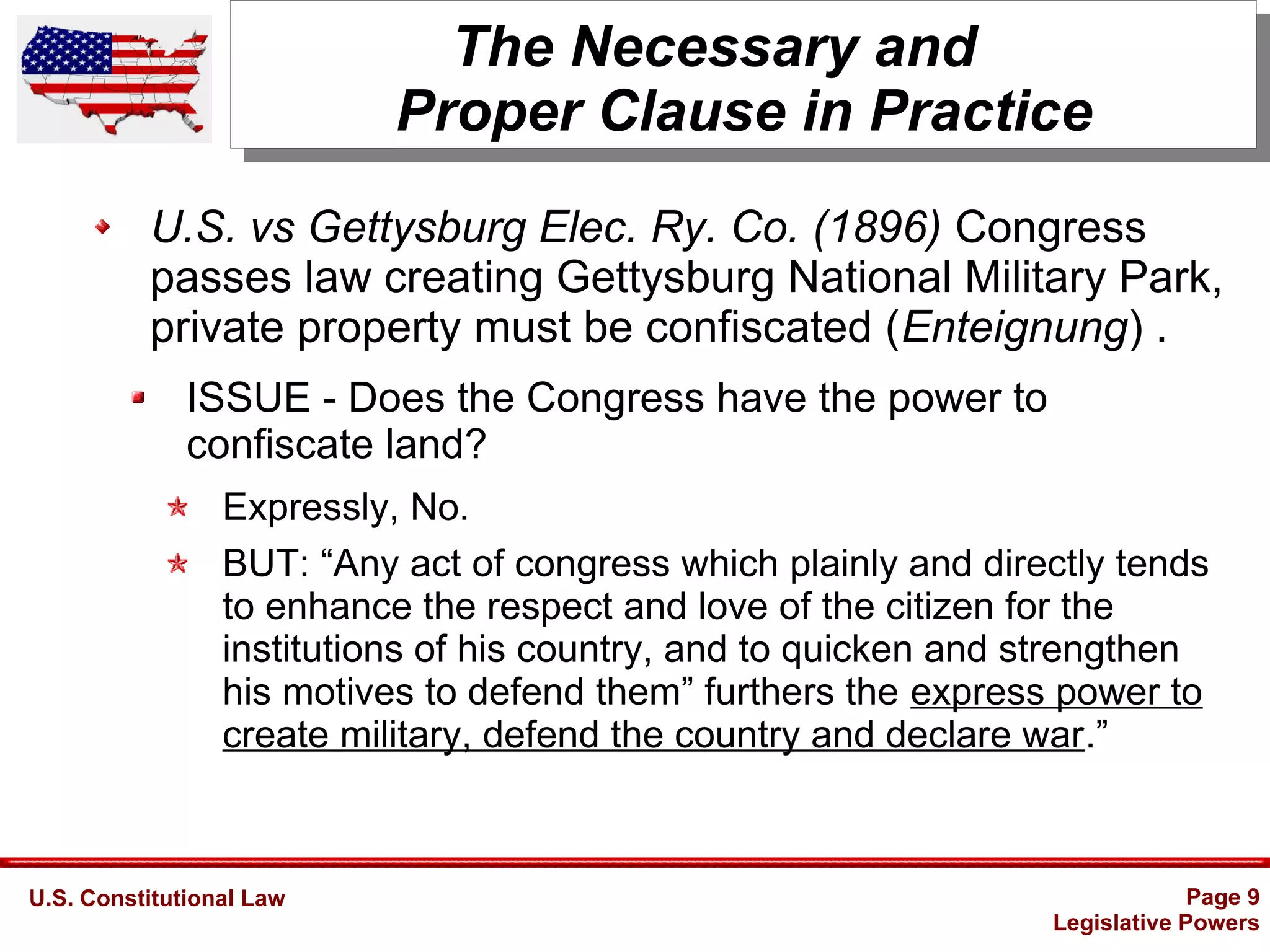
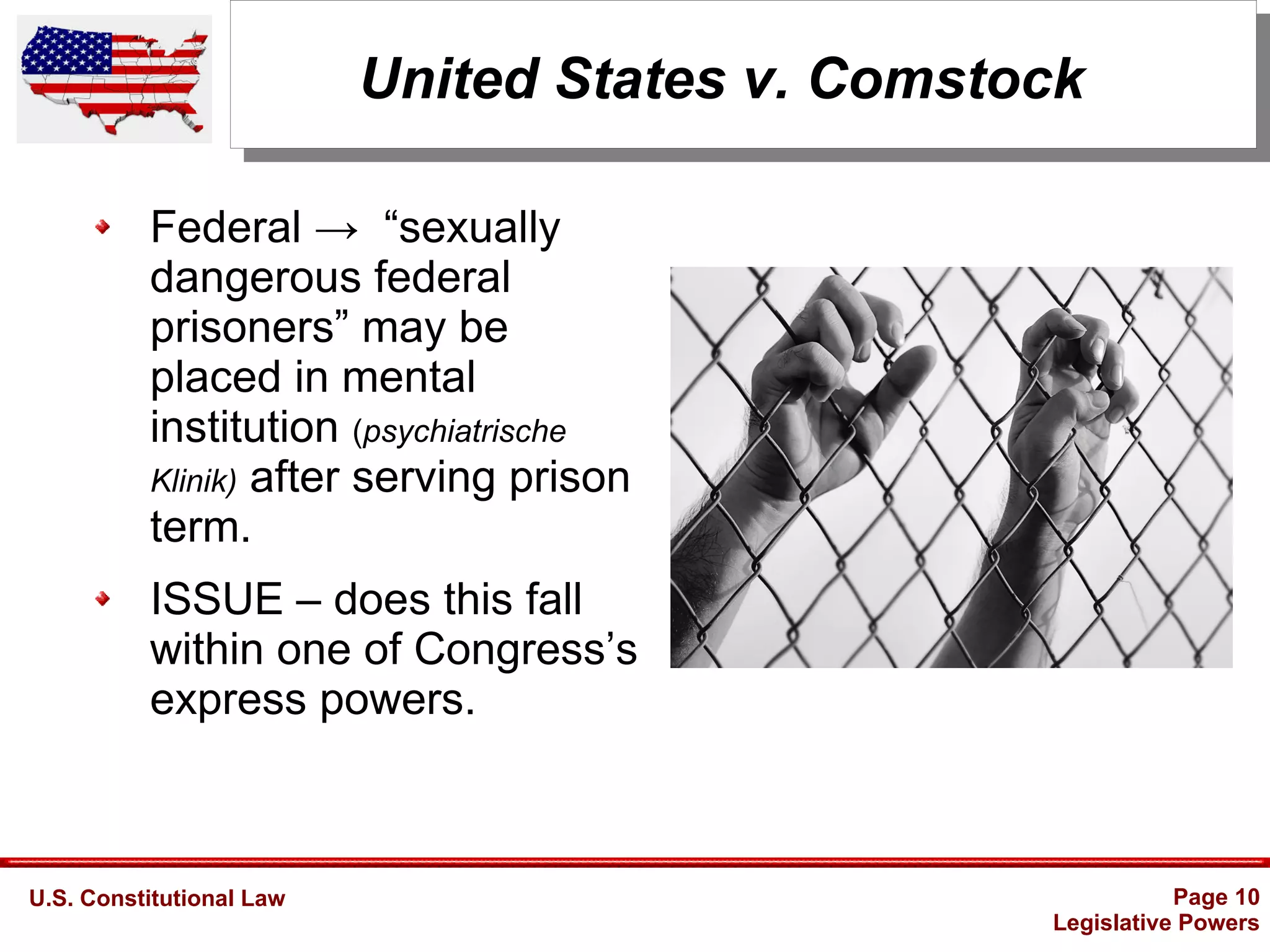
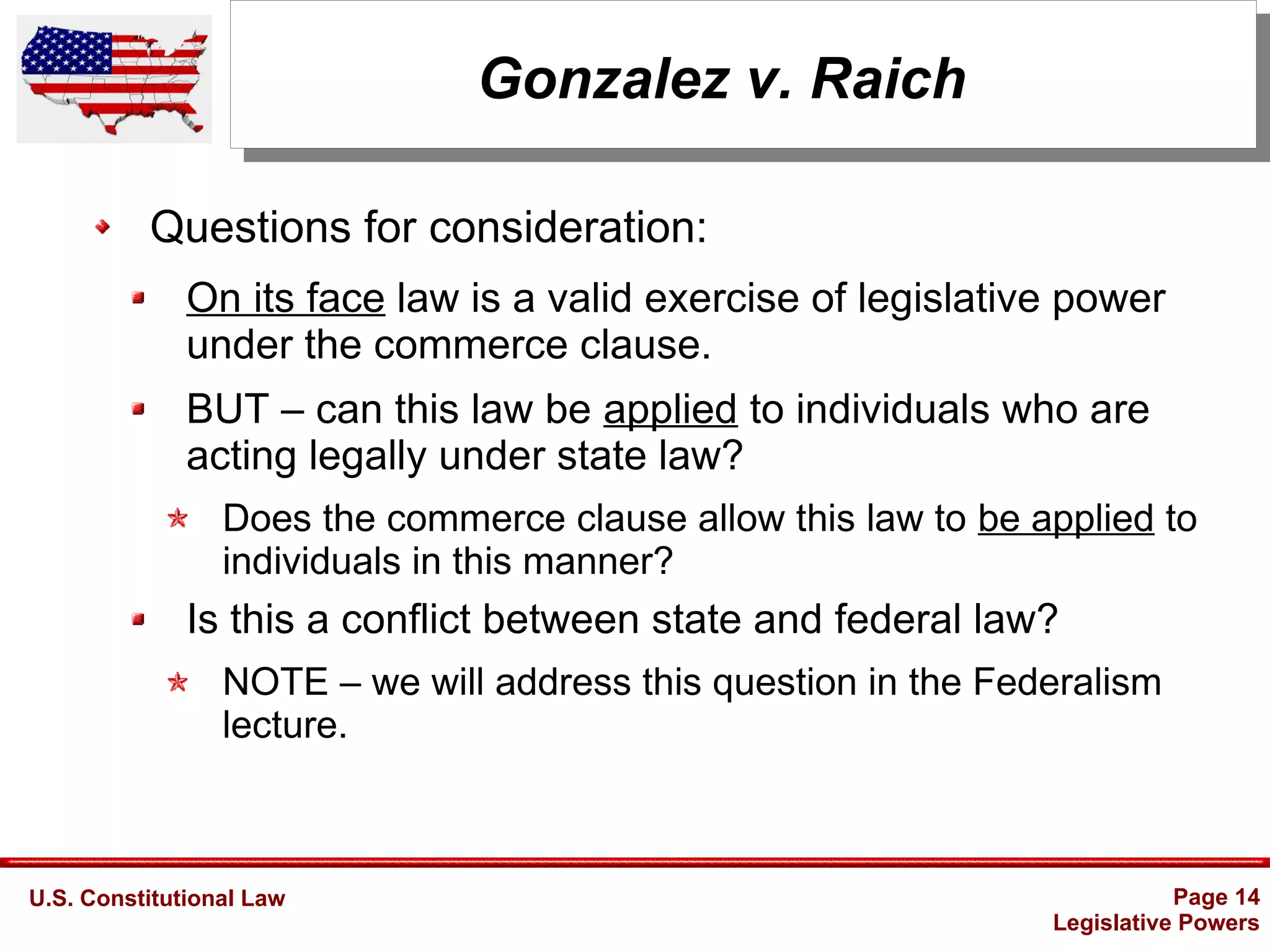
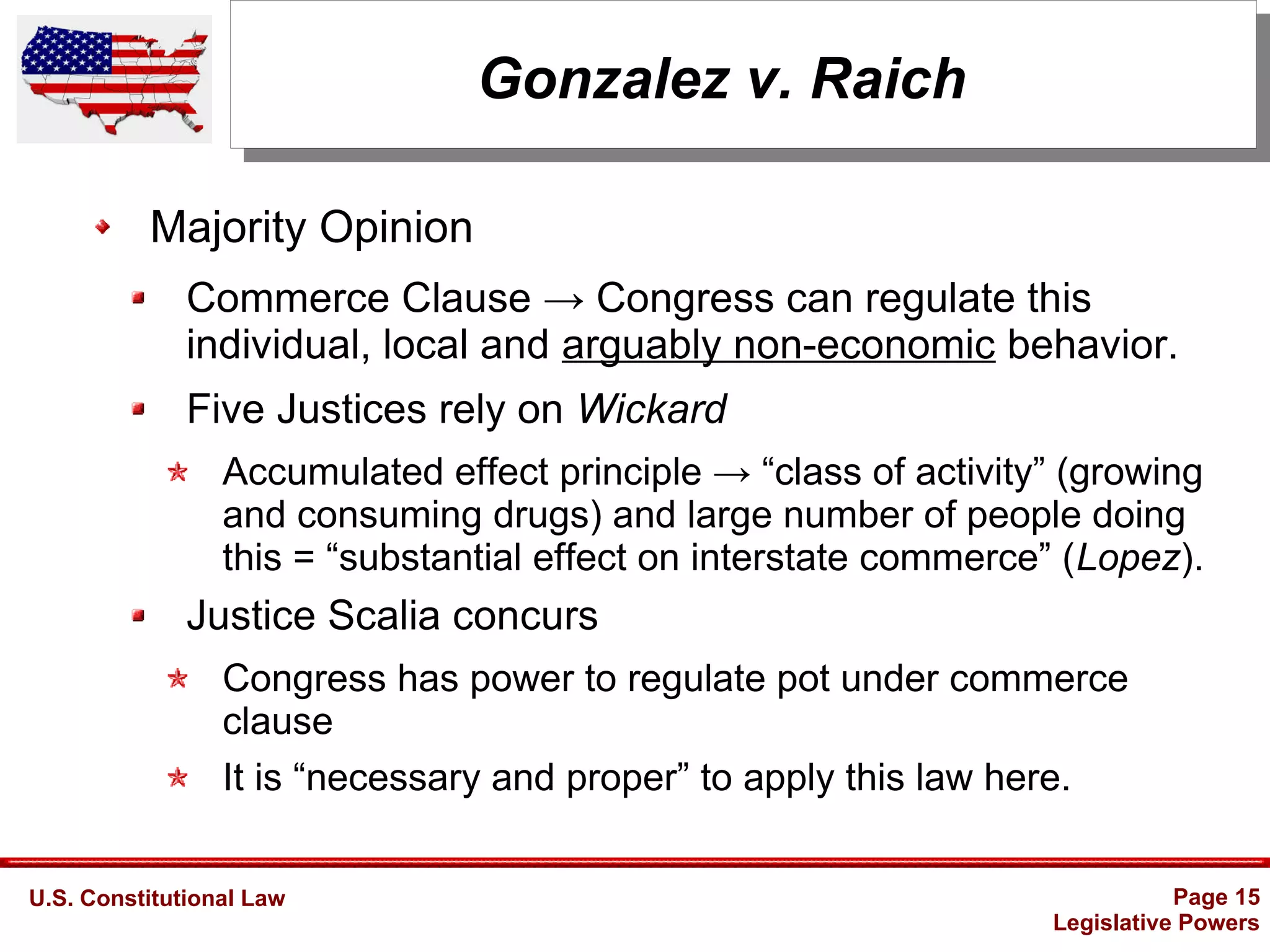
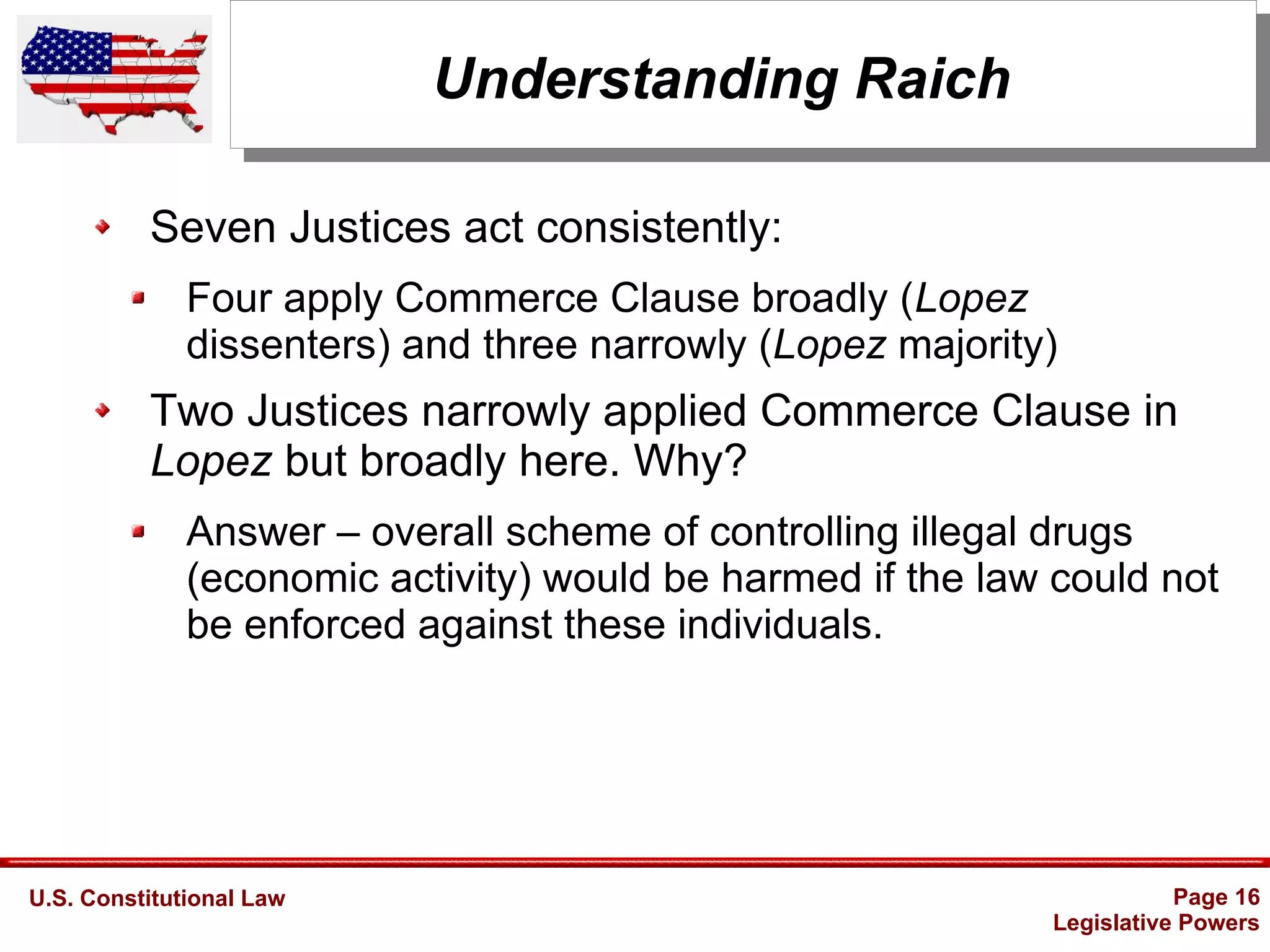

The document discusses the Necessary and Proper Clause of the U.S. Constitution and several Supreme Court cases that have interpreted the scope of congressional power under this clause. It provides background on McCulloch v. Maryland, which established that Congress can pass any laws that are convenient or useful for executing its enumerated powers. Later cases like United States v. Comstock and Gonzalez v. Raich further expanded Congress's authority, finding that laws need only be rationally related to or able to substantially affect interstate commerce to be considered "necessary and proper." The document analyzes how these rulings have contributed to an increasing liberal interpretation of congressional power over time.


![Mc culloch v maryland[1]](https://cdn.slidesharecdn.com/ss_thumbnails/mccullochvmaryland1-111104094832-phpapp01-thumbnail.jpg?width=640&height=640&fit=bounds)


