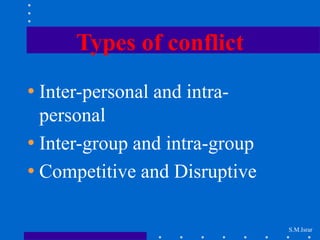
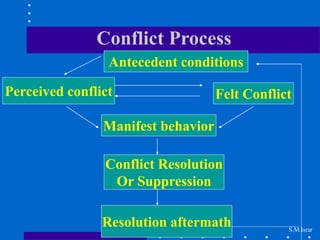
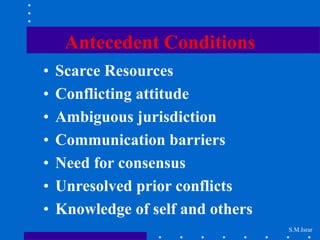
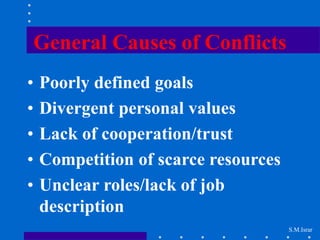
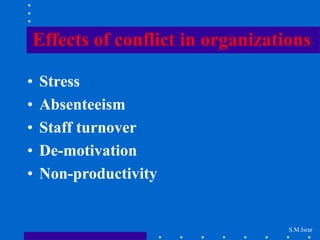
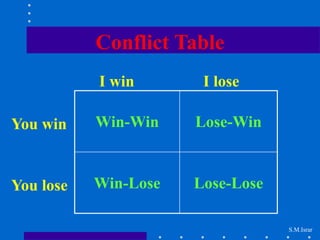
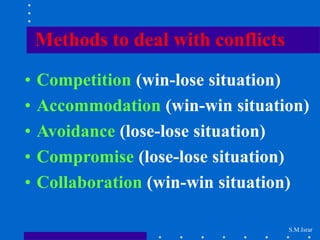
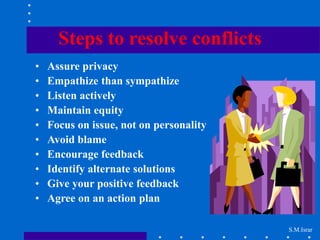
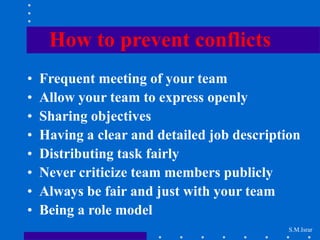
The document discusses conflict management, outlining the types and causes of conflicts, their effects on organizations, and methods for dealing with and preventing conflicts. It describes conflicts as occurring between individuals and groups, being competitive or disruptive in nature. Antecedent conditions like scarce resources, communication barriers, and unresolved prior issues can lead to perceived and actual conflicts. Methods for addressing conflicts include competition, accommodation, avoidance, compromise, and collaboration approaches. Steps are provided for resolving conflicts, and ways to prevent conflicts through open communication, clear roles, and being a fair leader. The conclusion notes that while conflict is inevitable, managing it well can stimulate productivity, whereas poor management leads to negative attitudes and problems.