B. Confirmation of Silver
(Ag+)
Silver forms a soluble complex
ion with aqueous ammonia. The
presence of silver is confirmed
by dissolving any remaining
solid residue in 6 M NH3 (aq)
and then re-precipitating the
chloride by freeing the silver
ion from the complex ion using
6 M acid


Two solids together*****
???????
Add ~5 drops of 6 M NH3 (aq) to the solid from A, keeping your
test tube near the inlet of the fume exhaust vent. The solid should
dissolve, but if any precipitate remains, centrifuge and proceed
using only the centrifugate. Add 6 M HNO3 to the solution until
the solution is acidified, using pH indicator paper to test for
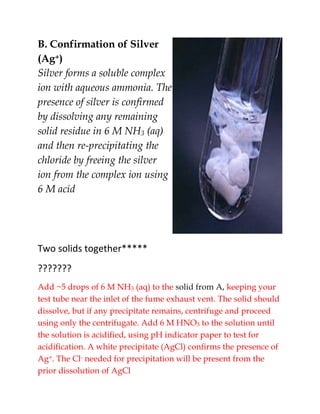
acidification. A white precipitate (AgCl) confirms the presence of
Ag+. The Cl- needed for precipitation will be present from the
prior dissolution of AgCl

Confirmatnion for silver Qual 1

  • 1.
    B. Confirmation ofSilver (Ag+) Silver forms a soluble complex ion with aqueous ammonia. The presence of silver is confirmed by dissolving any remaining solid residue in 6 M NH3 (aq) and then re-precipitating the chloride by freeing the silver ion from the complex ion using 6 M acid Two solids together***** ??????? Add ~5 drops of 6 M NH3 (aq) to the solid from A, keeping your test tube near the inlet of the fume exhaust vent. The solid should dissolve, but if any precipitate remains, centrifuge and proceed using only the centrifugate. Add 6 M HNO3 to the solution until the solution is acidified, using pH indicator paper to test for acidification. A white precipitate (AgCl) confirms the presence of Ag+. The Cl- needed for precipitation will be present from the prior dissolution of AgCl