BY: Prof. Mayank David Raiborde
Meaning
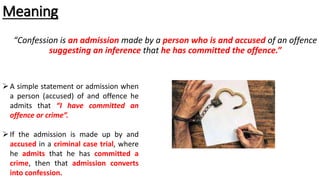
“Confession is an admission made by a person who is and accused of an offence
suggesting an inference that he has committed the offence.”
A simple statement or admission when
a person (accused) of and offence he
admits that “I have committed an
offence or crime”.
If the admission is made up by and
accused in a criminal case trial, where
he admits that he has committed a
crime, then that admission converts
into confession.
Contd…
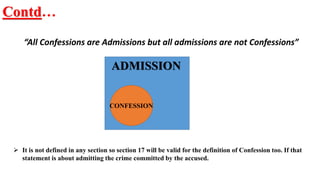
“All Confessions are Admissions but all admissions are not Confessions”
 It is not defined in any section so section 17 will be valid for the definition of Confession too. If that
statement is about admitting the crime committed by the accused.
ADMISSION
CONFESSION
RELEVANCY OF CONFESSION
• Section 24: Confessions caused by inducement, threat or promises will be
irrelevant if following conditions are proved/fulfilled:
Statement should be
a confession
obtained by
• Inducement,
• Threat, or
• Promise
It should be
made by and
Accused.
It should be
made to such
person who is
in authority.
(Judges,
Police, I.O)
Person makes
confession to
gain any
advantage or
avoid any evil
in reference to
proceedings
against him.
• Section 25: Confession to Police not to be Proved (Not admissible).
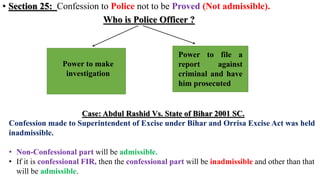
Who is Police Officer ?
Power to make
investigation
Power to file a
report against
criminal and have
him prosecuted
Case: Abdul Rashid Vs. State of Bihar 2001 SC.
Confession made to Superintendent of Excise under Bihar and Orrisa Excise Act was held
inadmissible.
• Non-Confessional part will be admissible.
• If it is confessional FIR, then the confessional part will be inadmissible and other than that
will be admissible.
• Section 26: Confession made in Police custody not to be proved (not admissible)
Except in the immediate presence of Magistrate
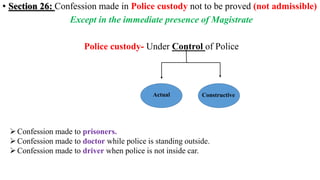
Police custody- Under Control of Police
Actual Constructive
Confession made to prisoners.
Confession made to doctor while police is standing outside.
Confession made to driver when police is not inside car.
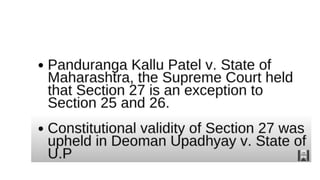
• Section 27: How much information received from accused may be
proved.
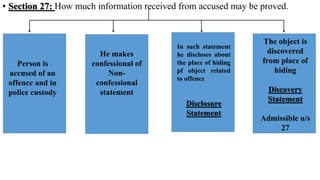
• Section 27: How much information received from accused may be proved.
Person is
accused of an
offence and in
police custody
He makes
confessional of
Non-
confessional
statement
In such statement
he discloses about
the place of hiding
pf object related
to offence
Disclosure
Statement
The object is
discovered
from place of
hiding
Discovery
Statement
Admissible u/s
27
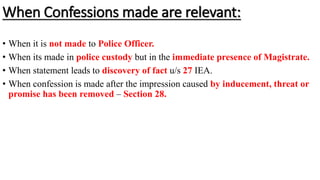
When Confessions made are relevant:
• When it is not made to Police Officer.
• When its made in police custody but in the immediate presence of Magistrate.
• When statement leads to discovery of fact u/s 27 IEA.
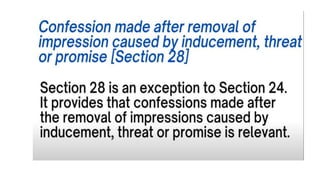
• When confession is made after the impression caused by inducement, threat or
promise has been removed – Section 28.

Confessions.pptx

  • 1.
    BY: Prof. MayankDavid Raiborde
  • 2.
    Meaning “Confession is anadmission made by a person who is and accused of an offence suggesting an inference that he has committed the offence.” A simple statement or admission when a person (accused) of and offence he admits that “I have committed an offence or crime”. If the admission is made up by and accused in a criminal case trial, where he admits that he has committed a crime, then that admission converts into confession.
  • 3.
    Contd… “All Confessions areAdmissions but all admissions are not Confessions”  It is not defined in any section so section 17 will be valid for the definition of Confession too. If that statement is about admitting the crime committed by the accused. ADMISSION CONFESSION
  • 4.
    RELEVANCY OF CONFESSION •Section 24: Confessions caused by inducement, threat or promises will be irrelevant if following conditions are proved/fulfilled: Statement should be a confession obtained by • Inducement, • Threat, or • Promise It should be made by and Accused. It should be made to such person who is in authority. (Judges, Police, I.O) Person makes confession to gain any advantage or avoid any evil in reference to proceedings against him.
  • 5.
    • Section 25:Confession to Police not to be Proved (Not admissible). Who is Police Officer ? Power to make investigation Power to file a report against criminal and have him prosecuted Case: Abdul Rashid Vs. State of Bihar 2001 SC. Confession made to Superintendent of Excise under Bihar and Orrisa Excise Act was held inadmissible. • Non-Confessional part will be admissible. • If it is confessional FIR, then the confessional part will be inadmissible and other than that will be admissible.
  • 6.
    • Section 26:Confession made in Police custody not to be proved (not admissible) Except in the immediate presence of Magistrate Police custody- Under Control of Police Actual Constructive Confession made to prisoners. Confession made to doctor while police is standing outside. Confession made to driver when police is not inside car.
  • 7.
    • Section 27:How much information received from accused may be proved.
  • 8.
    • Section 27:How much information received from accused may be proved. Person is accused of an offence and in police custody He makes confessional of Non- confessional statement In such statement he discloses about the place of hiding pf object related to offence Disclosure Statement The object is discovered from place of hiding Discovery Statement Admissible u/s 27
  • 15.
    When Confessions madeare relevant: • When it is not made to Police Officer. • When its made in police custody but in the immediate presence of Magistrate. • When statement leads to discovery of fact u/s 27 IEA. • When confession is made after the impression caused by inducement, threat or promise has been removed – Section 28.