MGM COLLEGE OF
ENGINEERING AND
TECHNOLOGY
DESHMUKH PRATHMESH (11) GARAD SAHIL (18)
BE CIVIL 1ST SHIFT
PROF : DR. KALPESH SHARMA
Concrete
The word concrete comes from the Latin word "concretus".Which
means compact.
Now a days concrete is most common and necessary things in our life.
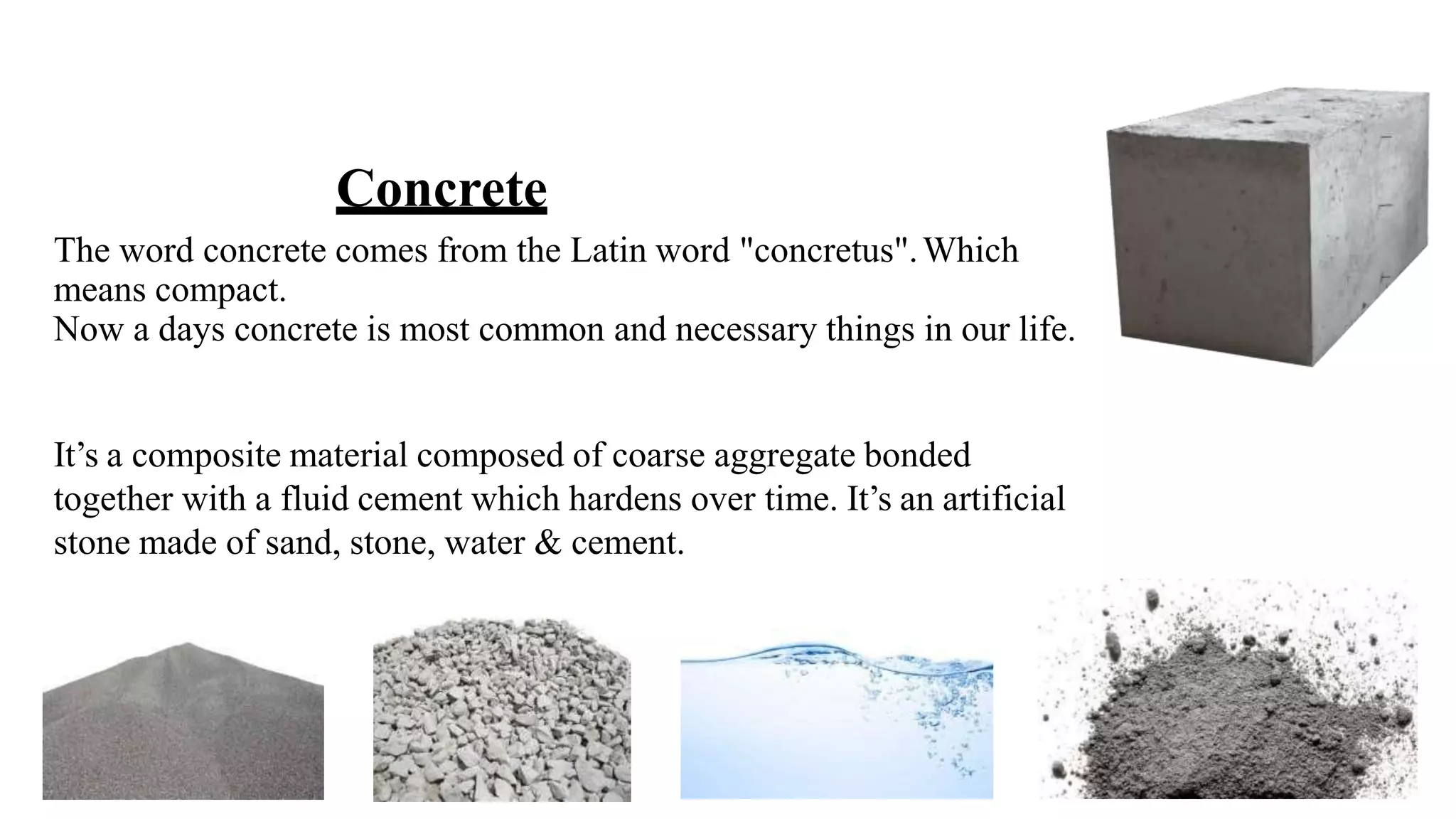
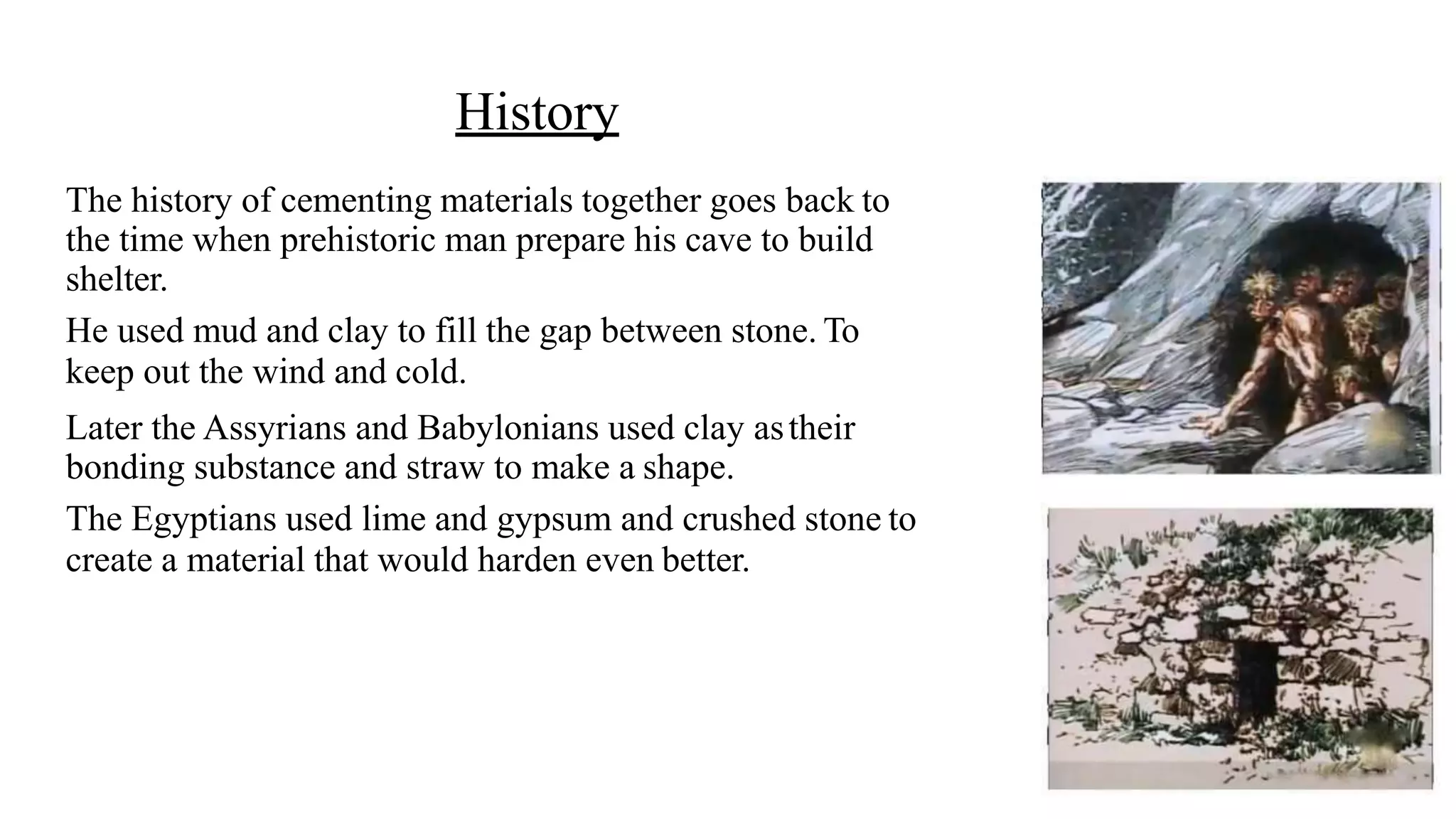
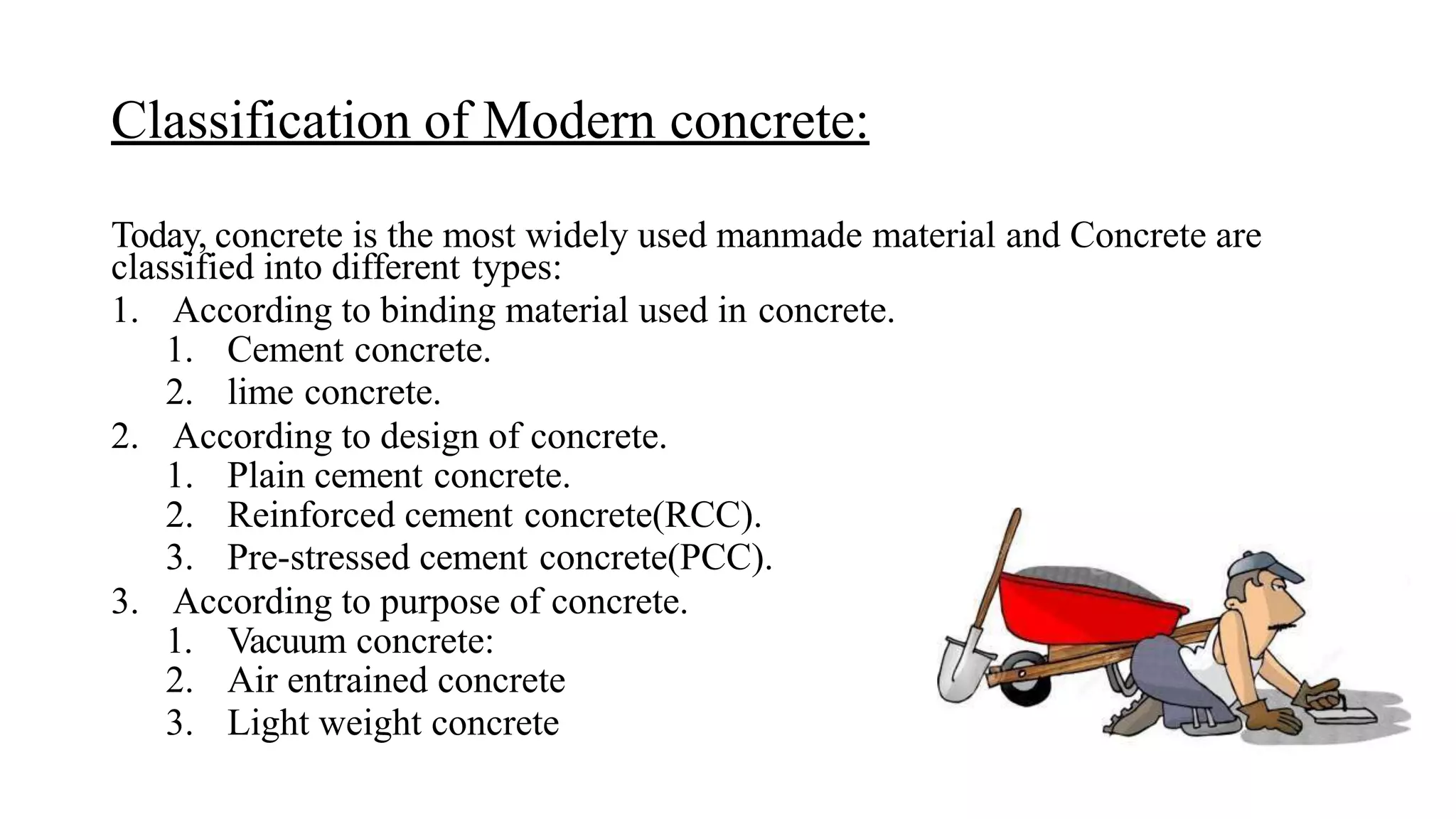
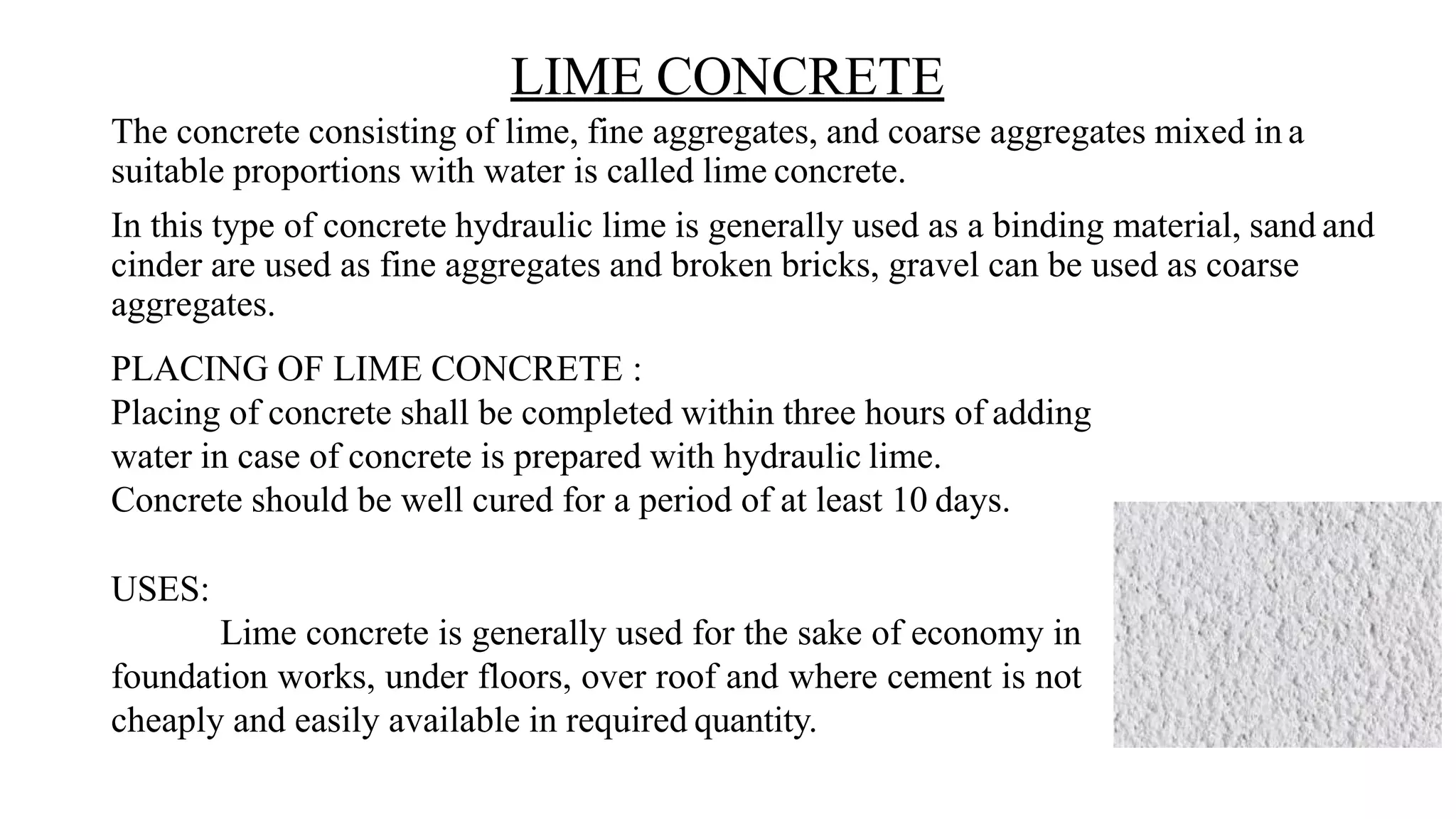
It’s a composite material composed of coarse aggregate bonded
together with a fluid cement which hardens over time. It’s an artificial
stone made of sand, stone, water & cement.
History
The history of cementing materials together goes back to
the time when prehistoric man prepare his cave to build
shelter.
He used mud and clay to fill the gap between stone. To
keep out the wind and cold.
Later the Assyrians and Babylonians used clay astheir
bonding substance and straw to make a shape.
The Egyptians used lime and gypsum and crushed stone to
create a material that would harden even better.
Then the Roman made cement and they learn how to use volcanic ash. After that they
built lots of structure like Pantheon, Colosseum, Trajan's Column.
After the Roman Empire collapsed, use of concrete became rare until the technology
was redeveloped in the mid18th century.
Classification of Modern concrete:
Today, concrete is the most widely used manmade material and Concrete are
classified into different types:
1. According to binding material used in concrete.
1. Cement concrete.
2. lime concrete.
2. According to design of concrete.
1. Plain cement concrete.
2. Reinforced cement concrete(RCC).
3. Pre-stressed cement concrete(PCC).
3. According to purpose of concrete.
1. Vacuum concrete:
2. Air entrained concrete
3. Light weight concrete
CLASSIFICATION ACCORDING TO BINDING
MATERIAL:
Cement concrete
The concrete consisting of cement, sand and coarse aggregates mixed in a suitable
proportions in addition to water is called cement concrete. In this type of concrete cement
is used as a binding material, sand as fine aggregates and gravel, crushed stones as coarse
aggregates.
USES
cement concrete is commonly used in buildings and other
important engineering works where strength and
durability
is of prime importance.
LIME CONCRETE
The concrete consisting of lime, fine aggregates, and coarse aggregates mixed in a
suitable proportions with water is called lime concrete.
In this type of concrete hydraulic lime is generally used as a binding material, sand and
cinder are used as fine aggregates and broken bricks, gravel can be used as coarse
aggregates.
PLACING OF LIME CONCRETE :
Placing of concrete shall be completed within three hours of adding
water in case of concrete is prepared with hydraulic lime.
Concrete should be well cured for a period of at least 10 days.
USES:
Lime concrete is generally used for the sake of economy in
foundation works, under floors, over roof and where cement is not
cheaply and easily available in required quantity.
CLASSIFICATION ACCORDING TO DESIGN OF
CONCRETE
PLAIN CEMENT CONCRETE
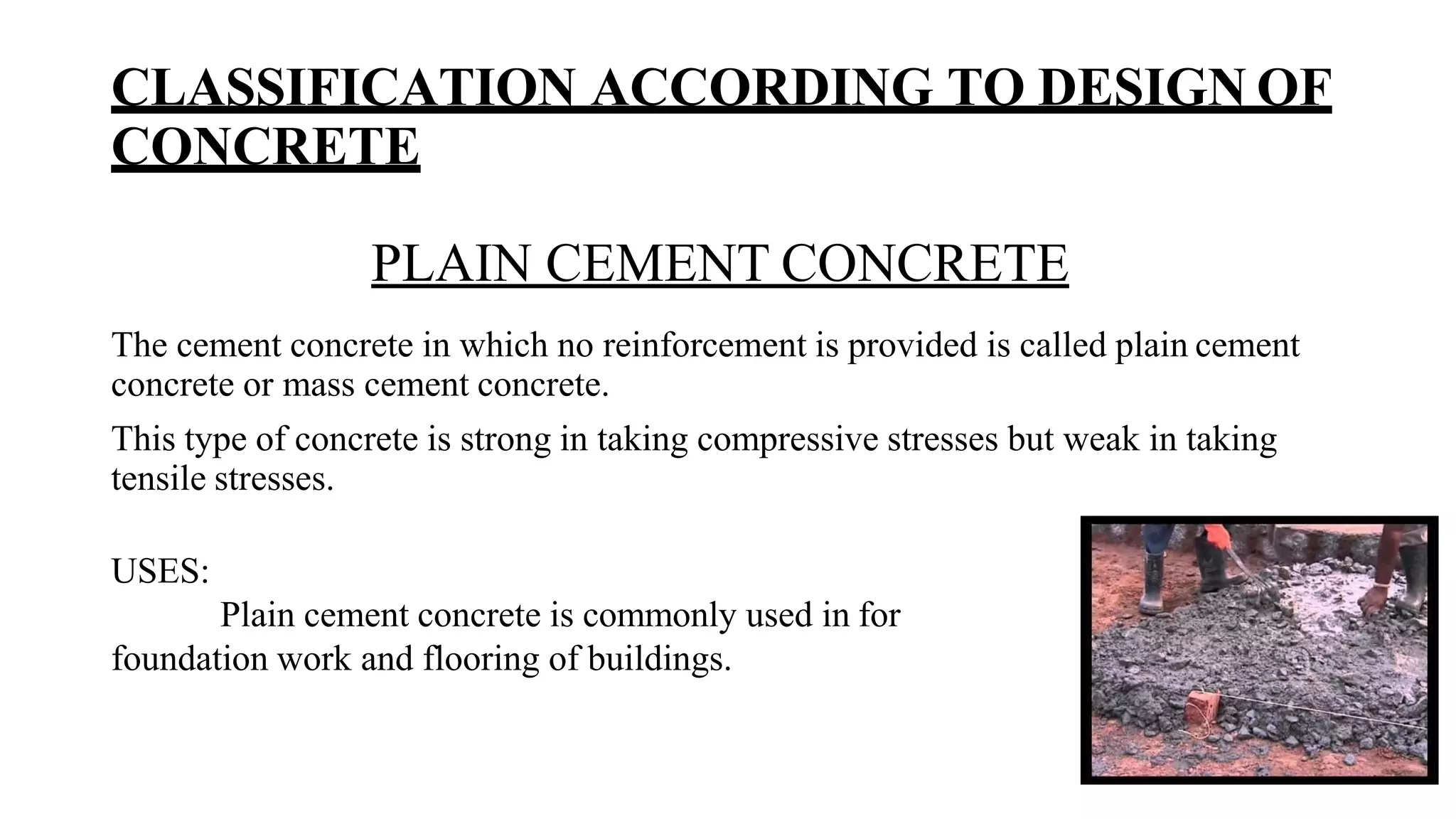
The cement concrete in which no reinforcement is provided is called plain cement
concrete or mass cement concrete.
This type of concrete is strong in taking compressive stresses but weak in taking
tensile stresses.
USES:
Plain cement concrete is commonly used in for
foundation work and flooring of buildings.
REINFORCED CEMENTCONCRETE(RCC)
The cement concrete in which reinforcement is embedded for taking tensile
stress is called reinforced cement concrete.
In this type of concrete the steel reinforcement is to be used generally in
the form of round bars,6mm to 32mm dia. This concrete is equally strong
in taking tensile, compressive and shear stresses.
USES:
RCC is commonly used for construction of slabs, beams,
columns, foundation, precast concrete.
PRE-STRESSED CEMENT CONCRETE (PCC)
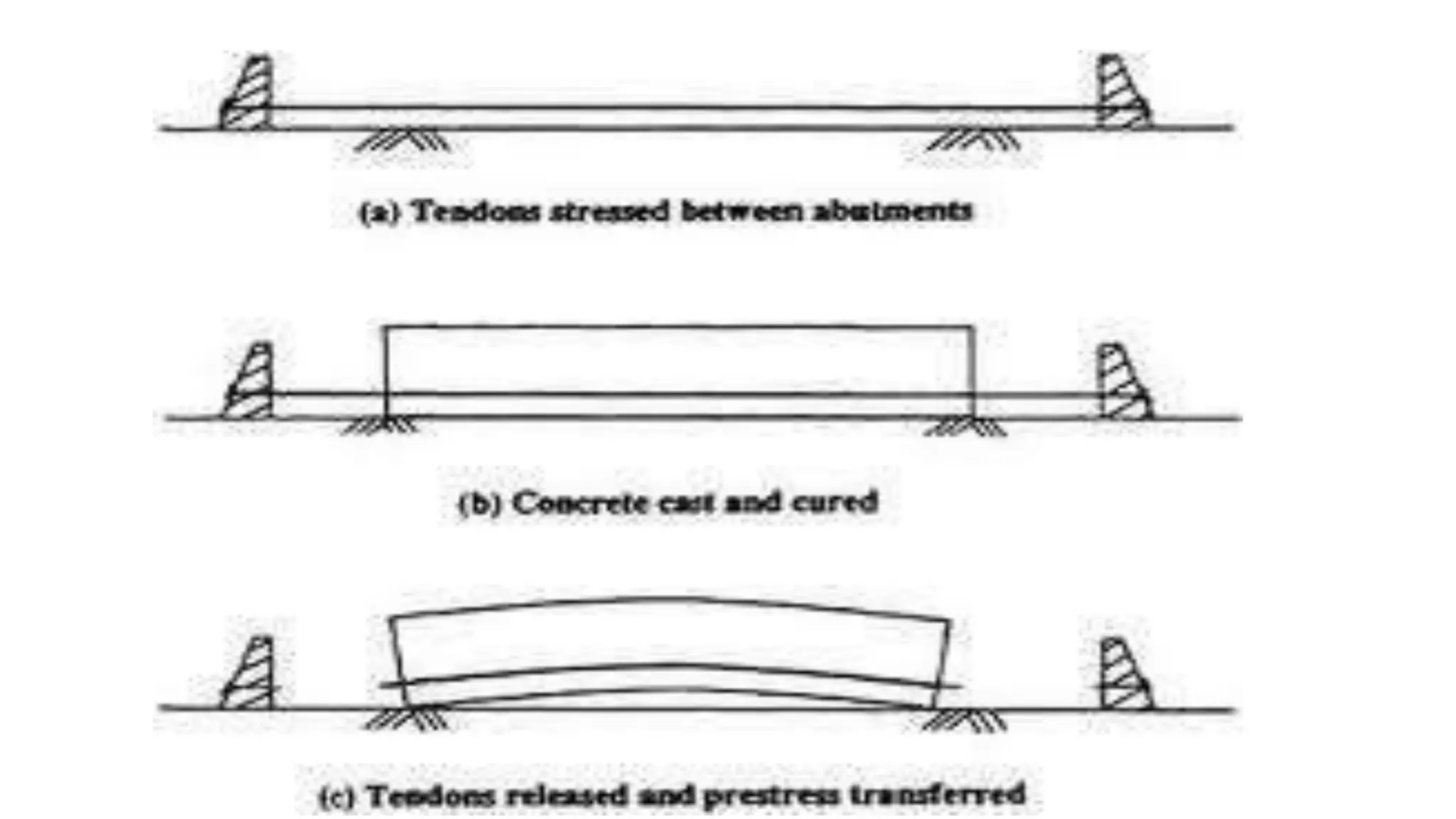
The cement concrete in which high compressive stresses are artificially induced
before their actual use is called pre-stresses cement concrete.
In this type of cement concrete, the high compressive stresses are induced
by pre-tensioning the reinforcement before placing the concrete, and the
reinforcement is released when final setting of the concrete take place.
Uses : This concrete can take up high tensile and compressive stresses
without development of cracks. The quantity of reinforcement can be
considerably reduced by using this concrete.
CLASSIFICATION ACCORDING TOPURPOSE
According to purpose concrete is classified into following types.
a. Vacuum concrete:
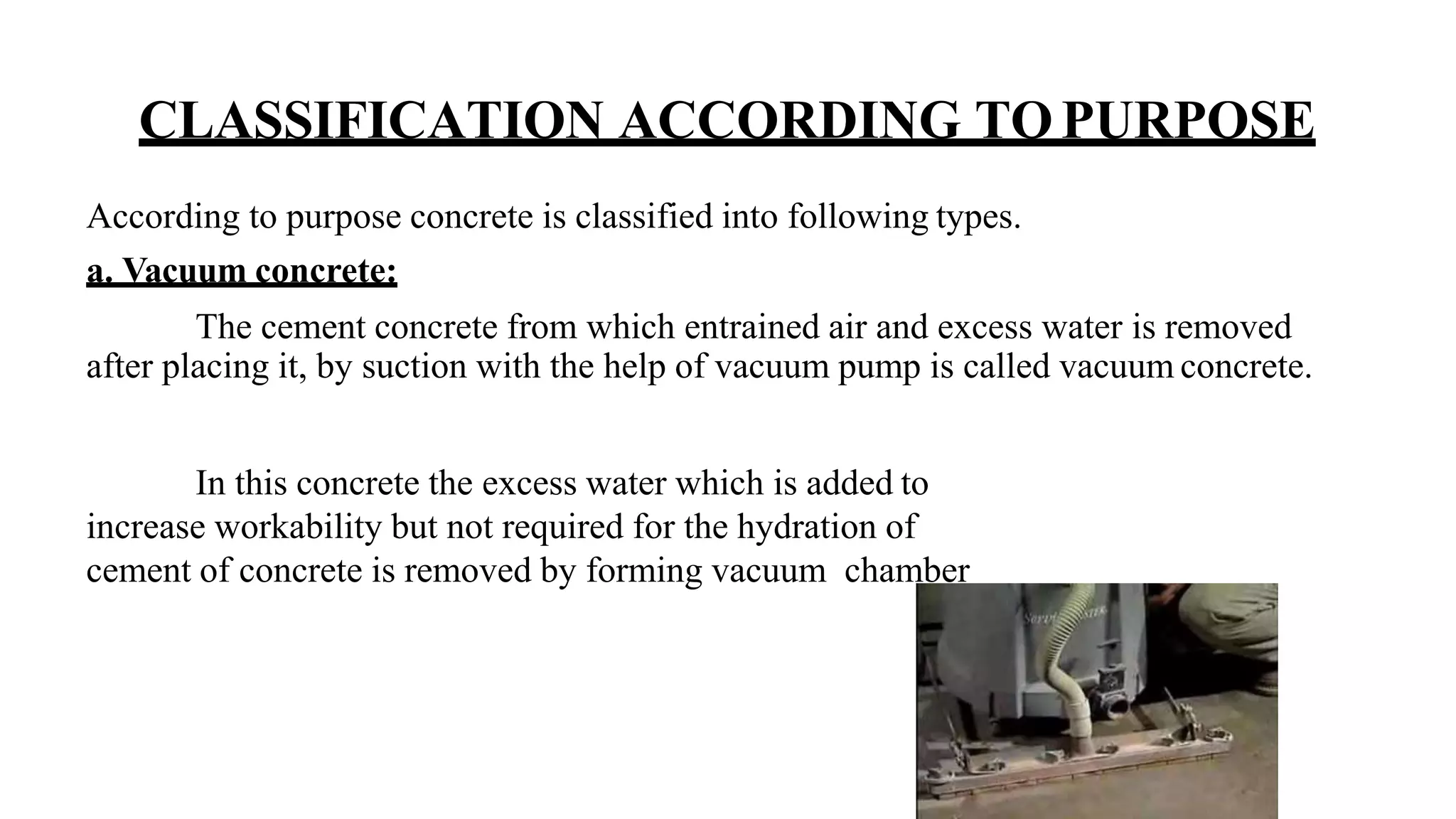
The cement concrete from which entrained air and excess water is removed
after placing it, by suction with the help of vacuum pump is called vacuum concrete.
In this concrete the excess water which is added to
increase workability but not required for the hydration of
cement of concrete is removed by forming vacuum chamber
b. Air entrained concrete
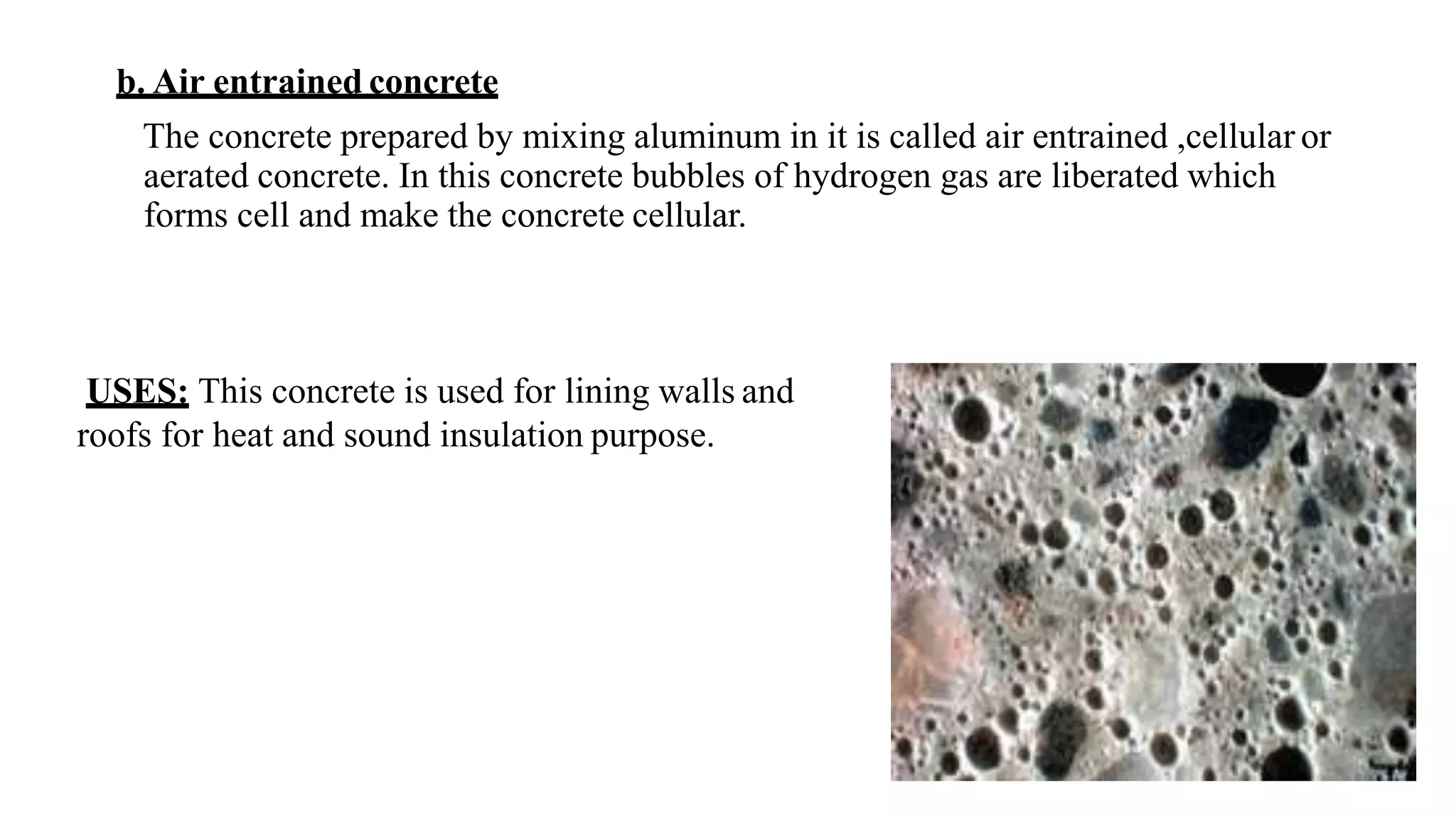
The concrete prepared by mixing aluminum in it is called air entrained ,cellular or
aerated concrete. In this concrete bubbles of hydrogen gas are liberated which
forms cell and make the concrete cellular.
USES: This concrete is used for lining walls and
roofs for heat and sound insulation purpose.
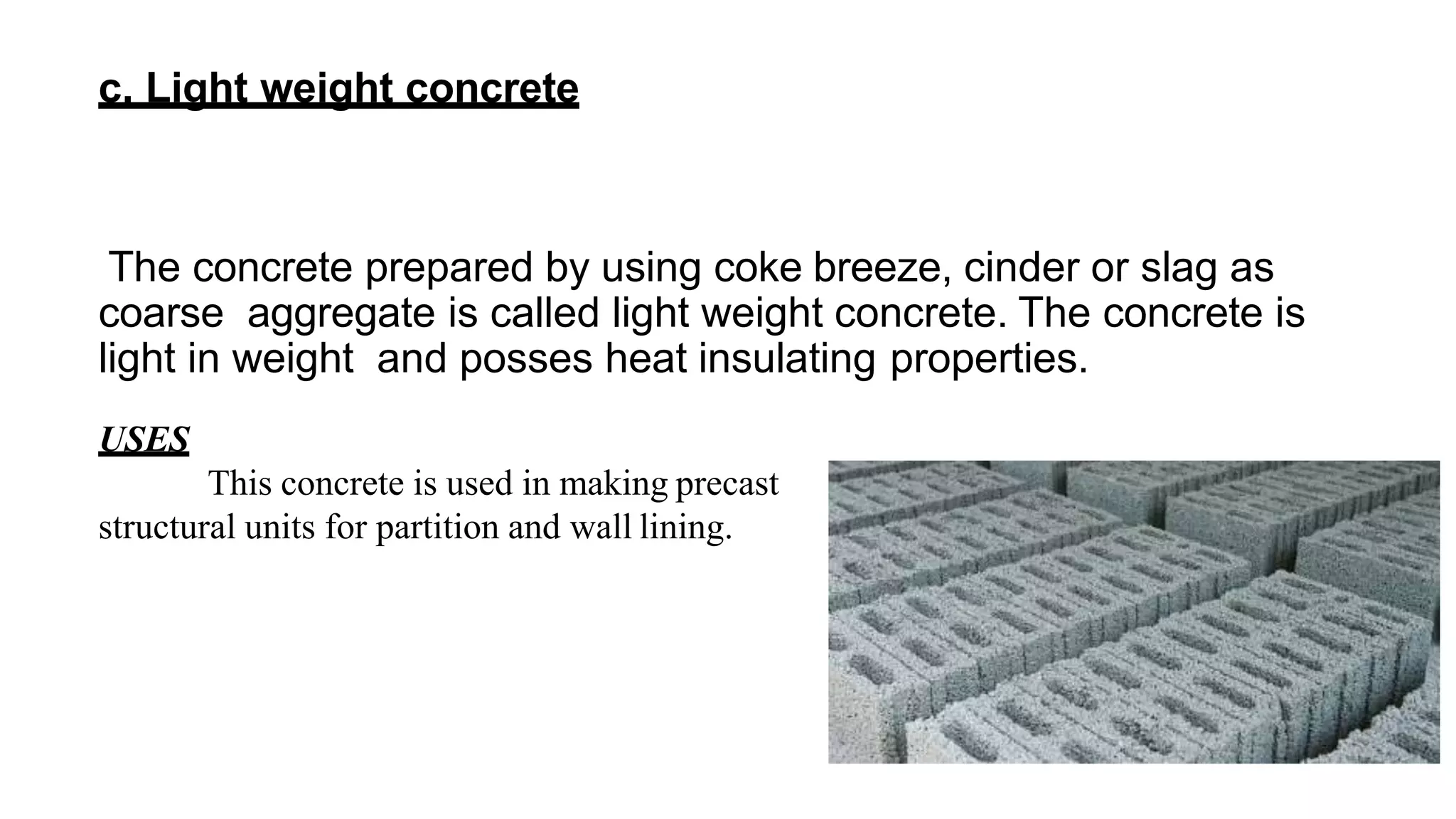
c. Light weight concrete
The concrete prepared by using coke breeze, cinder or slag as
coarse aggregate is called light weight concrete. The concrete is
light in weight and posses heat insulating properties.
USES
This concrete is used in making precast
structural units for partition and wall lining.
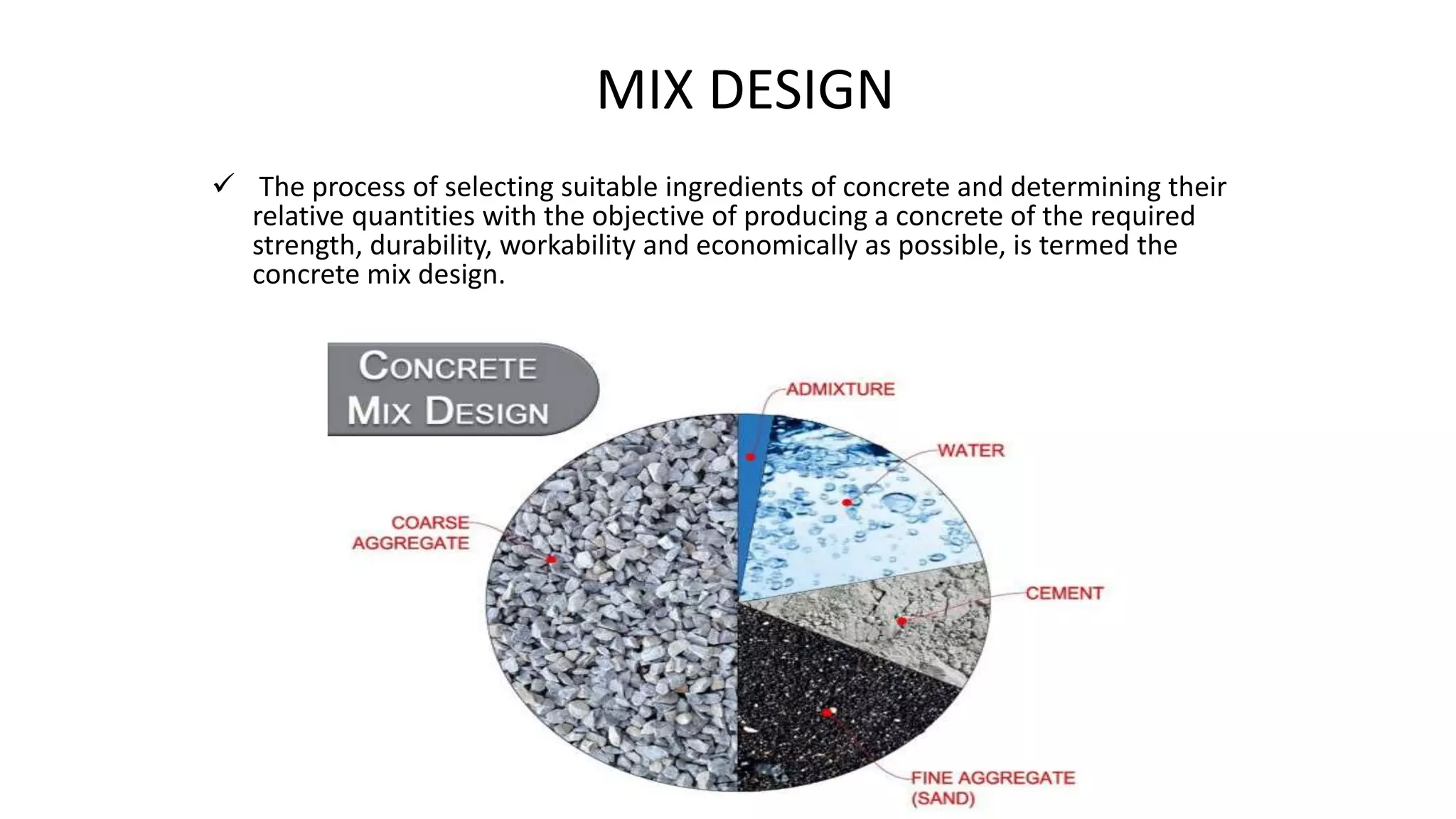
MIX DESIGN
 The process of selecting suitable ingredients of concrete and determining their
relative quantities with the objective of producing a concrete of the required
strength, durability, workability and economically as possible, is termed the
concrete mix design.
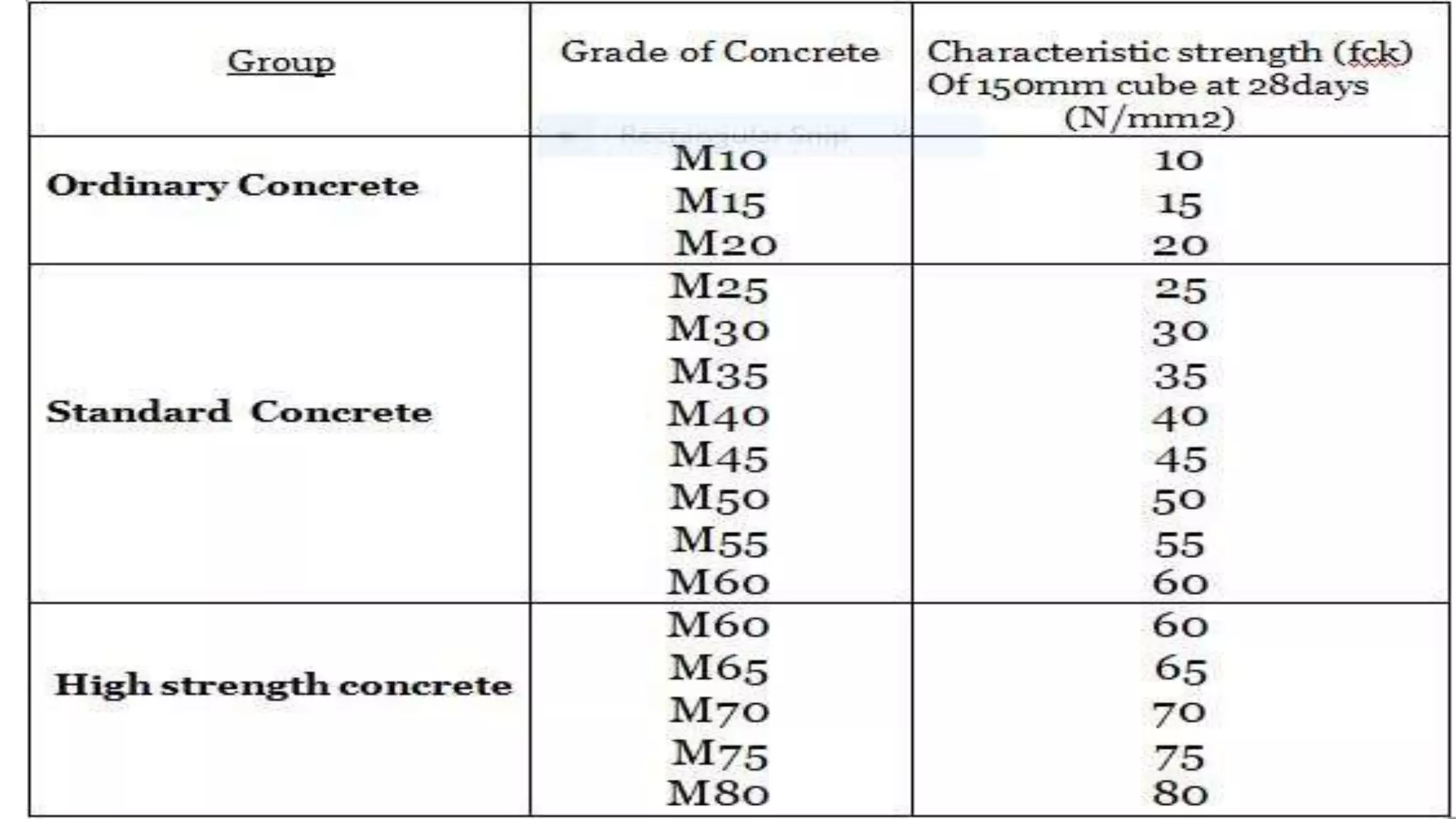
GRADE OF CONCRETE
The characteristic strength of concrete (fck) is defined
as the strength of concrete below which not more
than 5% of the test result are expected to fall.
 What is M 20 ?
M refers to MIX.
20 refers to characteristic compressive strength of
cube (150mm*150mmm*150mm) at 28 days in
N/mm².
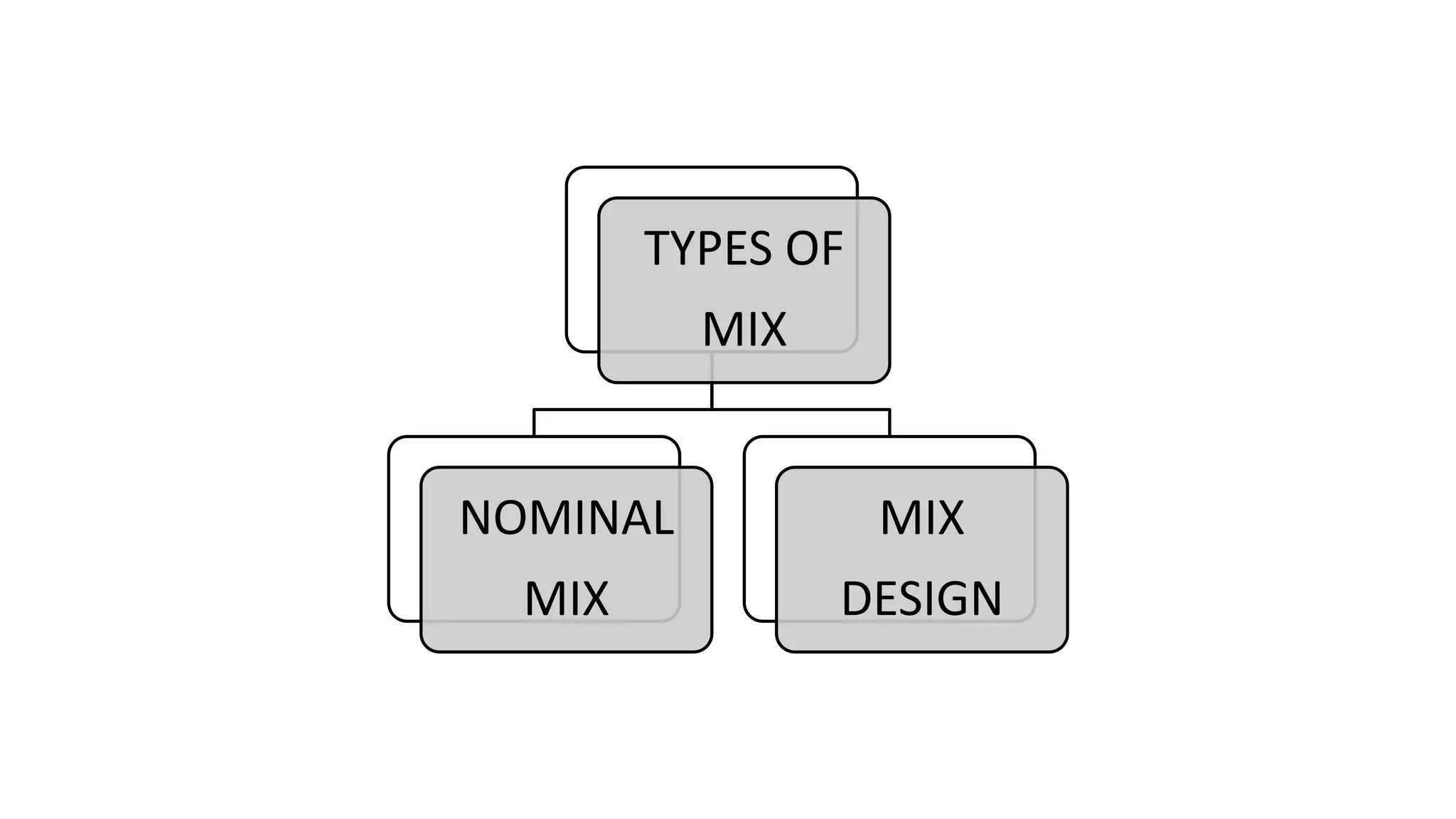
TYPES OF
MIX
NOMINAL
MIX
MIX
DESIGN
NOMINAL MIX CONCRETE
The Wide use of concrete as construction material has led to
the use of mixes of fixed proportions, which ensure adequate
strength. These mixes are called NOMINAL MIXES.
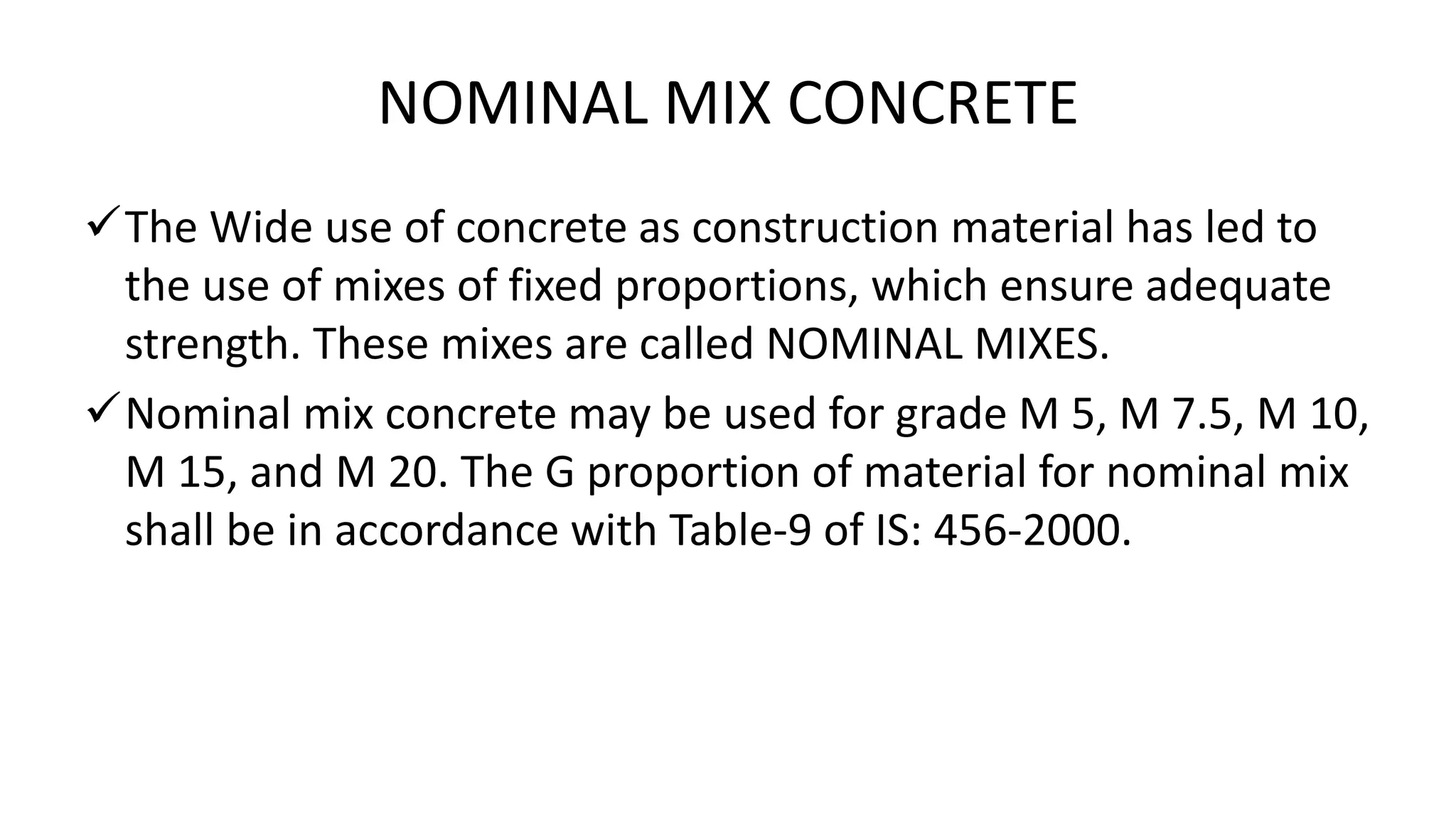
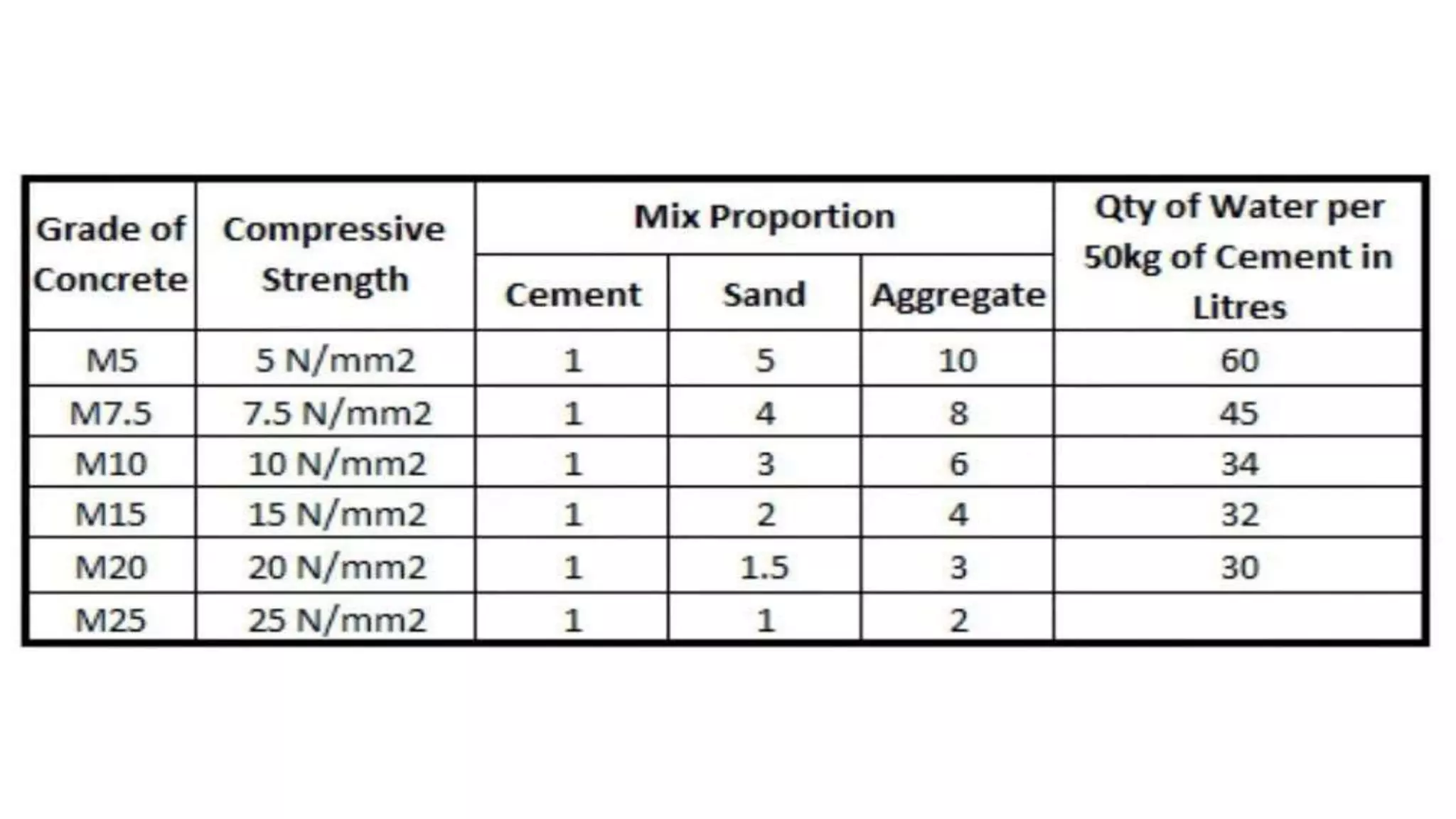
Nominal mix concrete may be used for grade M 5, M 7.5, M 10,
M 15, and M 20. The G proportion of material for nominal mix
shall be in accordance with Table-9 of IS: 456-2000.
FACTORS INFLUENCING THE CHOICE OF MIX DESIGN
✓1. Grade Of Concrete
2. Type Of Cement
3. Maximum nominal size of Aggregate
4. Grading Of Combined Aggregate
5. Maximum Water/Cement ratio
6. Workability
7. Durability
8. Quality Control
METHODS OF CONCRETE MIX DESIGN
✓I.S. Method
A.C.I. Method (American Concrete Institute Method)
Road Note-4 Method (U.K. Method)
IRC-44 Method
 Arbitrary Method
 Maximum Density Method
 DOE (British Method) etc..
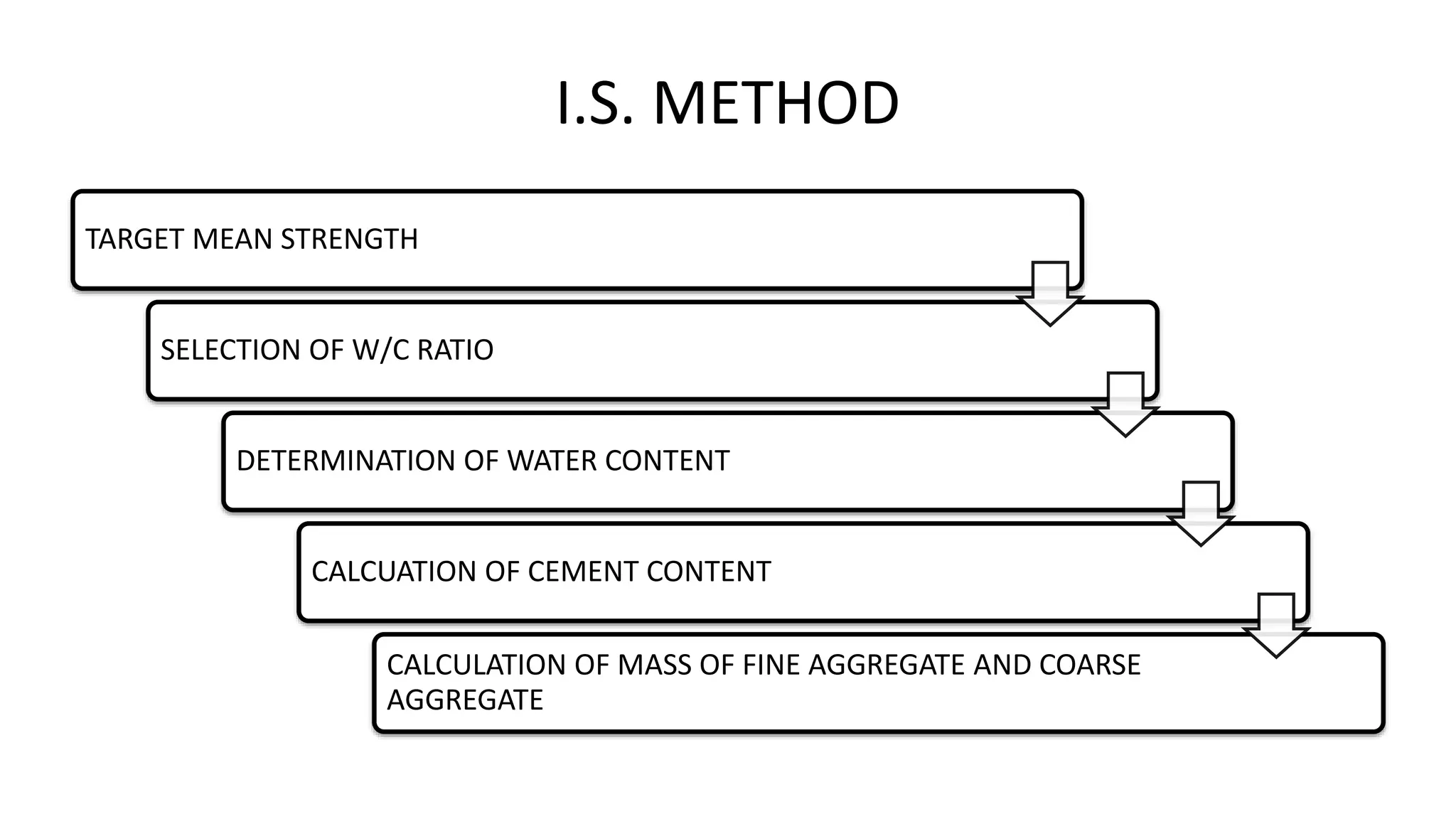
I.S. METHOD
TARGET MEAN STRENGTH
SELECTION OF W/C RATIO
DETERMINATION OF WATER CONTENT
CALCUATION OF CEMENT CONTENT
CALCULATION OF MASS OF FINE AGGREGATE AND COARSE
AGGREGATE
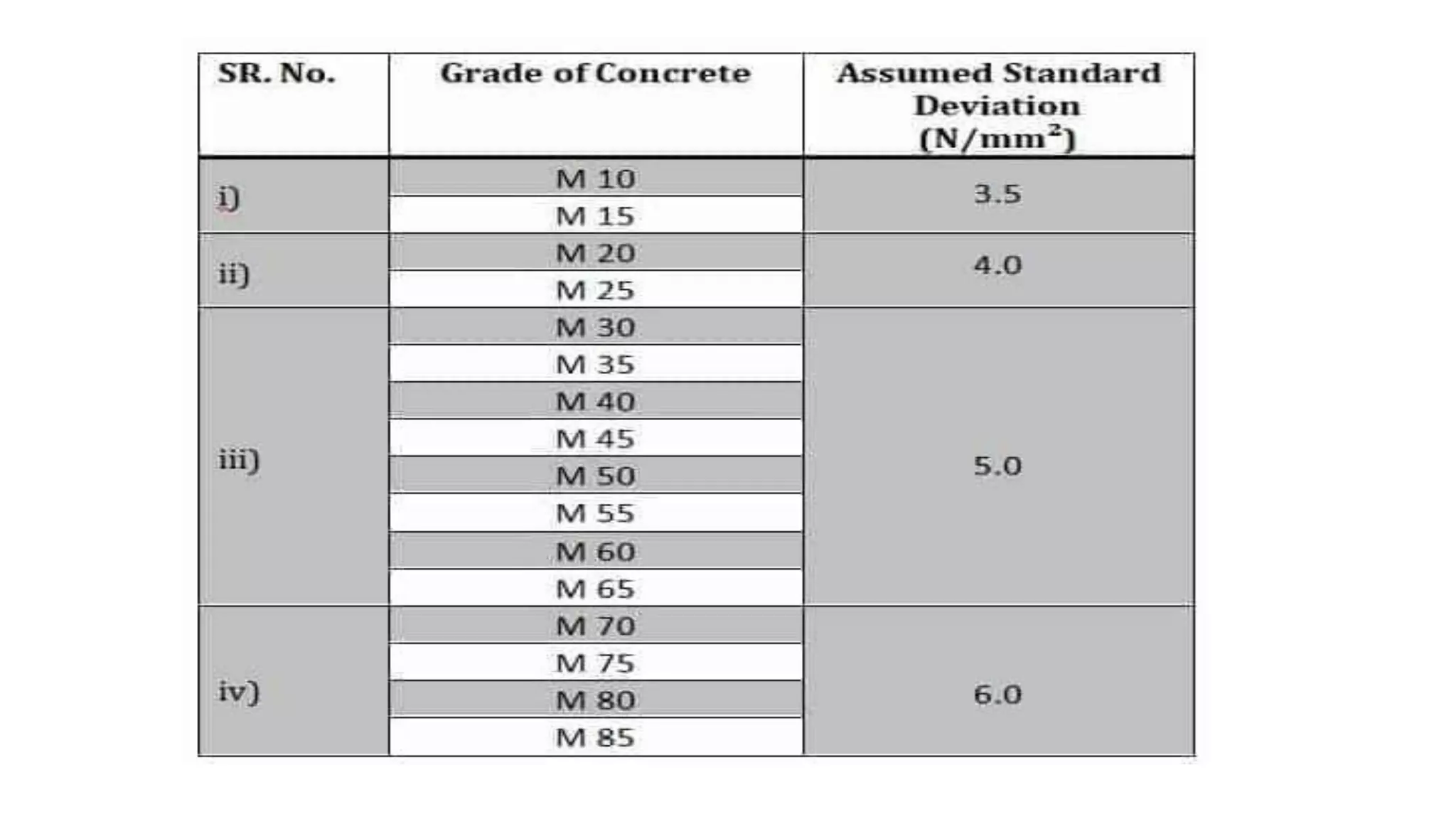
STEP : 1 Target Strength for Mix Proportioning
f'ck= Target Mean Strength at 28 Days
fck= Characteristic Strength at 28 Days
t = Tolerance factor= 1.65 (I.S. 10262)
s = Standard Deviation Given in Table
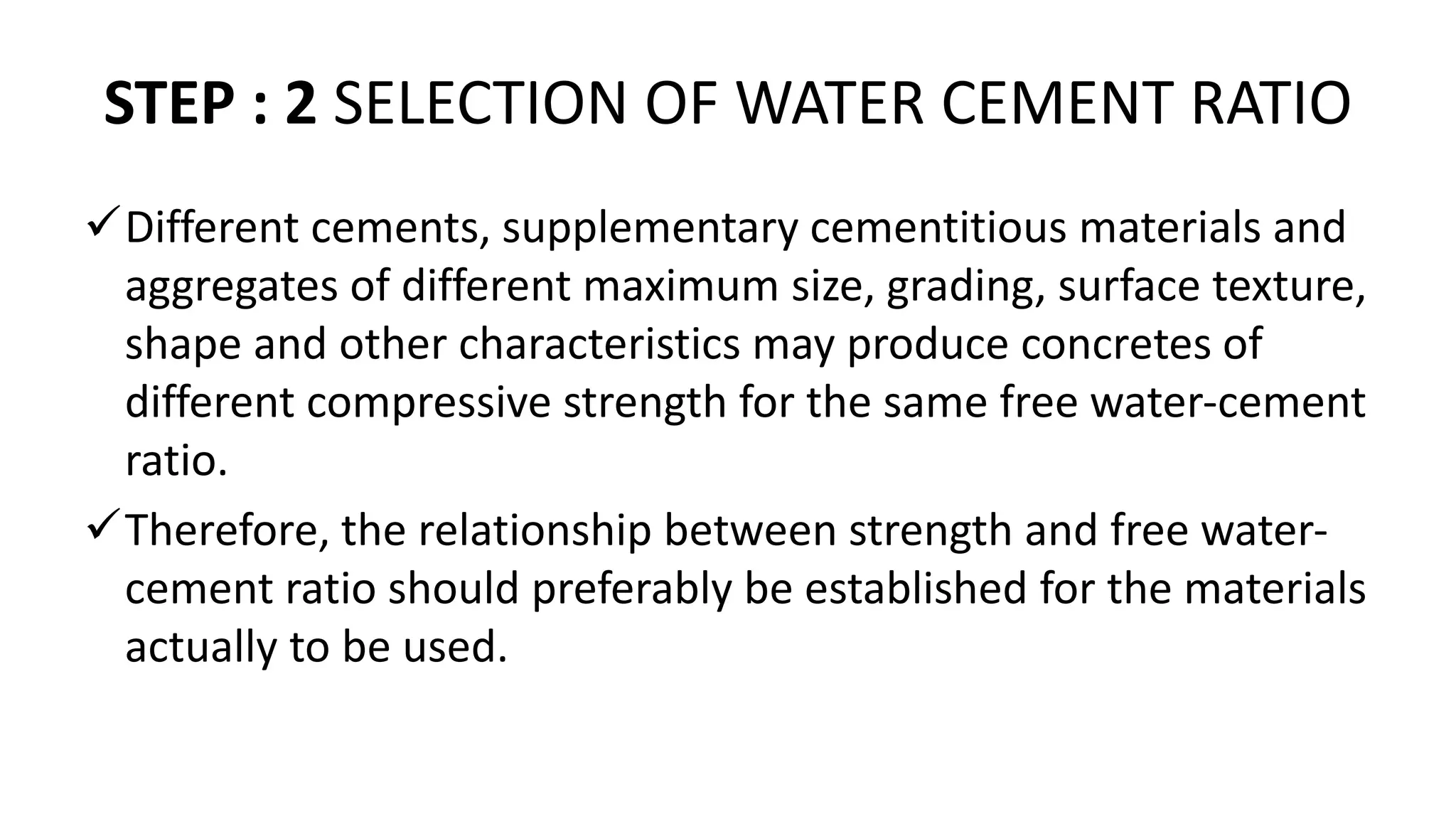
STEP : 2 SELECTION OF WATER CEMENT RATIO
Different cements, supplementary cementitious materials and
aggregates of different maximum size, grading, surface texture,
shape and other characteristics may produce concretes of
different compressive strength for the same free water-cement
ratio.
Therefore, the relationship between strength and free water-
cement ratio should preferably be established for the materials
actually to be used.
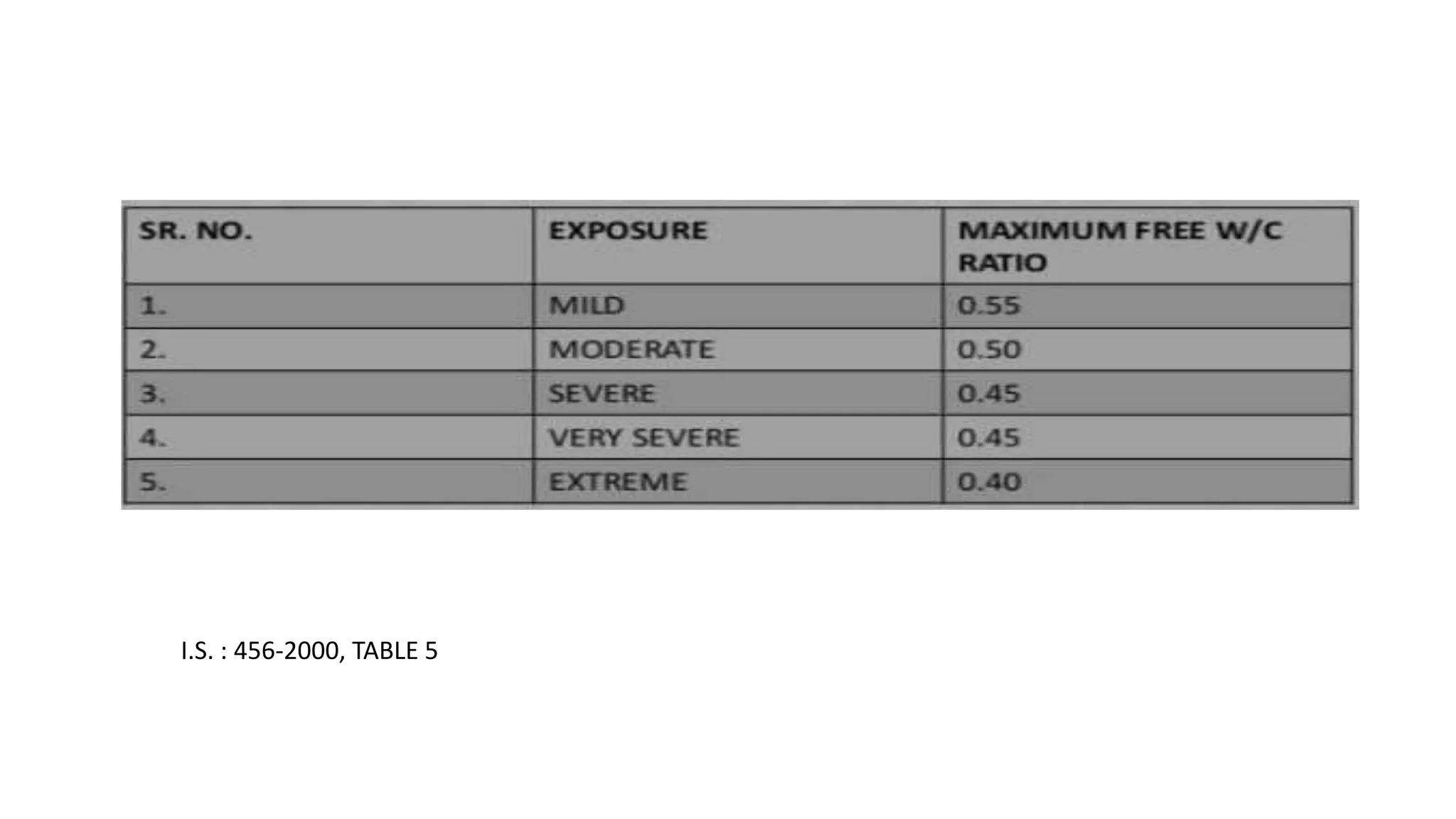
I.S. : 456-2000, TABLE 5
STEP : 3 WATER CONTENT
NOTE- These quantities of mixing water are for use in
computing cemetitious material contents for trial batches.
SLUMP DEDUCTIONS FOR MORE THAN 50mm SUMP.
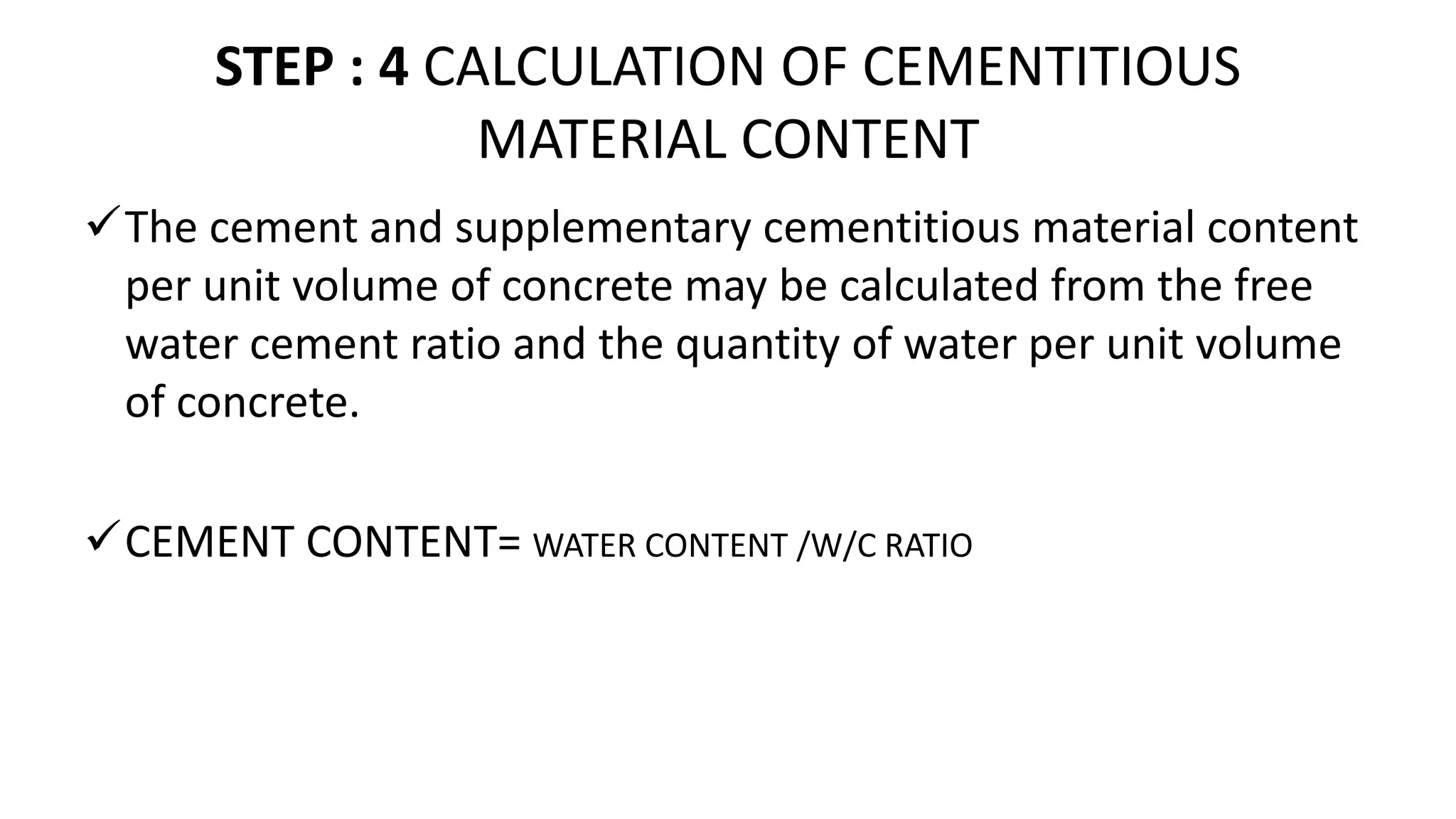
STEP : 4 CALCULATION OF CEMENTITIOUS
MATERIAL CONTENT
The cement and supplementary cementitious material content
per unit volume of concrete may be calculated from the free
water cement ratio and the quantity of water per unit volume
of concrete.
CEMENT CONTENT= WATER CONTENT /W/C RATIO
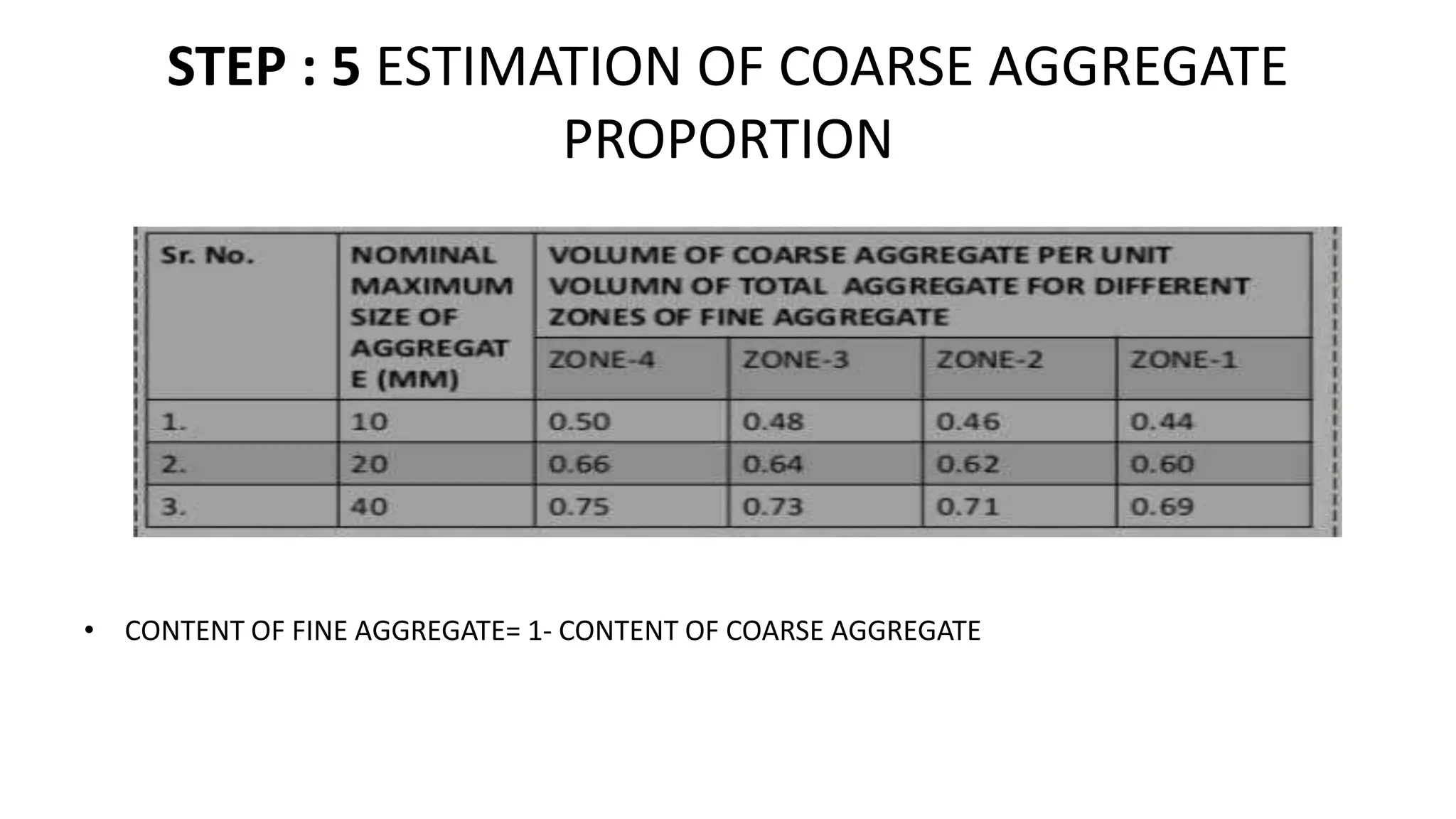
STEP : 5 ESTIMATION OF COARSE AGGREGATE
PROPORTION
• CONTENT OF FINE AGGREGATE= 1- CONTENT OF COARSE AGGREGATE
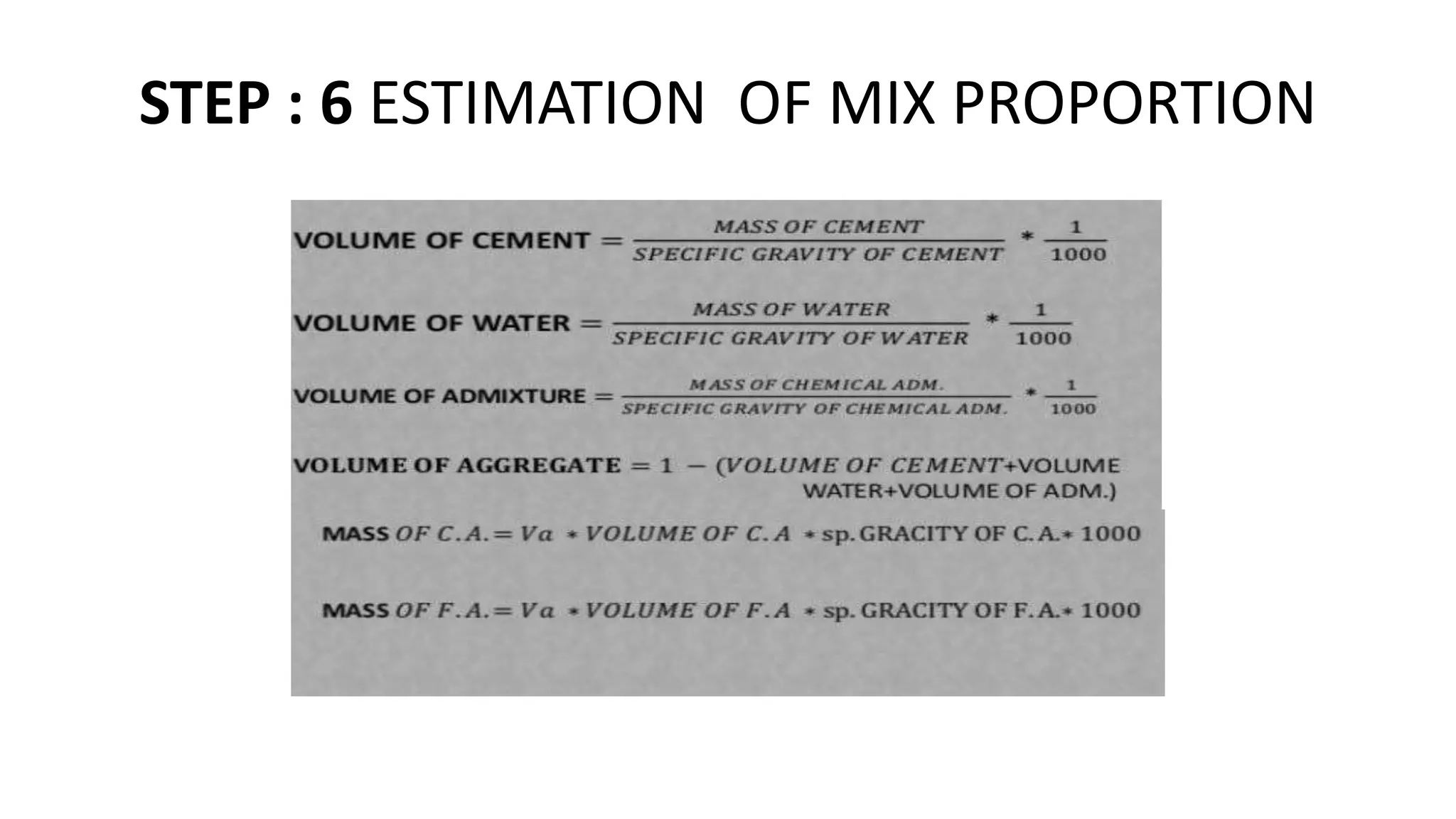
STEP : 6 ESTIMATION OF MIX PROPORTION
Cement, Stone And Sand Ratio
DESCRIPTION OFWORK GRADE OF CONCRETE
Concrete in columns, beams. 1:1:2
Water retaining structures, Piles, 1:1.5:3
precast work or dense Concrete.
RCC beams, slabs, columns. 1:2:4 Foundations for buildings,
Mass 1:3:6
reinforced works.
For mass concrete work. 1:4:8
WATER CEMENT RATIO
For different ratio of concrete the amount of water for 50kg of cement is
Concrete ratio
1:3:6
1:2:4
1:1.5:3
1:1:2
Water quantity
34 liter
30 liter
27 liter
25 liter
• In the preparation of concrete the water cement ratio is very important
• For normal construction the water cement ratio is usually 0.5
• Adding to much water will reduce the strength of concrete and can
cause segregation.
WORKABILITY OF CONCRETE
• It is the amount of work required to place concrete and to compact it thoroughly.
• Workability of concrete increases with the addition of water but it reduces the
strength that’s why it is not a desirable way of increasing the workability.
• Use of aggregates which are round and have smooth surfaces increases the
workability.
• Workability could also be improved by adding air entraining agent such as vinsol
resin or Darex.
• Use of Lisapole liquid at 30 cubic centimeter per bag of cement improves not only
the workability but also the water tightness of concrete.
• Workability of concrete is better determine by compaction factor test.
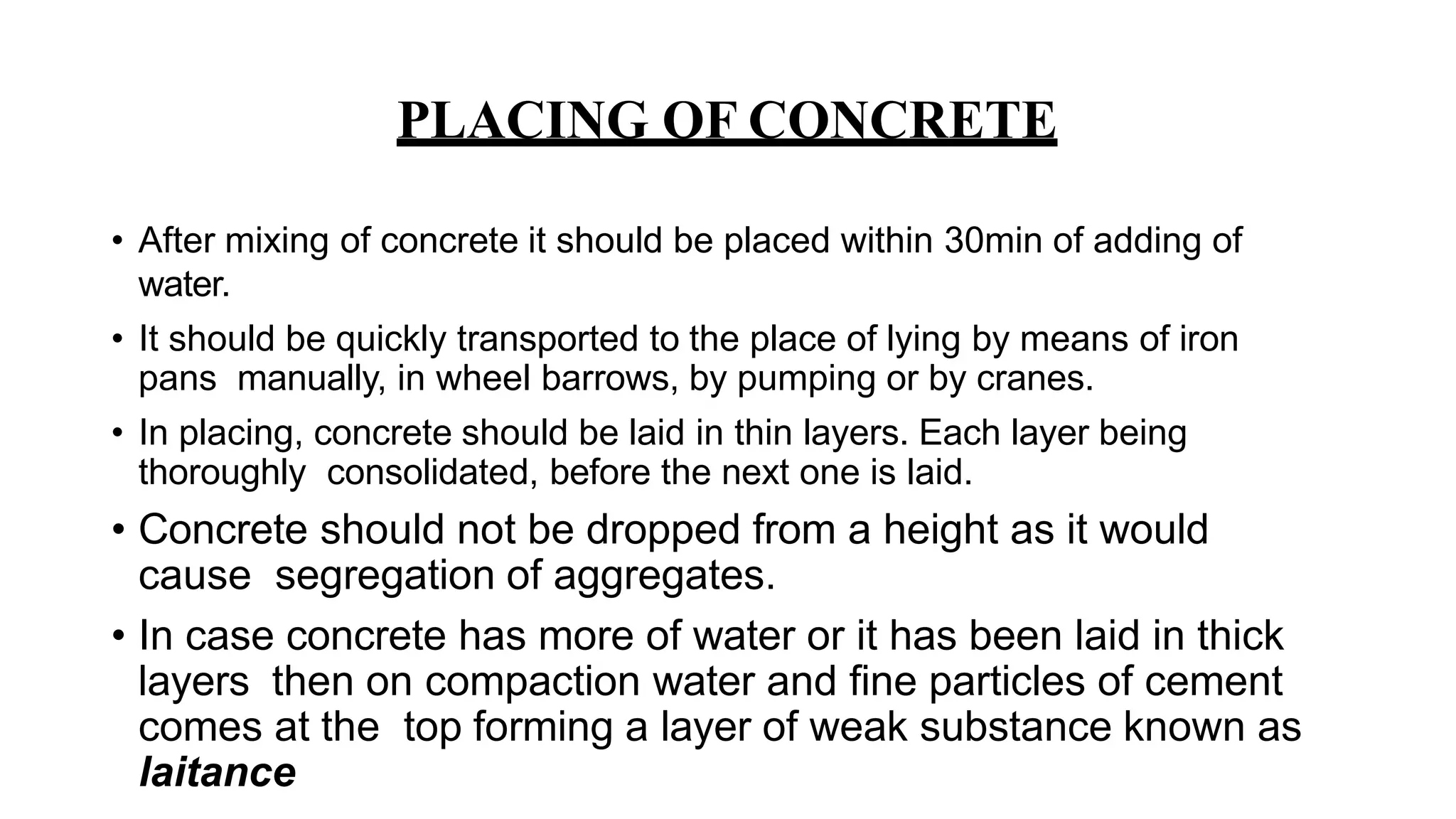
PLACING OF CONCRETE
• After mixing of concrete it should be placed within 30min of adding of
water.
• It should be quickly transported to the place of lying by means of iron
pans manually, in wheel barrows, by pumping or by cranes.
• In placing, concrete should be laid in thin layers. Each layer being
thoroughly consolidated, before the next one is laid.
• Concrete should not be dropped from a height as it would
cause segregation of aggregates.
• In case concrete has more of water or it has been laid in thick
layers then on compaction water and fine particles of cement
comes at the top forming a layer of weak substance known as
laitance
COMPACTION OF CONCRETE
• Compaction of concrete is very important in developing qualities like strength,
durability, imperviousness by making the concrete dense and free from voids.
• In case of RCC compaction is done by pinning with an iron rod or even with
trowel blade.
• Excess temping should be avoided as otherwise water, cement and finer particles
would come to the surface and results in non uniform concreting.
• In case of important and big works, compaction of concrete is done with vibrator.
• Use of vibrator is best and the most efficient way of compacting concrete. It gives
very dense concrete.
• Care should be taken not to make excessive use of vibrators otherwise the
concrete becomes non homogeneous
CURING OF CONCRETE
• The process of keeping concrete wet to enable it to attain full strength is known as
curing.
• The objective of curing is to prevent loss of moisture from concrete due to
evaporation or because of any other reasons.
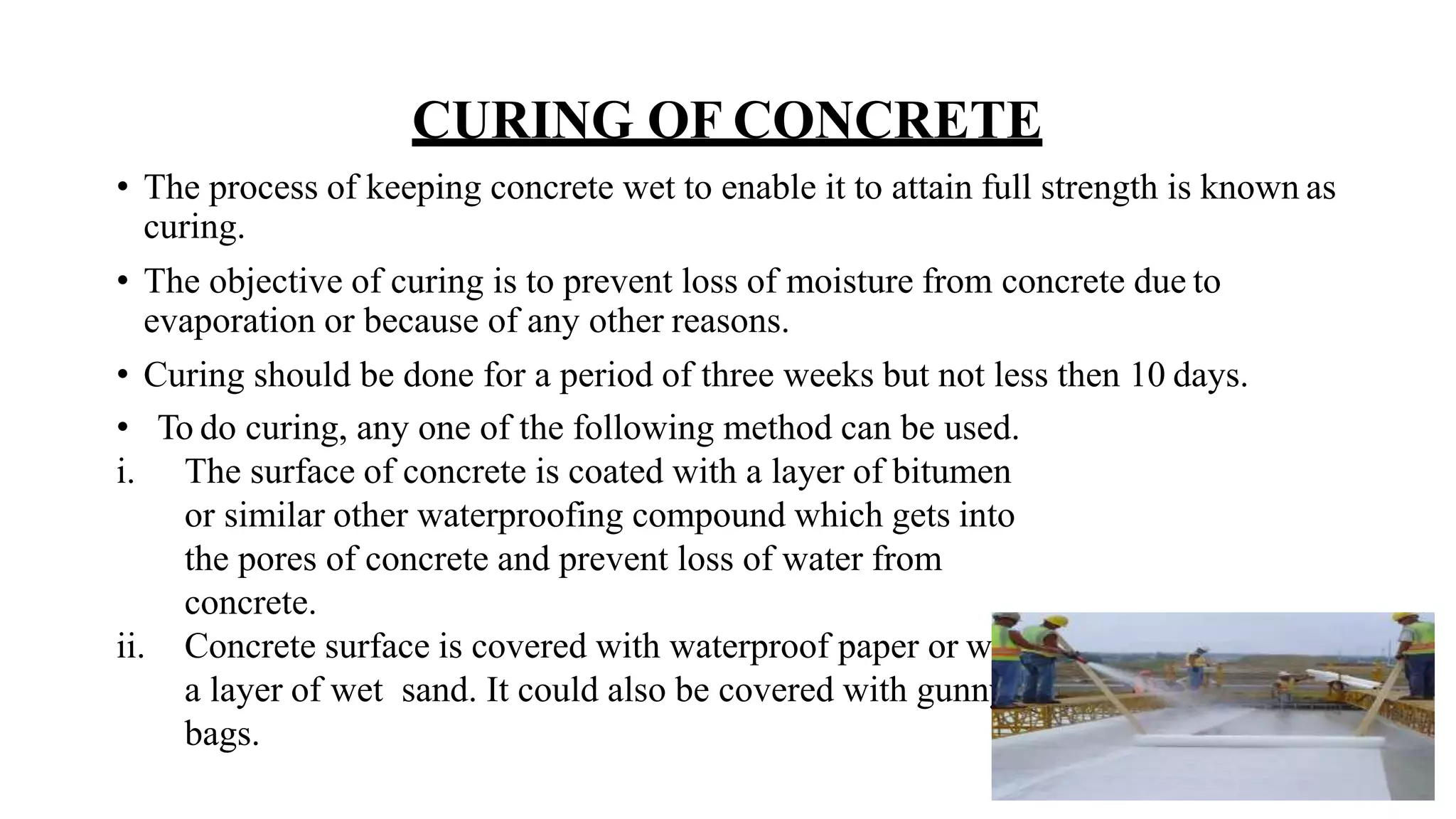
• Curing should be done for a period of three weeks but not less then 10 days.
• To do curing, any one of the following method can be used.
i. The surface of concrete is coated with a layer of bitumen
or similar other waterproofing compound which gets into
the pores of concrete and prevent loss of water from
concrete.
ii. Concrete surface is covered with waterproof paper or with
a layer of wet sand. It could also be covered with gunny
bags.
QUALITIES OF GOOD CONCRETE
• STRENGTH: The concrete should be able to withstand the stresses that it is
subjected to. It is quite strong in compression but weak in tension.
• DURABILITY: It should be durable enough to resist the effect of weathering
agents.
• DENSITY: the concrete should be well compacted so that there are no voids or
hollows left. It should weigh 3000 kg/cu.m
• WATER TIGHTNESS: when used for construction of water retaining structures such
as dams, elevated tanks and water reservoirs then this property of concrete becomes
very important. Otherwise the moisture inside the RCC would corrode steel and
leakage would start resulting in the ultimate failure of the structure.
• WORKABILITY: It should be easily workable.
• RESISTANCE TO WEAR AND TEAR: when used in floors and in the
construction of roads the concrete should be able to withstand abrasive forces.
TESTS ON CONCRETE
 The tests on concrete can be divided on the following lines:
1. Tests on Fresh concrete (wet concrete)
WORKABILITY TEST
2. Tests on Hardened concrete
3. For hardened concrete the most important tests are the assessment of
strength of concrete,which can be assessed by the following tests.
1. COMPRESSION TEST
2. FLEXURE TEST
3. SPLIT TENSILE STRENGTH TEST
4. NON DESTRUCTIVE TEST
WORKABILITY TEST
• Measurement of workability is done by the following tests:
a) Slump cone test
b) Compaction factor test
c) Vee-Bee Consistometer test
d) Kelly ball test
e) Flow table test
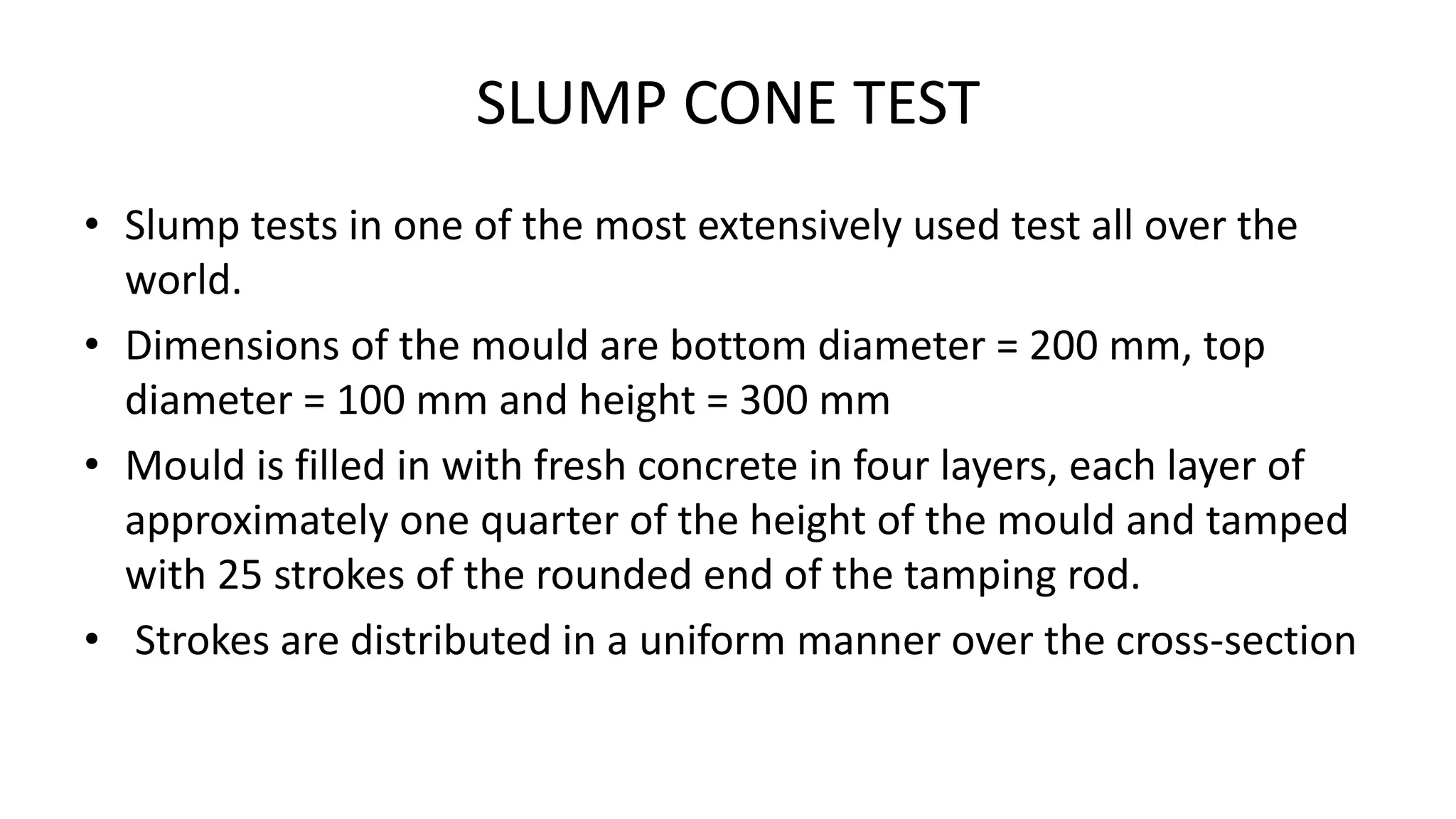
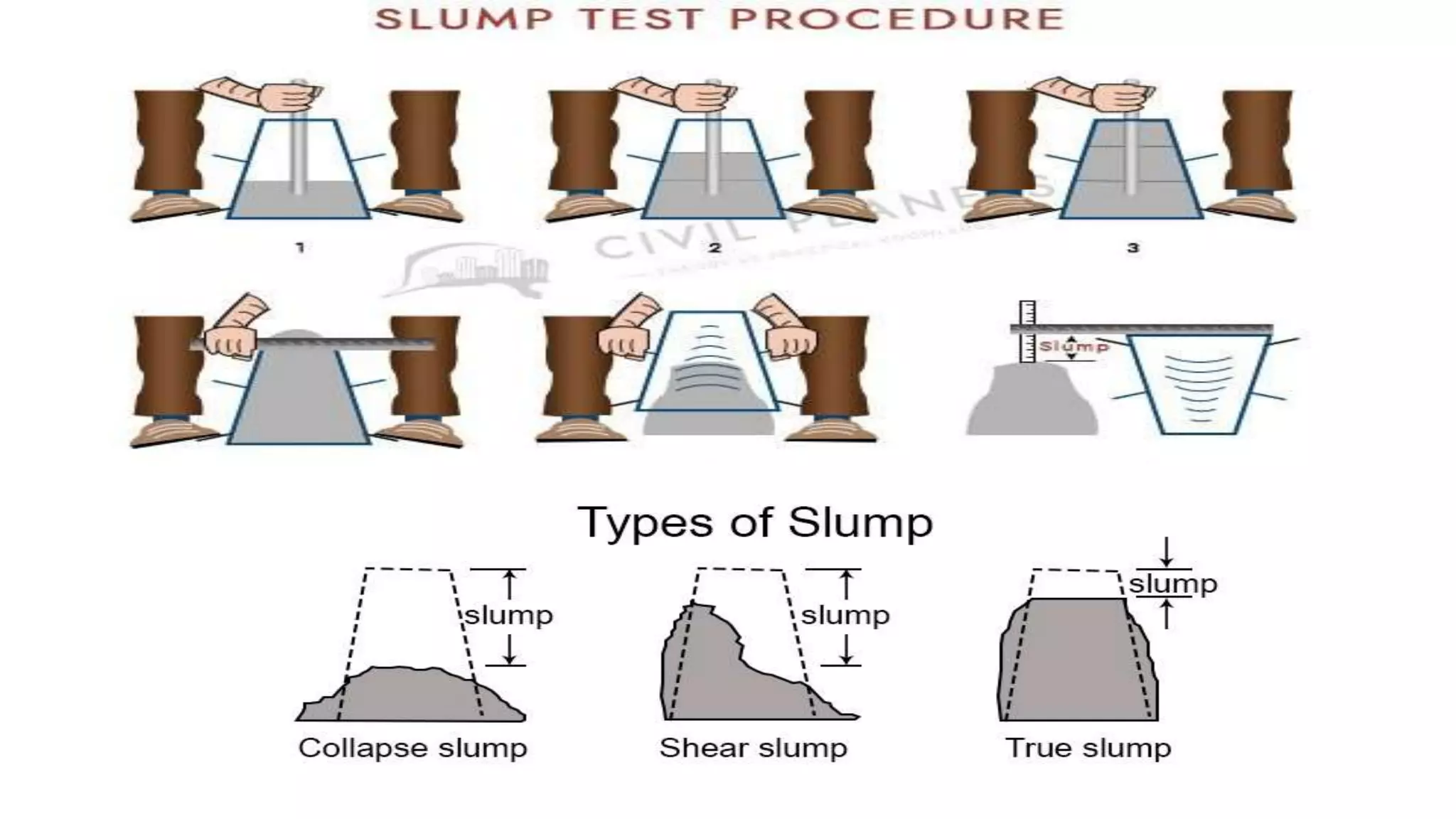
SLUMP CONE TEST
• Slump tests in one of the most extensively used test all over the
world.
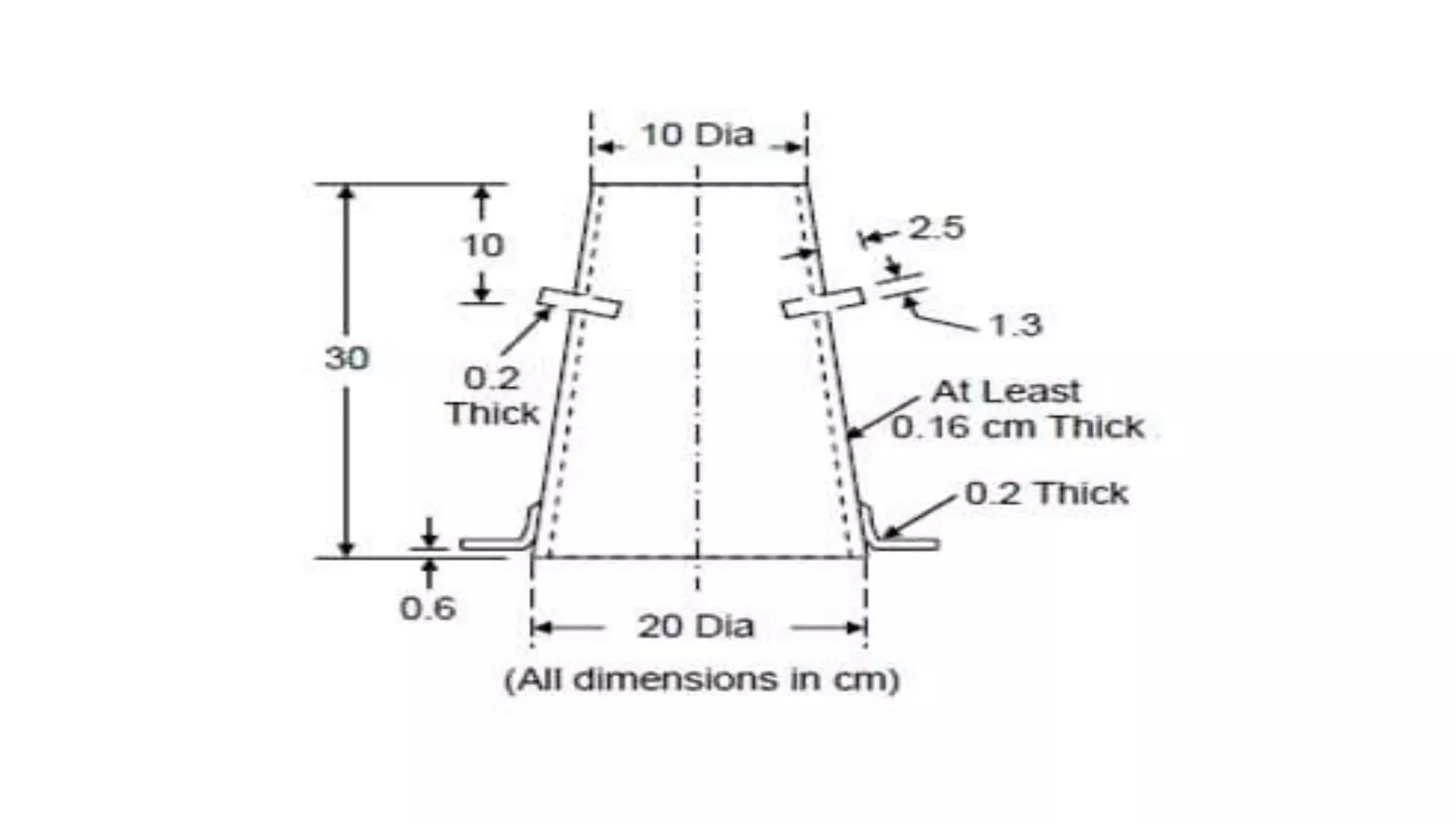
• Dimensions of the mould are bottom diameter = 200 mm, top
diameter = 100 mm and height = 300 mm
• Mould is filled in with fresh concrete in four layers, each layer of
approximately one quarter of the height of the mould and tamped
with 25 strokes of the rounded end of the tamping rod.
• Strokes are distributed in a uniform manner over the cross-section
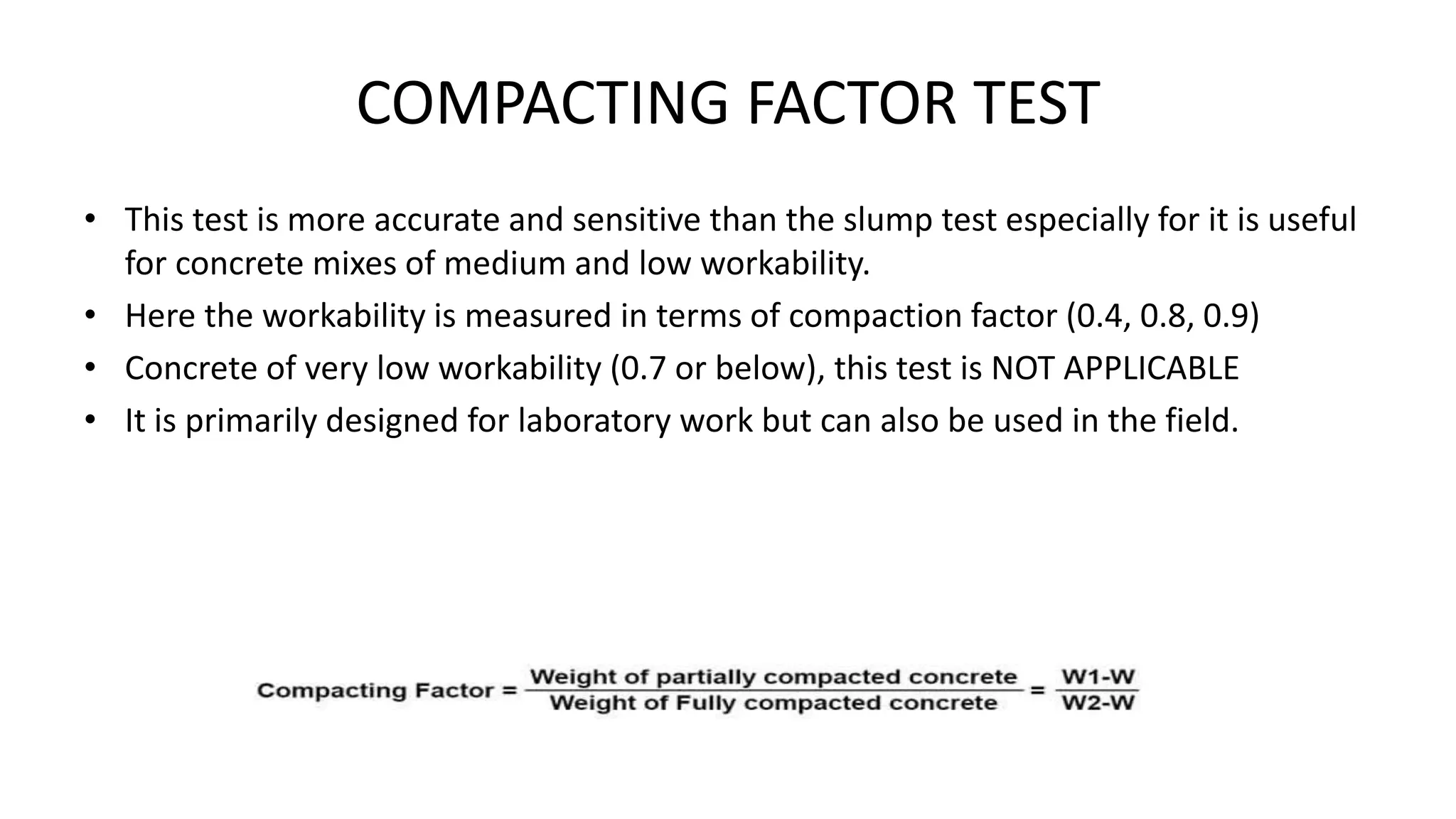
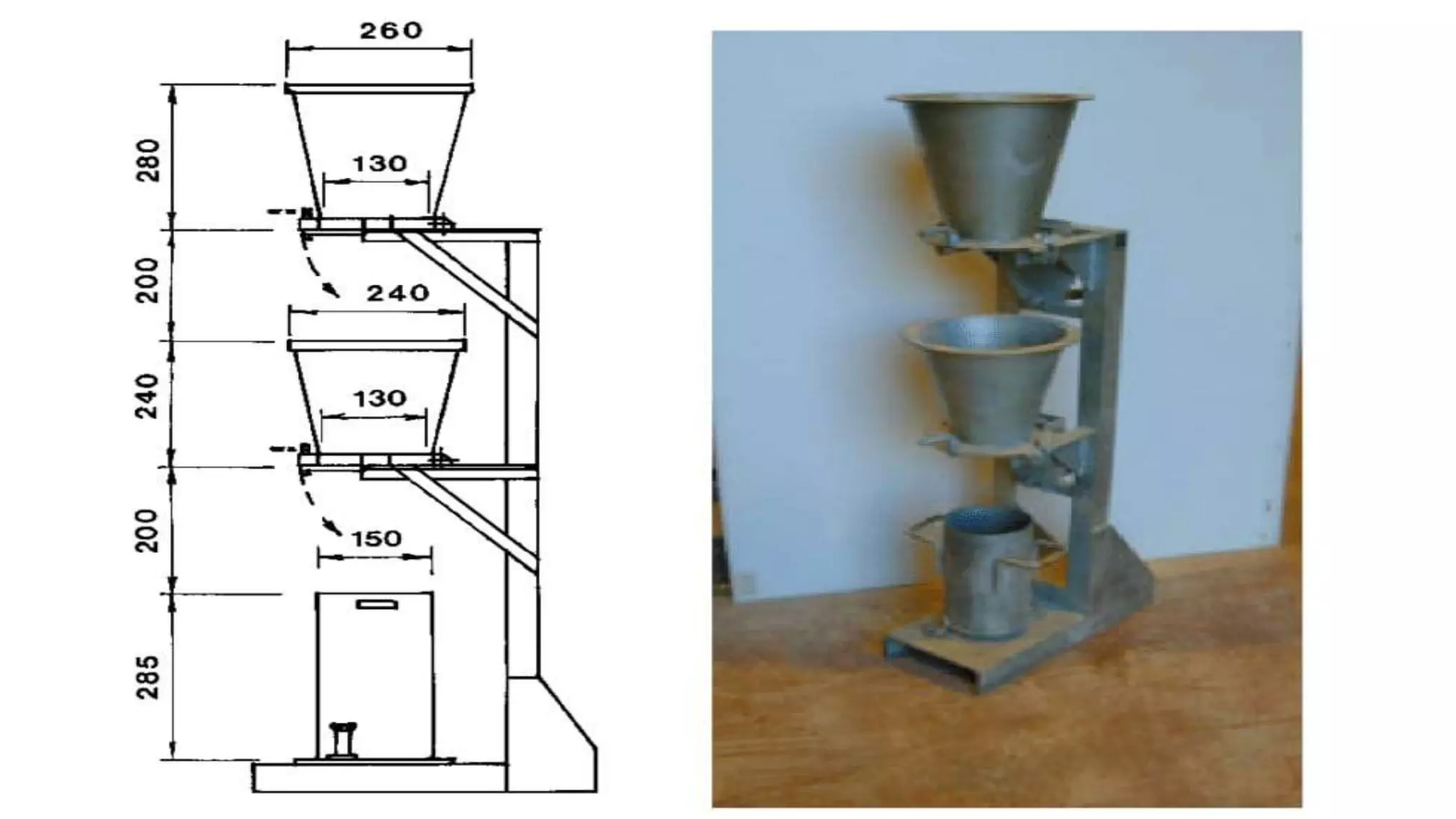
COMPACTING FACTOR TEST
• This test is more accurate and sensitive than the slump test especially for it is useful
for concrete mixes of medium and low workability.
• Here the workability is measured in terms of compaction factor (0.4, 0.8, 0.9)
• Concrete of very low workability (0.7 or below), this test is NOT APPLICABLE
• It is primarily designed for laboratory work but can also be used in the field.
VEE-BEE CONSISTOMETER TEST
• This test determines the time required for transforming, by vibration a
concrete specimen in the shape of a conical frustum into a cylinder.
• Apparatus consists of a vibrator table resting upon elastic supports, a metal
pot, a sheet metal cone, open at both ends, and a standard iron rod.
• Slump test is performed in the cylindrical pot of the consistometer which is
a good laboratory test [ONLY] to measure indirectly the workability of
concrete.
• The Slump cone is placed in the cylindrical pot, and slump is noted. Then
the electrical vibrator is switched on and the TIME TAKEN for the concrete
to spread out in the cylindrical pot is noted in seconds and workability is
measured in VEE-BEE degree.
COMPRESSIVE STRENGTH TEST
• Cement, fine aggregate and Coarse aggregate (upto 38mm) to be
used for making concrete are weighed in the required ratio to be
used in field and are thoroughly mixed, by adding requisite amount
of water until the concrete appears homogeneous.
• The test SPCIMENS are cast in the required sizes of cubes, 150mm x
150mm x 150mm or cylinders of 150mm diameter and 300mm
height. [D/H = 1/2]
• Test specimens are stored at room temperature for 24hrs from the
time of addition of water to dry ingredients.
• After this time specimens are removed from the moulds and placed
in water and kept there until taken out just before the test.
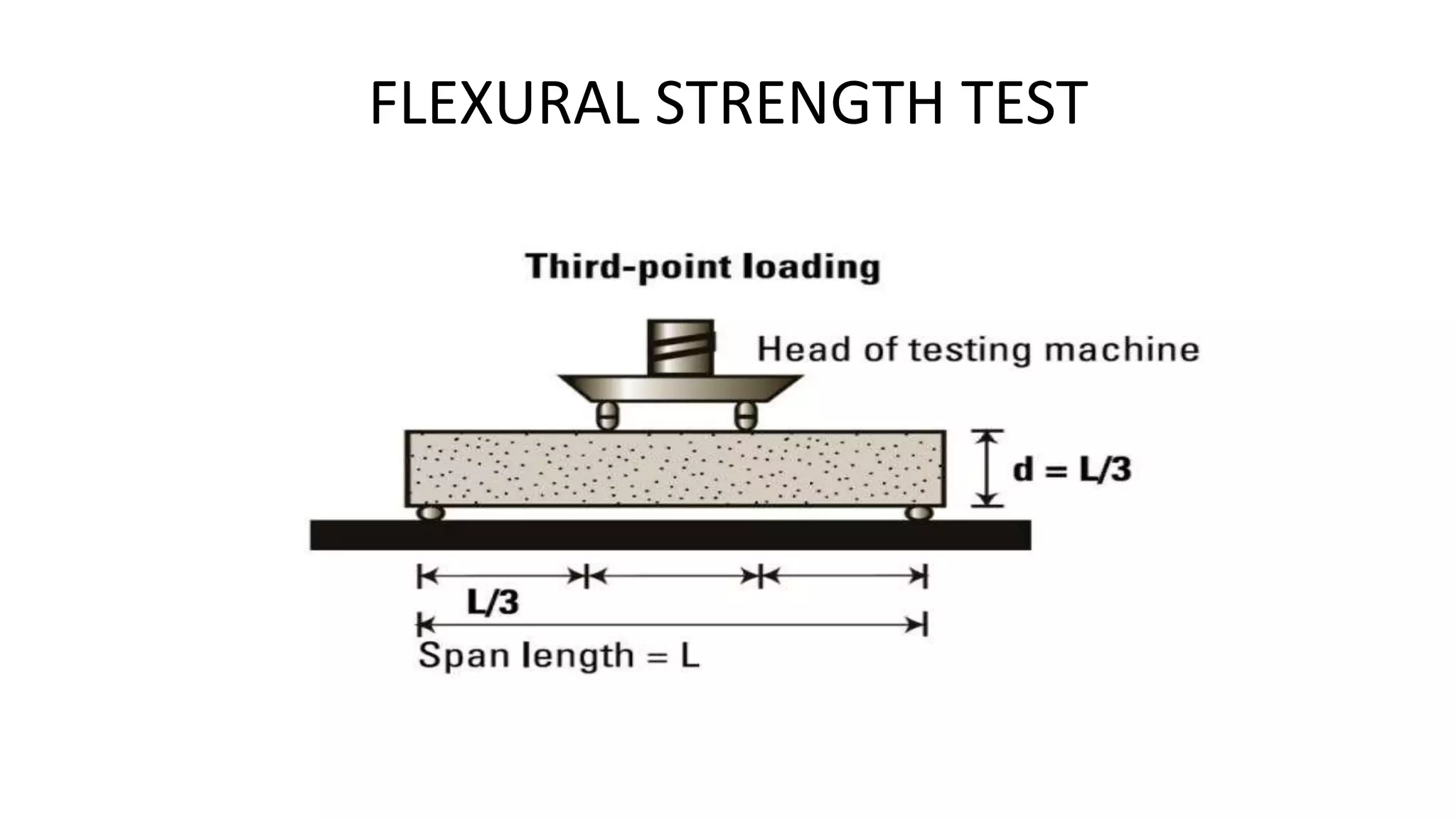
FLEXURAL STRENGTH TEST
TENSILE STRENGTH TEST
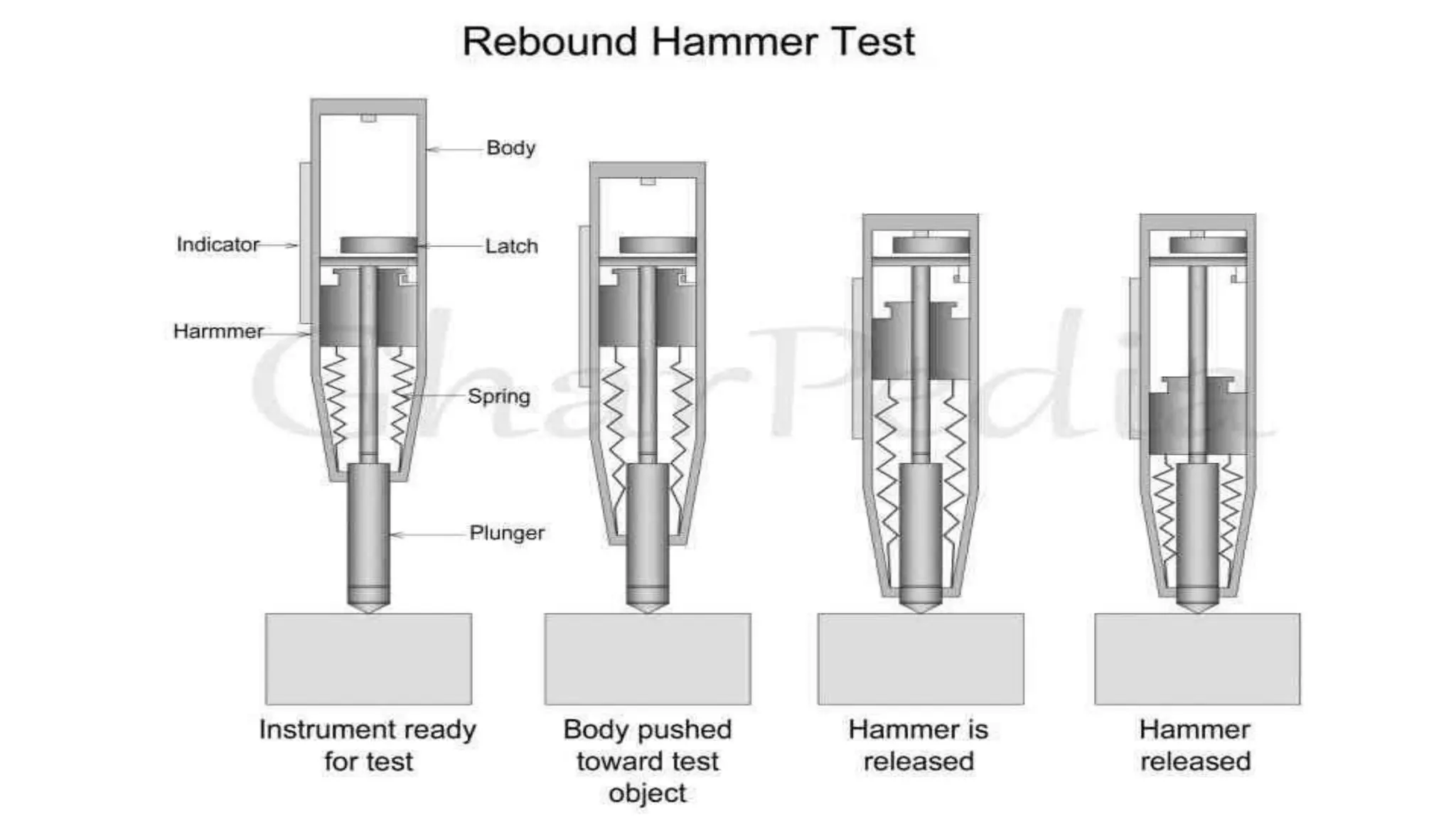
REBOUND HAMMER TEST
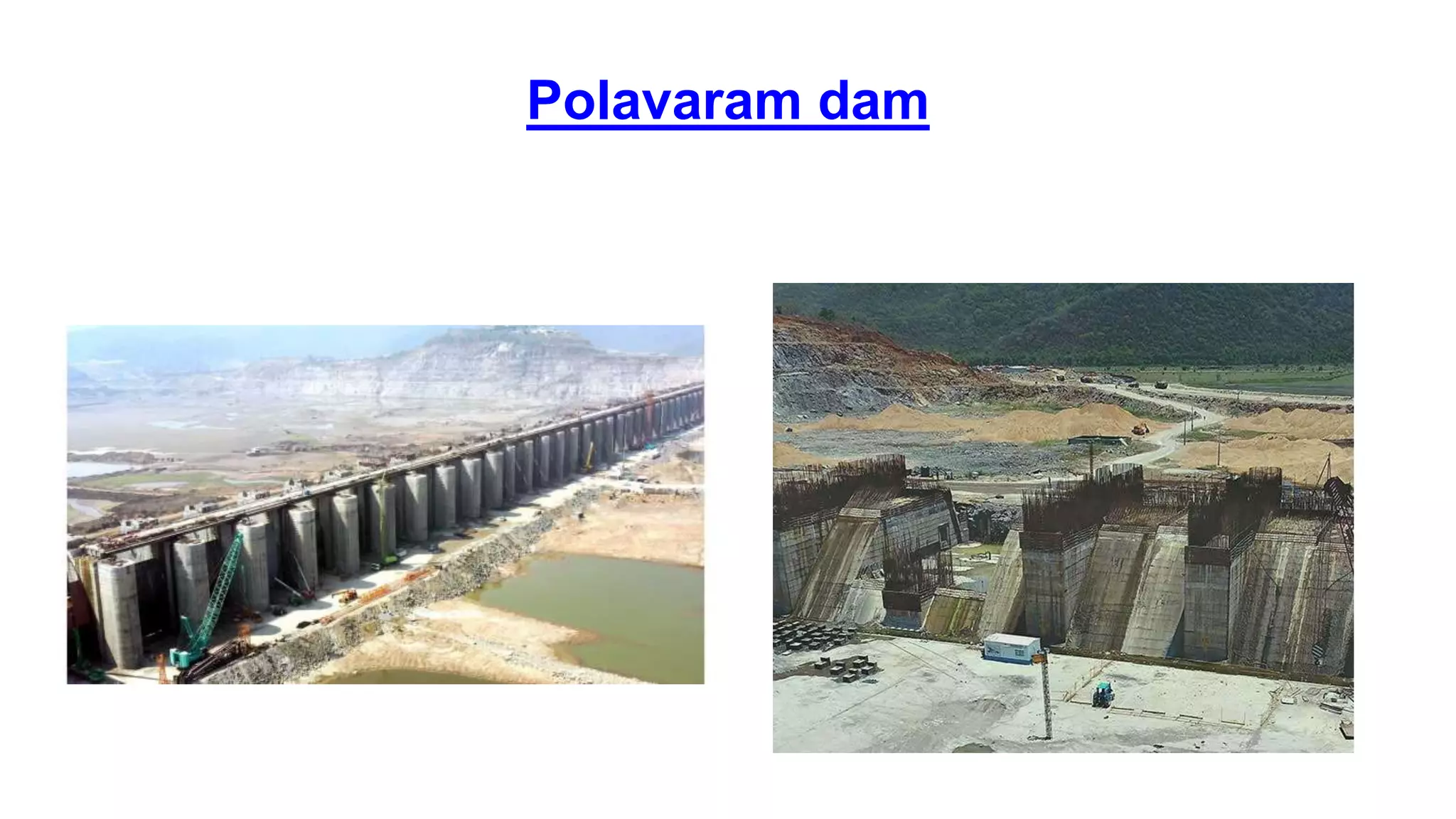
World records
Three Gorges Dam
Polavaram dam
Surprising Facts About Concrete You Never
Heard About Before
1. Reinforced concrete is the only building material that is highly
resistant to both water and fire
2. Concrete is the best material for road construction
3. The first concrete highway was built in 1909
4. Concrete was used as a building material in ancient Rome
5. The British Army used concrete to detect enemy aircraft
6. Concrete and cement are not the same thing
7. The world’s largest concrete structure is in China
Thank You

Concrete and its information

  • 2.
    MGM COLLEGE OF ENGINEERINGAND TECHNOLOGY DESHMUKH PRATHMESH (11) GARAD SAHIL (18) BE CIVIL 1ST SHIFT PROF : DR. KALPESH SHARMA
  • 3.
    Concrete The word concretecomes from the Latin word "concretus".Which means compact. Now a days concrete is most common and necessary things in our life. It’s a composite material composed of coarse aggregate bonded together with a fluid cement which hardens over time. It’s an artificial stone made of sand, stone, water & cement.
  • 4.
    History The history ofcementing materials together goes back to the time when prehistoric man prepare his cave to build shelter. He used mud and clay to fill the gap between stone. To keep out the wind and cold. Later the Assyrians and Babylonians used clay astheir bonding substance and straw to make a shape. The Egyptians used lime and gypsum and crushed stone to create a material that would harden even better.
  • 5.
    Then the Romanmade cement and they learn how to use volcanic ash. After that they built lots of structure like Pantheon, Colosseum, Trajan's Column. After the Roman Empire collapsed, use of concrete became rare until the technology was redeveloped in the mid18th century.
  • 6.
    Classification of Modernconcrete: Today, concrete is the most widely used manmade material and Concrete are classified into different types: 1. According to binding material used in concrete. 1. Cement concrete. 2. lime concrete. 2. According to design of concrete. 1. Plain cement concrete. 2. Reinforced cement concrete(RCC). 3. Pre-stressed cement concrete(PCC). 3. According to purpose of concrete. 1. Vacuum concrete: 2. Air entrained concrete 3. Light weight concrete
  • 7.
    CLASSIFICATION ACCORDING TOBINDING MATERIAL: Cement concrete The concrete consisting of cement, sand and coarse aggregates mixed in a suitable proportions in addition to water is called cement concrete. In this type of concrete cement is used as a binding material, sand as fine aggregates and gravel, crushed stones as coarse aggregates. USES cement concrete is commonly used in buildings and other important engineering works where strength and durability is of prime importance.
  • 8.
    LIME CONCRETE The concreteconsisting of lime, fine aggregates, and coarse aggregates mixed in a suitable proportions with water is called lime concrete. In this type of concrete hydraulic lime is generally used as a binding material, sand and cinder are used as fine aggregates and broken bricks, gravel can be used as coarse aggregates. PLACING OF LIME CONCRETE : Placing of concrete shall be completed within three hours of adding water in case of concrete is prepared with hydraulic lime. Concrete should be well cured for a period of at least 10 days. USES: Lime concrete is generally used for the sake of economy in foundation works, under floors, over roof and where cement is not cheaply and easily available in required quantity.
  • 9.
    CLASSIFICATION ACCORDING TODESIGN OF CONCRETE PLAIN CEMENT CONCRETE The cement concrete in which no reinforcement is provided is called plain cement concrete or mass cement concrete. This type of concrete is strong in taking compressive stresses but weak in taking tensile stresses. USES: Plain cement concrete is commonly used in for foundation work and flooring of buildings.
  • 10.
    REINFORCED CEMENTCONCRETE(RCC) The cementconcrete in which reinforcement is embedded for taking tensile stress is called reinforced cement concrete. In this type of concrete the steel reinforcement is to be used generally in the form of round bars,6mm to 32mm dia. This concrete is equally strong in taking tensile, compressive and shear stresses. USES: RCC is commonly used for construction of slabs, beams, columns, foundation, precast concrete.
  • 11.
    PRE-STRESSED CEMENT CONCRETE(PCC) The cement concrete in which high compressive stresses are artificially induced before their actual use is called pre-stresses cement concrete. In this type of cement concrete, the high compressive stresses are induced by pre-tensioning the reinforcement before placing the concrete, and the reinforcement is released when final setting of the concrete take place. Uses : This concrete can take up high tensile and compressive stresses without development of cracks. The quantity of reinforcement can be considerably reduced by using this concrete.
  • 13.
    CLASSIFICATION ACCORDING TOPURPOSE Accordingto purpose concrete is classified into following types. a. Vacuum concrete: The cement concrete from which entrained air and excess water is removed after placing it, by suction with the help of vacuum pump is called vacuum concrete. In this concrete the excess water which is added to increase workability but not required for the hydration of cement of concrete is removed by forming vacuum chamber
  • 14.
    b. Air entrainedconcrete The concrete prepared by mixing aluminum in it is called air entrained ,cellular or aerated concrete. In this concrete bubbles of hydrogen gas are liberated which forms cell and make the concrete cellular. USES: This concrete is used for lining walls and roofs for heat and sound insulation purpose.
  • 15.
    c. Light weightconcrete The concrete prepared by using coke breeze, cinder or slag as coarse aggregate is called light weight concrete. The concrete is light in weight and posses heat insulating properties. USES This concrete is used in making precast structural units for partition and wall lining.
  • 16.
    MIX DESIGN  Theprocess of selecting suitable ingredients of concrete and determining their relative quantities with the objective of producing a concrete of the required strength, durability, workability and economically as possible, is termed the concrete mix design.
  • 17.
    GRADE OF CONCRETE Thecharacteristic strength of concrete (fck) is defined as the strength of concrete below which not more than 5% of the test result are expected to fall.  What is M 20 ? M refers to MIX. 20 refers to characteristic compressive strength of cube (150mm*150mmm*150mm) at 28 days in N/mm².
  • 19.
  • 20.
    NOMINAL MIX CONCRETE TheWide use of concrete as construction material has led to the use of mixes of fixed proportions, which ensure adequate strength. These mixes are called NOMINAL MIXES. Nominal mix concrete may be used for grade M 5, M 7.5, M 10, M 15, and M 20. The G proportion of material for nominal mix shall be in accordance with Table-9 of IS: 456-2000.
  • 22.
    FACTORS INFLUENCING THECHOICE OF MIX DESIGN ✓1. Grade Of Concrete 2. Type Of Cement 3. Maximum nominal size of Aggregate 4. Grading Of Combined Aggregate 5. Maximum Water/Cement ratio 6. Workability 7. Durability 8. Quality Control
  • 23.
    METHODS OF CONCRETEMIX DESIGN ✓I.S. Method A.C.I. Method (American Concrete Institute Method) Road Note-4 Method (U.K. Method) IRC-44 Method  Arbitrary Method  Maximum Density Method  DOE (British Method) etc..
  • 24.
    I.S. METHOD TARGET MEANSTRENGTH SELECTION OF W/C RATIO DETERMINATION OF WATER CONTENT CALCUATION OF CEMENT CONTENT CALCULATION OF MASS OF FINE AGGREGATE AND COARSE AGGREGATE
  • 25.
    STEP : 1Target Strength for Mix Proportioning f'ck= Target Mean Strength at 28 Days fck= Characteristic Strength at 28 Days t = Tolerance factor= 1.65 (I.S. 10262) s = Standard Deviation Given in Table
  • 27.
    STEP : 2SELECTION OF WATER CEMENT RATIO Different cements, supplementary cementitious materials and aggregates of different maximum size, grading, surface texture, shape and other characteristics may produce concretes of different compressive strength for the same free water-cement ratio. Therefore, the relationship between strength and free water- cement ratio should preferably be established for the materials actually to be used.
  • 28.
  • 29.
    STEP : 3WATER CONTENT NOTE- These quantities of mixing water are for use in computing cemetitious material contents for trial batches. SLUMP DEDUCTIONS FOR MORE THAN 50mm SUMP.
  • 30.
    STEP : 4CALCULATION OF CEMENTITIOUS MATERIAL CONTENT The cement and supplementary cementitious material content per unit volume of concrete may be calculated from the free water cement ratio and the quantity of water per unit volume of concrete. CEMENT CONTENT= WATER CONTENT /W/C RATIO
  • 31.
    STEP : 5ESTIMATION OF COARSE AGGREGATE PROPORTION • CONTENT OF FINE AGGREGATE= 1- CONTENT OF COARSE AGGREGATE
  • 32.
    STEP : 6ESTIMATION OF MIX PROPORTION
  • 33.
    Cement, Stone AndSand Ratio DESCRIPTION OFWORK GRADE OF CONCRETE Concrete in columns, beams. 1:1:2 Water retaining structures, Piles, 1:1.5:3 precast work or dense Concrete. RCC beams, slabs, columns. 1:2:4 Foundations for buildings, Mass 1:3:6 reinforced works. For mass concrete work. 1:4:8
  • 34.
    WATER CEMENT RATIO Fordifferent ratio of concrete the amount of water for 50kg of cement is Concrete ratio 1:3:6 1:2:4 1:1.5:3 1:1:2 Water quantity 34 liter 30 liter 27 liter 25 liter • In the preparation of concrete the water cement ratio is very important • For normal construction the water cement ratio is usually 0.5 • Adding to much water will reduce the strength of concrete and can cause segregation.
  • 35.
    WORKABILITY OF CONCRETE •It is the amount of work required to place concrete and to compact it thoroughly. • Workability of concrete increases with the addition of water but it reduces the strength that’s why it is not a desirable way of increasing the workability. • Use of aggregates which are round and have smooth surfaces increases the workability. • Workability could also be improved by adding air entraining agent such as vinsol resin or Darex. • Use of Lisapole liquid at 30 cubic centimeter per bag of cement improves not only the workability but also the water tightness of concrete. • Workability of concrete is better determine by compaction factor test.
  • 36.
    PLACING OF CONCRETE •After mixing of concrete it should be placed within 30min of adding of water. • It should be quickly transported to the place of lying by means of iron pans manually, in wheel barrows, by pumping or by cranes. • In placing, concrete should be laid in thin layers. Each layer being thoroughly consolidated, before the next one is laid. • Concrete should not be dropped from a height as it would cause segregation of aggregates. • In case concrete has more of water or it has been laid in thick layers then on compaction water and fine particles of cement comes at the top forming a layer of weak substance known as laitance
  • 37.
    COMPACTION OF CONCRETE •Compaction of concrete is very important in developing qualities like strength, durability, imperviousness by making the concrete dense and free from voids. • In case of RCC compaction is done by pinning with an iron rod or even with trowel blade. • Excess temping should be avoided as otherwise water, cement and finer particles would come to the surface and results in non uniform concreting. • In case of important and big works, compaction of concrete is done with vibrator. • Use of vibrator is best and the most efficient way of compacting concrete. It gives very dense concrete. • Care should be taken not to make excessive use of vibrators otherwise the concrete becomes non homogeneous
  • 38.
    CURING OF CONCRETE •The process of keeping concrete wet to enable it to attain full strength is known as curing. • The objective of curing is to prevent loss of moisture from concrete due to evaporation or because of any other reasons. • Curing should be done for a period of three weeks but not less then 10 days. • To do curing, any one of the following method can be used. i. The surface of concrete is coated with a layer of bitumen or similar other waterproofing compound which gets into the pores of concrete and prevent loss of water from concrete. ii. Concrete surface is covered with waterproof paper or with a layer of wet sand. It could also be covered with gunny bags.
  • 39.
    QUALITIES OF GOODCONCRETE • STRENGTH: The concrete should be able to withstand the stresses that it is subjected to. It is quite strong in compression but weak in tension. • DURABILITY: It should be durable enough to resist the effect of weathering agents. • DENSITY: the concrete should be well compacted so that there are no voids or hollows left. It should weigh 3000 kg/cu.m • WATER TIGHTNESS: when used for construction of water retaining structures such as dams, elevated tanks and water reservoirs then this property of concrete becomes very important. Otherwise the moisture inside the RCC would corrode steel and leakage would start resulting in the ultimate failure of the structure. • WORKABILITY: It should be easily workable. • RESISTANCE TO WEAR AND TEAR: when used in floors and in the construction of roads the concrete should be able to withstand abrasive forces.
  • 40.
    TESTS ON CONCRETE The tests on concrete can be divided on the following lines: 1. Tests on Fresh concrete (wet concrete) WORKABILITY TEST 2. Tests on Hardened concrete 3. For hardened concrete the most important tests are the assessment of strength of concrete,which can be assessed by the following tests. 1. COMPRESSION TEST 2. FLEXURE TEST 3. SPLIT TENSILE STRENGTH TEST 4. NON DESTRUCTIVE TEST
  • 41.
    WORKABILITY TEST • Measurementof workability is done by the following tests: a) Slump cone test b) Compaction factor test c) Vee-Bee Consistometer test d) Kelly ball test e) Flow table test
  • 42.
    SLUMP CONE TEST •Slump tests in one of the most extensively used test all over the world. • Dimensions of the mould are bottom diameter = 200 mm, top diameter = 100 mm and height = 300 mm • Mould is filled in with fresh concrete in four layers, each layer of approximately one quarter of the height of the mould and tamped with 25 strokes of the rounded end of the tamping rod. • Strokes are distributed in a uniform manner over the cross-section
  • 47.
    COMPACTING FACTOR TEST •This test is more accurate and sensitive than the slump test especially for it is useful for concrete mixes of medium and low workability. • Here the workability is measured in terms of compaction factor (0.4, 0.8, 0.9) • Concrete of very low workability (0.7 or below), this test is NOT APPLICABLE • It is primarily designed for laboratory work but can also be used in the field.
  • 49.
    VEE-BEE CONSISTOMETER TEST •This test determines the time required for transforming, by vibration a concrete specimen in the shape of a conical frustum into a cylinder. • Apparatus consists of a vibrator table resting upon elastic supports, a metal pot, a sheet metal cone, open at both ends, and a standard iron rod. • Slump test is performed in the cylindrical pot of the consistometer which is a good laboratory test [ONLY] to measure indirectly the workability of concrete. • The Slump cone is placed in the cylindrical pot, and slump is noted. Then the electrical vibrator is switched on and the TIME TAKEN for the concrete to spread out in the cylindrical pot is noted in seconds and workability is measured in VEE-BEE degree.
  • 51.
    COMPRESSIVE STRENGTH TEST •Cement, fine aggregate and Coarse aggregate (upto 38mm) to be used for making concrete are weighed in the required ratio to be used in field and are thoroughly mixed, by adding requisite amount of water until the concrete appears homogeneous. • The test SPCIMENS are cast in the required sizes of cubes, 150mm x 150mm x 150mm or cylinders of 150mm diameter and 300mm height. [D/H = 1/2] • Test specimens are stored at room temperature for 24hrs from the time of addition of water to dry ingredients. • After this time specimens are removed from the moulds and placed in water and kept there until taken out just before the test.
  • 53.
  • 54.
  • 56.
  • 59.
  • 60.
  • 61.
    Surprising Facts AboutConcrete You Never Heard About Before
  • 62.
    1. Reinforced concreteis the only building material that is highly resistant to both water and fire 2. Concrete is the best material for road construction 3. The first concrete highway was built in 1909 4. Concrete was used as a building material in ancient Rome 5. The British Army used concrete to detect enemy aircraft 6. Concrete and cement are not the same thing 7. The world’s largest concrete structure is in China
  • 65.