
78
Indian Architect & Builder April 2006


                                          TIMELESS
                                          THEMES
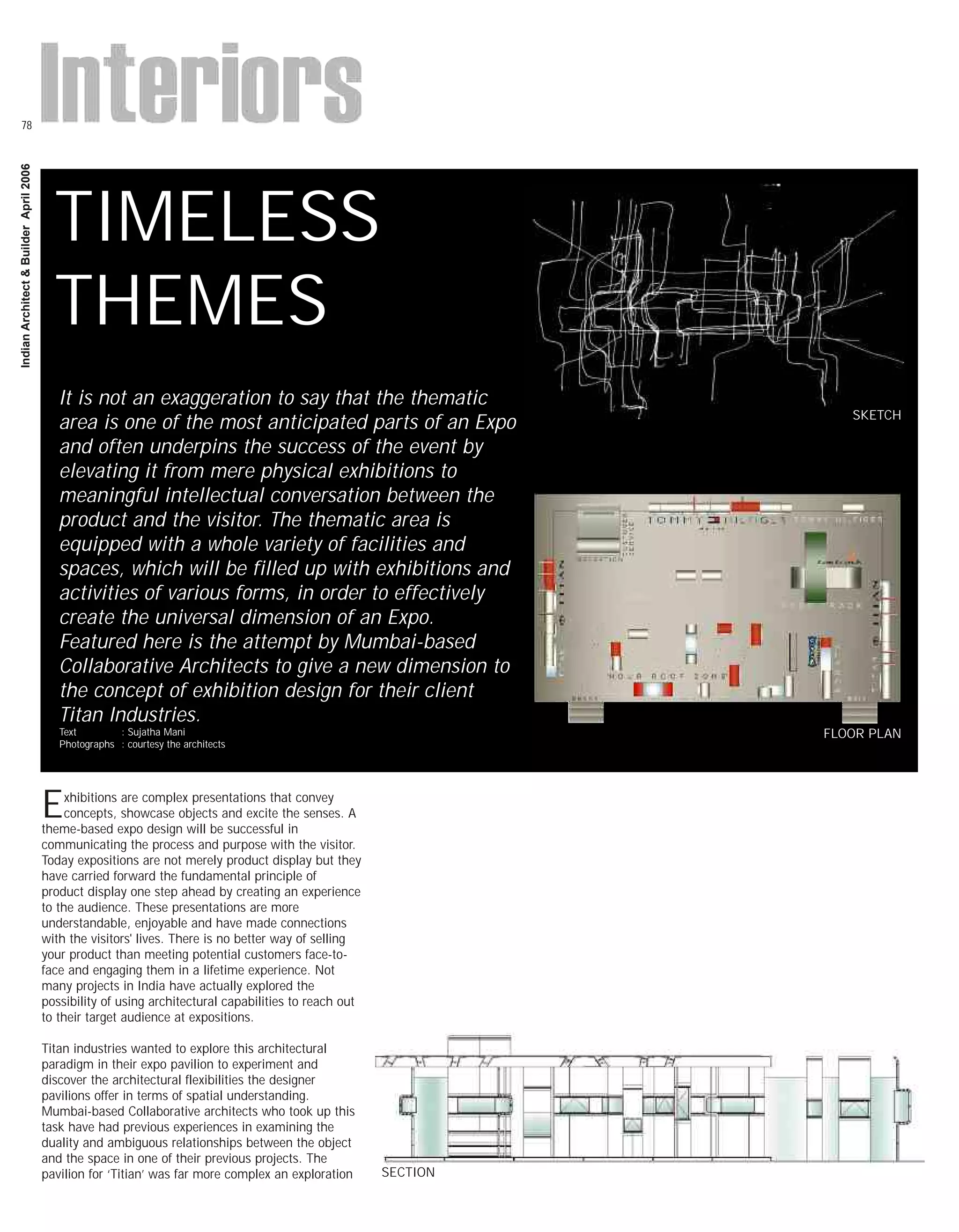
                                           It is not an exaggeration to say that the thematic
                                                                                                                    SKETCH
                                           area is one of the most anticipated parts of an Expo
                                           and often underpins the success of the event by
                                           elevating it from mere physical exhibitions to
                                           meaningful intellectual conversation between the
                                           product and the visitor. The thematic area is
                                           equipped with a whole variety of facilities and
                                           spaces, which will be filled up with exhibitions and
                                           activities of various forms, in order to effectively
                                           create the universal dimension of an Expo.
                                           Featured here is the attempt by Mumbai-based
                                           Collaborative Architects to give a new dimension to
                                           the concept of exhibition design for their client
                                           Titan Industries.
                                           Text        : Sujatha Mani                                            FLOOR PLAN
                                           Photographs : courtesy the architects


                                        E    xhibitions are complex presentations that convey
                                             concepts, showcase objects and excite the senses. A
                                        theme-based expo design will be successful in
                                        communicating the process and purpose with the visitor.
                                        Today expositions are not merely product display but they
                                        have carried forward the fundamental principle of
                                        product display one step ahead by creating an experience
                                        to the audience. These presentations are more
                                        understandable, enjoyable and have made connections
                                        with the visitors' lives. There is no better way of selling
                                        your product than meeting potential customers face-to-
                                        face and engaging them in a lifetime experience. Not
                                        many projects in India have actually explored the
                                        possibility of using architectural capabilities to reach out
                                        to their target audience at expositions.

                                        Titan industries wanted to explore this architectural
                                        paradigm in their expo pavilion to experiment and
                                        discover the architectural flexibilities the designer
                                        pavilions offer in terms of spatial understanding.
                                        Mumbai-based Collaborative architects who took up this
                                        task have had previous experiences in examining the
                                        duality and ambiguous relationships between the object
                                        and the space in one of their previous projects. The
                                        pavilion for ‘Titian’ was far more complex an exploration      SECTION
79


                                                                     Indian Architect & Builder April 2006
                                                             1   2


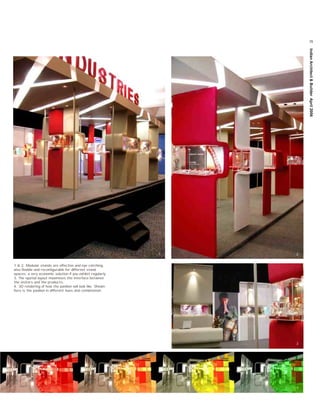
1 & 2. Modular stands are effective and eye catching,
also flexible and reconfigurable for different stand
spaces; a very economic solution if you exhibit regularly.
3. The spatial layout maximises the interface between
the visitors and the products.
4. 3D rendering of how the pavilion will look like. Shown
here is the pavilion in different hues and combination.


                                                                 3


                                                                 4
Indian Architect & Builder April 2006


                                            80


5
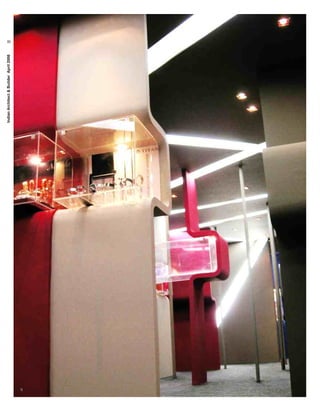
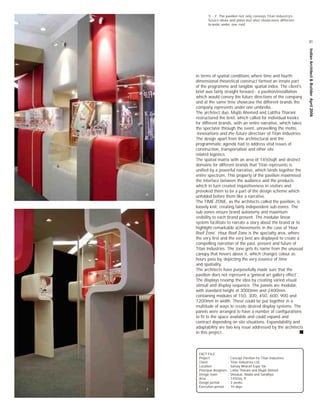
5 - 7. The pavilion not only conveys Titan Industry's
           future ideas and plans but also showcases different
           brands under one roof.


                                                                        81


                                                                       Indian Architect & Builder April 2006
    in terms of spatial conditions where time and fourth
    dimensional theoretical construct formed an innate part
    of the programme and tangible spatial index. The client's
    brief was fairly straight forward - a pavilion/installation
    which would convey the future directions of the company
    and at the same time showcase the different brands the
    company represents under one umbrella.
    The architect duo, Mujib Ahemed and Lalitha Tharani
    restructured the brief, which called for individual kiosks
    for different brands, with an entire narrative, which takes
    the spectator through the event, unravelling the motto,
    ‘innovations and the future direction’ of Titan Industries.
    The design apart from the architectural and the
    programmatic agenda had to address vital issues of
    construction, transportation and other site
    related logistics.
    The spatial matrix with an area of 1450sqft and distinct
    domains for different brands that Titan represents is
    unified by a powerful narrative, which binds together the
    entire spectrum. This property of the pavilion maximised
    the interface between the audience and the products
    which in turn created inquisitiveness in visitors and
    provoked them to be a part of the design scheme which
6
    unfolded before them like a narrative.
    The TIME ZONE, as the architects called the pavilion, is
    loosely knit, creating fairly independent sub-zones. The
    sub-zones ensure brand autonomy and maximum
    visibility to each brand present. The modular linear
    system facilitate to narrate a story about the brand or to
    highlight remarkable achievements in the case of 'Hour
    Roof Zone'. Hour Roof Zone is the specialty area, where
    the very first and the very best are displayed to create a
    compelling narration of the past, present and future of
    Titan Industries. The zone gets its name from the unusual
    canopy that hovers above it, which changes colour as
    hours pass by, depicting the very essence of time
    and spatiality.
    The architects have purposefully made sure that the
    pavilion does not represent a 'general art gallery effect'.
    The displays revamp the idea by creating varied visual
    stimuli and display sequence. The panels are modular,
    with standard height of 3000mm and 2400mm
    containing modules of 150, 300, 450, 600, 900 and
    1200mm in width. These could be put together in a
    multitude of ways to create desired display systems. The
    panels were arranged to have a number of configurations
    to fit to the space available and could expand and
    contract depending on site situations. Expandability and
    adaptability are two key issue addressed by the architects
    in this project.


     FACT FILE
     Project               :   Concept Pavilion for Titan Industries
     Client                :   Titan Industries Ltd.
     Location              :   Samay Bharati Expo '06
     Principal designers   :   Lalita Tharani and Mujib Ahmed
     Design team           :   Shoukat, Nadia and Sandhya,
     Area                  :   1450sq. ft
     Design period         :   3 weeks
     Execution period      :   10 days
7
CONCEPT PAVILION

CONCEPT PAVILION

  • 1.
    78 Indian Architect &Builder April 2006 TIMELESS THEMES It is not an exaggeration to say that the thematic SKETCH area is one of the most anticipated parts of an Expo and often underpins the success of the event by elevating it from mere physical exhibitions to meaningful intellectual conversation between the product and the visitor. The thematic area is equipped with a whole variety of facilities and spaces, which will be filled up with exhibitions and activities of various forms, in order to effectively create the universal dimension of an Expo. Featured here is the attempt by Mumbai-based Collaborative Architects to give a new dimension to the concept of exhibition design for their client Titan Industries. Text : Sujatha Mani FLOOR PLAN Photographs : courtesy the architects E xhibitions are complex presentations that convey concepts, showcase objects and excite the senses. A theme-based expo design will be successful in communicating the process and purpose with the visitor. Today expositions are not merely product display but they have carried forward the fundamental principle of product display one step ahead by creating an experience to the audience. These presentations are more understandable, enjoyable and have made connections with the visitors' lives. There is no better way of selling your product than meeting potential customers face-to- face and engaging them in a lifetime experience. Not many projects in India have actually explored the possibility of using architectural capabilities to reach out to their target audience at expositions. Titan industries wanted to explore this architectural paradigm in their expo pavilion to experiment and discover the architectural flexibilities the designer pavilions offer in terms of spatial understanding. Mumbai-based Collaborative architects who took up this task have had previous experiences in examining the duality and ambiguous relationships between the object and the space in one of their previous projects. The pavilion for ‘Titian’ was far more complex an exploration SECTION
  • 2.
    79 Indian Architect & Builder April 2006 1 2 1 & 2. Modular stands are effective and eye catching, also flexible and reconfigurable for different stand spaces; a very economic solution if you exhibit regularly. 3. The spatial layout maximises the interface between the visitors and the products. 4. 3D rendering of how the pavilion will look like. Shown here is the pavilion in different hues and combination. 3 4
  • 3.
    Indian Architect &Builder April 2006 80 5
  • 4.
    5 - 7.The pavilion not only conveys Titan Industry's future ideas and plans but also showcases different brands under one roof. 81 Indian Architect & Builder April 2006 in terms of spatial conditions where time and fourth dimensional theoretical construct formed an innate part of the programme and tangible spatial index. The client's brief was fairly straight forward - a pavilion/installation which would convey the future directions of the company and at the same time showcase the different brands the company represents under one umbrella. The architect duo, Mujib Ahemed and Lalitha Tharani restructured the brief, which called for individual kiosks for different brands, with an entire narrative, which takes the spectator through the event, unravelling the motto, ‘innovations and the future direction’ of Titan Industries. The design apart from the architectural and the programmatic agenda had to address vital issues of construction, transportation and other site related logistics. The spatial matrix with an area of 1450sqft and distinct domains for different brands that Titan represents is unified by a powerful narrative, which binds together the entire spectrum. This property of the pavilion maximised the interface between the audience and the products which in turn created inquisitiveness in visitors and provoked them to be a part of the design scheme which 6 unfolded before them like a narrative. The TIME ZONE, as the architects called the pavilion, is loosely knit, creating fairly independent sub-zones. The sub-zones ensure brand autonomy and maximum visibility to each brand present. The modular linear system facilitate to narrate a story about the brand or to highlight remarkable achievements in the case of 'Hour Roof Zone'. Hour Roof Zone is the specialty area, where the very first and the very best are displayed to create a compelling narration of the past, present and future of Titan Industries. The zone gets its name from the unusual canopy that hovers above it, which changes colour as hours pass by, depicting the very essence of time and spatiality. The architects have purposefully made sure that the pavilion does not represent a 'general art gallery effect'. The displays revamp the idea by creating varied visual stimuli and display sequence. The panels are modular, with standard height of 3000mm and 2400mm containing modules of 150, 300, 450, 600, 900 and 1200mm in width. These could be put together in a multitude of ways to create desired display systems. The panels were arranged to have a number of configurations to fit to the space available and could expand and contract depending on site situations. Expandability and adaptability are two key issue addressed by the architects in this project. FACT FILE Project : Concept Pavilion for Titan Industries Client : Titan Industries Ltd. Location : Samay Bharati Expo '06 Principal designers : Lalita Tharani and Mujib Ahmed Design team : Shoukat, Nadia and Sandhya, Area : 1450sq. ft Design period : 3 weeks Execution period : 10 days 7