Poornima College of Engineering
Department of Information Technology
A
Seminar Presentation
on
“Computer Virus & Cyber Attacks”
Guided By :
Ms. Shakshi Mishra
Seminar Coordinators :
Ms. Shazia Haque
Ms. Sita Gupta
Presented By:
Bhavesh Soni:
PCE15IT012
Session: 2018-19 (Even Sem.)
Contents : -
 Introduction
 History of Virus
 How does Virus work
 Creation of Virus
 Types of Virus
 Cyber Attacks
 Methods Of Detecting Virus By ANTI-VIRUS
Introduction : -
 Computer Virus - Computer virus is a piece of code or program which generates
copies automatically to another file or program that harm the target machine. OR
 A virus is illegal computer code that can do such things as alter programs or
destroy data. Also, the virus can copy itself onto programs, there by spreading its
damaging effects.
 The survey carried out by Microsoft Security Intelligence, about15 million Local
Systems have experienced a serious virus problem in last two years. 35% of the
world's computers are infected with some type of virus
History of Virus : -
 1949 - Theories for self-replicating programs was first developed.
 1981 - Apple Viruses 1, 2, and 3 was some of the first viruses in public.
 1988 – Jerusalem was detected. Activated every Friday the 13th, the virus affects
both .EXE and .COM files and deletes any programs run on that day.
 1991 - Tequila is the first widespread polymorphic virus found.
 1999 - The Melissa virus, W97M/Melissa, executed a macro in a document
attached to an email. Melissa spread faster than any other previous virus.
 2000 - The Love Bug, also known as the ILOVEYOU virus, sent itself out via
Outlook, much like Melissa.
 2001 - The Code Red I and II worms attacked computer networks in July and
August. They affected over 700,000 computers and caused upwards of 2 billion in
damages.
How does Virus work : -
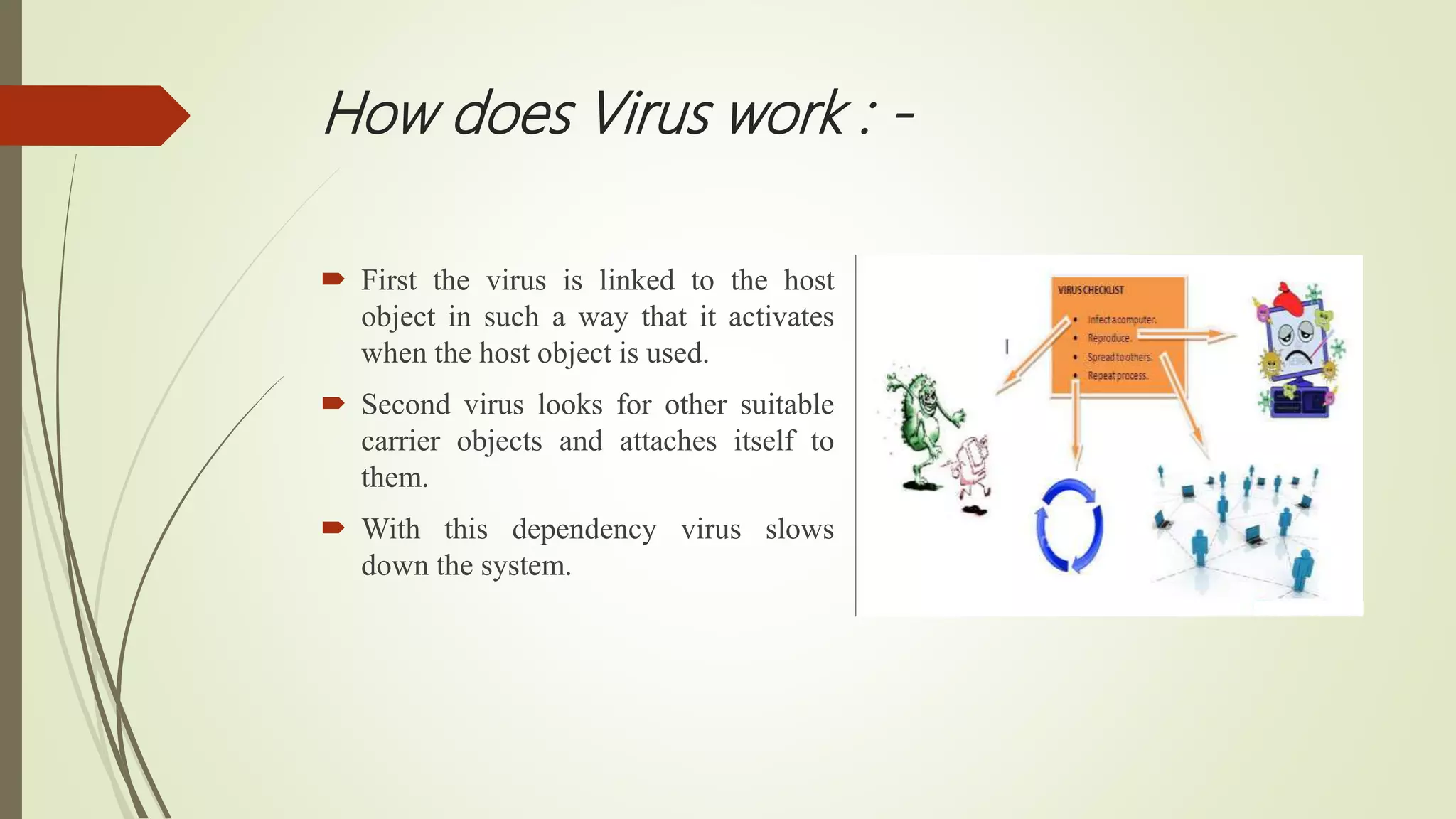
 First the virus is linked to the host
object in such a way that it activates
when the host object is used.
 Second virus looks for other suitable
carrier objects and attaches itself to
them.
 With this dependency virus slows
down the system.
Creation of Virus : -
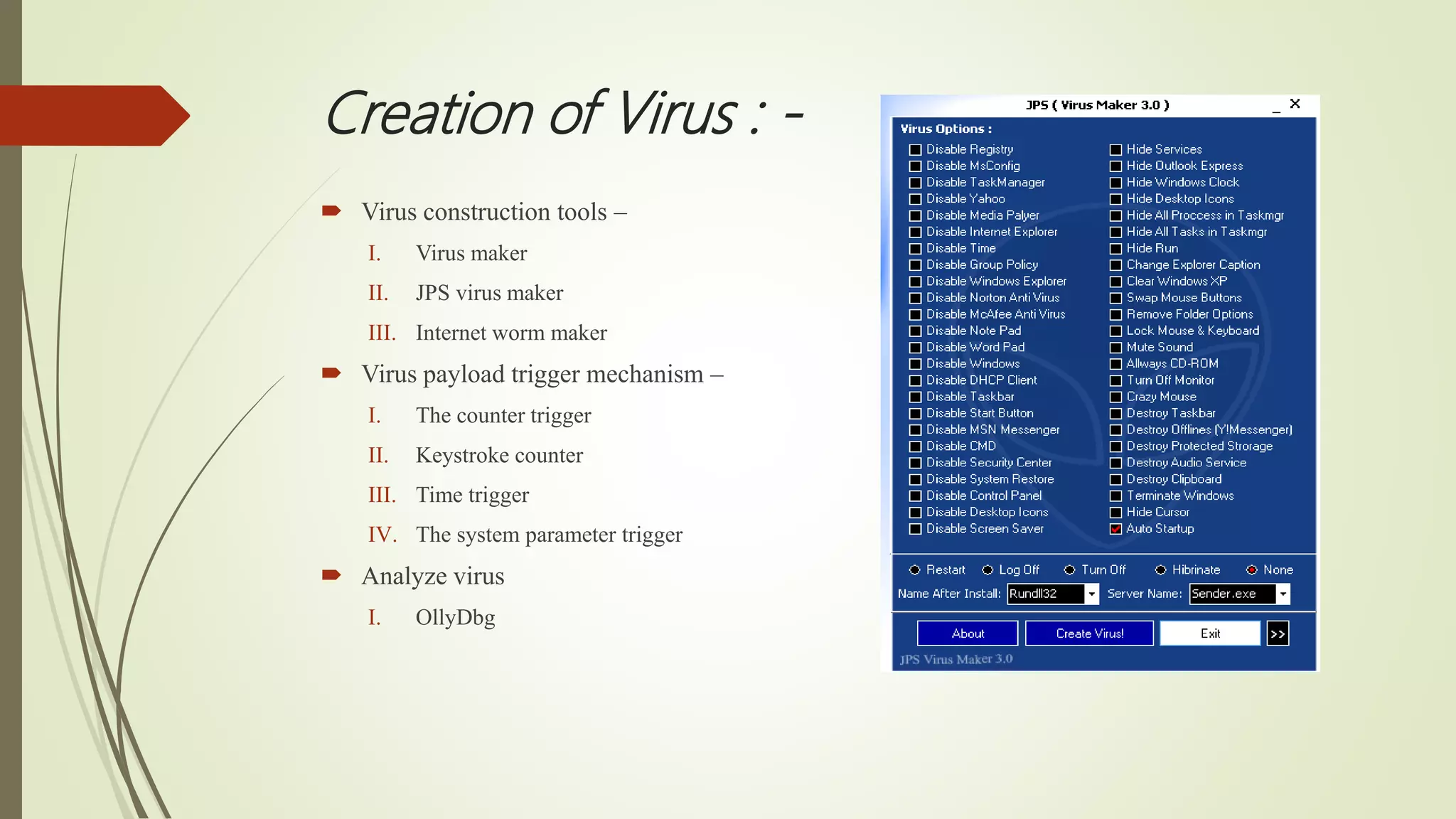
 Virus construction tools –
I. Virus maker
II. JPS virus maker
III. Internet worm maker
 Virus payload trigger mechanism –
I. The counter trigger
II. Keystroke counter
III. Time trigger
IV. The system parameter trigger
 Analyze virus
I. OllyDbg
Types of Virus : -
 Boot Sector Virus - This kind of virus got attention when floppy disks were used
to boot a computer. In modern generation computers, this virus could appear on
the "Master Boot Record".
 Web Scripting Virus - This virus is a type of security vulnerability through
websites that breaches your web browser security. This allows the attackers to
inject client-side scripting into the web page.
 Browser Hijacker - This type of virus automatically changes the browser’s
settings, and injects unwanted advertising into user's browser.
Types of Virus (continue)
 Resident Virus - This type of virus insert into the memory and it is capable of
take number of actions. This virus is able to run on its own.
 Direct Action Virus - This virus became active after the user executes the file.
The file is loaded in the system and if executed by user then virus activates itself
and perform its actions.
 Polymorphic Virus - Antivirus enabled in the user's system try to catch the virus
by its code but Polymorphic virus changes its code every time infected file is
executed
Cyber Attack : -
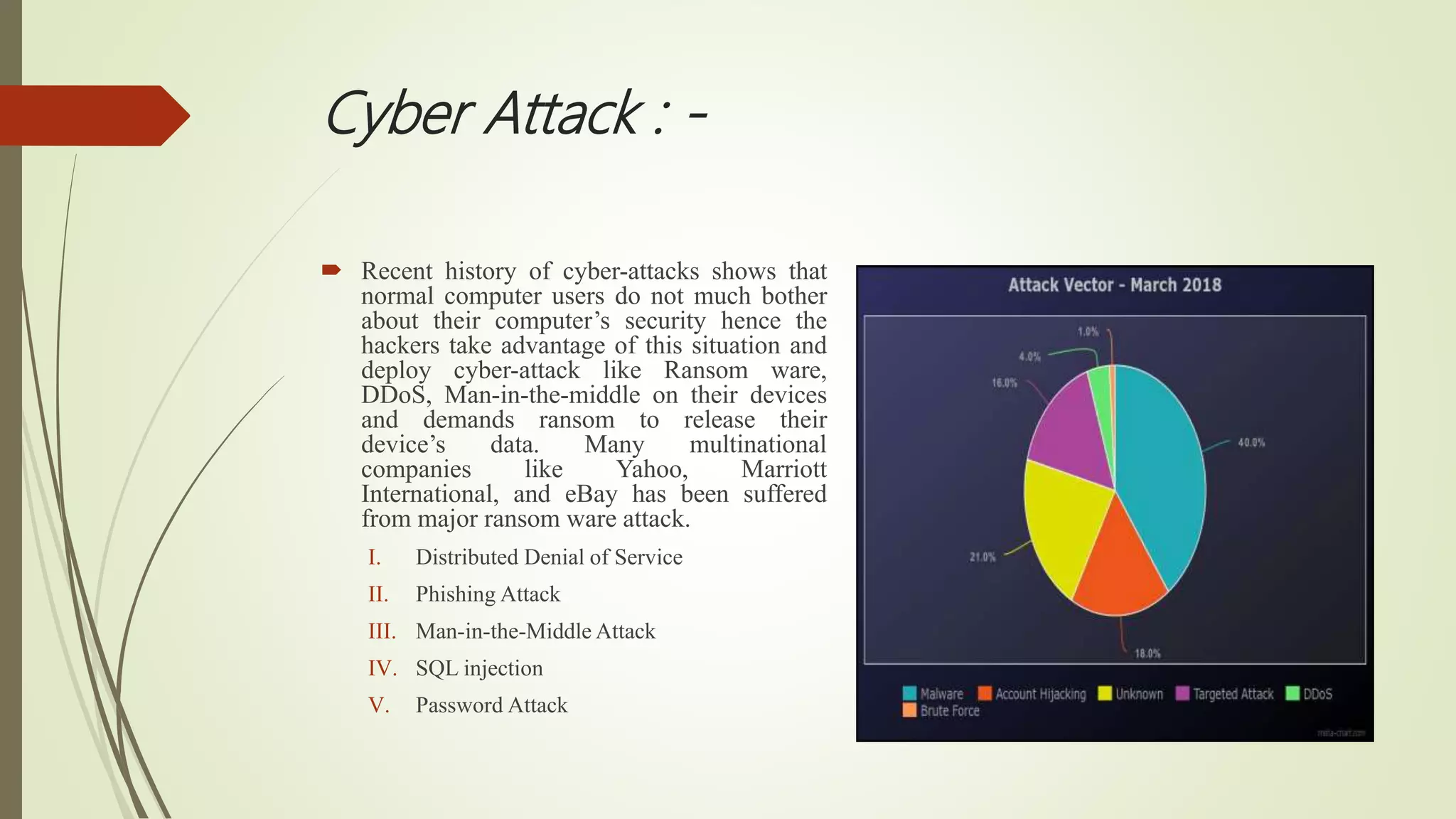
 Recent history of cyber-attacks shows that
normal computer users do not much bother
about their computer’s security hence the
hackers take advantage of this situation and
deploy cyber-attack like Ransom ware,
DDoS, Man-in-the-middle on their devices
and demands ransom to release their
device’s data. Many multinational
companies like Yahoo, Marriott
International, and eBay has been suffered
from major ransom ware attack.
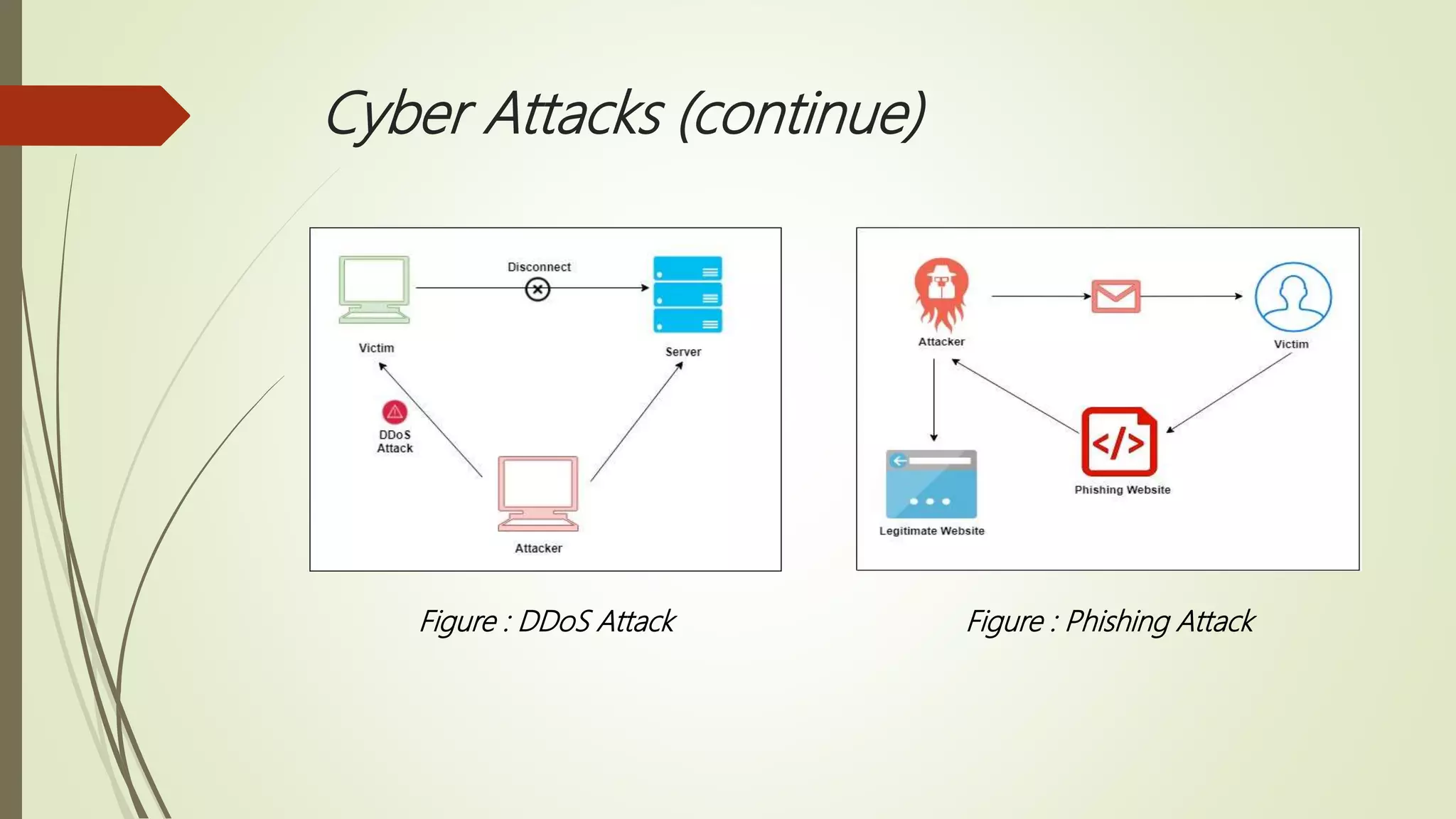
I. Distributed Denial of Service
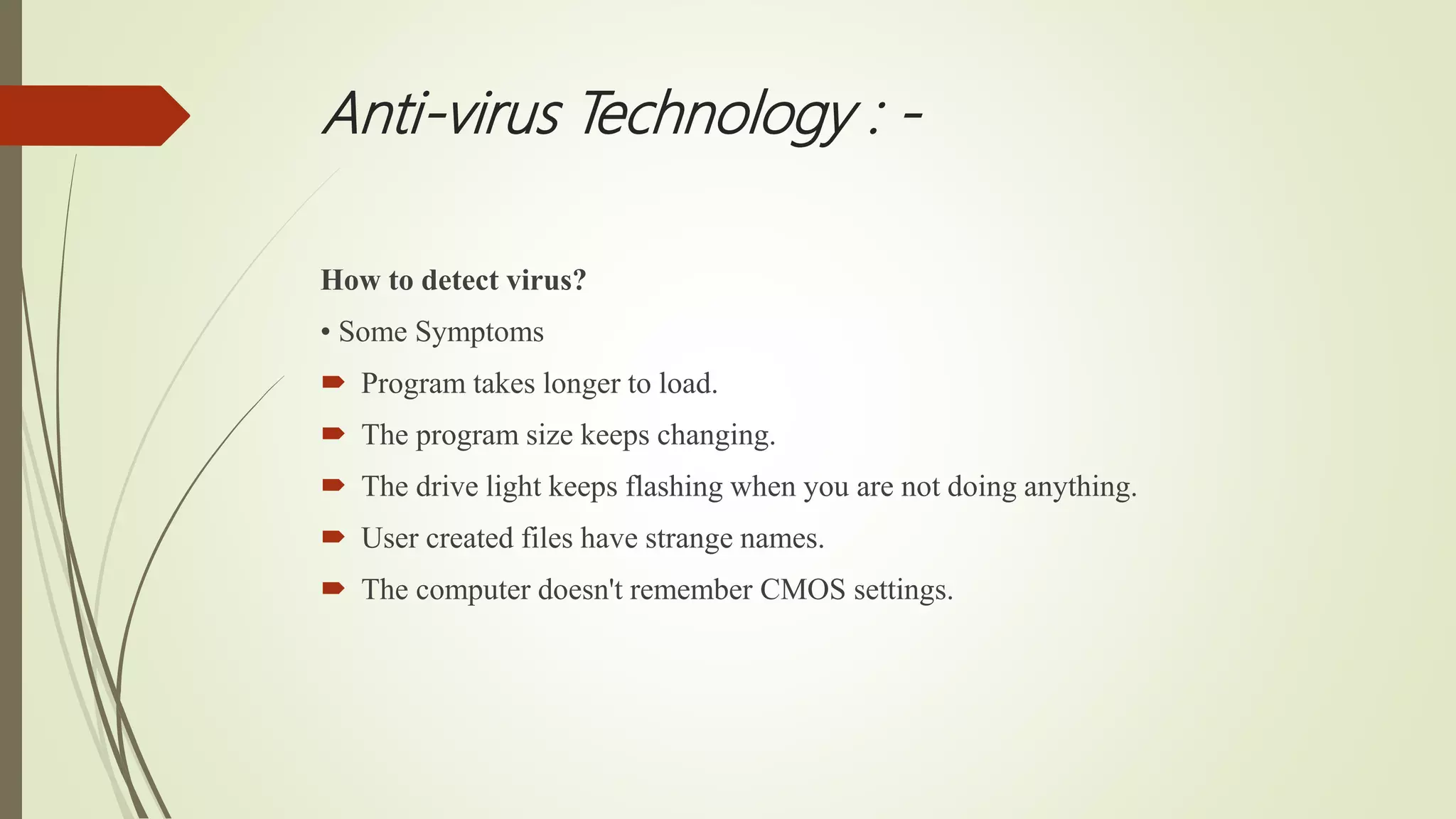
II. Phishing Attack
III. Man-in-the-Middle Attack
IV. SQL injection
V. Password Attack
Cyber Attacks (continue)
Figure : DDoS Attack Figure : Phishing Attack
Anti-virus Technology : -
How to detect virus?
• Some Symptoms
 Program takes longer to load.
 The program size keeps changing.
 The drive light keeps flashing when you are not doing anything.
 User created files have strange names.
 The computer doesn't remember CMOS settings.
Anti-virus Techniques : -
 Signature based detection - This kind of detection technique matches the
fingerprint of the file with the signature of the virus; signature is a series of bytes
in the file. This method has drawback that it cannot detect the malicious activity
that has not created its signature file. But it is most used and reliable among other
techniques.
 Heuristic based detection - This method of virus detection examines the static
file for any suspicious characteristic without looking for an exact match of
signature.
 Behavioral based detection - This technique observes suspicious behavior of the
program, execute, unpack the code and it observer the keystrokes etc. This gives
the ability to identify any suspicious program running in the system.
Prevention : -
 Use a full safety Internet connection.
 Use a firewall for your network.
 Timely update software updates of operating system.
 Skip unrecognized email.
 Keep updated about major security breaches.
 Look for Https in the address bar before providing financial details.
Thank You …

Computer virus and cyber attack

  • 1.
    Poornima College ofEngineering Department of Information Technology A Seminar Presentation on “Computer Virus & Cyber Attacks” Guided By : Ms. Shakshi Mishra Seminar Coordinators : Ms. Shazia Haque Ms. Sita Gupta Presented By: Bhavesh Soni: PCE15IT012 Session: 2018-19 (Even Sem.)
  • 2.
    Contents : - Introduction  History of Virus  How does Virus work  Creation of Virus  Types of Virus  Cyber Attacks  Methods Of Detecting Virus By ANTI-VIRUS
  • 3.
    Introduction : - Computer Virus - Computer virus is a piece of code or program which generates copies automatically to another file or program that harm the target machine. OR  A virus is illegal computer code that can do such things as alter programs or destroy data. Also, the virus can copy itself onto programs, there by spreading its damaging effects.  The survey carried out by Microsoft Security Intelligence, about15 million Local Systems have experienced a serious virus problem in last two years. 35% of the world's computers are infected with some type of virus
  • 4.
    History of Virus: -  1949 - Theories for self-replicating programs was first developed.  1981 - Apple Viruses 1, 2, and 3 was some of the first viruses in public.  1988 – Jerusalem was detected. Activated every Friday the 13th, the virus affects both .EXE and .COM files and deletes any programs run on that day.  1991 - Tequila is the first widespread polymorphic virus found.  1999 - The Melissa virus, W97M/Melissa, executed a macro in a document attached to an email. Melissa spread faster than any other previous virus.  2000 - The Love Bug, also known as the ILOVEYOU virus, sent itself out via Outlook, much like Melissa.  2001 - The Code Red I and II worms attacked computer networks in July and August. They affected over 700,000 computers and caused upwards of 2 billion in damages.
  • 5.
    How does Viruswork : -  First the virus is linked to the host object in such a way that it activates when the host object is used.  Second virus looks for other suitable carrier objects and attaches itself to them.  With this dependency virus slows down the system.
  • 6.
    Creation of Virus: -  Virus construction tools – I. Virus maker II. JPS virus maker III. Internet worm maker  Virus payload trigger mechanism – I. The counter trigger II. Keystroke counter III. Time trigger IV. The system parameter trigger  Analyze virus I. OllyDbg
  • 7.
    Types of Virus: -  Boot Sector Virus - This kind of virus got attention when floppy disks were used to boot a computer. In modern generation computers, this virus could appear on the "Master Boot Record".  Web Scripting Virus - This virus is a type of security vulnerability through websites that breaches your web browser security. This allows the attackers to inject client-side scripting into the web page.  Browser Hijacker - This type of virus automatically changes the browser’s settings, and injects unwanted advertising into user's browser.
  • 8.
    Types of Virus(continue)  Resident Virus - This type of virus insert into the memory and it is capable of take number of actions. This virus is able to run on its own.  Direct Action Virus - This virus became active after the user executes the file. The file is loaded in the system and if executed by user then virus activates itself and perform its actions.  Polymorphic Virus - Antivirus enabled in the user's system try to catch the virus by its code but Polymorphic virus changes its code every time infected file is executed
  • 9.
    Cyber Attack :-  Recent history of cyber-attacks shows that normal computer users do not much bother about their computer’s security hence the hackers take advantage of this situation and deploy cyber-attack like Ransom ware, DDoS, Man-in-the-middle on their devices and demands ransom to release their device’s data. Many multinational companies like Yahoo, Marriott International, and eBay has been suffered from major ransom ware attack. I. Distributed Denial of Service II. Phishing Attack III. Man-in-the-Middle Attack IV. SQL injection V. Password Attack
  • 10.
    Cyber Attacks (continue) Figure: DDoS Attack Figure : Phishing Attack
  • 11.
    Anti-virus Technology :- How to detect virus? • Some Symptoms  Program takes longer to load.  The program size keeps changing.  The drive light keeps flashing when you are not doing anything.  User created files have strange names.  The computer doesn't remember CMOS settings.
  • 12.
    Anti-virus Techniques :-  Signature based detection - This kind of detection technique matches the fingerprint of the file with the signature of the virus; signature is a series of bytes in the file. This method has drawback that it cannot detect the malicious activity that has not created its signature file. But it is most used and reliable among other techniques.  Heuristic based detection - This method of virus detection examines the static file for any suspicious characteristic without looking for an exact match of signature.  Behavioral based detection - This technique observes suspicious behavior of the program, execute, unpack the code and it observer the keystrokes etc. This gives the ability to identify any suspicious program running in the system.
  • 13.
    Prevention : - Use a full safety Internet connection.  Use a firewall for your network.  Timely update software updates of operating system.  Skip unrecognized email.  Keep updated about major security breaches.  Look for Https in the address bar before providing financial details.
  • 14.