Multiplexing
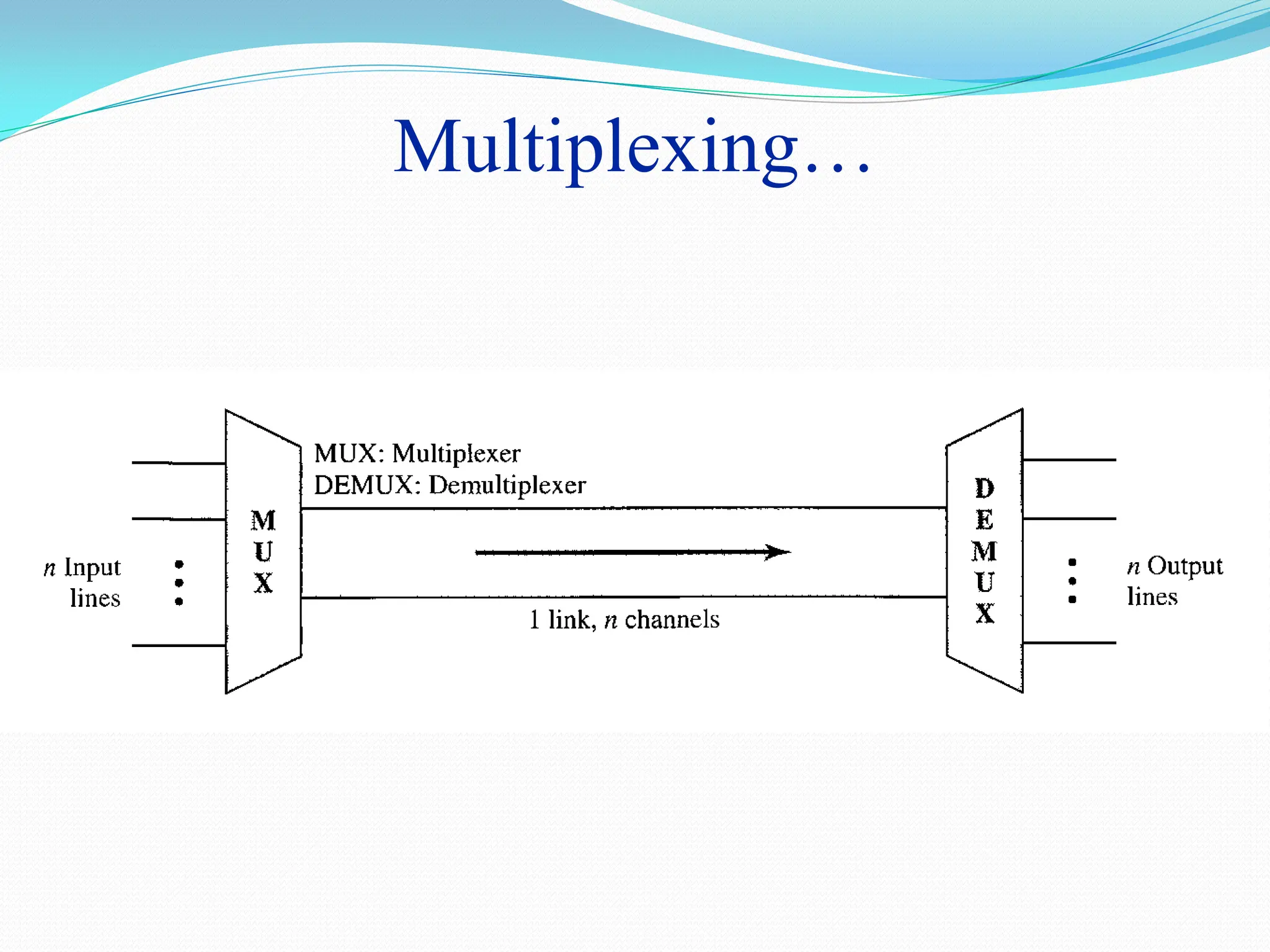
 Many to one/one to many
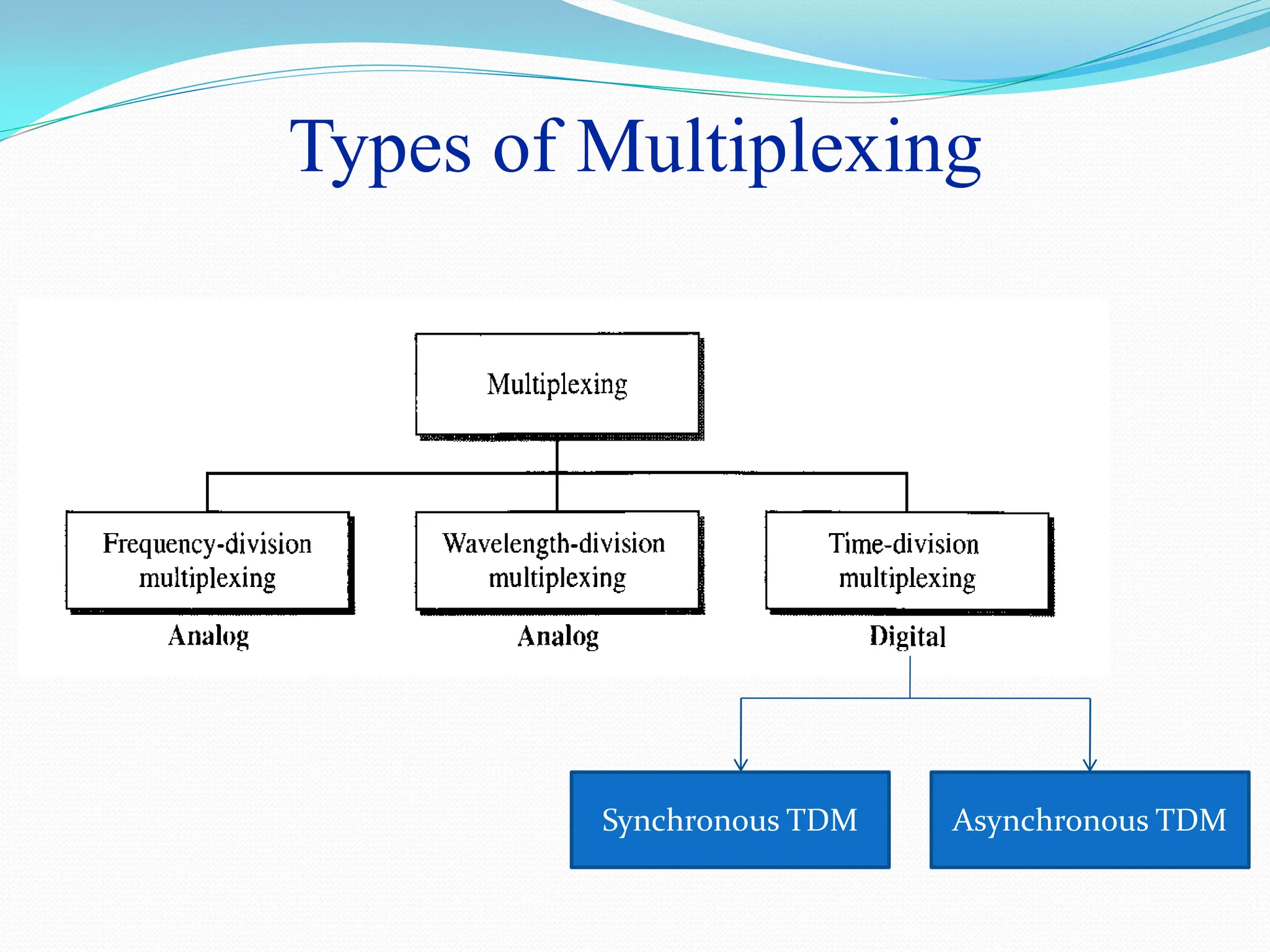
 Types of multiplexing
Multiplexing
 It is the set of techniques that allows the
simultaneous transmission of multiple signals
across a single data link.
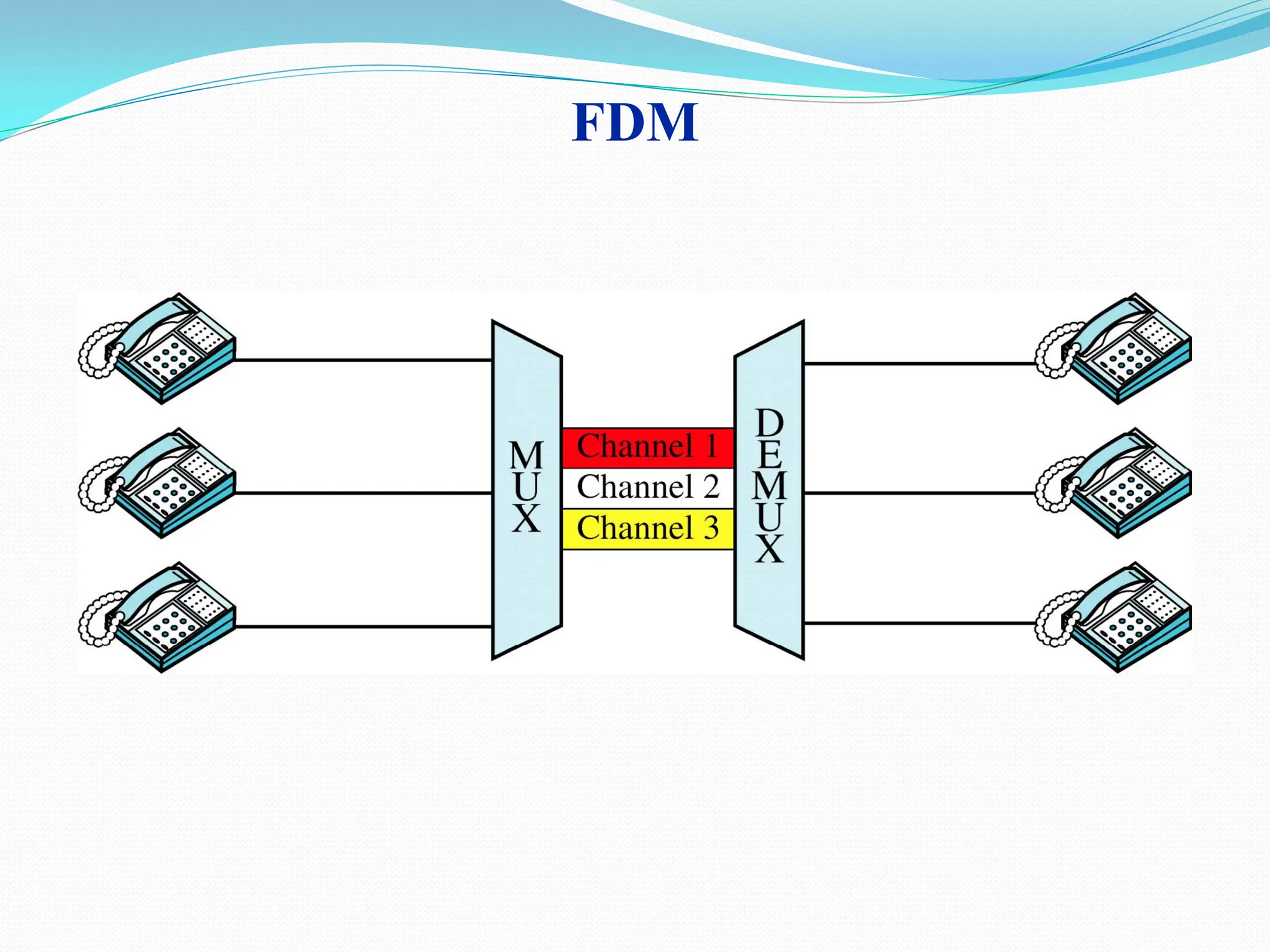
 Multiplexing is done using a device called
Multiplexer (MUX) that combine n input lines
to generate one output line i.e. (many to one).
 At the receiving end a device called
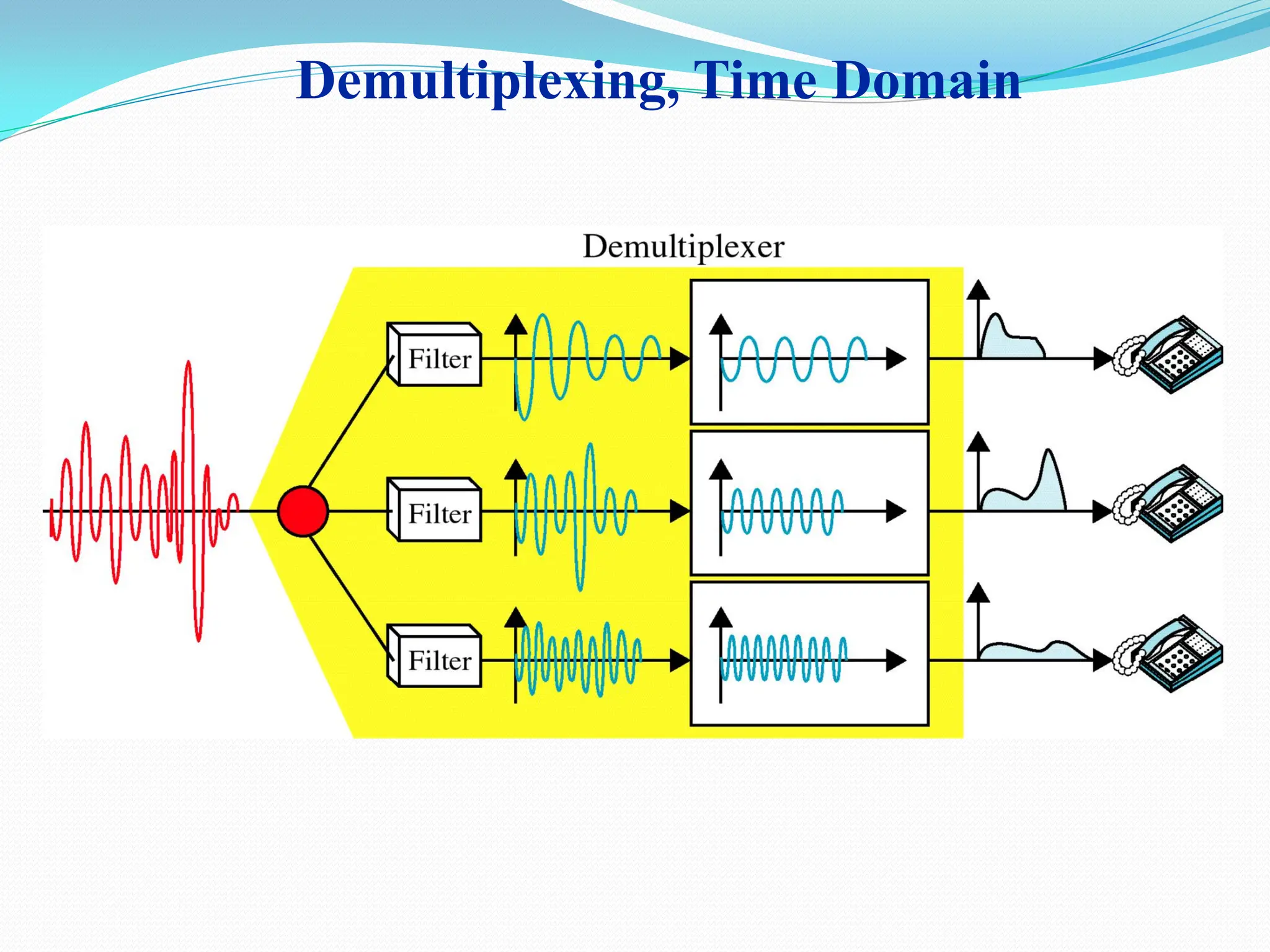
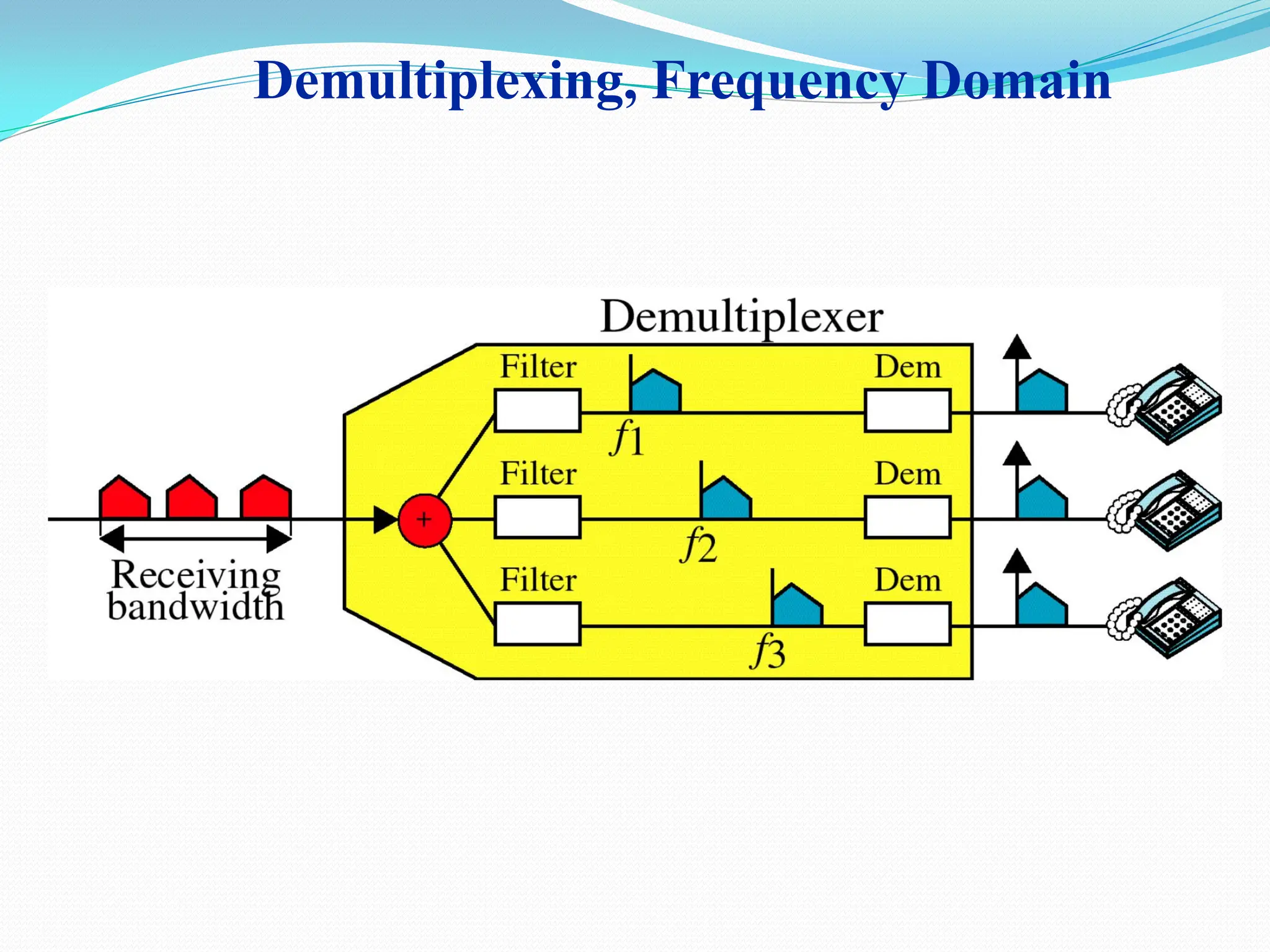
Demultiplexer (DEMUX) is used that separate
signal into its component signals i.e. one input
and several outputs (one to many).
Multiplexing…
Advantages of Multiplexing
 More than one signals can be sent over single
medium or link
 Effective use of the bandwidth of medium
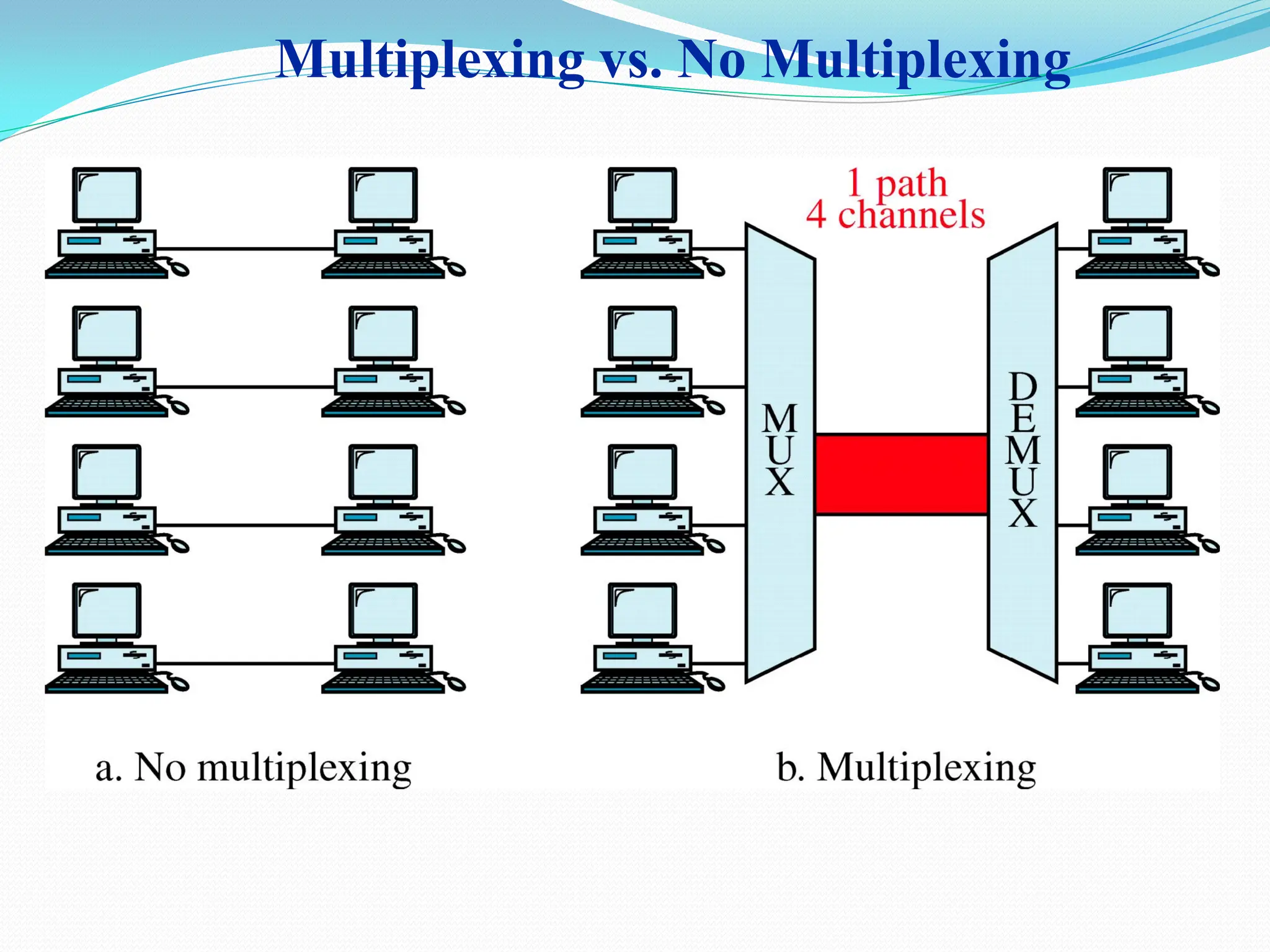
Multiplexing vs. No Multiplexing
Types of Multiplexing
Synchronous TDM Asynchronous TDM
Frequency Division Multiplexing
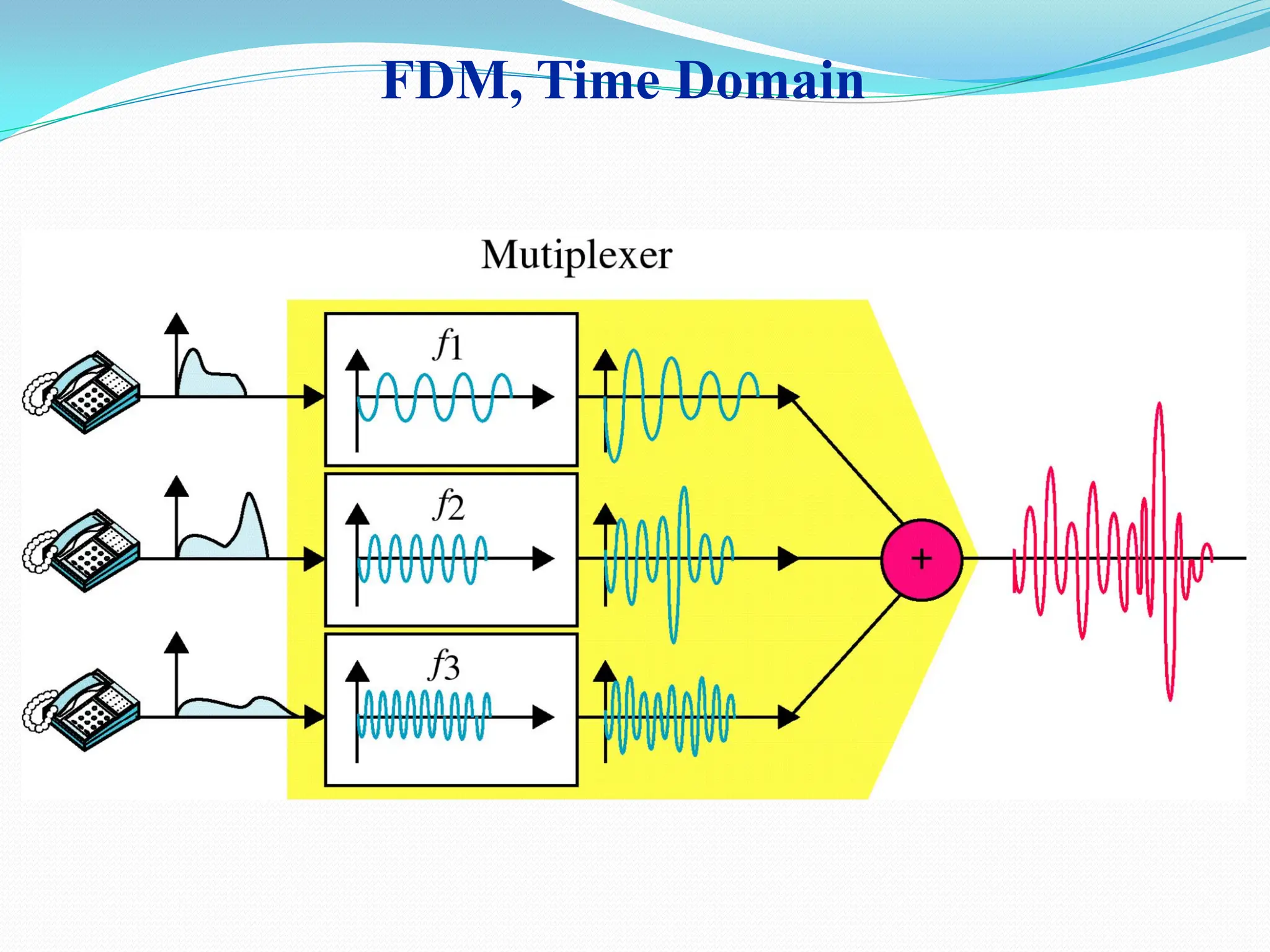
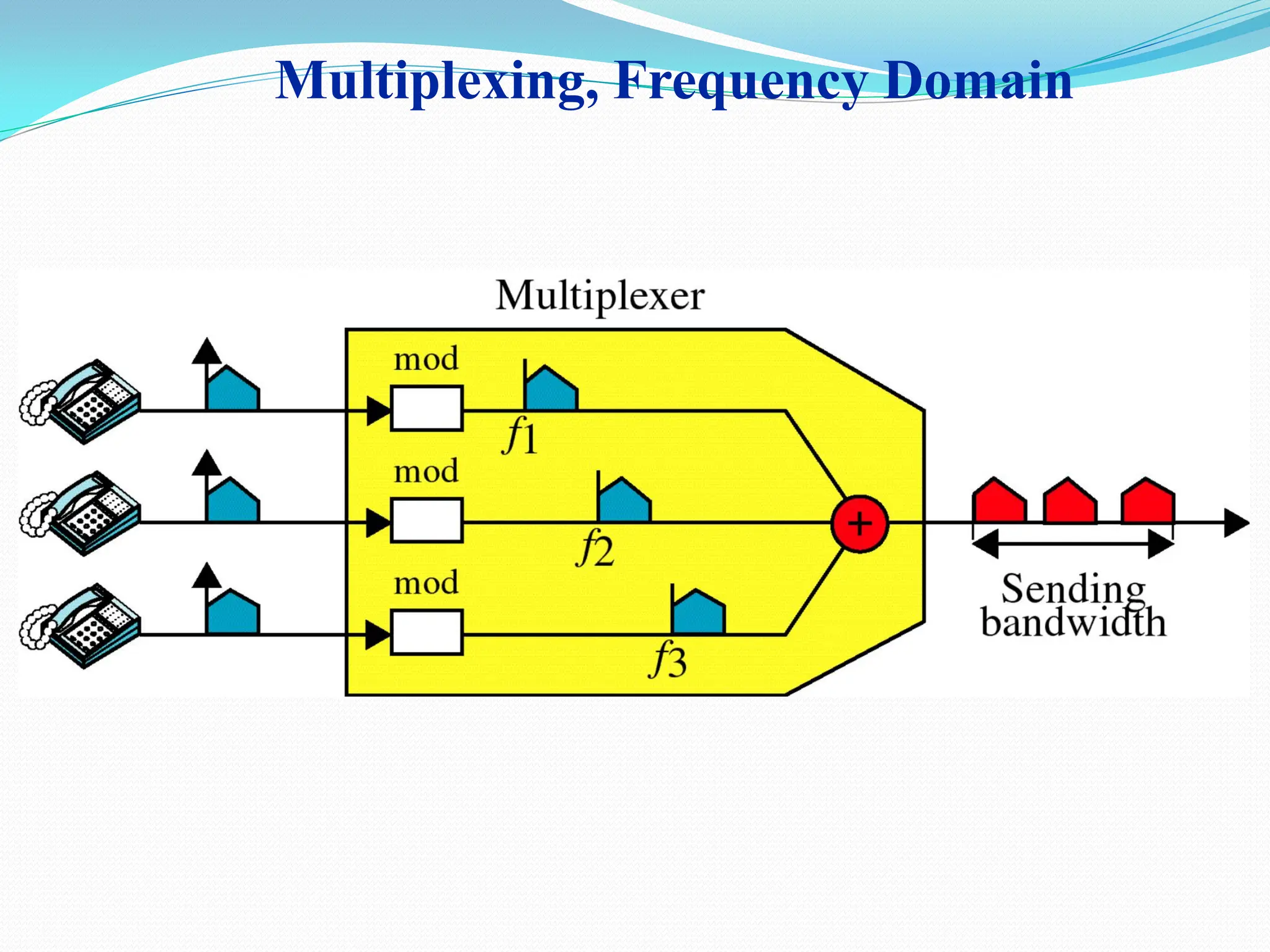
 It is an analog technique.
 Signals of different frequencies are combined
into a composite signal and is transmitted on
the single link.
 Bandwidth of a link should be greater than the
combined bandwidths of the various channels.
 Each signal is having different frequency.
 Channels are separated by the strips of unused
bandwidth called Guard Bands (to prevent
overlapping).
FDM
Applications of FDM
 FDM is used for FM & AM radio broadcasting.
 AM frequency = 530 to 1700 kHz.
 FM frequency = 88 to 108 MHz.
 FDM is used in television broadcasting.
 First generation cellular telephone also uses FDM.
FDM, Time Domain
Multiplexing, Frequency Domain
Demultiplexing, Time Domain
Demultiplexing, Frequency Domain
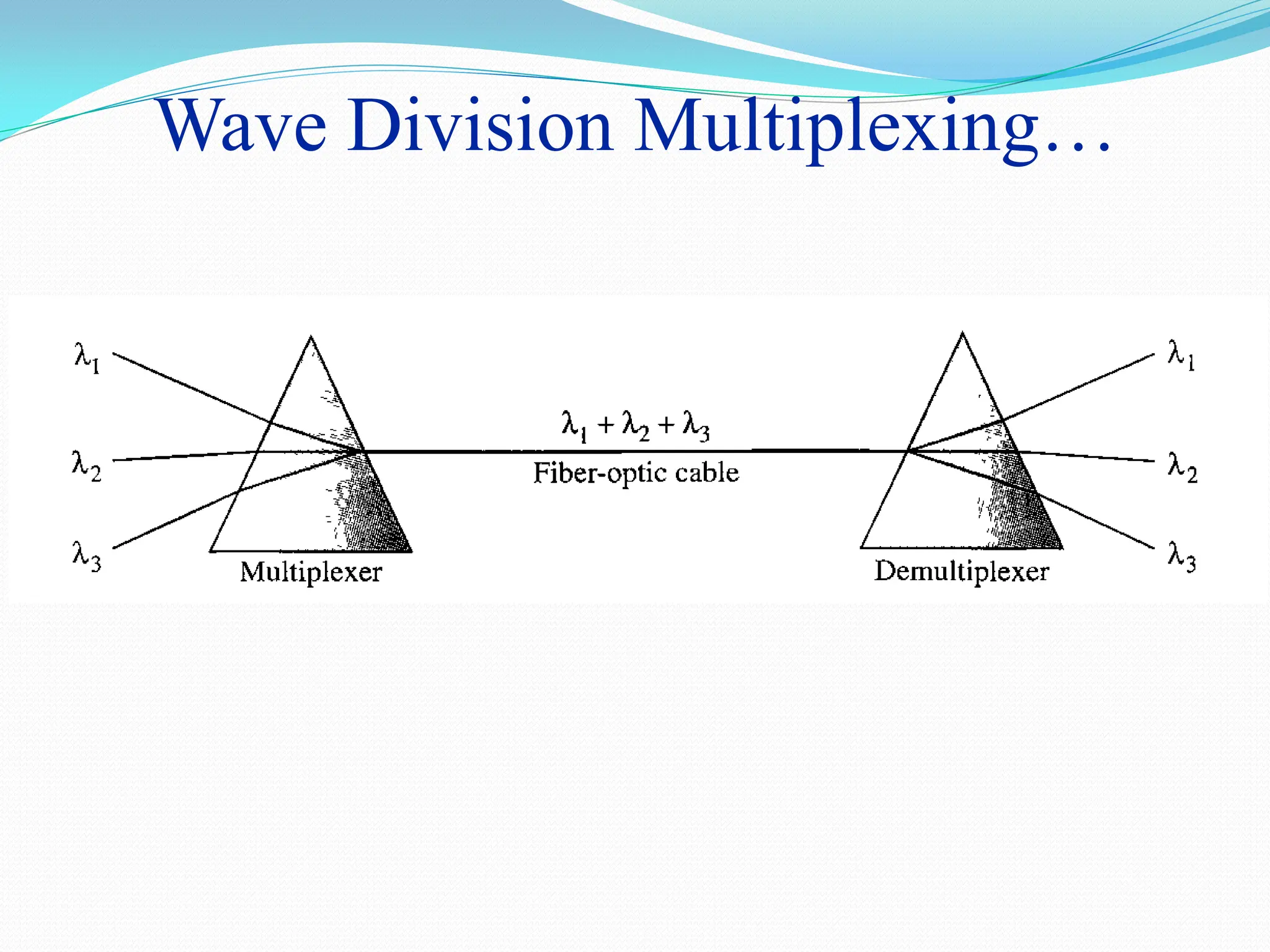
Wave Division Multiplexing
 WDM is an analog multiplexing technique.
 Working is same as FDM.
 In WDM different signals are optical or light signals that
are transmitted through optical fiber.
 Various light waves from different sources are combined to
form a composite light signal that is transmitted across the
channel to the receiver.
 At the receiver side, this composite light signal is broken
into different light waves by Demultiplexer.
 This Combining and the Splitting of light waves is done by
using a PRISM. Prism bends beam of light based on the
angle of incidence and the frequency of light wave.
Wave Division Multiplexing…
Time Division Multiplexing
 It is the digital multiplexing technique.
 Channel/Link is not divided on the basis of
frequency but on the basis of time.
 Total time available in the channel is divided
between several users.
 Each user is allotted a particular time interval
called time slot or slice.
 In TDM the data rate capacity of the
transmission medium should be greater than
the data rate required by sending of receiving
devices.
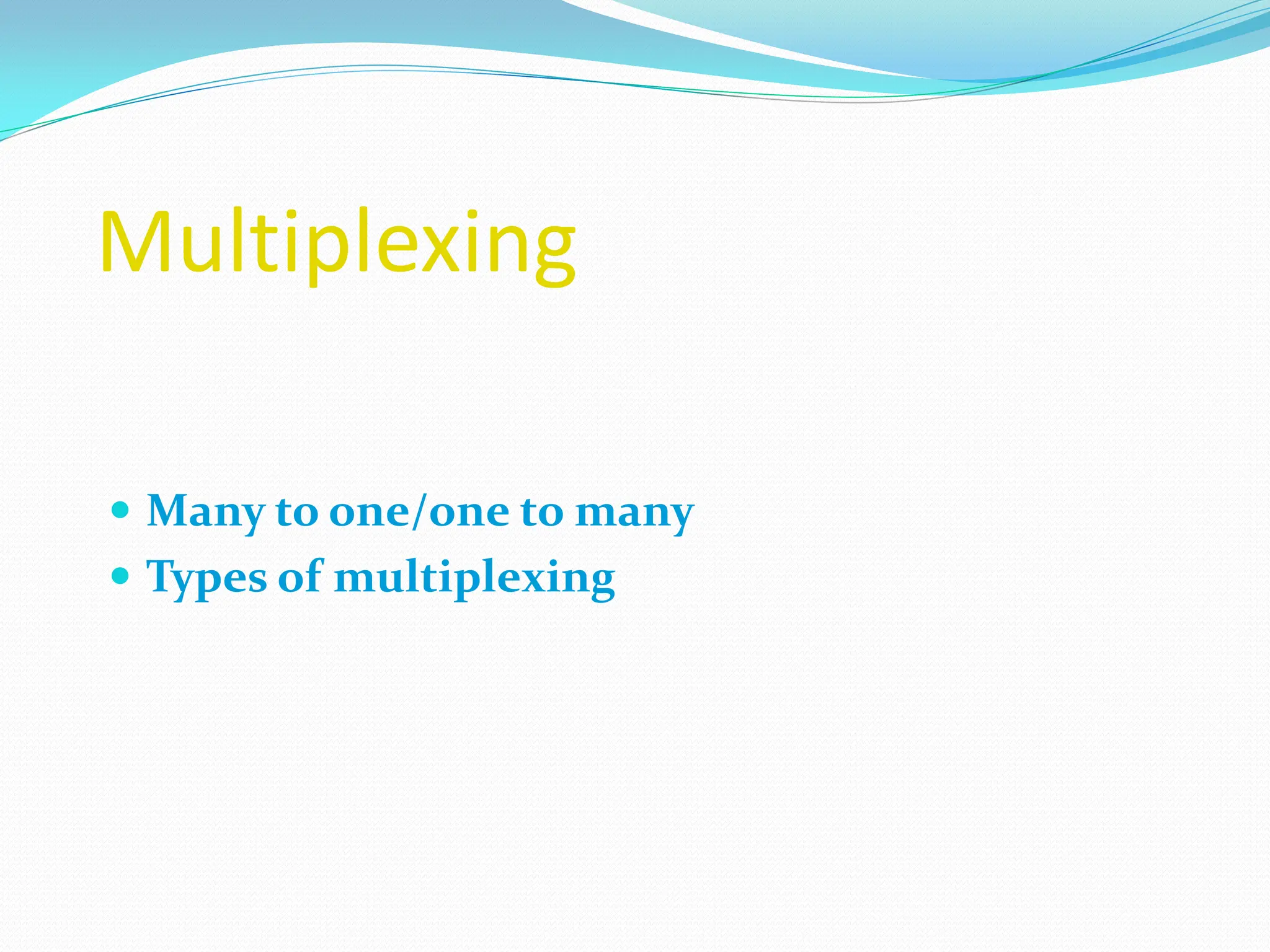
TDM

Computer networks ppt by Shivam Sharma.pdf

  • 1.
    Multiplexing  Many toone/one to many  Types of multiplexing
  • 2.
    Multiplexing  It isthe set of techniques that allows the simultaneous transmission of multiple signals across a single data link.  Multiplexing is done using a device called Multiplexer (MUX) that combine n input lines to generate one output line i.e. (many to one).  At the receiving end a device called Demultiplexer (DEMUX) is used that separate signal into its component signals i.e. one input and several outputs (one to many).
  • 3.
  • 4.
    Advantages of Multiplexing More than one signals can be sent over single medium or link  Effective use of the bandwidth of medium
  • 5.
    Multiplexing vs. NoMultiplexing
  • 6.
  • 7.
    Frequency Division Multiplexing It is an analog technique.  Signals of different frequencies are combined into a composite signal and is transmitted on the single link.  Bandwidth of a link should be greater than the combined bandwidths of the various channels.  Each signal is having different frequency.  Channels are separated by the strips of unused bandwidth called Guard Bands (to prevent overlapping).
  • 8.
  • 9.
    Applications of FDM FDM is used for FM & AM radio broadcasting.  AM frequency = 530 to 1700 kHz.  FM frequency = 88 to 108 MHz.  FDM is used in television broadcasting.  First generation cellular telephone also uses FDM.
  • 10.
  • 11.
  • 12.
  • 13.
  • 14.
    Wave Division Multiplexing WDM is an analog multiplexing technique.  Working is same as FDM.  In WDM different signals are optical or light signals that are transmitted through optical fiber.  Various light waves from different sources are combined to form a composite light signal that is transmitted across the channel to the receiver.  At the receiver side, this composite light signal is broken into different light waves by Demultiplexer.  This Combining and the Splitting of light waves is done by using a PRISM. Prism bends beam of light based on the angle of incidence and the frequency of light wave.
  • 15.
  • 16.
    Time Division Multiplexing It is the digital multiplexing technique.  Channel/Link is not divided on the basis of frequency but on the basis of time.  Total time available in the channel is divided between several users.  Each user is allotted a particular time interval called time slot or slice.  In TDM the data rate capacity of the transmission medium should be greater than the data rate required by sending of receiving devices.
  • 17.