Multiplexing
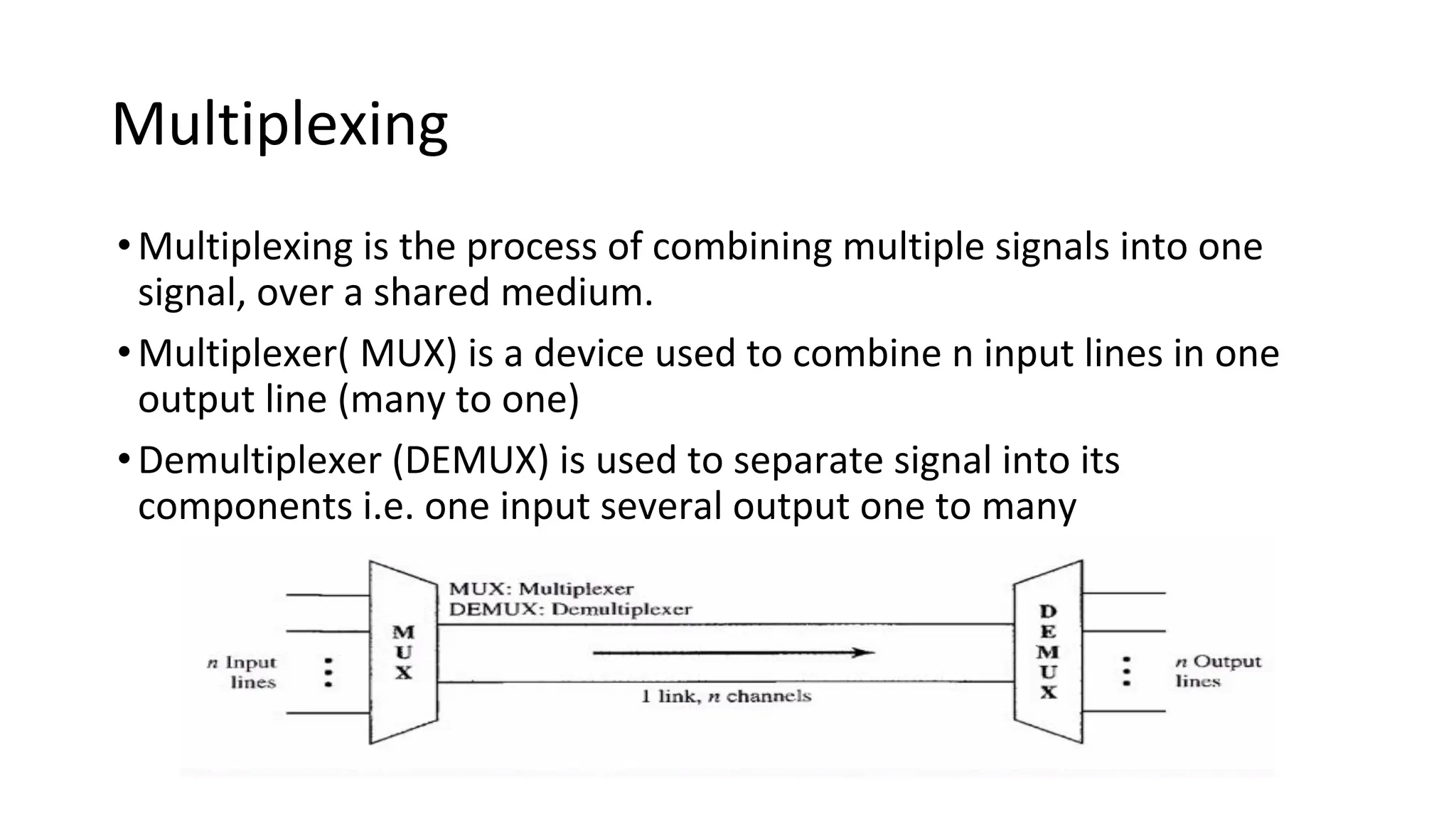
•Multiplexing is the process of combining multiple signals into one
signal, over a shared medium.
•Multiplexer( MUX) is a device used to combine n input lines in one
output line (many to one)
•Demultiplexer (DEMUX) is used to separate signal into its
components i.e. one input several output one to many
Frequency Division Multiplexing(FDM)
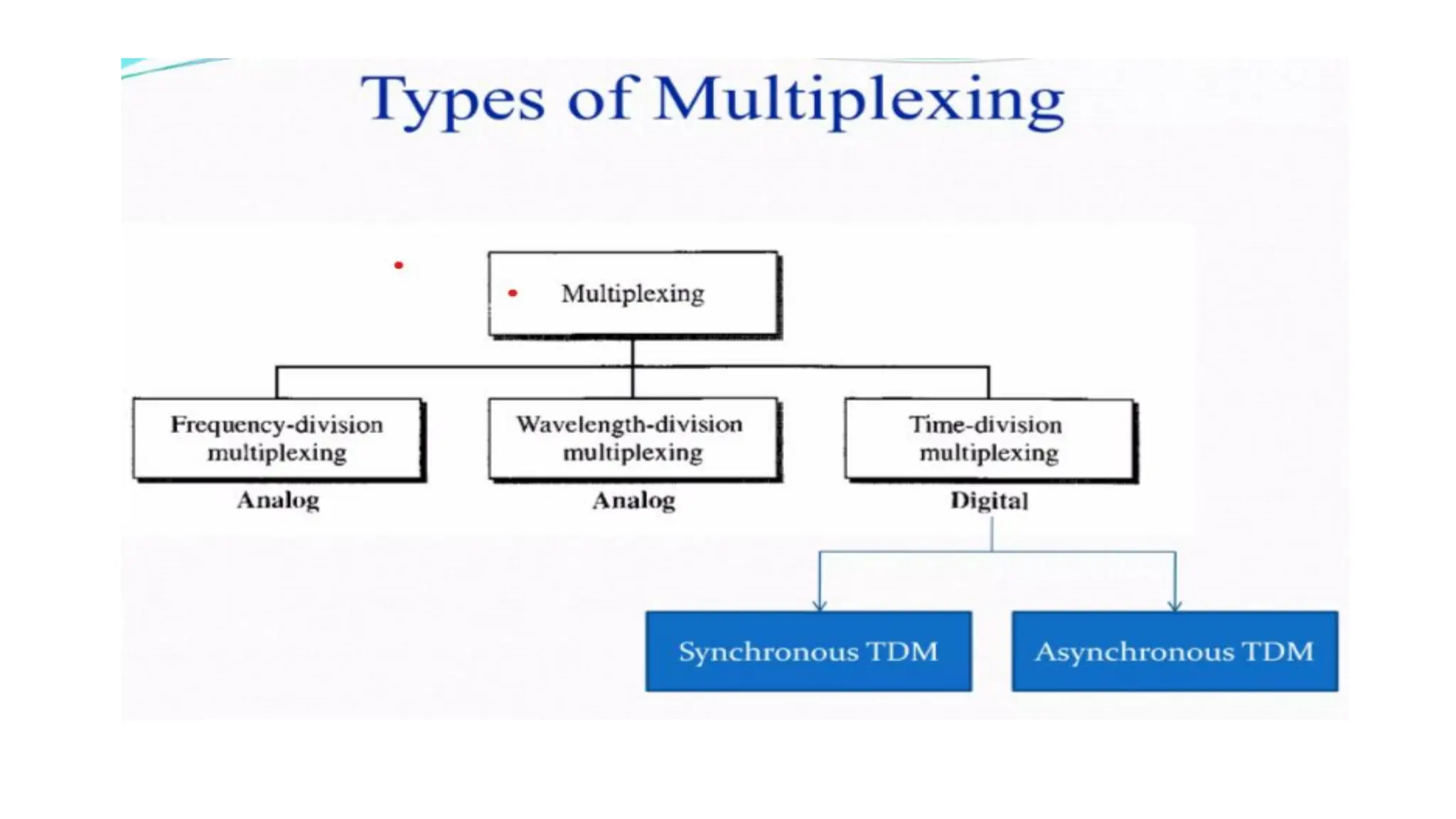
•Analog technique
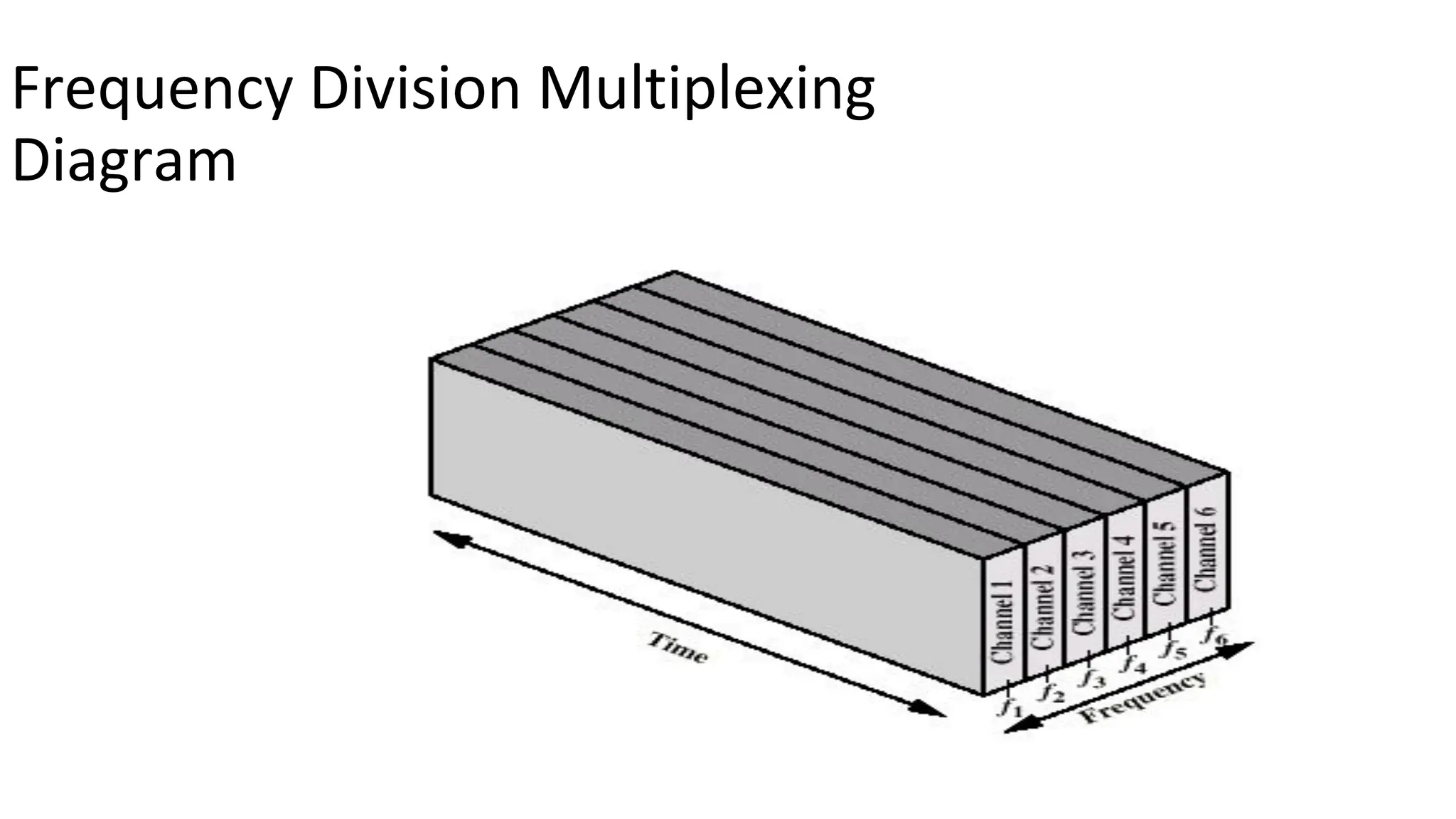
•Single transmission medium is subdivided into several frequency
channels.
•Carrier frequencies separated so signals do not overlap (guard bands)
•e.g. broadcast radio
•Channel allocated even if no data
Frequency Division Multiplexing
Diagram
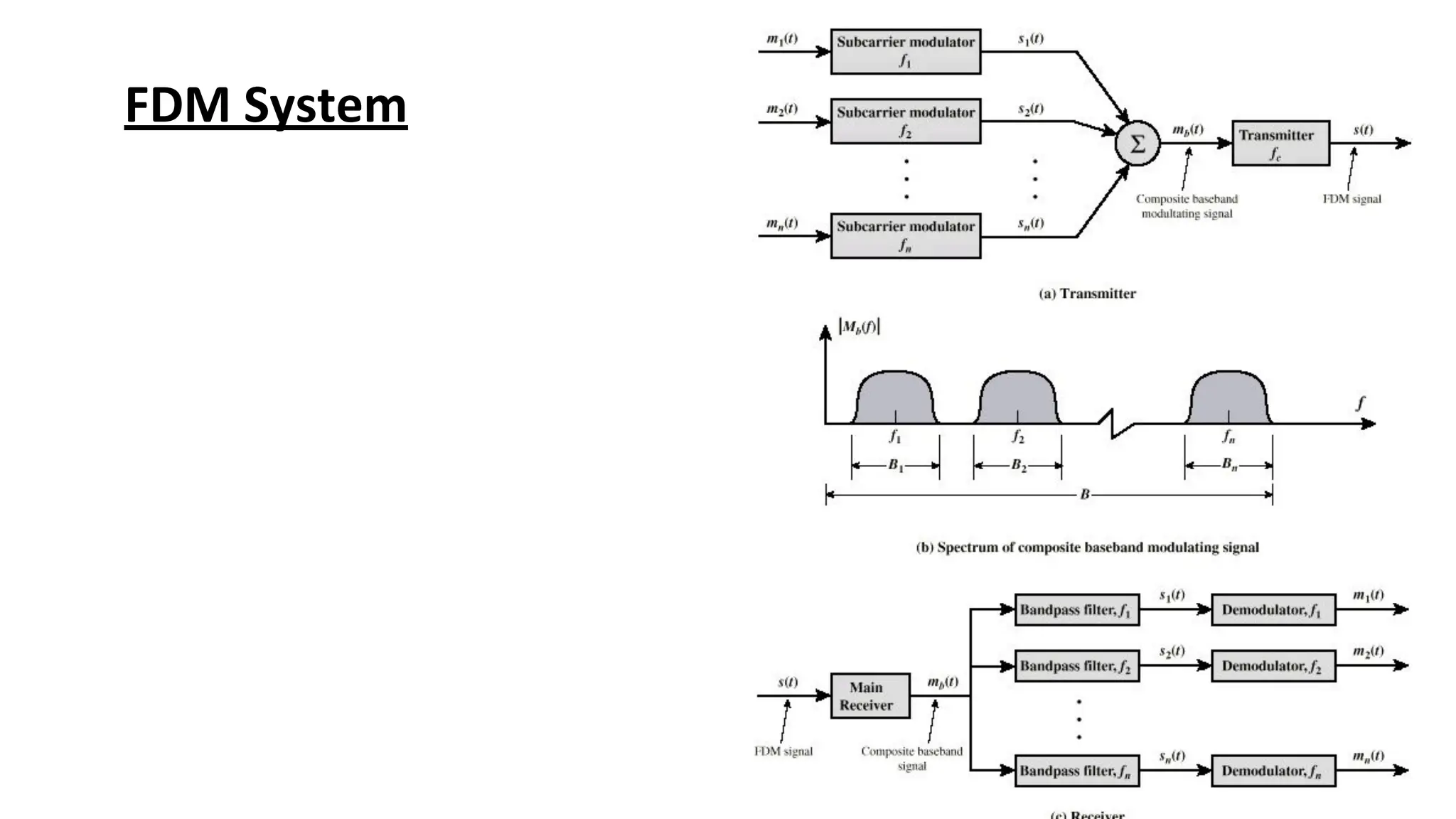
FDM System
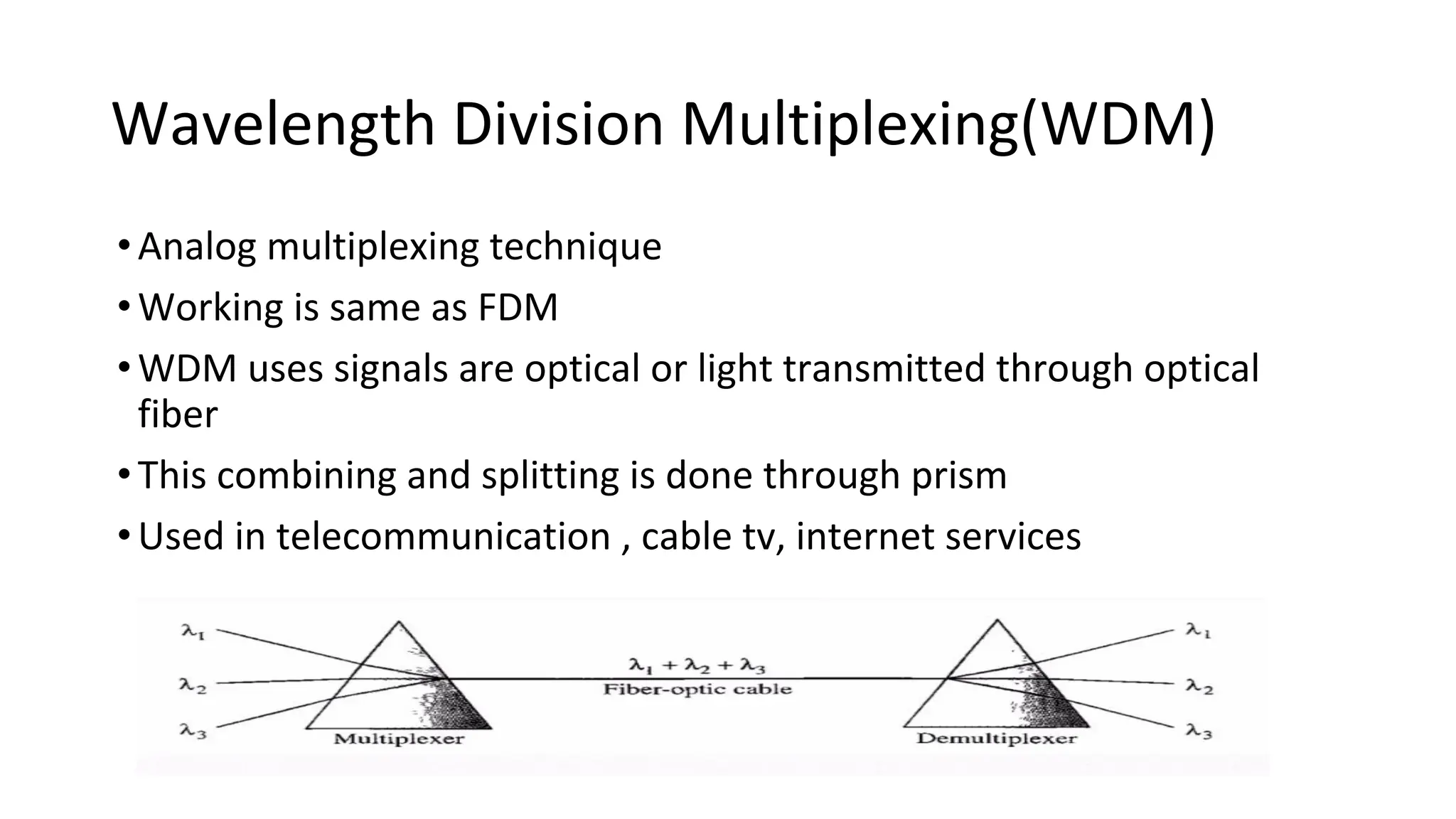
Wavelength Division Multiplexing(WDM)
•Analog multiplexing technique
•Working is same as FDM
•WDM uses signals are optical or light transmitted through optical
fiber
•This combining and splitting is done through prism
•Used in telecommunication , cable tv, internet services
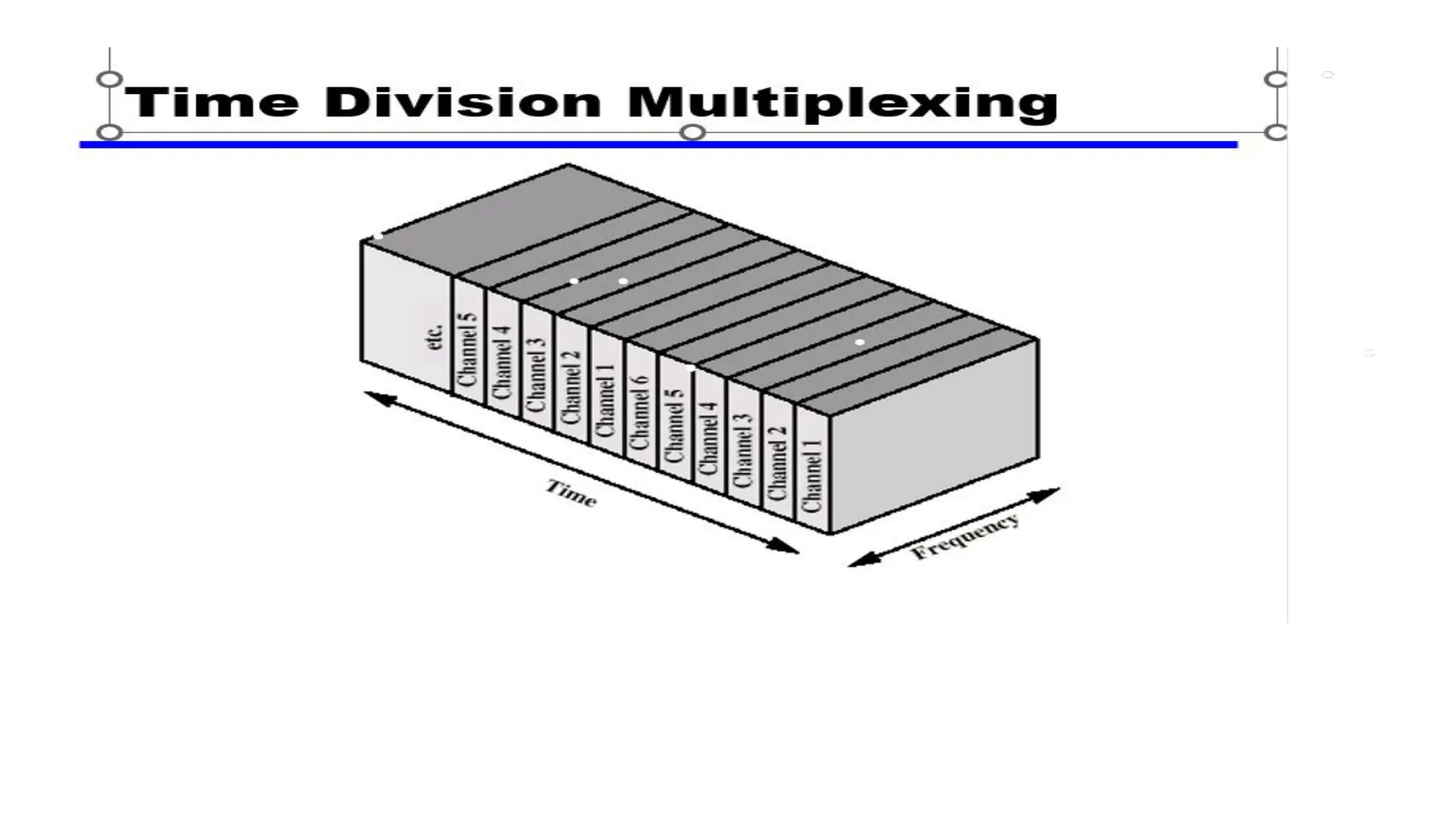
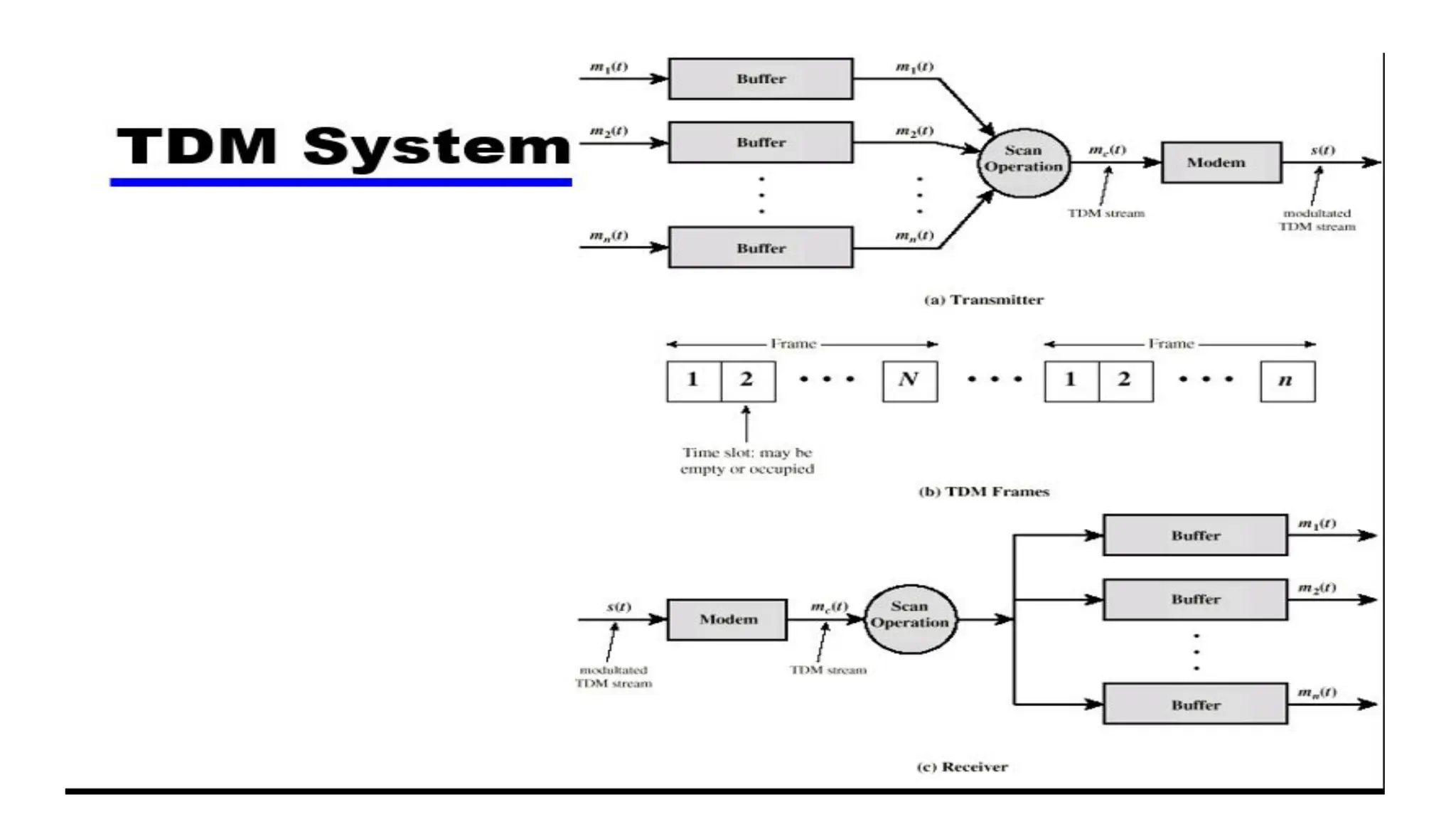
Time Division Multiplexing (TDM)
•Digital multiplexing technique
•Channel/Link is divided on the basis of time
•Total time available in the channel is divided between several users.
•Each user is allotted a particular time interval called time slot or slice
•Data rate should be greater than the data rate required by sending of
receiving devices
Types of TDM
•Synchronous TDM
• Each Device is given same time slot to transmit the data, whether the device
has any data to transmit or not.
• If any device does not have any data to se3nd then that time slot remains
empty
• Time slots are arranged in frames
• Disadvantage: channel capacity cannot be fully utilized
•Asynchronous TDM
• Time slots are not fixed
• Slots are not predefined rather slots are allocated to any of the device that
has data to send.
ppt multiplexing for engineering aktu latest

  • 1.
    Multiplexing •Multiplexing is theprocess of combining multiple signals into one signal, over a shared medium. •Multiplexer( MUX) is a device used to combine n input lines in one output line (many to one) •Demultiplexer (DEMUX) is used to separate signal into its components i.e. one input several output one to many
  • 3.
    Frequency Division Multiplexing(FDM) •Analogtechnique •Single transmission medium is subdivided into several frequency channels. •Carrier frequencies separated so signals do not overlap (guard bands) •e.g. broadcast radio •Channel allocated even if no data
  • 4.
  • 5.
  • 6.
    Wavelength Division Multiplexing(WDM) •Analogmultiplexing technique •Working is same as FDM •WDM uses signals are optical or light transmitted through optical fiber •This combining and splitting is done through prism •Used in telecommunication , cable tv, internet services
  • 7.
    Time Division Multiplexing(TDM) •Digital multiplexing technique •Channel/Link is divided on the basis of time •Total time available in the channel is divided between several users. •Each user is allotted a particular time interval called time slot or slice •Data rate should be greater than the data rate required by sending of receiving devices
  • 11.
    Types of TDM •SynchronousTDM • Each Device is given same time slot to transmit the data, whether the device has any data to transmit or not. • If any device does not have any data to se3nd then that time slot remains empty • Time slots are arranged in frames • Disadvantage: channel capacity cannot be fully utilized •Asynchronous TDM • Time slots are not fixed • Slots are not predefined rather slots are allocated to any of the device that has data to send.