
COMPUTERS IN MEDICAL FIELD
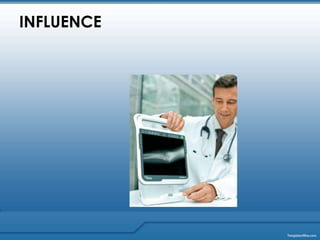
INFLUENCE
Information and
Informatics
 Information
Technology is the
use of
hardware, softwa
re, services, and
supporting
infrastructure to
manage
information.
 Informatics is the
scientific field that
deals with
biomedical
information, data
and knowledge -
their
storage, retrieval
and optimal use
for problem-
solving and
decision-making
 Health informatics is a discipline at the intersection
of information science, computer science, and
health care.
Health informatics
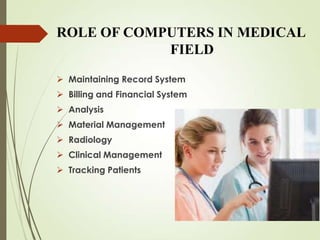
ROLE OF COMPUTERS IN MEDICAL
FIELD
 Maintaining Record System
 Billing and Financial System
 Analysis
 Material Management
 Radiology
 Clinical Management
 Tracking Patients
Computers for Information Handling
Computer store can serve as the best way of
housing all the medical data.
In medical offices, all the accounting processes
are also computerized assuring a safer record.
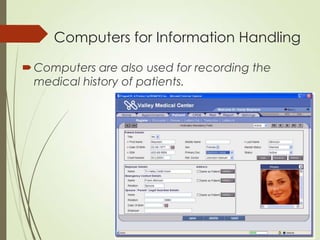
Computers for Information Handling
Computers are also used for recording the
medical history of patients.
The database of all the medical data
is known as Electronic Medical
Records(EMR) or Electronic Health
Records(HER)
Computers in Scanning and Imaging
Many of the modern methods of scanning and
imaging are largely based on the computer
technology.
Examples of Scanning and Imaging:
MRI(Magnetic Resonance Imaging)
CT Scan
Ultrasound
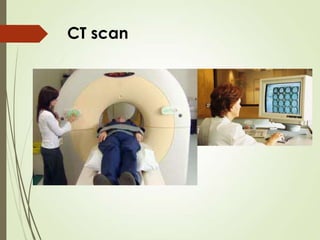
CT scan
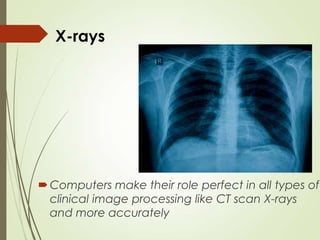
X-rays
Computers make their role perfect in all types of
clinical image processing like CT scan X-rays
and more accurately
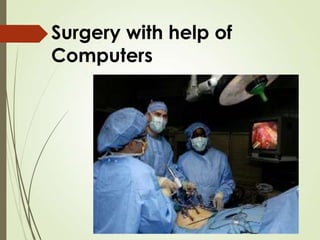
Surgery with help of
Computers
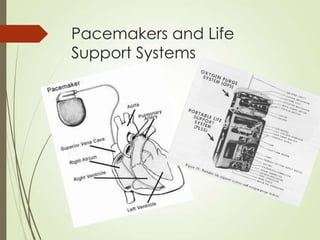
Pacemakers and Life
Support Systems
Pacemakers
 Computers to keep the heart beating.
Life Support Systems
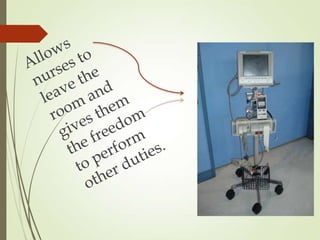
 Computers that look after and monitor patients who
are in critical life conditions.
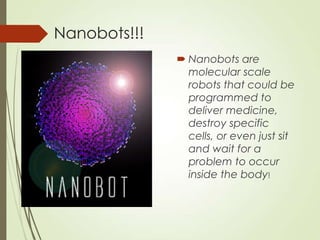
Nanobots!!!
 Nanobots are
molecular scale
robots that could be
programmed to
deliver medicine,
destroy specific
cells, or even just sit
and wait for a
problem to occur
inside the body!
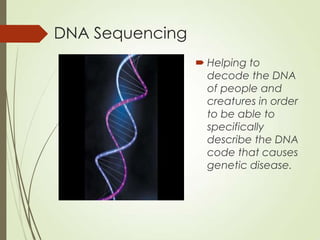
DNA Sequencing
 Helping to
decode the DNA
of people and
creatures in order
to be able to
specifically
describe the DNA
code that causes
genetic disease.
ADVANTAGES
 Computers are mostly used in every organization. Computer plays different
roles in different fields now a day’s no field is evolving without the role of
computers.
 Computers become a reliable product in every hospital due to its effective
and efficient performance. From open heart surgery to X-Ray’s everything
is made possible so easily only through computers.
 A part from administration purposes computers are used in performing
surgeries. Laparoscopic surgeries is said to be the most common surgery
which can be done only through the help of computers. The medical
experts insert the medical tools and other small equipments attached with
cameras into the patient’s body.
ADVANTAGES
 High-tech surgery tools and instruments embedded with cameras are used
in surgical process. The operations done by the medical experts are
completely recorded by the computers for future references and also to
avoid complications.
 The Heart rate, pulse rate, brain readings and other specifications are
monitored and recorded continuously through computers and finally the
medical expert analyze the computer record and provide treatment for the
affected person.
DISADVANTAGES
Cost
 One of the biggest drawbacks of adding computers to
hospitals is the cost. Computers cost money, and a large
hospital needs many computers to keep the system running
smoothly.
 Creating a network to transfer medical records or keep
track of billing is an additional initial cost. Unlike paper
records, which simply require a few more copies, electronic
record keeping requires constant upkeep of computers,
computer software and other electronic elements, which
can cost even more.
DISADVANTAGES
 Security
 If your doctor or hospital is switching to computers or
electronic record keeping, you're probably worried about the
security of your medical records. Paper records are kept in a
doctor's office or a warehouse, but once computers are
added to a hospital, electronic record keeping typically
follows. Once electronic record keeping is begun, medical
information is usually added to a closed computer network,
but as long as an Internet connection comes into the network,
the system is vulnerable to outside sources, opening the
debate to questions about patient privacy and medical
record security.
computer in medical filed

computer in medical filed

  • 1.
  • 2.
  • 3.
    Information and Informatics  Information Technologyis the use of hardware, softwa re, services, and supporting infrastructure to manage information.  Informatics is the scientific field that deals with biomedical information, data and knowledge - their storage, retrieval and optimal use for problem- solving and decision-making
  • 4.
     Health informaticsis a discipline at the intersection of information science, computer science, and health care. Health informatics
  • 5.
    ROLE OF COMPUTERSIN MEDICAL FIELD  Maintaining Record System  Billing and Financial System  Analysis  Material Management  Radiology  Clinical Management  Tracking Patients
  • 6.
    Computers for InformationHandling Computer store can serve as the best way of housing all the medical data. In medical offices, all the accounting processes are also computerized assuring a safer record.
  • 7.
    Computers for InformationHandling Computers are also used for recording the medical history of patients.
  • 8.
    The database ofall the medical data is known as Electronic Medical Records(EMR) or Electronic Health Records(HER)
  • 9.
    Computers in Scanningand Imaging Many of the modern methods of scanning and imaging are largely based on the computer technology. Examples of Scanning and Imaging: MRI(Magnetic Resonance Imaging) CT Scan Ultrasound
  • 10.
  • 11.
    X-rays Computers make theirrole perfect in all types of clinical image processing like CT scan X-rays and more accurately
  • 12.
    Surgery with helpof Computers
  • 14.
  • 15.
    Pacemakers  Computers tokeep the heart beating. Life Support Systems  Computers that look after and monitor patients who are in critical life conditions.
  • 16.
    Nanobots!!!  Nanobots are molecularscale robots that could be programmed to deliver medicine, destroy specific cells, or even just sit and wait for a problem to occur inside the body!
  • 17.
    DNA Sequencing  Helpingto decode the DNA of people and creatures in order to be able to specifically describe the DNA code that causes genetic disease.
  • 18.
    ADVANTAGES  Computers aremostly used in every organization. Computer plays different roles in different fields now a day’s no field is evolving without the role of computers.  Computers become a reliable product in every hospital due to its effective and efficient performance. From open heart surgery to X-Ray’s everything is made possible so easily only through computers.  A part from administration purposes computers are used in performing surgeries. Laparoscopic surgeries is said to be the most common surgery which can be done only through the help of computers. The medical experts insert the medical tools and other small equipments attached with cameras into the patient’s body.
  • 19.
    ADVANTAGES  High-tech surgerytools and instruments embedded with cameras are used in surgical process. The operations done by the medical experts are completely recorded by the computers for future references and also to avoid complications.  The Heart rate, pulse rate, brain readings and other specifications are monitored and recorded continuously through computers and finally the medical expert analyze the computer record and provide treatment for the affected person.
  • 20.
    DISADVANTAGES Cost  One ofthe biggest drawbacks of adding computers to hospitals is the cost. Computers cost money, and a large hospital needs many computers to keep the system running smoothly.  Creating a network to transfer medical records or keep track of billing is an additional initial cost. Unlike paper records, which simply require a few more copies, electronic record keeping requires constant upkeep of computers, computer software and other electronic elements, which can cost even more.
  • 21.
    DISADVANTAGES  Security  Ifyour doctor or hospital is switching to computers or electronic record keeping, you're probably worried about the security of your medical records. Paper records are kept in a doctor's office or a warehouse, but once computers are added to a hospital, electronic record keeping typically follows. Once electronic record keeping is begun, medical information is usually added to a closed computer network, but as long as an Internet connection comes into the network, the system is vulnerable to outside sources, opening the debate to questions about patient privacy and medical record security.

Editor's Notes

  • #7 1. Every day hospitals and clinics which are attached to it churn out enormous volumes of data regarding patients, ailments, prescriptions, medications, medical billing details, etc2. For example, staff records, recording incoming and outgoing time of the staff, the holiday records of the staff, etc. It is difficult to keep track of such things manually but with the help of computers, the task is simplified and is less time-consuming.3-. It also reduces the chances of money related frauds as all the data is stored properly that can be used for future reference. Computer also helps in recording the names and contact details of the doctors and associated people
  • #8 1-such as, previous treatments, tests, diagnosis, and symptoms, etc. Such information comes handy for the doctor in case of emergencies and when a new treatment is to be designed. His or her records will serve as references to predict if the treatment will be effective or not.2-An electronic medical record (EMR) is a computerized medical record created in an organization that delivers care, such as a hospital or physician's office. The concept of EHR is a bit broader than the EMR, as the database is accessible from different clinics and hospitals. Thus, a patient's medical history can be retrieved from any hospital by medical practitioners.
  • #10 1-Medical imaging is the technique and process used to create images of the human body (or parts and function thereof) for clinical purposes. In order to increase the precision of such procedures, computers have been adopted and integrated into the testing equipment2-These are the best examples where computers have been adopted, in order to make the process faster and precise.