Computer
Basics
THERE ARE MANY TYPES OF COMPUTERS INCLUDING:
Charles Babbage
 Charles Babbage was an inventor of computer.
they called “The Father of Computing,”
 The first computer is made by Charles Babbage.
  The first mechanical computer, created in 1822
 The first computer is made in London
Types of Computers
 Supercomputers...
 Mainframes….
 Personal Computers (PC)…
Supercomputers
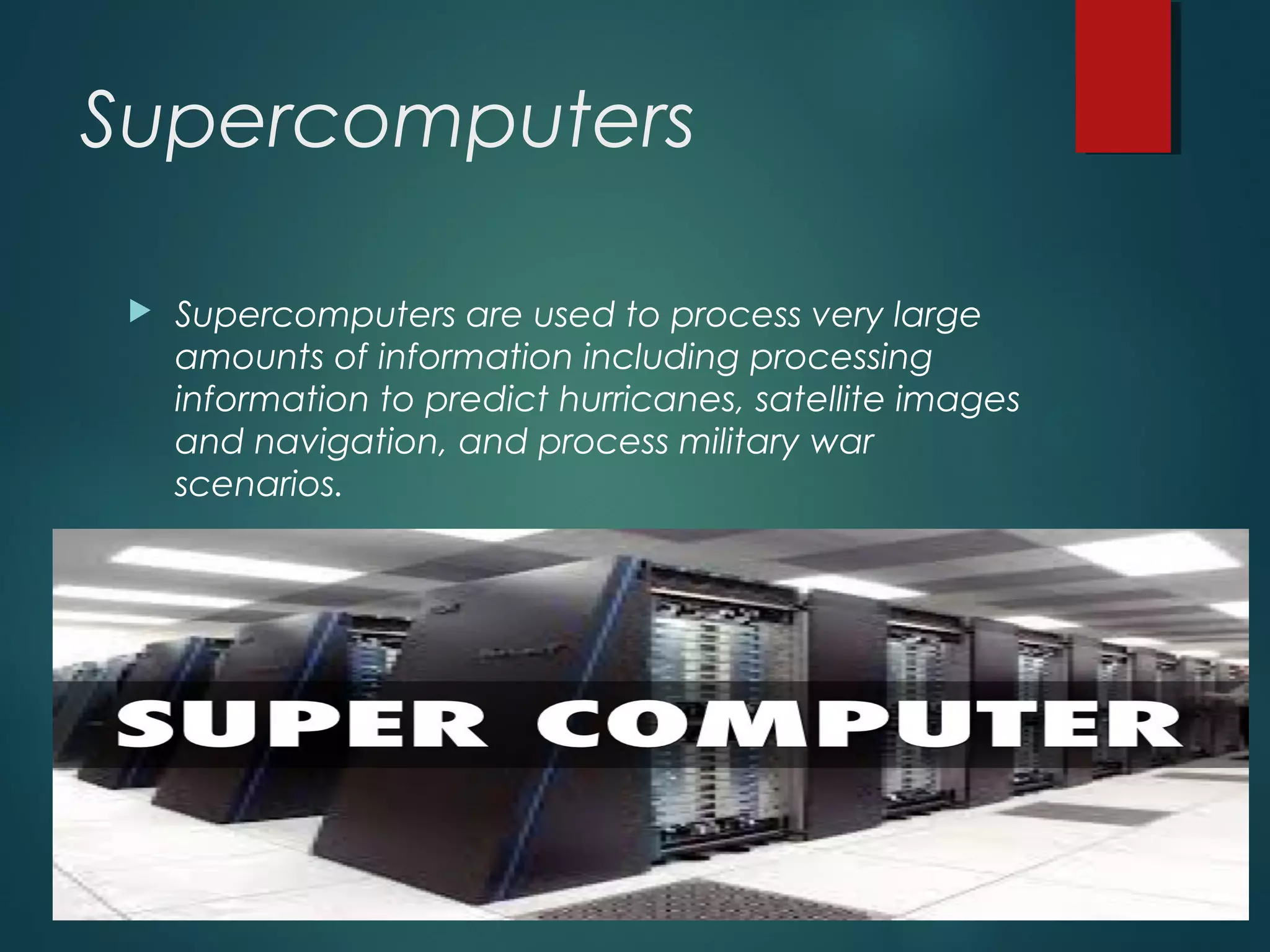
 Supercomputers are used to process very large
amounts of information including processing
information to predict hurricanes, satellite images
and navigation, and process military war
scenarios.
Mainframes
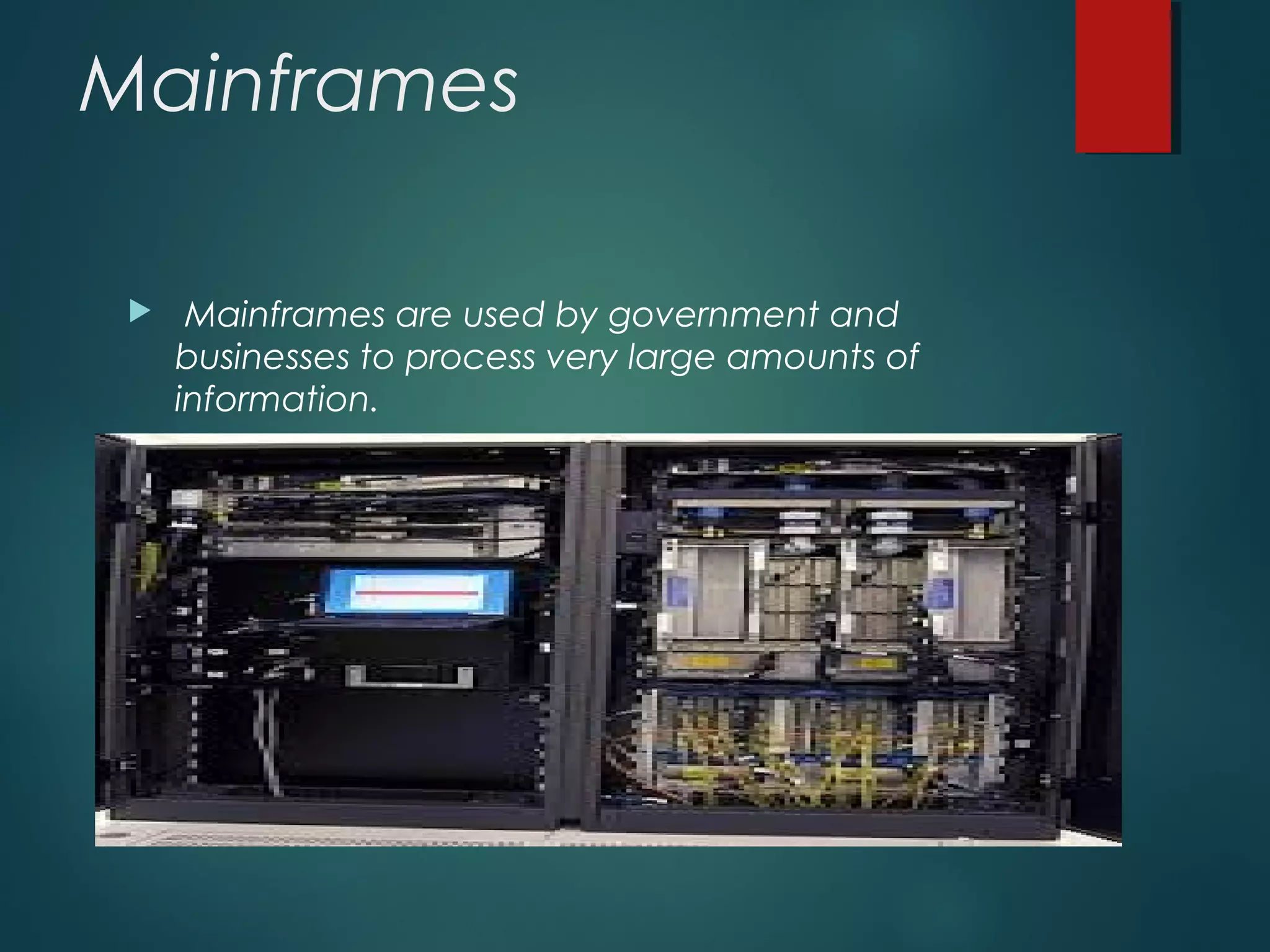
 Mainframes are used by government and
businesses to process very large amounts of
information.
Mini-Computers
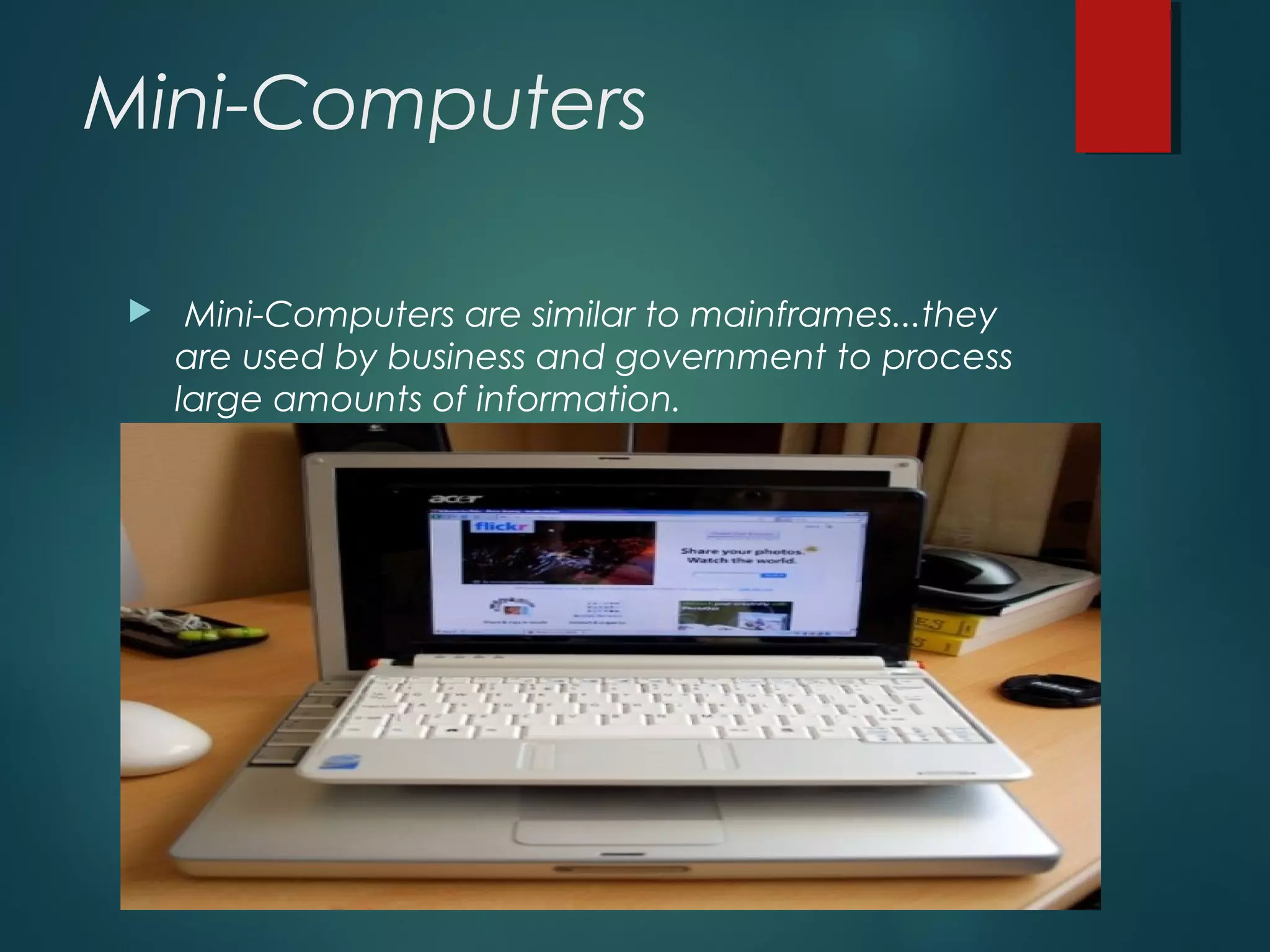
 Mini-Computers are similar to mainframes...they
are used by business and government to process
large amounts of information.
Personal Computers
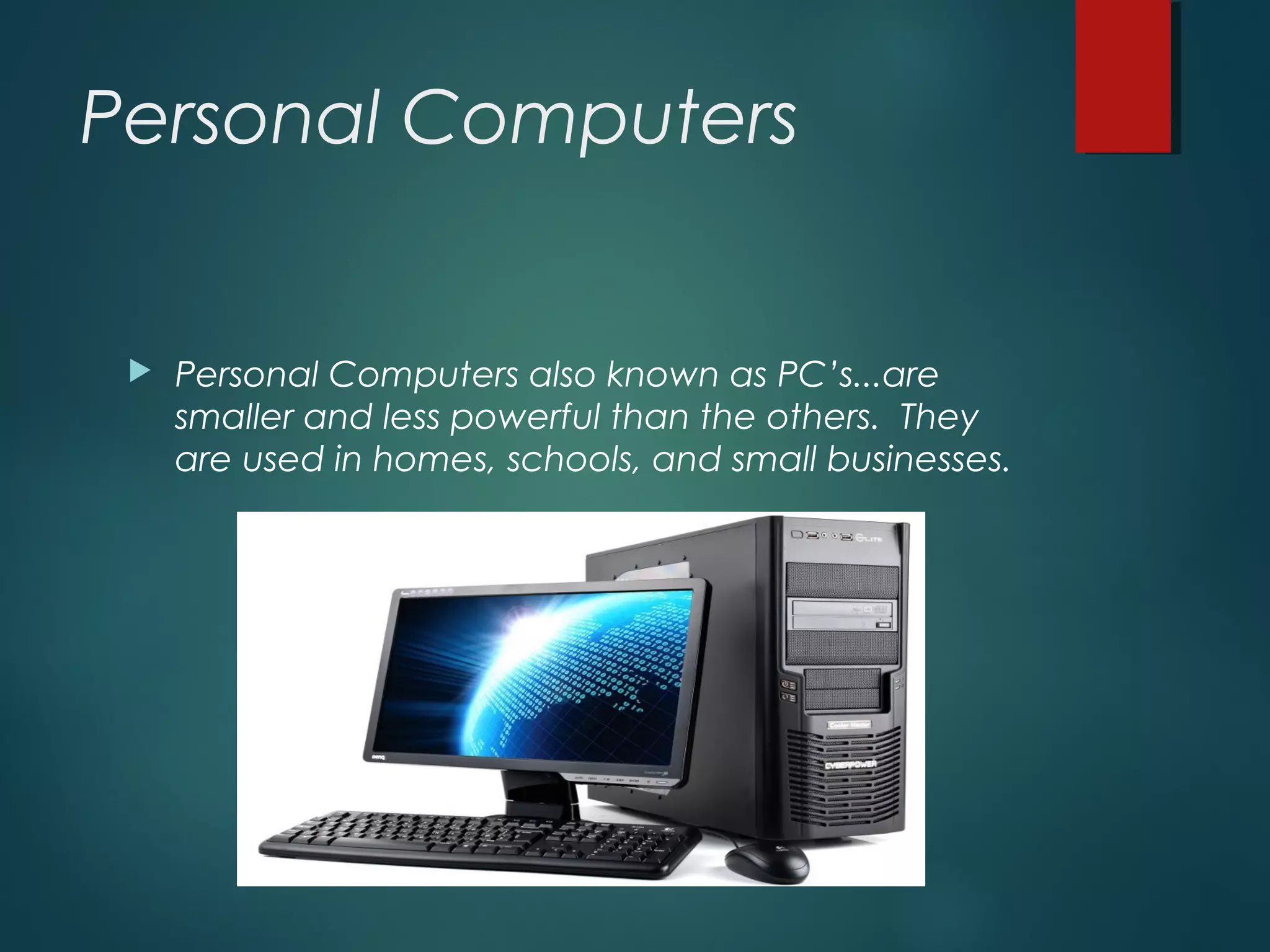
 Personal Computers also known as PC’s...are
smaller and less powerful than the others. They
are used in homes, schools, and small businesses.
Types of Computers
There are 3 main types of PCs
 Desktop
 Portable (Notebook/Laptop)
When portable (notebook/laptop) computers were
first created they were HUGE. They weighed around
100 lbs., and were carried in a large luggage suitcase.
The creators of the portable (notebook/laptop)
computer dreamed that one day it would be the size
a notebook or pocket dictionary. With today’s
technology, we have been able to accomplish this
goal and more..
 Hand-Held
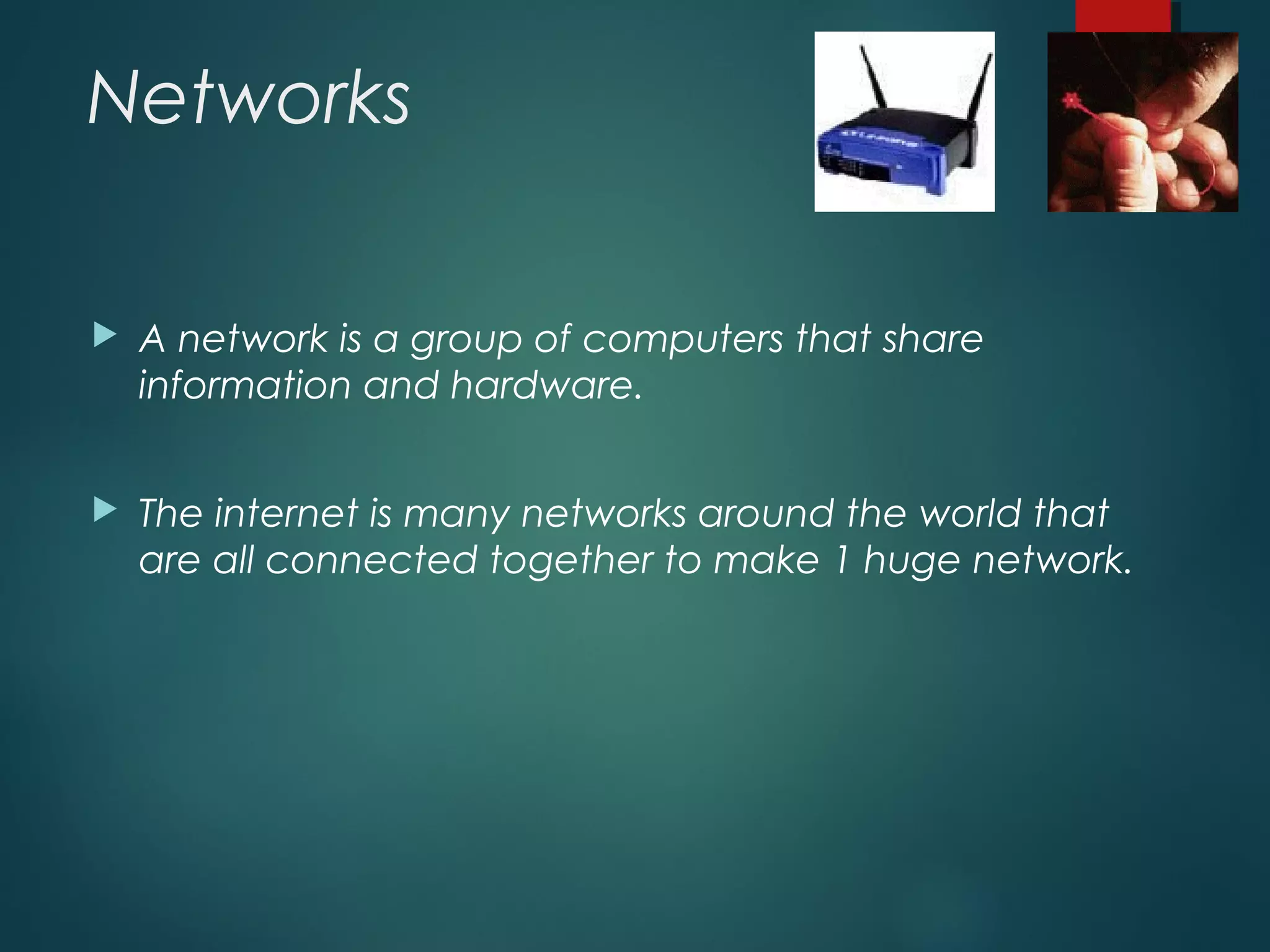
Networks
 A network is a group of computers that share
information and hardware.
 The internet is many networks around the world that
are all connected together to make 1 huge network.
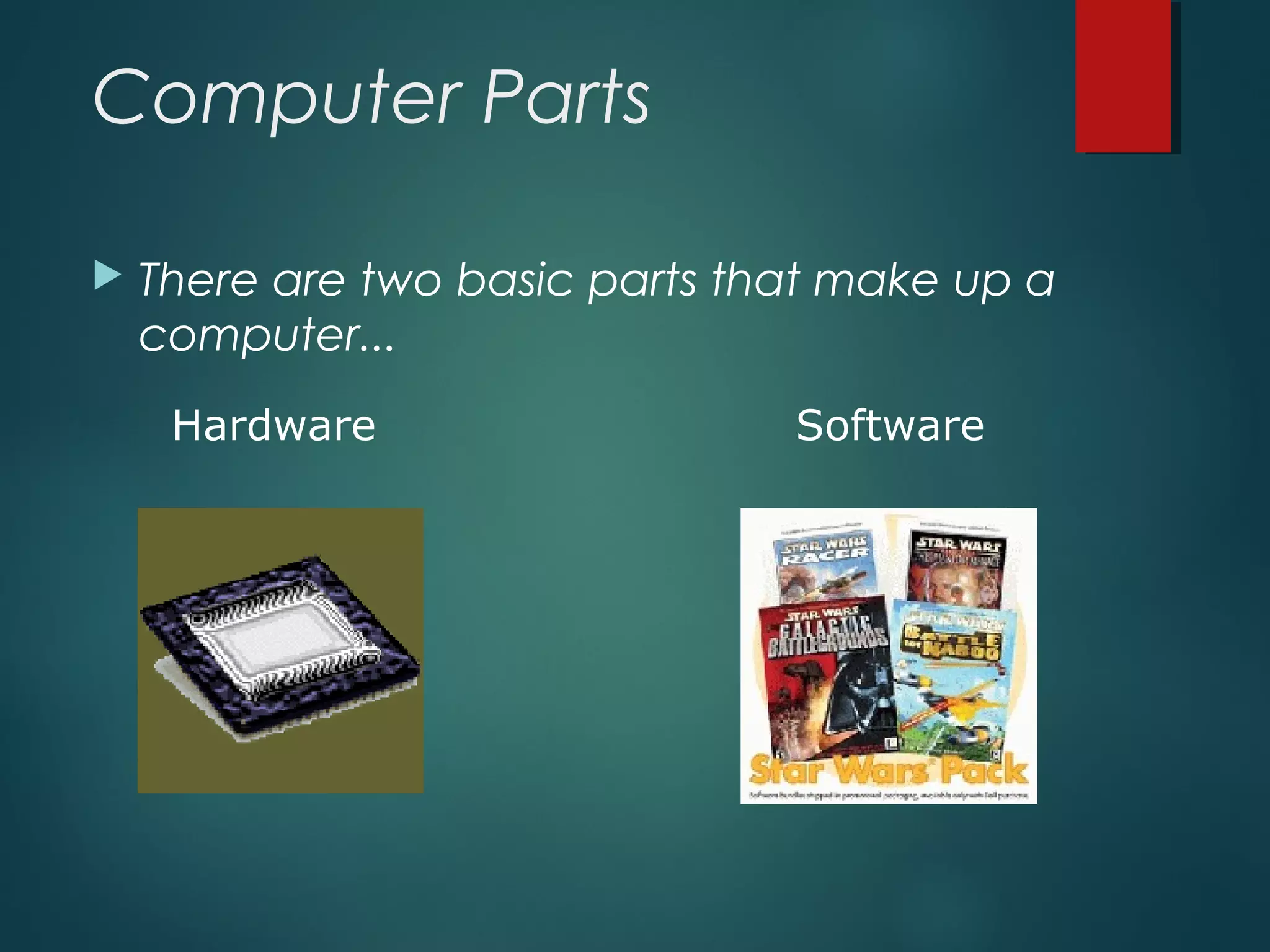
Computer Parts
 There are two basic parts that make up a
computer...
Hardware Software
Hardware
Hardware is basically anything that you can touch
with your fingers.
Computer Case
CPU (central processing unit...Pentium chip)
Monitor
Keyboard & Mouse
Disk Drive, Zip Drive, CD-ROM, DVD,
Hard Drive
Memory (RAM)
Speakers
Printer
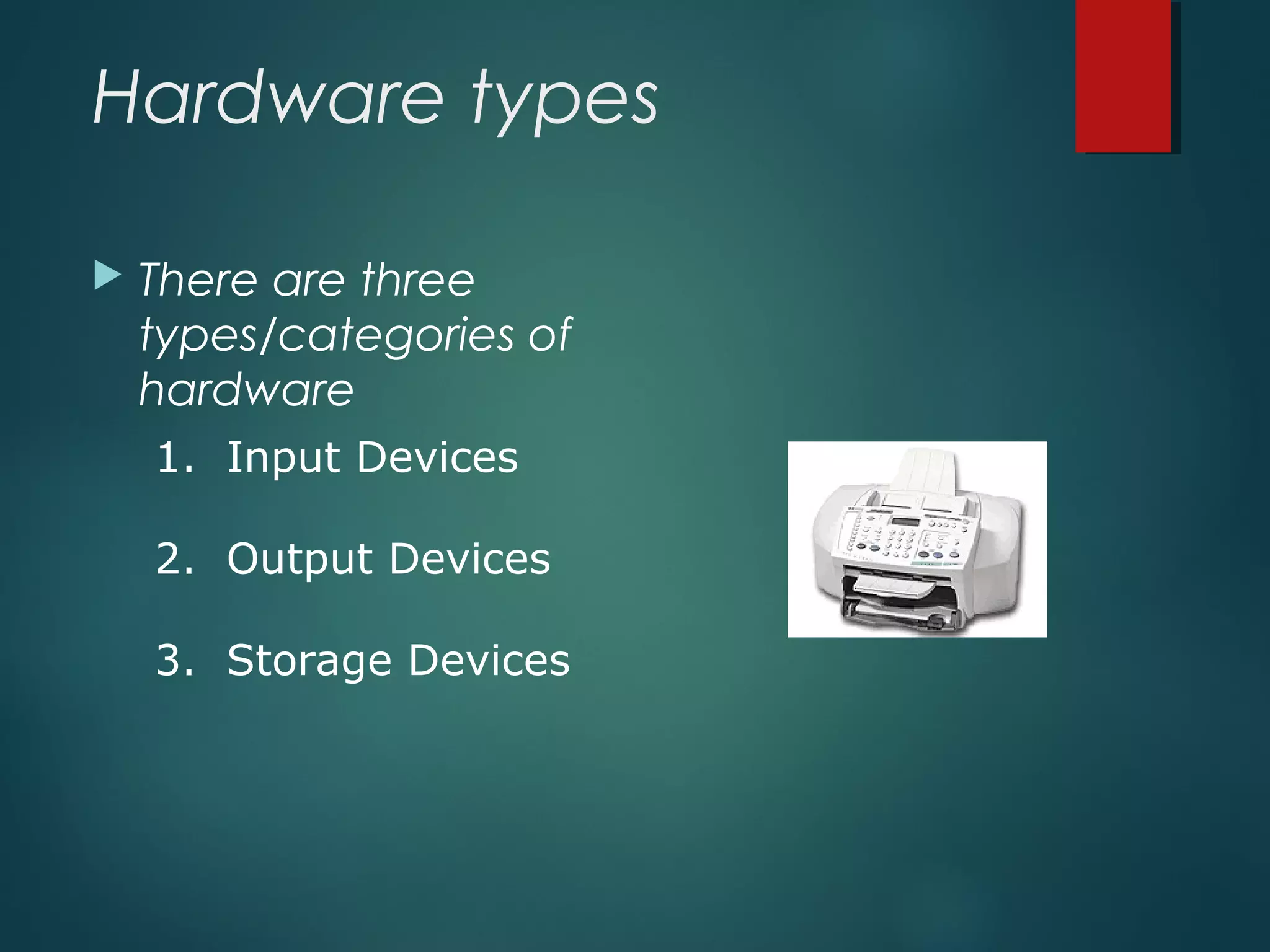
Hardware types
 There are three
types/categories of
hardware
1. Input Devices
2. Output Devices
3. Storage Devices
Input Devices
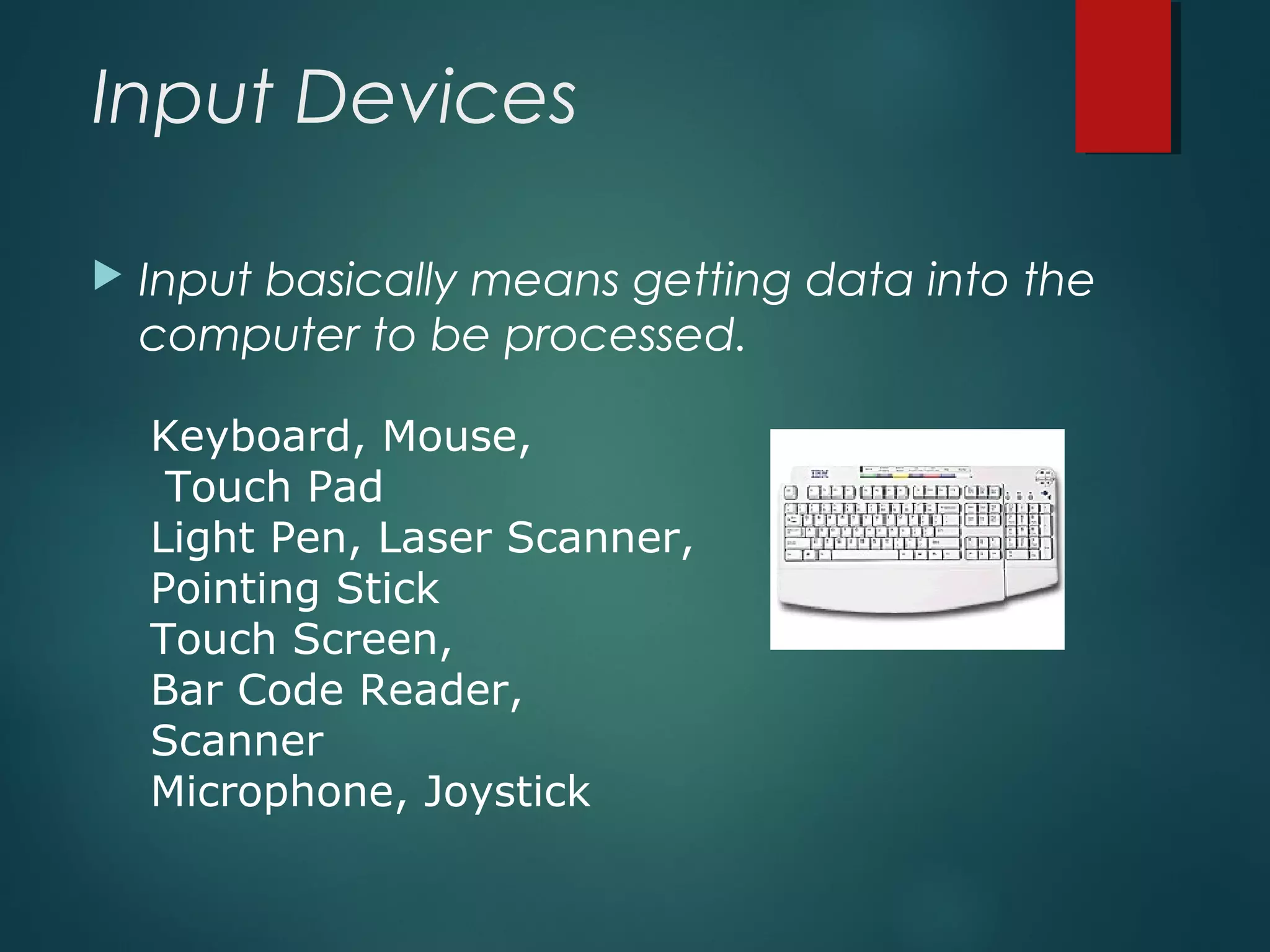
 Input basically means getting data into the
computer to be processed.
Keyboard, Mouse,
Touch Pad
Light Pen, Laser Scanner,
Pointing Stick
Touch Screen,
Bar Code Reader,
Scanner
Microphone, Joystick
Output Devices
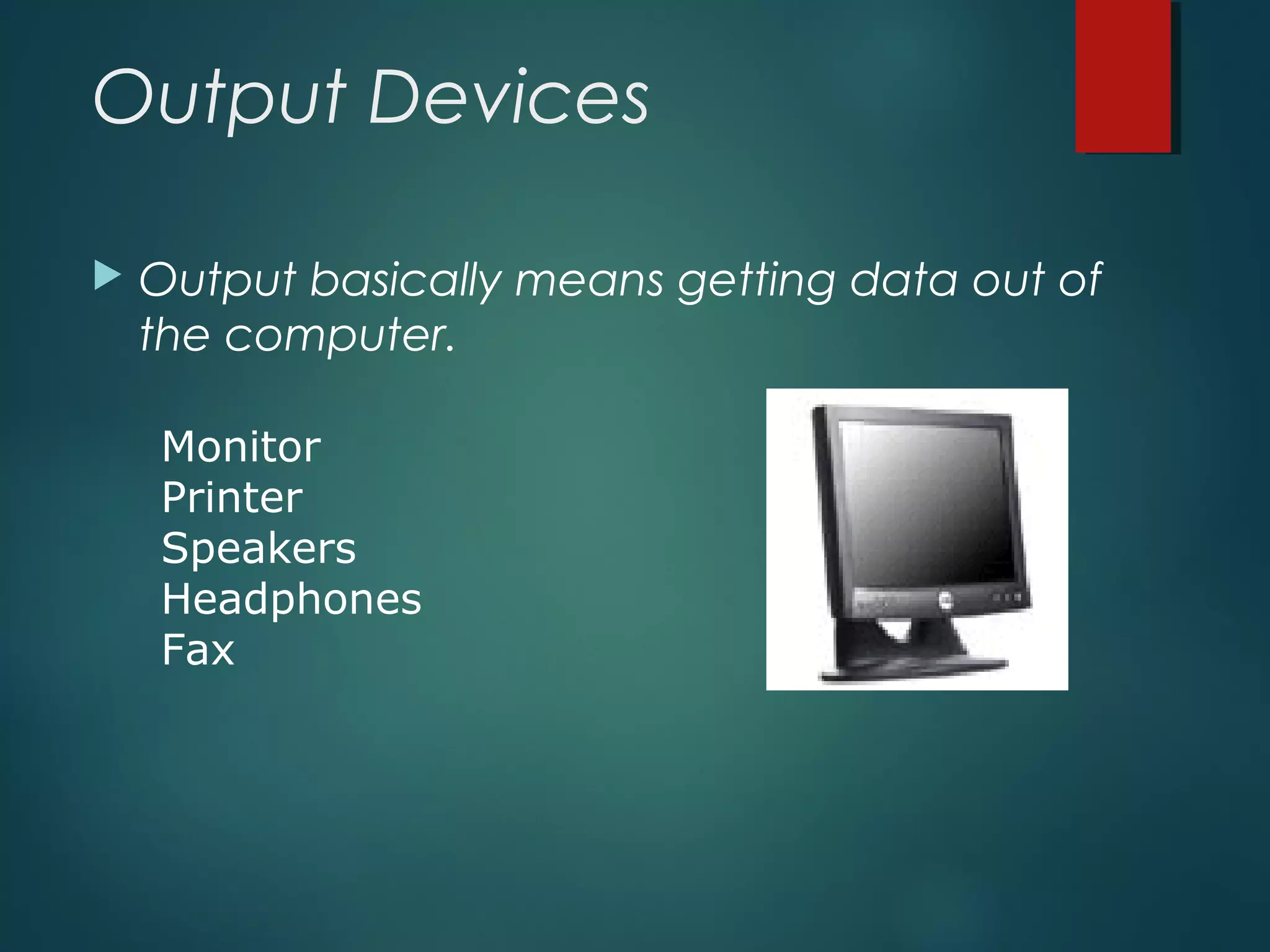
 Output basically means getting data out of
the computer.
Monitor
Printer
Speakers
Headphones
Fax
Storage Devices
 Storage devices are both input and output devices
in one. A storage device is a place to keep data
that has been processed so that it can be retrieved
at a later time to be used again.
Hard Disk
Floppy Disk
CD’s, DVD’s
Flash Memory,
Pen Drive
Software
 Software is the programs and
applications that tell the computer
what to do and how to look.
 Computer programmers write the
codes/instructions that make-up
software applications/programs.
 HTML is a type of computer
programming language that allows
programmers to make web pages.
 The next 2 slides show what HTML
codes look like and the web page the
codes produce.
Two Types of Software
 Application Software
 Operating System
Software
Operating System
Software
 Directs all the activities and sets all the rules for
how the hardware and software will work
together.
Examples would be:
DOS, Windows 95, 98, ME, NT, XP, Vista, Window
xp ,7,8 ,10.
Unix, Linux,
MAC system OS 6,7,8,9,10, 11
Operating Systems: GUI
 GUI stands for Graphical User Interface
Uses pictures (icons) to represent files, folders,
disk drives, modems, printers, etc.
GUI’s were created to make using a computer
easier, more interesting, non-threatening to
inexperienced users.
A mouse allows users to point at something and
click to make it work. With command line
you have to have all of the commands to make
your programs work.
Here is an example of a GUI
Application
Software
 Programs that work with operating system software to help
the computer to do specific types of work.
 There are six basic types of application software...
Application Software
1. Business software: word processors,
spreadsheets, and database programs.
2. Communication software: allows
computers to communicate with other
computers: fax software, Novell NetWare,
AOL, Modem Software.
3. Graphics software: software that allows
users to create and manipulate
graphics...Photoshop, Print Shop, etc.
Application Software
4. Education and Reference software: Programs that
help teach new material and ideas, and
programs that can be used to find
information...Encarta, Worldbook Encyclopedia,
Jumpstart Kindergarten, MicroType.
5. Entertainment and Leisure software...Warcraft,
Age of Empires, Barbie Design Center, Mrs.
Pacman, Solitair
6. Integrated software: Combines several types of
software into one program or package...Quicken
(Spreadsheet/data
base/communications/reference) or Print Shop
(Graphics/Word processor).
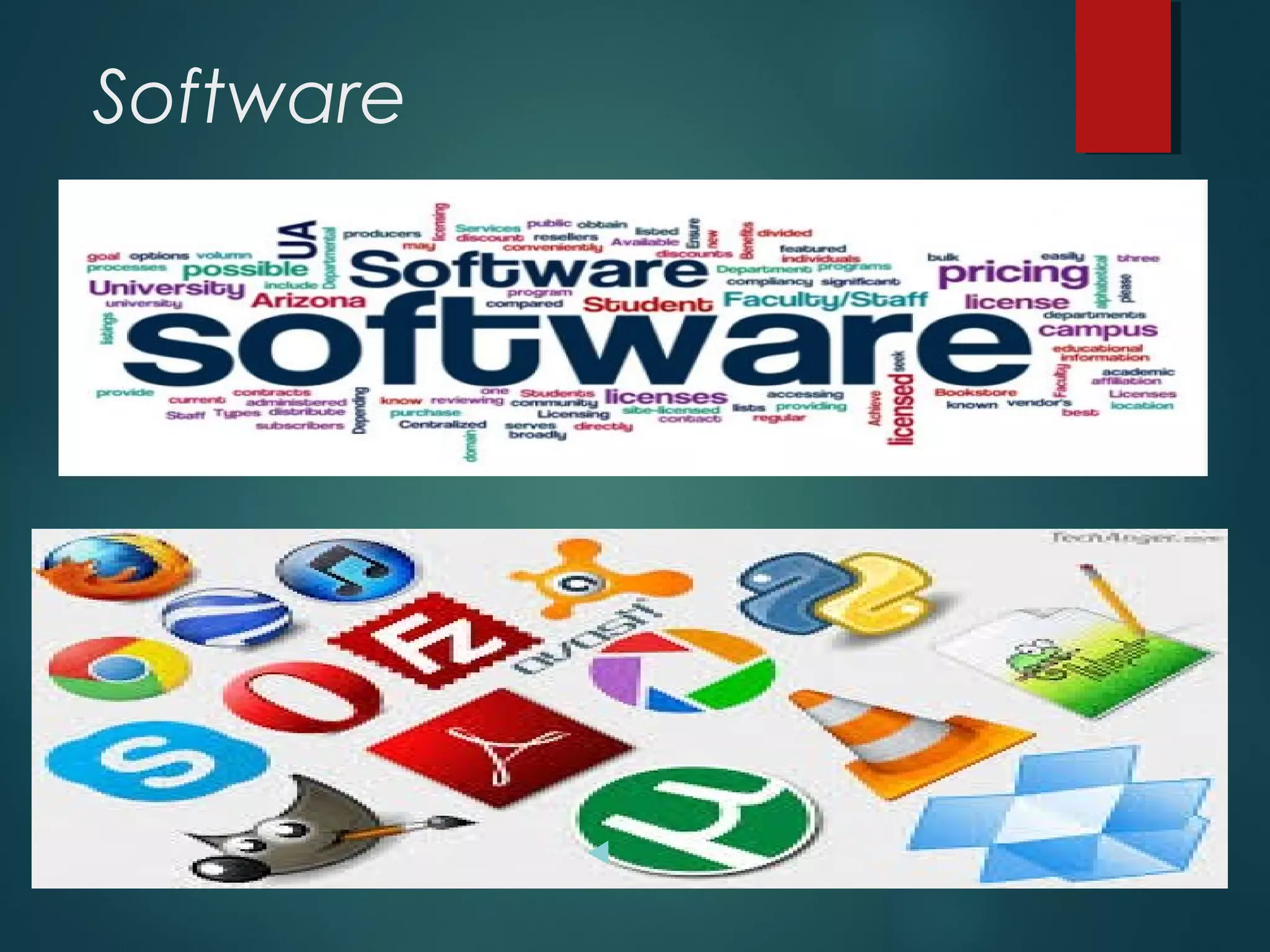
Software


Computer Basics made by Mr Kaptan

  • 1.
    Computer Basics THERE ARE MANYTYPES OF COMPUTERS INCLUDING:
  • 2.
    Charles Babbage  CharlesBabbage was an inventor of computer. they called “The Father of Computing,”  The first computer is made by Charles Babbage.   The first mechanical computer, created in 1822  The first computer is made in London
  • 3.
    Types of Computers Supercomputers...  Mainframes….  Personal Computers (PC)…
  • 4.
    Supercomputers  Supercomputers areused to process very large amounts of information including processing information to predict hurricanes, satellite images and navigation, and process military war scenarios.
  • 5.
    Mainframes  Mainframes areused by government and businesses to process very large amounts of information.
  • 6.
    Mini-Computers  Mini-Computers aresimilar to mainframes...they are used by business and government to process large amounts of information.
  • 7.
    Personal Computers  PersonalComputers also known as PC’s...are smaller and less powerful than the others. They are used in homes, schools, and small businesses.
  • 8.
    Types of Computers Thereare 3 main types of PCs  Desktop  Portable (Notebook/Laptop) When portable (notebook/laptop) computers were first created they were HUGE. They weighed around 100 lbs., and were carried in a large luggage suitcase. The creators of the portable (notebook/laptop) computer dreamed that one day it would be the size a notebook or pocket dictionary. With today’s technology, we have been able to accomplish this goal and more..  Hand-Held
  • 9.
    Networks  A networkis a group of computers that share information and hardware.  The internet is many networks around the world that are all connected together to make 1 huge network.
  • 10.
    Computer Parts  Thereare two basic parts that make up a computer... Hardware Software
  • 11.
    Hardware Hardware is basicallyanything that you can touch with your fingers. Computer Case CPU (central processing unit...Pentium chip) Monitor Keyboard & Mouse Disk Drive, Zip Drive, CD-ROM, DVD, Hard Drive Memory (RAM) Speakers Printer
  • 12.
    Hardware types  Thereare three types/categories of hardware 1. Input Devices 2. Output Devices 3. Storage Devices
  • 13.
    Input Devices  Inputbasically means getting data into the computer to be processed. Keyboard, Mouse, Touch Pad Light Pen, Laser Scanner, Pointing Stick Touch Screen, Bar Code Reader, Scanner Microphone, Joystick
  • 14.
    Output Devices  Outputbasically means getting data out of the computer. Monitor Printer Speakers Headphones Fax
  • 15.
    Storage Devices  Storagedevices are both input and output devices in one. A storage device is a place to keep data that has been processed so that it can be retrieved at a later time to be used again. Hard Disk Floppy Disk CD’s, DVD’s Flash Memory, Pen Drive
  • 16.
    Software  Software isthe programs and applications that tell the computer what to do and how to look.  Computer programmers write the codes/instructions that make-up software applications/programs.  HTML is a type of computer programming language that allows programmers to make web pages.  The next 2 slides show what HTML codes look like and the web page the codes produce.
  • 17.
    Two Types ofSoftware  Application Software  Operating System Software
  • 18.
    Operating System Software  Directsall the activities and sets all the rules for how the hardware and software will work together. Examples would be: DOS, Windows 95, 98, ME, NT, XP, Vista, Window xp ,7,8 ,10. Unix, Linux, MAC system OS 6,7,8,9,10, 11
  • 19.
    Operating Systems: GUI GUI stands for Graphical User Interface Uses pictures (icons) to represent files, folders, disk drives, modems, printers, etc. GUI’s were created to make using a computer easier, more interesting, non-threatening to inexperienced users. A mouse allows users to point at something and click to make it work. With command line you have to have all of the commands to make your programs work. Here is an example of a GUI
  • 20.
    Application Software  Programs thatwork with operating system software to help the computer to do specific types of work.  There are six basic types of application software...
  • 21.
    Application Software 1. Businesssoftware: word processors, spreadsheets, and database programs. 2. Communication software: allows computers to communicate with other computers: fax software, Novell NetWare, AOL, Modem Software. 3. Graphics software: software that allows users to create and manipulate graphics...Photoshop, Print Shop, etc.
  • 22.
    Application Software 4. Educationand Reference software: Programs that help teach new material and ideas, and programs that can be used to find information...Encarta, Worldbook Encyclopedia, Jumpstart Kindergarten, MicroType. 5. Entertainment and Leisure software...Warcraft, Age of Empires, Barbie Design Center, Mrs. Pacman, Solitair 6. Integrated software: Combines several types of software into one program or package...Quicken (Spreadsheet/data base/communications/reference) or Print Shop (Graphics/Word processor).
  • 23.