Hamza KareemHamza Kareem
What is Security
Properties of SecurityProperties of Security
Major Topics in Security
Next Page
What is security?What is security?
In information technology, security is the protection of
information assets through the use of technology, processes,
and training.
Security is about
Honest user (e.g., David, Jenny, Greg, …)
Dishonest Attacker
How the Attacker
Disrupts honest David’s use of the system (Integrity, Availability)
Learns information intended for David only (Confidentiality)
Information Technology Professionals must protect users from
these attackers.
Next Page
Properties of SecurityProperties of Security
Confidentiality
Information about system or its users cannot be learned by an
attacker
Integrity
The system continues to operate properly, only reaching states
that would occur if there were no attacker
Availability
Actions by an attacker do not prevent users from having access
to use of the system
Next Page
Application and OSApplication and OS
SecuritySecurity
Main Problem
OS Attacker Controls malicious files and applications
Content
Vulnerabilities: control hijacking attacks, fuzzing
Prevention: System design, robust coding, isolation
Project
Buffer overflow project
Next Page
Application security is the use of software, hardware, and
procedural methods to protect applications from external
threats.
Implications for the IT Professional:
Security measures built into applications
Sound application security routine
Use of hardware or software firewalls
Return to Home Additional Reading i
Web SecurityWeb Security
Main Problem
Web Attacker sets up malicious site visited by victim; no
control of network
Content
Browser policies, session mgmt, user authentication
HTTPS and web application security
Project
Web site attack and defenses project
Next Page
Web SecurityWeb Security
Web security is the separation or control of threats from
assets within or maintained by web-based services to protect
the integrity of the service, the confidentiality of the
communication, and the availability of the application.
Implications for the IT professional:
Security measures built into the applications
Sound application security routine
Use of hardware or software firewalls
Security measures built into the web service
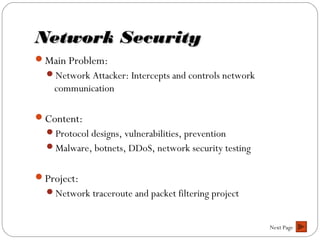
Network SecurityNetwork Security
Main Problem:
Network Attacker: Intercepts and controls network
communication
Content:
Protocol designs, vulnerabilities, prevention
Malware, botnets, DDoS, network security testing
Project:
Network traceroute and packet filtering project
Next Page
Network VulnerabilityNetwork Vulnerability
PointsPoints
Return to Home Additional Reading i
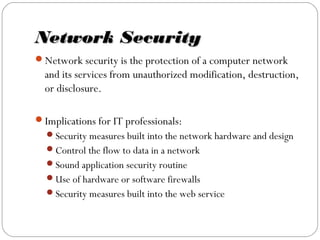
Network SecurityNetwork Security
Network security is the protection of a computer network
and its services from unauthorized modification, destruction,
or disclosure.
Implications for IT professionals:
Security measures built into the network hardware and design
Control the flow to data in a network
Sound application security routine
Use of hardware or software firewalls
Security measures built into the web service
Computer SecurityComputer Security
Main Idea
Hacker gains controls of a computer, installs malicious files,
applications and access computer files.
Content
Cryptography (user perspective)
digital rights management
Project
Seminar
Next Page
Computer SecurityComputer Security
Computer security is the process of preventing and detecting
unauthorized use of your computer. The content of a computer is
vulnerable to few risks unless the computer is connected to other
computers on a network
Implications for IT professionals:
Use of applications such as antivirus, and firewalls
Security settings on local machines
Use of software firewalls
Create boot disks and backup data on a regular basis
Gmail : hamzakareem61@gmail.com
Facebook : Hamza kareem

Network security presentation

  • 1.
  • 2.
    What is Security Propertiesof SecurityProperties of Security Major Topics in Security Next Page
  • 3.
    What is security?Whatis security? In information technology, security is the protection of information assets through the use of technology, processes, and training. Security is about Honest user (e.g., David, Jenny, Greg, …) Dishonest Attacker How the Attacker Disrupts honest David’s use of the system (Integrity, Availability) Learns information intended for David only (Confidentiality) Information Technology Professionals must protect users from these attackers. Next Page
  • 4.
    Properties of SecurityPropertiesof Security Confidentiality Information about system or its users cannot be learned by an attacker Integrity The system continues to operate properly, only reaching states that would occur if there were no attacker Availability Actions by an attacker do not prevent users from having access to use of the system Next Page
  • 5.
    Application and OSApplicationand OS SecuritySecurity Main Problem OS Attacker Controls malicious files and applications Content Vulnerabilities: control hijacking attacks, fuzzing Prevention: System design, robust coding, isolation Project Buffer overflow project Next Page
  • 6.
    Application security isthe use of software, hardware, and procedural methods to protect applications from external threats. Implications for the IT Professional: Security measures built into applications Sound application security routine Use of hardware or software firewalls Return to Home Additional Reading i
  • 7.
    Web SecurityWeb Security MainProblem Web Attacker sets up malicious site visited by victim; no control of network Content Browser policies, session mgmt, user authentication HTTPS and web application security Project Web site attack and defenses project Next Page
  • 8.
    Web SecurityWeb Security Websecurity is the separation or control of threats from assets within or maintained by web-based services to protect the integrity of the service, the confidentiality of the communication, and the availability of the application. Implications for the IT professional: Security measures built into the applications Sound application security routine Use of hardware or software firewalls Security measures built into the web service
  • 9.
    Network SecurityNetwork Security MainProblem: Network Attacker: Intercepts and controls network communication Content: Protocol designs, vulnerabilities, prevention Malware, botnets, DDoS, network security testing Project: Network traceroute and packet filtering project Next Page
  • 10.
  • 11.
    Network SecurityNetwork Security Networksecurity is the protection of a computer network and its services from unauthorized modification, destruction, or disclosure. Implications for IT professionals: Security measures built into the network hardware and design Control the flow to data in a network Sound application security routine Use of hardware or software firewalls Security measures built into the web service
  • 12.
    Computer SecurityComputer Security MainIdea Hacker gains controls of a computer, installs malicious files, applications and access computer files. Content Cryptography (user perspective) digital rights management Project Seminar Next Page
  • 13.
    Computer SecurityComputer Security Computersecurity is the process of preventing and detecting unauthorized use of your computer. The content of a computer is vulnerable to few risks unless the computer is connected to other computers on a network Implications for IT professionals: Use of applications such as antivirus, and firewalls Security settings on local machines Use of software firewalls Create boot disks and backup data on a regular basis
  • 14.