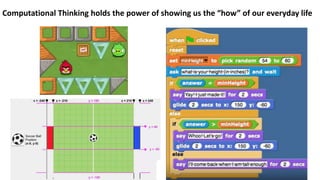
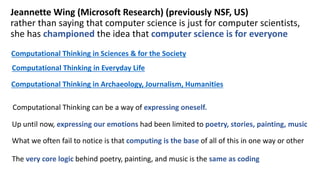
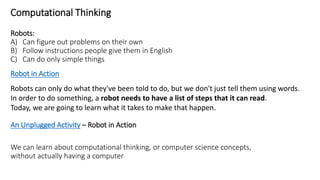
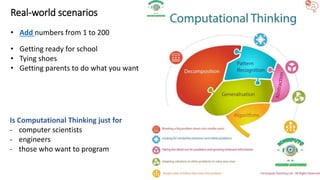
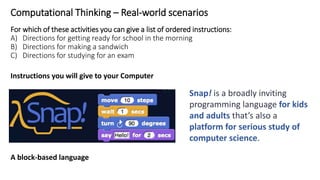
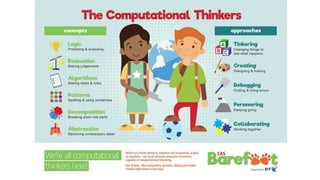
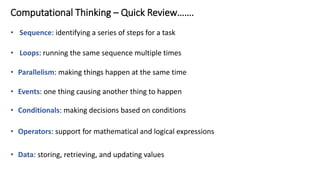
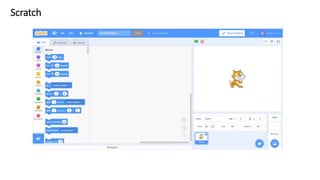
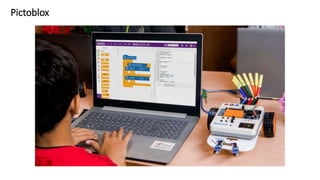
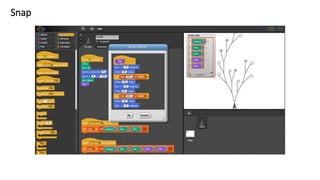
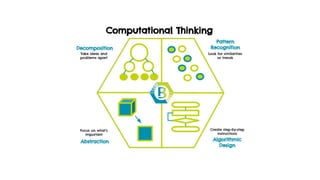
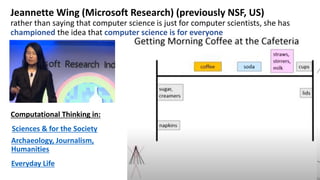
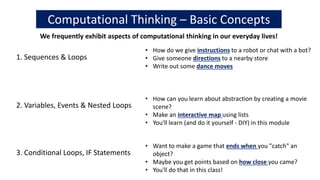
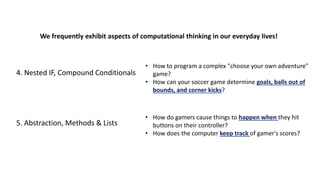
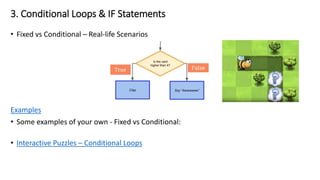
This document discusses computational thinking and provides examples of how it can be applied. It defines computational thinking as using logical reasoning and problem-solving skills to solve problems. It gives examples of computational thinking in everyday life, sciences, archaeology, journalism, and more. The document also discusses teaching computational thinking to others using block-based programming languages like Snap, Scratch, and Pictoblox. Key concepts covered include sequences, loops, conditionals, events, parallelism, operators, and data.