COMPLICATIONS OF TEXTUREDCOMPLICATIONS OF TEXTURED
SURFACE SILASTIC BREAST IMPLANTSSURFACE SILASTIC BREAST IMPLANTS
Dr. Vijay Sharma, M D, India
President - Federation of Restorative & Cosmetic Surgery
Author - Changing Faces
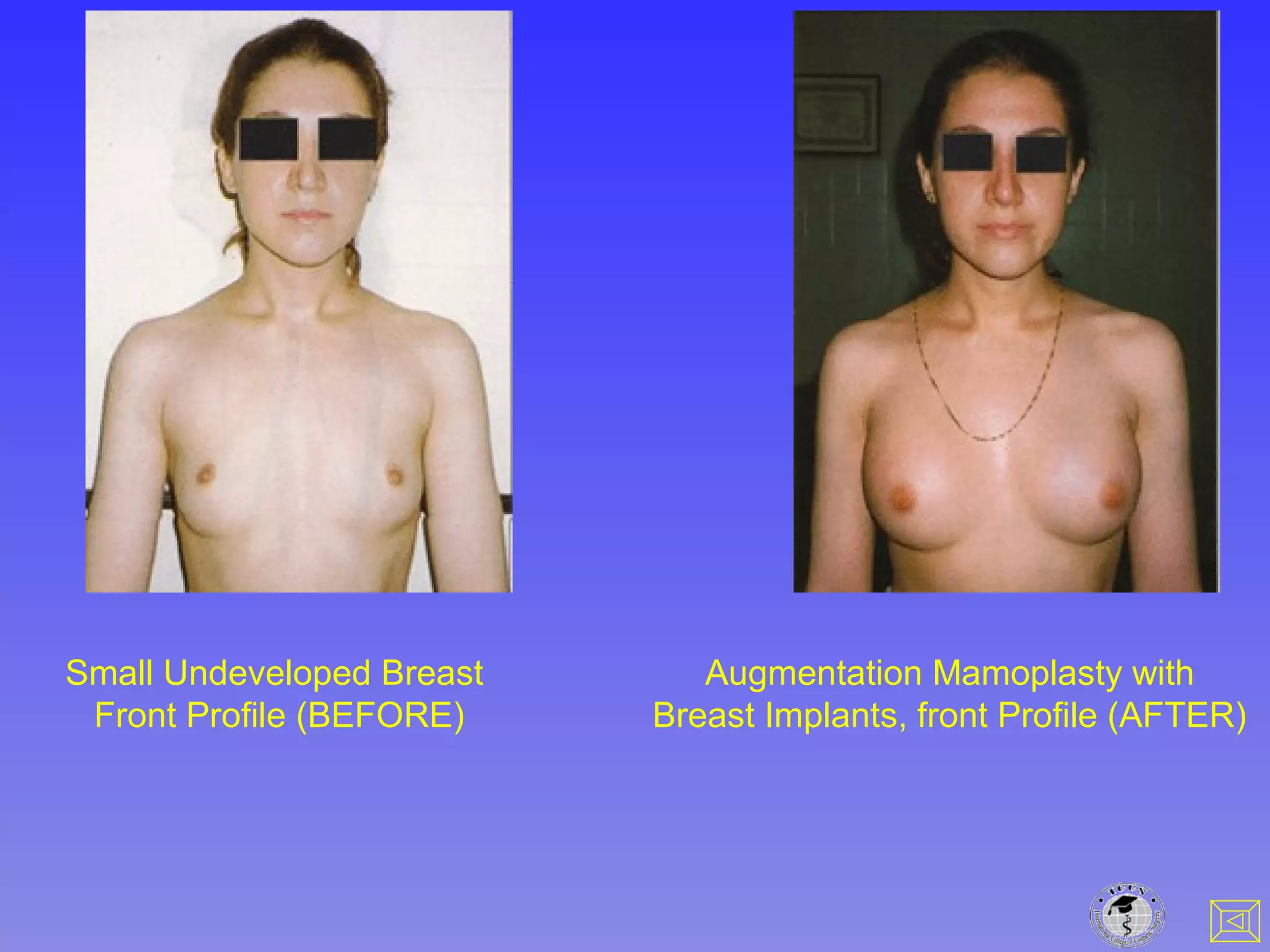
Small Undeveloped Breast
Front Profile (BEFORE)
Augmentation Mamoplasty with
Breast Implants, front Profile (AFTER)
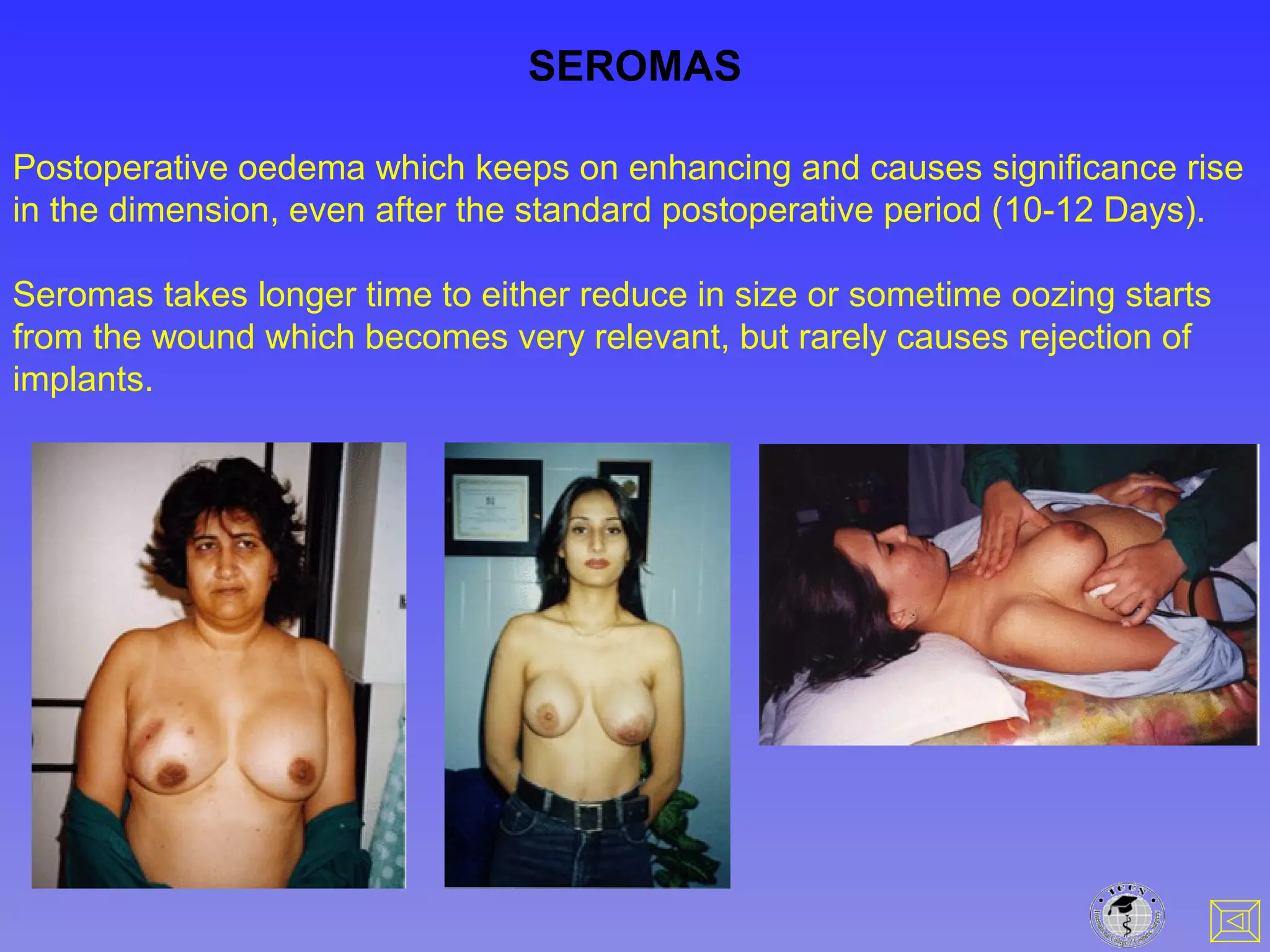
SEROMAS
Postoperative oedema which keeps on enhancing and causes significance rise
in the dimension, even after the standard postoperative period (10-12 Days).
Seromas takes longer time to either reduce in size or sometime oozing starts
from the wound which becomes very relevant, but rarely causes rejection of
implants.
Most important and controversial question concerning Silicone/Silastic Breast
Implants is whether they can pathophysiologic pathways that they could cause
generalized disease or symptoms.Why need 10% patients develop seromas.
IS THERE ANY PATHOPHYSIOLOGICAL PATHWAYS FOR
TEXTURED SURFACE SILASTIC IMPLANTS
1. Is this an antigen – antibody reaction
Antigen-a substance that elicits an immune response and reacts specifically
with antibodies and/or T cells. A molecule, to be an antigen, must be sufficiently
large and complex for the immune system to distinguish from being different
from other molecules. Most small molecules, those with a molecular weight
below about 2000 daltons, by themselves do not elicit the formation of
antibodies. Medical-grade silicone is composed of long chains of
dimethylsiloxane (-ACH302Si0-) x. Dimethylsiloxane has a molecular weight of
74 daltons. Compared to most organic molecules it is a very small Molecule
with a low molecular weight, which renders the immune system incapable of
identifying it as an antigen.
Dimethylsiloxane is polymerized into long chains – polydimethylsiloxane. Does
the fact dimethylsiloxane is polymerized render the immune system capable of
identifying it is an antigen? The answer to this question is "no." Polymerized
dimethylsiloxane does not present the immune system with any additional
molecular information; it only exposes the immune system repeatedly to
molecular information that is already present. Therefore, based on the low
molecular weight of dimethylsiloxane alone, it could be stated that
silicone/silastic cannot be an antigen.
2. Is this an adjuvant triggering immungenicity.
Adjuvant-material added to an antigen to increase its immunogenicity. In 1954,
Stoerk and associates described a polyarthritis in rats that developed after a
subcutaneous injection of a spleen cell suspension with Freuld's complete
adjuvant, a dispension of dried heat killed tubercle bacilli i mineral oil. In 1964,
Miyoski and co-workers described a similar condition in two women following
paraffin injection augmentation mamoplasty, and coined the term "human
adjuvant disease". Additional cases of so called human adjuvant disease have
been reported in medical literature and have presented a variety of signs and
symptoms, and no single constellation of symptoms and laboratory findings has
emerged. The adjuvant disease originally described in rat is now attributed to a
cross reaction between antigen present in the acid-fast bacilli and the host.
Adjuvant disease in the experimental animal bears no relationship to
autoimmune or connective disease in humans. It is now recommended that the
term "human adjuvant disease" be abandoned.
Two important characteristics of antigen recognition by T lymphocytes that are
1. T-cells recognize only protein antigen or chemically reactive forms of
haptens. such as dinitrophenol
2. T-cells recognize and respond to foreign proteins only when attached to
the surface of other cells-antigen presenting cells. Dimethylsiloxane will be
phagocytized by macrophages as any foreign material. However, since it is
biologically non reactive, it cannot attach to the surface of monocytes and
therefore the monocytes cannot act as antigen presenting cells. In conclusion,
from the scientific data it is implausible to postulate silicone is an adjuvant
causing generalized disease or symptoms.
3. Is this a Hapten – recognized as Antigen
Hapten-a molecule not immunogenic by itself but that, when coupled to a
macro molecule, can elicit anti bodies directed against itself to a hapten would
require that the dimethylsiloxane repeatedly attached to a specific side on a
specific macro molecular for only then could the immune system recognize its
molecular uniqueness, which by all evidence is biologically inert, is incapable of
repeatedly attaching to a specific site on a specific macro molecule.
Silicone/Silastic cannot act as a hapten.
4. Is there any alterations in endogenous antigens resulting in an auto immune
response.
As already stated, all evidence indicates silicone/silastic is biologically inert. To
cause alteration in endogenous antigens would require Silicone/Silastic to react
repeatedly at specific sites on the endogenous antigens. Therefore a
silicone/silastic cannot cause an autoimmune disease by way of altering
endogenous antigens.
5. Is this a foreign body reaction, which then causes Cytokines-Mediated
disease.
Silicone/silastic is treated by the host as a foreign body and it evokes a fibrotic
and foreign body reaction in the host. Cytokine production would be expected
in these circumstances. Cytokines are factors secreted by monocytes
(monokines) and lymphocytes (lymphokines). These factors can be thought of
as locally acting hormones. In general cytokines are synthesized in response to
inflammatory or antigenic stimuli and act locally by binding to high affinity
receptors on target cells. Two distilled physiologic cell responses of cytokines
secreted into the circulation are endogenous pyrogen effect, which act on the
hypothalamus to induce fever. No distilled pathologic effects from circulating
cytokines have been demonstrated. Cytokines cannot initiate an immune
disease; if these were so there would be an increased frequency of immune
disease in chronic glaucomatous diseases such as tuberculosis and
sarcoidosis. It is implausible to postulate, based on current medical information,
that cytokines can cause generalized disease or symptoms.
6. Silicone/silastic breast envelopes contain amorphous silica to reinforce the
silicone/silastic elastomer.
An association between crystalline silica and systemic disease has been
established, although its exact pathophysiology remains unknown. Heavy
exposure to silica dust has been associated with systemic sclerosis, has in
minors. Silica (silicone dioxide) occurs either in an amorphous or crystalline
form. Only the crystalline form has been associated with an increased
frequency of systemic disease is dose related. Amorphous silica at present in
the elastomer, is believed to be non reactive. We should keep in mind that
silicone is the second most common element on earth, and silica is one of the
most common compound on earth to which we are exposed daily. In conclusion
it is extremely unlikely that the small quantity of amorphous silica in the
elastomer can cause generalized disease or symptoms like oozing serum or
seromas developed.
Seromas
Sr.
No
Year Total no. of patients
operated
Patients developed
seromas
1 1998
(Jan-June)
15 2
2 1998
(July-Dec)
9 1
3 1999
(Jan-June)
23 3
4 1999
(July-Dec)
16 1
5 2000
(Jan-June)
18 2
TEXTURED SURFACE SILASTIC IMPLANTS
Total 81 9
Discussion
A review of the chemical properties of silicone/silastic and the silicone/silastic
containing molecules reinforces the fact that it is very unlikely that silicone/silastic
breast implants can cause generalized disease or symptoms. Of the many
thousands of molecules present in animal kingdom none have been found to
include silicone/silastic. From this fact, we must concluded that molecules in living
organisms in the animal kingdom cannot react to silicone/silastic or compound
containing silicone. This is the very important fact since all the propose
pathophysiologic pathways, accept for the cytokine – mediated suggestion would
require a reaction between silicone or silica and molecules present in the human
body, a condition that all studies to date failed to demonstrate. For example, even if
the immune symptoms could develop anti bodies to silicone/silastic, the anti bodies
would still have bind to silicone/silastic at a specific binding site to cause an immune
disease like oozing serum or seromas developed.
The fact that silicone or silicone/silastic containing molecules does not react or bind
to molecules in living organisms is not surprising. The role that silicone/silastic has
in nature is the formation of rocks and crystals. It seems reasonable to postulate
that has life evolves on earth living organisms in the animal kingdom excluded an
possibility of reaction with silicone or silicone/silastic containing molecules since
there role in nature is to form rocks and crystal.
Several additional misconceptions frequently sited in discussions of whether
silicone/silastic breast implants can cause generalized disease or symptoms
need to be addressed briefly.
The first misconception is that silicone is not inert since it evokes a foreign body
reaction. Silicone/silastic, like any foreign material will be treated by the body,
as foreign body reaction to silicone/silastic does not imply that silicone is not in
earth.
Silicone/silastic causes the foreign body reaction with monocyte response
(monocytes, macrophages, multinucleated, giant cells). A second
misconception is that monocytes can initiate an immune disease can only be
initiated by an antigen that reacts specifically with anti bodies of B-lymphocytes
origin of T lymphocytes. Monocytes and Monokines play a major role in a T cell
mediated immune response; however, they do not initiate an immune response
or disease.
In the medical literature there are several reports of regration of signs and
symptoms following removal of silicone breast implants. Can these report be
taken has scientific evidence that silicone breast implants caused generalized
disease or symptoms?
The answer to this question is no for the following reasons:
1. The few cases reported in the medical literature do not represent controlled
studies.
2. Patients presenting with signs and symptoms of disease will also receive
medical therapy in addition to having their silicone breast implants moved. The
improvement in the patient's signs and symptoms could be the result of their
medical therapy and not the removal of the implants.
3. The signs and symptoms associated with immune or connective tissue
diseases typically do not remain stationary. In many cases, the patient will
show spontaneous improvement and in a few cases even complete mission
4. There could be a patient bias, either unconscious or conscious, to report
improvement in her signs and symptoms following removal of the
silicone/silastic breast implants.
A recent FDA drug bulletin states, "if women are having symptoms they think
may be related to the implant and they should see their physicians". Therefore
physicians must familiarize about the silicone controversy, and especially about
whether breast implants can cause systemic disease or symptoms. Two
important questions need to be addressed. First, is there any proof that
silicone/silastic breast implants can cause generalized disease or symptoms?
The answer to this question is "no". The American College of Rheumatology
has recently stated, "there is no convincing evidence that these implants cause
generalized disease". A recent FDA drug bulletin states, "while the FDA has
received reports about an increasing number of immune related disorders
among breast implants patients, the panel found the data between immune
related disorders and implants inconclusive in relation to these devices“.
The second question, which need to be addressed, is, what is the probability
that at some future date a cause and effect relationship between Silicon/silastic
breast implants and generalized disease or symptoms will be found. Following
review of possible pathophysiologic pathways, each, from the scientific data,
range from impossible to extremely unlikely. Therefore I would suggest the
following answer to the second question: A number of possible ways in which
silicon breast implants might cause generalized disease or symptoms have
been suggested pathway is very unlikely. Therefore, it is also very unlikely that
a cause and effect relationship between the silicone breast implants and
generalized disease or symptoms will be found in the future.
Small Undeveloped Breast
Side Profile (BEFORE)
Augmentation Mamoplasty with
Breast Implants, Side Profile (AFTER)
Thanking You
Namaskar

Complications of textured_surface_implants

  • 1.
    COMPLICATIONS OF TEXTUREDCOMPLICATIONSOF TEXTURED SURFACE SILASTIC BREAST IMPLANTSSURFACE SILASTIC BREAST IMPLANTS Dr. Vijay Sharma, M D, India President - Federation of Restorative & Cosmetic Surgery Author - Changing Faces
  • 2.
    Small Undeveloped Breast FrontProfile (BEFORE) Augmentation Mamoplasty with Breast Implants, front Profile (AFTER)
  • 3.
    SEROMAS Postoperative oedema whichkeeps on enhancing and causes significance rise in the dimension, even after the standard postoperative period (10-12 Days). Seromas takes longer time to either reduce in size or sometime oozing starts from the wound which becomes very relevant, but rarely causes rejection of implants.
  • 4.
    Most important andcontroversial question concerning Silicone/Silastic Breast Implants is whether they can pathophysiologic pathways that they could cause generalized disease or symptoms.Why need 10% patients develop seromas. IS THERE ANY PATHOPHYSIOLOGICAL PATHWAYS FOR TEXTURED SURFACE SILASTIC IMPLANTS
  • 5.
    1. Is thisan antigen – antibody reaction Antigen-a substance that elicits an immune response and reacts specifically with antibodies and/or T cells. A molecule, to be an antigen, must be sufficiently large and complex for the immune system to distinguish from being different from other molecules. Most small molecules, those with a molecular weight below about 2000 daltons, by themselves do not elicit the formation of antibodies. Medical-grade silicone is composed of long chains of dimethylsiloxane (-ACH302Si0-) x. Dimethylsiloxane has a molecular weight of 74 daltons. Compared to most organic molecules it is a very small Molecule with a low molecular weight, which renders the immune system incapable of identifying it as an antigen. Dimethylsiloxane is polymerized into long chains – polydimethylsiloxane. Does the fact dimethylsiloxane is polymerized render the immune system capable of identifying it is an antigen? The answer to this question is "no." Polymerized dimethylsiloxane does not present the immune system with any additional molecular information; it only exposes the immune system repeatedly to molecular information that is already present. Therefore, based on the low molecular weight of dimethylsiloxane alone, it could be stated that silicone/silastic cannot be an antigen.
  • 6.
    2. Is thisan adjuvant triggering immungenicity. Adjuvant-material added to an antigen to increase its immunogenicity. In 1954, Stoerk and associates described a polyarthritis in rats that developed after a subcutaneous injection of a spleen cell suspension with Freuld's complete adjuvant, a dispension of dried heat killed tubercle bacilli i mineral oil. In 1964, Miyoski and co-workers described a similar condition in two women following paraffin injection augmentation mamoplasty, and coined the term "human adjuvant disease". Additional cases of so called human adjuvant disease have been reported in medical literature and have presented a variety of signs and symptoms, and no single constellation of symptoms and laboratory findings has emerged. The adjuvant disease originally described in rat is now attributed to a cross reaction between antigen present in the acid-fast bacilli and the host. Adjuvant disease in the experimental animal bears no relationship to autoimmune or connective disease in humans. It is now recommended that the term "human adjuvant disease" be abandoned.
  • 7.
    Two important characteristicsof antigen recognition by T lymphocytes that are 1. T-cells recognize only protein antigen or chemically reactive forms of haptens. such as dinitrophenol 2. T-cells recognize and respond to foreign proteins only when attached to the surface of other cells-antigen presenting cells. Dimethylsiloxane will be phagocytized by macrophages as any foreign material. However, since it is biologically non reactive, it cannot attach to the surface of monocytes and therefore the monocytes cannot act as antigen presenting cells. In conclusion, from the scientific data it is implausible to postulate silicone is an adjuvant causing generalized disease or symptoms.
  • 8.
    3. Is thisa Hapten – recognized as Antigen Hapten-a molecule not immunogenic by itself but that, when coupled to a macro molecule, can elicit anti bodies directed against itself to a hapten would require that the dimethylsiloxane repeatedly attached to a specific side on a specific macro molecular for only then could the immune system recognize its molecular uniqueness, which by all evidence is biologically inert, is incapable of repeatedly attaching to a specific site on a specific macro molecule. Silicone/Silastic cannot act as a hapten. 4. Is there any alterations in endogenous antigens resulting in an auto immune response. As already stated, all evidence indicates silicone/silastic is biologically inert. To cause alteration in endogenous antigens would require Silicone/Silastic to react repeatedly at specific sites on the endogenous antigens. Therefore a silicone/silastic cannot cause an autoimmune disease by way of altering endogenous antigens.
  • 9.
    5. Is thisa foreign body reaction, which then causes Cytokines-Mediated disease. Silicone/silastic is treated by the host as a foreign body and it evokes a fibrotic and foreign body reaction in the host. Cytokine production would be expected in these circumstances. Cytokines are factors secreted by monocytes (monokines) and lymphocytes (lymphokines). These factors can be thought of as locally acting hormones. In general cytokines are synthesized in response to inflammatory or antigenic stimuli and act locally by binding to high affinity receptors on target cells. Two distilled physiologic cell responses of cytokines secreted into the circulation are endogenous pyrogen effect, which act on the hypothalamus to induce fever. No distilled pathologic effects from circulating cytokines have been demonstrated. Cytokines cannot initiate an immune disease; if these were so there would be an increased frequency of immune disease in chronic glaucomatous diseases such as tuberculosis and sarcoidosis. It is implausible to postulate, based on current medical information, that cytokines can cause generalized disease or symptoms.
  • 10.
    6. Silicone/silastic breastenvelopes contain amorphous silica to reinforce the silicone/silastic elastomer. An association between crystalline silica and systemic disease has been established, although its exact pathophysiology remains unknown. Heavy exposure to silica dust has been associated with systemic sclerosis, has in minors. Silica (silicone dioxide) occurs either in an amorphous or crystalline form. Only the crystalline form has been associated with an increased frequency of systemic disease is dose related. Amorphous silica at present in the elastomer, is believed to be non reactive. We should keep in mind that silicone is the second most common element on earth, and silica is one of the most common compound on earth to which we are exposed daily. In conclusion it is extremely unlikely that the small quantity of amorphous silica in the elastomer can cause generalized disease or symptoms like oozing serum or seromas developed.
  • 11.
  • 12.
    Sr. No Year Total no.of patients operated Patients developed seromas 1 1998 (Jan-June) 15 2 2 1998 (July-Dec) 9 1 3 1999 (Jan-June) 23 3 4 1999 (July-Dec) 16 1 5 2000 (Jan-June) 18 2 TEXTURED SURFACE SILASTIC IMPLANTS Total 81 9
  • 13.
    Discussion A review ofthe chemical properties of silicone/silastic and the silicone/silastic containing molecules reinforces the fact that it is very unlikely that silicone/silastic breast implants can cause generalized disease or symptoms. Of the many thousands of molecules present in animal kingdom none have been found to include silicone/silastic. From this fact, we must concluded that molecules in living organisms in the animal kingdom cannot react to silicone/silastic or compound containing silicone. This is the very important fact since all the propose pathophysiologic pathways, accept for the cytokine – mediated suggestion would require a reaction between silicone or silica and molecules present in the human body, a condition that all studies to date failed to demonstrate. For example, even if the immune symptoms could develop anti bodies to silicone/silastic, the anti bodies would still have bind to silicone/silastic at a specific binding site to cause an immune disease like oozing serum or seromas developed. The fact that silicone or silicone/silastic containing molecules does not react or bind to molecules in living organisms is not surprising. The role that silicone/silastic has in nature is the formation of rocks and crystals. It seems reasonable to postulate that has life evolves on earth living organisms in the animal kingdom excluded an possibility of reaction with silicone or silicone/silastic containing molecules since there role in nature is to form rocks and crystal.
  • 14.
    Several additional misconceptionsfrequently sited in discussions of whether silicone/silastic breast implants can cause generalized disease or symptoms need to be addressed briefly. The first misconception is that silicone is not inert since it evokes a foreign body reaction. Silicone/silastic, like any foreign material will be treated by the body, as foreign body reaction to silicone/silastic does not imply that silicone is not in earth. Silicone/silastic causes the foreign body reaction with monocyte response (monocytes, macrophages, multinucleated, giant cells). A second misconception is that monocytes can initiate an immune disease can only be initiated by an antigen that reacts specifically with anti bodies of B-lymphocytes origin of T lymphocytes. Monocytes and Monokines play a major role in a T cell mediated immune response; however, they do not initiate an immune response or disease.
  • 15.
    In the medicalliterature there are several reports of regration of signs and symptoms following removal of silicone breast implants. Can these report be taken has scientific evidence that silicone breast implants caused generalized disease or symptoms? The answer to this question is no for the following reasons: 1. The few cases reported in the medical literature do not represent controlled studies. 2. Patients presenting with signs and symptoms of disease will also receive medical therapy in addition to having their silicone breast implants moved. The improvement in the patient's signs and symptoms could be the result of their medical therapy and not the removal of the implants. 3. The signs and symptoms associated with immune or connective tissue diseases typically do not remain stationary. In many cases, the patient will show spontaneous improvement and in a few cases even complete mission 4. There could be a patient bias, either unconscious or conscious, to report improvement in her signs and symptoms following removal of the silicone/silastic breast implants.
  • 16.
    A recent FDAdrug bulletin states, "if women are having symptoms they think may be related to the implant and they should see their physicians". Therefore physicians must familiarize about the silicone controversy, and especially about whether breast implants can cause systemic disease or symptoms. Two important questions need to be addressed. First, is there any proof that silicone/silastic breast implants can cause generalized disease or symptoms? The answer to this question is "no". The American College of Rheumatology has recently stated, "there is no convincing evidence that these implants cause generalized disease". A recent FDA drug bulletin states, "while the FDA has received reports about an increasing number of immune related disorders among breast implants patients, the panel found the data between immune related disorders and implants inconclusive in relation to these devices“.
  • 17.
    The second question,which need to be addressed, is, what is the probability that at some future date a cause and effect relationship between Silicon/silastic breast implants and generalized disease or symptoms will be found. Following review of possible pathophysiologic pathways, each, from the scientific data, range from impossible to extremely unlikely. Therefore I would suggest the following answer to the second question: A number of possible ways in which silicon breast implants might cause generalized disease or symptoms have been suggested pathway is very unlikely. Therefore, it is also very unlikely that a cause and effect relationship between the silicone breast implants and generalized disease or symptoms will be found in the future.
  • 18.
    Small Undeveloped Breast SideProfile (BEFORE) Augmentation Mamoplasty with Breast Implants, Side Profile (AFTER) Thanking You Namaskar