Complex systems
neuroscience
George Dimitriadis
Reverse engineering complex systems
Observation of information exchange Disassembly Decompilation
?
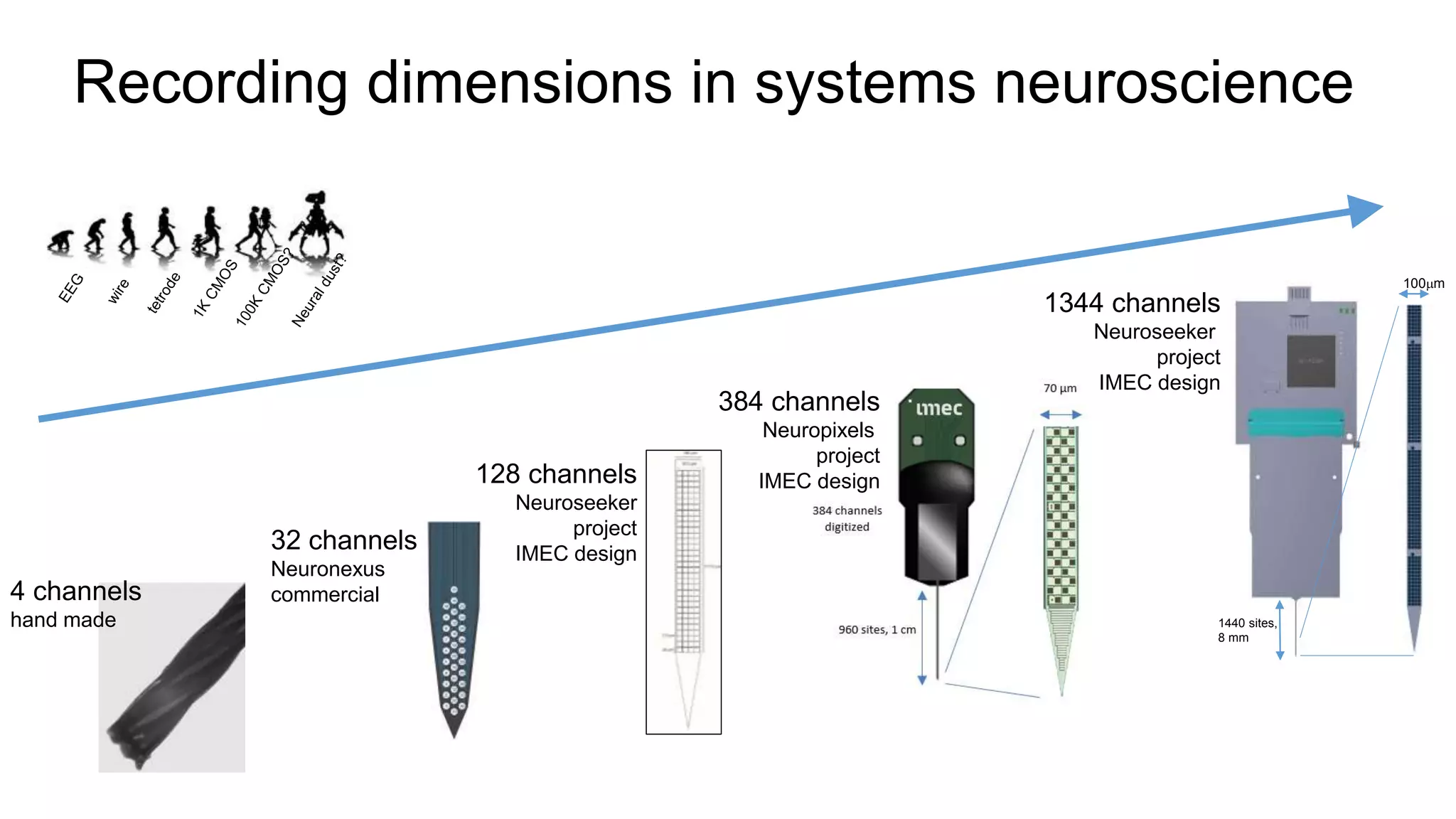
Recording dimensions in systems neuroscience
32 channels
Neuronexus
commercial
128 channels
Neuroseeker
project
IMEC design
384 channels
Neuropixels
project
IMEC design
4 channels
hand made
1344 channels
Neuroseeker
project
IMEC design
1440 sites,
8 mm
100mm
Behavioural dimensions in systems neuroscience
Behavioural variables = One
Hypothesis driven
Anne Marie Brady, Stan B. Floresco
Behavioural variables = A few
Hypothesis driven
Ruth A. Wood et al.
Behavioural variables = Many
Exploratory driven
Behavioural variables = Many
Both hypothesis and
exploratory driven
Carsen Stringer et al.
Summary
• High dimensional recordings: Design concepts and validation
• High dimensional behavioural setup
• Putting it all together
• Speed correlations
• Encoding salient features of a world model
• Exploratory analysis
Summary
• High dimensional recordings: Design concepts and validation
• High dimensional behavioural setup
• Putting it all together
• Speed correlations
• Encoding salient features of a world model
• Exploratory analysis
Neuroseeker probe: Design
• 1344 ACTIVE
electrodes
• Scanning
amplifier
• 10 bit res.
• 8mm x 100um x50um
• Electrodes separated
in 12 regions
• 112 measuring
• 8 reference
electrodes
• Each set to either
LFP or AP band
One
region
Reference
22 mm
Neuroseeker probe: Recordings
Neuroseeker probe: Live
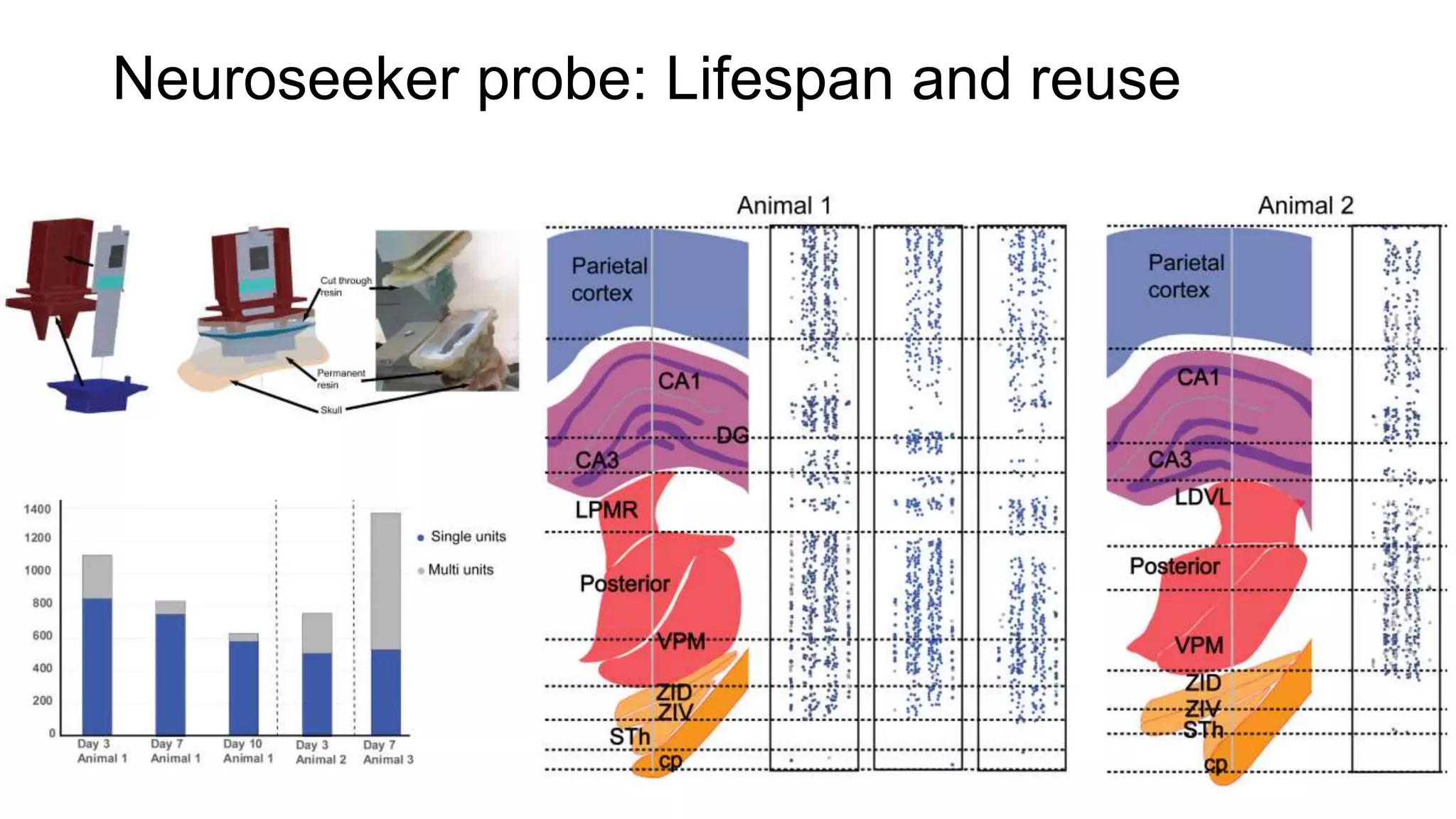
Neuroseeker probe: Lifespan and reuse
Summary
• High dimensional recordings: Design concepts and validation
• High dimensional behavioural setup
• Putting it all together
• Speed correlations
• Encoding salient features of a world model
• Exploratory analysis
Behavioural setup: The machine
Behavioural setup: The experiment (training)
Sound to reward availability Touching light to reward availability
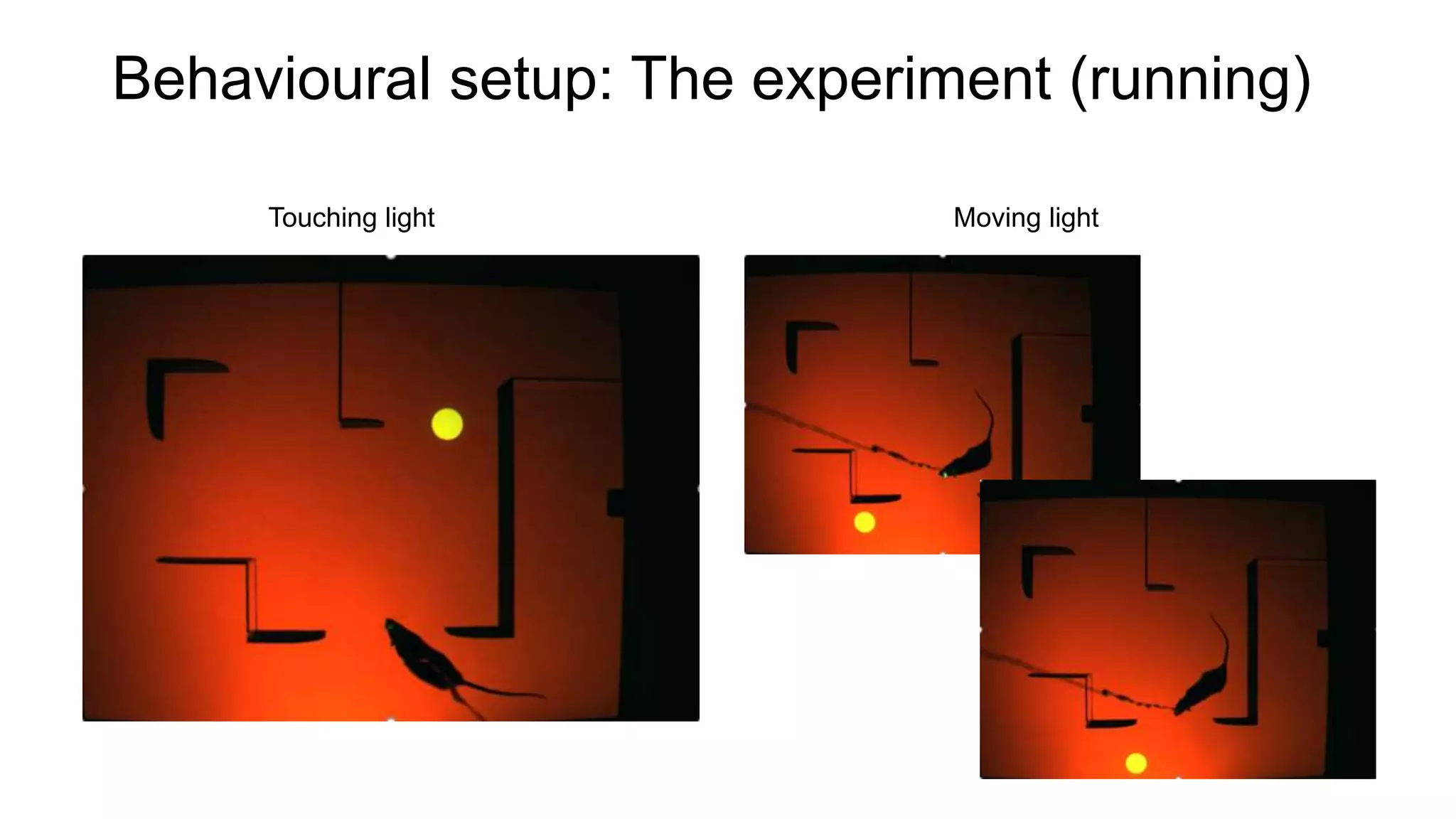
Behavioural setup: The experiment (running)
Touching light Moving light
Summary
• High dimensional recordings: Design concepts and validation
• High dimensional behavioural setup
• Putting it all together
• Speed correlations
• Encoding salient features of a world model
• Exploratory analysis
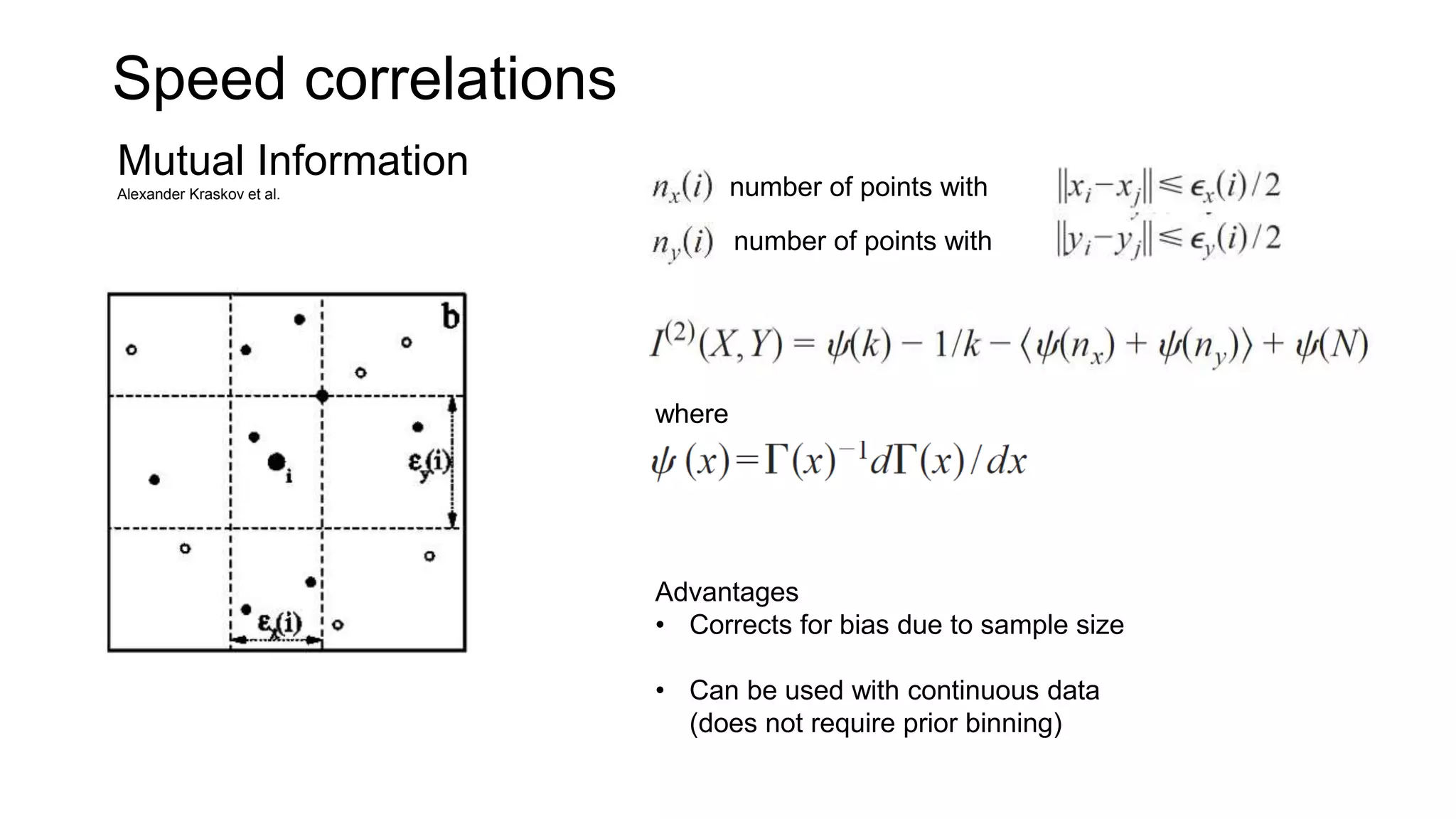
Speed correlations
Mutual Information
Alexander Kraskov et al. number of points with
number of points with
where
Advantages
• Corrects for bias due to sample size
• Can be used with continuous data
(does not require prior binning)
Speed correlations
Speed correlations
Speed correlations
Numberofneurons
Summary
• High dimensional recordings: Design concepts and validation
• High dimensional behavioural setup
• Putting it all together
• Speed correlations
• Encoding salient features of a world model
• Exploratory analysis
Encoding salient features of a world model
Events definition
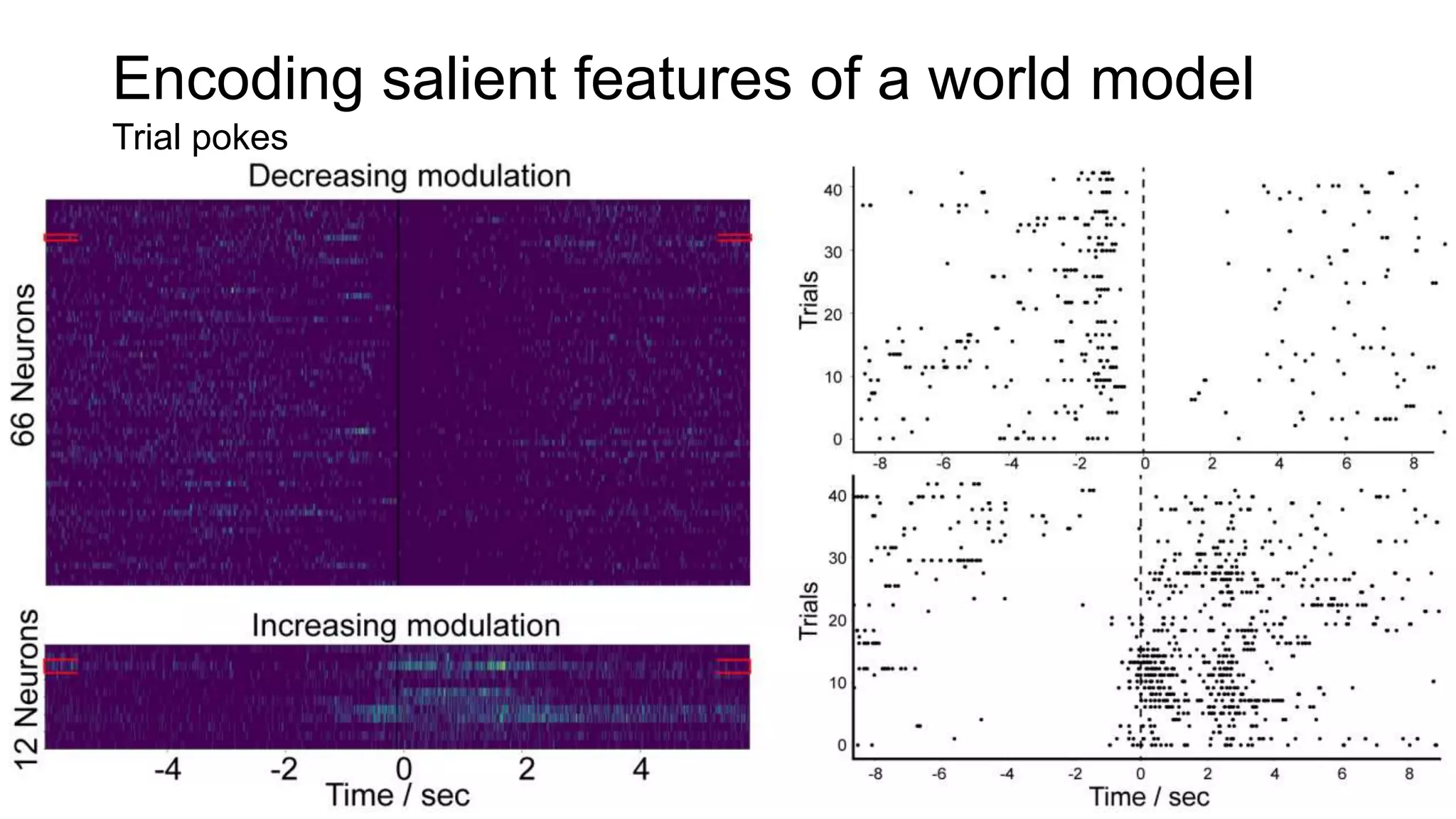
Encoding salient features of a world model
Trial pokes
Encoding salient features of a world model
Non trial pokes
Encoding salient features of a world model
Positions of modulating neurons
Encoding salient features of a world model
Activity modulating neurons in the hippocampus have place fields spanning the whole arena
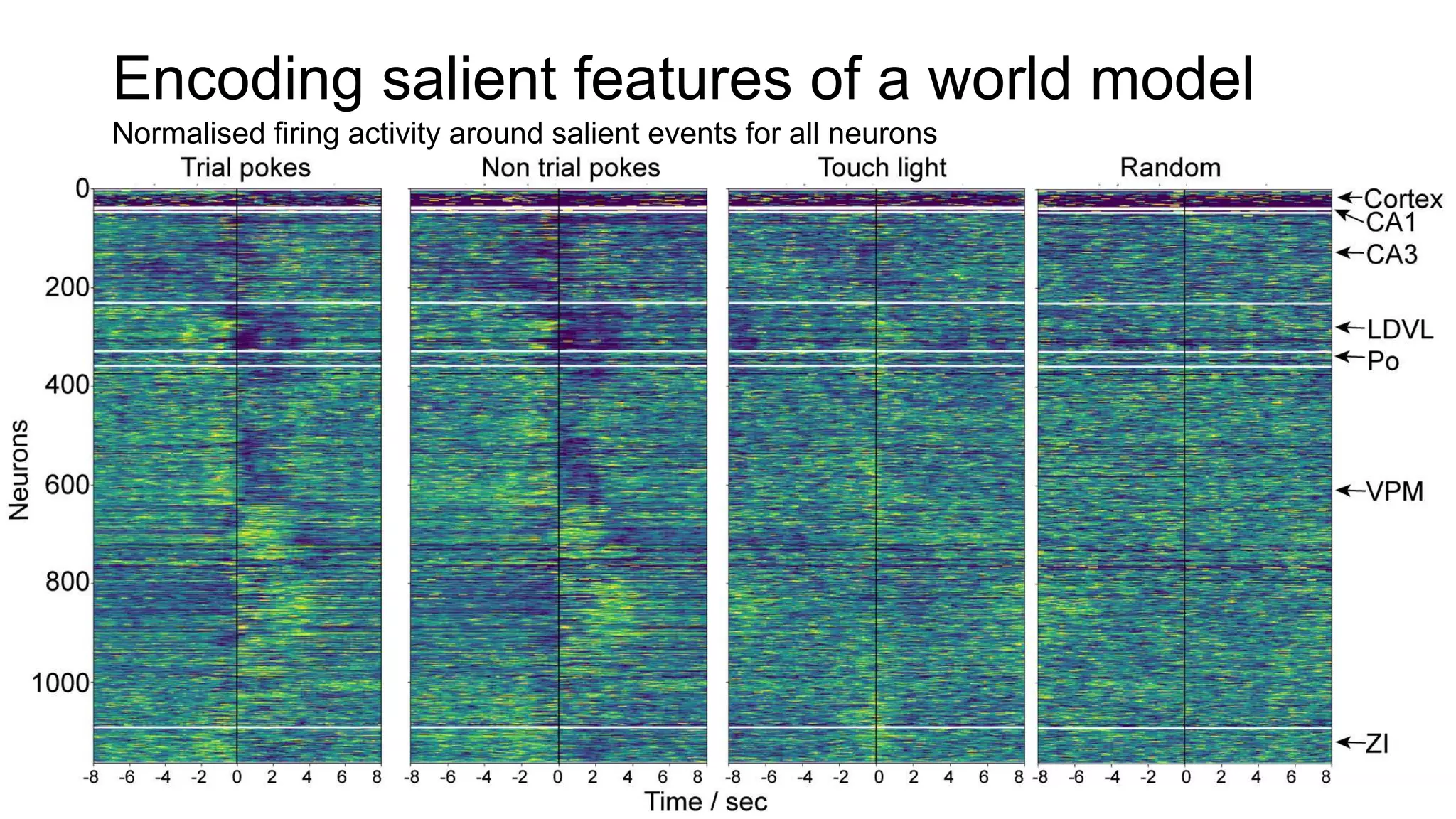
Encoding salient features of a world model
Normalised firing activity around salient events for all neurons
Encoding salient features of a world model
Normalised firing activity around trial pokes events for all neurons over days
Summary
• High dimensional recordings: Design concepts and validation
• High dimensional behavioural setup
• Putting it all together
• Speed correlations
• Encoding salient features of a world model
• Exploratory analysis
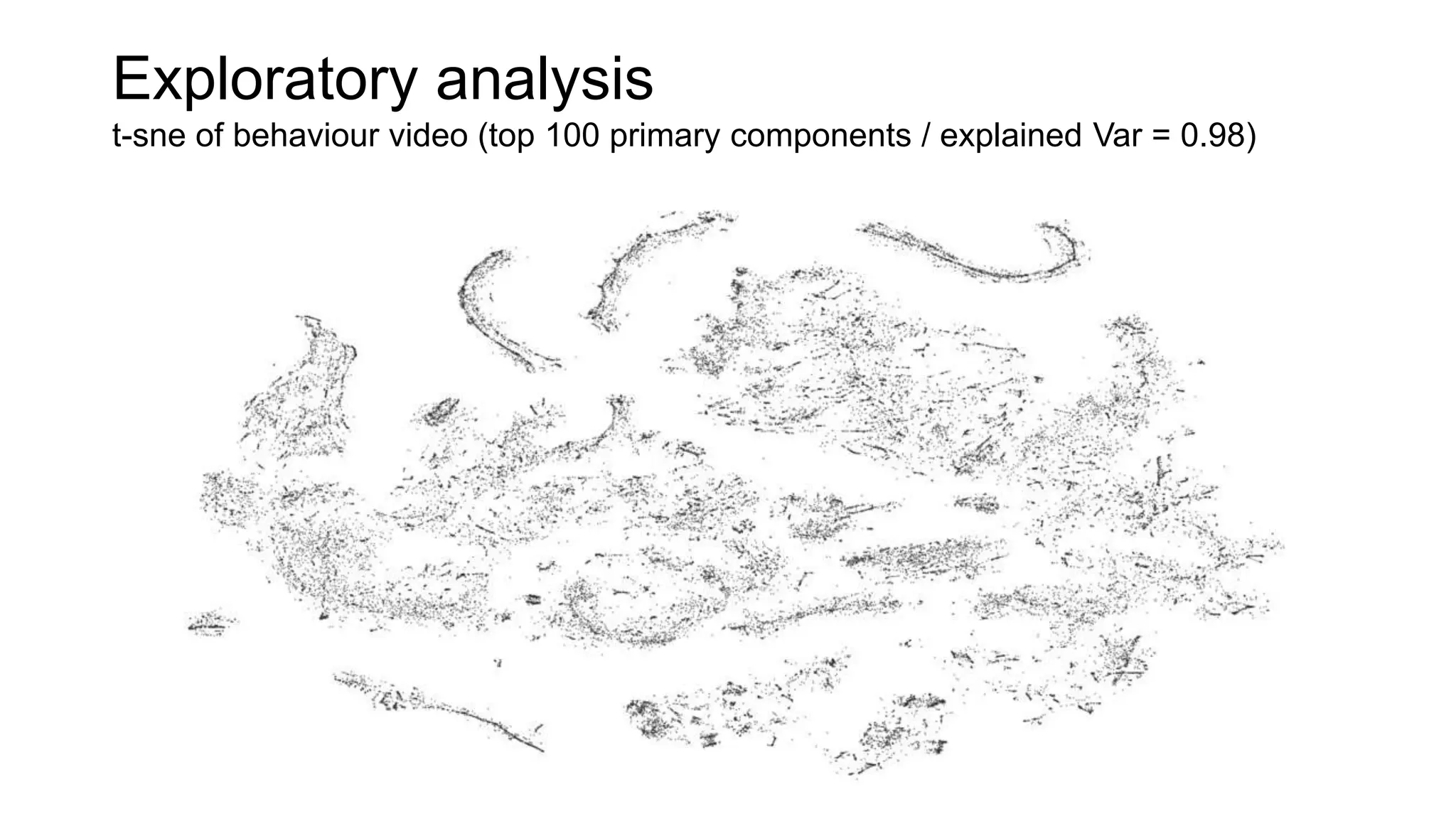
t-Student nonlinear embedding (t-sne)
Laurens Van Der Maaten, Geoffrey Hinton
Exploratory analysis
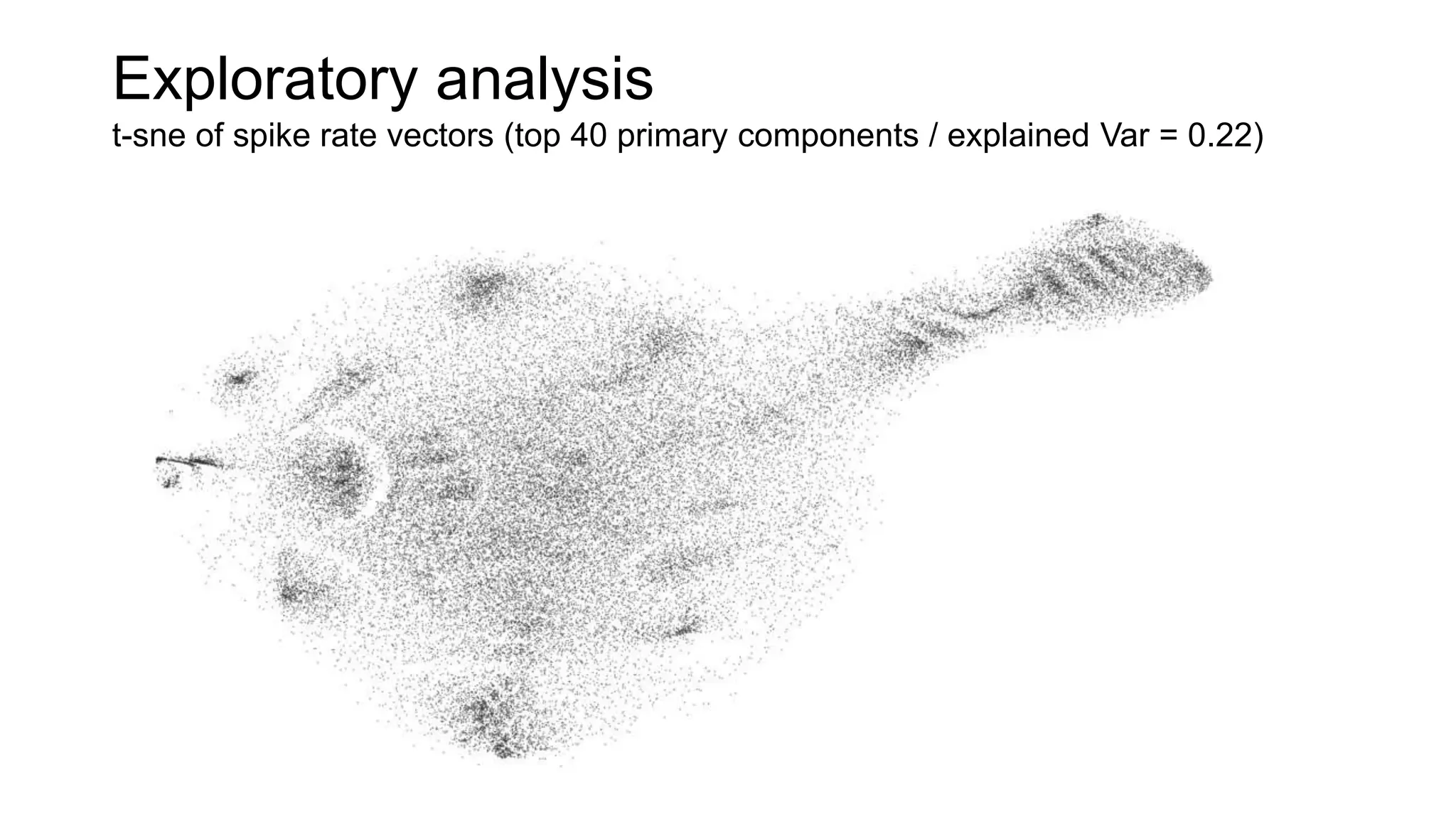
t-sne of spike rate vectors (top 40 primary components / explained Var = 0.22)
Exploratory analysis
t-sne of behaviour video (top 100 primary components / explained Var = 0.98)
Exploratory analysis
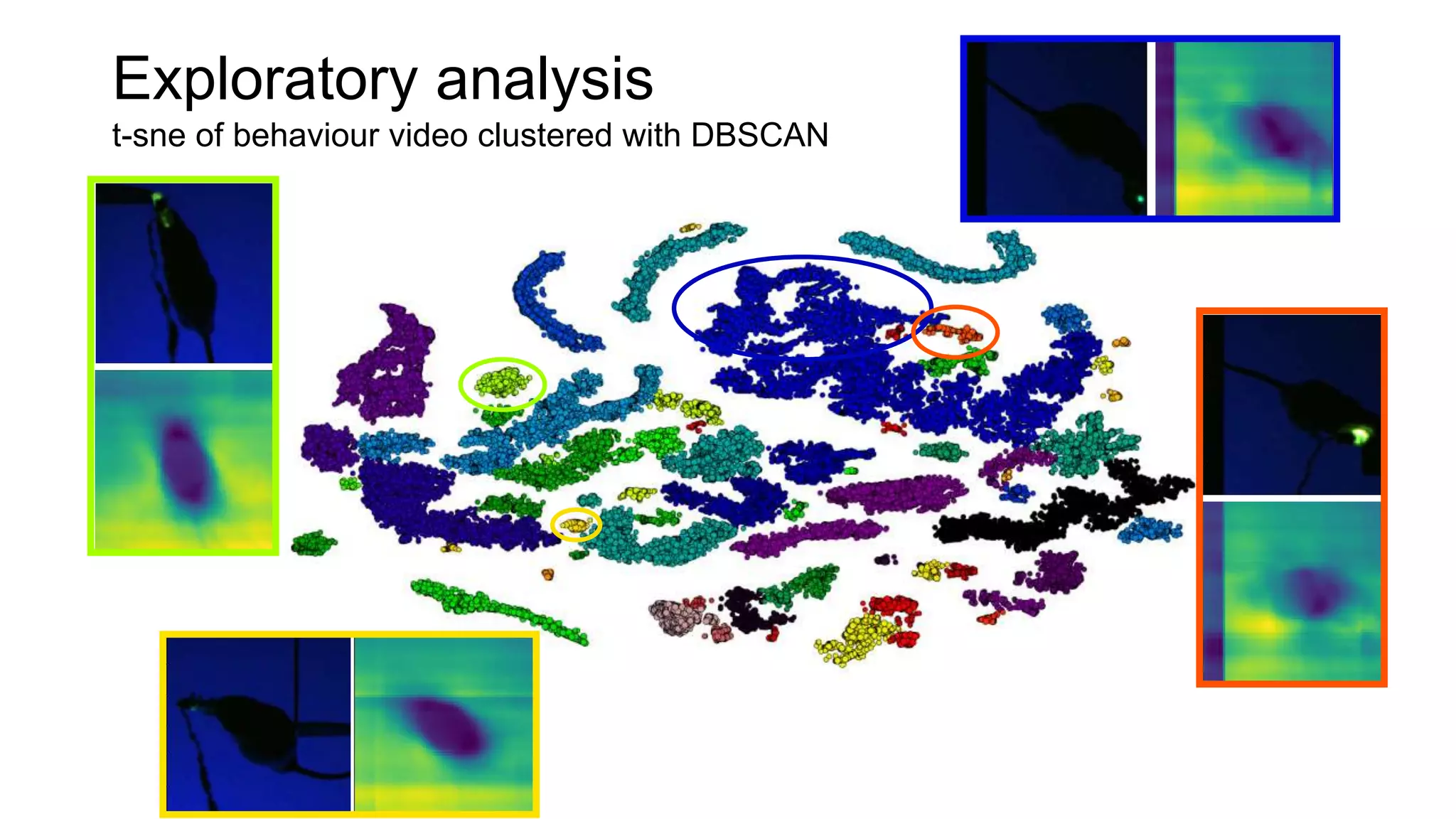
t-sne of behaviour video clustered with DBSCAN
Exploratory analysis
Correspondence of behaviour clusters to the spike t-sne
Exploratory analysis
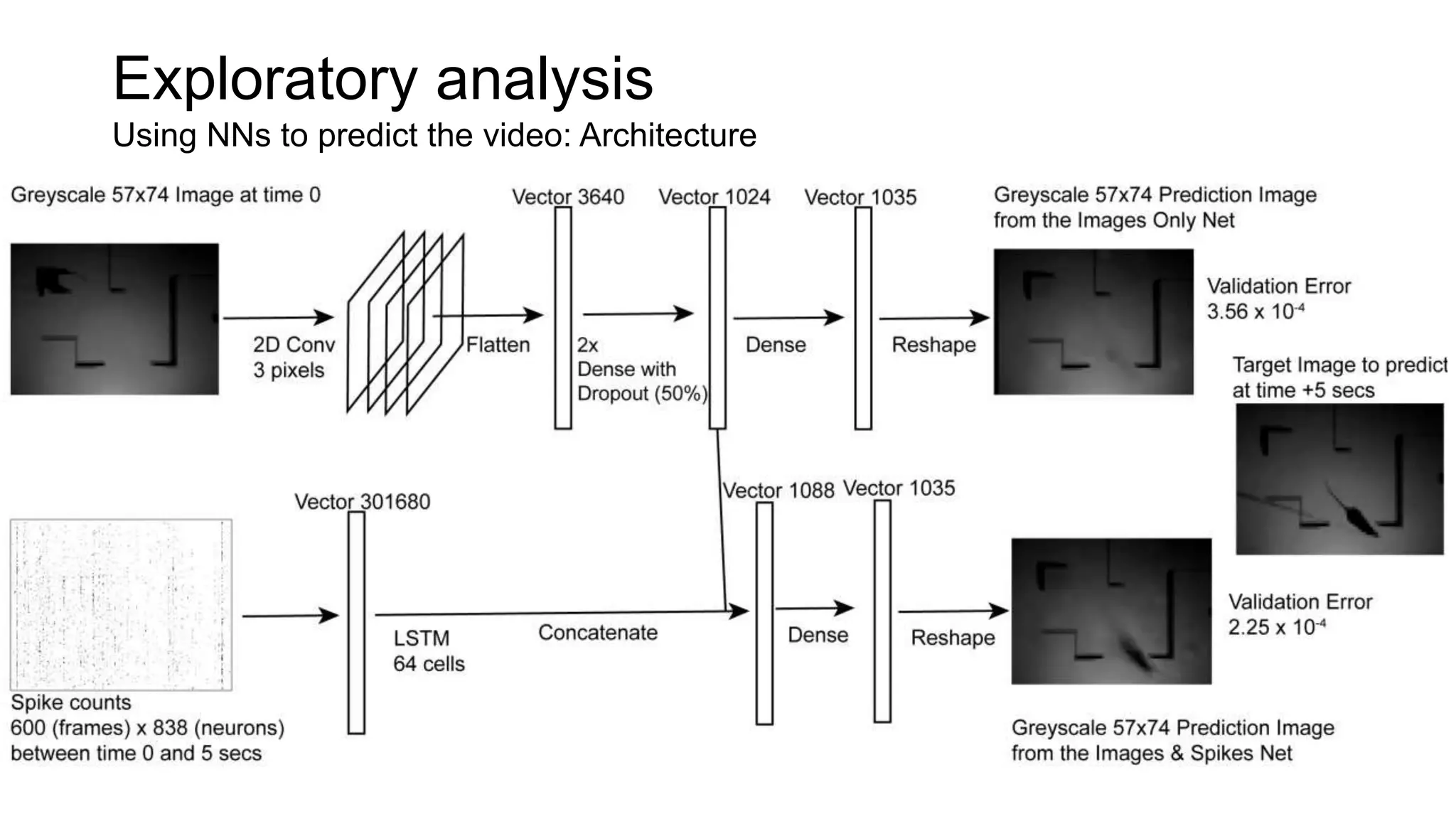
Using NNs to predict the video: Architecture
Exploratory analysis
Using NNs to predict the video: Results
Image fed to
the networks
Target image
to predict
Image predicted by
the Images Only
network
Image predicted by
the Images and
Spikes network
Acknowledgments
ATLAS
Neuroengineering
Arno Aarts
Tobias Holzhammer
IMEC
Andrei Alexandru
Marco Ballini
Nick Van Helleputte
Chris van Hoof
Carolina M. Lopez
Silke Musa
Bogdan Raducanu
Jan Putzeys
Shiwei Wang
Marleen Welkenhuysen
RADBOUD U.
Francesco Battaglia
Eric Maris
Tim Schroeder
Paul Tiesinga
CNRL
Francois David
Luc J. Gentet
ICNP
Richárd Fiáth
Domonkos Horváth
Gergely Márton
Domokos Meszéna
Istvan Ulbert
IMNS
Srinjoy Mitra
UPPSALA U.
Hercules Neves
U. OF PARMA
Guy A. Orban
IMTEK
Frederick Pothof
Patrick Ruther
U. Of CAL. IRVINE
Bruce L. McNaughton
ESIN
Wolf Singer
Spyros
Samothrakis
Joana
Neto
Adam
Kampff
Atabak
Dehban
Lorenza
Calcaterra
Joana
Nogueira
Gonçalo
Lopes
Andre
Marques-Smith
Joana
Neto
Adam
Kampff
Atabak
Dehban
Lorenza
Calcaterra
Joana
Nogueira
Gonçalo
Lopes
Acknowledgments
Do not obstruct knowledge.
Adam R. Kampff 2018
Andre
Marques-Smith
Acknowledgments
Do not obstruct knowledge.
Adam R. Kampff 2018
The rule of reason:
In order to learn you must desire
to learn, and in so desiring not be
satisfied with what you already
incline to think.
Corollary:
Do not block the way of inquiry.
Charles Sanders Peirce c.1890

Complex Systems Neuroscience