Download to read offline
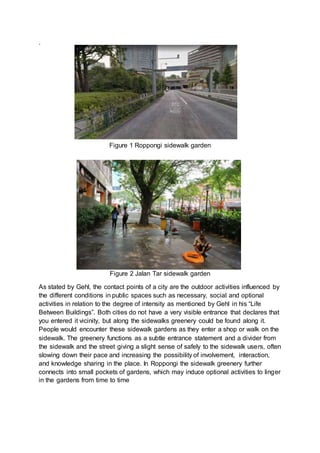
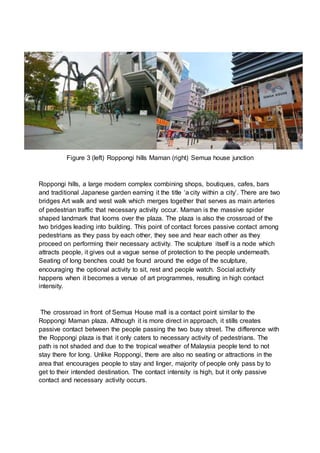
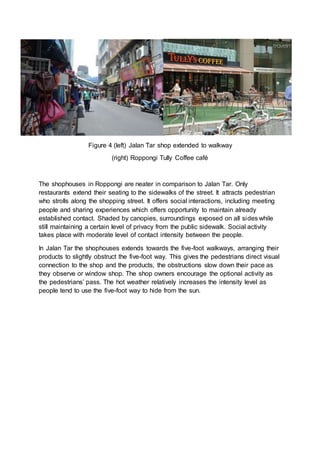
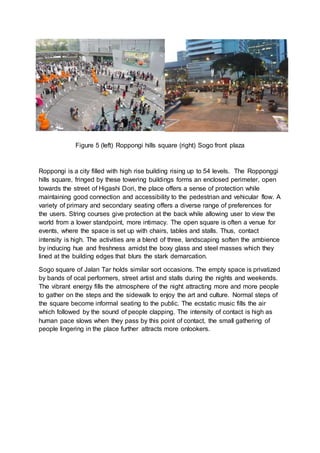
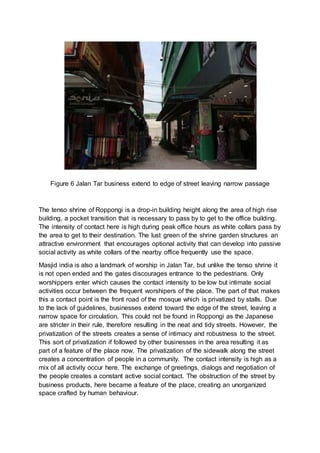



The document compares the urban patterns and public spaces of Roppongi, Japan and Jalan Tunku Abdul Rahman (Jalan TAR) in Kuala Lumpur, Malaysia. While Roppongi developed organically over time through narrow streets and piecemeal development, Jalan TAR began along rivers and spread outward as transportation improved. Both areas have sidewalk gardens and public plazas that serve as contact points where necessary, social, and optional activities occur, though the intensity varies based on environmental and cultural factors. Features like extended storefronts, public performances, and religious sites influence how people interact in the public spaces of each area.


