
TYPE OF COMPANIES &
COMPANY’s DISSOLUTION
PROCESS
By:
1. M. AMIN (57682)
2. M. OSAMA ZAFAR (57790)
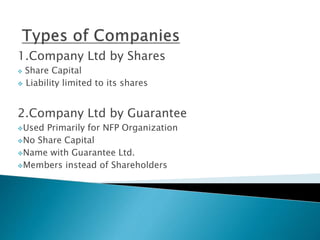
1.Company Ltd by Shares
 Share Capital
 Liability limited to its shares
2.Company Ltd by Guarantee
Used Primarily for NFP Organization
No Share Capital
Name with Guarantee Ltd.
Members instead of Shareholders
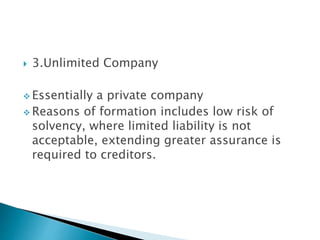
 3.Unlimited Company
 Essentially a private company
 Reasons of formation includes low risk of
solvency, where limited liability is not
acceptable, extending greater assurance is
required to creditors.
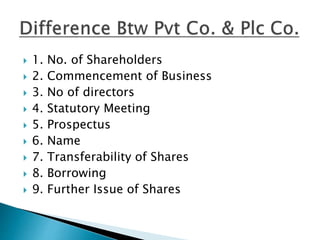
 1. No. of Shareholders
 2. Commencement of Business
 3. No of directors
 4. Statutory Meeting
 5. Prospectus
 6. Name
 7. Transferability of Shares
 8. Borrowing
 9. Further Issue of Shares
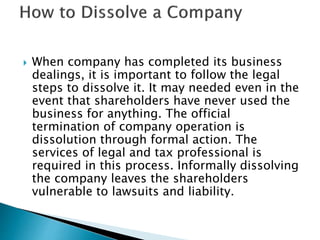
 When company has completed its business
dealings, it is important to follow the legal
steps to dissolve it. It may needed even in the
event that shareholders have never used the
business for anything. The official
termination of company operation is
dissolution through formal action. The
services of legal and tax professional is
required in this process. Informally dissolving
the company leaves the shareholders
vulnerable to lawsuits and liability.
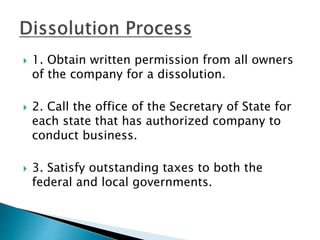
 1. Obtain written permission from all owners
of the company for a dissolution.
 2. Call the office of the Secretary of State for
each state that has authorized company to
conduct business.
 3. Satisfy outstanding taxes to both the
federal and local governments.
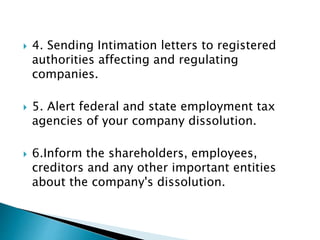
 4. Sending Intimation letters to registered
authorities affecting and regulating
companies.
 5. Alert federal and state employment tax
agencies of your company dissolution.
 6.Inform the shareholders, employees,
creditors and any other important entities
about the company's dissolution.
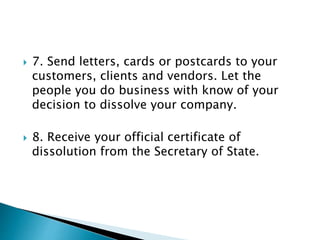
 7. Send letters, cards or postcards to your
customers, clients and vendors. Let the
people you do business with know of your
decision to dissolve your company.
 8. Receive your official certificate of
dissolution from the Secretary of State.
 9. Look at all your company assets, inventory
and anything else that has a connection to
the business.
 10. Sell all the company assets left after you
pay all bills, taxes, legal or accounting fees
and all expenses.
 11. Close all company bank, credit and
service accounts.
THANK YOU

Company Dissolution and Its Types

  • 1.
    TYPE OF COMPANIES& COMPANY’s DISSOLUTION PROCESS By: 1. M. AMIN (57682) 2. M. OSAMA ZAFAR (57790)
  • 2.
    1.Company Ltd byShares  Share Capital  Liability limited to its shares 2.Company Ltd by Guarantee Used Primarily for NFP Organization No Share Capital Name with Guarantee Ltd. Members instead of Shareholders
  • 3.
     3.Unlimited Company Essentially a private company  Reasons of formation includes low risk of solvency, where limited liability is not acceptable, extending greater assurance is required to creditors.
  • 4.
     1. No.of Shareholders  2. Commencement of Business  3. No of directors  4. Statutory Meeting  5. Prospectus  6. Name  7. Transferability of Shares  8. Borrowing  9. Further Issue of Shares
  • 5.
     When companyhas completed its business dealings, it is important to follow the legal steps to dissolve it. It may needed even in the event that shareholders have never used the business for anything. The official termination of company operation is dissolution through formal action. The services of legal and tax professional is required in this process. Informally dissolving the company leaves the shareholders vulnerable to lawsuits and liability.
  • 6.
     1. Obtainwritten permission from all owners of the company for a dissolution.  2. Call the office of the Secretary of State for each state that has authorized company to conduct business.  3. Satisfy outstanding taxes to both the federal and local governments.
  • 7.
     4. SendingIntimation letters to registered authorities affecting and regulating companies.  5. Alert federal and state employment tax agencies of your company dissolution.  6.Inform the shareholders, employees, creditors and any other important entities about the company's dissolution.
  • 8.
     7. Sendletters, cards or postcards to your customers, clients and vendors. Let the people you do business with know of your decision to dissolve your company.  8. Receive your official certificate of dissolution from the Secretary of State.
  • 9.
     9. Lookat all your company assets, inventory and anything else that has a connection to the business.  10. Sell all the company assets left after you pay all bills, taxes, legal or accounting fees and all expenses.  11. Close all company bank, credit and service accounts.
  • 10.