Othman Elshaikh
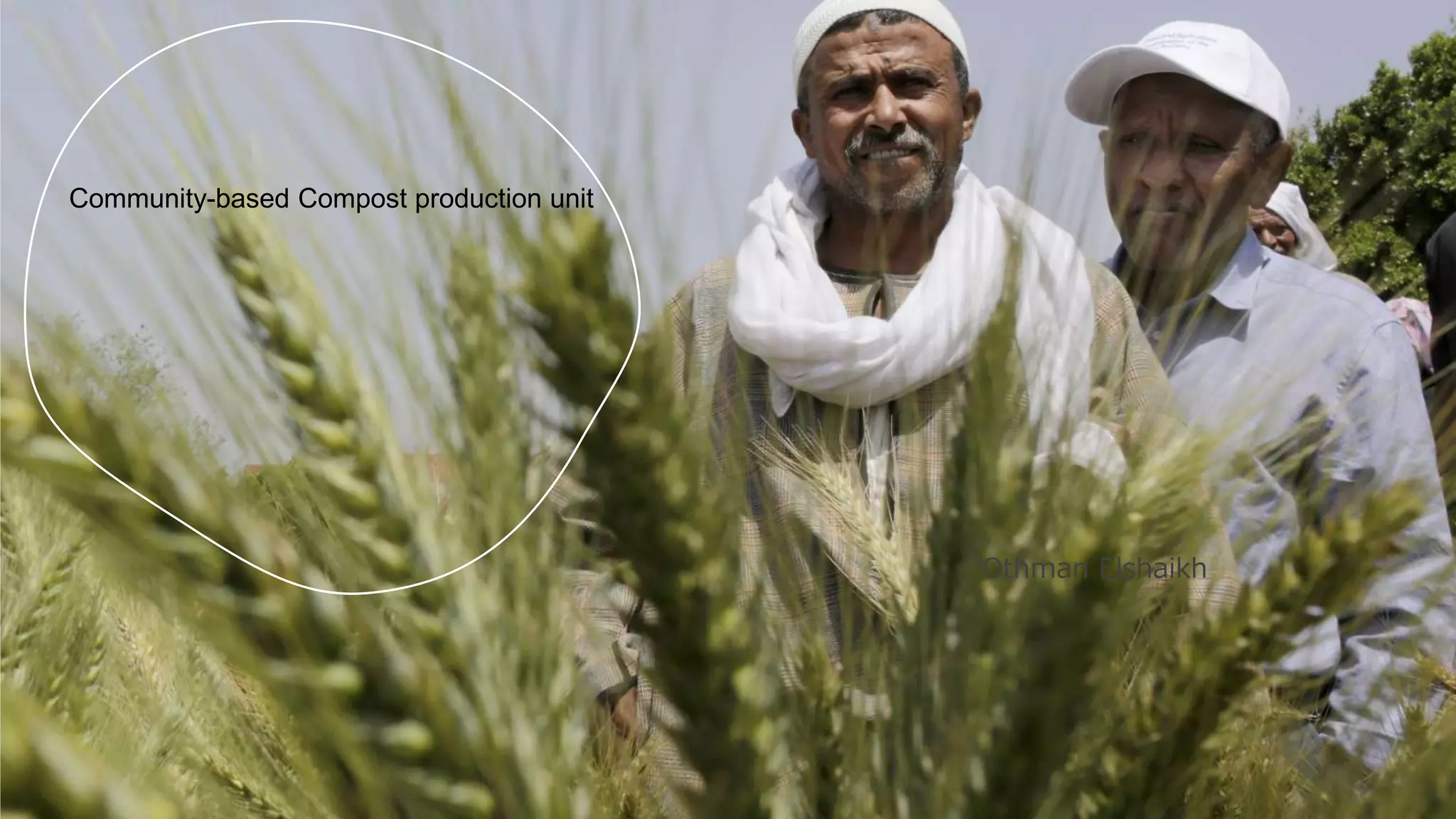
Community-based Compost production unit
Agenda
The objectives
Business value chain
Business model
Potential risks and mitigation
Sample Footer Text 2/3/20XX 2
Introduction
the community-based cooperative model offers
opportunities to address these limitations as small
communities can mobilize their resources by encouraging
members to join the local CDA voluntarily and raise their
funding through membership fees. The CDA initiates this
business model – a distinct form of enterprise that
provides services and/or products to the members, by the
members, and for the members at a cost and divides the
profits, known as surpluses in a cooperative, among the
members pro rata to the amount of business each
member did with the CDA
Sample Footer Text 2/3/20XX 3
Current Situation
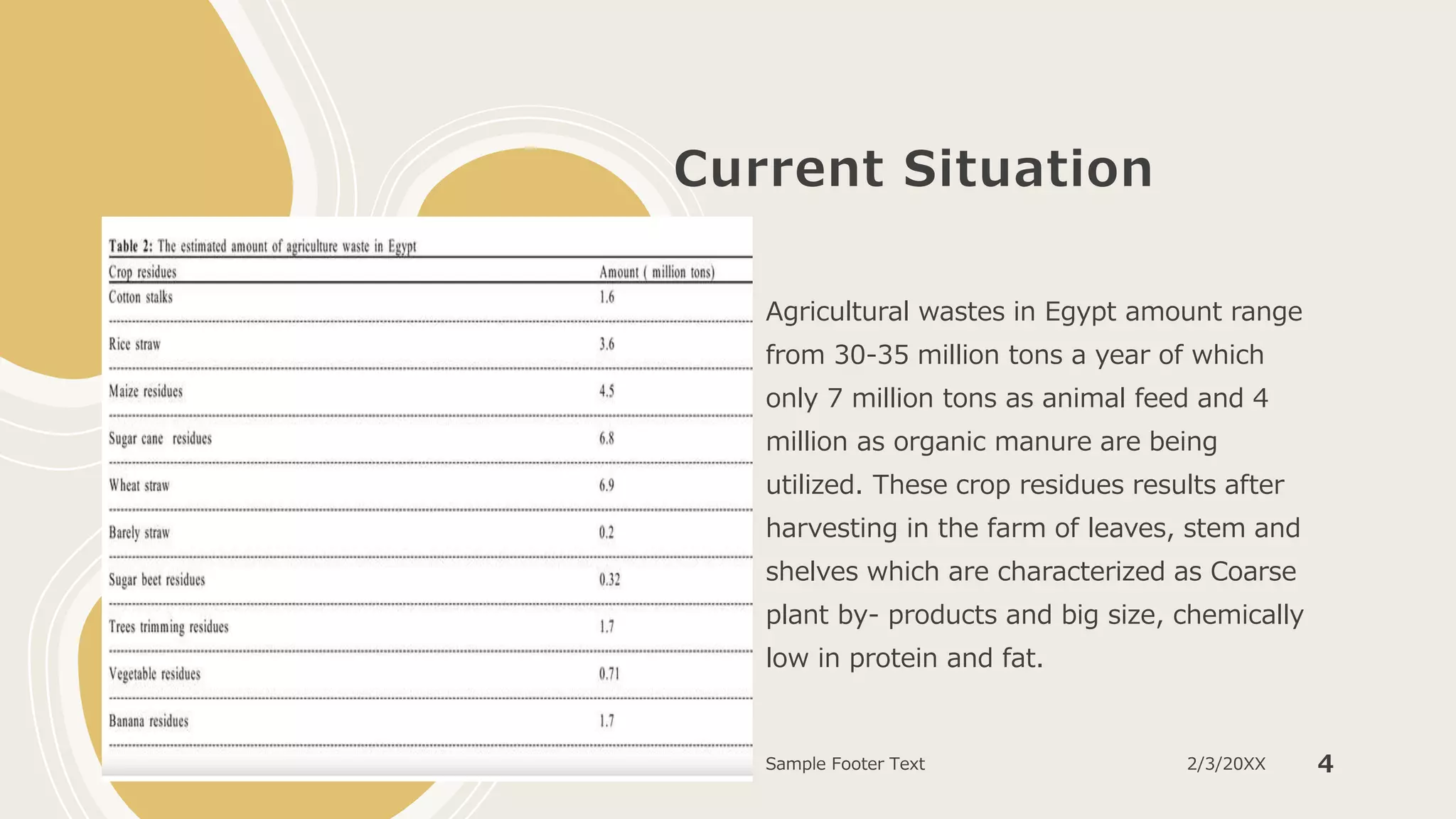
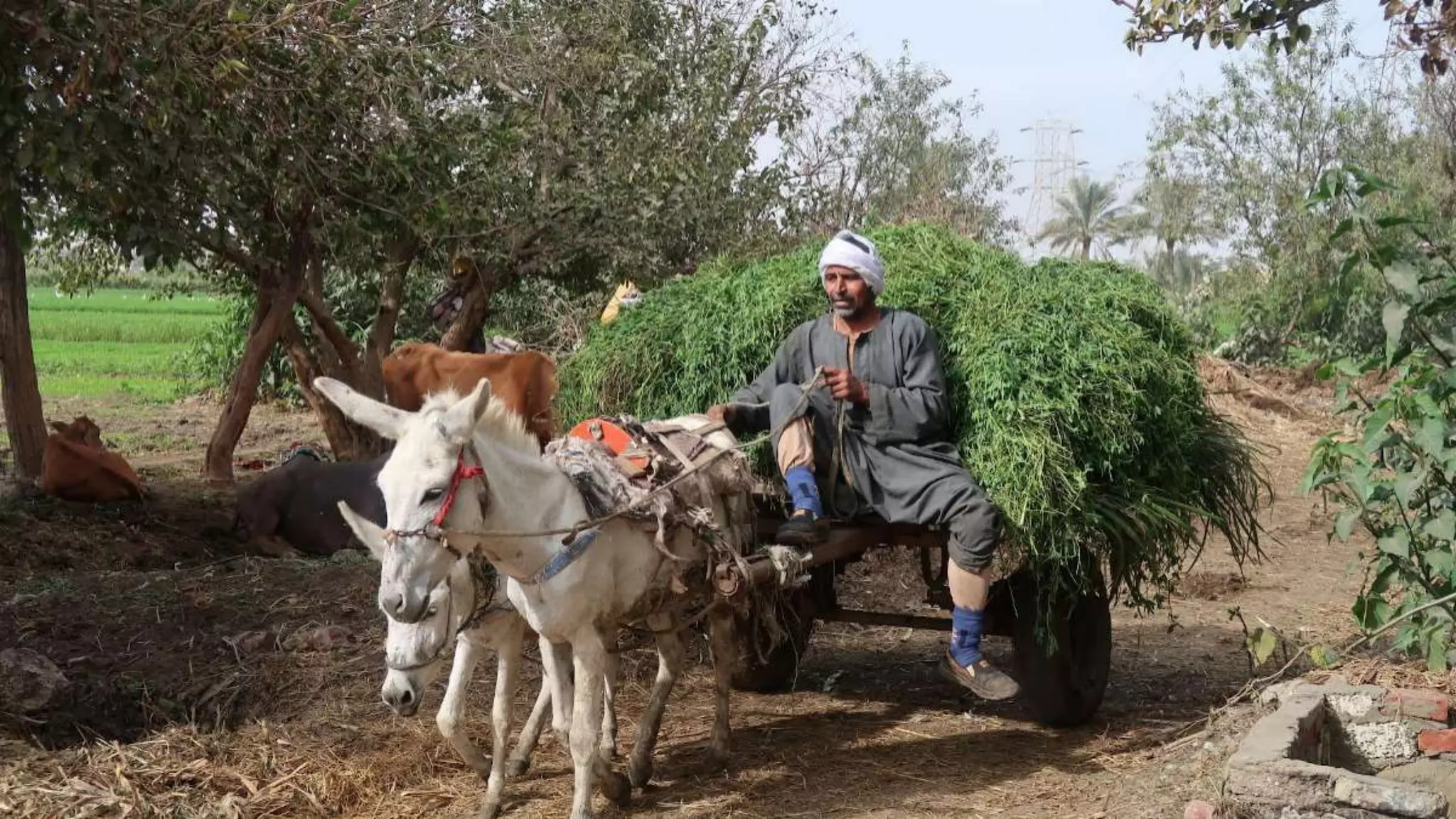
Agricultural wastes in Egypt amount range
from 30-35 million tons a year of which
only 7 million tons as animal feed and 4
million as organic manure are being
utilized. These crop residues results after
harvesting in the farm of leaves, stem and
shelves which are characterized as Coarse
plant by- products and big size, chemically
low in protein and fat.
Sample Footer Text 2/3/20XX 4
Sample Footer Text 2/3/20XX 5
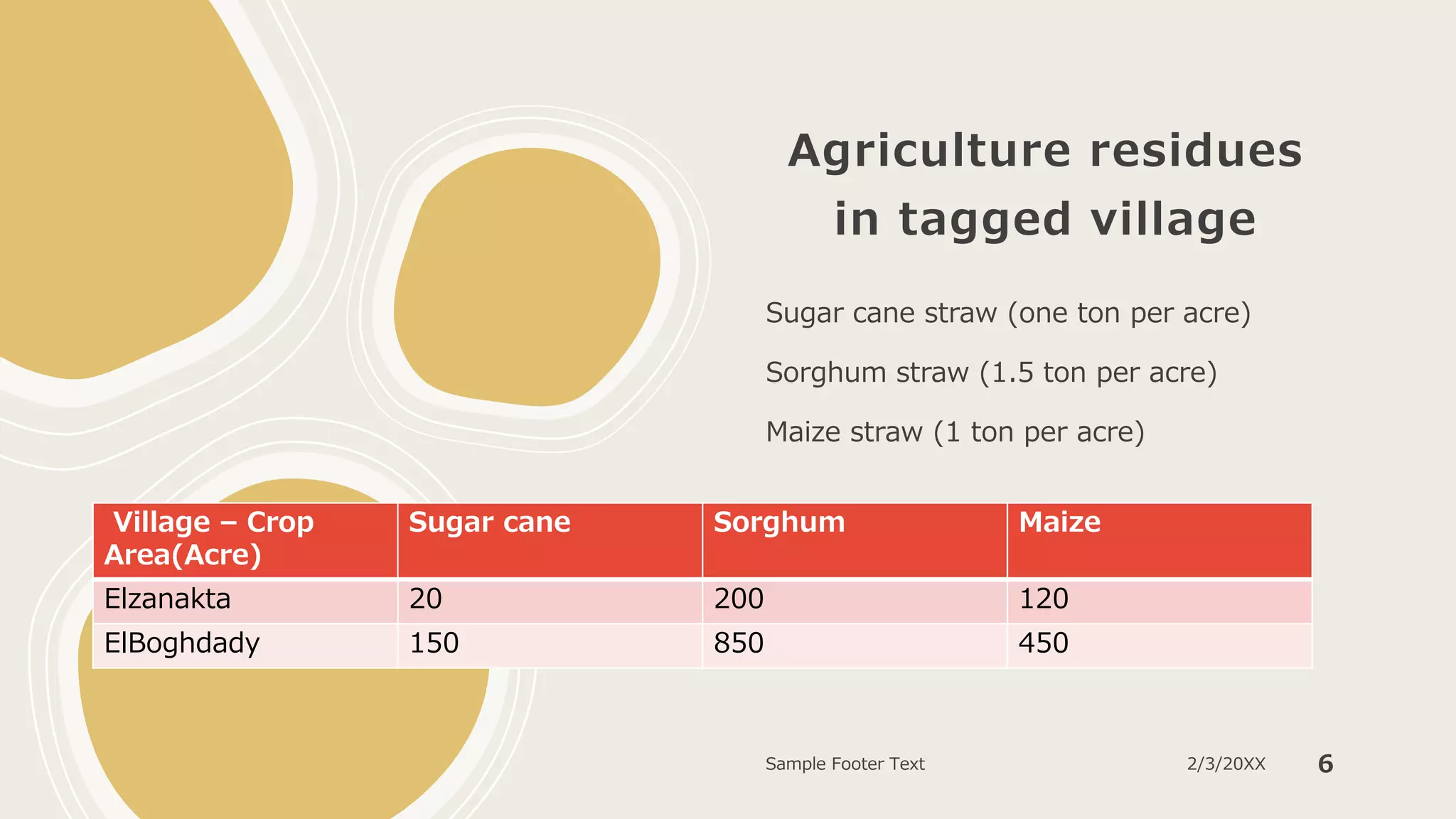
Agriculture residues
in tagged village
Sugar cane straw (one ton per acre)
Sorghum straw (1.5 ton per acre)
Maize straw (1 ton per acre)
Sample Footer Text 2/3/20XX 6
Village – Crop
Area(Acre)
Sugar cane Sorghum Maize
Elzanakta 20 200 120
ElBoghdady 150 850 450
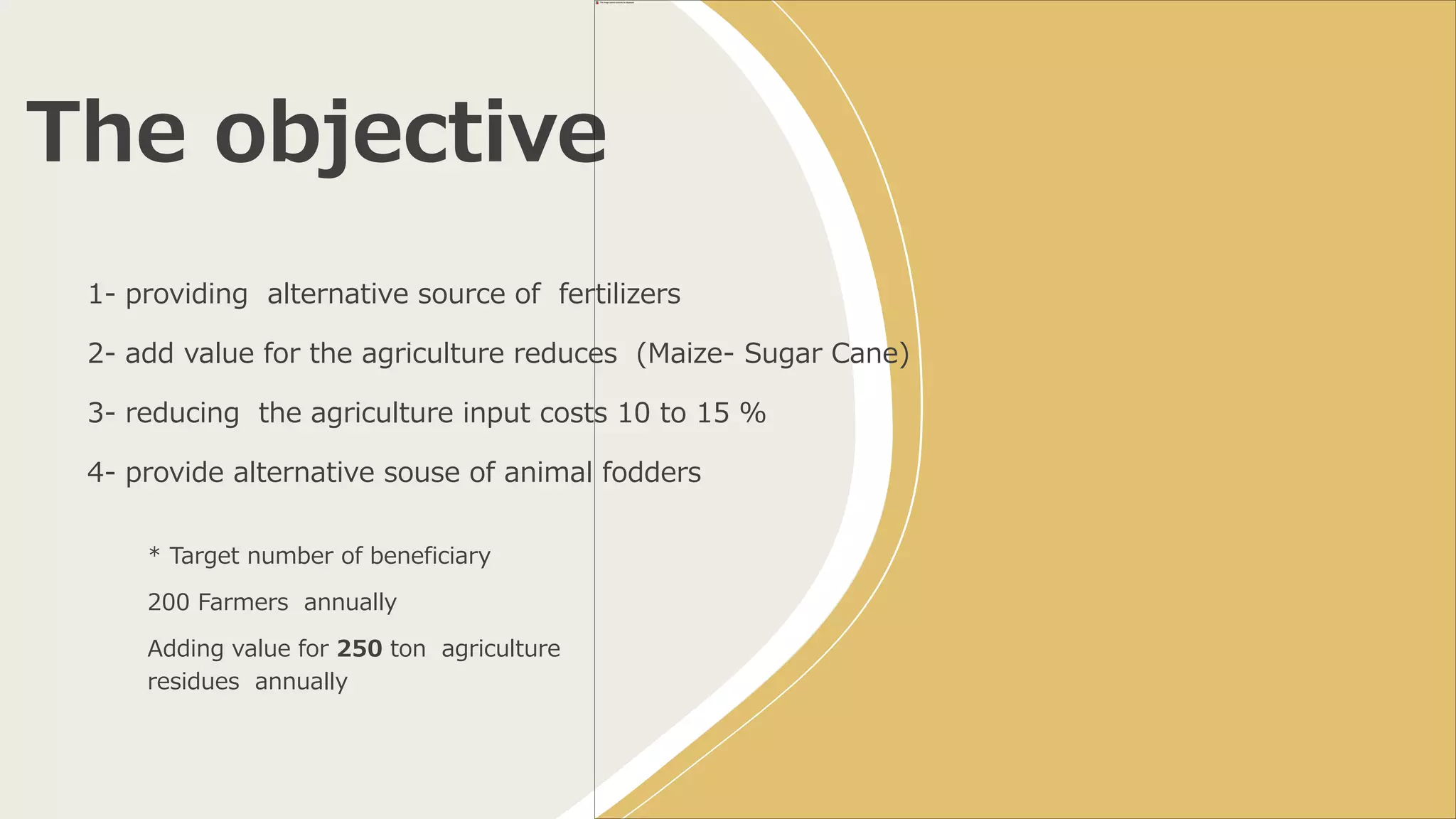
The objective
* Target number of beneficiary
200 Farmers annually
Adding value for 250 ton agriculture
residues annually
1- providing alternative source of fertilizers
2- add value for the agriculture reduces (Maize- Sugar Cane)
3- reducing the agriculture input costs 10 to 15 %
4- provide alternative souse of animal fodders
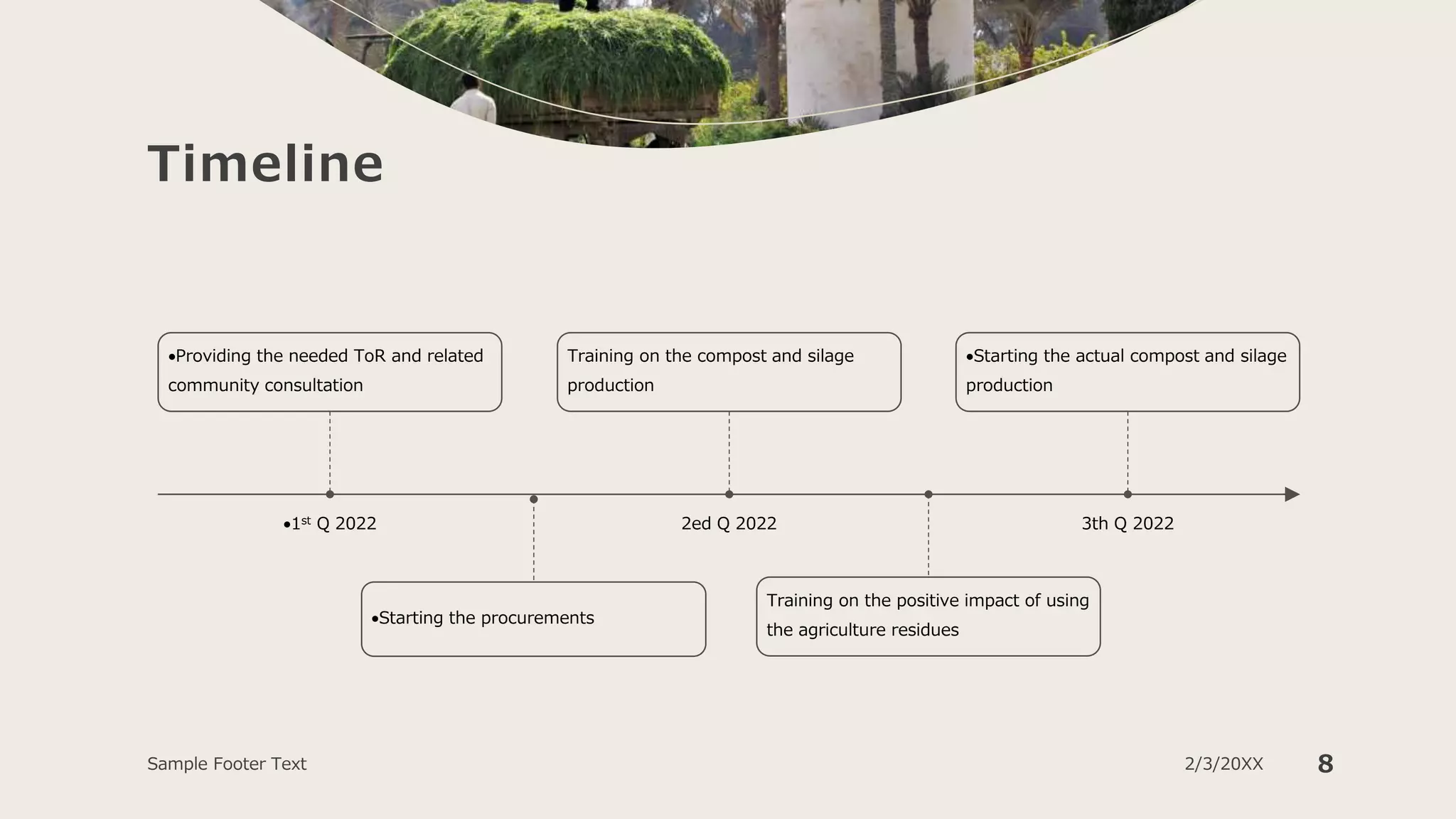
Timeline
Providing the needed ToR and related
community consultation
1st Q 2022
Starting the procurements
Training on the compost and silage
production
2ed Q 2022
Training on the positive impact of using
the agriculture residues
Starting the actual compost and silage
production
3th Q 2022
Sample Footer Text 2/3/20XX 8
BUSINESS MODEL
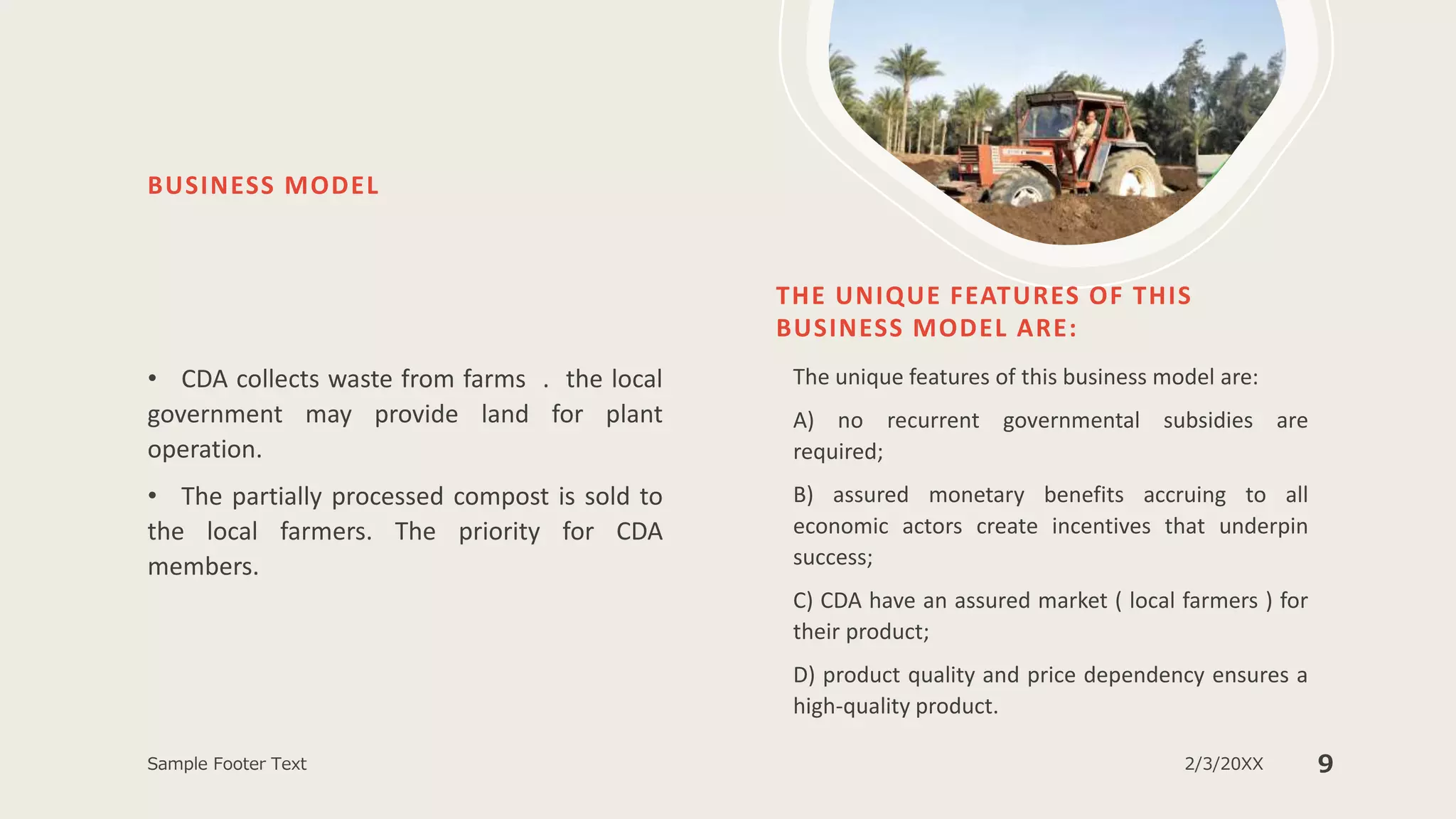
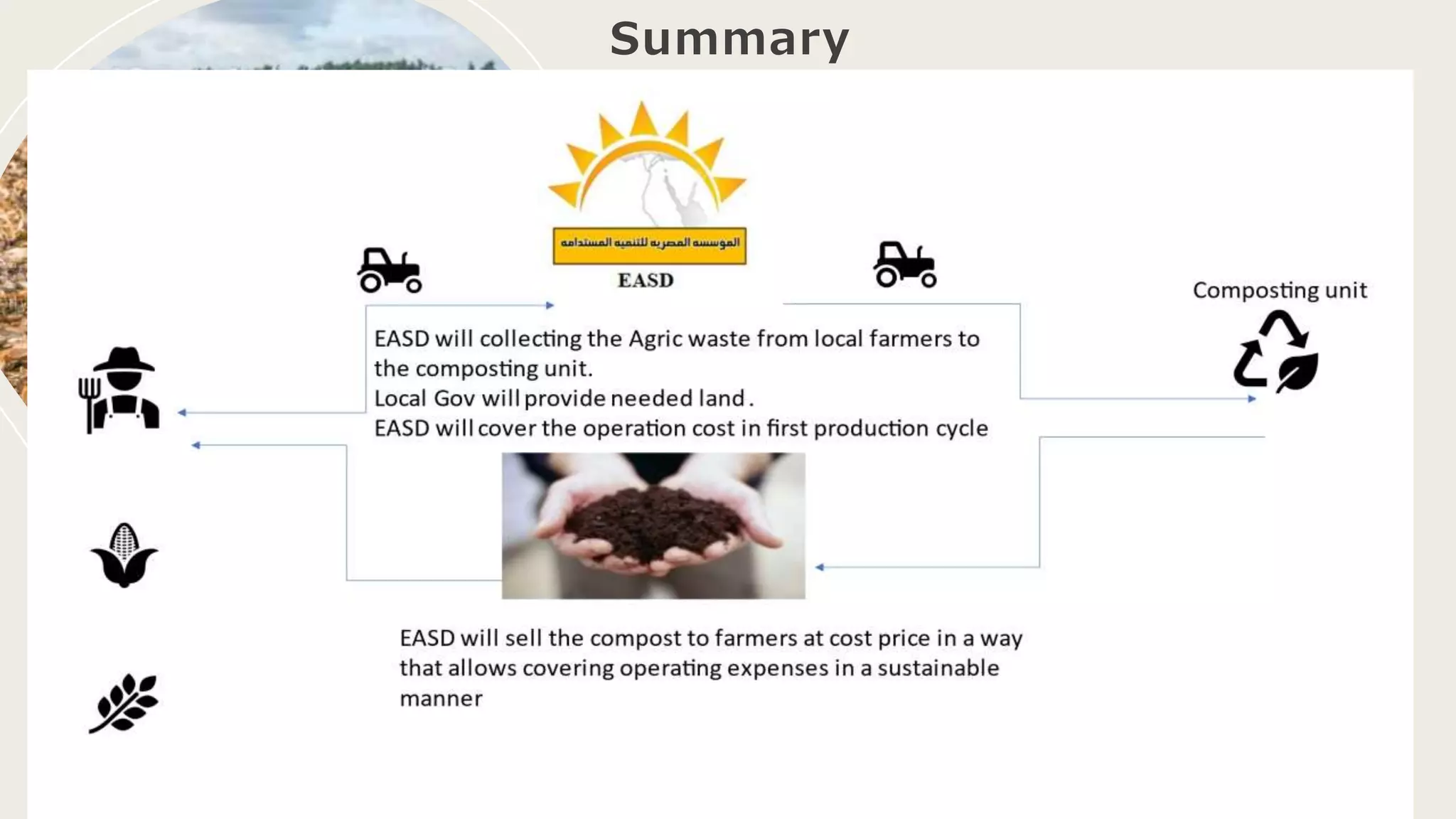
• CDA collects waste from farms . the local
government may provide land for plant
operation.
• The partially processed compost is sold to
the local farmers. The priority for CDA
members.
THE UNIQUE FEATURES OF THIS
BUSINESS MODEL ARE:
The unique features of this business model are:
A) no recurrent governmental subsidies are
required;
B) assured monetary benefits accruing to all
economic actors create incentives that underpin
success;
C) CDA have an assured market ( local farmers ) for
their product;
D) product quality and price dependency ensures a
high-quality product.
Sample Footer Text 2/3/20XX 9
The way to get started
is to quit talking and
begin doing.
Walt Disney
Sample Footer Text 2/3/20XX 10
Expected Risks And mitigation
COMMUNITY MARKET
The model has a very low
input supply risk as supply is
assured from its members
TECHNICAL
• Technology performance
risks: The composting
technology typically used
(windrow composting) is a
relatively mature and
simple technology.
Sample Footer Text 2/3/20XX 11
• Lack of community
awareness and interest.
There is a need for a reliable
leader among the
community, which is a
prerequisite to prevent falling
into a ‘failed CDA’ trap. The
management structure can
be fairly complex and this can
affect the sustainability of
the enterprise.
Summary
Sample Footer Text 2/3/20XX 12
Sample Footer Text 2/3/20XX 13
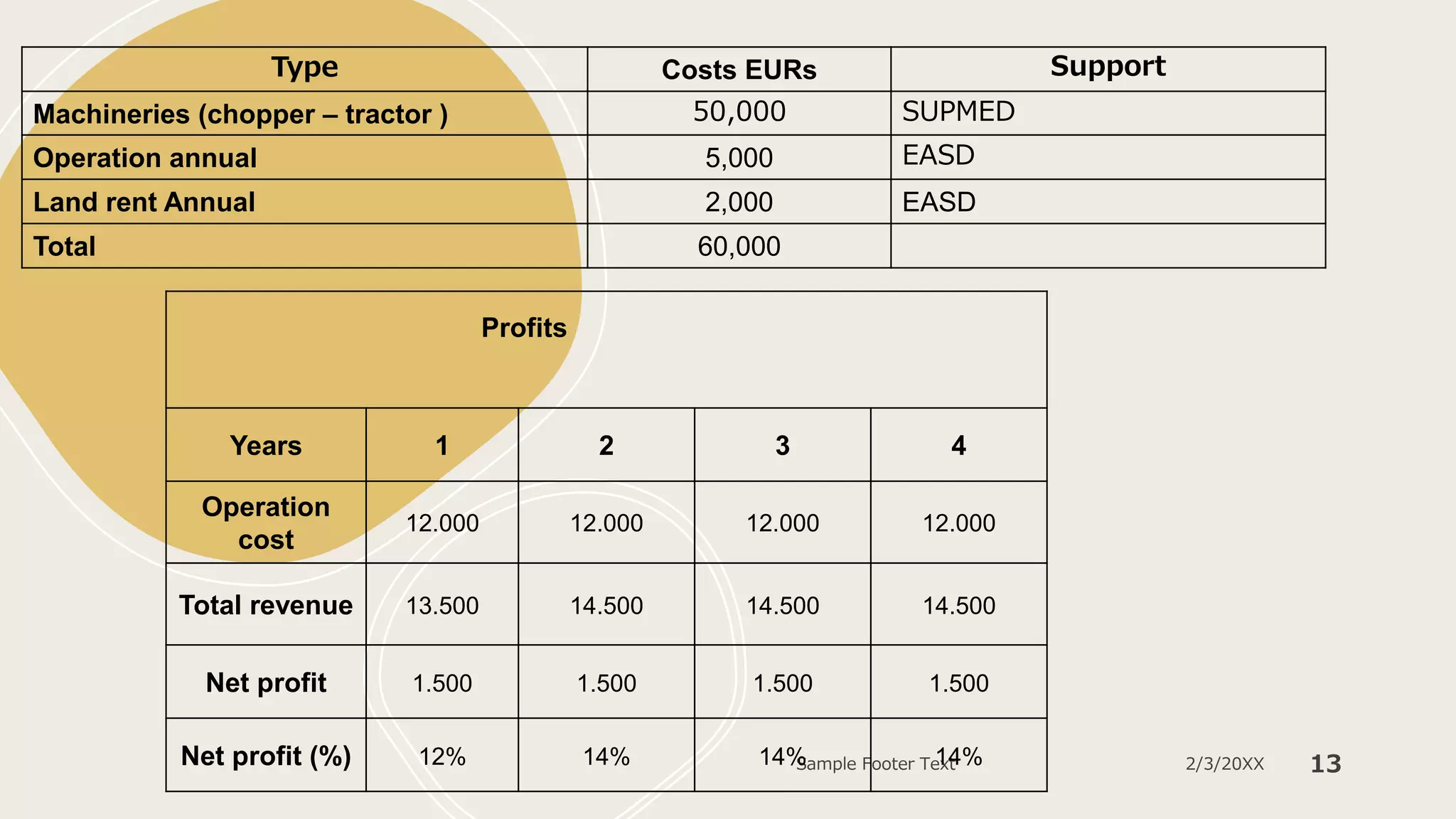
Type Costs EURs Support
Machineries (chopper – tractor ) 50,000 SUPMED
Operation annual 5,000 EASD
Land rent Annual 2,000 EASD
Total 60,000
Profits
Years 1 2 3 4
Operation
cost
12.000 12.000 12.000 12.000
Total revenue 13.500 14.500 14.500 14.500
Net profit 1.500 1.500 1.500 1.500
Net profit (%) 12% 14% 14% 14%
Thank You
Presenter Name
Email
Website
Sample Footer Text 2/3/20XX 14

Community-based Compost production unit(2).pptx

  • 1.
  • 2.
    Agenda The objectives Business valuechain Business model Potential risks and mitigation Sample Footer Text 2/3/20XX 2
  • 3.
    Introduction the community-based cooperativemodel offers opportunities to address these limitations as small communities can mobilize their resources by encouraging members to join the local CDA voluntarily and raise their funding through membership fees. The CDA initiates this business model – a distinct form of enterprise that provides services and/or products to the members, by the members, and for the members at a cost and divides the profits, known as surpluses in a cooperative, among the members pro rata to the amount of business each member did with the CDA Sample Footer Text 2/3/20XX 3
  • 4.
    Current Situation Agricultural wastesin Egypt amount range from 30-35 million tons a year of which only 7 million tons as animal feed and 4 million as organic manure are being utilized. These crop residues results after harvesting in the farm of leaves, stem and shelves which are characterized as Coarse plant by- products and big size, chemically low in protein and fat. Sample Footer Text 2/3/20XX 4
  • 5.
  • 6.
    Agriculture residues in taggedvillage Sugar cane straw (one ton per acre) Sorghum straw (1.5 ton per acre) Maize straw (1 ton per acre) Sample Footer Text 2/3/20XX 6 Village – Crop Area(Acre) Sugar cane Sorghum Maize Elzanakta 20 200 120 ElBoghdady 150 850 450
  • 7.
    The objective * Targetnumber of beneficiary 200 Farmers annually Adding value for 250 ton agriculture residues annually 1- providing alternative source of fertilizers 2- add value for the agriculture reduces (Maize- Sugar Cane) 3- reducing the agriculture input costs 10 to 15 % 4- provide alternative souse of animal fodders
  • 8.
    Timeline Providing the neededToR and related community consultation 1st Q 2022 Starting the procurements Training on the compost and silage production 2ed Q 2022 Training on the positive impact of using the agriculture residues Starting the actual compost and silage production 3th Q 2022 Sample Footer Text 2/3/20XX 8
  • 9.
    BUSINESS MODEL • CDAcollects waste from farms . the local government may provide land for plant operation. • The partially processed compost is sold to the local farmers. The priority for CDA members. THE UNIQUE FEATURES OF THIS BUSINESS MODEL ARE: The unique features of this business model are: A) no recurrent governmental subsidies are required; B) assured monetary benefits accruing to all economic actors create incentives that underpin success; C) CDA have an assured market ( local farmers ) for their product; D) product quality and price dependency ensures a high-quality product. Sample Footer Text 2/3/20XX 9
  • 10.
    The way toget started is to quit talking and begin doing. Walt Disney Sample Footer Text 2/3/20XX 10
  • 11.
    Expected Risks Andmitigation COMMUNITY MARKET The model has a very low input supply risk as supply is assured from its members TECHNICAL • Technology performance risks: The composting technology typically used (windrow composting) is a relatively mature and simple technology. Sample Footer Text 2/3/20XX 11 • Lack of community awareness and interest. There is a need for a reliable leader among the community, which is a prerequisite to prevent falling into a ‘failed CDA’ trap. The management structure can be fairly complex and this can affect the sustainability of the enterprise.
  • 12.
  • 13.
    Sample Footer Text2/3/20XX 13 Type Costs EURs Support Machineries (chopper – tractor ) 50,000 SUPMED Operation annual 5,000 EASD Land rent Annual 2,000 EASD Total 60,000 Profits Years 1 2 3 4 Operation cost 12.000 12.000 12.000 12.000 Total revenue 13.500 14.500 14.500 14.500 Net profit 1.500 1.500 1.500 1.500 Net profit (%) 12% 14% 14% 14%
  • 14.