COMMUNICATION SKILLS
PRESENTER DR. MARIA NASIR
DESIGNATION WAREHOUSE PHARMACIST
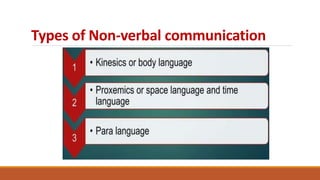
Types of Non-verbal communication
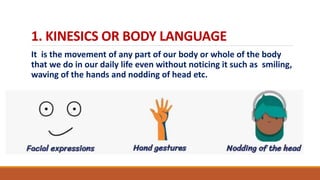
1. KINESICS OR BODY LANGUAGE
It is the movement of any part of our body or whole of the body
that we do in our daily life even without noticing it such as smiling,
waving of the hands and nodding of head etc.
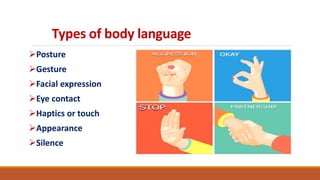
Types of body language
Posture
Gesture
Facial expression
Eye contact
Haptics or touch
Appearance
Silence
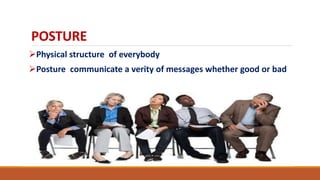
POSTURE
Physical structure of everybody
Posture communicate a verity of messages whether good or bad
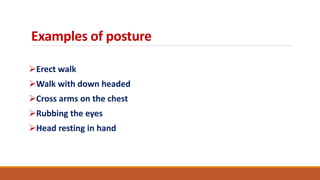
Examples of posture
Erect walk
Walk with down headed
Cross arms on the chest
Rubbing the eyes
Head resting in hand
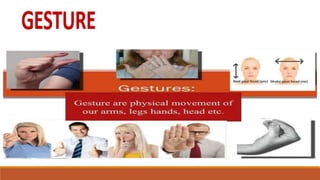
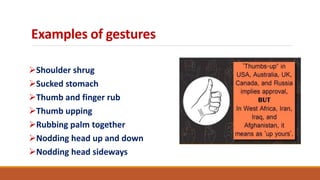
Examples of gestures
Shoulder shrug
Sucked stomach
Thumb and finger rub
Thumb upping
Rubbing palm together
Nodding head up and down
Nodding head sideways
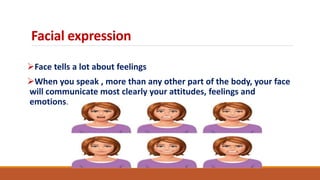
Facial expression
Face tells a lot about feelings
When you speak , more than any other part of the body, your face
will communicate most clearly your attitudes, feelings and
emotions.
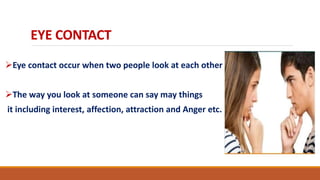
EYE CONTACT
Eye contact occur when two people look at each other
The way you look at someone can say may things
it including interest, affection, attraction and Anger etc.
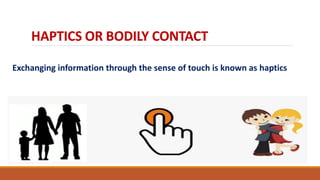
HAPTICS OR BODILY CONTACT
Exchanging information through the sense of touch is known as haptics
APPEARANCE
Appearance can indicate our profession
It show your nature, taste and interest
It can also point out our religious
and cultural values
SILENCE
Silence speak its own language , no need to explain it.
Understand silence carefully
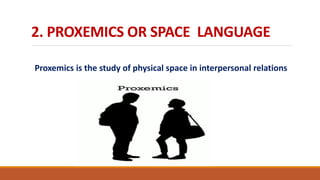
2. PROXEMICS OR SPACE LANGUAGE
Proxemics is the study of physical space in interpersonal relations
TYPES OF PROXEMICS
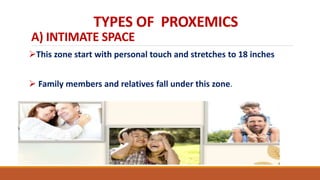
A) INTIMATE SPACE
This zone start with personal touch and stretches to 18 inches
 Family members and relatives fall under this zone.
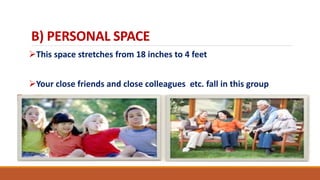
B) PERSONAL SPACE
This space stretches from 18 inches to 4 feet
Your close friends and close colleagues etc. fall in this group
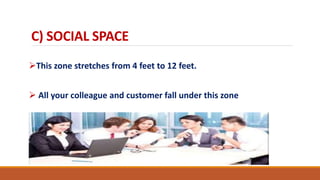
C) SOCIAL SPACE
This zone stretches from 4 feet to 12 feet.
 All your colleague and customer fall under this zone
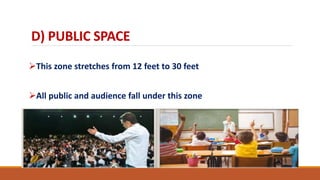
D) PUBLIC SPACE
This zone stretches from 12 feet to 30 feet
All public and audience fall under this zone
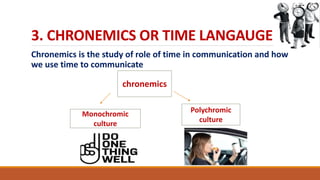
3. CHRONEMICS OR TIME LANGAUGE
Chronemics is the study of role of time in communication and how
we use time to communicate
chronemics
Polychromic
culture
Monochromic
culture
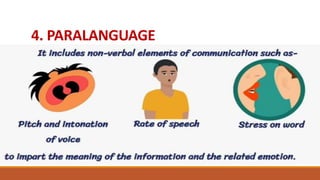
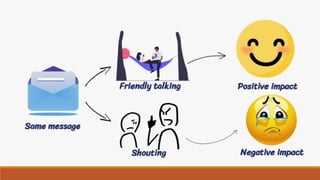
4. PARALANGUAGE
Operational communication
Operational communication refers to the exchange of information
and messages within an organization to facilitate its day-to-day
operations. It can be categorized into 3 types;
1) INTERNAL-OPERATIONAL COMMUNICATION
2) EXTERNAL -OPERATIONAL COMMUNICATION
3) PERSONAL -OPERATIONAL COMMUNICATION
1.INTERNAL-OPERATIONAL COMMUNICATION
All the communication that occur in conducting work within an
organization is known as internal-operational communication.
FOR EXAMPLE;
orders and instructions
Oral exchanges among workers
Reports concerning official trips, lab experiment etc.
Types
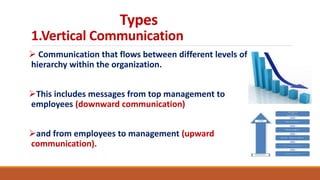
1.Vertical Communication
 Communication that flows between different levels of
hierarchy within the organization.
This includes messages from top management to
employees (downward communication)
and from employees to management (upward
communication).
2.Horizontal Communication
 Communication that occurs between individuals or departments
at the same hierarchical level.
 It facilitates coordination, collaboration, and sharing of
information among colleagues or teams.
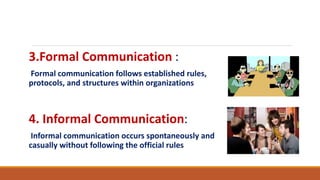
3.Formal Communication :
Formal communication follows established rules,
protocols, and structures within organizations
4. Informal Communication:
Informal communication occurs spontaneously and
casually without following the official rules
2.EXTERNAL -OPERATIONAL
COMMUNICATION
The work related communication that an organization does with
people outside the organization.
Communication with clients, service companies, customers and
general public etc.
Sales people’s talk, telephone call backs, follow up service calls,
brochures, print and audio-visual ads etc.
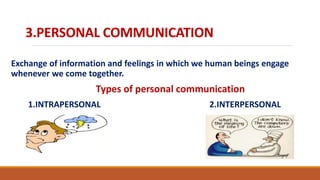
3.PERSONAL COMMUNICATION
Exchange of information and feelings in which we human beings engage
whenever we come together.
Types of personal communication
1.INTRAPERSONAL 2.INTERPERSONAL
Importance of Communication in an
organization
1. Productive and operate effectively
2. Helps in Coordinating the activities of various departments and
persons
3. Increase managerial efficiency
4. Helps in decision making
5. Increase employe job satisfaction
Ways to Communicate Effectively in an
organization
1. Conduct open meetings it allow all employees to be aware of
updates
2. Communicating via email remains potent
3. Communicating via presentation/training help the people to
grasp the message easily
4. Place visuals around the workstation
5. Be appreciative
Styles of communication
1. Submissive communication
2. Assertive communication
3. Aggressive communication
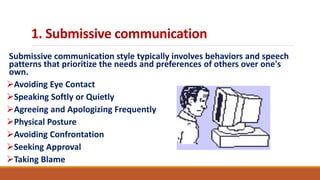
1. Submissive communication
Submissive communication style typically involves behaviors and speech
patterns that prioritize the needs and preferences of others over one's
own.
Avoiding Eye Contact
Speaking Softly or Quietly
Agreeing and Apologizing Frequently
Physical Posture
Avoiding Confrontation
Seeking Approval
Taking Blame
2. Assertive communication
Assertive communication involves expressing one's thoughts, feelings,
and needs in a confident and respectful manner while also considering
the rights and feelings of others.
Using "I" Statements
Expressing Preferences and Boundaries
Active Listening
Standing Up for Oneself
Maintaining Eye Contact and Confident Body Language
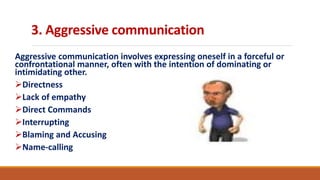
3. Aggressive communication
Aggressive communication involves expressing oneself in a forceful or
confrontational manner, often with the intention of dominating or
intimidating other.
Directness
Lack of empathy
Direct Commands
Interrupting
Blaming and Accusing
Name-calling
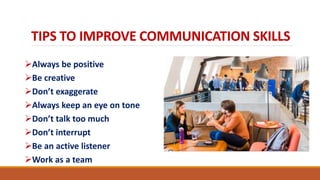
TIPS TO IMPROVE COMMUNICATION SKILLS
Always be positive
Be creative
Don’t exaggerate
Always keep an eye on tone
Don’t talk too much
Don’t interrupt
Be an active listener
Work as a team
COMMUNICATION SKILLS - Presentation - BY MARIA.pptx

COMMUNICATION SKILLS - Presentation - BY MARIA.pptx

  • 1.
    COMMUNICATION SKILLS PRESENTER DR.MARIA NASIR DESIGNATION WAREHOUSE PHARMACIST
  • 12.
    Types of Non-verbalcommunication
  • 13.
    1. KINESICS ORBODY LANGUAGE It is the movement of any part of our body or whole of the body that we do in our daily life even without noticing it such as smiling, waving of the hands and nodding of head etc.
  • 16.
    Types of bodylanguage Posture Gesture Facial expression Eye contact Haptics or touch Appearance Silence
  • 17.
    POSTURE Physical structure ofeverybody Posture communicate a verity of messages whether good or bad
  • 18.
    Examples of posture Erectwalk Walk with down headed Cross arms on the chest Rubbing the eyes Head resting in hand
  • 20.
    Examples of gestures Shouldershrug Sucked stomach Thumb and finger rub Thumb upping Rubbing palm together Nodding head up and down Nodding head sideways
  • 21.
    Facial expression Face tellsa lot about feelings When you speak , more than any other part of the body, your face will communicate most clearly your attitudes, feelings and emotions.
  • 22.
    EYE CONTACT Eye contactoccur when two people look at each other The way you look at someone can say may things it including interest, affection, attraction and Anger etc.
  • 23.
    HAPTICS OR BODILYCONTACT Exchanging information through the sense of touch is known as haptics
  • 24.
    APPEARANCE Appearance can indicateour profession It show your nature, taste and interest It can also point out our religious and cultural values
  • 25.
    SILENCE Silence speak itsown language , no need to explain it. Understand silence carefully
  • 26.
    2. PROXEMICS ORSPACE LANGUAGE Proxemics is the study of physical space in interpersonal relations
  • 27.
    TYPES OF PROXEMICS A)INTIMATE SPACE This zone start with personal touch and stretches to 18 inches  Family members and relatives fall under this zone.
  • 28.
    B) PERSONAL SPACE Thisspace stretches from 18 inches to 4 feet Your close friends and close colleagues etc. fall in this group
  • 29.
    C) SOCIAL SPACE Thiszone stretches from 4 feet to 12 feet.  All your colleague and customer fall under this zone
  • 30.
    D) PUBLIC SPACE Thiszone stretches from 12 feet to 30 feet All public and audience fall under this zone
  • 31.
    3. CHRONEMICS ORTIME LANGAUGE Chronemics is the study of role of time in communication and how we use time to communicate chronemics Polychromic culture Monochromic culture
  • 32.
  • 34.
    Operational communication Operational communicationrefers to the exchange of information and messages within an organization to facilitate its day-to-day operations. It can be categorized into 3 types; 1) INTERNAL-OPERATIONAL COMMUNICATION 2) EXTERNAL -OPERATIONAL COMMUNICATION 3) PERSONAL -OPERATIONAL COMMUNICATION
  • 35.
    1.INTERNAL-OPERATIONAL COMMUNICATION All thecommunication that occur in conducting work within an organization is known as internal-operational communication. FOR EXAMPLE; orders and instructions Oral exchanges among workers Reports concerning official trips, lab experiment etc.
  • 36.
    Types 1.Vertical Communication  Communicationthat flows between different levels of hierarchy within the organization. This includes messages from top management to employees (downward communication) and from employees to management (upward communication).
  • 37.
    2.Horizontal Communication  Communicationthat occurs between individuals or departments at the same hierarchical level.  It facilitates coordination, collaboration, and sharing of information among colleagues or teams.
  • 38.
    3.Formal Communication : Formalcommunication follows established rules, protocols, and structures within organizations 4. Informal Communication: Informal communication occurs spontaneously and casually without following the official rules
  • 39.
    2.EXTERNAL -OPERATIONAL COMMUNICATION The workrelated communication that an organization does with people outside the organization. Communication with clients, service companies, customers and general public etc. Sales people’s talk, telephone call backs, follow up service calls, brochures, print and audio-visual ads etc.
  • 40.
    3.PERSONAL COMMUNICATION Exchange ofinformation and feelings in which we human beings engage whenever we come together. Types of personal communication 1.INTRAPERSONAL 2.INTERPERSONAL
  • 41.
    Importance of Communicationin an organization 1. Productive and operate effectively 2. Helps in Coordinating the activities of various departments and persons 3. Increase managerial efficiency 4. Helps in decision making 5. Increase employe job satisfaction
  • 42.
    Ways to CommunicateEffectively in an organization 1. Conduct open meetings it allow all employees to be aware of updates 2. Communicating via email remains potent 3. Communicating via presentation/training help the people to grasp the message easily 4. Place visuals around the workstation 5. Be appreciative
  • 43.
    Styles of communication 1.Submissive communication 2. Assertive communication 3. Aggressive communication
  • 44.
    1. Submissive communication Submissivecommunication style typically involves behaviors and speech patterns that prioritize the needs and preferences of others over one's own. Avoiding Eye Contact Speaking Softly or Quietly Agreeing and Apologizing Frequently Physical Posture Avoiding Confrontation Seeking Approval Taking Blame
  • 45.
    2. Assertive communication Assertivecommunication involves expressing one's thoughts, feelings, and needs in a confident and respectful manner while also considering the rights and feelings of others. Using "I" Statements Expressing Preferences and Boundaries Active Listening Standing Up for Oneself Maintaining Eye Contact and Confident Body Language
  • 46.
    3. Aggressive communication Aggressivecommunication involves expressing oneself in a forceful or confrontational manner, often with the intention of dominating or intimidating other. Directness Lack of empathy Direct Commands Interrupting Blaming and Accusing Name-calling
  • 58.
    TIPS TO IMPROVECOMMUNICATION SKILLS Always be positive Be creative Don’t exaggerate Always keep an eye on tone Don’t talk too much Don’t interrupt Be an active listener Work as a team

Editor's Notes

  • #12 It is a form of communication in which msg convey without the use of words it is convey through ,,,,Like nodding head, hand shake, smling etc
  • #51 So emotionally matured person can communicate effectively and not emotionally matured person can’t communicate properly