

Submitted to:
Dr. S. S. Bukhari
PhD (usa); Post-doc (USA)
Department of Agricultural Education
Extension and Short Courses
Faculty of Agricultural Social Sciences
Sindh Agriculture University, Tandojam
Course Code: AEE-604
Subject: Introduction to
Programme Planning
Submitted By:
Zahid Hussain Noonari
2K11-SS-126
ASSIGNMENT
Communication
Process
Submitted to:
Dr. S. S. Bukhari
PhD (usa); Post-doc (USA)
Department of Agricultural Education
Extension and Short Courses
Faculty of Agricultural Social Sciences
Sindh Agriculture University, Tandojam
Course Code: AEE-604
Subject: Introduction to
Programme Planning
Submitted By:
Zahid Hussain Noonari
2K11-SS-126
PRACTICAL
Communication
Process
Submitted to:
Dr. S. S. Bukhari
PhD (usa); Post-doc (USA)
Department of Agricultural Education
Extension and Short Courses
Faculty of Agricultural Social Sciences
Sindh Agriculture University, Tandojam
Course Code: AEE-604
Subject: Introduction to
Programme Planning
Submitted By:
Zahid Hussain Noonari
2K11-SS-126
ASSIGNMENT
Communication
Process
Submitted to:
Dr. S. S. Bukhari
PhD (usa); Post-doc (USA)
Department of Agricultural Education
Extension and Short Courses
Faculty of Agricultural Social Sciences
Sindh Agriculture University, Tandojam
Course Code: AEE-604
Subject: Introduction to
Programme Planning
Submitted By:
Zahid Hussain Noonari
2K11-SS-126
PRACTICAL
Communication
Process
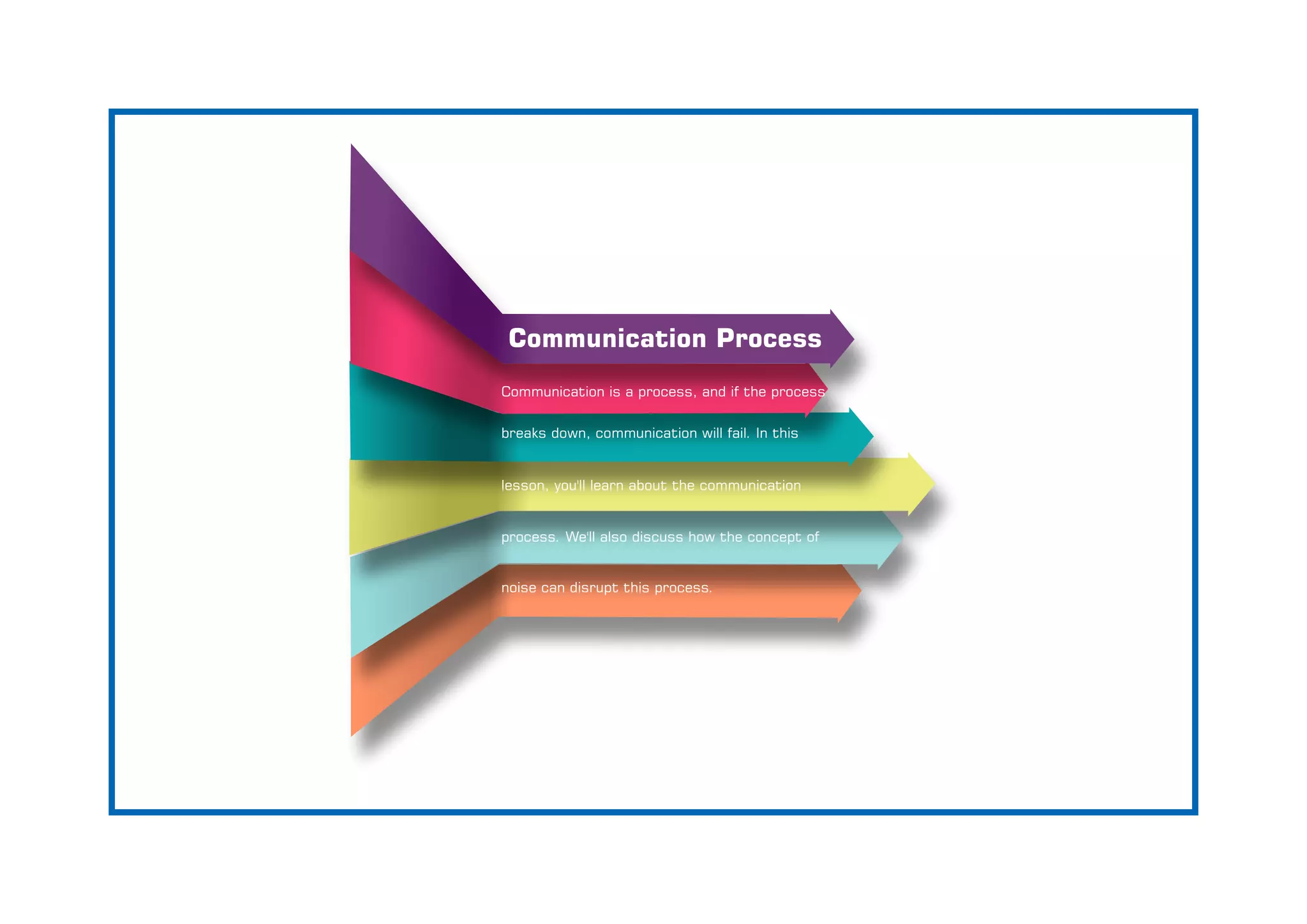
Communication Process
Communication is a process, and if the process
breaks down, communication will fail. In this
lesson, you'll learn about the communication
process. We'll also discuss how the concept of
noise can disrupt this process.
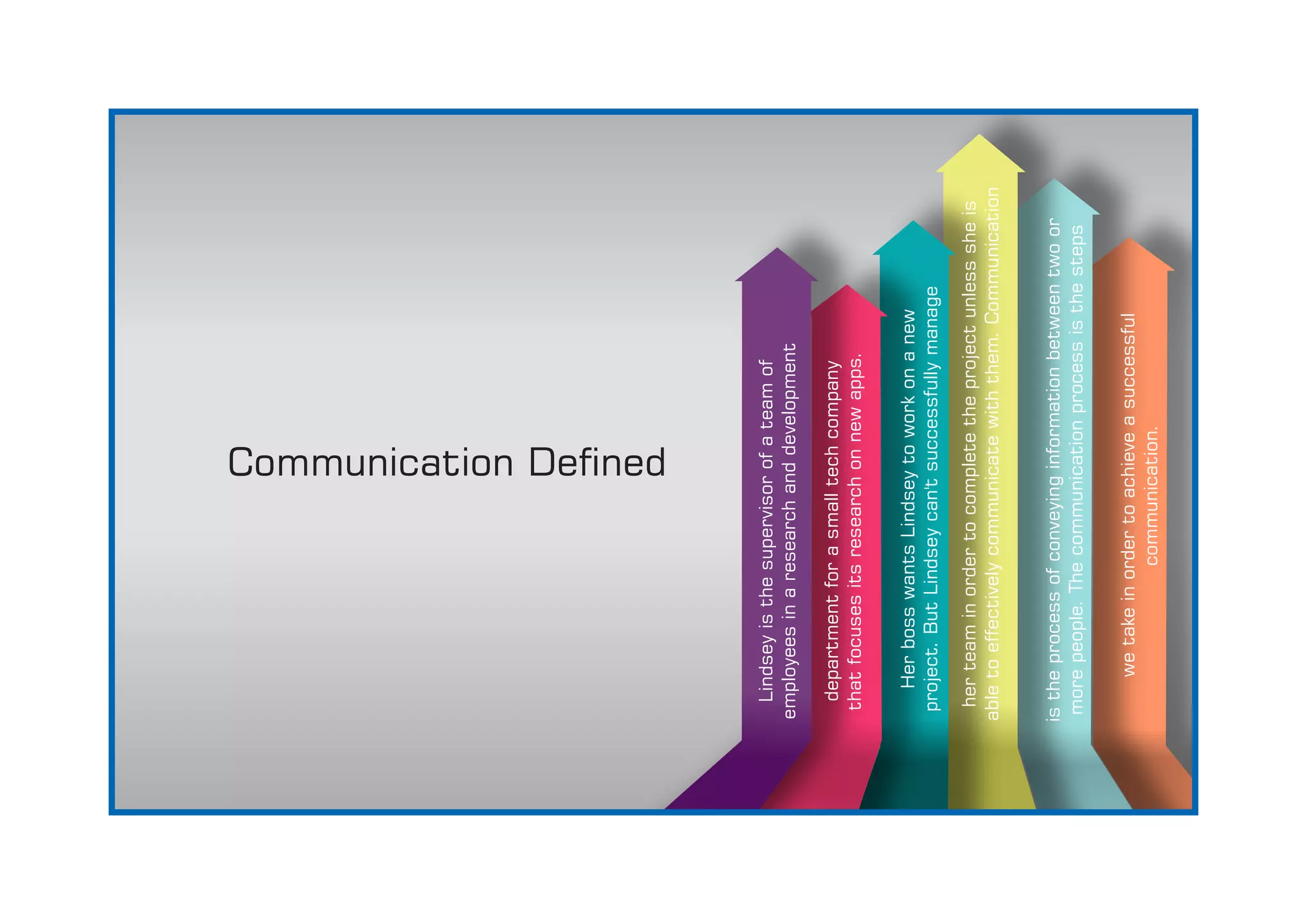
Communication Dened
Lindseyisthesupervisorofateamof
employeesinaresearchanddevelopment
departmentforasmalltechcompany
thatfocusesitsresearchonnewapps.
HerbosswantsLindseytoworkonanew
project.ButLindseycan'tsuccessfullymanage
herteaminordertocompletetheprojectunlesssheis
abletoeffectivelycommunicatewiththem.Communication
istheprocessofconveyinginformationbetweentwoor
morepeople.Thecommunicationprocessisthesteps
wetakeinordertoachieveasuccessful
communication.
Communication
A sender is the party that sends a message.
A channel of communication must also be selected
The receiver must be able to decode the message
Sometimes, a receiver will give the sender feedback
Communication
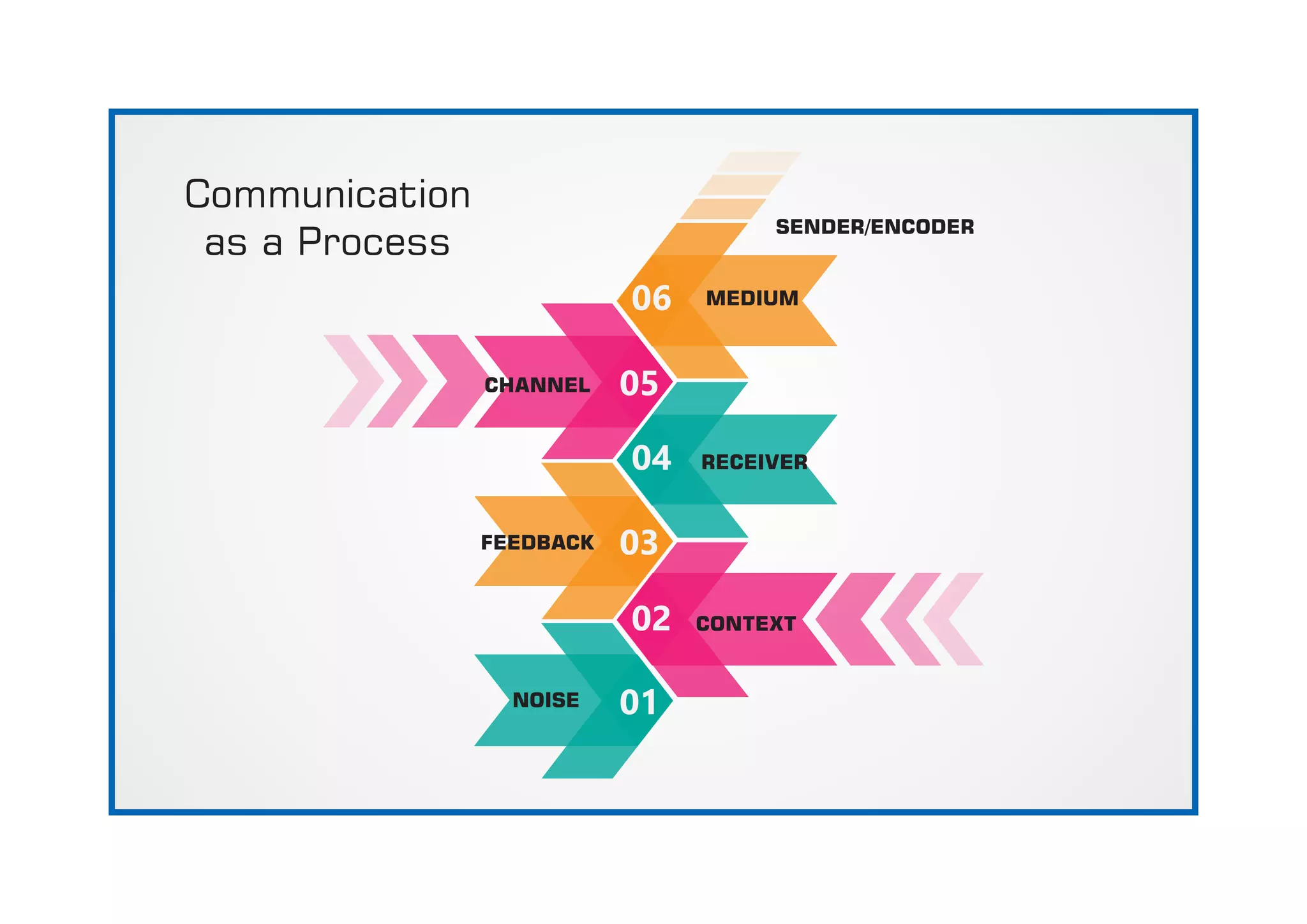
as a Process
SENDER/ENCODER
MEDIUM
CHANNEL
RECEIVER
FEEDBACK
CONTEXT
NOISE
The Communication Process
Communication is a complex
process, and it is difcult to
determine where or with whom
a communication encounter
starts and ends
Models of communication
simplify the process by
providing a visual
representation of the various
aspects of a communication
encounter.
Transmission Model
of Communication
The transmission model of communication
describes communication as a linear, one-way
process in which a sender intentionally
transmits a message to a receiver.
Interaction Model of
Communication
The interaction model of communication
describes communication as a process
in which participants alternate
positions as sender and receiver and
generate meaning by sending messages
and receiving feedback within physical
and psychological contexts.
Transaction Model
of Communication
As
the study of
communication
progressed, models
expanded to account for
more of the communication
process. Many scholars view
communication as more than
a process that is used to
carry on conversations
and convey meaning.
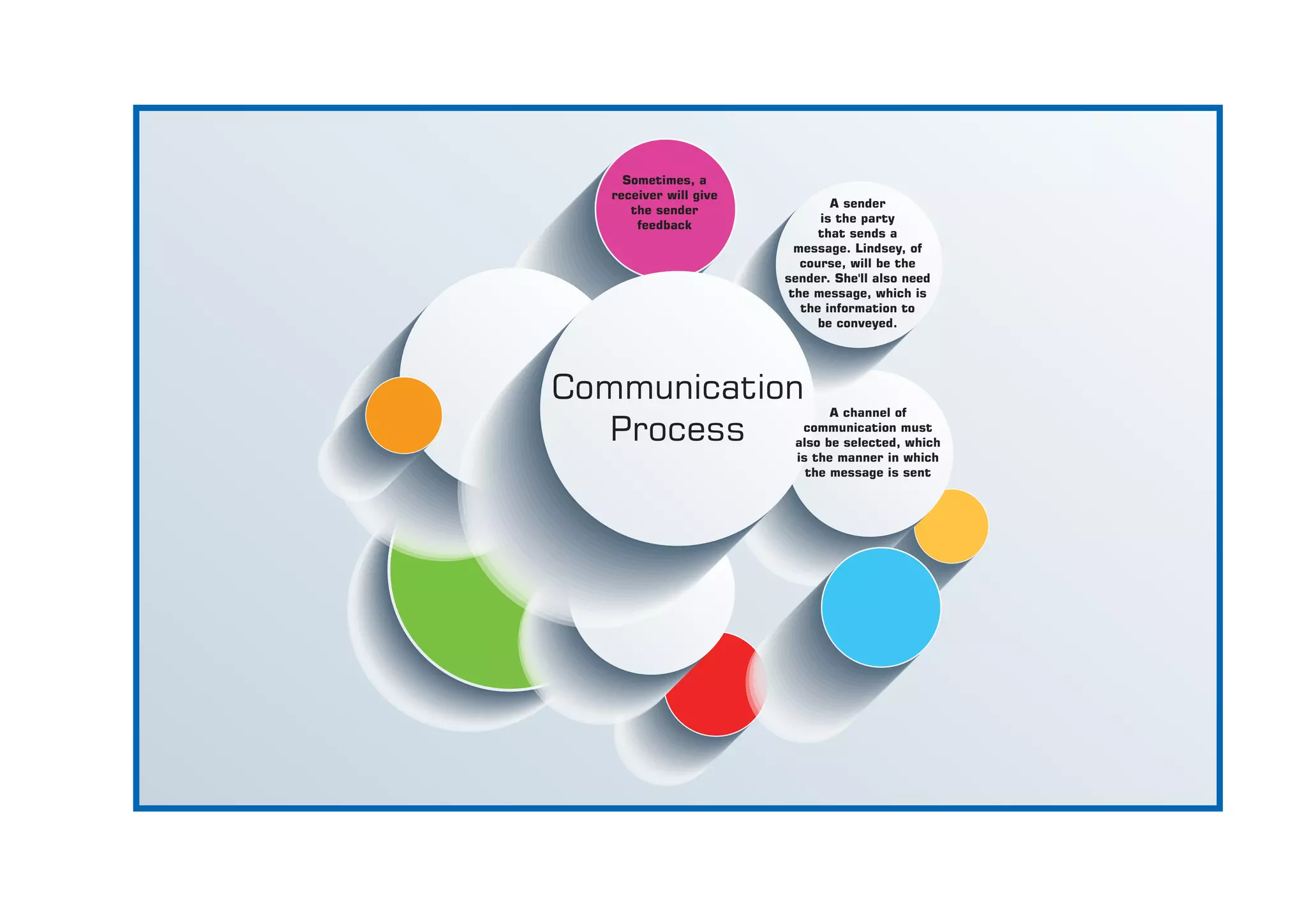
Communication
Process
A sender
is the party
that sends a
message. Lindsey, of
course, will be the
sender. She'll also need
the message, which is
the information to
be conveyed.
A channel of
communication must
also be selected, which
is the manner in which
the message is sent
Sometimes, a
receiver will give
the sender
feedback
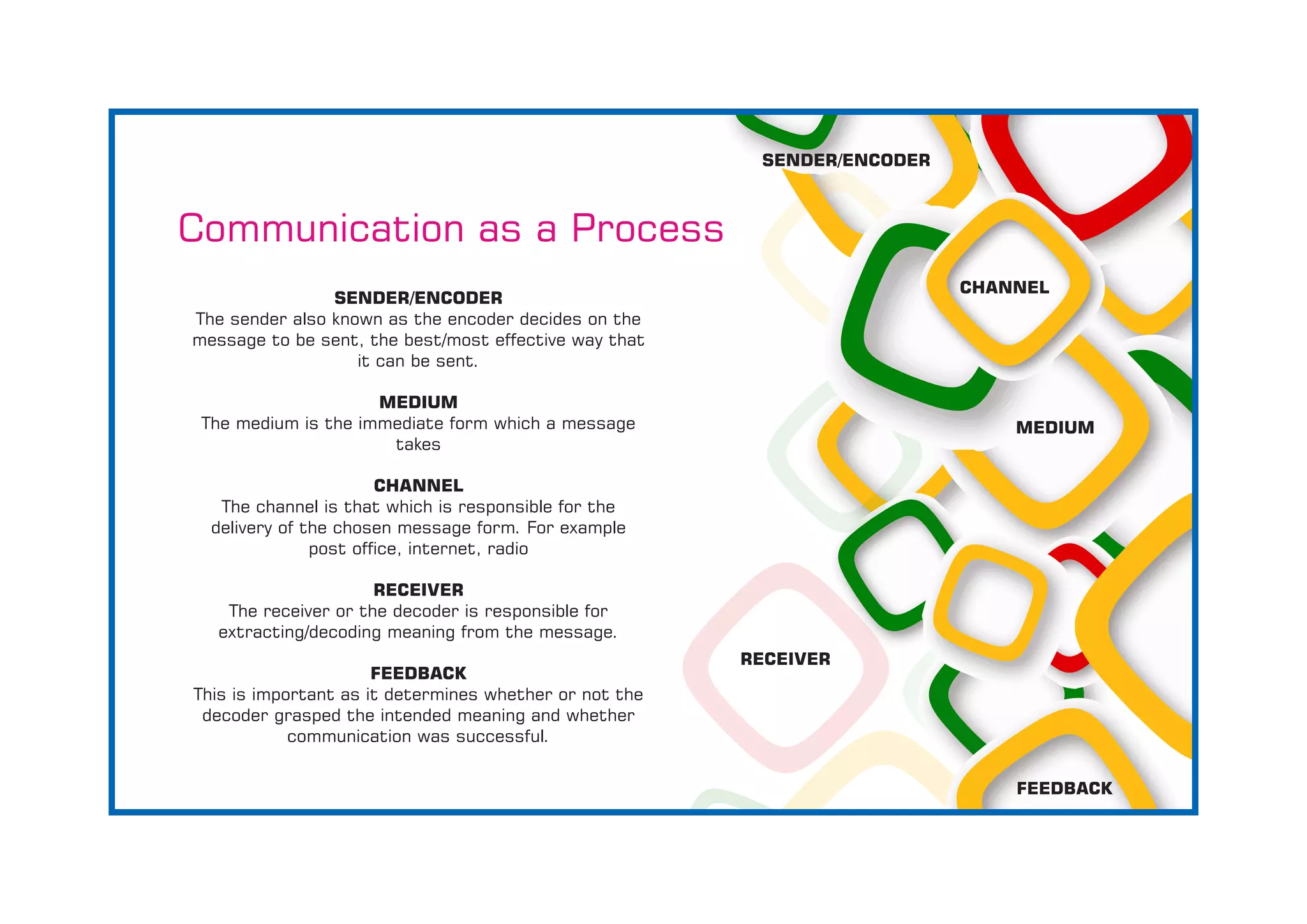
Communication as a Process
SENDER/ENCODER
The sender also known as the encoder decides on the
message to be sent, the best/most effective way that
it can be sent.
MEDIUM
The medium is the immediate form which a message
takes
CHANNEL
The channel is that which is responsible for the
delivery of the chosen message form. For example
post ofce, internet, radio
RECEIVER
The receiver or the decoder is responsible for
extracting/decoding meaning from the message.
FEEDBACK
This is important as it determines whether or not the
decoder grasped the intended meaning and whether
communication was successful.
CO
N
TEXT
Com
m
unication
does
not
take
place
in
a
vacuum
. The
context
of any
com
m
unication
act
is
the
environm
ent
surrounding
it. This
includes,
am
ong
other
things, place, tim
e, event, and
attitudes
of sender
and
receiver.
N
O
IS
E
This
is
any
factor
that
inhibits
the
conveyance
ofa
m
essage.That
is,
anything
that
gets
in
the
w
ay
ofthe
m
essage
being
accurately
received,interpreted
and
responded
to.N
oise
m
ay
be
internalor
external.
Although models of
communication provide a
useful blueprint to see how
the communication process
works, they are not complex
enough to capture what
communication is like
as it is experienced.

communication