Commonly used lab apparatus 
Satya Patra 
VIII B
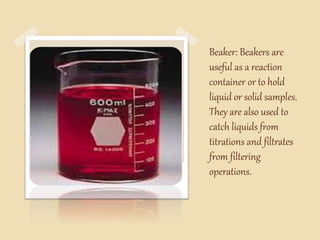
Beaker: Beakers are 
useful as a reaction 
container or to hold 
liquid or solid samples. 
They are also used to 
catch liquids from 
titrations and filtrates 
from filtering 
operations.
A Bunsen burner, is a 
common piece of 
laboratory equipment 
that produces a single 
open gas flame, which is 
used for heating, 
sterilization, and 
combustion. The gas can 
be natural gas (which is 
mainly methane) or a 
liquefied petroleum gas 
(LPG).
A test tube is a common 
piece of laboratory 
glassware consisting of a 
finger-like length of glass 
or clear plastic tubing, 
open at the top, usually 
with a rounded U-shaped 
bottom. Test tubes are 
widely used by chemists to 
hold, mix, or heat small 
quantities of solid or liquid 
chemicals
A test tube holder is 
used to hold the test 
tubes during some 
experiment.
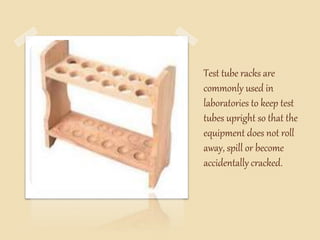
Test tube racks are 
commonly used in 
laboratories to keep test 
tubes upright so that the 
equipment does not roll 
away, spill or become 
accidentally cracked.
A tripod is a portable 
three-legged frame, used 
as a platform for 
supporting the weight and 
maintaining the stability 
of some other object.
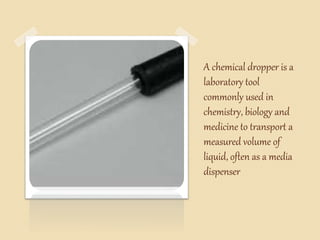
A chemical dropper is a 
laboratory tool 
commonly used in 
chemistry, biology and 
medicine to transport a 
measured volume of 
liquid, often as a media 
dispenser
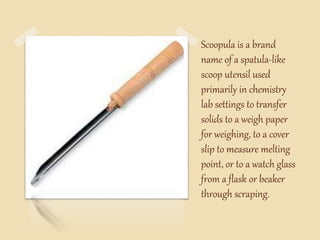
Scoopula is a brand 
name of a spatula-like 
scoop utensil used 
primarily in chemistry 
lab settings to transfer 
solids to a weigh paper 
for weighing, to a cover 
slip to measure melting 
point, or to a watch glass 
from a flask or beaker 
through scraping.
Forceps is an 
instrument 
resembling a pair 
of pincers or tongs, 
used for grasping, 
manipulating, or 
extracting
A microscope is an 
instrument used to see 
objects that are too 
small for the naked eye. 
There are many types 
of microscopes. The 
most common (and the 
first to be invented) is 
the optical microscope, 
which uses light to 
image the sample.
An Erlenmeyer flask 
or conical flask is a 
type of laboratory 
flask which features a 
flat bottom, a conical 
body, and a 
cylindrical neck.
A stirring rod or stir rod 
is a piece of laboratory 
equipment used to mix 
chemicals and liquids for 
laboratory purposes. They 
are usually made of solid 
glass.
A microscope slide is a 
thin flat piece of glass, 
used to hold objects for 
examination under a 
microscope. Typically the 
object is placed or 
secured ("mounted") on 
the slide, and then both 
are inserted together in 
the microscope for 
viewing.
Wire mesh (wire 
gauze) is used for 
uniform distribution 
of flame heat in base 
of a heated body. It is 
made of a iron wire 
strands with or 
without ceramic 
interior cores.
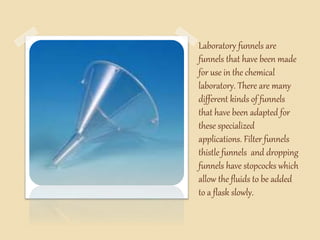
Laboratory funnels are 
funnels that have been made 
for use in the chemical 
laboratory. There are many 
different kinds of funnels 
that have been adapted for 
these specialized 
applications. Filter funnels 
thistle funnels and dropping 
funnels have stopcocks which 
allow the fluids to be added 
to a flask slowly.
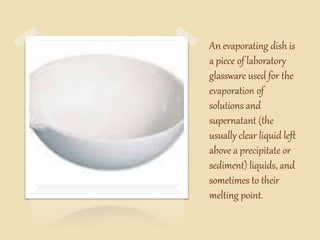
An evaporating dish is 
a piece of laboratory 
glassware used for the 
evaporation of 
solutions and 
supernatant (the 
usually clear liquid left 
above a precipitate or 
sediment) liquids, and 
sometimes to their 
melting point.
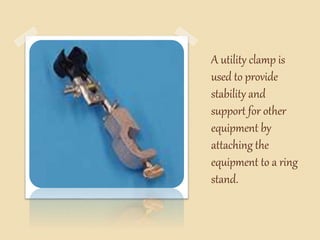
A utility clamp is 
used to provide 
stability and 
support for other 
equipment by 
attaching the 
equipment to a ring 
stand.
The wash bottle is 
generally used in the 
clean-up phase of 
many experiments . 
Most bottles contain an 
internal dip tube 
allowing upright use.
A watch glass is a circular 
concave piece of glass used 
in chemistry as a surface to 
evaporate a liquid, to hold 
solids while being weighed, 
or as a cover for a beaker. 
The latter use is generally 
applied to prevent dust or 
other particles entering the 
beaker; the watch glass 
does not completely seal the 
beaker, and so gas 
exchanges still occur.
Laboratory 
thermometers are 
devices used to 
measure temperature. 
There are many types 
of lab thermometers 
such as differential, 
mechanical, logging, 
etc.
A graduated cylinder, 
measuring cylinder or 
mixing cylinder is a 
piece of laboratory 
equipment used to 
measure the volume of 
a liquid. Graduated 
cylinders are generally 
more accurate and 
precise than laboratory 
flasks and beakers.
Crucible tongs are 
large pincers made of 
welded steel that are 
used to grasp and 
take a hot crucible 
out of a fire or 
furnace, or to move a 
crucible from one 
location to another.
Deflagrating spoon is a 
long-handled spoon 
with a cover, lowered 
into a glass vessel filled 
with a gas to 
demonstrate 
deflagration (to burn 
violently, or make 
something burn 
violently)

Commonly used lab apparatus

  • 1.
    Commonly used labapparatus Satya Patra VIII B
  • 2.
    Beaker: Beakers are useful as a reaction container or to hold liquid or solid samples. They are also used to catch liquids from titrations and filtrates from filtering operations.
  • 3.
    A Bunsen burner,is a common piece of laboratory equipment that produces a single open gas flame, which is used for heating, sterilization, and combustion. The gas can be natural gas (which is mainly methane) or a liquefied petroleum gas (LPG).
  • 4.
    A test tubeis a common piece of laboratory glassware consisting of a finger-like length of glass or clear plastic tubing, open at the top, usually with a rounded U-shaped bottom. Test tubes are widely used by chemists to hold, mix, or heat small quantities of solid or liquid chemicals
  • 5.
    A test tubeholder is used to hold the test tubes during some experiment.
  • 6.
    Test tube racksare commonly used in laboratories to keep test tubes upright so that the equipment does not roll away, spill or become accidentally cracked.
  • 7.
    A tripod isa portable three-legged frame, used as a platform for supporting the weight and maintaining the stability of some other object.
  • 8.
    A chemical dropperis a laboratory tool commonly used in chemistry, biology and medicine to transport a measured volume of liquid, often as a media dispenser
  • 9.
    Scoopula is abrand name of a spatula-like scoop utensil used primarily in chemistry lab settings to transfer solids to a weigh paper for weighing, to a cover slip to measure melting point, or to a watch glass from a flask or beaker through scraping.
  • 10.
    Forceps is an instrument resembling a pair of pincers or tongs, used for grasping, manipulating, or extracting
  • 11.
    A microscope isan instrument used to see objects that are too small for the naked eye. There are many types of microscopes. The most common (and the first to be invented) is the optical microscope, which uses light to image the sample.
  • 12.
    An Erlenmeyer flask or conical flask is a type of laboratory flask which features a flat bottom, a conical body, and a cylindrical neck.
  • 13.
    A stirring rodor stir rod is a piece of laboratory equipment used to mix chemicals and liquids for laboratory purposes. They are usually made of solid glass.
  • 14.
    A microscope slideis a thin flat piece of glass, used to hold objects for examination under a microscope. Typically the object is placed or secured ("mounted") on the slide, and then both are inserted together in the microscope for viewing.
  • 15.
    Wire mesh (wire gauze) is used for uniform distribution of flame heat in base of a heated body. It is made of a iron wire strands with or without ceramic interior cores.
  • 16.
    Laboratory funnels are funnels that have been made for use in the chemical laboratory. There are many different kinds of funnels that have been adapted for these specialized applications. Filter funnels thistle funnels and dropping funnels have stopcocks which allow the fluids to be added to a flask slowly.
  • 17.
    An evaporating dishis a piece of laboratory glassware used for the evaporation of solutions and supernatant (the usually clear liquid left above a precipitate or sediment) liquids, and sometimes to their melting point.
  • 18.
    A utility clampis used to provide stability and support for other equipment by attaching the equipment to a ring stand.
  • 19.
    The wash bottleis generally used in the clean-up phase of many experiments . Most bottles contain an internal dip tube allowing upright use.
  • 20.
    A watch glassis a circular concave piece of glass used in chemistry as a surface to evaporate a liquid, to hold solids while being weighed, or as a cover for a beaker. The latter use is generally applied to prevent dust or other particles entering the beaker; the watch glass does not completely seal the beaker, and so gas exchanges still occur.
  • 21.
    Laboratory thermometers are devices used to measure temperature. There are many types of lab thermometers such as differential, mechanical, logging, etc.
  • 22.
    A graduated cylinder, measuring cylinder or mixing cylinder is a piece of laboratory equipment used to measure the volume of a liquid. Graduated cylinders are generally more accurate and precise than laboratory flasks and beakers.
  • 23.
    Crucible tongs are large pincers made of welded steel that are used to grasp and take a hot crucible out of a fire or furnace, or to move a crucible from one location to another.
  • 24.
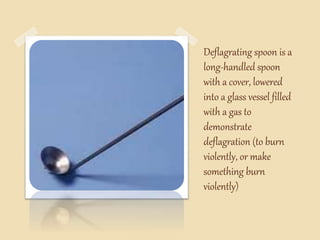
    Deflagrating spoon isa long-handled spoon with a cover, lowered into a glass vessel filled with a gas to demonstrate deflagration (to burn violently, or make something burn violently)