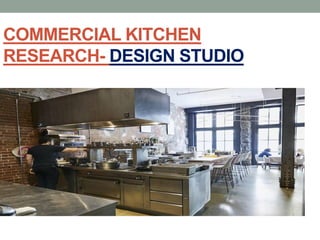
COMMERCIAL KITCHEN
RESEARCH- DESIGN STUDIO
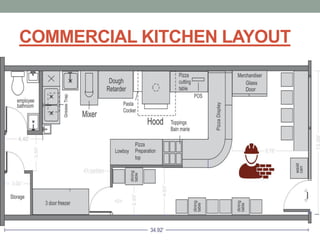
COMMERCIAL KITCHEN LAYOUT
ABOUT COMMERCIAL KITHCEN:-
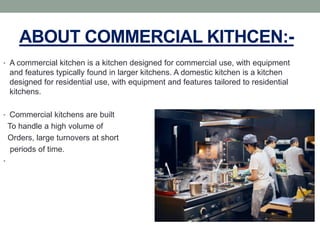
• A commercial kitchen is a kitchen designed for commercial use, with equipment
and features typically found in larger kitchens. A domestic kitchen is a kitchen
designed for residential use, with equipment and features tailored to residential
kitchens.
• Commercial kitchens are built
To handle a high volume of
Orders, large turnovers at short
periods of time.
•
WORK SPACE DIVISION BASED ON FUNCTION
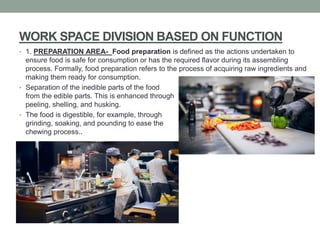
• 1. PREPARATION AREA- Food preparation is defined as the actions undertaken to
ensure food is safe for consumption or has the required flavor during its assembling
process. Formally, food preparation refers to the process of acquiring raw ingredients and
making them ready for consumption.
• Separation of the inedible parts of the food
from the edible parts. This is enhanced through
peeling, shelling, and husking.
• The food is digestible, for example, through
grinding, soaking, and pounding to ease the
chewing process..
2. COOKINGAREA:- The cooking area is where actual cooking takes place. It is
equipped with stoves, ovens, grills, and other appliances for various cooking methods.The
space is essential for transferring prepped ingredients into finished dishes.
Some Equipments for Cooking area:-
1. Stoves and ovens-These are used for direct heat cooking and baking.
2. Grills- For grilling and searing meats and vegetables.
3. Deep Fryer- for frying oil based thing in less time.
4. Utensils- Essentials tools like spatulas,tongs.
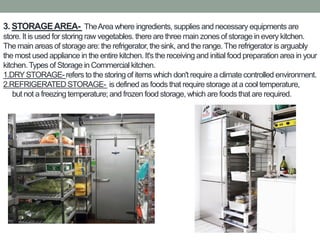
3. STORAGEAREA- TheArea where ingredients, supplies and necessary equipments are
store. It is used for storing raw vegetables. there are three main zones of storage in every kitchen.
The main areas of storage are: the refrigerator,the sink, and the range.The refrigeratoris arguably
the most used appliance in the entire kitchen. It's the receiving and initial food preparation area in your
kitchen.Types of Storage in Commercial kitchen.
1.DRYSTORAGE-refers to the storing of items which don't require a climate controlled environment.
2.REFRIGERATED STORAGE- is defined as foods that require storage at a cool temperature,
but not a freezing temperature; and frozen food storage, which are foods that are required.
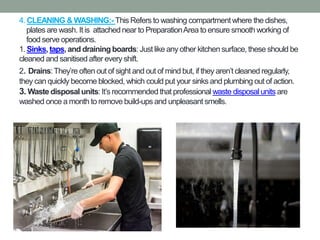
4. CLEANING & WASHING:- This Refers to washing compartment where the dishes,
plates are wash. It is attached near to PreparationArea to ensure smooth working of
food serve operations.
1. Sinks, taps, and drainingboards:Just like any other kitchen surface, these should be
cleaned and sanitised after every shift.
2. Drains:They’re often out of sight and out of mind but, if they aren’t cleaned regularly,
they can quickly become blocked, which could put your sinks and plumbing out of action.
3. Waste disposalunits:It’s recommended that professional waste disposal units are
washed once a month to remove build-ups and unpleasant smells.
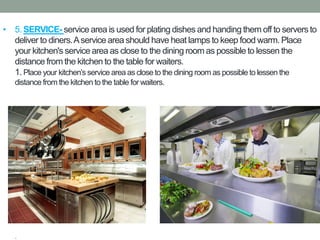
• 5. SERVICE- service area is used for plating dishes and handing them off to servers to
deliver to diners.Aservice area should have heat lamps to keep food warm. Place
your kitchen's service area as close to the dining room as possible to lessen the
distance from the kitchen to the table for waiters.
1. Place your kitchen’s service area as close to the dining room as possible to lessen the
distance from the kitchen to the table for waiters.
.
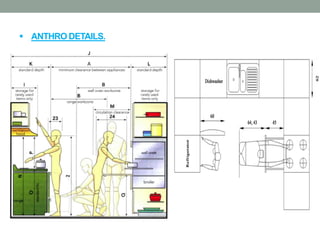
 ANTHRO DETAILS.
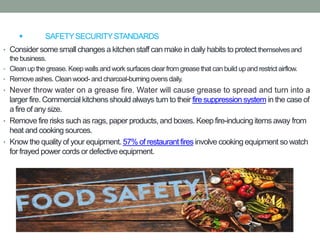
 SAFETYSECURITYSTANDARDS
• Consider some small changes a kitchen staff can make in daily habits to protect themselvesand
the business.
• Cleanup the grease. Keepwallsand work surfacesclearfrom greasethat can build upand restrict airflow.
• Removeashes.Cleanwood- and charcoal-burningovensdaily.
• Never throw water on a grease fire. Water will cause grease to spread and turn into a
larger fire. Commercial kitchens should always turn to their fire suppression system in the case of
a fire of any size.
• Remove fire risks such as rags, paper products, and boxes. Keep fire-inducing items away from
heat and cooking sources.
• Know the quality of your equipment. 57% of restaurant fires involve cooking equipment so watch
for frayed power cords or defective equipment.
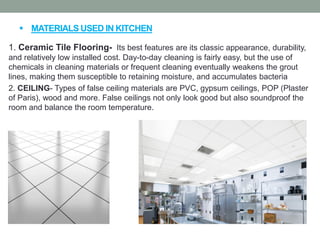
 MATERIALS USED IN KITCHEN
1. Ceramic Tile Flooring- Its best features are its classic appearance, durability,
and relatively low installed cost. Day-to-day cleaning is fairly easy, but the use of
chemicals in cleaning materials or frequent cleaning eventually weakens the grout
lines, making them susceptible to retaining moisture, and accumulates bacteria
2. CEILING- Types of false ceiling materials are PVC, gypsum ceilings, POP (Plaster
of Paris), wood and more. False ceilings not only look good but also soundproof the
room and balance the room temperature.
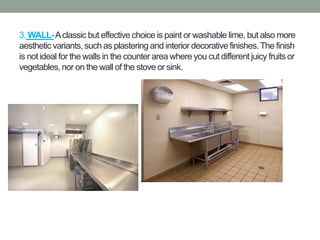
3. WALL-Aclassic but effective choice is paint or washable lime, but also more
aesthetic variants, such as plastering and interior decorative finishes.The finish
is not ideal for the walls in the counter area where you cut different juicy fruits or
vegetables, nor on the wall of the stove or sink.

COMMERCIAL KITCHEN RESEARCH- Design studio.pdf

  • 1.
  • 2.
  • 3.
    ABOUT COMMERCIAL KITHCEN:- •A commercial kitchen is a kitchen designed for commercial use, with equipment and features typically found in larger kitchens. A domestic kitchen is a kitchen designed for residential use, with equipment and features tailored to residential kitchens. • Commercial kitchens are built To handle a high volume of Orders, large turnovers at short periods of time. •
  • 4.
    WORK SPACE DIVISIONBASED ON FUNCTION • 1. PREPARATION AREA- Food preparation is defined as the actions undertaken to ensure food is safe for consumption or has the required flavor during its assembling process. Formally, food preparation refers to the process of acquiring raw ingredients and making them ready for consumption. • Separation of the inedible parts of the food from the edible parts. This is enhanced through peeling, shelling, and husking. • The food is digestible, for example, through grinding, soaking, and pounding to ease the chewing process..
  • 5.
    2. COOKINGAREA:- Thecooking area is where actual cooking takes place. It is equipped with stoves, ovens, grills, and other appliances for various cooking methods.The space is essential for transferring prepped ingredients into finished dishes. Some Equipments for Cooking area:- 1. Stoves and ovens-These are used for direct heat cooking and baking. 2. Grills- For grilling and searing meats and vegetables. 3. Deep Fryer- for frying oil based thing in less time. 4. Utensils- Essentials tools like spatulas,tongs.
  • 6.
    3. STORAGEAREA- TheAreawhere ingredients, supplies and necessary equipments are store. It is used for storing raw vegetables. there are three main zones of storage in every kitchen. The main areas of storage are: the refrigerator,the sink, and the range.The refrigeratoris arguably the most used appliance in the entire kitchen. It's the receiving and initial food preparation area in your kitchen.Types of Storage in Commercial kitchen. 1.DRYSTORAGE-refers to the storing of items which don't require a climate controlled environment. 2.REFRIGERATED STORAGE- is defined as foods that require storage at a cool temperature, but not a freezing temperature; and frozen food storage, which are foods that are required.
  • 7.
    4. CLEANING &WASHING:- This Refers to washing compartment where the dishes, plates are wash. It is attached near to PreparationArea to ensure smooth working of food serve operations. 1. Sinks, taps, and drainingboards:Just like any other kitchen surface, these should be cleaned and sanitised after every shift. 2. Drains:They’re often out of sight and out of mind but, if they aren’t cleaned regularly, they can quickly become blocked, which could put your sinks and plumbing out of action. 3. Waste disposalunits:It’s recommended that professional waste disposal units are washed once a month to remove build-ups and unpleasant smells.
  • 8.
    • 5. SERVICE-service area is used for plating dishes and handing them off to servers to deliver to diners.Aservice area should have heat lamps to keep food warm. Place your kitchen's service area as close to the dining room as possible to lessen the distance from the kitchen to the table for waiters. 1. Place your kitchen’s service area as close to the dining room as possible to lessen the distance from the kitchen to the table for waiters. .
  • 9.
  • 10.
     SAFETYSECURITYSTANDARDS • Considersome small changes a kitchen staff can make in daily habits to protect themselvesand the business. • Cleanup the grease. Keepwallsand work surfacesclearfrom greasethat can build upand restrict airflow. • Removeashes.Cleanwood- and charcoal-burningovensdaily. • Never throw water on a grease fire. Water will cause grease to spread and turn into a larger fire. Commercial kitchens should always turn to their fire suppression system in the case of a fire of any size. • Remove fire risks such as rags, paper products, and boxes. Keep fire-inducing items away from heat and cooking sources. • Know the quality of your equipment. 57% of restaurant fires involve cooking equipment so watch for frayed power cords or defective equipment.
  • 11.
     MATERIALS USEDIN KITCHEN 1. Ceramic Tile Flooring- Its best features are its classic appearance, durability, and relatively low installed cost. Day-to-day cleaning is fairly easy, but the use of chemicals in cleaning materials or frequent cleaning eventually weakens the grout lines, making them susceptible to retaining moisture, and accumulates bacteria 2. CEILING- Types of false ceiling materials are PVC, gypsum ceilings, POP (Plaster of Paris), wood and more. False ceilings not only look good but also soundproof the room and balance the room temperature.
  • 12.
    3. WALL-Aclassic buteffective choice is paint or washable lime, but also more aesthetic variants, such as plastering and interior decorative finishes.The finish is not ideal for the walls in the counter area where you cut different juicy fruits or vegetables, nor on the wall of the stove or sink.