MODEL OF ORGANIZATIONAL
ASSIMILATION
Anna Freund
What is it?
Frederic M. Jablin defines organizational
assimilation as “the process by which
individuals become integrated into the
culture of an organization.”
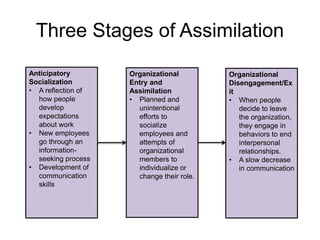
Three Stages of Assimilation
Anticipatory
Socialization
• A reflection of
how people
develop
expectations
about work
• New employees
go through an
information-
seeking process
• Development of
communication
skills
Organizational
Entry and
Assimilation
• Planned and
unintentional
efforts to
socialize
employees and
attempts of
organizational
members to
individualize or
change their role.
Organizational
Disengagement/Ex
it
• When people
decide to leave
the organization,
they engage in
behaviors to end
interpersonal
relationships.
• A slow decrease
in communication
Who uses it?
Members of
organizational
settings, both
non-high reliability
(advertising,
banking,
publishing, non-
profit, etc.) and
high-reliability
organizations (fire
and police
departments) are
always socializing
their new
employees into
their company.
What’s the point?
Organizational Assimilation is important to
the study of organizational communication,
communication within and between
organizations, and a group’s future success
when it comes to their employees.
Criticism
The study of organizational assimilation
would be enhanced by the use of multiple
research perspectives rather than by
evaluating one perspective, the “newcomer,”
as more appropriate than another.

Comm201theorypresentation freund

  • 1.
  • 2.
    What is it? FredericM. Jablin defines organizational assimilation as “the process by which individuals become integrated into the culture of an organization.”
  • 3.
    Three Stages ofAssimilation Anticipatory Socialization • A reflection of how people develop expectations about work • New employees go through an information- seeking process • Development of communication skills Organizational Entry and Assimilation • Planned and unintentional efforts to socialize employees and attempts of organizational members to individualize or change their role. Organizational Disengagement/Ex it • When people decide to leave the organization, they engage in behaviors to end interpersonal relationships. • A slow decrease in communication
  • 4.
    Who uses it? Membersof organizational settings, both non-high reliability (advertising, banking, publishing, non- profit, etc.) and high-reliability organizations (fire and police departments) are always socializing their new employees into their company.
  • 5.
    What’s the point? OrganizationalAssimilation is important to the study of organizational communication, communication within and between organizations, and a group’s future success when it comes to their employees.
  • 6.
    Criticism The study oforganizational assimilation would be enhanced by the use of multiple research perspectives rather than by evaluating one perspective, the “newcomer,” as more appropriate than another.