Color Fastness
What is Color fastness of a dyed
material?
• The outstandingly important property of a dyed material is
the fastness of the shade of color.
• Color fastness refers to the resistance of color to fade or
bleed of a dyed or printed textile materials to various types
of influences e.g. water, light, rubbing, washing, perspiration
etc. to which they are normally exposed in textile
manufacturing and in daily use.
Types of color fastness
• Color fastness to wash
• Color fastness to water
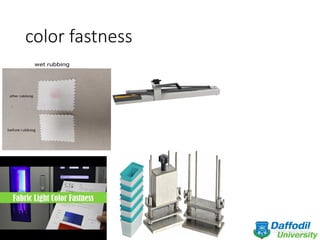
• Color fastness to rubbing/crocking
• Color fastness to perspiration
• Color fastness to light
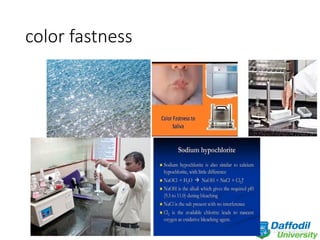
• Color fastness to sea water
• Color fastness to saliva
• Color fastness to chlorinated water
• Color fastness to hypochlorite bleach etc
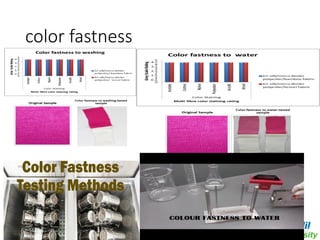
color fastness
color fastness
color fastness
Standards of color fastness
• AATCC (American Association of Textile Chemists and Colorists)
technical manual:
• Describes 66 numbers of different color fastness tests.
• SDC (Society of Dyers and Colorists):
• In 1927, SDC (Europe) made fastness test committee.
• ISO (International Organization for Standardization):
• In 1947, ISO made color sub committee. ISO also grades
the fastness:
• For light fastness: 1~8
• For other fastness: 1~5
Assessment of color fastness
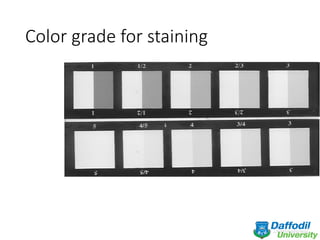
Color fastness is usually assessed
separately with respect to:
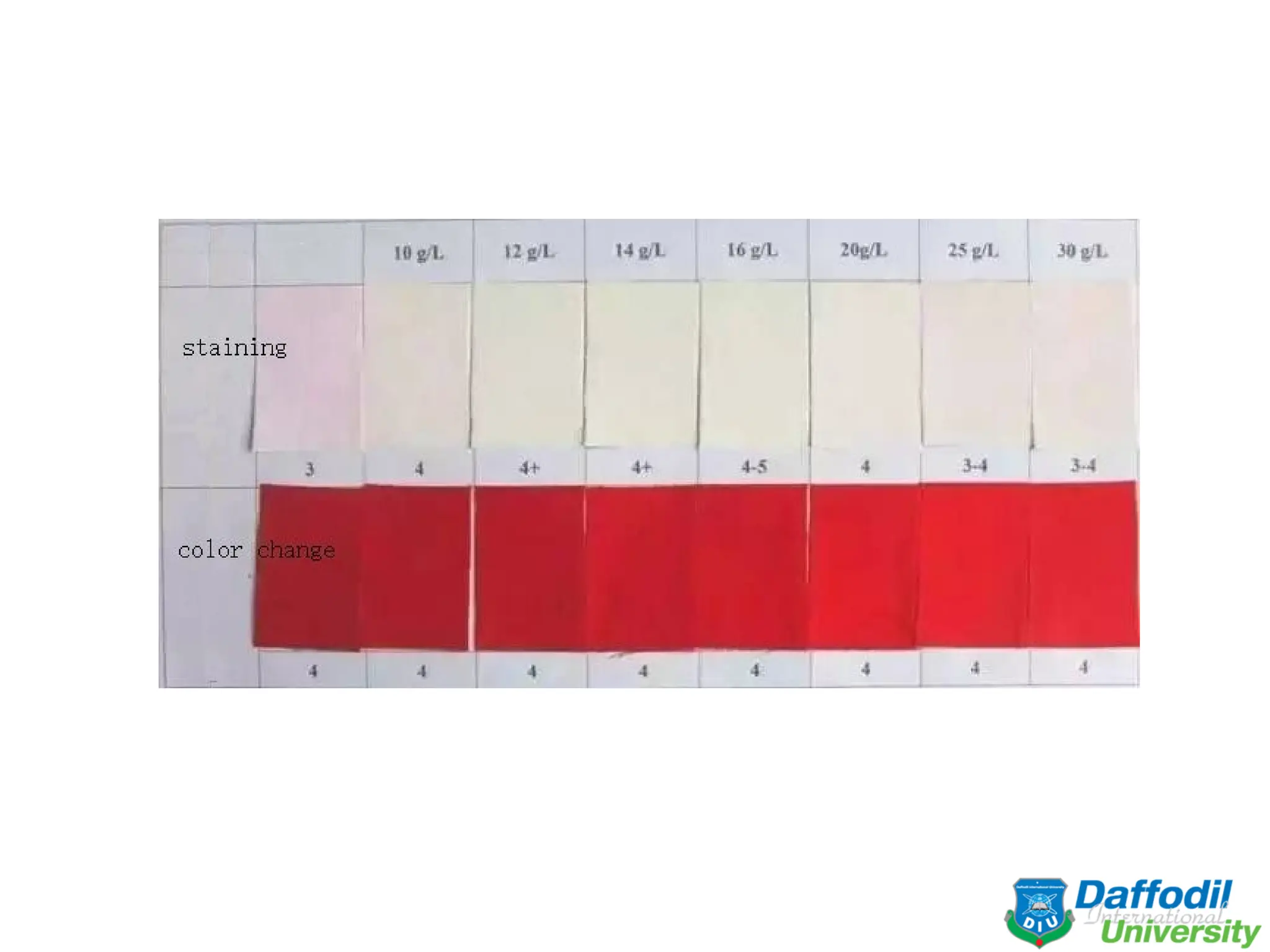
1.Changes in the colour of the specimen
being tested, that is colour fading.
2.Staining of undyed material which is in
contact with the specimen during the
test, that is bleeding of colour.
AATCC Grey scale for change i
n color
Color grade for staining
Factors affecting the color
fastness properties
• The molecular structure (e.g.) of a dye molecule. If
the dye molecule is larger in size, it will be tightly
entrapped inside the inter-polymer chain space of a
fiber. Thus the fastness will be better.
• The manner in which the dye is bonded to the fibre
or the physical form present.
• The amount of dye present in the fibre i.e. depth of
shade. A deep shade will be less fast than a pale or
light shade.
Factors affecting the color
fastness properties
• The chemical nature of the fibre. For example,
cellulosic fibres dyed with reactive or vat dyes will
show good fastness properties. Protein fibres dyed
with acid mordant and reactive dyes will achieve
good fastness properties and so on. That is to say
compatibility of dye with the fibre is very
important.
• The presence of other chemicals in the material.
• The actual conditions prevailing during exposure.

Colorfastness_part 1 (intro-factors).ppt

  • 1.
  • 2.
    What is Colorfastness of a dyed material? • The outstandingly important property of a dyed material is the fastness of the shade of color. • Color fastness refers to the resistance of color to fade or bleed of a dyed or printed textile materials to various types of influences e.g. water, light, rubbing, washing, perspiration etc. to which they are normally exposed in textile manufacturing and in daily use.
  • 3.
    Types of colorfastness • Color fastness to wash • Color fastness to water • Color fastness to rubbing/crocking • Color fastness to perspiration • Color fastness to light • Color fastness to sea water • Color fastness to saliva • Color fastness to chlorinated water • Color fastness to hypochlorite bleach etc
  • 4.
  • 5.
  • 6.
  • 7.
    Standards of colorfastness • AATCC (American Association of Textile Chemists and Colorists) technical manual: • Describes 66 numbers of different color fastness tests. • SDC (Society of Dyers and Colorists): • In 1927, SDC (Europe) made fastness test committee. • ISO (International Organization for Standardization): • In 1947, ISO made color sub committee. ISO also grades the fastness: • For light fastness: 1~8 • For other fastness: 1~5
  • 8.
    Assessment of colorfastness Color fastness is usually assessed separately with respect to: 1.Changes in the colour of the specimen being tested, that is colour fading. 2.Staining of undyed material which is in contact with the specimen during the test, that is bleeding of colour.
  • 9.
    AATCC Grey scalefor change i n color
  • 10.
  • 11.
    Factors affecting thecolor fastness properties • The molecular structure (e.g.) of a dye molecule. If the dye molecule is larger in size, it will be tightly entrapped inside the inter-polymer chain space of a fiber. Thus the fastness will be better. • The manner in which the dye is bonded to the fibre or the physical form present. • The amount of dye present in the fibre i.e. depth of shade. A deep shade will be less fast than a pale or light shade.
  • 12.
    Factors affecting thecolor fastness properties • The chemical nature of the fibre. For example, cellulosic fibres dyed with reactive or vat dyes will show good fastness properties. Protein fibres dyed with acid mordant and reactive dyes will achieve good fastness properties and so on. That is to say compatibility of dye with the fibre is very important. • The presence of other chemicals in the material. • The actual conditions prevailing during exposure.