Collaborative Threat Mitigation
or
(Collective Self Defense)
	
  
DOE’s	
  Cyber	
  Fed	
  Model	
  (CFM)	


  Sco5	
  Pinkerton	
  
pinkerton@anl.gov	
  
www.anl.gov/it/cfm	
  
Agenda
§  What	
  is	
  DOE’s	
  Cyber	
  Fed	
  
Model	
  
§  SubscripHon	
  vs.	
  parHcipaHon	
  
§  Relevance	
  &	
  ROI	
  
§  Why	
  are	
  we	
  here	
  ?	
  
§  Conclusions	
  &	
  Takeaways	
  
§  QuesHons	
  
2	
  
Tech	
  for	
  Security	
  Summit	
  
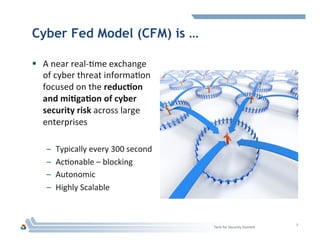
Cyber Fed Model (CFM) is …
§  A	
  near	
  real-­‐Hme	
  exchange	
  
of	
  cyber	
  threat	
  informaHon	
  
focused	
  on	
  the	
  reduc&on	
  
and	
  mi&ga&on	
  of	
  cyber	
  
security	
  risk	
  across	
  large	
  
enterprises	
  
–  Typically	
  every	
  300	
  second	
  
–  AcHonable	
  –	
  blocking	
  
–  Autonomic	
  
–  Highly	
  Scalable	
  	
  
3	
  
Tech	
  for	
  Security	
  Summit	
  
Structured Threat Information
§  InformaHon	
  shared	
  uses	
  an	
  
XML	
  syntax	
  
–  Based	
  upon	
  IODEF	
  (RFC	
  
5070)	
  
–  Looking	
  to	
  support	
  
OpenIOC	
  formats	
  in	
  the	
  
future	
  for	
  sharing	
  malware	
  
informaHon	
  
§  InformaHon	
  focuses	
  on	
  IP,	
  
DNS,	
  URL,	
  e-­‐mail,	
  hash	
  
strings	
  
4	
  
Tech	
  for	
  Security	
  Summit	
  
How Cyber Fed Model (CFM) Works
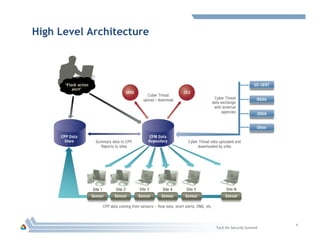
§  High	
  Level:	
  Client-­‐server	
  data	
  exchange	
  
§  Reality:	
  Central	
  repositories	
  providing	
  access	
  via	
  web	
  service	
  
–  Sites	
  control	
  who	
  can	
  see	
  the	
  data	
  they	
  upload	
  (by	
  PGP	
  key)	
  
–  Sites	
  decide	
  how	
  to	
  use	
  data	
  they	
  download	
  
§  Repository	
  accepts	
  encrypted	
  files	
  on	
  upload	
  
–  Contents	
  may	
  be	
  any	
  format	
  	
  
–  Simply	
  export	
  from	
  a	
  third	
  party	
  tool,	
  encrypt,	
  and	
  upload	
  
§  Output	
  comes	
  in	
  standardized	
  XML	
  format	
  
–  Allows	
  for	
  predictability	
  
–  Converters	
  can	
  translate	
  to	
  another	
  format	
  
–  Scripts	
  can	
  convert	
  and	
  send	
  to	
  other	
  tools	
  inline	
  
Tech	
  for	
  Security	
  Summit	
  
5	
  
High Level Architecture
Tech	
  for	
  Security	
  Summit	
  
6	
  
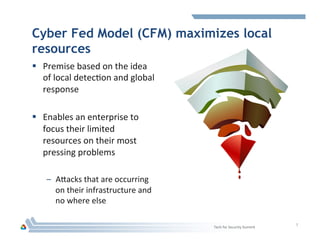
Cyber Fed Model (CFM) maximizes local
resources
§  Premise	
  based	
  on	
  the	
  idea	
  
of	
  local	
  detecHon	
  and	
  global	
  
response	
  
§  Enables	
  an	
  enterprise	
  to	
  
focus	
  their	
  limited	
  
resources	
  on	
  their	
  most	
  
pressing	
  problems	
  
–  A5acks	
  that	
  are	
  occurring	
  
on	
  their	
  infrastructure	
  and	
  
no	
  where	
  else	
  
7	
  
Tech	
  for	
  Security	
  Summit	
  
Effective Cyber Security Defense for an Enterprise
§  It	
  conHnues	
  to	
  be	
  a	
  hard	
  job	


§  Doubly	
  so	
  for	
  those	
  supporHng	
  criHcal	
  infrastructure	
  
§  Doesn’t	
  appear	
  to	
  be	
  gefng	
  any	
  easier;	
  mostly	
  harder	


§  Increasing	
  skill	
  &	
  sophisHcaHon	
  of	
  the	
  bad	
  guys;	
  commodity	
  
hacking	
  tools	
  
Tech	
  for	
  Security	
  Summit	
  
8	
  
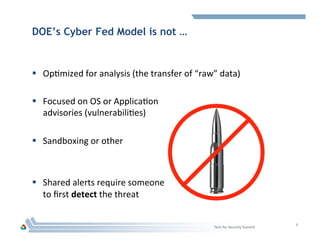
DOE’s Cyber Fed Model is not …
§  OpHmized	
  for	
  analysis	
  (the	
  transfer	
  of	
  “raw”	
  data)	
  
§  Focused	
  on	
  OS	
  or	
  ApplicaHon	
  
advisories	
  (vulnerabiliHes)	
  
§  Sandboxing	
  or	
  other	


§  Shared	
  alerts	
  require	
  someone	
  
to	
  first	
  detect	
  the	
  threat	
  
Tech	
  for	
  Security	
  Summit	
  
9	
  
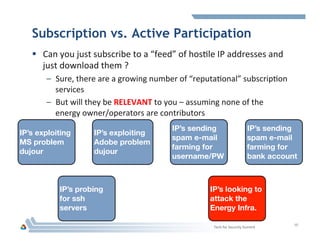
Subscription vs. Active Participation
§  Can	
  you	
  just	
  subscribe	
  to	
  a	
  “feed”	
  of	
  hosHle	
  IP	
  addresses	
  and	
  
just	
  download	
  them	
  ?	
  
–  Sure,	
  there	
  are	
  a	
  growing	
  number	
  of	
  “reputaHonal”	
  subscripHon	
  
services	
  
–  But	
  will	
  they	
  be	
  RELEVANT	
  to	
  you	
  –	
  assuming	
  none	
  of	
  the	
  
energy	
  owner/operators	
  are	
  contributors	
  
10	
  
Tech	
  for	
  Security	
  Summit	
  
IP’s exploiting
MS problem
dujour
IP’s exploiting
Adobe problem
dujour
IP’s sending
spam e-mail
farming for
username/PW
IP’s sending
spam e-mail
farming for
bank account
IP’s probing
for ssh
servers
IP’s looking to
attack the
Energy Infra.
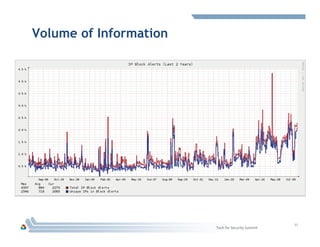
Volume of Information
Tech	
  for	
  Security	
  Summit	
  
11	
  
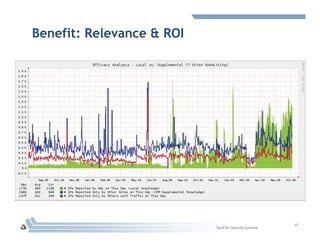
Benefit: Relevance & ROI
Tech	
  for	
  Security	
  Summit	
  
12	
  
We know collaboration is hard
§  Every	
  organizaHon	
  is	
  a	
  snow	
  flake	
  
–  B2B/collaboraHons	
  vary	
  
–  Blocking	
  the	
  wrong	
  thing	
  can	
  be	
  highly	
  disrupHve	
  
§  Legal	
  agreements	
  are	
  tricky	
  
–  DefiniHons	
  of	
  terms	
  can	
  vary	
  
•  What	
  does	
  MOU	
  mean	
  to	
  you?	
  ISA?	
  ToS?	
  etc.	
  
§  A5ribuHon	
  and	
  disclosure	
  concerns	
  
§  A5ack	
  vectors	
  change	
  
Tech	
  for	
  Security	
  Summit	
  
13	
  
Why are we here ?
§  We	
  believe	
  ...	
  
–  Cyber	
  threats	
  to	
  criHcal	
  infrastructure	
  exist	
  
–  CollaboraHon	
  and	
  collecHve	
  defense	
  are	
  essenHal	
  
–  DOE	
  Cyber	
  Fed	
  Model	
  (CFM)	
  can	
  be	
  part	
  of	
  the	
  soluHon	
  
§  We	
  want	
  to	
  ...	
  
–  Help	
  protect	
  our	
  country’s	
  criHcal	
  infrastructure	
  
–  Begin	
  a	
  pilot	
  to	
  assess	
  efficacy	
  in	
  electric	
  sector	
  
–  See	
  threat	
  overlap	
  between	
  electric	
  sector	
  and	
  DOE	
  
§  We	
  have	
  ...	
  
–  DOE	
  labs	
  willing	
  to	
  share	
  –	
  public-­‐private	
  sector	
  partnership	
  
–  Electric	
  sector	
  enHHes	
  which	
  have	
  expressed	
  interest	
  
–  Experience	
  in	
  collecHve	
  defense	
  
Tech	
  for	
  Security	
  Summit	
  
14	
  
Conclusions & Takeaways
§  Common	
  adversaries	
  exist	
  
and	
  are	
  acHve	
  
§  CollaboraHon	
  will	
  be	
  key	
  to	
  
future	
  cyber	
  defense	
  
§  The	
  DOE	
  Cyber	
  Fed	
  Model	
  
(CFM)	
  provides	
  collecHve	
  
defense	
  in	
  a	
  flexible,	
  site-­‐
controlled	
  manner	
  
§  CFM	
  can	
  help	
  maximize	
  
your	
  cyber	
  security	
  
resources	
  
15	
  
Tech	
  for	
  Security	
  Summit	
  
Questions ??
Tech	
  for	
  Security	
  Summit	
  
www.anl.gov/it/cfm	
  

Collaborative Threat Mitigation or (Collective Self Defense) by Scott Pinkerton, Argonne National Lab

  • 1.
    Collaborative Threat Mitigation or (CollectiveSelf Defense)   DOE’s  Cyber  Fed  Model  (CFM)      Sco5  Pinkerton   pinkerton@anl.gov   www.anl.gov/it/cfm  
  • 2.
    Agenda §  What  is  DOE’s  Cyber  Fed   Model   §  SubscripHon  vs.  parHcipaHon   §  Relevance  &  ROI   §  Why  are  we  here  ?   §  Conclusions  &  Takeaways   §  QuesHons   2   Tech  for  Security  Summit  
  • 3.
    Cyber Fed Model(CFM) is … §  A  near  real-­‐Hme  exchange   of  cyber  threat  informaHon   focused  on  the  reduc&on   and  mi&ga&on  of  cyber   security  risk  across  large   enterprises   –  Typically  every  300  second   –  AcHonable  –  blocking   –  Autonomic   –  Highly  Scalable     3   Tech  for  Security  Summit  
  • 4.
    Structured Threat Information § InformaHon  shared  uses  an   XML  syntax   –  Based  upon  IODEF  (RFC   5070)   –  Looking  to  support   OpenIOC  formats  in  the   future  for  sharing  malware   informaHon   §  InformaHon  focuses  on  IP,   DNS,  URL,  e-­‐mail,  hash   strings   4   Tech  for  Security  Summit  
  • 5.
    How Cyber FedModel (CFM) Works §  High  Level:  Client-­‐server  data  exchange   §  Reality:  Central  repositories  providing  access  via  web  service   –  Sites  control  who  can  see  the  data  they  upload  (by  PGP  key)   –  Sites  decide  how  to  use  data  they  download   §  Repository  accepts  encrypted  files  on  upload   –  Contents  may  be  any  format     –  Simply  export  from  a  third  party  tool,  encrypt,  and  upload   §  Output  comes  in  standardized  XML  format   –  Allows  for  predictability   –  Converters  can  translate  to  another  format   –  Scripts  can  convert  and  send  to  other  tools  inline   Tech  for  Security  Summit   5  
  • 6.
    High Level Architecture Tech  for  Security  Summit   6  
  • 7.
    Cyber Fed Model(CFM) maximizes local resources §  Premise  based  on  the  idea   of  local  detecHon  and  global   response   §  Enables  an  enterprise  to   focus  their  limited   resources  on  their  most   pressing  problems   –  A5acks  that  are  occurring   on  their  infrastructure  and   no  where  else   7   Tech  for  Security  Summit  
  • 8.
    Effective Cyber SecurityDefense for an Enterprise §  It  conHnues  to  be  a  hard  job     §  Doubly  so  for  those  supporHng  criHcal  infrastructure   §  Doesn’t  appear  to  be  gefng  any  easier;  mostly  harder     §  Increasing  skill  &  sophisHcaHon  of  the  bad  guys;  commodity   hacking  tools   Tech  for  Security  Summit   8  
  • 9.
    DOE’s Cyber FedModel is not … §  OpHmized  for  analysis  (the  transfer  of  “raw”  data)   §  Focused  on  OS  or  ApplicaHon   advisories  (vulnerabiliHes)   §  Sandboxing  or  other     §  Shared  alerts  require  someone   to  first  detect  the  threat   Tech  for  Security  Summit   9  
  • 10.
    Subscription vs. ActiveParticipation §  Can  you  just  subscribe  to  a  “feed”  of  hosHle  IP  addresses  and   just  download  them  ?   –  Sure,  there  are  a  growing  number  of  “reputaHonal”  subscripHon   services   –  But  will  they  be  RELEVANT  to  you  –  assuming  none  of  the   energy  owner/operators  are  contributors   10   Tech  for  Security  Summit   IP’s exploiting MS problem dujour IP’s exploiting Adobe problem dujour IP’s sending spam e-mail farming for username/PW IP’s sending spam e-mail farming for bank account IP’s probing for ssh servers IP’s looking to attack the Energy Infra.
  • 11.
    Volume of Information Tech  for  Security  Summit   11  
  • 12.
    Benefit: Relevance &ROI Tech  for  Security  Summit   12  
  • 13.
    We know collaborationis hard §  Every  organizaHon  is  a  snow  flake   –  B2B/collaboraHons  vary   –  Blocking  the  wrong  thing  can  be  highly  disrupHve   §  Legal  agreements  are  tricky   –  DefiniHons  of  terms  can  vary   •  What  does  MOU  mean  to  you?  ISA?  ToS?  etc.   §  A5ribuHon  and  disclosure  concerns   §  A5ack  vectors  change   Tech  for  Security  Summit   13  
  • 14.
    Why are wehere ? §  We  believe  ...   –  Cyber  threats  to  criHcal  infrastructure  exist   –  CollaboraHon  and  collecHve  defense  are  essenHal   –  DOE  Cyber  Fed  Model  (CFM)  can  be  part  of  the  soluHon   §  We  want  to  ...   –  Help  protect  our  country’s  criHcal  infrastructure   –  Begin  a  pilot  to  assess  efficacy  in  electric  sector   –  See  threat  overlap  between  electric  sector  and  DOE   §  We  have  ...   –  DOE  labs  willing  to  share  –  public-­‐private  sector  partnership   –  Electric  sector  enHHes  which  have  expressed  interest   –  Experience  in  collecHve  defense   Tech  for  Security  Summit   14  
  • 15.
    Conclusions & Takeaways § Common  adversaries  exist   and  are  acHve   §  CollaboraHon  will  be  key  to   future  cyber  defense   §  The  DOE  Cyber  Fed  Model   (CFM)  provides  collecHve   defense  in  a  flexible,  site-­‐ controlled  manner   §  CFM  can  help  maximize   your  cyber  security   resources   15   Tech  for  Security  Summit  
  • 16.
    Questions ?? Tech  for  Security  Summit   www.anl.gov/it/cfm