• The Colgate-Palmolive Company is an
American worldwide consumer products
company focused on the production,
distribution and provision of household,
health care and personal products.
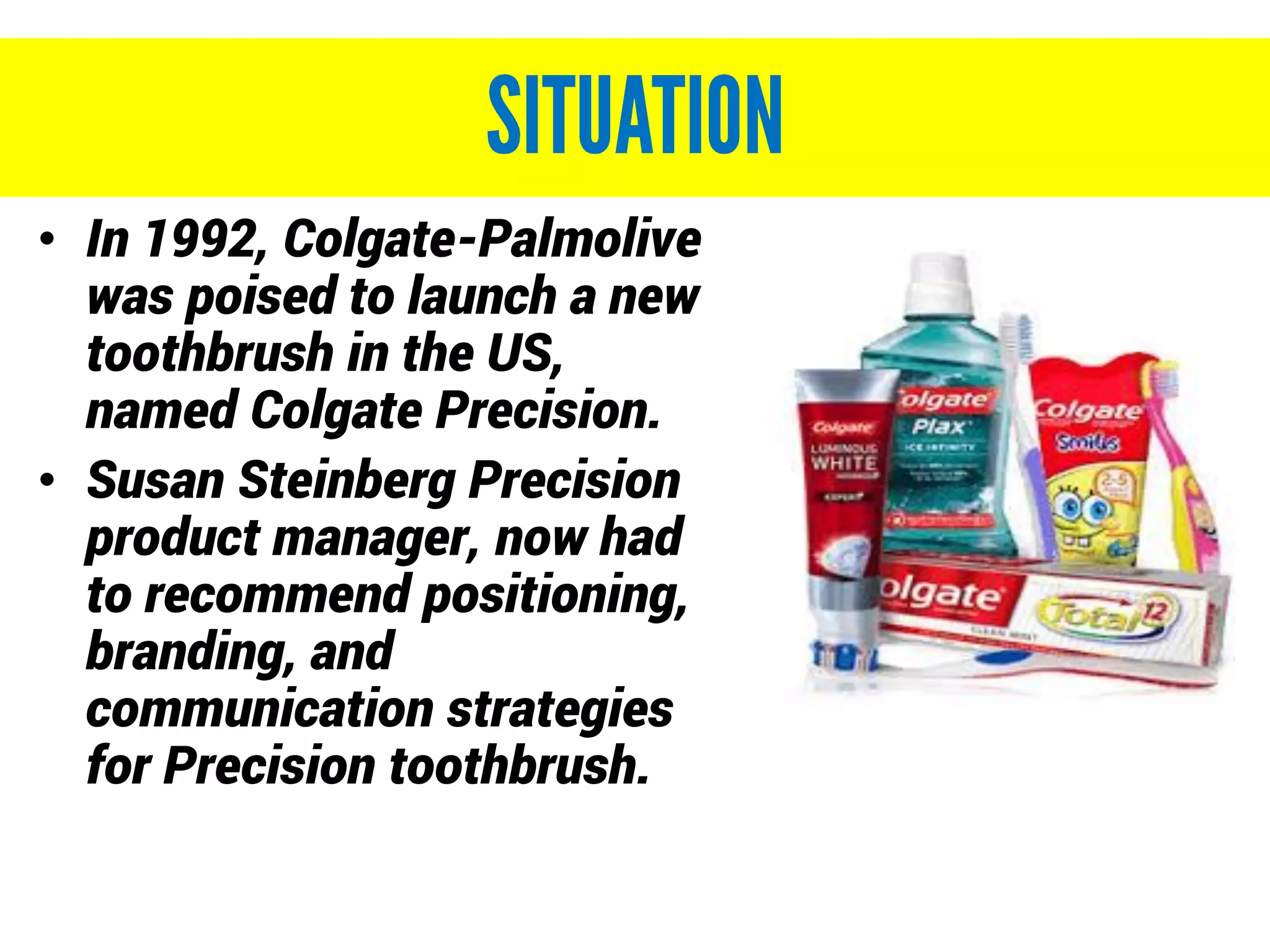
• In 1992, Colgate-Palmolive
was poised to launch a new
toothbrush in the US,
named Colgate Precision.
• Susan Steinberg Precision
product manager, now had
to recommend positioning,
branding, and
communication strategies
for Precision toothbrush.
• Developing marketing
mix for technologically
superior toothbrush to
faced a highly
competitive market with
substantial new product
activity.
• What should be the
marketing
strategies(Positioning
, Branding and
Communication
strategies) for the new
toothbrush-Colgate
Precision ?
Prior to finding solution we must first analyse
the US toothbrush market to understand the
market.
• In 1991, the U.S. Oral Care market was $2.9
billion in retail sales and had grown at an annual
rate of 6.1% since 1986.
• Toothpaste accounted for 46% of this market,
mouth rinses 24%, toothbrushes 15.5% , with
dental floss and other products making up the
remainder.
• Brand choice was based on features,
comfort and professional
recommendations.
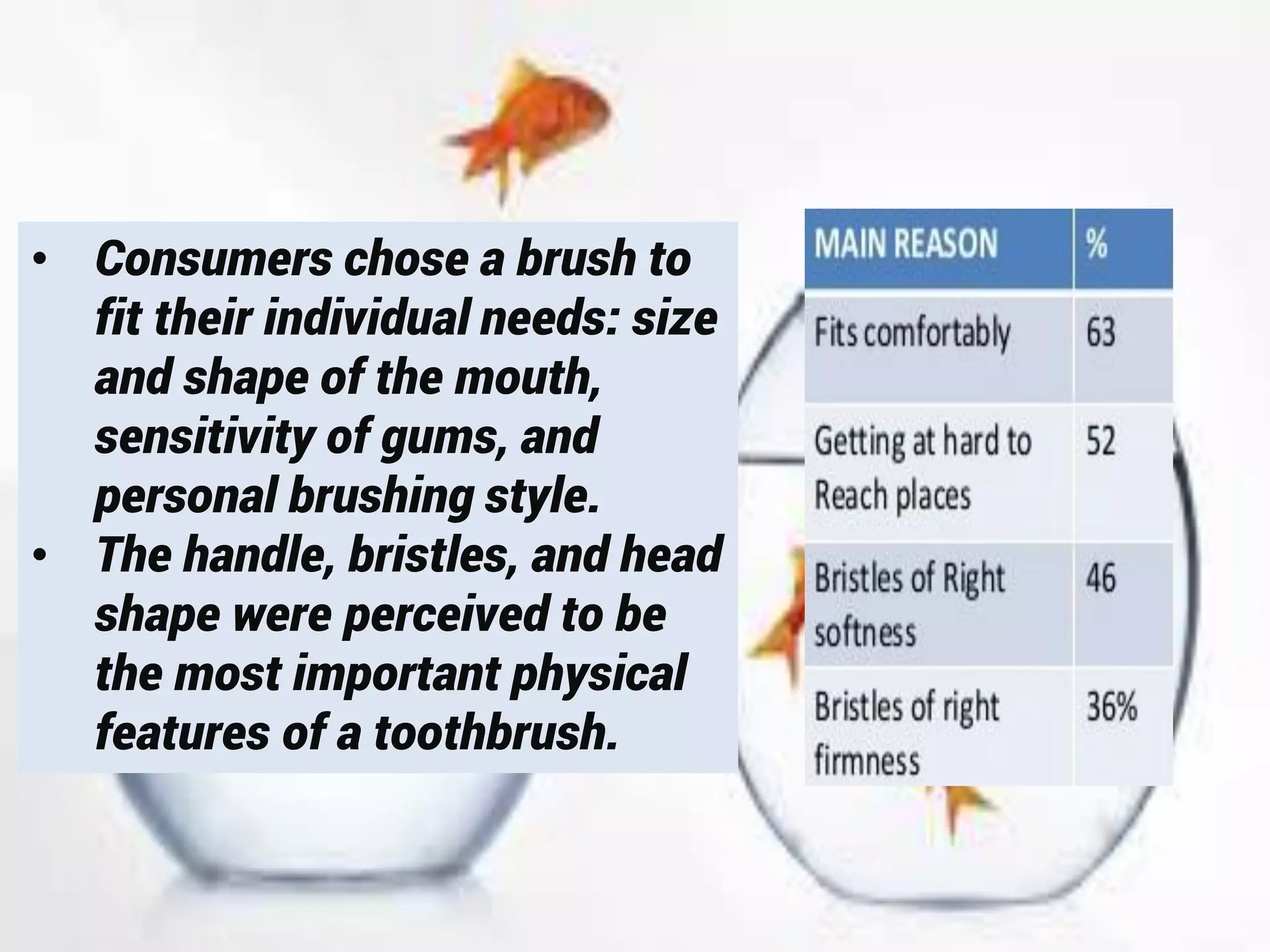
• Consumers chose a brush to
fit their individual needs: size
and shape of the mouth,
sensitivity of gums, and
personal brushing style.
• The handle, bristles, and head
shape were perceived to be
the most important physical
features of a toothbrush.
• Oral-B became market leader because of professional
endorsements and was known as “the dentist’s
toothbrush.”
• The Reach line by Johnson & Johnson (J&J) was
positioned as the toothbrush that enabled consumers
to brush in even the hardest-to-reach places, thereby
increasing the efficiency of brushing.
• Procter & Gamble (P&G) entered with Crest Complete
which claimed to have “the ability to reach between the
teeth up to 37% farther than leading flat brushes.”
• As the pace of new product introductions
quickened the advertising media expenditures
rose.
• Growing competition also increased the
frequency and value of consumer promotion
events.
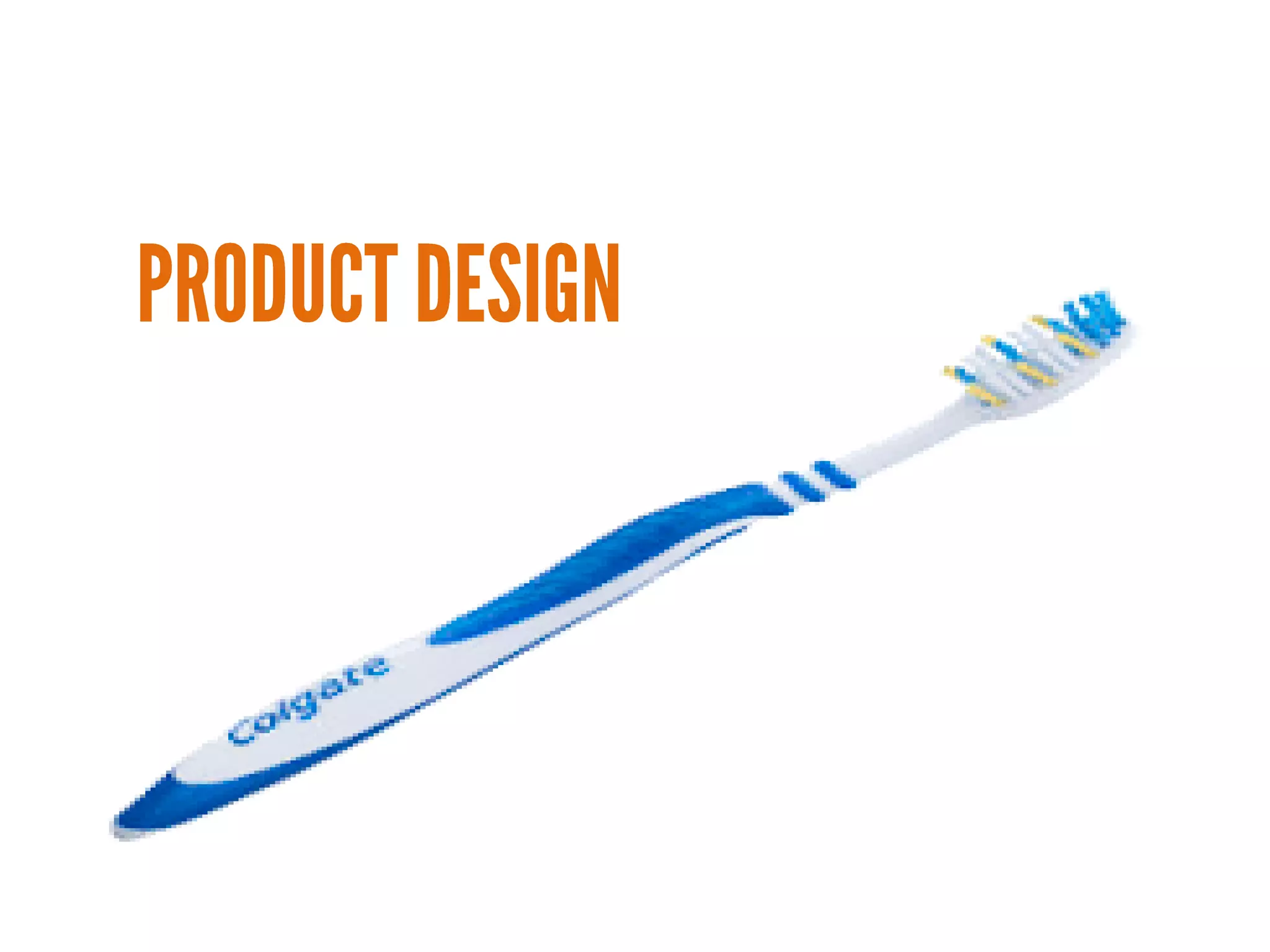
• The longer outer bristles cleaned around
the gum line.
• The long inner bristles cleaned between the
teeth.
• A superior ,technical, plaque removing
device.
• The shorter bristles cleaned the teeth
surface.
• The Brush achieved 35% increase in Plaque
removal compared to other leading
toothbrushes.
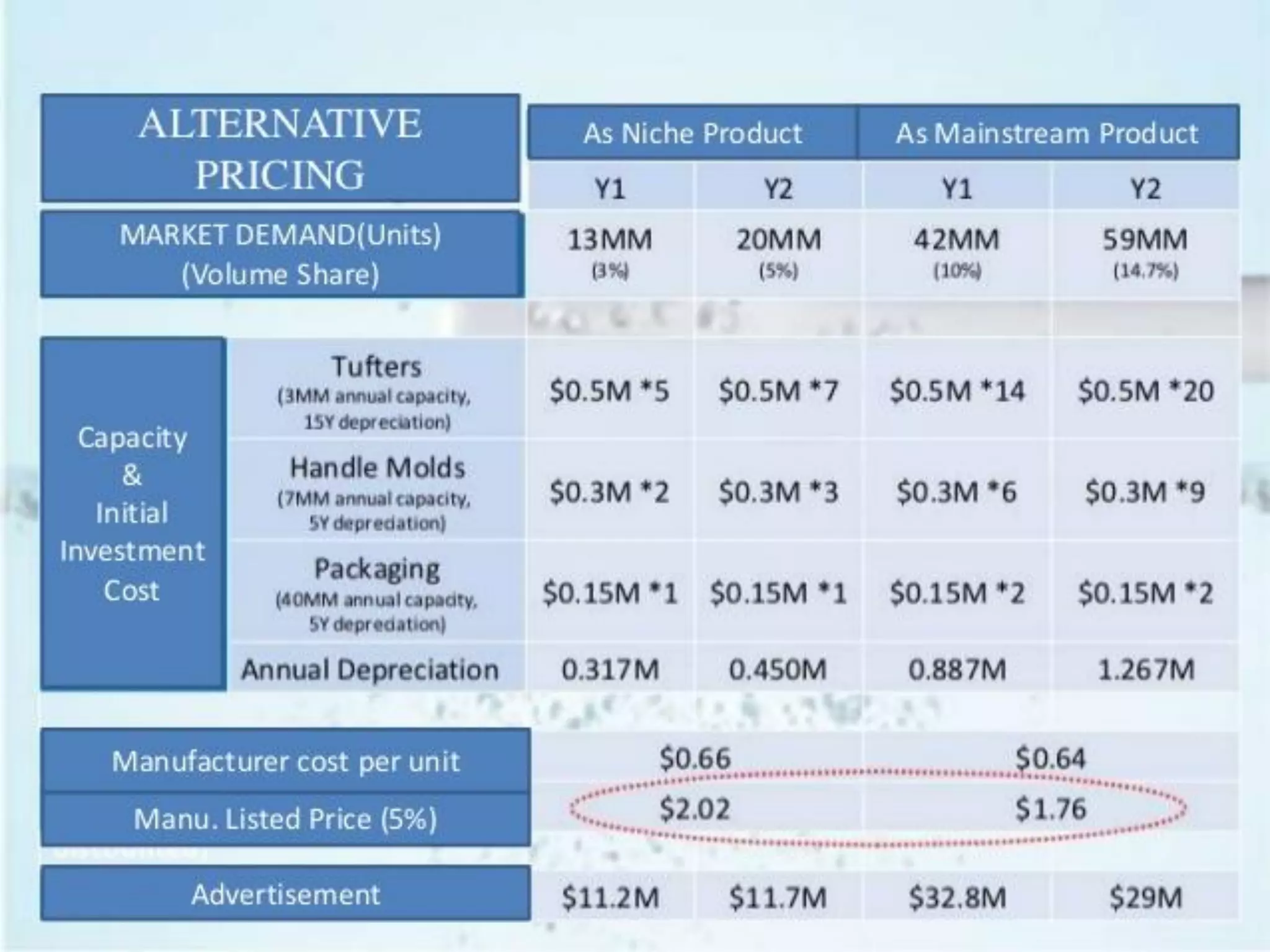
• When positioned as Niche
product ,it would target at
consumers concerned about
gum diseases.
• As such ,it could command a
15% price premium over
ORAL-B and would be
expected to capture 3% of the
U.S toothbrush market by the
end of 1st year following its
launch.
• No SKU’s Needed to be
dropped!
• If Precision is positioned as a
Mainstream brush, Precision
would capture 10% of the
market share at the end of 1st
year following its launch.(Very
high when compared with
Niche positioning)
• The volume shares when
positioned as mainstream
would be 10% in 1 year when
compared to 5% when
positioned as Niche product!
• Mainstream was more
appealing as it proclaimed
larger market share &
volume share at the end of
1 year after launch.
• Greater proportion of sales
would occur through mass
merchandisers and club
stores.
• Raised concerns about
‘CANNIBALIZATION’ of Colgate plus
and about pressure on Production
Schedules that had been developed
for Niche positioning.
• Production capacity increases
required 10months lead-resulting
in inadequate supply of product.
• Positioning Precision as a
mainstream product with 7 SKU’s
would probably require dropping
one or more existing SKUs.
• Executives believed that Product should
stand alone and the PRECISION brand
name should be emphasized.
• Stressing Precision as opposed to Colgate
would-limit the extent of Cannibalization
of Colgate plus.
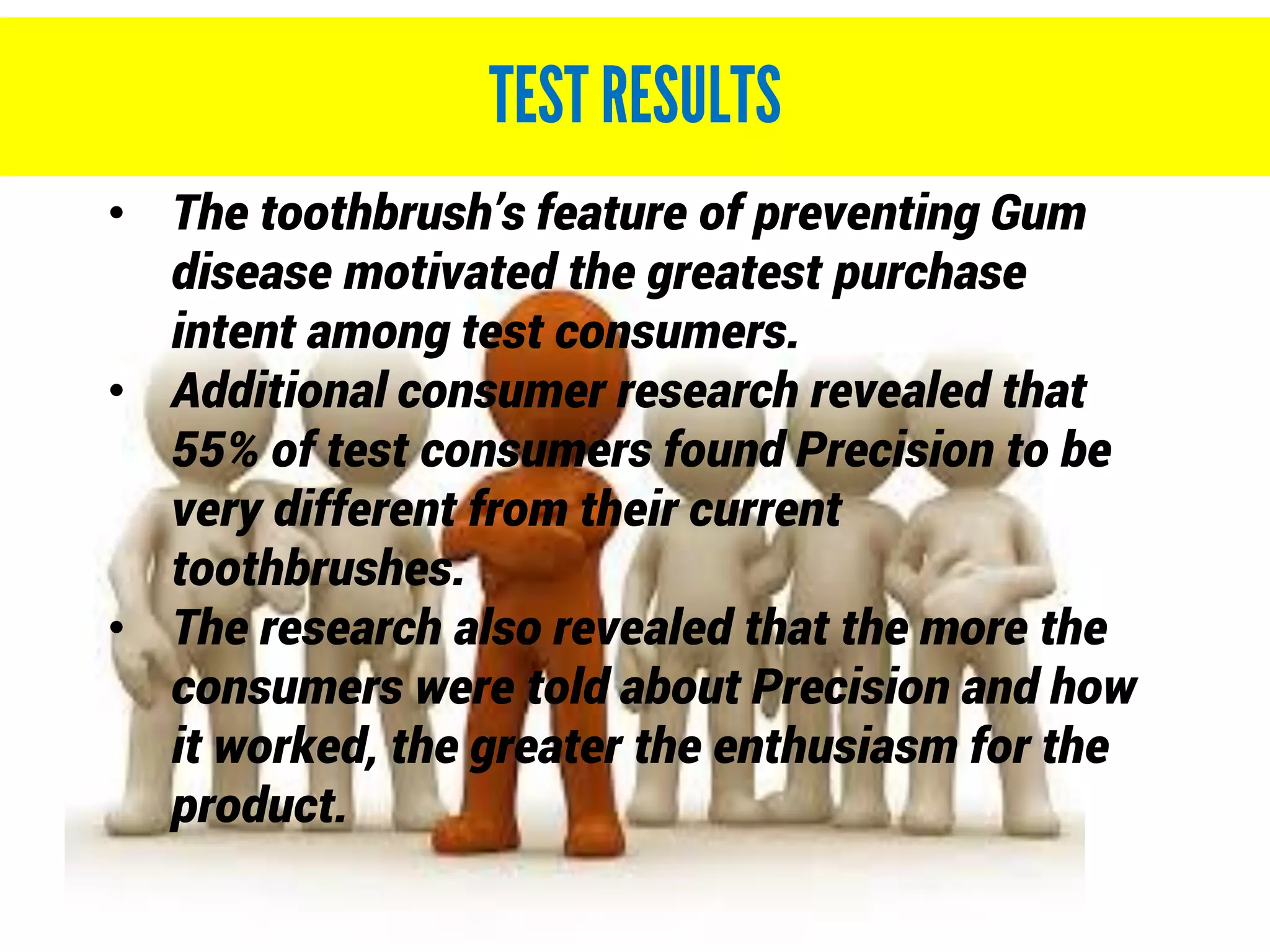
• The toothbrush’s feature of preventing Gum
disease motivated the greatest purchase
intent among test consumers.
• Additional consumer research revealed that
55% of test consumers found Precision to be
very different from their current
toothbrushes.
• The research also revealed that the more the
consumers were told about Precision and how
it worked, the greater the enthusiasm for the
product.
• However, the clichéd look of
the brush put the consumers
in dilemma.
• Also it was difficult to
translate the message of
greater plaque removal with
a broad consumer appeal,
since few consumers
acknowledged that they
might have gum disease.
COLGATE-PALMOLIVE should select mass positioning for
precision toothbrush.
• Majority of consumers tend to focus on technical
characteristics over the aesthetic functional features
which make Precision perfect choice for mass market.
• Positioning Precision as the best toothbrush on the
market as super premium brush with strong promotion
activities.
• Mainstream Product strategy will bring higher Net
Profit of $ 31 and $ 69.7 millions in the first and
second year respectively , which is $20 and $ 42
millions respectively.
• Investing a little more on Advertising and Promotion
would not do much harm as it shall give a head start to
this potential product.
• Since sampling would be critical to Precision’s success,
it would be better to use Dentists to sample consumers
since professional endorsements were more credible.
This presentation was created by Sudeepta Mohanta under the
guidance of Prof. Sameer Mathur,IIM L .

Colgate Precise :A Harvard case study

  • 3.
    • The Colgate-PalmoliveCompany is an American worldwide consumer products company focused on the production, distribution and provision of household, health care and personal products.
  • 4.
    • In 1992,Colgate-Palmolive was poised to launch a new toothbrush in the US, named Colgate Precision. • Susan Steinberg Precision product manager, now had to recommend positioning, branding, and communication strategies for Precision toothbrush.
  • 5.
    • Developing marketing mixfor technologically superior toothbrush to faced a highly competitive market with substantial new product activity.
  • 6.
    • What shouldbe the marketing strategies(Positioning , Branding and Communication strategies) for the new toothbrush-Colgate Precision ?
  • 7.
    Prior to findingsolution we must first analyse the US toothbrush market to understand the market.
  • 8.
    • In 1991,the U.S. Oral Care market was $2.9 billion in retail sales and had grown at an annual rate of 6.1% since 1986. • Toothpaste accounted for 46% of this market, mouth rinses 24%, toothbrushes 15.5% , with dental floss and other products making up the remainder.
  • 13.
    • Brand choicewas based on features, comfort and professional recommendations.
  • 15.
    • Consumers chosea brush to fit their individual needs: size and shape of the mouth, sensitivity of gums, and personal brushing style. • The handle, bristles, and head shape were perceived to be the most important physical features of a toothbrush.
  • 17.
    • Oral-B becamemarket leader because of professional endorsements and was known as “the dentist’s toothbrush.” • The Reach line by Johnson & Johnson (J&J) was positioned as the toothbrush that enabled consumers to brush in even the hardest-to-reach places, thereby increasing the efficiency of brushing. • Procter & Gamble (P&G) entered with Crest Complete which claimed to have “the ability to reach between the teeth up to 37% farther than leading flat brushes.”
  • 19.
    • As thepace of new product introductions quickened the advertising media expenditures rose. • Growing competition also increased the frequency and value of consumer promotion events.
  • 21.
    • The longerouter bristles cleaned around the gum line. • The long inner bristles cleaned between the teeth. • A superior ,technical, plaque removing device. • The shorter bristles cleaned the teeth surface. • The Brush achieved 35% increase in Plaque removal compared to other leading toothbrushes.
  • 24.
    • When positionedas Niche product ,it would target at consumers concerned about gum diseases. • As such ,it could command a 15% price premium over ORAL-B and would be expected to capture 3% of the U.S toothbrush market by the end of 1st year following its launch. • No SKU’s Needed to be dropped! • If Precision is positioned as a Mainstream brush, Precision would capture 10% of the market share at the end of 1st year following its launch.(Very high when compared with Niche positioning) • The volume shares when positioned as mainstream would be 10% in 1 year when compared to 5% when positioned as Niche product!
  • 25.
    • Mainstream wasmore appealing as it proclaimed larger market share & volume share at the end of 1 year after launch. • Greater proportion of sales would occur through mass merchandisers and club stores. • Raised concerns about ‘CANNIBALIZATION’ of Colgate plus and about pressure on Production Schedules that had been developed for Niche positioning. • Production capacity increases required 10months lead-resulting in inadequate supply of product. • Positioning Precision as a mainstream product with 7 SKU’s would probably require dropping one or more existing SKUs.
  • 27.
    • Executives believedthat Product should stand alone and the PRECISION brand name should be emphasized. • Stressing Precision as opposed to Colgate would-limit the extent of Cannibalization of Colgate plus.
  • 28.
    • The toothbrush’sfeature of preventing Gum disease motivated the greatest purchase intent among test consumers. • Additional consumer research revealed that 55% of test consumers found Precision to be very different from their current toothbrushes. • The research also revealed that the more the consumers were told about Precision and how it worked, the greater the enthusiasm for the product.
  • 29.
    • However, theclichéd look of the brush put the consumers in dilemma. • Also it was difficult to translate the message of greater plaque removal with a broad consumer appeal, since few consumers acknowledged that they might have gum disease.
  • 31.
    COLGATE-PALMOLIVE should selectmass positioning for precision toothbrush. • Majority of consumers tend to focus on technical characteristics over the aesthetic functional features which make Precision perfect choice for mass market. • Positioning Precision as the best toothbrush on the market as super premium brush with strong promotion activities.
  • 33.
    • Mainstream Productstrategy will bring higher Net Profit of $ 31 and $ 69.7 millions in the first and second year respectively , which is $20 and $ 42 millions respectively.
  • 34.
    • Investing alittle more on Advertising and Promotion would not do much harm as it shall give a head start to this potential product. • Since sampling would be critical to Precision’s success, it would be better to use Dentists to sample consumers since professional endorsements were more credible.
  • 36.
    This presentation wascreated by Sudeepta Mohanta under the guidance of Prof. Sameer Mathur,IIM L .