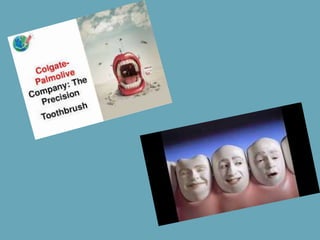
COLGATE PALMOLIVE COMPANY
THE PRECISION TOOTHBRUSH
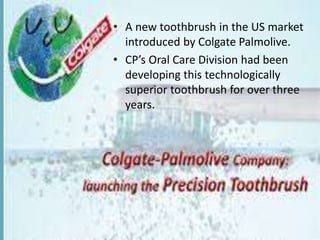
• A new toothbrush in the US market
introduced by Colgate Palmolive.
• CP’s Oral Care Division had been
developing this technologically
superior toothbrush for over three
years.
Company Background
• CP was a global leader in household and
personal care products in 1991.
• CP’s five-year plan for 1991 to 1995
emphasized new product launches and entry
into new geographic markets.
• 275 new products were introduced worldwide
in 1991.
Company Background-cont...
• Reuben Mark, CP’s C.E.O since 1984, had been
widely praised for his leadership in turning the
company into a lean and profitable one.
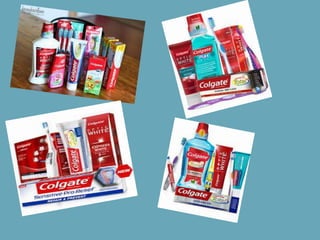
Oral care products
• A team of 170 CP researchers worked on new
technologies for oral care products.
TOOTHBRUSH MARKET
• As early as 3000 B.C- ancient Egyptians used
toothbrushes fashioned from twigs.
• In the twentieth century, a major design advance
occurred in 1938 with the launch of Dr. West’s
Miracle Tuft Toothbrush, the first nylon-bristle
brush.
• In the late 1940s, Oral-B began selling a soft-
bristle brush which was better for the gums, and
in 1961 Broxodent launched the first electric
toothbrush.
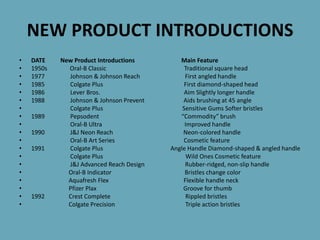
NEW PRODUCT INTRODUCTIONS
• DATE New Product Introductions Main Feature
• 1950s Oral-B Classic Traditional square head
• 1977 Johnson & Johnson Reach First angled handle
• 1985 Colgate Plus First diamond-shaped head
• 1986 Lever Bros. Aim Slightly longer handle
• 1988 Johnson & Johnson Prevent Aids brushing at 45 angle
• Colgate Plus Sensitive Gums Softer bristles
• 1989 Pepsodent “Commodity” brush
• Oral-B Ultra Improved handle
• 1990 J&J Neon Reach Neon-colored handle
• Oral-B Art Series Cosmetic feature
• 1991 Colgate Plus Angle Handle Diamond-shaped & angled handle
• Colgate Plus Wild Ones Cosmetic feature
• J&J Advanced Reach Design Rubber-ridged, non-slip handle
• Oral-B Indicator Bristles change color
• Aquafresh Flex Flexible handle neck
• Pfizer Plax Groove for thumb
• 1992 Crest Complete Rippled bristles
• Colgate Precision Triple action bristles
PROBLEMS FACED
• Toothbrush market is a century old but is now
facing many changes.
• Market is emerging from value and premium
range to a third category of “super-premium”
range.
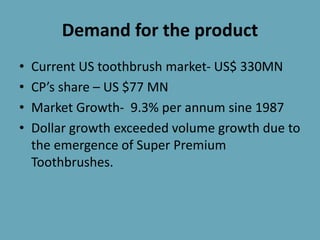
Demand for the product
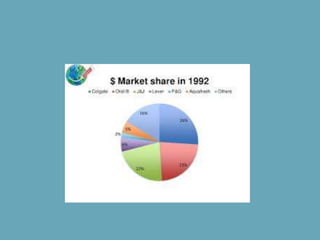
• Current US toothbrush market- US$ 330MN
• CP’s share – US $77 MN
• Market Growth- 9.3% per annum sine 1987
• Dollar growth exceeded volume growth due to
the emergence of Super Premium
Toothbrushes.
ADVERTISEMENT AND PROMOTION
• In the toothpaste category, it was hard to
increase primary demand, so new products
tended to steal sales from existing products.
• In the case of toothbrushes, however,
increased advertising and promotion
enhanced the category’s visibility which, in
turn, seemed to fuel consumer demand.
ENVIRONMENTAL CLIMATE
ECONOMIC
• New entrants appeared in the early 90’s.
• Positioned in the super-premium segment
POLITICAL
• Relatively insignificant
ENVIRONMENTAL CLIMATE-Cont…
TECHNOLOGICAL
• The new products in the late 1990’s .
• Design of the handle and head of the
toothbrush
• The action of the bristles
• Super premium toothbrushes.
SOCIAL
• Aesthetic appeal in the late 1990’s
• New technological innovations
• Additional performance enhancement –gum
strengthening for the baby boom population
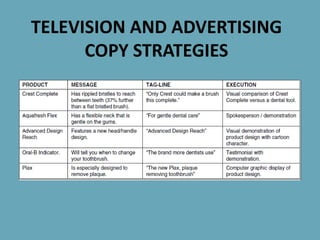
TELEVISION AND ADVERTISING
COPY STRATEGIES
PRODUCT
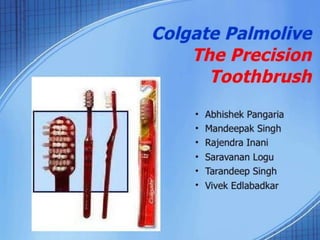
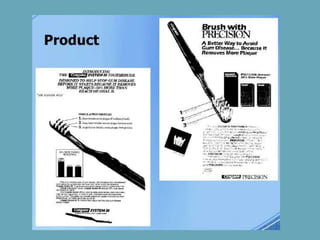
• Using infrared motion analysis, CP developed
a unique brush with bristles of three different
orientation and length.
• This technological innovation and
performance made the brand to compete with
the other leading brands.
POSITIONING
• Steinberg believed that with a niche
positioning, Precision retail sales would
represent 3% volume share of the toothbrush
market in year 1 and 5% in year 2.
• With a mainstream positioning, these volume
shares would be 10% in year 1 and 14.7% in
year 2.
• Total category unit volumes were estimated at
268 million in 1993 and 300 million in 1994.
CONSUMER PROMOTION
• A conflict arose in naming the product with
the colgate attached or the brand name by
itself.
• The company’s notion in creating brand equity
urged the need to use the name colgate in
front of it.
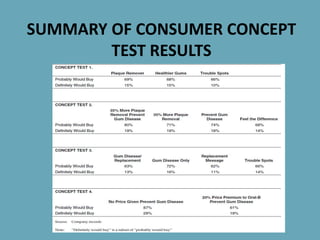
SUMMARY OF CONSUMER CONCEPT
TEST RESULTS
Sameer Mathur
Indian Institute of Management,
Lucknow
Marketing Professor 2013 –
Marketing Professor 2009 – 2013
Ph.D. and M.S. (Marketing) 2003 – 2009
M Darsini Meena,
PSG COLLEGE OF TECHNOLOGY,
COIMBATORE.

Colgate palmolive

  • 1.
    COLGATE PALMOLIVE COMPANY THEPRECISION TOOTHBRUSH
  • 2.
    • A newtoothbrush in the US market introduced by Colgate Palmolive. • CP’s Oral Care Division had been developing this technologically superior toothbrush for over three years.
  • 4.
    Company Background • CPwas a global leader in household and personal care products in 1991. • CP’s five-year plan for 1991 to 1995 emphasized new product launches and entry into new geographic markets. • 275 new products were introduced worldwide in 1991.
  • 5.
    Company Background-cont... • ReubenMark, CP’s C.E.O since 1984, had been widely praised for his leadership in turning the company into a lean and profitable one.
  • 7.
    Oral care products •A team of 170 CP researchers worked on new technologies for oral care products.
  • 9.
    TOOTHBRUSH MARKET • Asearly as 3000 B.C- ancient Egyptians used toothbrushes fashioned from twigs. • In the twentieth century, a major design advance occurred in 1938 with the launch of Dr. West’s Miracle Tuft Toothbrush, the first nylon-bristle brush. • In the late 1940s, Oral-B began selling a soft- bristle brush which was better for the gums, and in 1961 Broxodent launched the first electric toothbrush.
  • 10.
    NEW PRODUCT INTRODUCTIONS •DATE New Product Introductions Main Feature • 1950s Oral-B Classic Traditional square head • 1977 Johnson & Johnson Reach First angled handle • 1985 Colgate Plus First diamond-shaped head • 1986 Lever Bros. Aim Slightly longer handle • 1988 Johnson & Johnson Prevent Aids brushing at 45 angle • Colgate Plus Sensitive Gums Softer bristles • 1989 Pepsodent “Commodity” brush • Oral-B Ultra Improved handle • 1990 J&J Neon Reach Neon-colored handle • Oral-B Art Series Cosmetic feature • 1991 Colgate Plus Angle Handle Diamond-shaped & angled handle • Colgate Plus Wild Ones Cosmetic feature • J&J Advanced Reach Design Rubber-ridged, non-slip handle • Oral-B Indicator Bristles change color • Aquafresh Flex Flexible handle neck • Pfizer Plax Groove for thumb • 1992 Crest Complete Rippled bristles • Colgate Precision Triple action bristles
  • 11.
    PROBLEMS FACED • Toothbrushmarket is a century old but is now facing many changes. • Market is emerging from value and premium range to a third category of “super-premium” range.
  • 12.
    Demand for theproduct • Current US toothbrush market- US$ 330MN • CP’s share – US $77 MN • Market Growth- 9.3% per annum sine 1987 • Dollar growth exceeded volume growth due to the emergence of Super Premium Toothbrushes.
  • 15.
    ADVERTISEMENT AND PROMOTION •In the toothpaste category, it was hard to increase primary demand, so new products tended to steal sales from existing products. • In the case of toothbrushes, however, increased advertising and promotion enhanced the category’s visibility which, in turn, seemed to fuel consumer demand.
  • 18.
    ENVIRONMENTAL CLIMATE ECONOMIC • Newentrants appeared in the early 90’s. • Positioned in the super-premium segment POLITICAL • Relatively insignificant
  • 19.
    ENVIRONMENTAL CLIMATE-Cont… TECHNOLOGICAL • Thenew products in the late 1990’s . • Design of the handle and head of the toothbrush • The action of the bristles • Super premium toothbrushes.
  • 20.
    SOCIAL • Aesthetic appealin the late 1990’s • New technological innovations • Additional performance enhancement –gum strengthening for the baby boom population
  • 21.
  • 22.
    PRODUCT • Using infraredmotion analysis, CP developed a unique brush with bristles of three different orientation and length. • This technological innovation and performance made the brand to compete with the other leading brands.
  • 23.
    POSITIONING • Steinberg believedthat with a niche positioning, Precision retail sales would represent 3% volume share of the toothbrush market in year 1 and 5% in year 2. • With a mainstream positioning, these volume shares would be 10% in year 1 and 14.7% in year 2. • Total category unit volumes were estimated at 268 million in 1993 and 300 million in 1994.
  • 24.
    CONSUMER PROMOTION • Aconflict arose in naming the product with the colgate attached or the brand name by itself. • The company’s notion in creating brand equity urged the need to use the name colgate in front of it.
  • 26.
    SUMMARY OF CONSUMERCONCEPT TEST RESULTS
  • 27.
    Sameer Mathur Indian Instituteof Management, Lucknow Marketing Professor 2013 – Marketing Professor 2009 – 2013 Ph.D. and M.S. (Marketing) 2003 – 2009 M Darsini Meena, PSG COLLEGE OF TECHNOLOGY, COIMBATORE.