Coiled Tubing
Structure & Applications
2
Introduction
• What is Coiled Tubing?
• Definition
• CT diameter; 0.75 – 4”
• Raw material
• Reel length; 4,000 – 25,000’
• History of Coiled Tubing
• 1944….”PLUTO”
• 1960’s…. first fully functional CT unit
• 1970’s -1985…. CT developed, 8,500’ ,¾”
3
Key Elements of a CT Unit
• Reel
• Injector Head
• Control Cabin
• Power Pack
4
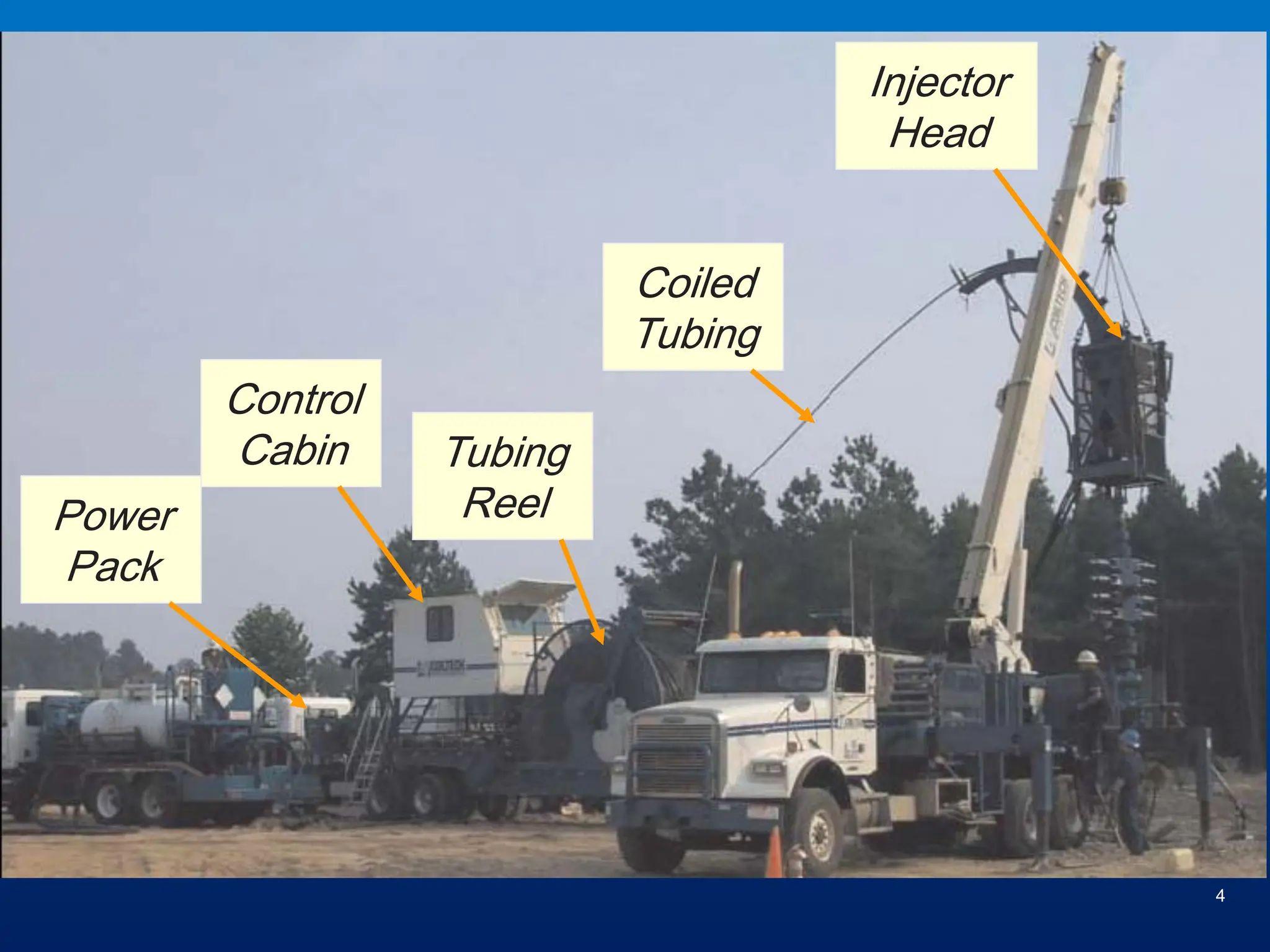
Coiled
Tubing
Tubing
Reel
Control
Cabin
Power
Pack
Injector
Head
5
Well Control Equipment
• BOP topped with a stripper
• BOP rams
• Blind ram
• Shear ram
• Slip ram
• Pipe ram
• BOP types
• Single
• Double
• Quad
6
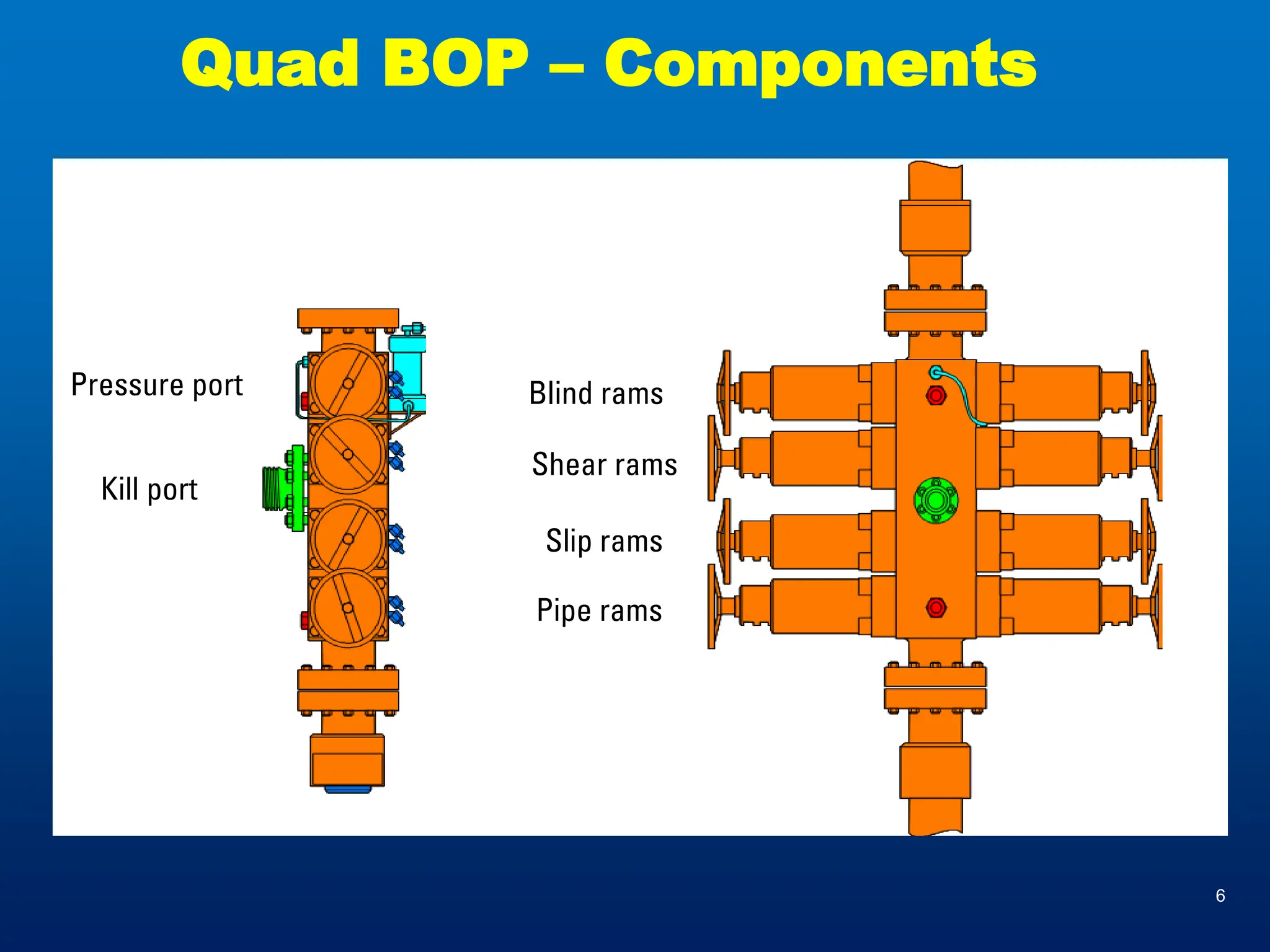
Pressure port
Kill port
Blind rams
Shear rams
Slip rams
Pipe rams
Quad BOP – Components
7
Technical Challenges
• three technical challenges had to be
overcome:
• CT string…
• injector head…
• stripper or packoff device….
8
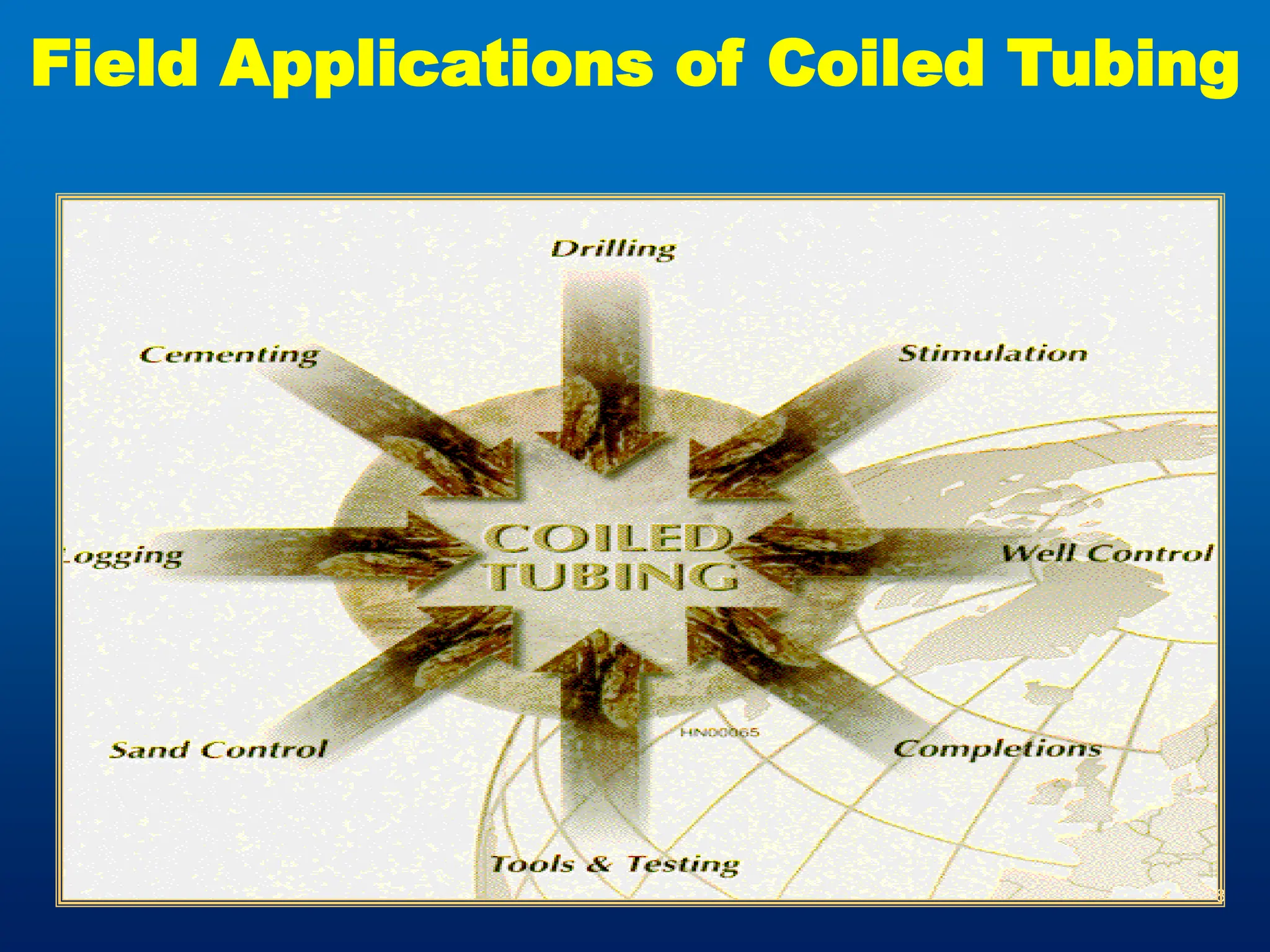
Field Applications of Coiled Tubing
9
Common Applications
• Washing Sand and Fill
• Scale Removal
• Unloading with Nitrogen
• Stimulation and Chemical Treatments
• Remedial Cementing
• Fishing
10
Less Common Applications
• Drilling
• Wireline Logging
• Completions
11
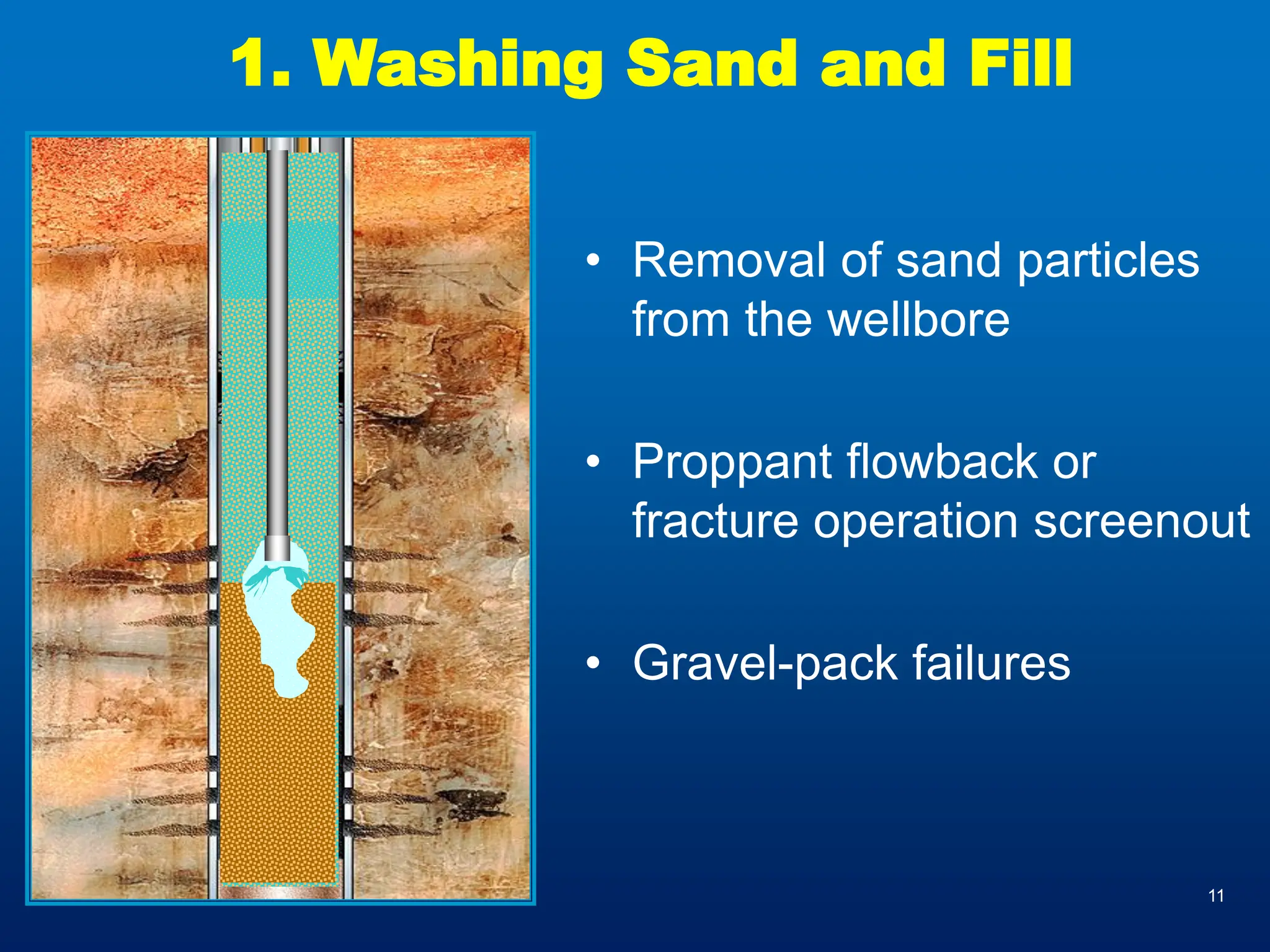
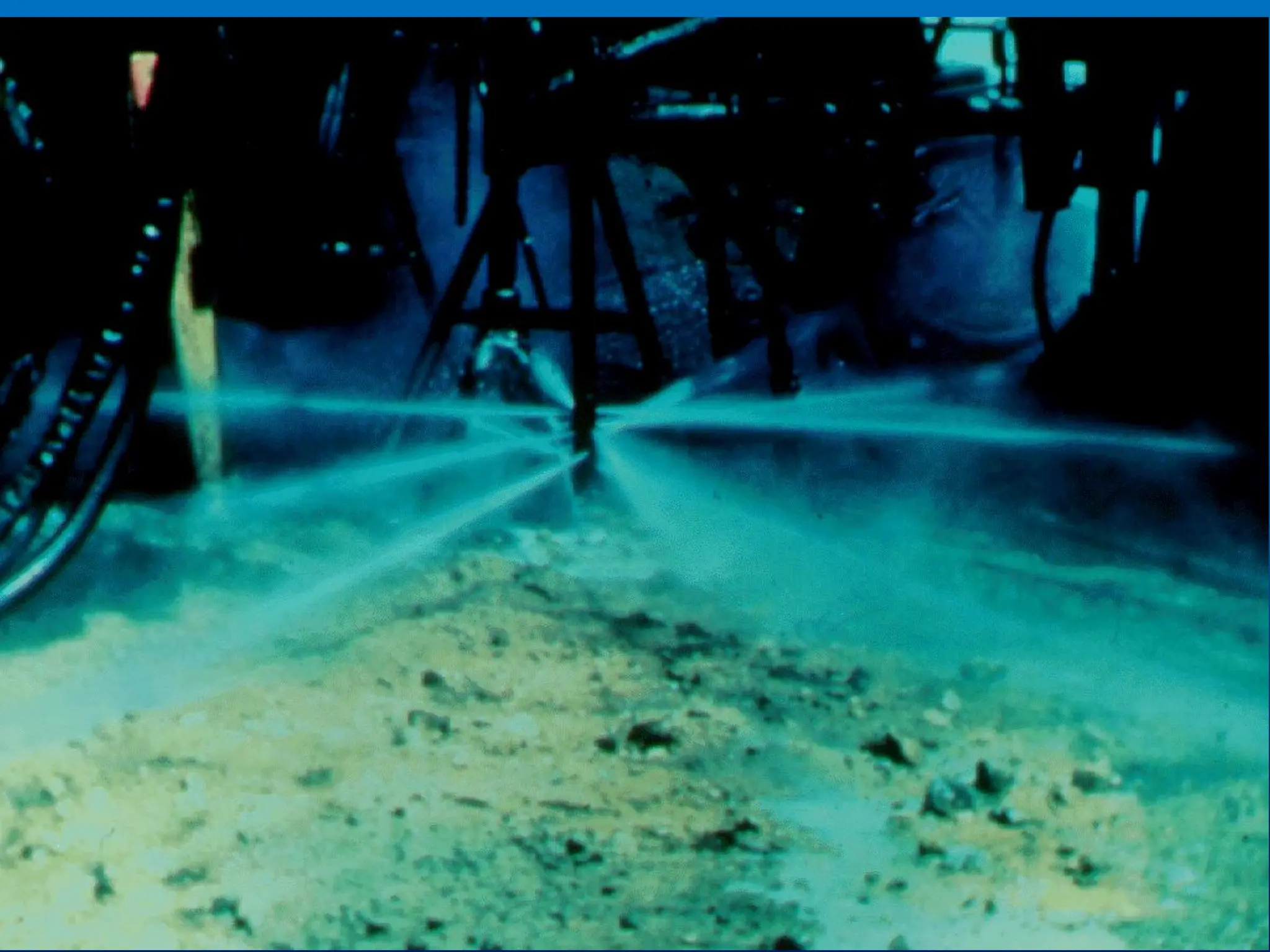
1. Washing Sand and Fill
• Removal of sand particles
from the wellbore
• Proppant flowback or
fracture operation screenout
• Gravel-pack failures
12
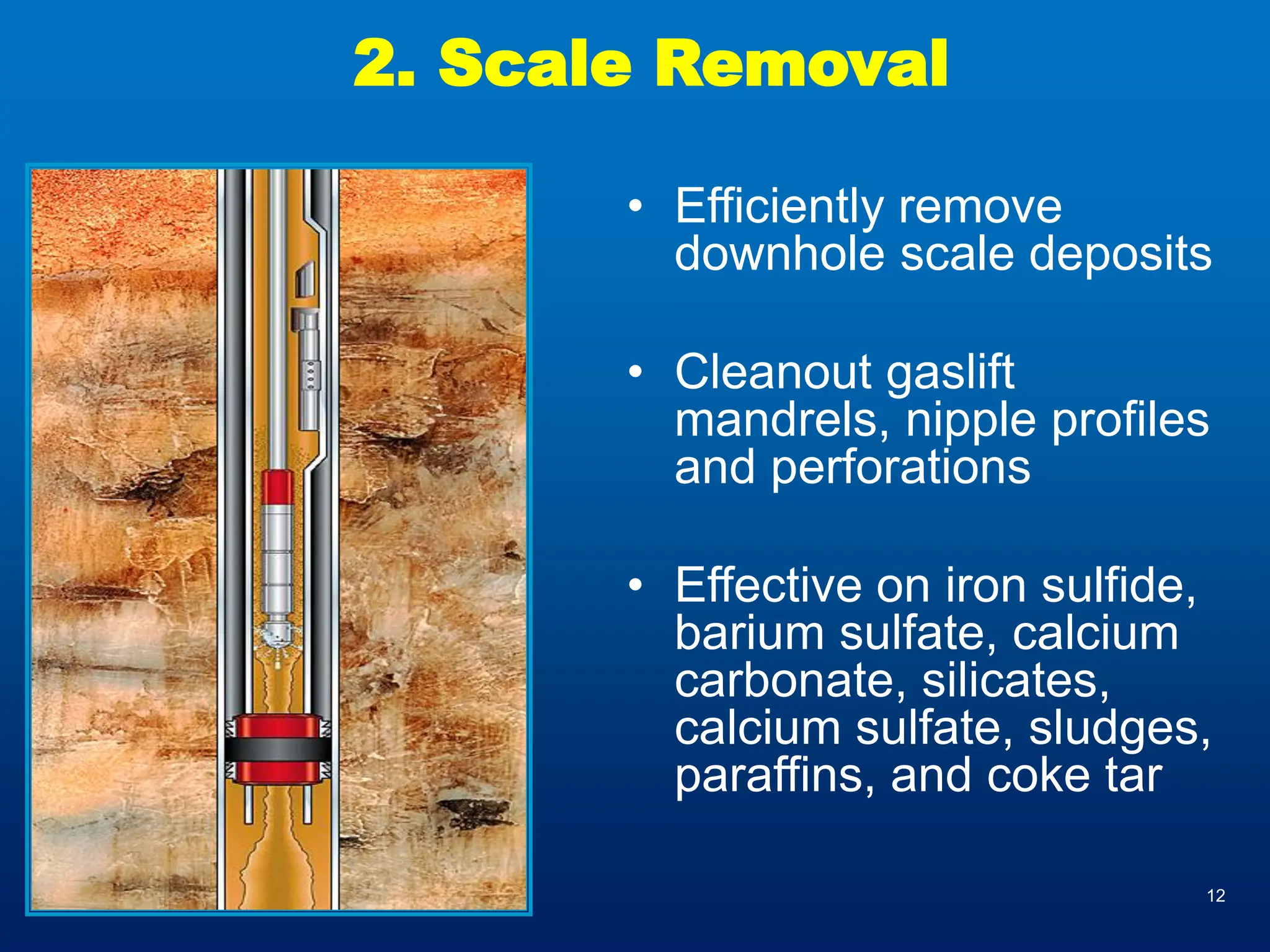
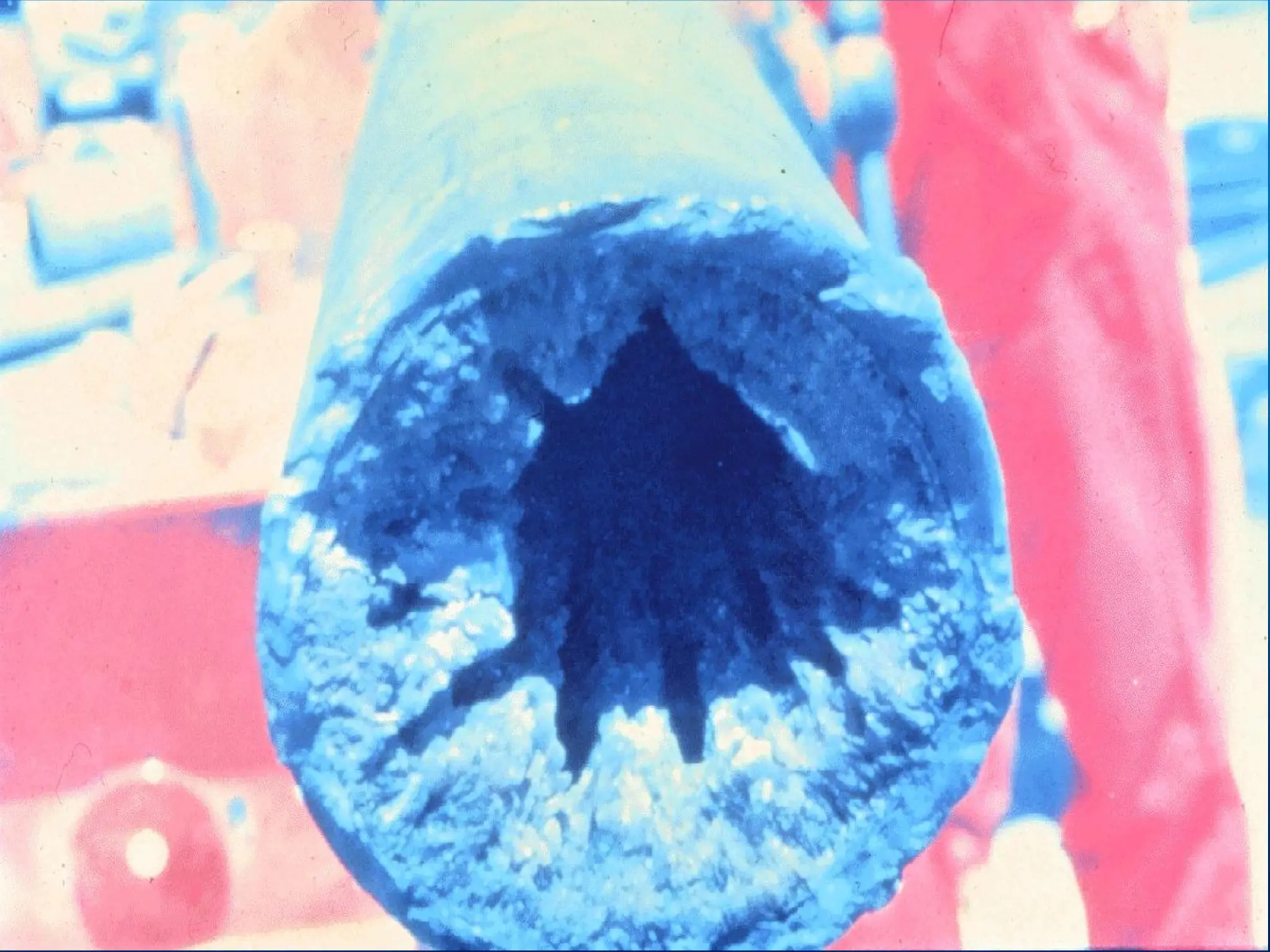
2. Scale Removal
• Efficiently remove
downhole scale deposits
• Cleanout gaslift
mandrels, nipple profiles
and perforations
• Effective on iron sulfide,
barium sulfate, calcium
carbonate, silicates,
calcium sulfate, sludges,
paraffins, and coke tar
13
14
15
16
17
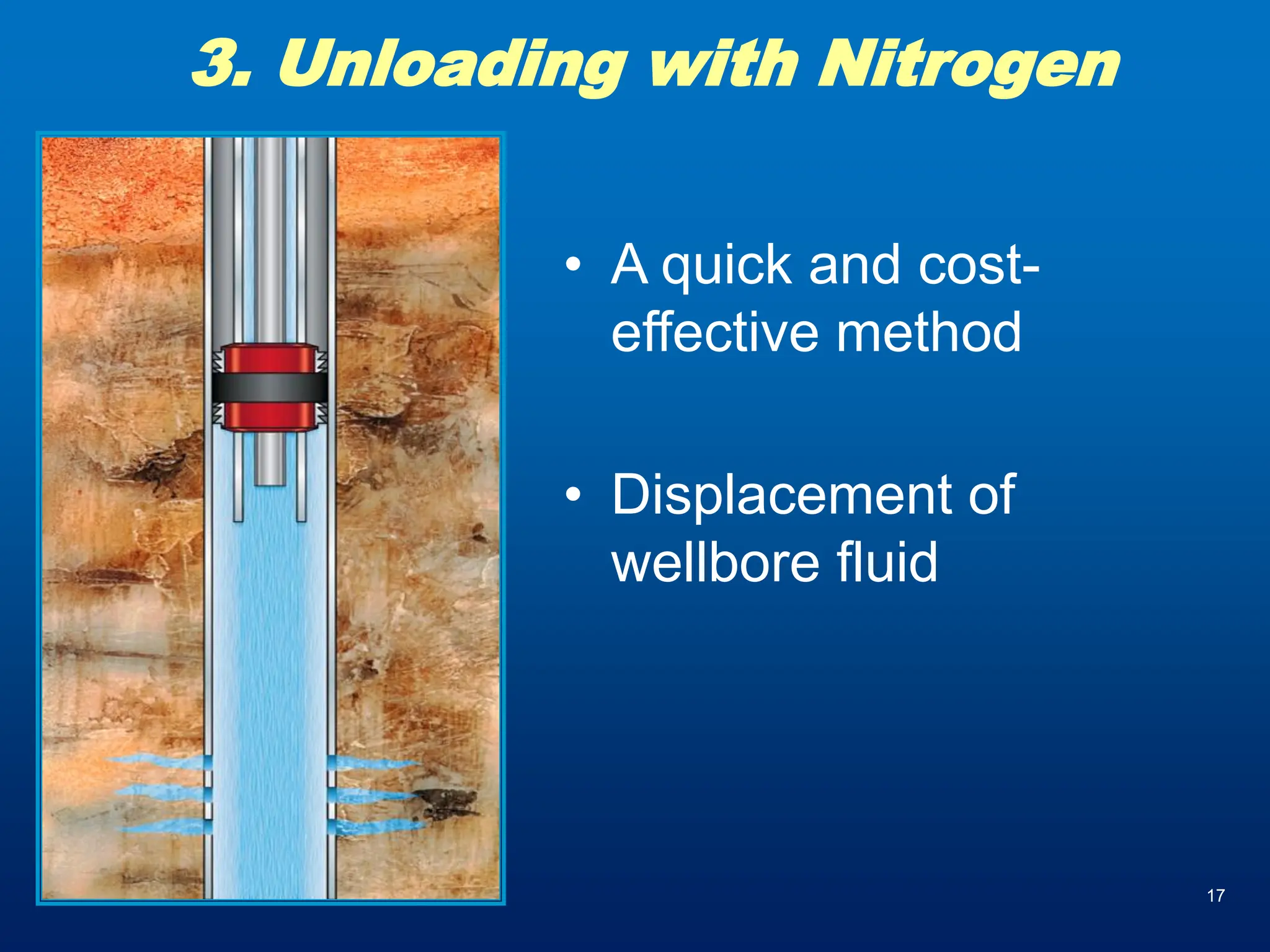
3. Unloading with Nitrogen
• A quick and cost-
effective method
• Displacement of
wellbore fluid
18
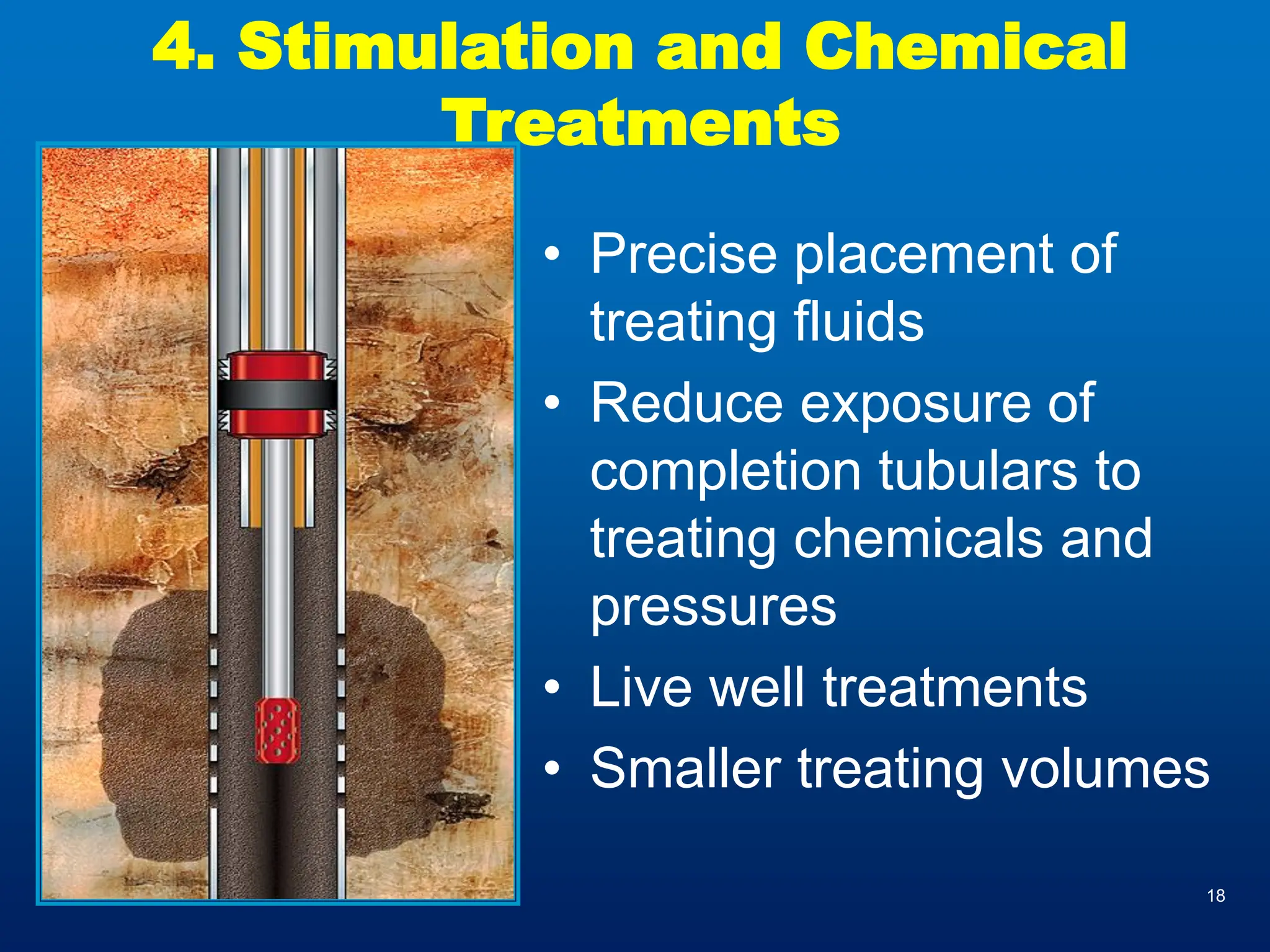
4. Stimulation and Chemical
Treatments
• Precise placement of
treating fluids
• Reduce exposure of
completion tubulars to
treating chemicals and
pressures
• Live well treatments
• Smaller treating volumes
19
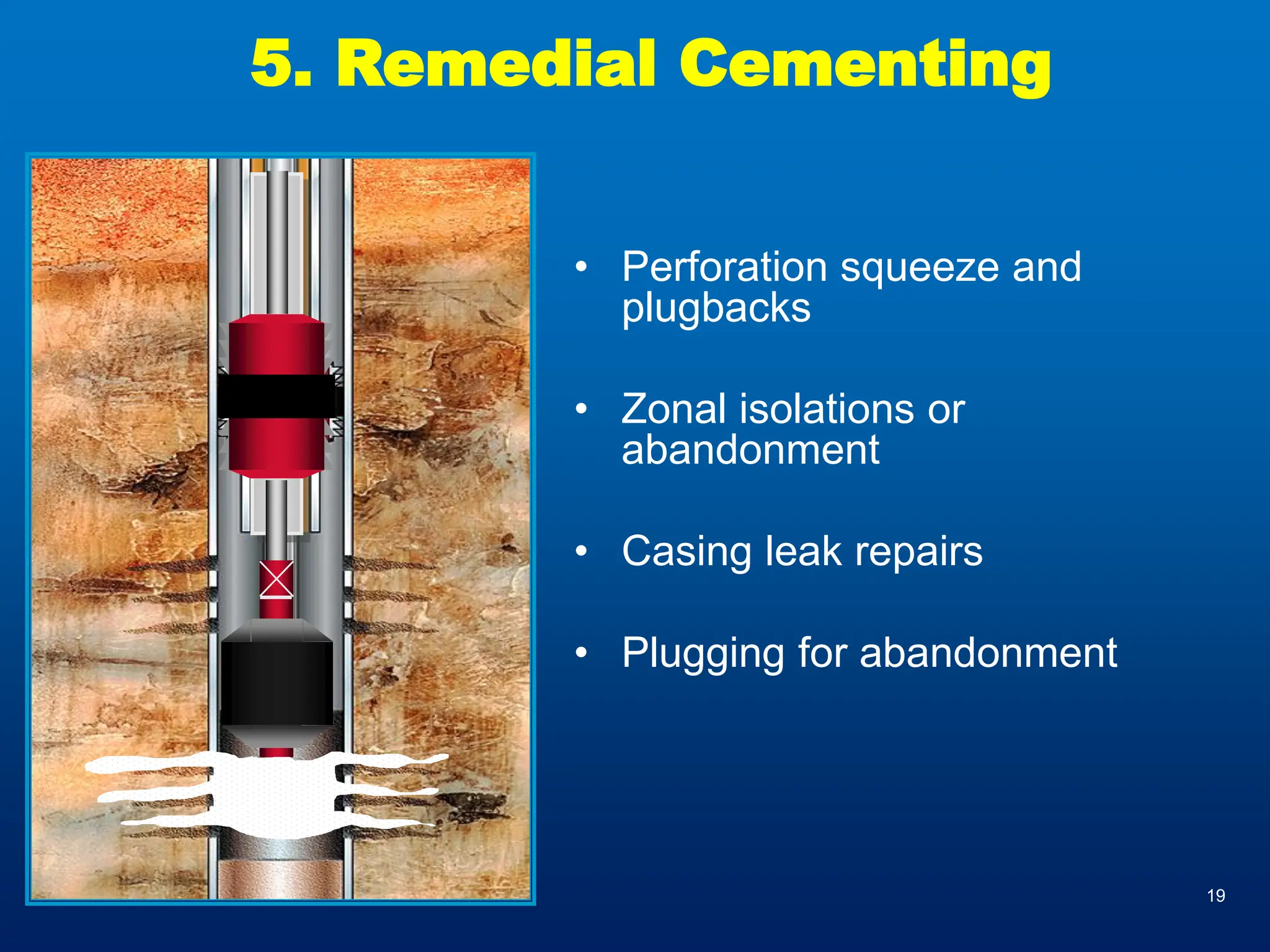
5. Remedial Cementing
• Perforation squeeze and
plugbacks
• Zonal isolations or
abandonment
• Casing leak repairs
• Plugging for abandonment
20
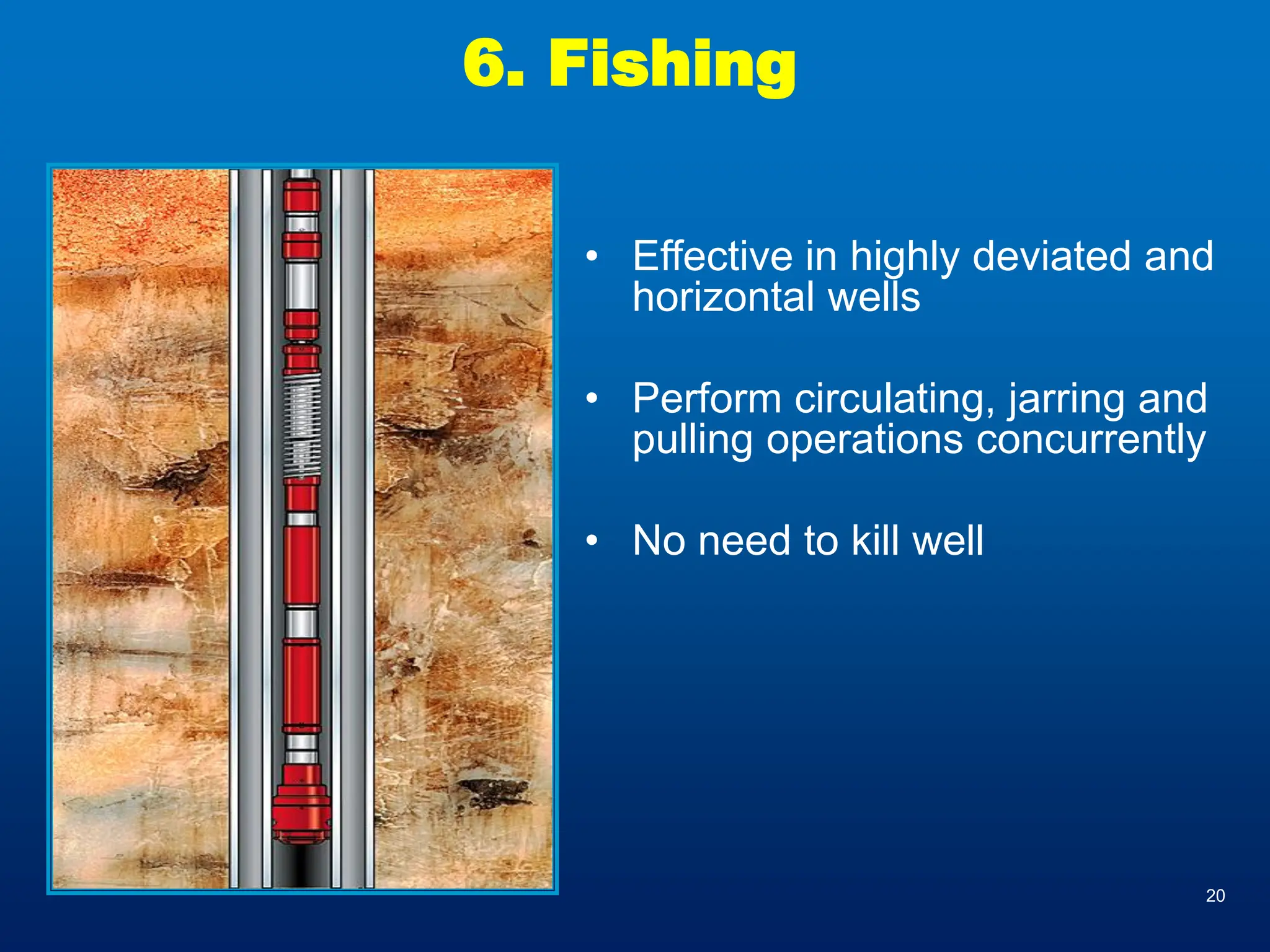
6. Fishing
• Effective in highly deviated and
horizontal wells
• Perform circulating, jarring and
pulling operations concurrently
• No need to kill well
21
1. Drilling
• New and deepening wells
• Slimhole applications
• Over and under balanced conditions
• No drilling rig required
• Compact size
• Decreased drilling times
• Environmentally friendly
22
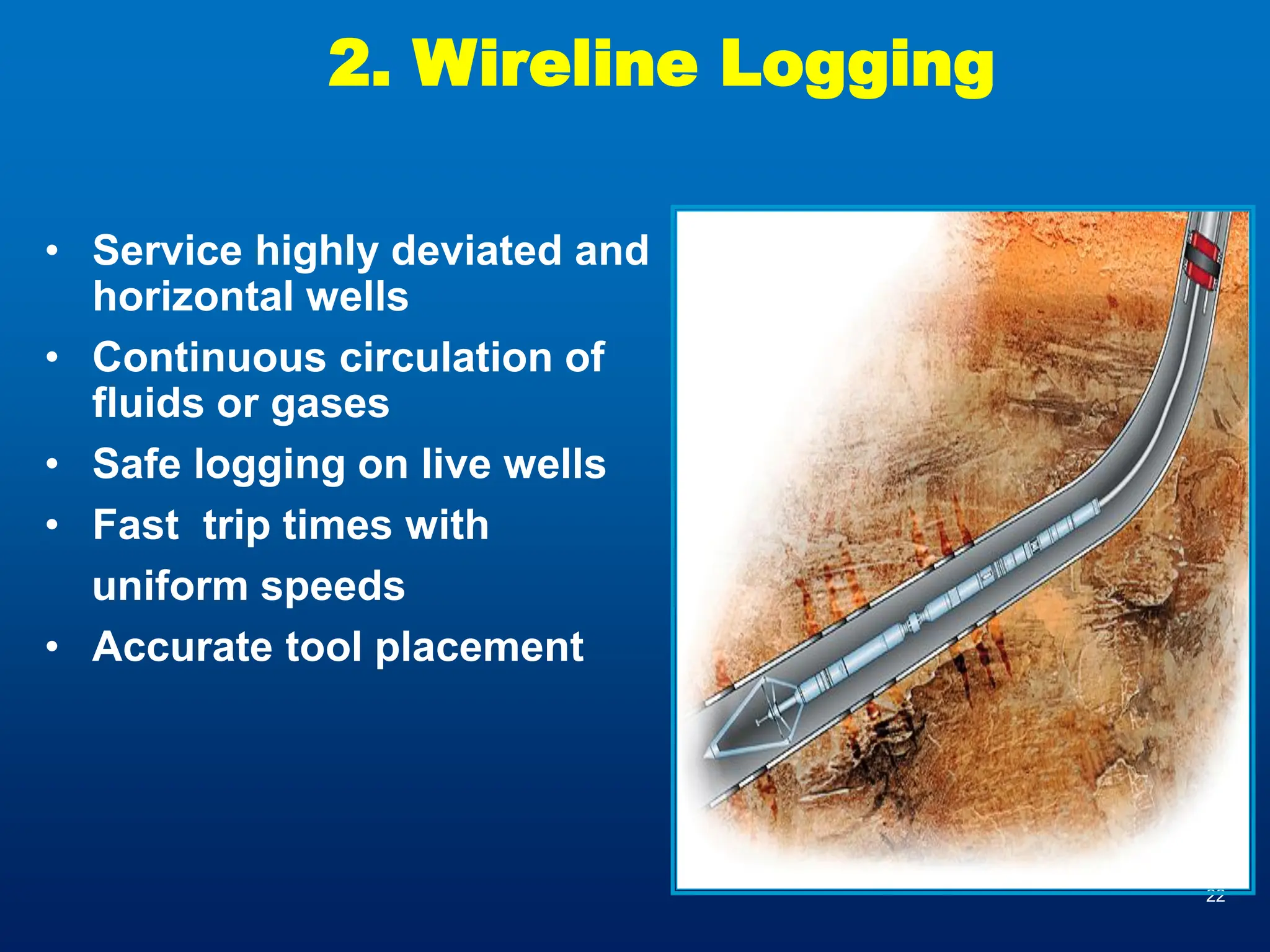
2. Wireline Logging
• Service highly deviated and
horizontal wells
• Continuous circulation of
fluids or gases
• Safe logging on live wells
• Fast trip times with
uniform speeds
• Accurate tool placement
23
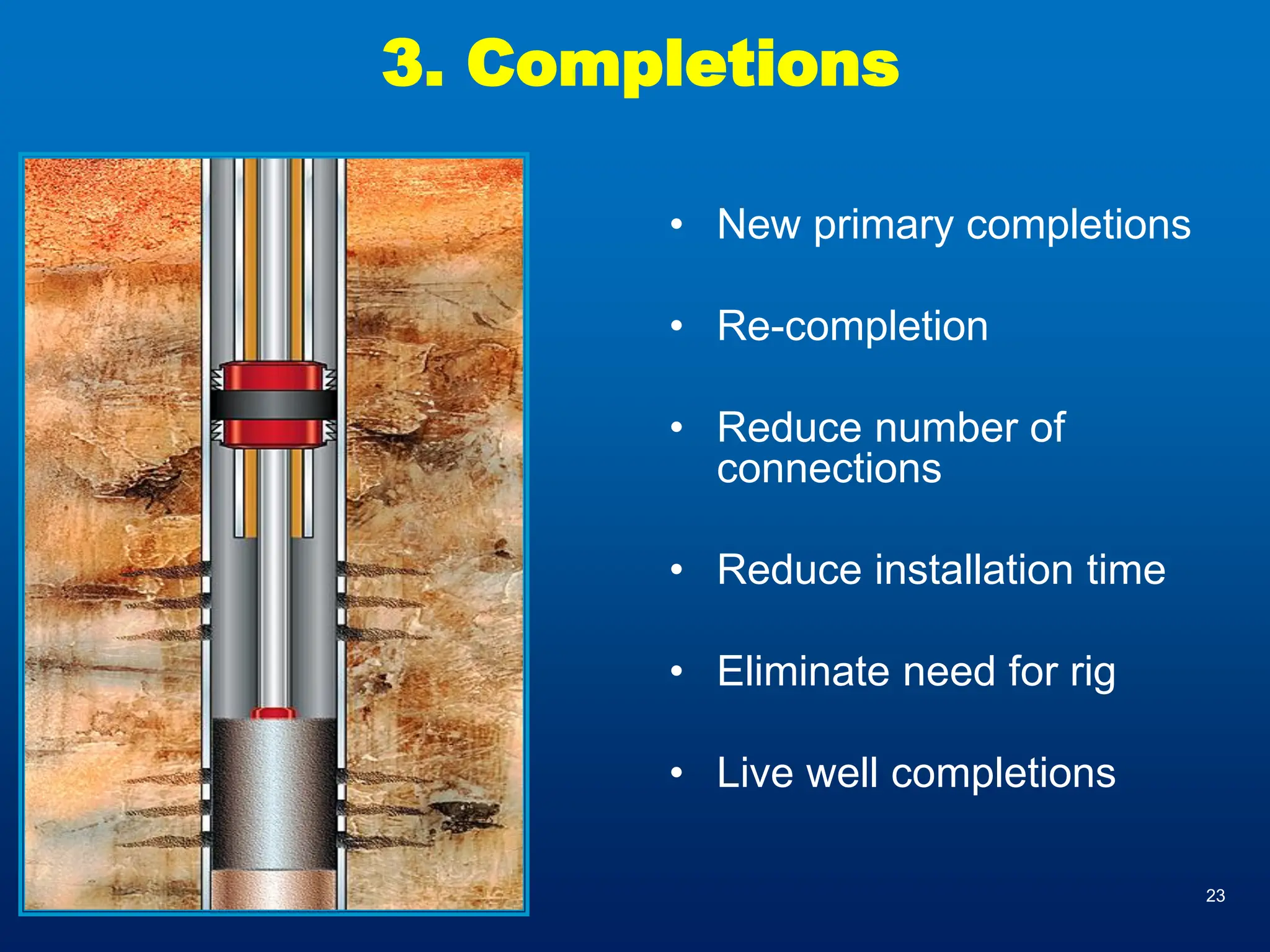
3. Completions
• New primary completions
• Re-completion
• Reduce number of
connections
• Reduce installation time
• Eliminate need for rig
• Live well completions
24
Advantages of CT
• Overall Process Efficiency
• Live Well Service
• Ability to Push / Pull in Deviated Hole
• Performance - Speed In and Out of Hole
• Cost may be significantly reduced
• Versatility
➢Broad Spectrum of Applications
➢Sizes, Grades, and Lengths
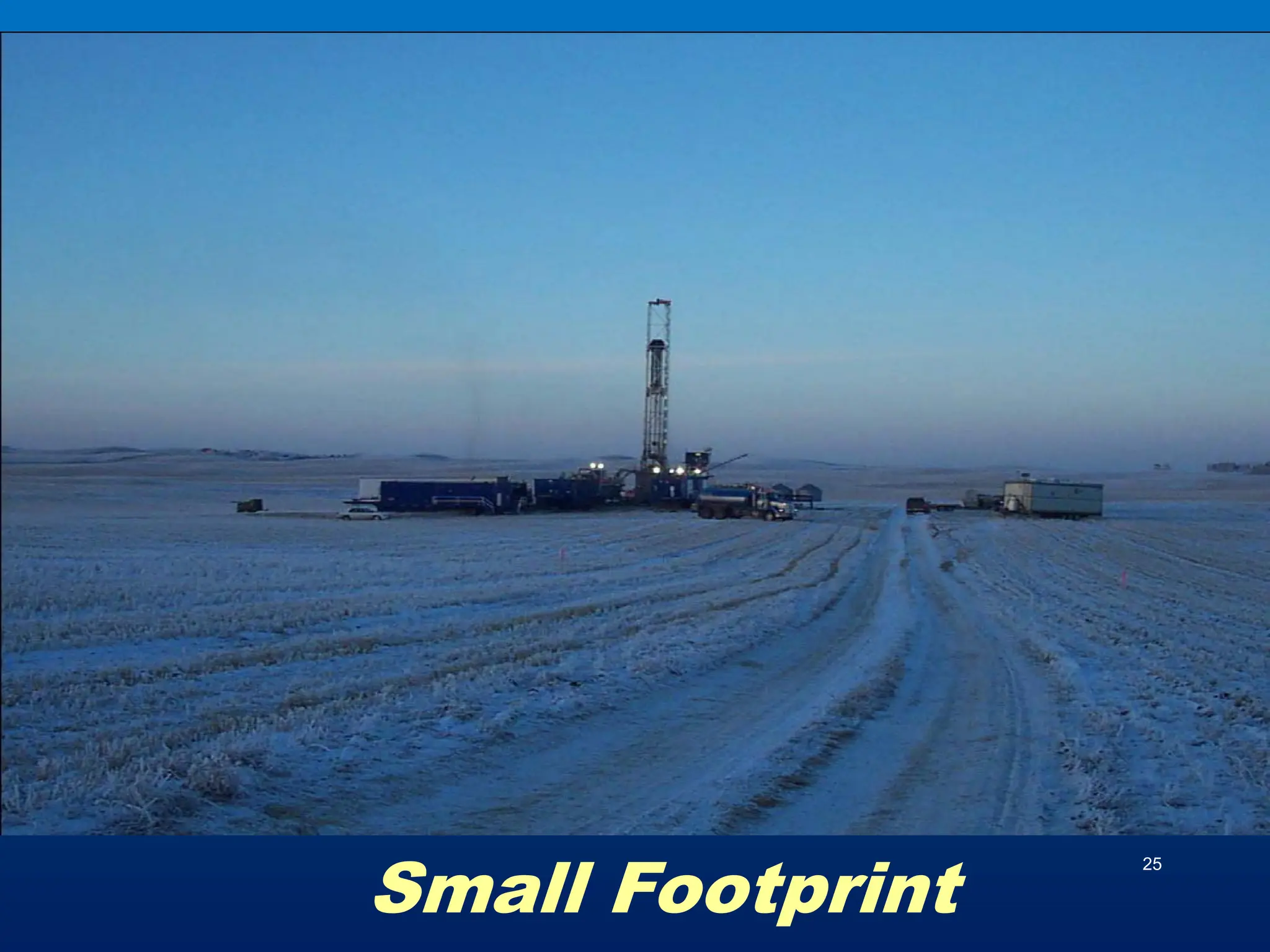
• Small footprint
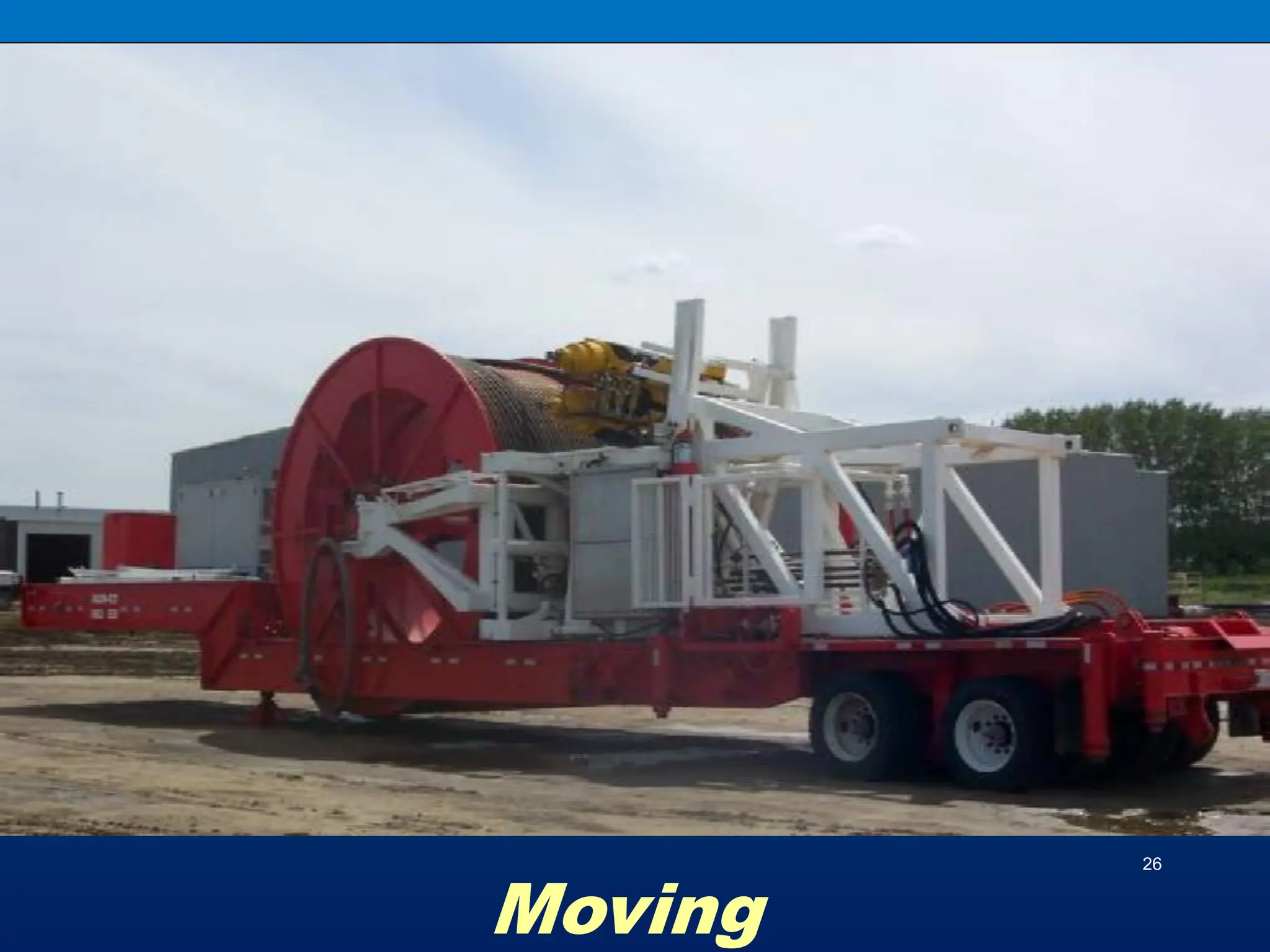
• Readily mobilization
25
Small Footprint
26
Moving
27
Disadvantages of CT
• Fatigue life limit (cycles)
• Pressure and tension
28
Summary
• What is Coiled Tubing?
• History of Coiled Tubing
• Key Elements of Coiled Tubing Unit
• Well Control Equipment
• Field Application of Coiled Tubing
– Common application
– Less common application
• Advantages and Disadvantages
29

Coiled tubing Structure and Applications

  • 1.
  • 2.
    2 Introduction • What isCoiled Tubing? • Definition • CT diameter; 0.75 – 4” • Raw material • Reel length; 4,000 – 25,000’ • History of Coiled Tubing • 1944….”PLUTO” • 1960’s…. first fully functional CT unit • 1970’s -1985…. CT developed, 8,500’ ,¾”
  • 3.
    3 Key Elements ofa CT Unit • Reel • Injector Head • Control Cabin • Power Pack
  • 4.
  • 5.
    5 Well Control Equipment •BOP topped with a stripper • BOP rams • Blind ram • Shear ram • Slip ram • Pipe ram • BOP types • Single • Double • Quad
  • 6.
    6 Pressure port Kill port Blindrams Shear rams Slip rams Pipe rams Quad BOP – Components
  • 7.
    7 Technical Challenges • threetechnical challenges had to be overcome: • CT string… • injector head… • stripper or packoff device….
  • 8.
  • 9.
    9 Common Applications • WashingSand and Fill • Scale Removal • Unloading with Nitrogen • Stimulation and Chemical Treatments • Remedial Cementing • Fishing
  • 10.
    10 Less Common Applications •Drilling • Wireline Logging • Completions
  • 11.
    11 1. Washing Sandand Fill • Removal of sand particles from the wellbore • Proppant flowback or fracture operation screenout • Gravel-pack failures
  • 12.
    12 2. Scale Removal •Efficiently remove downhole scale deposits • Cleanout gaslift mandrels, nipple profiles and perforations • Effective on iron sulfide, barium sulfate, calcium carbonate, silicates, calcium sulfate, sludges, paraffins, and coke tar
  • 13.
  • 14.
  • 15.
  • 16.
  • 17.
    17 3. Unloading withNitrogen • A quick and cost- effective method • Displacement of wellbore fluid
  • 18.
    18 4. Stimulation andChemical Treatments • Precise placement of treating fluids • Reduce exposure of completion tubulars to treating chemicals and pressures • Live well treatments • Smaller treating volumes
  • 19.
    19 5. Remedial Cementing •Perforation squeeze and plugbacks • Zonal isolations or abandonment • Casing leak repairs • Plugging for abandonment
  • 20.
    20 6. Fishing • Effectivein highly deviated and horizontal wells • Perform circulating, jarring and pulling operations concurrently • No need to kill well
  • 21.
    21 1. Drilling • Newand deepening wells • Slimhole applications • Over and under balanced conditions • No drilling rig required • Compact size • Decreased drilling times • Environmentally friendly
  • 22.
    22 2. Wireline Logging •Service highly deviated and horizontal wells • Continuous circulation of fluids or gases • Safe logging on live wells • Fast trip times with uniform speeds • Accurate tool placement
  • 23.
    23 3. Completions • Newprimary completions • Re-completion • Reduce number of connections • Reduce installation time • Eliminate need for rig • Live well completions
  • 24.
    24 Advantages of CT •Overall Process Efficiency • Live Well Service • Ability to Push / Pull in Deviated Hole • Performance - Speed In and Out of Hole • Cost may be significantly reduced • Versatility ➢Broad Spectrum of Applications ➢Sizes, Grades, and Lengths • Small footprint • Readily mobilization
  • 25.
  • 26.
  • 27.
    27 Disadvantages of CT •Fatigue life limit (cycles) • Pressure and tension
  • 28.
    28 Summary • What isCoiled Tubing? • History of Coiled Tubing • Key Elements of Coiled Tubing Unit • Well Control Equipment • Field Application of Coiled Tubing – Common application – Less common application • Advantages and Disadvantages
  • 29.