Cognitive Code Learning
• Cognitive-code learning refers to a theory of second language
teaching and learning developed in
• 1960s
There are two Theoretical models
• Cognitivist psychology (mental processes involved in knowledge)
• Generative grammar (structural applied linguistics)
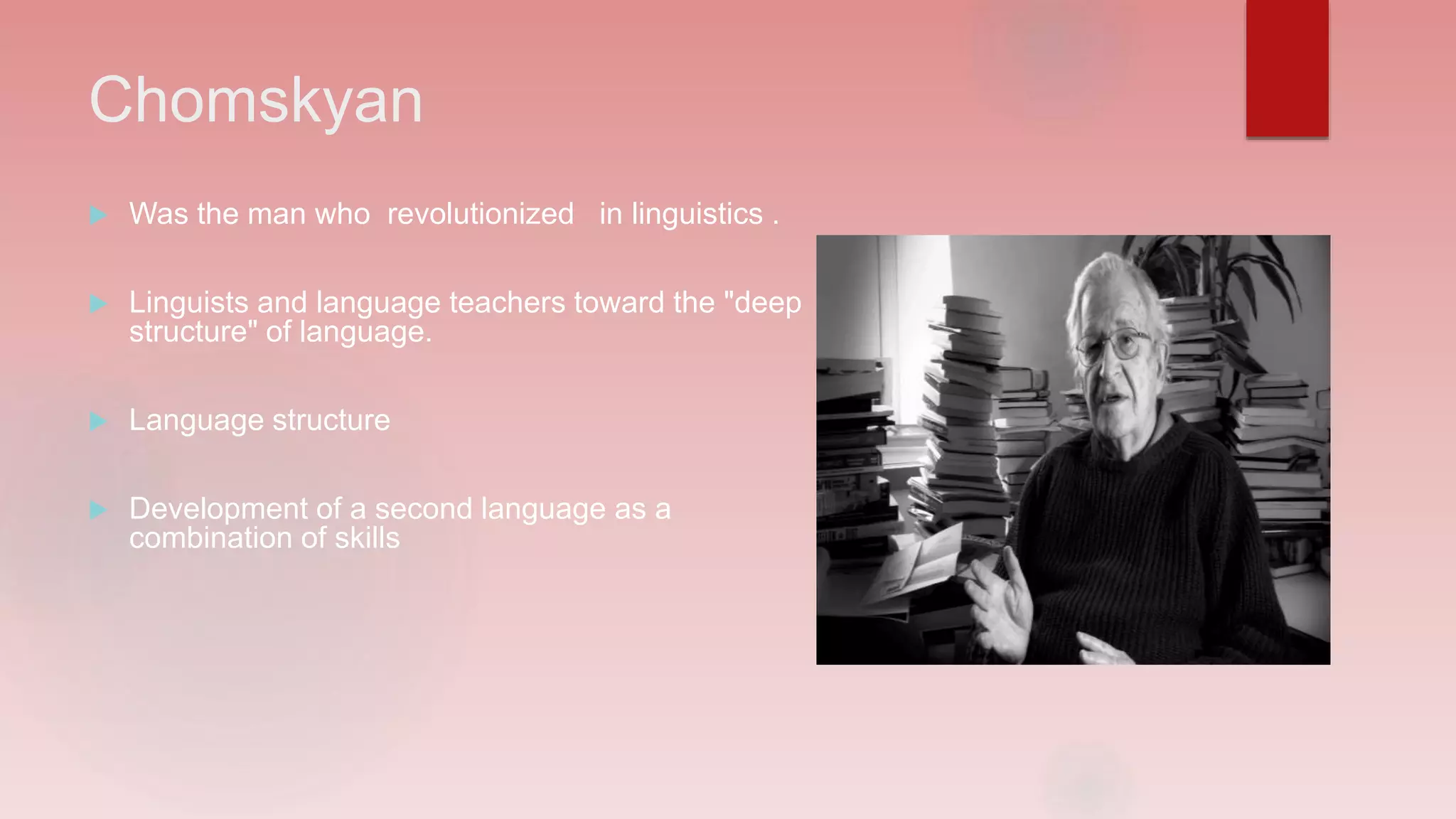
Chomskyan
 Was the man who revolutionized in linguistics .
 Linguists and language teachers toward the "deep
structure" of language.
 Language structure
 Development of a second language as a
combination of skills
B. Carroll and Kenneth Chastain
 Advocated the cognitive- code approach to the study
of a second language as an alternative to the audio-
lingual method.
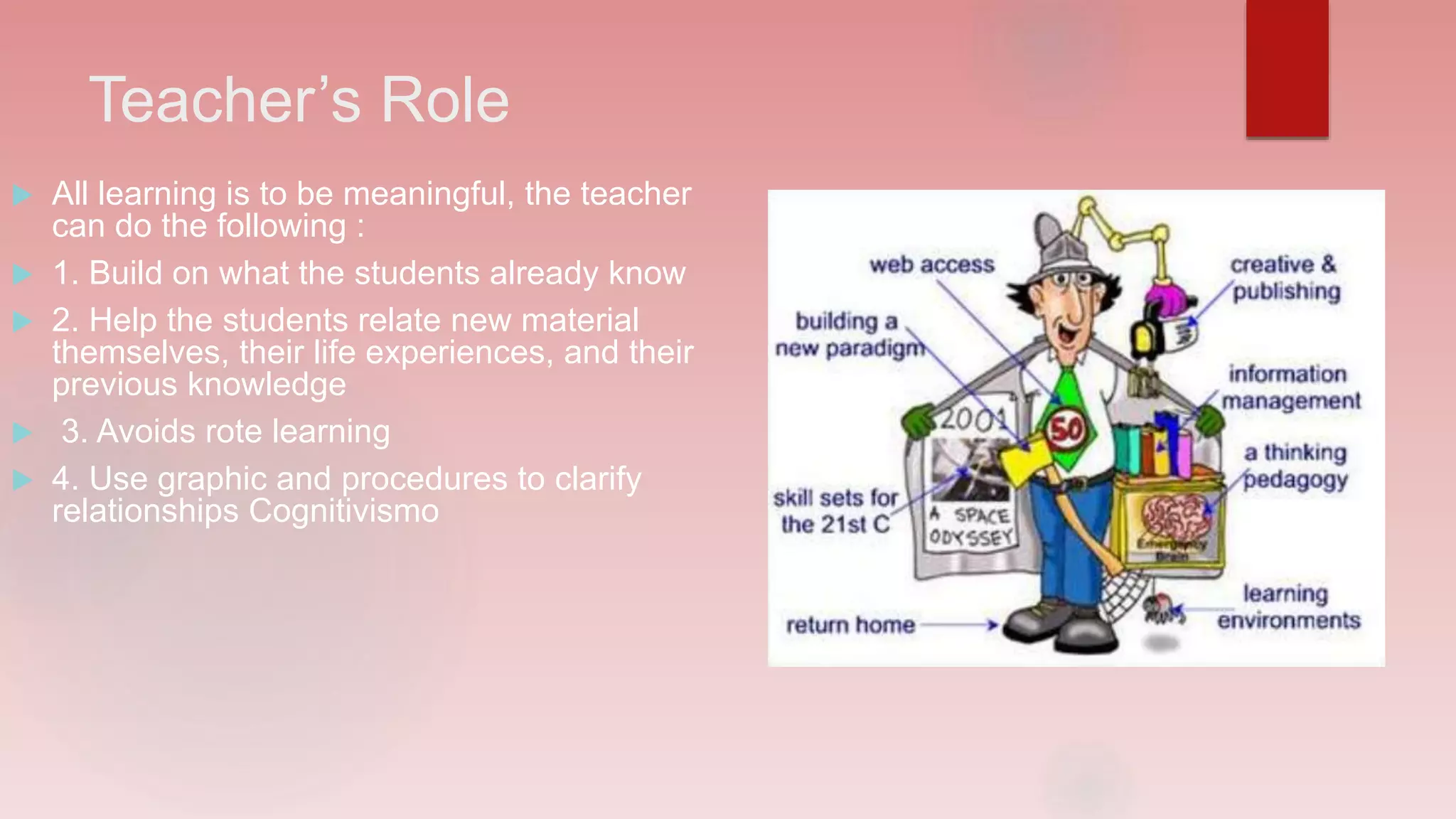
Teacher’s Role
 All learning is to be meaningful, the teacher
can do the following :
 1. Build on what the students already know
 2. Help the students relate new material
themselves, their life experiences, and their
previous knowledge
 3. Avoids rote learning
 4. Use graphic and procedures to clarify
relationships Cognitivismo
Student’s Role
 The student acquires
greater responsibility for
their own learning
 Learn from your own errore
 Learning new significativo.-
knowledge with prior
knowledge
Advantages
 There are advantages as well as
disadvantages of cognitive learning
theory.
 While the advantages it’s a good
foundation for elementary level, the
graph phonemic can be the best for
this level.
Disadvantages
 Disadvantage of cognitive learning theory is
that it’s a limited to teacher only.
 It is a teacher based learning.
 So whatever the teacher’s knowledge that's
the only things they can learn.

Cognitive learning

  • 1.
    Cognitive Code Learning •Cognitive-code learning refers to a theory of second language teaching and learning developed in • 1960s There are two Theoretical models • Cognitivist psychology (mental processes involved in knowledge) • Generative grammar (structural applied linguistics)
  • 2.
    Chomskyan  Was theman who revolutionized in linguistics .  Linguists and language teachers toward the "deep structure" of language.  Language structure  Development of a second language as a combination of skills
  • 3.
    B. Carroll andKenneth Chastain  Advocated the cognitive- code approach to the study of a second language as an alternative to the audio- lingual method.
  • 4.
    Teacher’s Role  Alllearning is to be meaningful, the teacher can do the following :  1. Build on what the students already know  2. Help the students relate new material themselves, their life experiences, and their previous knowledge  3. Avoids rote learning  4. Use graphic and procedures to clarify relationships Cognitivismo
  • 5.
    Student’s Role  Thestudent acquires greater responsibility for their own learning  Learn from your own errore  Learning new significativo.- knowledge with prior knowledge
  • 6.
    Advantages  There areadvantages as well as disadvantages of cognitive learning theory.  While the advantages it’s a good foundation for elementary level, the graph phonemic can be the best for this level.
  • 7.
    Disadvantages  Disadvantage ofcognitive learning theory is that it’s a limited to teacher only.  It is a teacher based learning.  So whatever the teacher’s knowledge that's the only things they can learn.