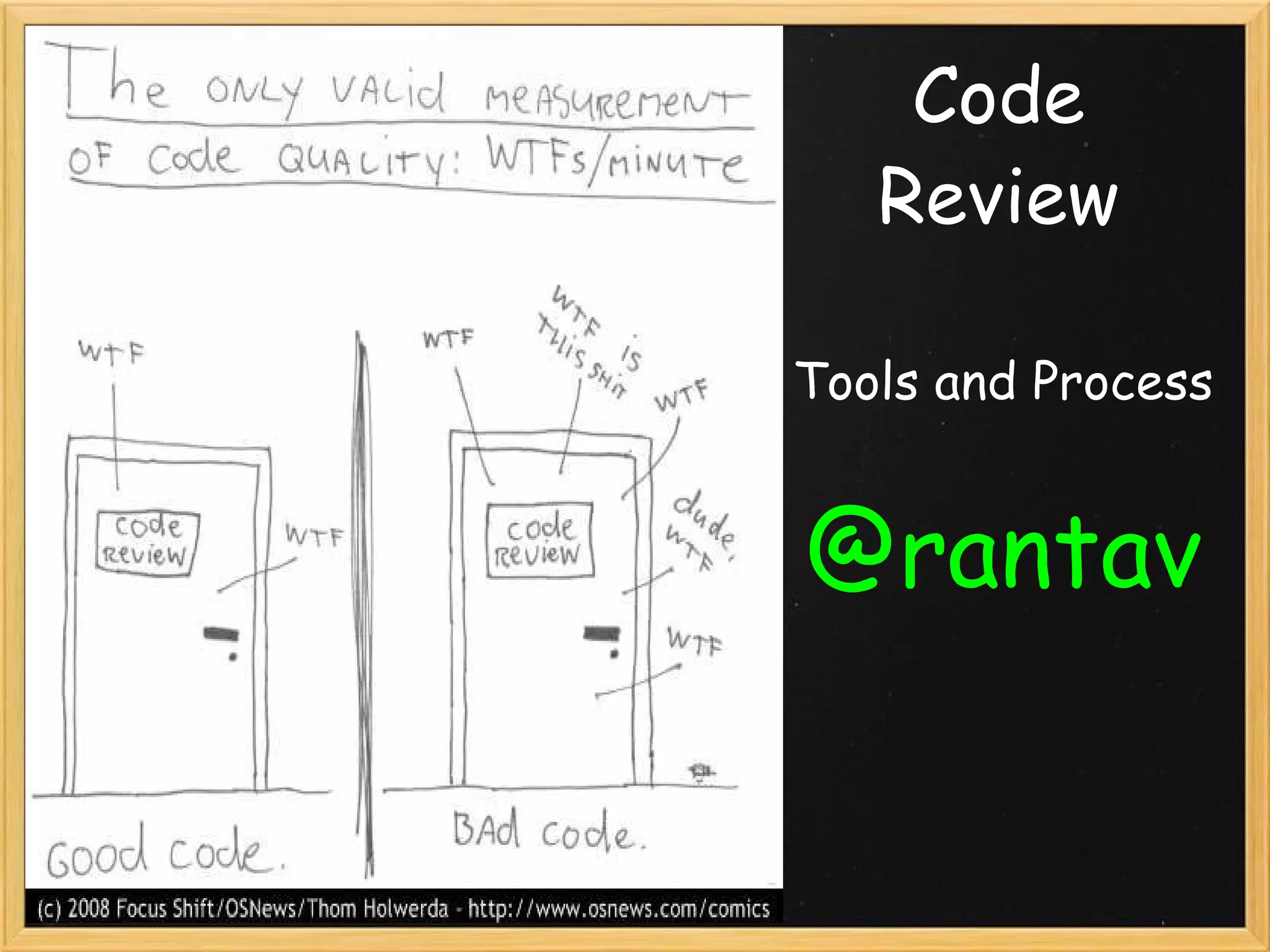
Code Review Tools and Process @rantav
Formal  Code Review Meetings A sit down meeting  Everyone looks at the code Need to get prepared in advance People bring up issues that need to be fixed before you can go ahead with commit
Formal Code Review - The  Pain Needs  preparation Time consuming Hard to  concentrate No time to dig in and be  thorough Difficult to  schedule  the right ppl, especially at decentralized companies or projects Synergy  - Yes Cost effective  - No Fun - well...
Code Review in Apache Every change has a jira issue A patch is uploaded A committer reviews and writes comments per the patch When LGTM, the committer commits
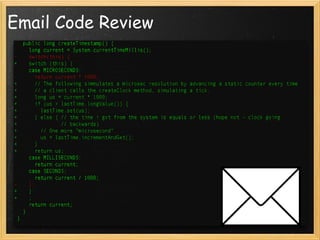
Email Code Review
Offline Code Review Tools Jupiter  - Eclipse prehistorical plugin Mondrian   - Google Rietveld   - Free and very limited Mondrian ReviewBoard   - The leading open source Crubicle   - from Atlassian ($$) Code Collaborator  - the leading $$ from SmartBear Gerrit  - git goodness
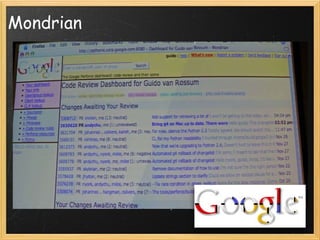
Mondrian  
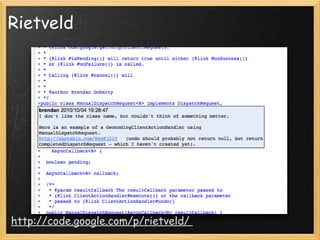
Rietveld http://code.google.com/p/rietveld/ 
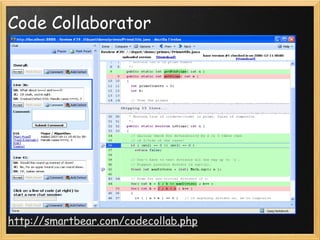
Code Collaborator http://smartbear.com/codecollab.php
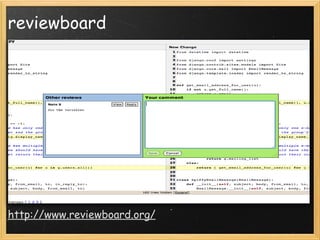
reviewboard   http://www.reviewboard.org/
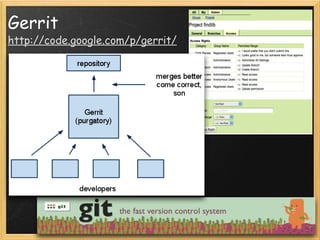
Gerrit http://code.google.com/p/gerrit/
Motivation Teach Learn Maintain  coding conventions   Find  defects early Get  more ppl  familiar with the code (no job security)
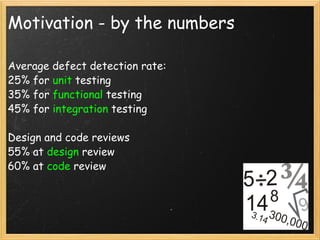
Motivation - by the numbers Average defect detection rate: 25% for  unit  testing 35% for  functional  testing 45% for  integration  testing Design and code reviews  55% at  design  review 60% at  code  review
When? Before commit? After commit? During commit (?)
Who? Manager Tech lead Architect Peers Any peer from the team The one most likely to have valuable input
Checklist (?)  Does the code build correctly? Does the code execute as expected? Is all new code tested? Altered code tests up to date? Is the code readable? Do you understand the code you are reviewing? Has the developer tested the code? coding conventions? Are all functions, methods and classes documented? Are complex algorithms and code optimizations adequately commented? Error Handling Resource Leaks Thread Safeness Is the code free of unintended infinite loops? Are function parameters explicitly verified in the code? Pending/TODO assertions abnormal terminations Database Transactions Correct synchronization no deadlocks/livelocks Bug Fix Side Effects All the occurrences of the bug are fixed
Different Techniques - recap email jira patch process a la apache over the shoulder formal review at a meeting room pasetbin web tools - reviewboard and such GitHub - fork-review-pull process
Tips for Effective Code Review Psychology  - Let's face it, there's a lot of psychology in it, so play nice.  Be professional,  nothing is personal Strive to  understand , not criticize. Get  prepared   understand the technology in use know the coding conventions read related code (classes/method being used) Read  Slow Short
What's Short? No more than  60 minutes No more than  200 LOC  (C code)
Challenges ( למה לא ) Ego The Hassle
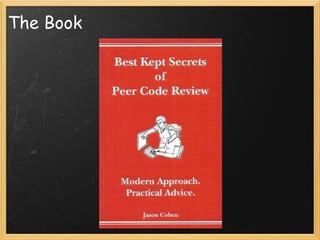
The Book
Related Pair Programming Code Reading (Doug Crockford) Static Analysis tools
Extra slides
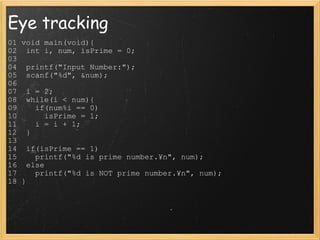
Eye tracking 01 void main(void){  02  int i, num, isPrime = 0;  03    04  printf(&quot;Input Number:&quot;);  05  scanf(&quot;%d&quot;, &num);  06    07  i = 2;  08  while(i < num){  09    if(num%i == 0)  10      isPrime = 1;  11    i = i + 1;  12  }  13    14  if(isPrime == 1)  15    printf(&quot;%d is prime number.¥n&quot;, num);  16  else  17    printf(&quot;%d is NOT prime number.¥n&quot;, num);  18 } 
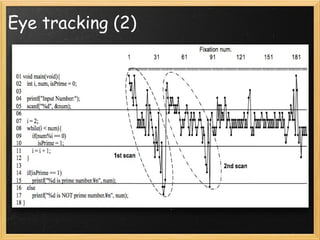
Eye tracking (2)
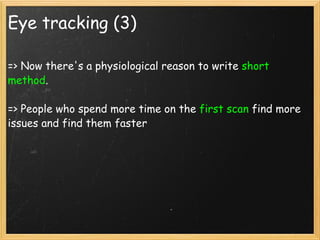
Eye tracking (3) => Now there's a physiological reason to write  short method . => People who spend more time on the  first scan  find more issues and find them faster
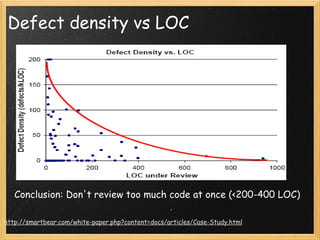
Defect density vs LOC http://smartbear.com/white-paper.php?content=docs/articles/Case-Study.html Conclusion: Don't review too much code at once (<200-400 LOC)
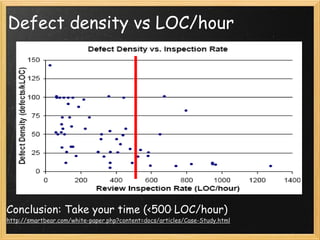
Defect density vs LOC/hour Conclusion: Take your time (<500 LOC/hour) http://smartbear.com/white-paper.php?content=docs/articles/Case-Study.html
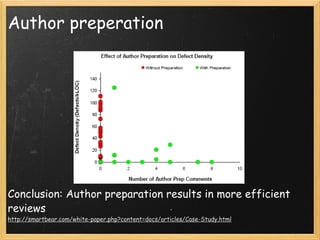
Author preperation Conclusion: Author preparation results in more efficient reviews http://smartbear.com/white-paper.php?content=docs/articles/Case-Study.html

Code Review

  • 1.
    Code Review Toolsand Process @rantav
  • 2.
    Formal CodeReview Meetings A sit down meeting  Everyone looks at the code Need to get prepared in advance People bring up issues that need to be fixed before you can go ahead with commit
  • 3.
    Formal Code Review- The Pain Needs preparation Time consuming Hard to concentrate No time to dig in and be thorough Difficult to schedule the right ppl, especially at decentralized companies or projects Synergy - Yes Cost effective - No Fun - well...
  • 4.
    Code Review inApache Every change has a jira issue A patch is uploaded A committer reviews and writes comments per the patch When LGTM, the committer commits
  • 5.
  • 6.
    Offline Code ReviewTools Jupiter - Eclipse prehistorical plugin Mondrian - Google Rietveld - Free and very limited Mondrian ReviewBoard - The leading open source Crubicle - from Atlassian ($$) Code Collaborator - the leading $$ from SmartBear Gerrit - git goodness
  • 7.
  • 8.
  • 9.
  • 10.
  • 11.
  • 12.
    Motivation Teach LearnMaintain coding conventions   Find defects early Get more ppl familiar with the code (no job security)
  • 13.
    Motivation - bythe numbers Average defect detection rate: 25% for unit testing 35% for functional testing 45% for integration testing Design and code reviews  55% at design review 60% at code review
  • 14.
    Motivation - bythe numbers Average defect detection rate: 25% for unit testing 35% for functional testing 45% for integration testing Design and code reviews  55% at design review 60% at code review
  • 15.
    When? Before commit?After commit? During commit (?)
  • 16.
    Who? Manager Techlead Architect Peers Any peer from the team The one most likely to have valuable input
  • 17.
    Checklist (?)  Doesthe code build correctly? Does the code execute as expected? Is all new code tested? Altered code tests up to date? Is the code readable? Do you understand the code you are reviewing? Has the developer tested the code? coding conventions? Are all functions, methods and classes documented? Are complex algorithms and code optimizations adequately commented? Error Handling Resource Leaks Thread Safeness Is the code free of unintended infinite loops? Are function parameters explicitly verified in the code? Pending/TODO assertions abnormal terminations Database Transactions Correct synchronization no deadlocks/livelocks Bug Fix Side Effects All the occurrences of the bug are fixed
  • 18.
    Different Techniques -recap email jira patch process a la apache over the shoulder formal review at a meeting room pasetbin web tools - reviewboard and such GitHub - fork-review-pull process
  • 19.
    Tips for EffectiveCode Review Psychology  - Let's face it, there's a lot of psychology in it, so play nice.  Be professional, nothing is personal Strive to understand , not criticize. Get prepared   understand the technology in use know the coding conventions read related code (classes/method being used) Read Slow Short
  • 20.
    What's Short? Nomore than 60 minutes No more than 200 LOC (C code)
  • 21.
    Challenges ( למהלא ) Ego The Hassle
  • 22.
  • 23.
    Related Pair ProgrammingCode Reading (Doug Crockford) Static Analysis tools
  • 24.
  • 25.
    Eye tracking 01void main(void){  02  int i, num, isPrime = 0;  03    04  printf(&quot;Input Number:&quot;);  05  scanf(&quot;%d&quot;, &num);  06    07  i = 2;  08  while(i < num){  09    if(num%i == 0)  10      isPrime = 1;  11    i = i + 1;  12  }  13    14  if(isPrime == 1)  15    printf(&quot;%d is prime number.¥n&quot;, num);  16  else  17    printf(&quot;%d is NOT prime number.¥n&quot;, num);  18 } 
  • 26.
  • 27.
    Eye tracking (3)=> Now there's a physiological reason to write short method . => People who spend more time on the first scan find more issues and find them faster
  • 28.
    Defect density vsLOC http://smartbear.com/white-paper.php?content=docs/articles/Case-Study.html Conclusion: Don't review too much code at once (<200-400 LOC)
  • 29.
    Defect density vsLOC/hour Conclusion: Take your time (<500 LOC/hour) http://smartbear.com/white-paper.php?content=docs/articles/Case-Study.html
  • 30.
    Author preperation Conclusion: Authorpreparation results in more efficient reviews http://smartbear.com/white-paper.php?content=docs/articles/Case-Study.html