Pham Thanh Tu 
Bach Hai Au 
Nguyen T.Huyen 
Trang 
Pham Van Vu 
Ngoc Hai Yen
I. Introduction: 
II.Body 
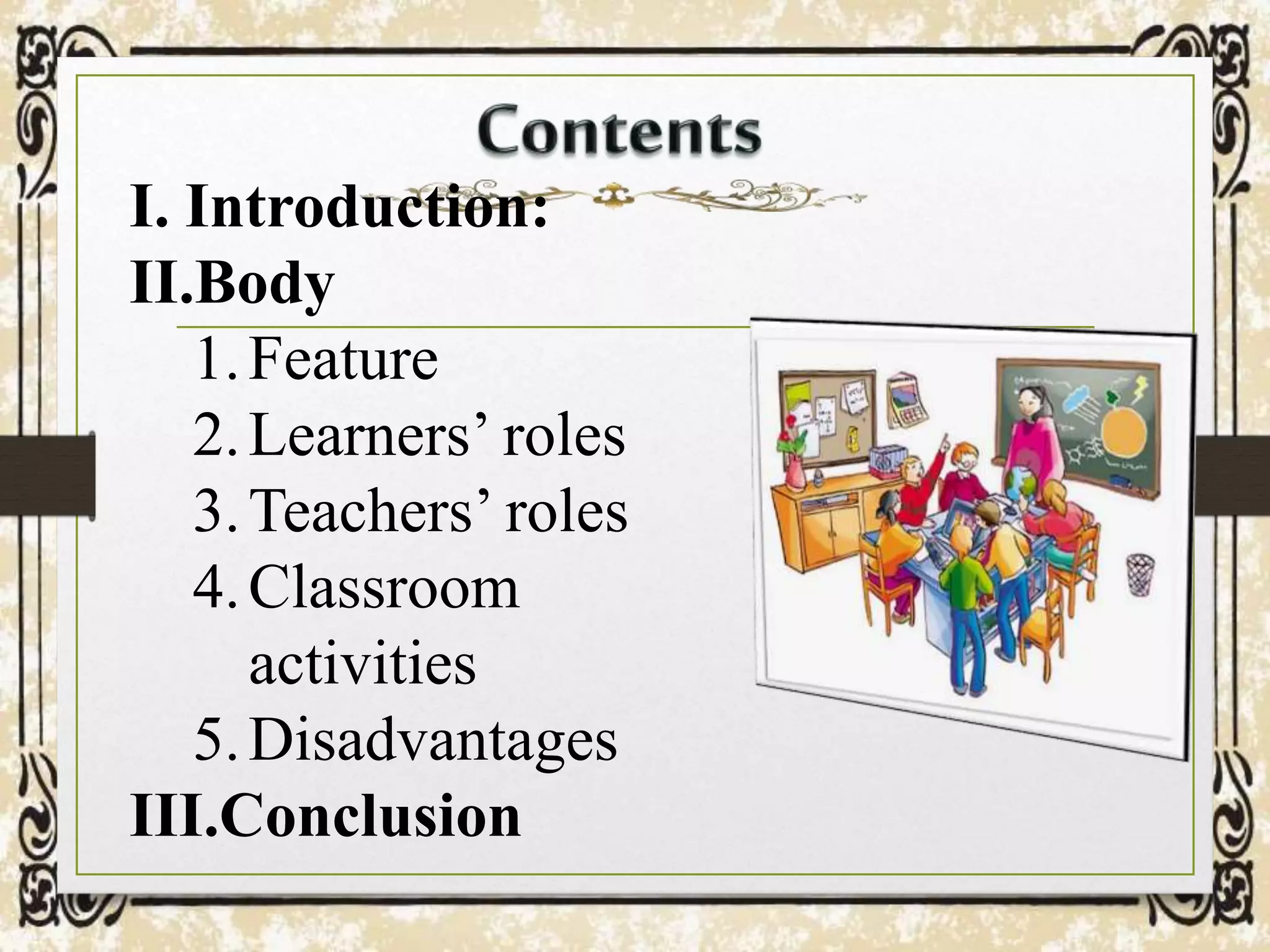
1. Feature 
2. Learners’ roles 
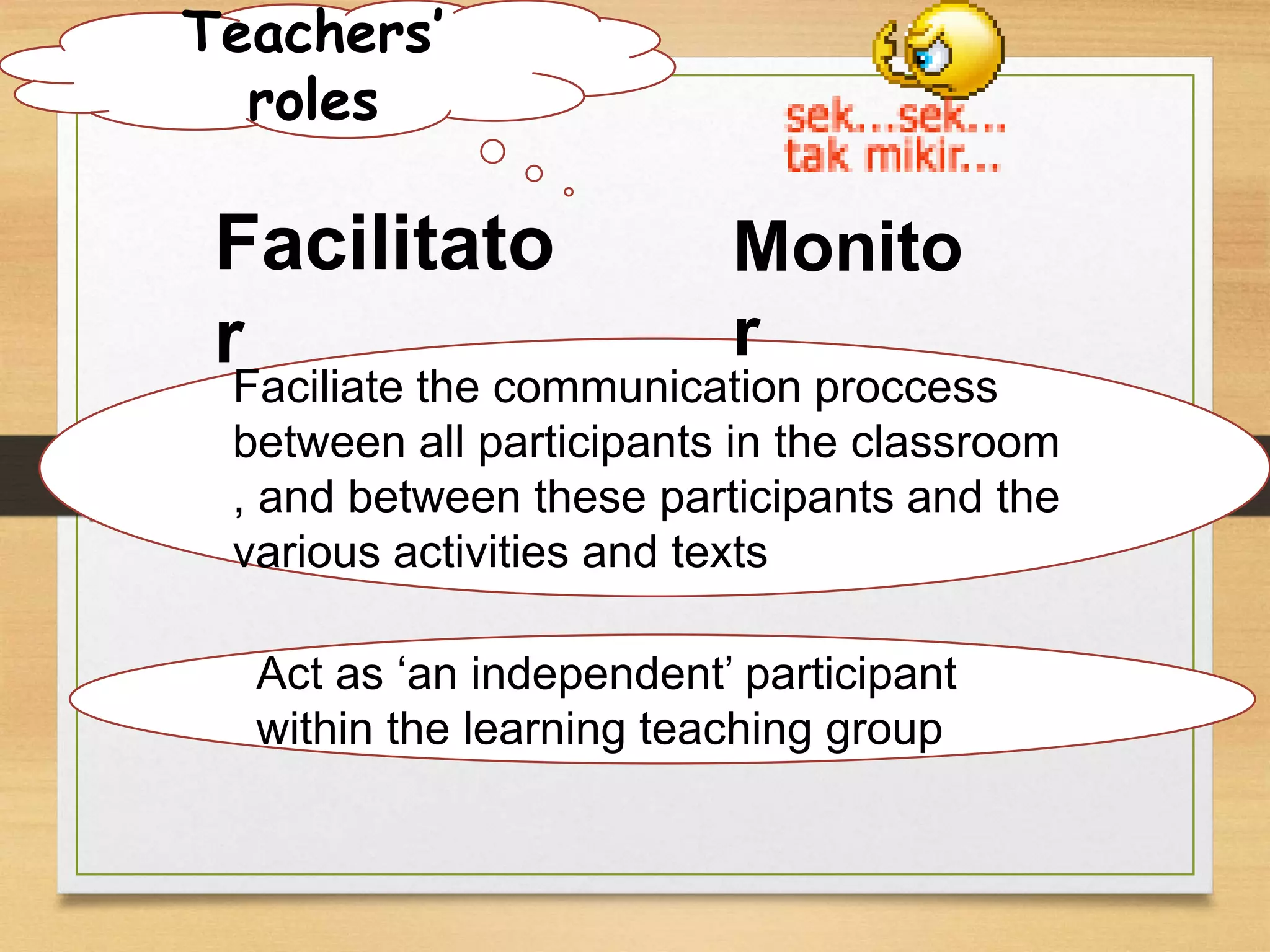
3. Teachers’ roles 
4. Classroom 
activities 
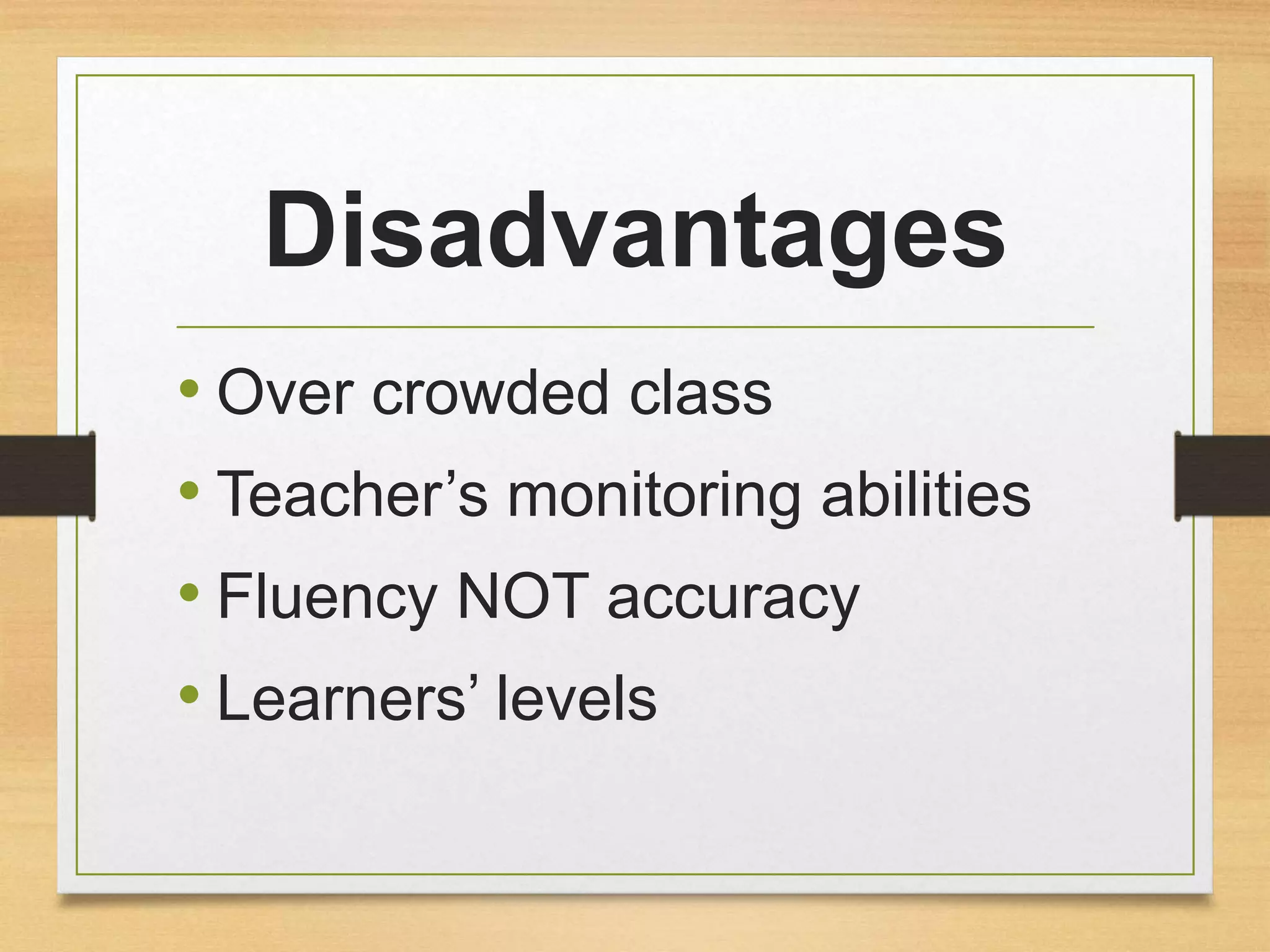
5. Disadvantages 
III.Conclusion
What is CLT? 
Longman Dictionary of Language Teaching & Applied 
Linguistics defines the Communicative Approach or 
Communicative Language Teaching as “an APPROACH to 
foreign or second language teaching which emphasises that 
the goal of language learning is COMMUNICATIVE 
COMPETENCE. ” (Richards et al 1992:65) According to the 
same dictionary, the approach which has been developed 
by British applied linguists as a reaction away from 
grammar-based approaches
CLT? 
• CLT is a meaning – based , 
learner – centered approach to L2 
teaching 
•Fluencyis given priority Over 
Accuracy. 
Spada .N 
(2007)
CLT? 
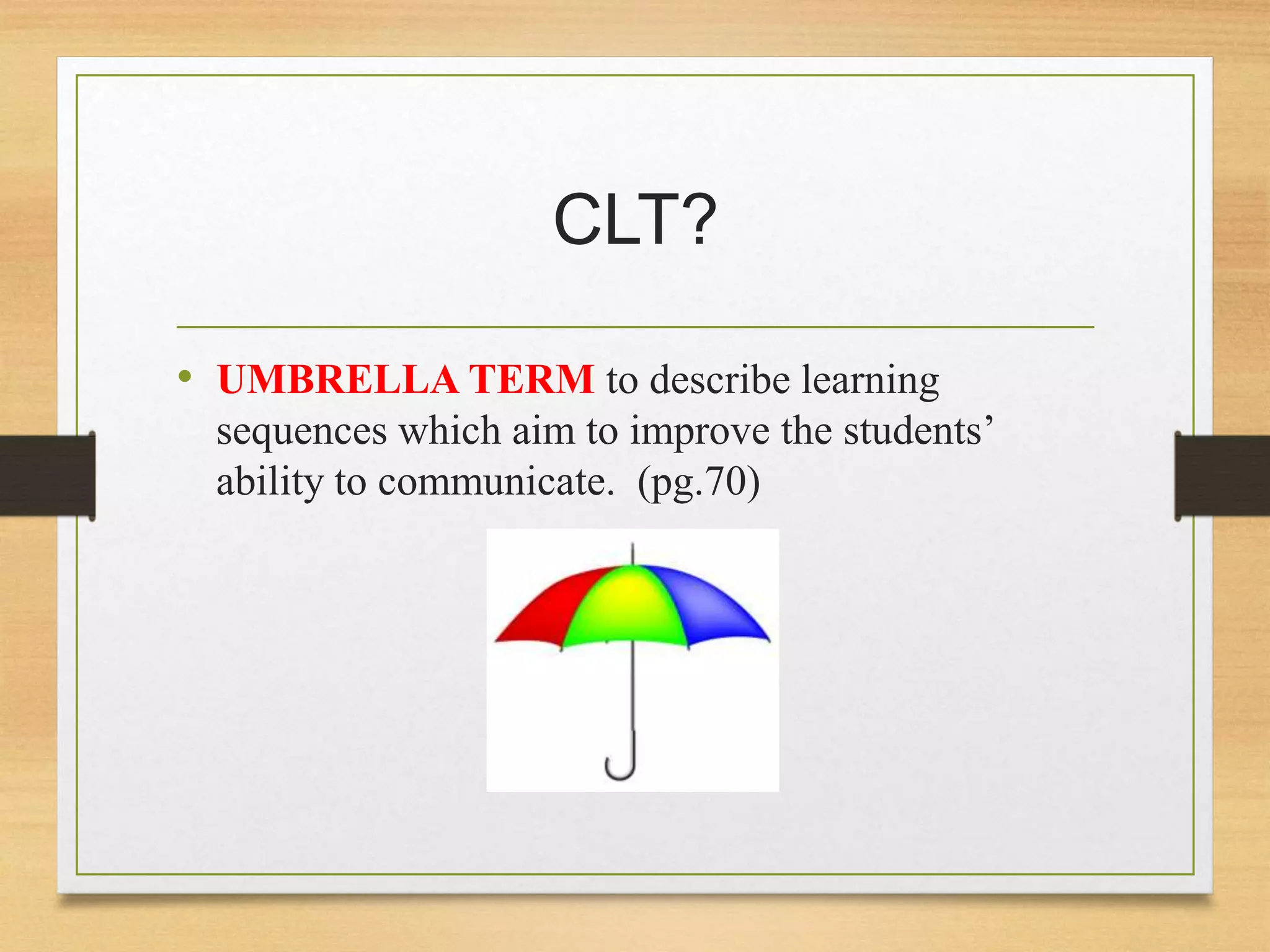
• UMBRELLA TERM to describe learning 
sequences which aim to improve the students’ 
ability to communicate. (pg.70)
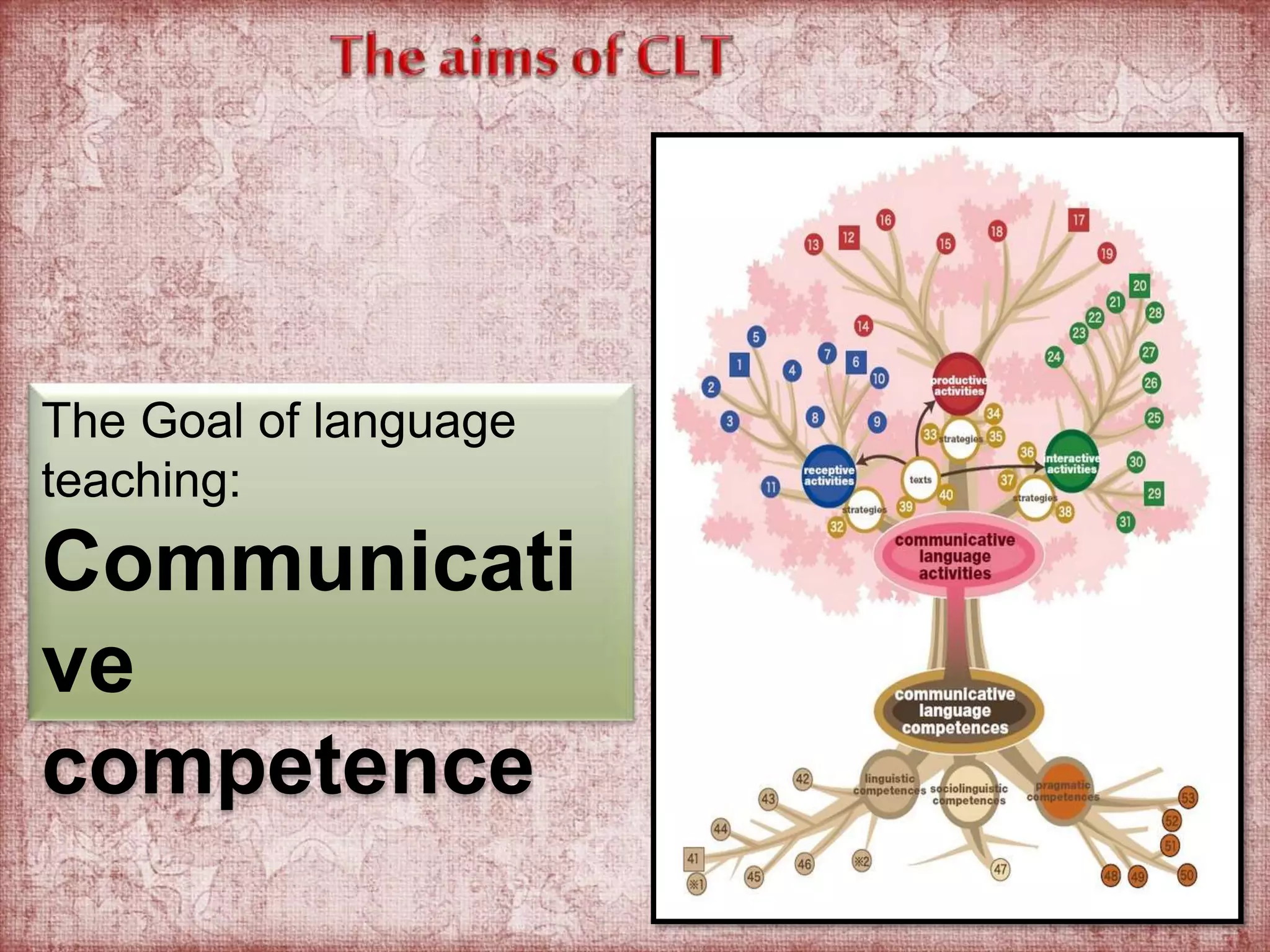
The Goal of language 
teaching: 
Communicati 
ve 
competence
Communicative competence is the goal 
 desire to communicate 
 communicative purpose 
Content NOT form 
 variety of language 
 NO teacher intervention 
 NO material control 
Information 
gap 
The features of CLT
Learner Roles 
LLeeaarLrneneaerrr n RReorolsele’ss 
The emphasis of CLT on the proccess of 
communication leads to different role(s) of 
learners . 
Roles 
Negotiator 
s
Teachers’ 
roles 
Facilitato 
r 
Monito 
r 
Faciliate the communication proccess 
between all participants in the classroom 
, and between these participants and the 
various activities and texts 
Act as ‘an independent’ participant 
within the learning teaching group
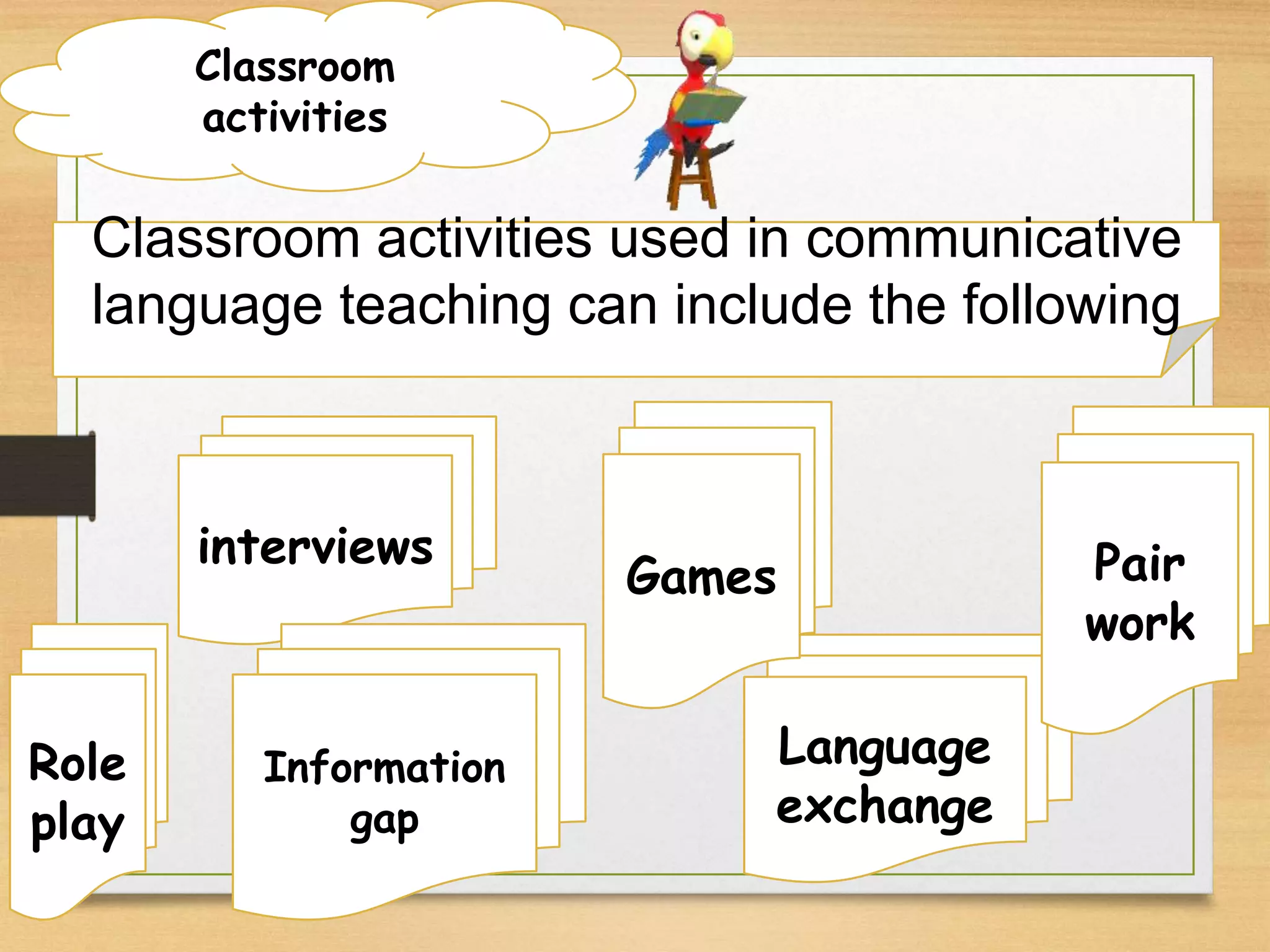
Classroom 
activities 
Classroom activities used in communicative 
language teaching can include the following 
Role 
play 
interviews 
Language 
exchange 
Information 
gap 
Games Pair 
work
Disadvantages 
• Over crowded class 
• Teacher’s monitoring abilities 
• Fluency NOT accuracy 
• Learners’ levels
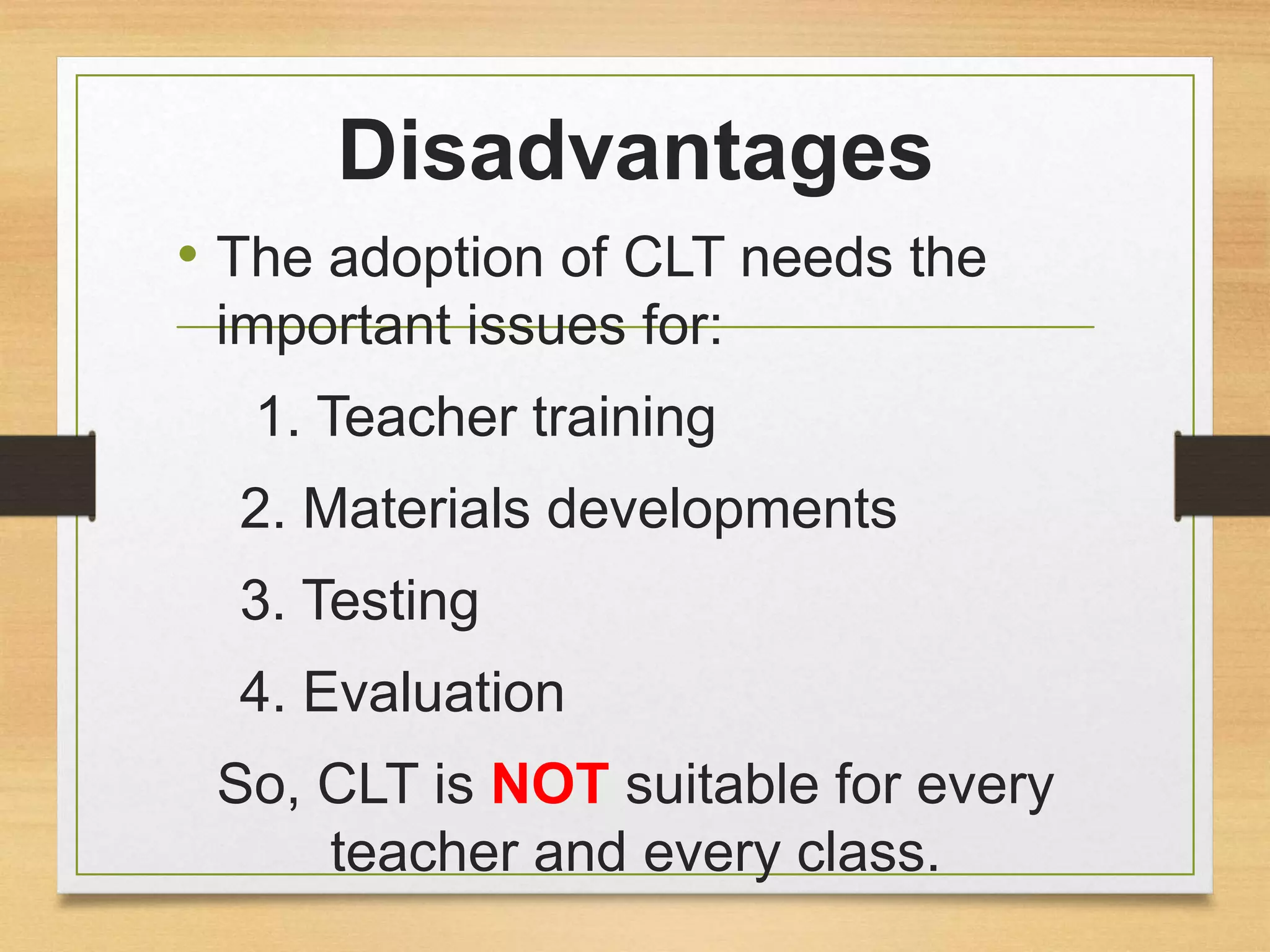
Disadvantages 
• The adoption of CLT needs the 
important issues for: 
1. Teacher training 
2. Materials developments 
3. Testing 
4. Evaluation 
So, CLT is NOT suitable for every 
teacher and every class.
CLT is best considered an approach rather 
than a method . It refers to a diverse set of 
principles that reflect a communicative view of 
language and language learning and that can 
be used to support a wide variety of classroom 
procedures .

Communicative Leanguage Teaching

  • 1.
    Pham Thanh Tu Bach Hai Au Nguyen T.Huyen Trang Pham Van Vu Ngoc Hai Yen
  • 2.
    I. Introduction: II.Body 1. Feature 2. Learners’ roles 3. Teachers’ roles 4. Classroom activities 5. Disadvantages III.Conclusion
  • 3.
    What is CLT? Longman Dictionary of Language Teaching & Applied Linguistics defines the Communicative Approach or Communicative Language Teaching as “an APPROACH to foreign or second language teaching which emphasises that the goal of language learning is COMMUNICATIVE COMPETENCE. ” (Richards et al 1992:65) According to the same dictionary, the approach which has been developed by British applied linguists as a reaction away from grammar-based approaches
  • 4.
    CLT? • CLTis a meaning – based , learner – centered approach to L2 teaching •Fluencyis given priority Over Accuracy. Spada .N (2007)
  • 5.
    CLT? • UMBRELLATERM to describe learning sequences which aim to improve the students’ ability to communicate. (pg.70)
  • 6.
    The Goal oflanguage teaching: Communicati ve competence
  • 7.
    Communicative competence isthe goal  desire to communicate  communicative purpose Content NOT form  variety of language  NO teacher intervention  NO material control Information gap The features of CLT
  • 8.
    Learner Roles LLeeaarLrneneaerrrn RReorolsele’ss The emphasis of CLT on the proccess of communication leads to different role(s) of learners . Roles Negotiator s
  • 9.
    Teachers’ roles Facilitato r Monito r Faciliate the communication proccess between all participants in the classroom , and between these participants and the various activities and texts Act as ‘an independent’ participant within the learning teaching group
  • 10.
    Classroom activities Classroomactivities used in communicative language teaching can include the following Role play interviews Language exchange Information gap Games Pair work
  • 11.
    Disadvantages • Overcrowded class • Teacher’s monitoring abilities • Fluency NOT accuracy • Learners’ levels
  • 12.
    Disadvantages • Theadoption of CLT needs the important issues for: 1. Teacher training 2. Materials developments 3. Testing 4. Evaluation So, CLT is NOT suitable for every teacher and every class.
  • 13.
    CLT is bestconsidered an approach rather than a method . It refers to a diverse set of principles that reflect a communicative view of language and language learning and that can be used to support a wide variety of classroom procedures .