•PRATHIP. S
•PRABU. K
 Cloud computing consists of three distinct
types of computing services delivered
remotely to clients via the internet. ... Clients
who subscribe to cloud computing services
can reap a variety of benefits, depending on
their particular business needs at a given
point in time.
CLOUD COMPUTING IS AN EMERGING
COMPUTING TECHNOLOGY THAT USES
THE INTERNET AND CENTRAL REMOTE
SERVERS TO MAINTAIN DATA AND
APPLICATION.
 Application programming interface.
 Device and location independence.
 Virtualization.
 Reliability.
 Maintenance.
 Security.
 Performance.
 Agility.
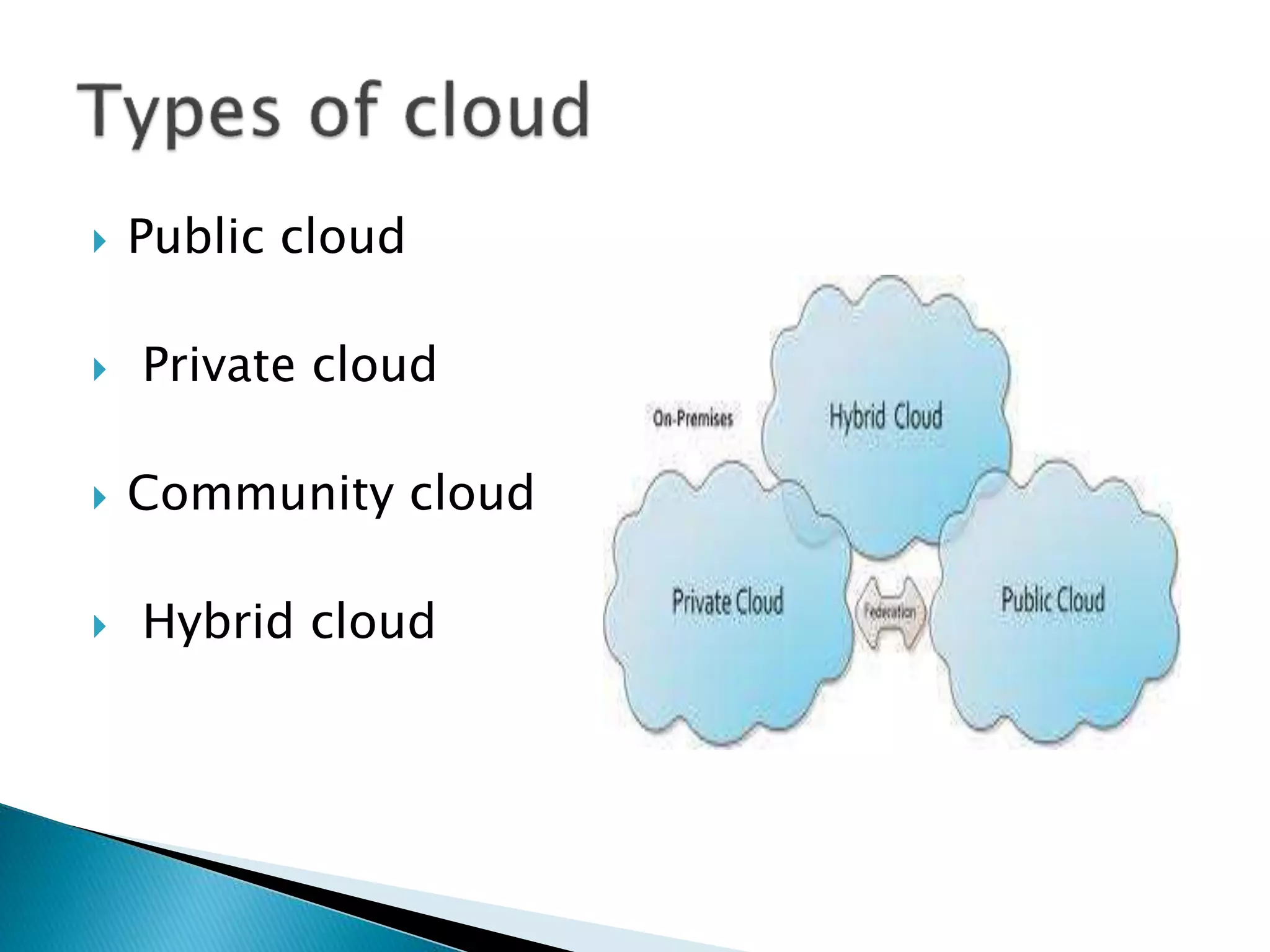
 Public cloud
 Private cloud
 Community cloud
 Hybrid cloud
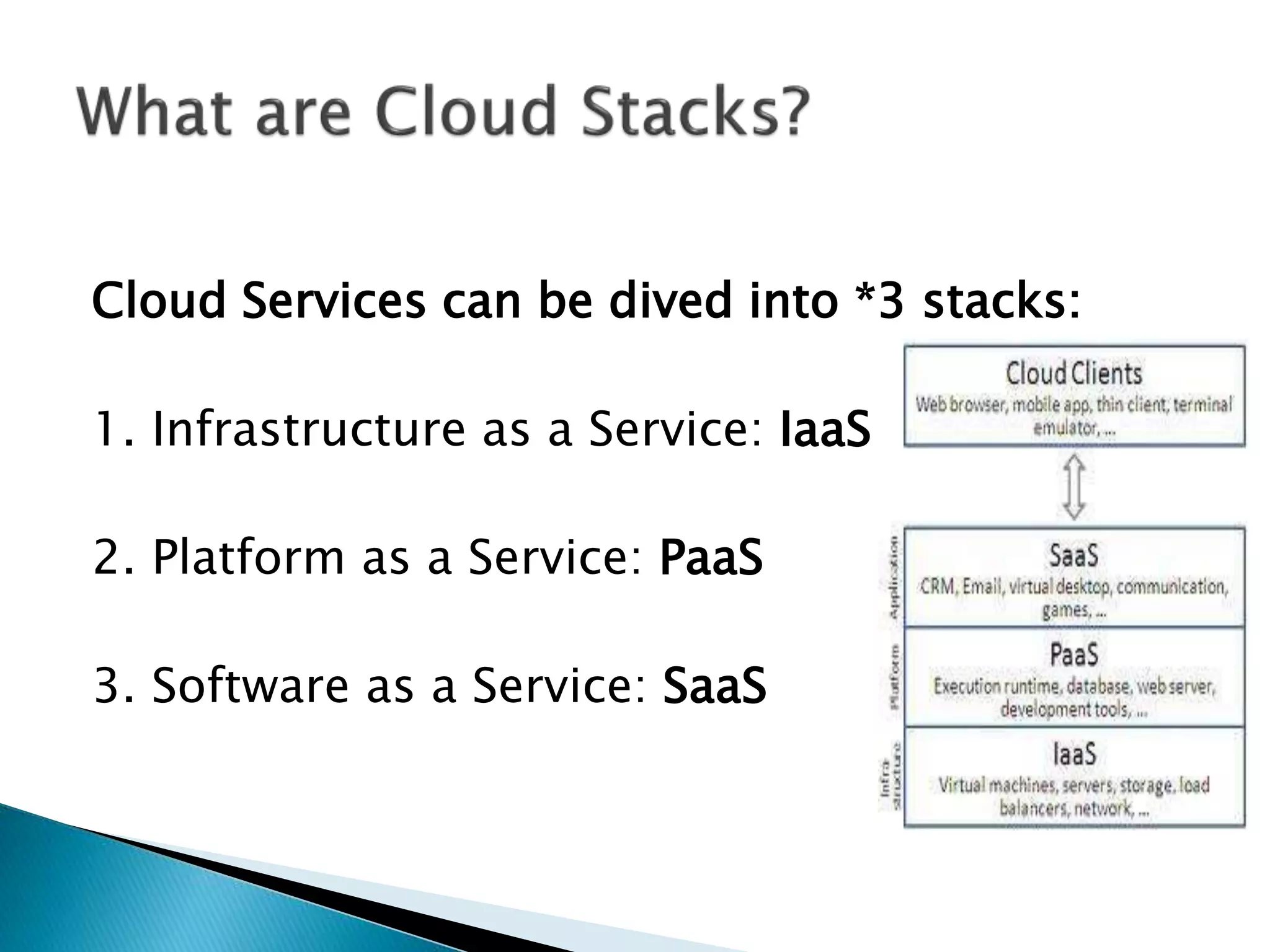
Cloud Services can be dived into *3 stacks:
1. Infrastructure as a Service: IaaS
2. Platform as a Service: PaaS
3. Software as a Service: SaaS
This is the base layer of the cloud stack.
It serves as a foundation for the other two layers, for
their execution. The keyword behind this stack is
Virtualization.
 Infrastructure as a service (IaaS) is a service model
that delivers computer infrastructure on an
outsourced basis to support enterprise operations.
Typically, IaaS provides hardware, storage, servers
and data center space or network components; it
may also include software.
 Infrastructure as a service (IaaS) is also known as
hardware as a service (HaaS).
 Now you don’t need to invest millions of $$$ to get that
development foundation ready for your developers. The PaaS
provider will deliver the platform on the web, and in most of the
cases you can consume the platform using your browser, i.e. no
need to download any software.
PaaS Layers
• Cloud OS
• Cloud Middleware
PaaS Examples
 Google App Engine and Windows Azure are examples of Cloud OS.
Oranges Scape & Wolf PaaS are cloud middleware.
This is the Top most layer of the cloud computing stack -
directly consumed by end user – i.e. SaaS (Software as a
Service).
•Next generation SaaS promises everything as
a service over the internet.
•Cloud computing started with a similar
premise.
•A computing paradigm where there exists a
flexible set of computing resources across
the internet.
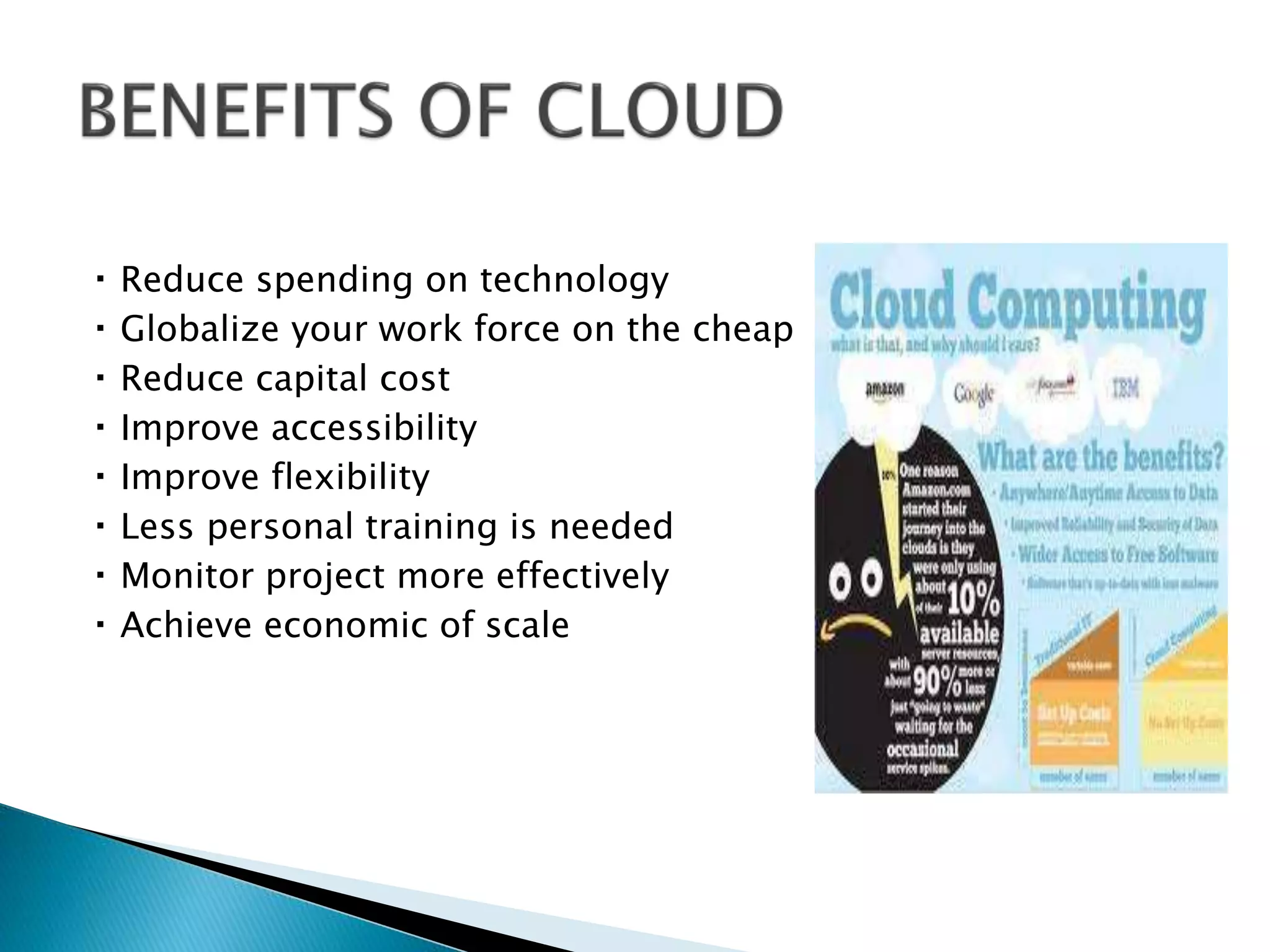
Reduce spending on technology
Globalize your work force on the cheap
Reduce capital cost
Improve accessibility
Improve flexibility
Less personal training is needed
Monitor project more effectively
Achieve economic of scale
• SECURITY AND PRIVACY-
Identify management
Physical and personal
security
Availability
Application security
Privacy
Legal issues
Helps to use application without installation.
Access the personal files at any computer
with internet
This technology allows much more efficient
computation by centralizing storage memory,
processing and bandwidth.
• Cloud Computing holds some strong
promises
– Highly Available
– Dynamically allocate resources
– Pay only for resources that you use
• Cloud Computing is not yet well understood
THANK
YOU

Cloud computing ppt

  • 1.
  • 2.
     Cloud computingconsists of three distinct types of computing services delivered remotely to clients via the internet. ... Clients who subscribe to cloud computing services can reap a variety of benefits, depending on their particular business needs at a given point in time.
  • 4.
    CLOUD COMPUTING ISAN EMERGING COMPUTING TECHNOLOGY THAT USES THE INTERNET AND CENTRAL REMOTE SERVERS TO MAINTAIN DATA AND APPLICATION.
  • 5.
     Application programminginterface.  Device and location independence.  Virtualization.  Reliability.  Maintenance.  Security.  Performance.  Agility.
  • 6.
     Public cloud Private cloud  Community cloud  Hybrid cloud
  • 7.
    Cloud Services canbe dived into *3 stacks: 1. Infrastructure as a Service: IaaS 2. Platform as a Service: PaaS 3. Software as a Service: SaaS
  • 8.
    This is thebase layer of the cloud stack. It serves as a foundation for the other two layers, for their execution. The keyword behind this stack is Virtualization.  Infrastructure as a service (IaaS) is a service model that delivers computer infrastructure on an outsourced basis to support enterprise operations. Typically, IaaS provides hardware, storage, servers and data center space or network components; it may also include software.  Infrastructure as a service (IaaS) is also known as hardware as a service (HaaS).
  • 9.
     Now youdon’t need to invest millions of $$$ to get that development foundation ready for your developers. The PaaS provider will deliver the platform on the web, and in most of the cases you can consume the platform using your browser, i.e. no need to download any software. PaaS Layers • Cloud OS • Cloud Middleware PaaS Examples  Google App Engine and Windows Azure are examples of Cloud OS. Oranges Scape & Wolf PaaS are cloud middleware.
  • 10.
    This is theTop most layer of the cloud computing stack - directly consumed by end user – i.e. SaaS (Software as a Service). •Next generation SaaS promises everything as a service over the internet. •Cloud computing started with a similar premise. •A computing paradigm where there exists a flexible set of computing resources across the internet.
  • 11.
    Reduce spending ontechnology Globalize your work force on the cheap Reduce capital cost Improve accessibility Improve flexibility Less personal training is needed Monitor project more effectively Achieve economic of scale
  • 12.
    • SECURITY ANDPRIVACY- Identify management Physical and personal security Availability Application security Privacy Legal issues
  • 13.
    Helps to useapplication without installation. Access the personal files at any computer with internet This technology allows much more efficient computation by centralizing storage memory, processing and bandwidth.
  • 14.
    • Cloud Computingholds some strong promises – Highly Available – Dynamically allocate resources – Pay only for resources that you use • Cloud Computing is not yet well understood
  • 15.