Assalamualaikum
2
Contents
Key Features
1
2
3
Conclusion4
Overview & Introduction
Cloud Computing For Education
3
Cloud Computing
What is “Cloud Computing”? How it
works? and Why we use it?
 Distributed computing on internet or
delivery of computing service over the
internet.
 Example: Google Drive, One Drive etc.
4
Overview
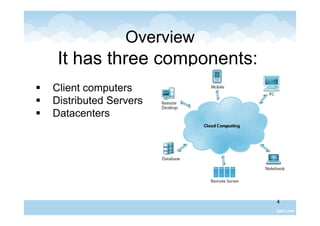
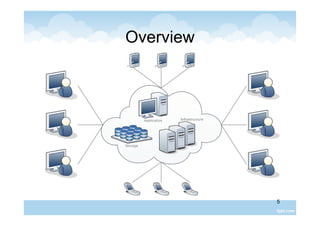
It has three components:
 Client computers
 Distributed Servers
 Datacenters
5
Overview
6
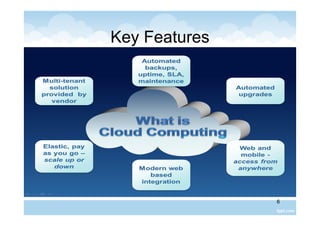
Key Features
7
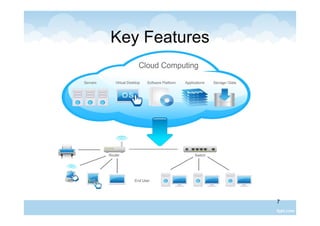
Key Features
8
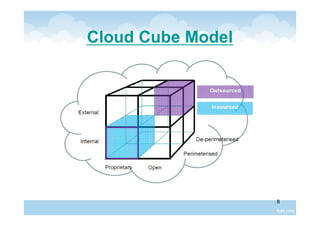
Cloud Cube Model
9
Cloud Education
Cloud education is the new buzz concept in
education and the business world.
 The heart of cloud computing is the flexibility it
offers to create, share, save and collaborate from
anywhere, at anytime and at any place.
 Many institutions have already embraced the
concept of cloud computing to create flexible
educational environments and business to
harness global opportuities.
10
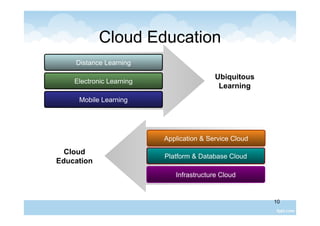
Cloud Education
Distance Learning
Electronic Learning
Mobile Learning
Ubiquitous
Learning
Infrastructure Cloud
Platform & Database Cloud
Application & Service Cloud
Cloud
Education
11
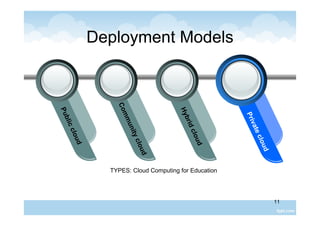
Deployment Models
Publiccloud
Communitycloud
Hybridcloud
Privatecloud
TYPES: Cloud Computing for Education
12
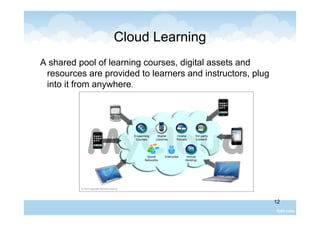
Cloud Learning
A shared pool of learning courses, digital assets and
resources are provided to learners and instructors, plug
into it from anywhere.
13
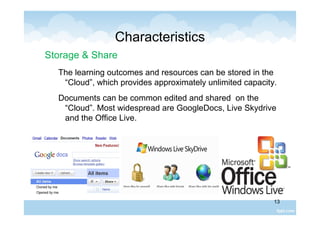
Characteristics
Storage & Share
The learning outcomes and resources can be stored in the
“Cloud”, which provides approximately unlimited capacity.
Documents can be common edited and shared on the
“Cloud”. Most widespread are GoogleDocs, Live Skydrive
and the Office Live.
14
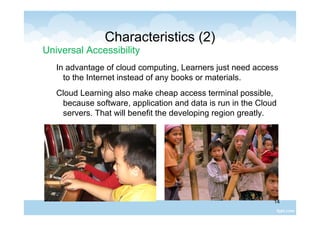
Characteristics (2)
Universal Accessibility
In advantage of cloud computing, Learners just need access
to the Internet instead of any books or materials.
Cloud Learning also make cheap access terminal possible,
because software, application and data is run in the Cloud
servers. That will benefit the developing region greatly.
15
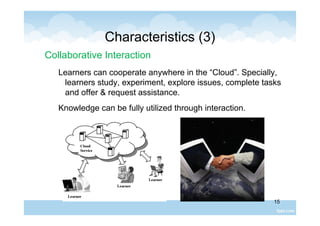
Characteristics (3)
Collaborative Interaction
Learners can cooperate anywhere in the “Cloud”. Specially,
learners study, experiment, explore issues, complete tasks
and offer & request assistance.
Knowledge can be fully utilized through interaction.
16
Characteristics (4)
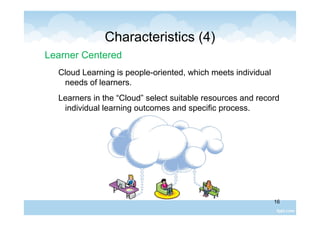
Learner Centered
Cloud Learning is people-oriented, which meets individual
needs of learners.
Learners in the “Cloud” select suitable resources and record
individual learning outcomes and specific process.
17
Cloud learning service application-
External application (1)
Cloud-based unified content delivery platform
 Unified management in cloudy
 Portal websites
 Content examination
 Security services
Cloud-based unified interactive family-school
platform
 Unified communication, registration and storage
 Keeping Track of Student Homework
 Live video and audio
 Score delivery
18
Cloud learning service application-
External application (2)
Cloud-based lifelong learning platform
 Learning e-portfolio
 Educational resources integration
 Credit identification and bank
 Enterprise training
19
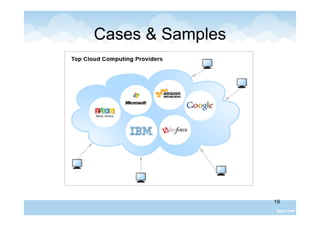
Cases & Samples
20
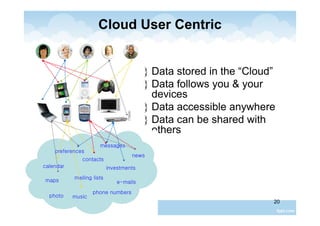
Cloud User Centric
 Data stored in the “Cloud”
 Data follows you & your
devices
 Data accessible anywhere
 Data can be shared with
others
music
preferences
maps
news
contacts
messages
mailing lists
photo
e-mails
calendar
phone numbers
investments
21
Conclusion:
So why we use Cloud Computing in Education?
 Access remotely, from any location, and by any
authorized personnel.
 Educational productivity can increase.
 Easier data access while traveling.
So when asking the question, “What is the
significance of cloud computing in education?”
The answer is simple: Cloud computing is the
future of Education.
22
Thank you for attending!

Cloud Computing for Education & Learning.

  • 1.
  • 2.
    2 Contents Key Features 1 2 3 Conclusion4 Overview &Introduction Cloud Computing For Education
  • 3.
    3 Cloud Computing What is“Cloud Computing”? How it works? and Why we use it?  Distributed computing on internet or delivery of computing service over the internet.  Example: Google Drive, One Drive etc.
  • 4.
    4 Overview It has threecomponents:  Client computers  Distributed Servers  Datacenters
  • 5.
  • 6.
  • 7.
  • 8.
  • 9.
    9 Cloud Education Cloud educationis the new buzz concept in education and the business world.  The heart of cloud computing is the flexibility it offers to create, share, save and collaborate from anywhere, at anytime and at any place.  Many institutions have already embraced the concept of cloud computing to create flexible educational environments and business to harness global opportuities.
  • 10.
    10 Cloud Education Distance Learning ElectronicLearning Mobile Learning Ubiquitous Learning Infrastructure Cloud Platform & Database Cloud Application & Service Cloud Cloud Education
  • 11.
  • 12.
    12 Cloud Learning A sharedpool of learning courses, digital assets and resources are provided to learners and instructors, plug into it from anywhere.
  • 13.
    13 Characteristics Storage & Share Thelearning outcomes and resources can be stored in the “Cloud”, which provides approximately unlimited capacity. Documents can be common edited and shared on the “Cloud”. Most widespread are GoogleDocs, Live Skydrive and the Office Live.
  • 14.
    14 Characteristics (2) Universal Accessibility Inadvantage of cloud computing, Learners just need access to the Internet instead of any books or materials. Cloud Learning also make cheap access terminal possible, because software, application and data is run in the Cloud servers. That will benefit the developing region greatly.
  • 15.
    15 Characteristics (3) Collaborative Interaction Learnerscan cooperate anywhere in the “Cloud”. Specially, learners study, experiment, explore issues, complete tasks and offer & request assistance. Knowledge can be fully utilized through interaction.
  • 16.
    16 Characteristics (4) Learner Centered CloudLearning is people-oriented, which meets individual needs of learners. Learners in the “Cloud” select suitable resources and record individual learning outcomes and specific process.
  • 17.
    17 Cloud learning serviceapplication- External application (1) Cloud-based unified content delivery platform  Unified management in cloudy  Portal websites  Content examination  Security services Cloud-based unified interactive family-school platform  Unified communication, registration and storage  Keeping Track of Student Homework  Live video and audio  Score delivery
  • 18.
    18 Cloud learning serviceapplication- External application (2) Cloud-based lifelong learning platform  Learning e-portfolio  Educational resources integration  Credit identification and bank  Enterprise training
  • 19.
  • 20.
    20 Cloud User Centric Data stored in the “Cloud”  Data follows you & your devices  Data accessible anywhere  Data can be shared with others music preferences maps news contacts messages mailing lists photo e-mails calendar phone numbers investments
  • 21.
    21 Conclusion: So why weuse Cloud Computing in Education?  Access remotely, from any location, and by any authorized personnel.  Educational productivity can increase.  Easier data access while traveling. So when asking the question, “What is the significance of cloud computing in education?” The answer is simple: Cloud computing is the future of Education.
  • 22.
    22 Thank you forattending!