1/10
   Cloud computing is a model for
           enabling convenient, on-demand
           network access to a shared pool of
           configurable computing resources
           (e.g., networks, servers, storage,
           applications, and services) that can
           be rapidly provisioned and released
           with minimal management effort or
           service provider interaction.

2/10
 Front End is the section which the
         computer user can see.
        Back End is the cloud section of the
         system. Its three components are:
           › Data Storage
           › Application Server
           › Control nodes


3/10
 Elasticity and Scalability
        Self Service Provisioning and Automatic
         Releasing
        Standardized Interfaces
        Pay as you go model
        Performance monitoring and measuring
        Maintenance


4/10
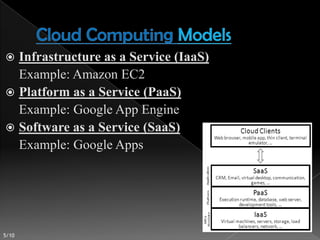
 Infrastructure as a Service (IaaS)
  Example: Amazon EC2
 Platform as a Service (PaaS)
  Example: Google App Engine
 Software as a Service (SaaS)
  Example: Google Apps


5/10
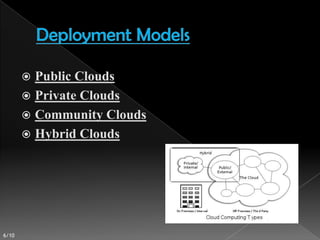
 Public Clouds
        Private Clouds
        Community Clouds
        Hybrid Clouds


6/10
   Google:
           › Google Apps
           › Google App Engine
          Amazon:
           › Simple Storage Service(S3)
           › Elastic Compute Cloud(EC2)
          Microsoft Azure Service Platform


7/10
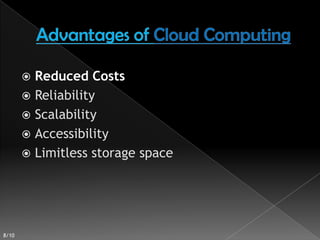
 Reduced Costs
        Reliability
        Scalability
        Accessibility
        Limitless storage space


8/10
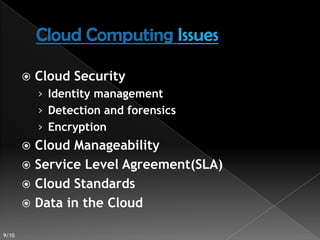
   Cloud Security
           › Identity management
           › Detection and forensics
           › Encryption
        Cloud Manageability
        Service Level Agreement(SLA)
        Cloud Standards
        Data in the Cloud

9/10
10

Cloud computing

  • 1.
  • 2.
    Cloud computing is a model for enabling convenient, on-demand network access to a shared pool of configurable computing resources (e.g., networks, servers, storage, applications, and services) that can be rapidly provisioned and released with minimal management effort or service provider interaction. 2/10
  • 3.
     Front Endis the section which the computer user can see.  Back End is the cloud section of the system. Its three components are: › Data Storage › Application Server › Control nodes 3/10
  • 4.
     Elasticity andScalability  Self Service Provisioning and Automatic Releasing  Standardized Interfaces  Pay as you go model  Performance monitoring and measuring  Maintenance 4/10
  • 5.
     Infrastructure asa Service (IaaS) Example: Amazon EC2  Platform as a Service (PaaS) Example: Google App Engine  Software as a Service (SaaS) Example: Google Apps 5/10
  • 6.
     Public Clouds  Private Clouds  Community Clouds  Hybrid Clouds 6/10
  • 7.
    Google: › Google Apps › Google App Engine  Amazon: › Simple Storage Service(S3) › Elastic Compute Cloud(EC2)  Microsoft Azure Service Platform 7/10
  • 8.
     Reduced Costs  Reliability  Scalability  Accessibility  Limitless storage space 8/10
  • 9.
    Cloud Security › Identity management › Detection and forensics › Encryption  Cloud Manageability  Service Level Agreement(SLA)  Cloud Standards  Data in the Cloud 9/10
  • 10.