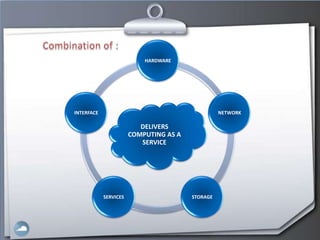
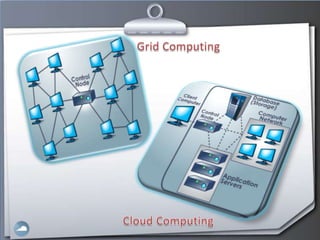
HARDWARE


INTERFACE                                         NETWORK

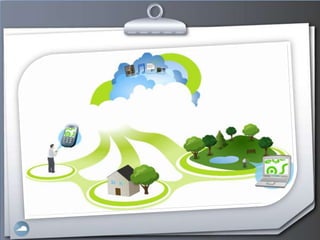
                          DELIVERS
                       COMPUTING AS A
                          SERVICE


            SERVICES                    STORAGE
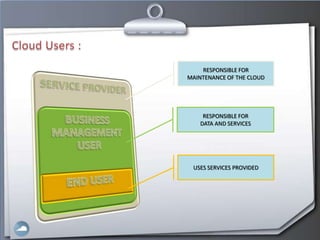
RESPONSIBLE FOR
MAINTENANCE OF THE CLOUD


     RESPONSIBLE FOR
    DATA AND SERVICES


 USES SERVICES PROVIDED
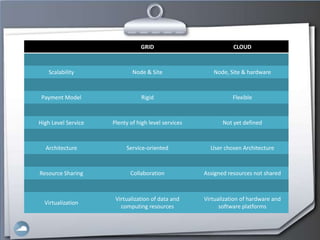
GRID                            CLOUD


   Scalability               Node & Site                Node, Site & hardware


 Payment Model                  Rigid                           Flexible


High Level Service   Plenty of high level services          Not yet defined


  Architecture            Service-oriented             User chosen Architecture


Resource Sharing            Collaboration            Assigned resources not shared


                      Virtualization of data and     Virtualization of hardware and
  Virtualization
                        computing resources                software platforms
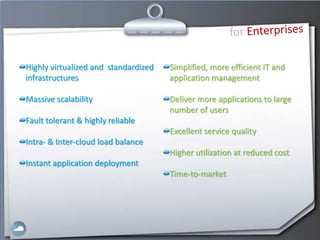
Highly virtualized and standardized   Simplified, more efficient IT and
infrastructures                       application management

Massive scalability                   Deliver more applications to large
                                      number of users
Fault tolerant & highly reliable
                                      Excellent service quality
Intra- & Inter-cloud load balance
                                      Higher utilization at reduced cost
Instant application deployment
                                      Time-to-market
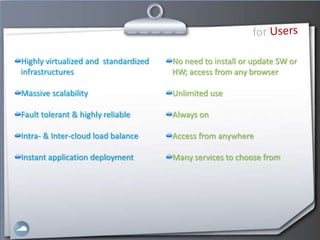
Highly virtualized and standardized   No need to install or update SW or
infrastructures                       HW; access from any browser

Massive scalability                   Unlimited use

Fault tolerant & highly reliable      Always on

Intra- & Inter-cloud load balance     Access from anywhere

Instant application deployment        Many services to choose from
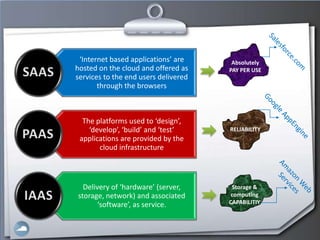
‘Internet based applications’ are     Absolutely
hosted on the cloud and offered as    PAY PER USE
services to the end users delivered
       through the browsers


  The platforms used to ‘design’,
    ‘develop’, ‘build’ and ‘test’     RELIABILITY
 applications are provided by the
       cloud infrastructure


  Delivery of ‘hardware’ (server,      Storage &
storage, network) and associated       computing
       ‘software’, as service.        CAPABILITIY
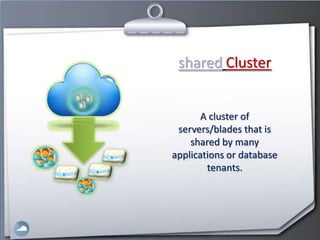
shared Cluster


       A cluster of
 servers/blades that is
    shared by many
applications or database
        tenants.
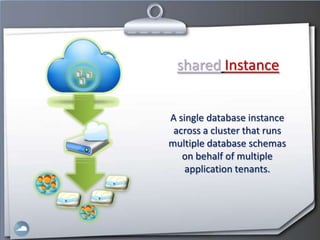
shared Instance


A single database instance
 across a cluster that runs
multiple database schemas
   on behalf of multiple
    application tenants.
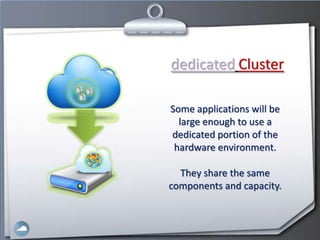
dedicated Cluster

Some applications will be
  large enough to use a
dedicated portion of the
 hardware environment.

  They share the same
components and capacity.
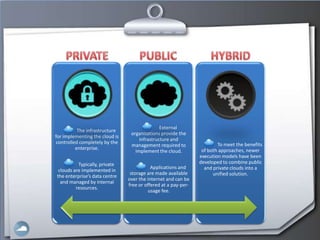
External
          The infrastructure
                                 organizations provide the
for implementing the cloud is
                                     infrastructure and
controlled completely by the                                            To meet the benefits
                                 management required to
         enterprise.                                             of both approaches, newer
                                   implement the cloud.
                                                                execution models have been
          Typically, private                                    developed to combine public
                                           Applications and       and private clouds into a
 clouds are implemented in
                                 storage are made available           unified solution.
the enterprise’s data centre
                                over the internet and can be
  and managed by internal
                                free or offered at a pay-per-
         resources.
                                         usage fee.
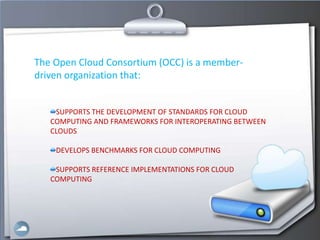
The Open Cloud Consortium (OCC) is a member-
driven organization that:


    SUPPORTS THE DEVELOPMENT OF STANDARDS FOR CLOUD
   COMPUTING AND FRAMEWORKS FOR INTEROPERATING BETWEEN
   CLOUDS

    DEVELOPS BENCHMARKS FOR CLOUD COMPUTING

    SUPPORTS REFERENCE IMPLEMENTATIONS FOR CLOUD
   COMPUTING
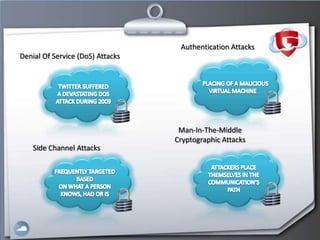
Authentication Attacks
Denial Of Service (DoS) Attacks


                                   Man-In-The-Middle
                                  Cryptographic Attacks
    Side Channel Attacks
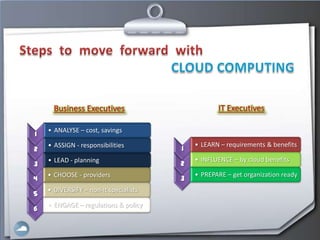
Business Executives                         IT Executives

    • ANALYSE – cost, savings
1
    • ASSIGN - responsibilities            • LEARN – requirements & benefits
2                                      1
    • LEAD - planning                      • INFLUENCE – by cloud benefits
3                                      2
    • CHOOSE - providers                   • PREPARE – get organization ready
4                                      3
    • DIVERSIFY – non-it specialists
5
    • ENGAGE – regulations & policy
6
Cloud Computing

Cloud Computing

  • 3.
    HARDWARE INTERFACE NETWORK DELIVERS COMPUTING AS A SERVICE SERVICES STORAGE
  • 4.
    RESPONSIBLE FOR MAINTENANCE OFTHE CLOUD RESPONSIBLE FOR DATA AND SERVICES USES SERVICES PROVIDED
  • 10.
    GRID CLOUD Scalability Node & Site Node, Site & hardware Payment Model Rigid Flexible High Level Service Plenty of high level services Not yet defined Architecture Service-oriented User chosen Architecture Resource Sharing Collaboration Assigned resources not shared Virtualization of data and Virtualization of hardware and Virtualization computing resources software platforms
  • 12.
    Highly virtualized andstandardized Simplified, more efficient IT and infrastructures application management Massive scalability Deliver more applications to large number of users Fault tolerant & highly reliable Excellent service quality Intra- & Inter-cloud load balance Higher utilization at reduced cost Instant application deployment Time-to-market
  • 13.
    Highly virtualized andstandardized No need to install or update SW or infrastructures HW; access from any browser Massive scalability Unlimited use Fault tolerant & highly reliable Always on Intra- & Inter-cloud load balance Access from anywhere Instant application deployment Many services to choose from
  • 15.
    ‘Internet based applications’are Absolutely hosted on the cloud and offered as PAY PER USE services to the end users delivered through the browsers The platforms used to ‘design’, ‘develop’, ‘build’ and ‘test’ RELIABILITY applications are provided by the cloud infrastructure Delivery of ‘hardware’ (server, Storage & storage, network) and associated computing ‘software’, as service. CAPABILITIY
  • 17.
    shared Cluster A cluster of servers/blades that is shared by many applications or database tenants.
  • 18.
    shared Instance A singledatabase instance across a cluster that runs multiple database schemas on behalf of multiple application tenants.
  • 19.
    dedicated Cluster Some applicationswill be large enough to use a dedicated portion of the hardware environment. They share the same components and capacity.
  • 22.
    External The infrastructure organizations provide the for implementing the cloud is infrastructure and controlled completely by the To meet the benefits management required to enterprise. of both approaches, newer implement the cloud. execution models have been Typically, private developed to combine public Applications and and private clouds into a clouds are implemented in storage are made available unified solution. the enterprise’s data centre over the internet and can be and managed by internal free or offered at a pay-per- resources. usage fee.
  • 24.
    The Open CloudConsortium (OCC) is a member- driven organization that: SUPPORTS THE DEVELOPMENT OF STANDARDS FOR CLOUD COMPUTING AND FRAMEWORKS FOR INTEROPERATING BETWEEN CLOUDS DEVELOPS BENCHMARKS FOR CLOUD COMPUTING SUPPORTS REFERENCE IMPLEMENTATIONS FOR CLOUD COMPUTING
  • 30.
    Authentication Attacks Denial OfService (DoS) Attacks Man-In-The-Middle Cryptographic Attacks Side Channel Attacks
  • 32.
    Business Executives IT Executives • ANALYSE – cost, savings 1 • ASSIGN - responsibilities • LEARN – requirements & benefits 2 1 • LEAD - planning • INFLUENCE – by cloud benefits 3 2 • CHOOSE - providers • PREPARE – get organization ready 4 3 • DIVERSIFY – non-it specialists 5 • ENGAGE – regulations & policy 6