Cloud based software testing -
Cloud based AI services - Types
of cloud computing
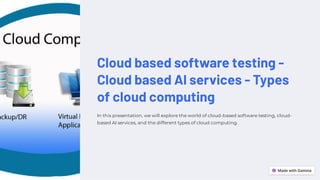
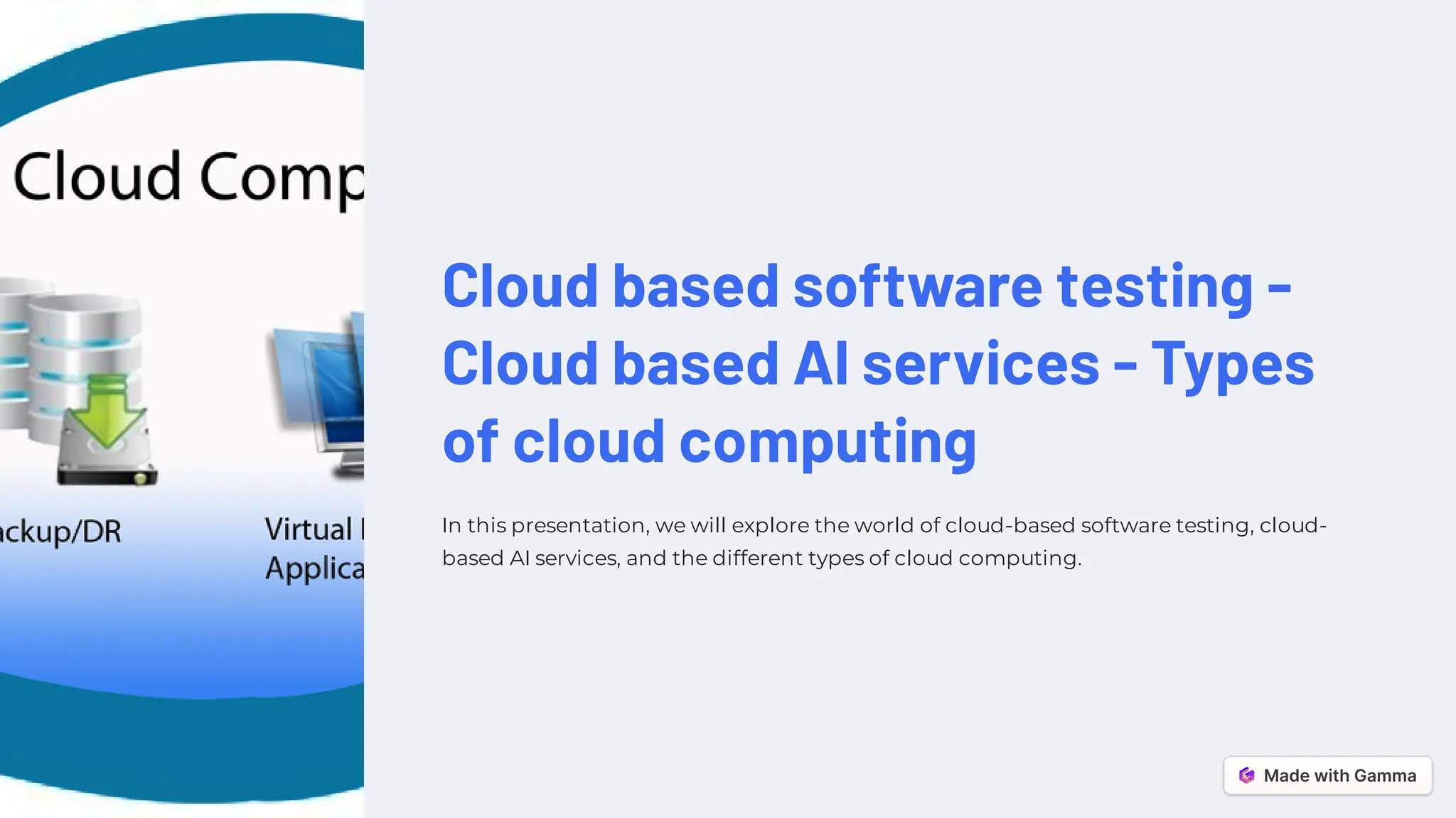
In this presentation, we will explore the world of cloud-based software testing, cloud-
based AI services, and the different types of cloud computing.
Cloud-based Software Testing
1 Advantages
Efficient, scalable, and cost-effective testing solutions accessible from
anywhere.
2 Challenges
Ensuring data security, overcoming network limitations, and managing
dependencies.
3 Best Practices
Use automation, leverage cloud-based testing environments, and ensure
seamless integration with CI/CD pipelines.
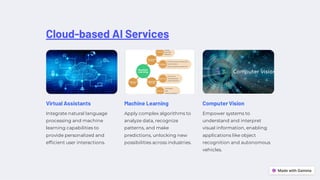
Cloud-based AI Services
Virtual Assistants
Integrate natural language
processing and machine
learning capabilities to
provide personalized and
efficient user interactions.
Machine Learning
Apply complex algorithms to
analyze data, recognize
patterns, and make
predictions, unlocking new
possibilities across industries.
Computer Vision
Empower systems to
understand and interpret
visual information, enabling
applications like object
recognition and autonomous
vehicles.
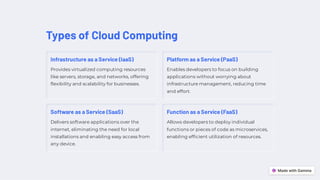
Types of Cloud Computing
Infrastructure as a Service (IaaS)
Provides virtualized computing resources
like servers, storage, and networks, offering
flexibility and scalability for businesses.
Platform as a Service (PaaS)
Enables developers to focus on building
applications without worrying about
infrastructure management, reducing time
and effort.
Software as a Service (SaaS)
Delivers software applications over the
internet, eliminating the need for local
installations and enabling easy access from
any device.
Function as a Service (FaaS)
Allows developers to deploy individual
functions or pieces of code as microservices,
enabling efficient utilization of resources.
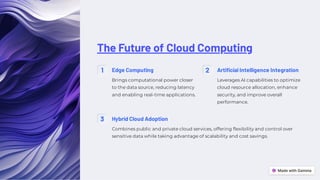
The Future of Cloud Computing
1 Edge Computing
Brings computational power closer
to the data source, reducing latency
and enabling real-time applications.
2 Artificial Intelligence Integration
Leverages AI capabilities to optimize
cloud resource allocation, enhance
security, and improve overall
performance.
3 Hybrid Cloud Adoption
Combines public and private cloud services, offering flexibility and control over
sensitive data while taking advantage of scalability and cost savings.
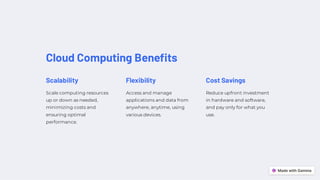
Cloud Computing Benefits
Scalability
Scale computing resources
up or down as needed,
minimizing costs and
ensuring optimal
performance.
Flexibility
Access and manage
applications and data from
anywhere, anytime, using
various devices.
Cost Savings
Reduce upfront investment
in hardware and software,
and pay only for what you
use.
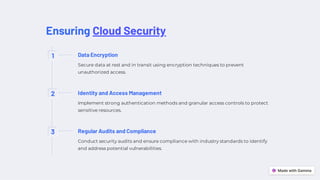
Ensuring Cloud Security
1 Data Encryption
Secure data at rest and in transit using encryption techniques to prevent
unauthorized access.
2 Identity and Access Management
Implement strong authentication methods and granular access controls to protect
sensitive resources.
3 Regular Audits and Compliance
Conduct security audits and ensure compliance with industry standards to identify
and address potential vulnerabilities.
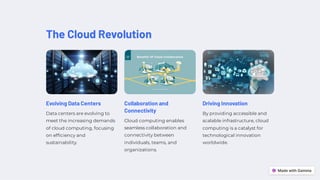
The Cloud Revolution
Evolving Data Centers
Data centers are evolving to
meet the increasing demands
of cloud computing, focusing
on efficiency and
sustainability.
Collaboration and
Connectivity
Cloud computing enables
seamless collaboration and
connectivity between
individuals, teams, and
organizations.
Driving Innovation
By providing accessible and
scalable infrastructure, cloud
computing is a catalyst for
technological innovation
worldwide.

Cloud based AI services - cloud testing challenges

  • 1.
    Cloud based softwaretesting - Cloud based AI services - Types of cloud computing In this presentation, we will explore the world of cloud-based software testing, cloud- based AI services, and the different types of cloud computing.
  • 2.
    Cloud-based Software Testing 1Advantages Efficient, scalable, and cost-effective testing solutions accessible from anywhere. 2 Challenges Ensuring data security, overcoming network limitations, and managing dependencies. 3 Best Practices Use automation, leverage cloud-based testing environments, and ensure seamless integration with CI/CD pipelines.
  • 3.
    Cloud-based AI Services VirtualAssistants Integrate natural language processing and machine learning capabilities to provide personalized and efficient user interactions. Machine Learning Apply complex algorithms to analyze data, recognize patterns, and make predictions, unlocking new possibilities across industries. Computer Vision Empower systems to understand and interpret visual information, enabling applications like object recognition and autonomous vehicles.
  • 4.
    Types of CloudComputing Infrastructure as a Service (IaaS) Provides virtualized computing resources like servers, storage, and networks, offering flexibility and scalability for businesses. Platform as a Service (PaaS) Enables developers to focus on building applications without worrying about infrastructure management, reducing time and effort. Software as a Service (SaaS) Delivers software applications over the internet, eliminating the need for local installations and enabling easy access from any device. Function as a Service (FaaS) Allows developers to deploy individual functions or pieces of code as microservices, enabling efficient utilization of resources.
  • 5.
    The Future ofCloud Computing 1 Edge Computing Brings computational power closer to the data source, reducing latency and enabling real-time applications. 2 Artificial Intelligence Integration Leverages AI capabilities to optimize cloud resource allocation, enhance security, and improve overall performance. 3 Hybrid Cloud Adoption Combines public and private cloud services, offering flexibility and control over sensitive data while taking advantage of scalability and cost savings.
  • 6.
    Cloud Computing Benefits Scalability Scalecomputing resources up or down as needed, minimizing costs and ensuring optimal performance. Flexibility Access and manage applications and data from anywhere, anytime, using various devices. Cost Savings Reduce upfront investment in hardware and software, and pay only for what you use.
  • 7.
    Ensuring Cloud Security 1Data Encryption Secure data at rest and in transit using encryption techniques to prevent unauthorized access. 2 Identity and Access Management Implement strong authentication methods and granular access controls to protect sensitive resources. 3 Regular Audits and Compliance Conduct security audits and ensure compliance with industry standards to identify and address potential vulnerabilities.
  • 8.
    The Cloud Revolution EvolvingData Centers Data centers are evolving to meet the increasing demands of cloud computing, focusing on efficiency and sustainability. Collaboration and Connectivity Cloud computing enables seamless collaboration and connectivity between individuals, teams, and organizations. Driving Innovation By providing accessible and scalable infrastructure, cloud computing is a catalyst for technological innovation worldwide.