Introduction to Digital
Services and Solutions
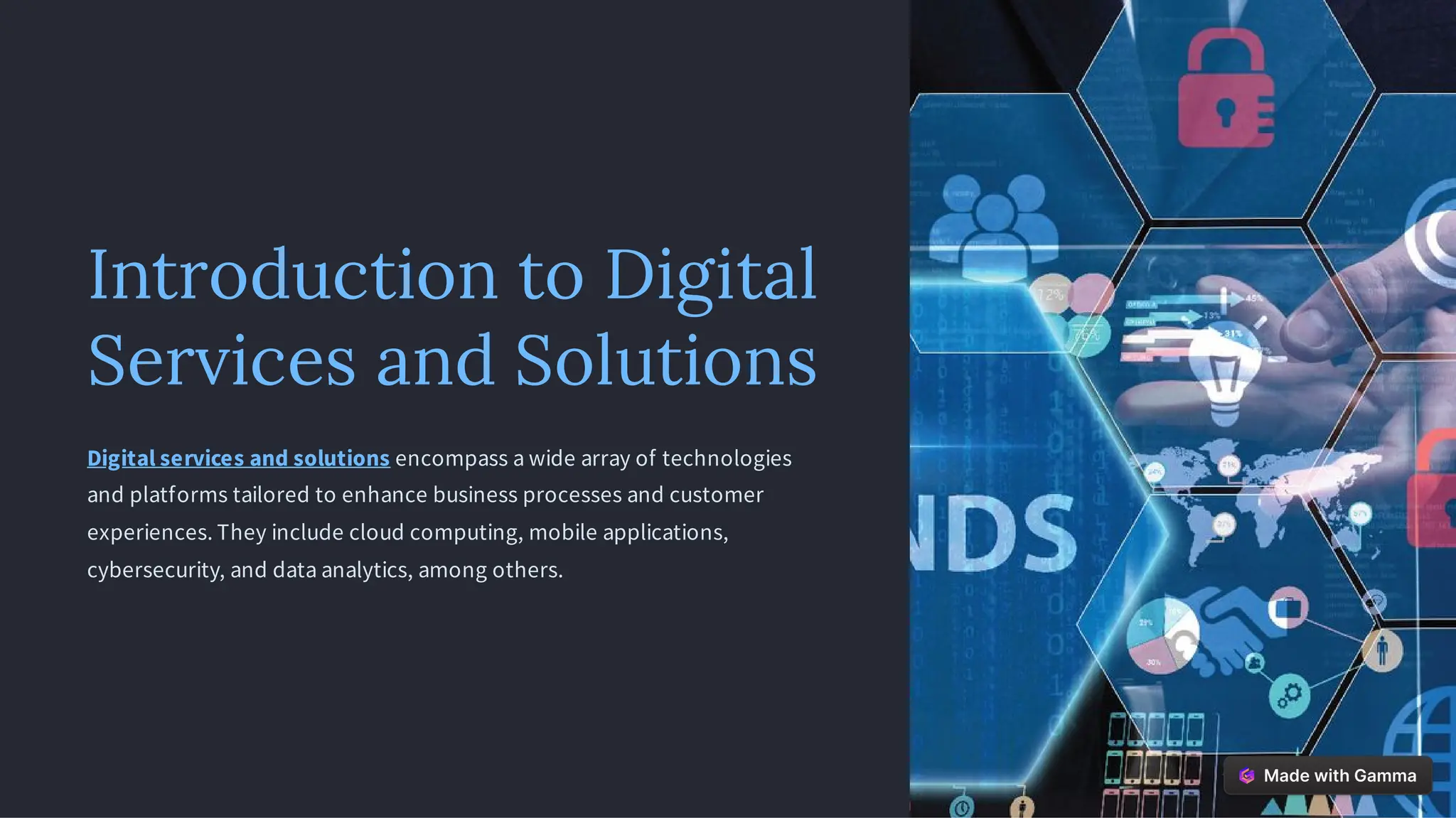
Digital services and solutions encompass a wide array of technologies
and platforms tailored to enhance business processes and customer
experiences. They include cloud computing, mobile applications,
cybersecurity, and data analytics, among others.
What is Digital Transformation?
1 Redefining Business
Strategies
Digital transformation involves
rethinking traditional business
models and processes, harnessing
technology to improve efficiency
and agility.
2 Enhancing Customer
Engagement
It's about leveraging digital tools and
channels to create compelling and
personalized experiences for
customers.
3 Optimizing Operations
Streamline digital transformation operations through automation and data-driven
insights is a core focus of digital transformation efforts.
Benefits of Digital Transformation
Increased Efficiency
Digital transformation often
leads to improved
productivity, reduced
operational costs, and faster
decision-making processes.
Enhanced Scalability
Modernizing systems can
provide the flexibility
necessary to scale operations
and adapt to evolving market
demands.
Elevated Customer
Experience
By embracing innovation,
businesses can deliver
seamless and personalized
experiences that cater to
customer needs and
preferences.
Key Challenges in Digital
Transformation
1
Legacy Systems
Integration
Integrating new technologies
with existing legacy systems
can be complex and require
significant resources.
2
Change Management
Managing cultural and
organizational shifts is crucial,
as resistance to change can
hinder transformation
efforts.
3
Cybersecurity Risks
As digital footprints expand,
safeguarding sensitive data
and systems becomes
increasingly challenging.
Strategies for Successful Digital
Transformation
Clear Vision &
Leadership
Having a well-defined digital
strategy and strong
leadership is crucial for
guiding the transformation
journey.
Agile Approach &
Flexibility
Embracing an agile mindset
and fostering a culture of
adaptability allows for
iterative improvements
throughout the process.
Talent Development
& Upskilling
Investing in workforce
training and skill
enhancement ensures that
employees are equipped to
leverage new technologies.
Case Studies of Successful Digital
Transformation
1 Digital Commerce Revolution
A retail giant transformed its e-commerce platform, integrating AI and
omnichannel capabilities, resulting in accelerated sales growth.
2 Enterprise Resource Optimization
A multinational corporation optimized its supply chain through digital
technologies, achieving cost savings and process efficiency.
3 Healthcare Innovations
A leading healthcare provider leveraged telemedicine and data analytics to
enhance patient care and operational effectiveness.
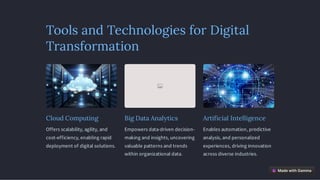
Tools and Technologies for Digital
Transformation
Cloud Computing
Offers scalability, agility, and
cost-efficiency, enabling rapid
deployment of digital solutions.
Big Data Analytics
Empowers data-driven decision-
making and insights, uncovering
valuable patterns and trends
within organizational data.
Artificial Intelligence
Enables automation, predictive
analysis, and personalized
experiences, driving innovation
across diverse industries.
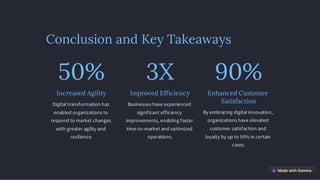
Conclusion and Key Takeaways
50%
Increased Agility
Digital transformation has
enabled organizations to
respond to market changes
with greater agility and
resilience.
3X
Improved Efficiency
Businesses have experienced
significant efficiency
improvements, enabling faster
time-to-market and optimized
operations.
90%
Enhanced Customer
Satisfaction
By embracing digital innovation,
organizations have elevated
customer satisfaction and
loyalty by up to 90% in certain
cases.

Introduction-to-Digital-Services-and-Solutions.pdf

  • 1.
    Introduction to Digital Servicesand Solutions Digital services and solutions encompass a wide array of technologies and platforms tailored to enhance business processes and customer experiences. They include cloud computing, mobile applications, cybersecurity, and data analytics, among others.
  • 2.
    What is DigitalTransformation? 1 Redefining Business Strategies Digital transformation involves rethinking traditional business models and processes, harnessing technology to improve efficiency and agility. 2 Enhancing Customer Engagement It's about leveraging digital tools and channels to create compelling and personalized experiences for customers. 3 Optimizing Operations Streamline digital transformation operations through automation and data-driven insights is a core focus of digital transformation efforts.
  • 3.
    Benefits of DigitalTransformation Increased Efficiency Digital transformation often leads to improved productivity, reduced operational costs, and faster decision-making processes. Enhanced Scalability Modernizing systems can provide the flexibility necessary to scale operations and adapt to evolving market demands. Elevated Customer Experience By embracing innovation, businesses can deliver seamless and personalized experiences that cater to customer needs and preferences.
  • 4.
    Key Challenges inDigital Transformation 1 Legacy Systems Integration Integrating new technologies with existing legacy systems can be complex and require significant resources. 2 Change Management Managing cultural and organizational shifts is crucial, as resistance to change can hinder transformation efforts. 3 Cybersecurity Risks As digital footprints expand, safeguarding sensitive data and systems becomes increasingly challenging.
  • 5.
    Strategies for SuccessfulDigital Transformation Clear Vision & Leadership Having a well-defined digital strategy and strong leadership is crucial for guiding the transformation journey. Agile Approach & Flexibility Embracing an agile mindset and fostering a culture of adaptability allows for iterative improvements throughout the process. Talent Development & Upskilling Investing in workforce training and skill enhancement ensures that employees are equipped to leverage new technologies.
  • 6.
    Case Studies ofSuccessful Digital Transformation 1 Digital Commerce Revolution A retail giant transformed its e-commerce platform, integrating AI and omnichannel capabilities, resulting in accelerated sales growth. 2 Enterprise Resource Optimization A multinational corporation optimized its supply chain through digital technologies, achieving cost savings and process efficiency. 3 Healthcare Innovations A leading healthcare provider leveraged telemedicine and data analytics to enhance patient care and operational effectiveness.
  • 7.
    Tools and Technologiesfor Digital Transformation Cloud Computing Offers scalability, agility, and cost-efficiency, enabling rapid deployment of digital solutions. Big Data Analytics Empowers data-driven decision- making and insights, uncovering valuable patterns and trends within organizational data. Artificial Intelligence Enables automation, predictive analysis, and personalized experiences, driving innovation across diverse industries.
  • 8.
    Conclusion and KeyTakeaways 50% Increased Agility Digital transformation has enabled organizations to respond to market changes with greater agility and resilience. 3X Improved Efficiency Businesses have experienced significant efficiency improvements, enabling faster time-to-market and optimized operations. 90% Enhanced Customer Satisfaction By embracing digital innovation, organizations have elevated customer satisfaction and loyalty by up to 90% in certain cases.