Dr.Latha Venkatesan
Principal, Apollo College of Nursing, Chennai 600 095
Email: latha6901@yahoo.com
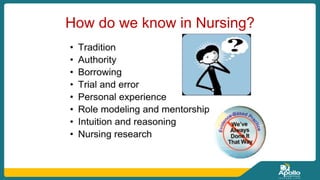
How do we know in Nursing?
What is the Percentage of nursing practices
based on research findings in India?
It’s a trend !
• In 2012 USA 55% of all nursing
practices are based on research
findings.
• The American Nurses Association
(ANA) predicts that by 2020, 90% of all
nursing practice will be based on EBP
research findings.
Indian perspectives
• Nursing research Society of India
• Clinical Nursing Research Society in India
–Visit www.cnrsi.in
• TamilNadu Nurses and Midwives Council
–Nursing Research Archives
What is Clinical Nursing Research
Clinical research is a branch of healthcare science that determines the
safety and effectiveness (efficacy) of medications, devices, diagnostic
products and treatment regimens intended for human use.
These may be used for prevention, treatment, diagnosis or for relieving
symptoms of a disease.
Clinical nursing research is a systematic inquiry into the problems
encountered in nursing practice and into the modalities of patient care.
Myths around CNR…..
Clinical research Vs Clinical trials
EBP is not synonymous with research.
• Research focuses on discovery
• EBP focuses on application
Clinical Nursing Research is not synonymous with Nursing
Audit
Levels of Evidence
Why clinical nursing research is important
to nursing practice?
• It results in better patient outcomes.
• It contributes to the science of nursing.
• It keeps practice current and relevant.
• It increases confidence in decision making.
• Policies and procedures are current and include
the latest research, thus supporting JCAHO-
readiness.
Need for clinical nursing research
Why Nurses?
• Critical members of the patient care team
• Empathy, sympathy and noble fellow beings.
• Closer to the participants/patients
• Care and research are a continuum .
• Patience and good interpersonal relationships.
• Recognized globally nurses play a important role in emancipating
quality care by research and quality framework.
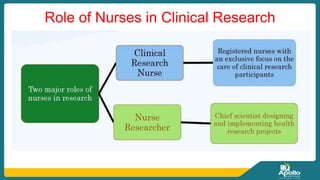
Role of Nurses in Clinical Research
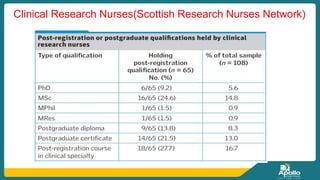
Clinical Research Nurses(Scottish Research Nurses Network)
Clinical Nurse Researcher in Clinical Research
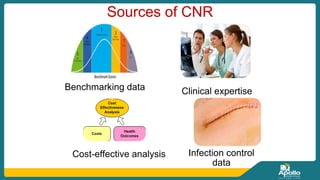
Sources of CNR
Benchmarking data Clinical expertise
Cost-effective analysis Infection control
data
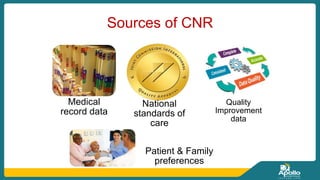
Sources of CNR
Medical
record data
National
standards of
care
Quality
Improvement
data
Patient & Family
preferences
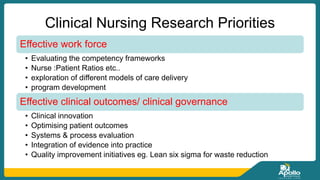
Clinical Nursing Research Priorities
Effective work force
• Evaluating the competency frameworks
• Nurse :Patient Ratios etc..
• exploration of different models of care delivery
• program development
Effective clinical outcomes/ clinical governance
• Clinical innovation
• Optimising patient outcomes
• Systems & process evaluation
• Integration of evidence into practice
• Quality improvement initiatives eg. Lean six sigma for waste reduction
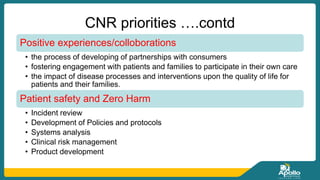
CNR priorities ….contd
Positive experiences/colloborations
• the process of developing of partnerships with consumers
• fostering engagement with patients and families to participate in their own care
• the impact of disease processes and interventions upon the quality of life for
patients and their families.
Patient safety and Zero Harm
• Incident review
• Development of Policies and protocols
• Systems analysis
• Clinical risk management
• Product development
Steps in Clinical Research
Formulating the
research question
based on day to
day care
Defining the
purpose of the
study
Reviewing related
literature and
Formulating
hypotheses and
defining variables
Selecting the
research design,
sample setting
Conducting a pilot
study
Collecting and
analyzing the data
Change of
practice towards
quality
improvement.
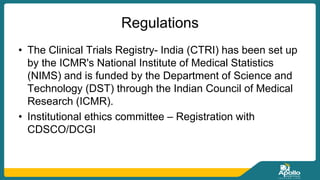
Regulations
• The Clinical Trials Registry- India (CTRI) has been set up
by the ICMR's National Institute of Medical Statistics
(NIMS) and is funded by the Department of Science and
Technology (DST) through the Indian Council of Medical
Research (ICMR).
• Institutional ethics committee – Registration with
CDSCO/DCGI
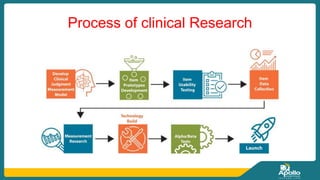
Process of clinical Research
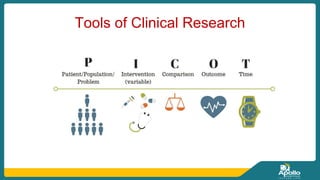
Tools of Clinical Research
Referenced Rationale & Quality of Evidence Rating Contd-
• The PICOT format
28
Elements
Participants Newborn babies with Vernix Caseosa
Intervention is it really works out the baby’s skin?
Comparison Compared with its properties.
Outcome Protection against infection, Decreased
Skin permeability, Skin cleansing,
Moisturisation the skin Surface
PH Development ,Wound Healing.
Timeframe During Postnatal period
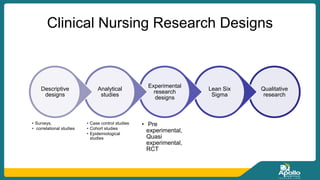
Clinical Nursing Research Designs
Qualitative
research
Lean Six
Sigma
Experimental
research
designs
• Pre
experimental,
Quasi
experimental,
RCT
Analytical
studies
• Case control studies
• Cohort studies
• Epidemiological
studies
Descriptive
designs
• Surveys,
• correlational studies
Cochrane Database of Systematic
Reviews
• The Cochrane Database of Systematic Reviews (CDSR)
is the leading journal and database for systematic reviews
in health care. CDSR includes Cochrane Reviews
(systematic reviews) and protocols for Cochrane Reviews
as well as editorials and supplements.
• CDSR (ISSN 1469-493X) is owned and produced by
Cochrane, a global, independent network of researchers,
professionals, patients, carers, and people interested in
health.
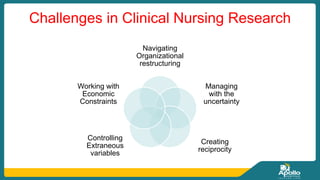
Challenges in Clinical Nursing Research
Navigating
Organizational
restructuring
Managing
with the
uncertainty
Creating
reciprocity
Controlling
Extraneous
variables
Working with
Economic
Constraints
Any queries ???

Clinical nursing research

  • 1.
    Dr.Latha Venkatesan Principal, ApolloCollege of Nursing, Chennai 600 095 Email: latha6901@yahoo.com
  • 5.
    How do weknow in Nursing?
  • 6.
    What is thePercentage of nursing practices based on research findings in India?
  • 7.
    It’s a trend! • In 2012 USA 55% of all nursing practices are based on research findings. • The American Nurses Association (ANA) predicts that by 2020, 90% of all nursing practice will be based on EBP research findings.
  • 8.
    Indian perspectives • Nursingresearch Society of India • Clinical Nursing Research Society in India –Visit www.cnrsi.in • TamilNadu Nurses and Midwives Council –Nursing Research Archives
  • 9.
    What is ClinicalNursing Research Clinical research is a branch of healthcare science that determines the safety and effectiveness (efficacy) of medications, devices, diagnostic products and treatment regimens intended for human use. These may be used for prevention, treatment, diagnosis or for relieving symptoms of a disease. Clinical nursing research is a systematic inquiry into the problems encountered in nursing practice and into the modalities of patient care.
  • 10.
    Myths around CNR….. Clinicalresearch Vs Clinical trials EBP is not synonymous with research. • Research focuses on discovery • EBP focuses on application Clinical Nursing Research is not synonymous with Nursing Audit
  • 11.
  • 12.
    Why clinical nursingresearch is important to nursing practice? • It results in better patient outcomes. • It contributes to the science of nursing. • It keeps practice current and relevant. • It increases confidence in decision making. • Policies and procedures are current and include the latest research, thus supporting JCAHO- readiness.
  • 13.
    Need for clinicalnursing research
  • 14.
    Why Nurses? • Criticalmembers of the patient care team • Empathy, sympathy and noble fellow beings. • Closer to the participants/patients • Care and research are a continuum . • Patience and good interpersonal relationships. • Recognized globally nurses play a important role in emancipating quality care by research and quality framework.
  • 15.
    Role of Nursesin Clinical Research
  • 17.
    Clinical Research Nurses(ScottishResearch Nurses Network)
  • 18.
    Clinical Nurse Researcherin Clinical Research
  • 19.
    Sources of CNR Benchmarkingdata Clinical expertise Cost-effective analysis Infection control data
  • 20.
    Sources of CNR Medical recorddata National standards of care Quality Improvement data Patient & Family preferences
  • 21.
    Clinical Nursing ResearchPriorities Effective work force • Evaluating the competency frameworks • Nurse :Patient Ratios etc.. • exploration of different models of care delivery • program development Effective clinical outcomes/ clinical governance • Clinical innovation • Optimising patient outcomes • Systems & process evaluation • Integration of evidence into practice • Quality improvement initiatives eg. Lean six sigma for waste reduction
  • 22.
    CNR priorities ….contd Positiveexperiences/colloborations • the process of developing of partnerships with consumers • fostering engagement with patients and families to participate in their own care • the impact of disease processes and interventions upon the quality of life for patients and their families. Patient safety and Zero Harm • Incident review • Development of Policies and protocols • Systems analysis • Clinical risk management • Product development
  • 24.
    Steps in ClinicalResearch Formulating the research question based on day to day care Defining the purpose of the study Reviewing related literature and Formulating hypotheses and defining variables Selecting the research design, sample setting Conducting a pilot study Collecting and analyzing the data Change of practice towards quality improvement.
  • 25.
    Regulations • The ClinicalTrials Registry- India (CTRI) has been set up by the ICMR's National Institute of Medical Statistics (NIMS) and is funded by the Department of Science and Technology (DST) through the Indian Council of Medical Research (ICMR). • Institutional ethics committee – Registration with CDSCO/DCGI
  • 26.
  • 27.
  • 28.
    Referenced Rationale &Quality of Evidence Rating Contd- • The PICOT format 28 Elements Participants Newborn babies with Vernix Caseosa Intervention is it really works out the baby’s skin? Comparison Compared with its properties. Outcome Protection against infection, Decreased Skin permeability, Skin cleansing, Moisturisation the skin Surface PH Development ,Wound Healing. Timeframe During Postnatal period
  • 29.
    Clinical Nursing ResearchDesigns Qualitative research Lean Six Sigma Experimental research designs • Pre experimental, Quasi experimental, RCT Analytical studies • Case control studies • Cohort studies • Epidemiological studies Descriptive designs • Surveys, • correlational studies
  • 32.
    Cochrane Database ofSystematic Reviews • The Cochrane Database of Systematic Reviews (CDSR) is the leading journal and database for systematic reviews in health care. CDSR includes Cochrane Reviews (systematic reviews) and protocols for Cochrane Reviews as well as editorials and supplements. • CDSR (ISSN 1469-493X) is owned and produced by Cochrane, a global, independent network of researchers, professionals, patients, carers, and people interested in health.
  • 33.
    Challenges in ClinicalNursing Research Navigating Organizational restructuring Managing with the uncertainty Creating reciprocity Controlling Extraneous variables Working with Economic Constraints
  • 34.

Editor's Notes

  • #29 The PICOT format is a helpful approach for summarizing research questions that explore the vernix caseosa effect over the skin of Newborn.