1
Climate Change and Our Health
Our Fight for Healthy Air
2
American Lung Association
Mission: To save lives by
improving lung health and
preventing lung disease
Vision: A world free of lung
disease
Active nationally, and in all 50
states.
3
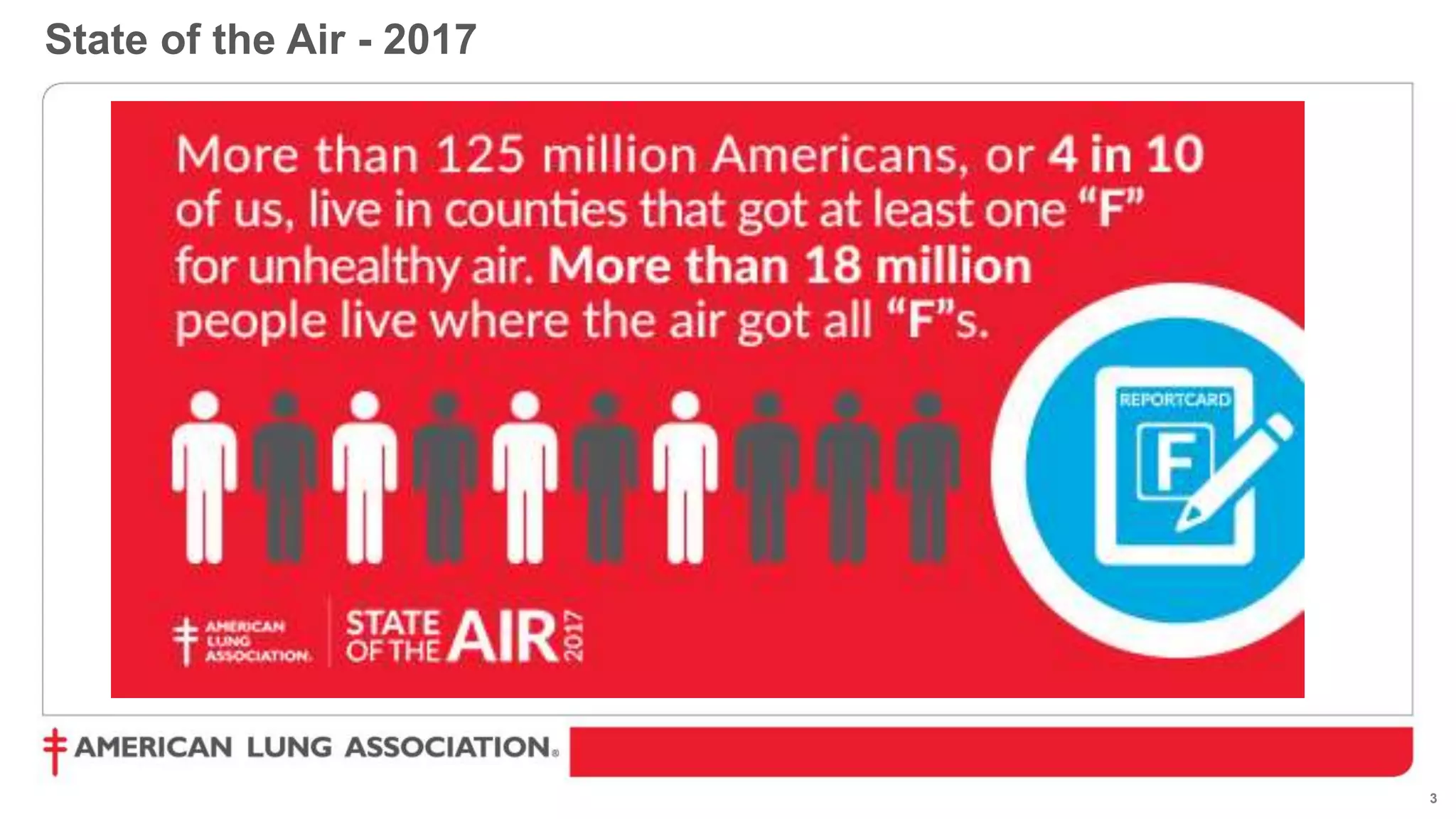
State of the Air - 2017
4
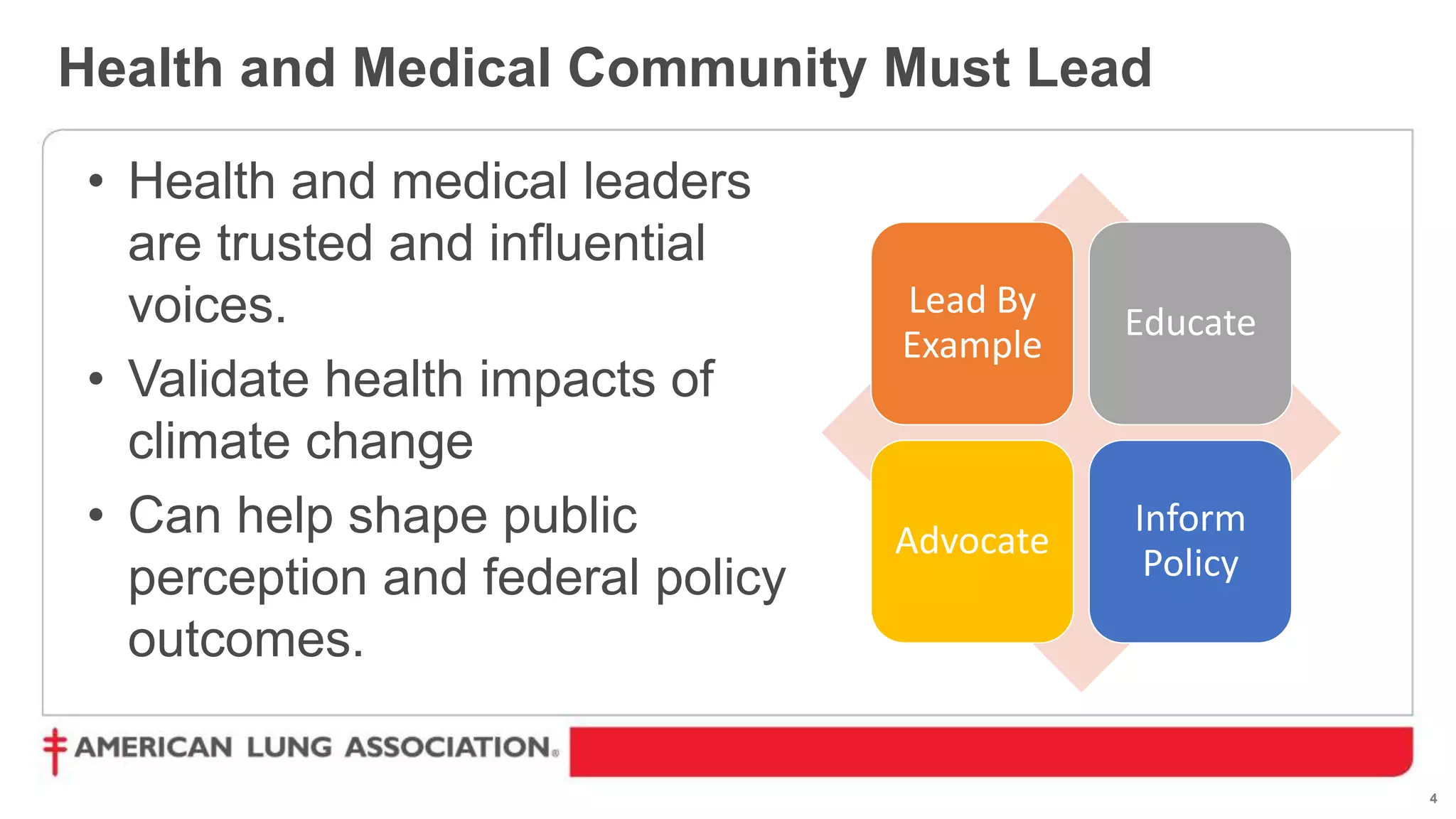
• Health and medical leaders
are trusted and influential
voices.
• Validate health impacts of
climate change
• Can help shape public
perception and federal policy
outcomes.
Health and Medical Community Must Lead
Lead By
Example
Educate
Advocate
Inform
Policy
5
Healthy Air Campaign
What is the campaign?
• Science-based campaign for clean air and climate
protections
• Coalition of health and medical organizations
• Leverage medical experts and personal stories
• National and state-based effort
• Rooted in Lung Association’s historic fight for healthy air
• Launched in 2011
6
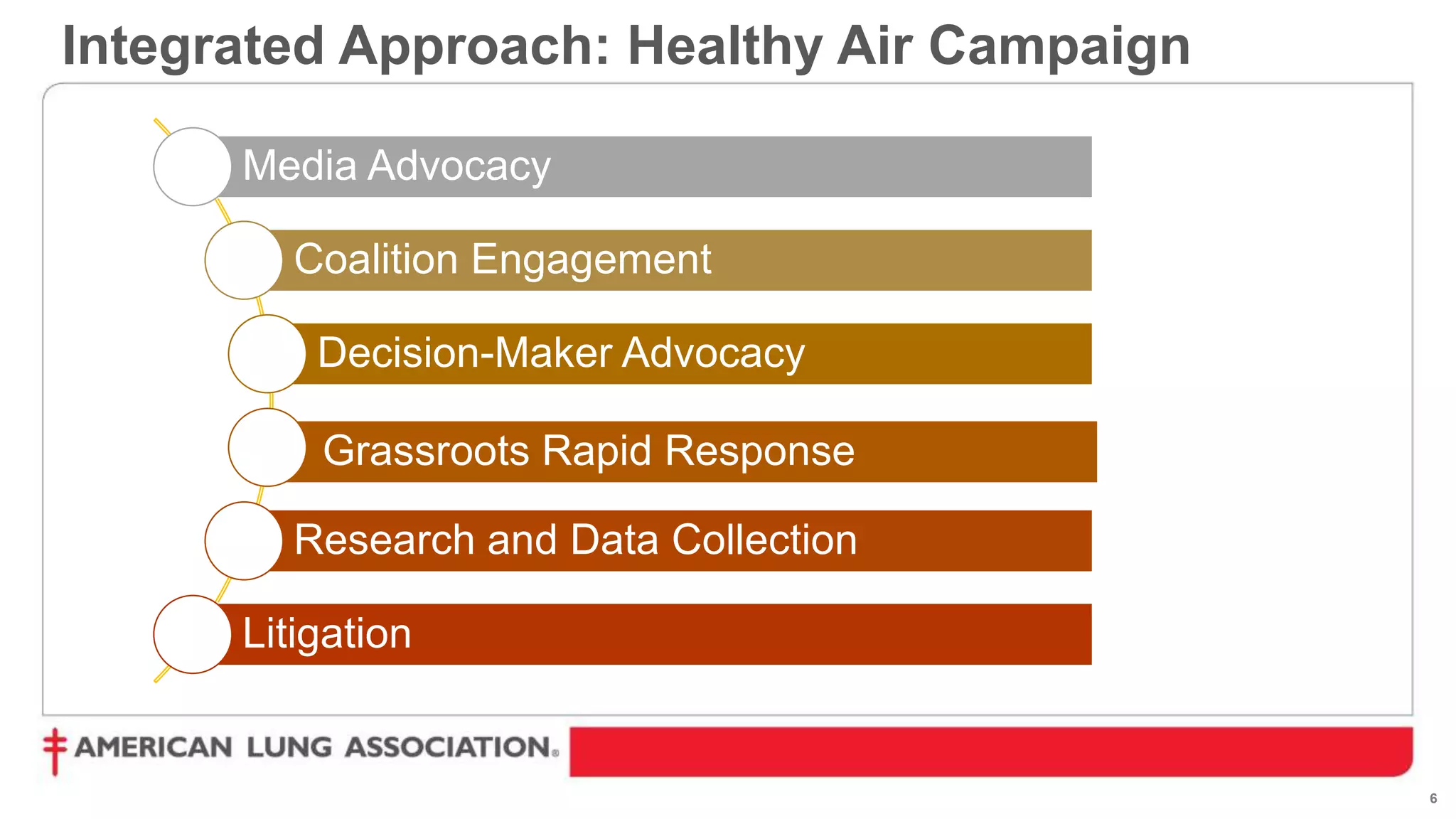
Integrated Approach: Healthy Air Campaign
Media Advocacy
Coalition Engagement
Decision-Maker Advocacy
Grassroots Rapid Response
Research and Data Collection
Litigation
7
Health Impacts of Air Pollution
8
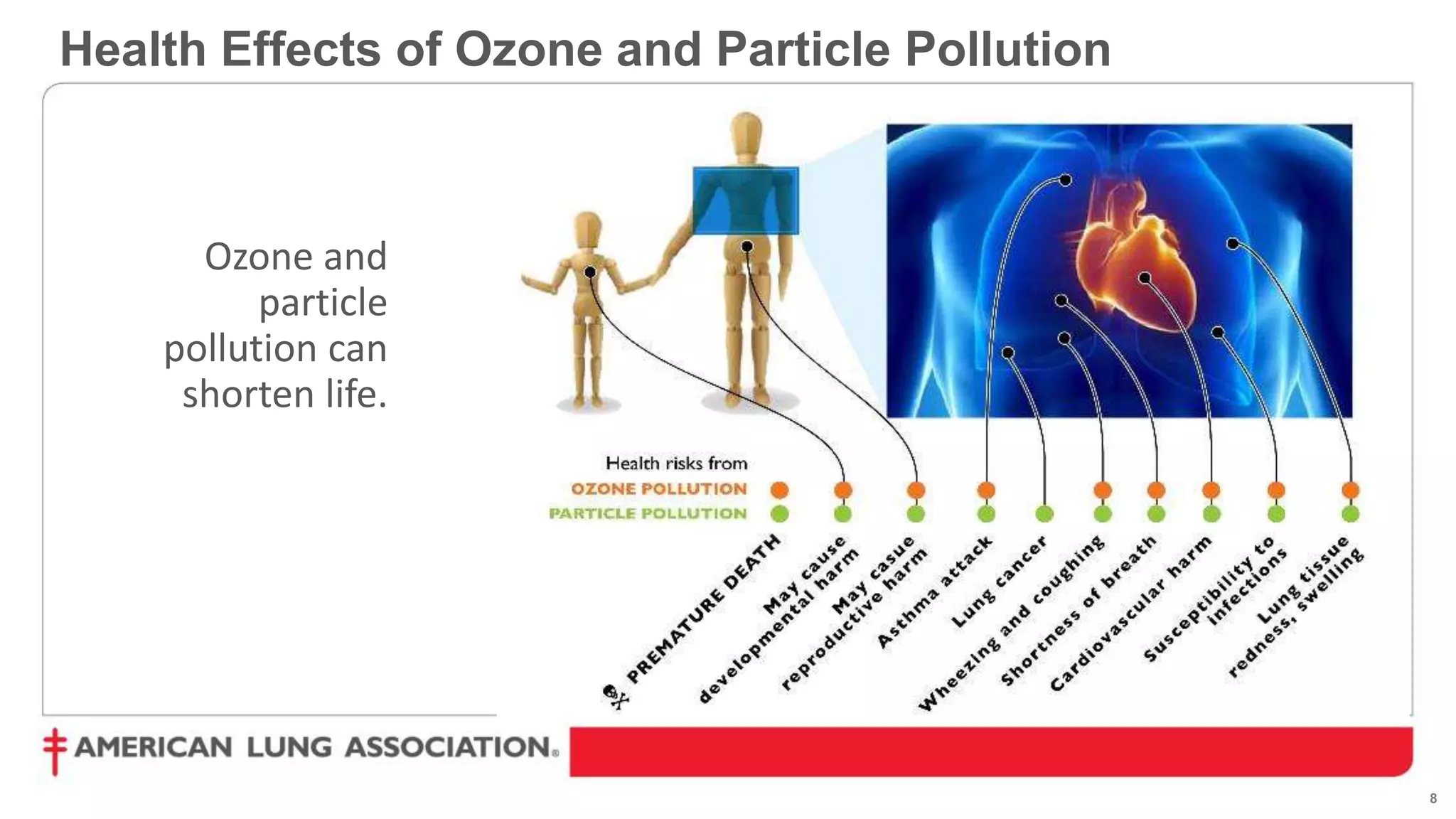
Health Effects of Ozone and Particle Pollution
Ozone and
particle
pollution can
shorten life.
9
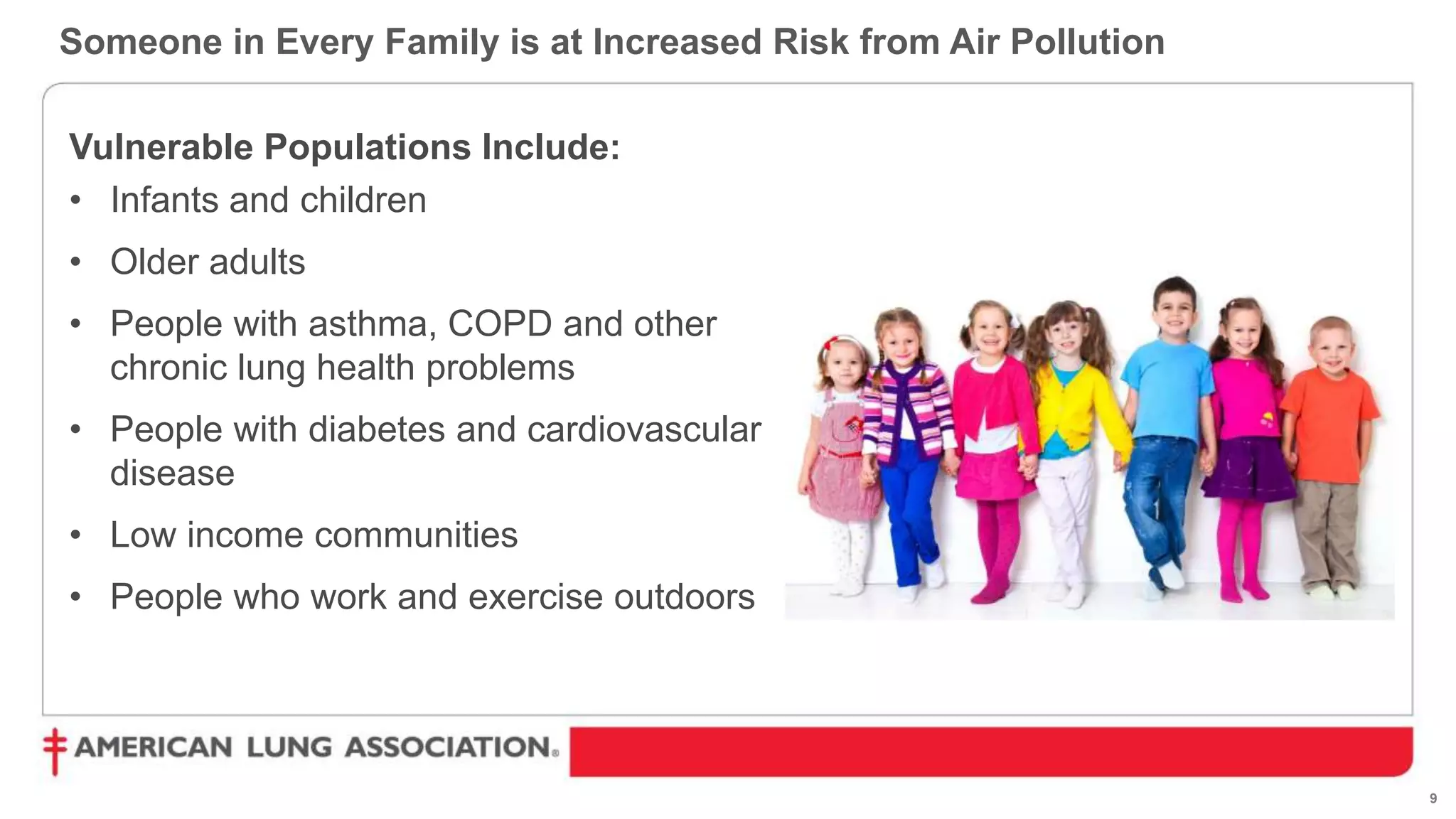
Someone in Every Family is at Increased Risk from Air Pollution
Vulnerable Populations Include:
• Infants and children
• Older adults
• People with asthma, COPD and other
chronic lung health problems
• People with diabetes and cardiovascular
disease
• Low income communities
• People who work and exercise outdoors
10
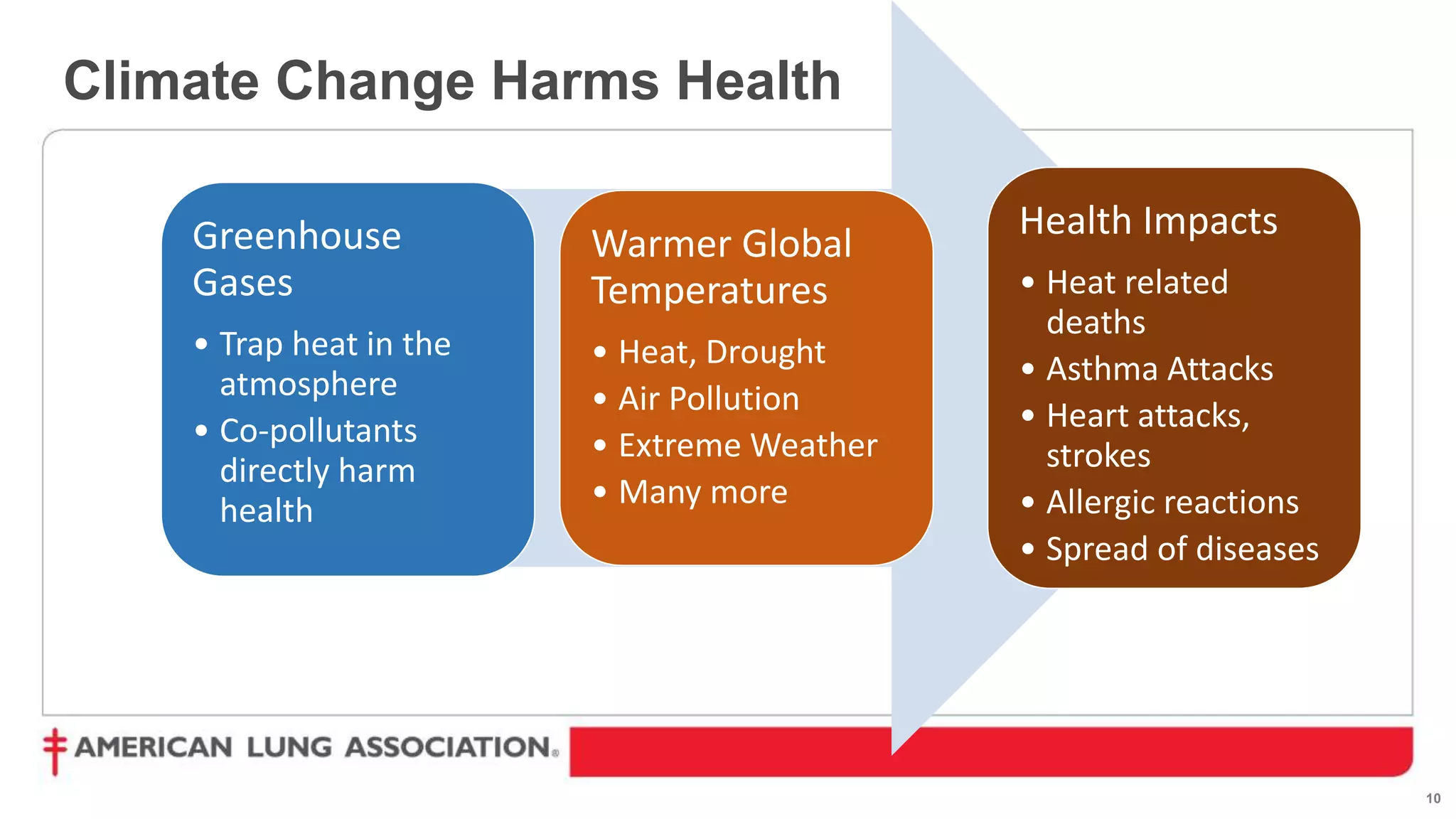
Climate Change Harms Health
Greenhouse
Gases
• Trap heat in the
atmosphere
• Co-pollutants
directly harm
health
Warmer Global
Temperatures
• Heat, Drought
• Air Pollution
• Extreme Weather
• Many more
Health Impacts
• Heat related
deaths
• Asthma Attacks
• Heart attacks,
strokes
• Allergic reactions
• Spread of diseases
11
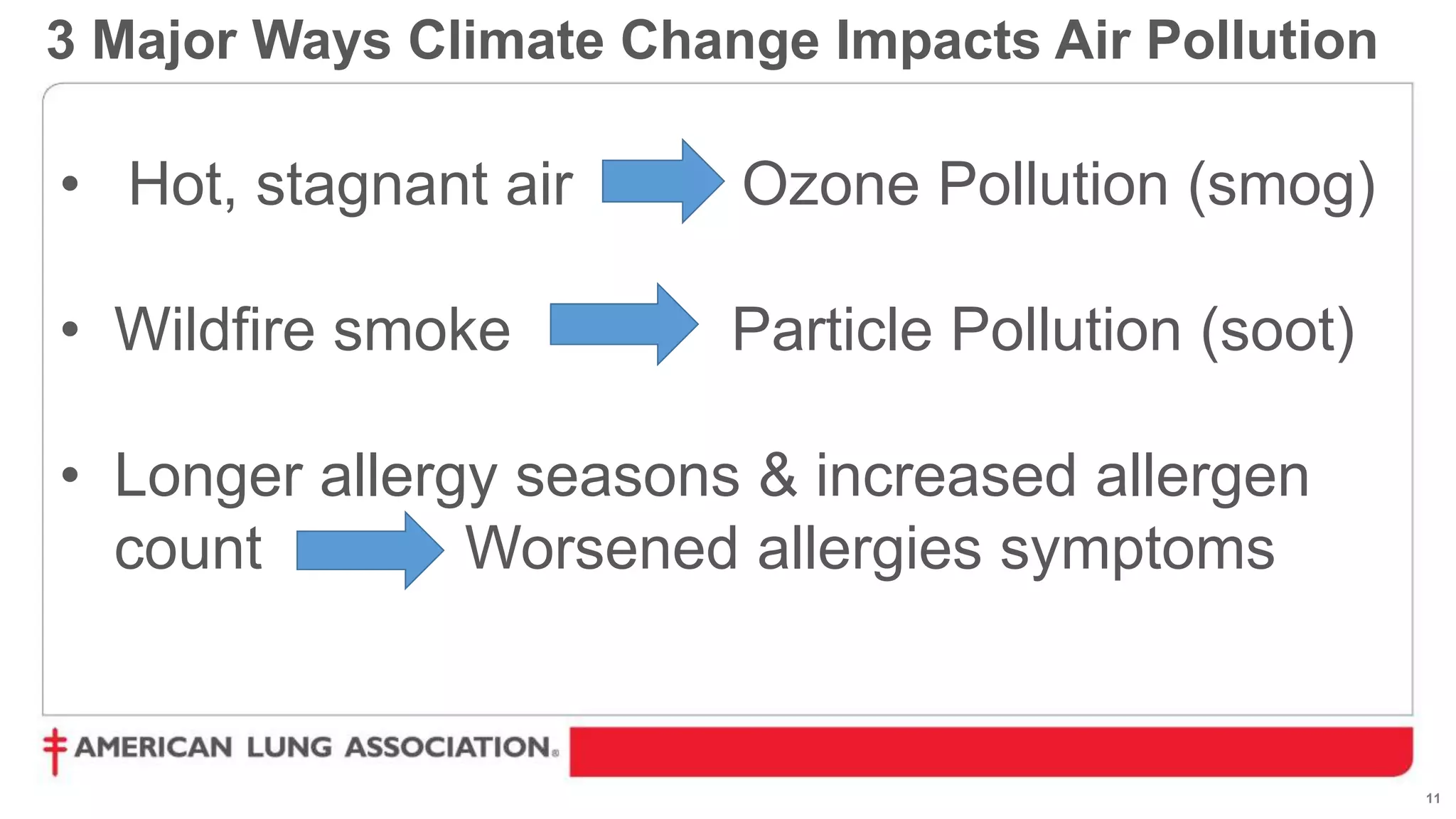
3 Major Ways Climate Change Impacts Air Pollution
• Hot, stagnant air Ozone Pollution (smog)
• Wildfire smoke Particle Pollution (soot)
• Longer allergy seasons & increased allergen
count Worsened allergies symptoms
12
13
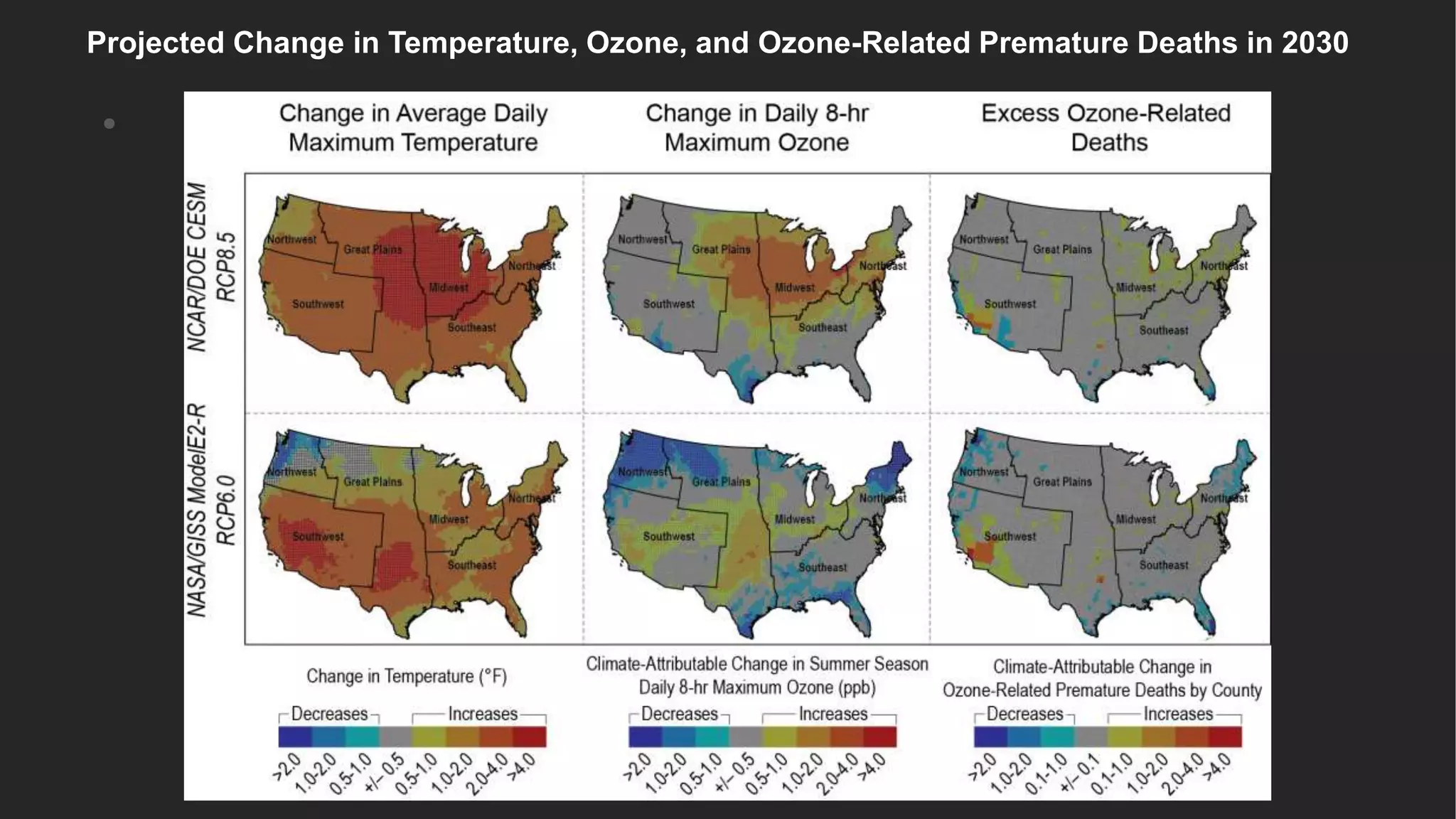
Projected Change in Temperature, Ozone, and Ozone-Related Premature Deaths in 2030
•
14
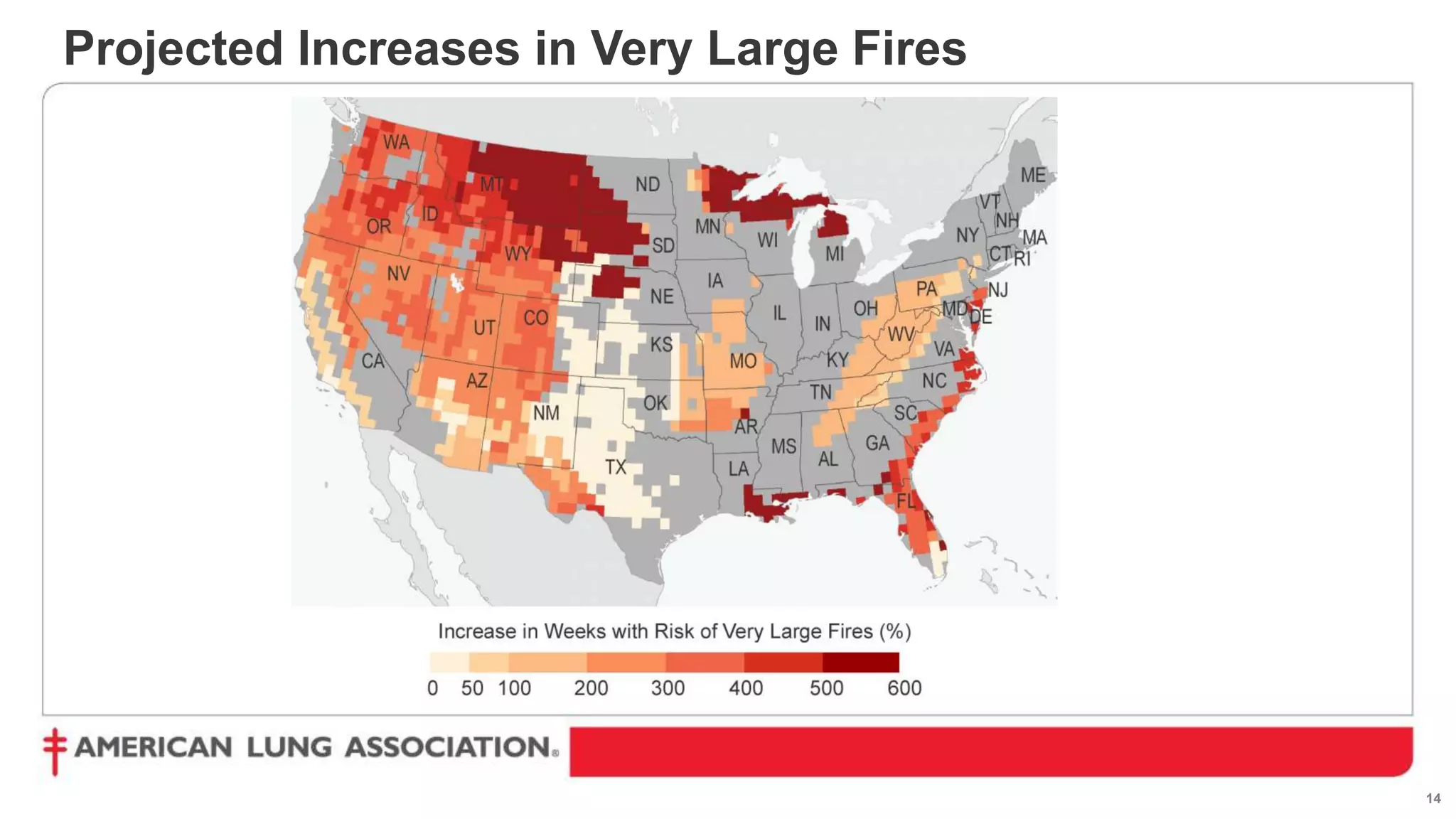
Projected Increases in Very Large Fires
15
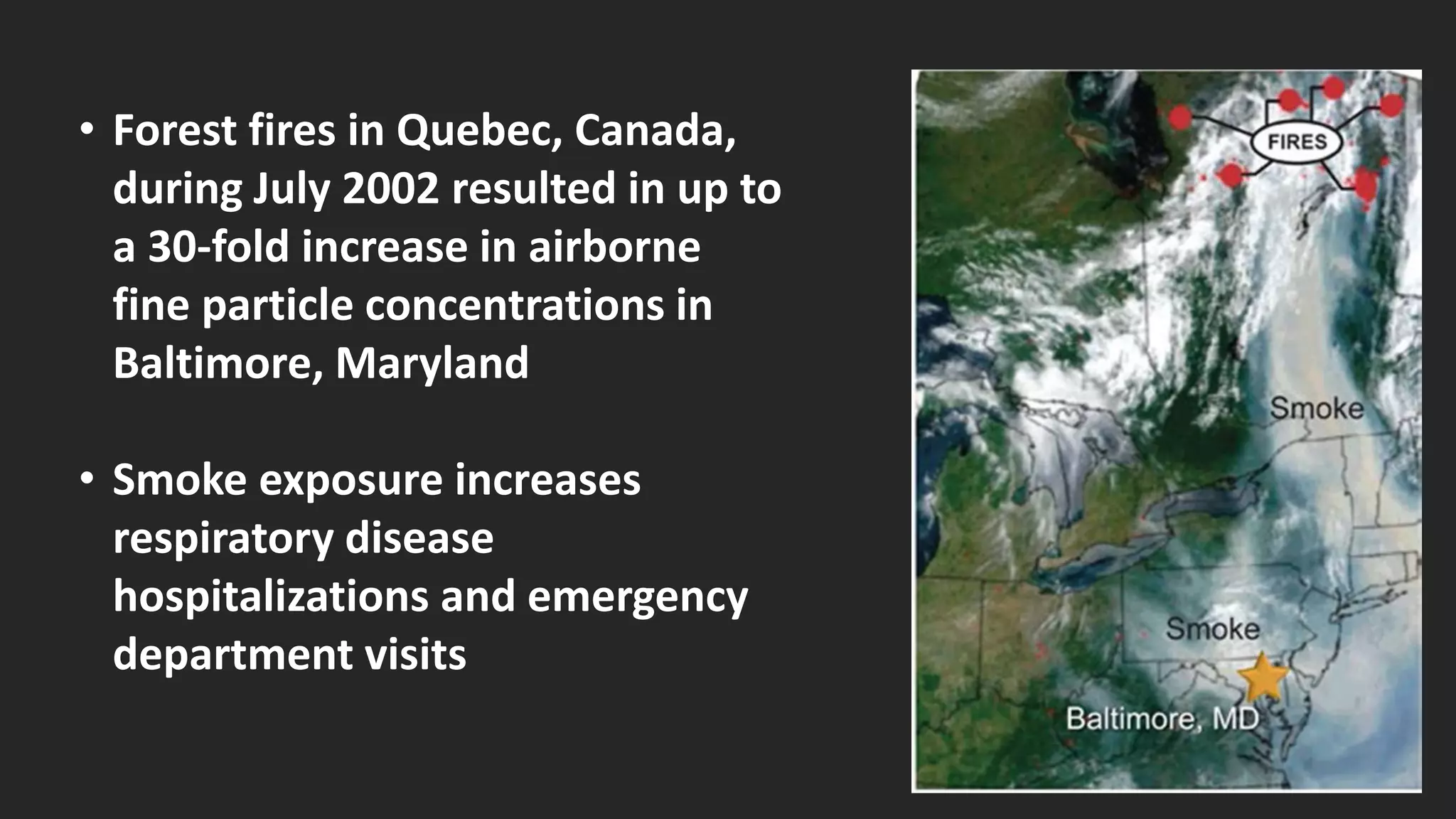
• Forest fires in Quebec, Canada,
during July 2002 resulted in up to
a 30-fold increase in airborne
fine particle concentrations in
Baltimore, Maryland
• Smoke exposure increases
respiratory disease
hospitalizations and emergency
department visits
16
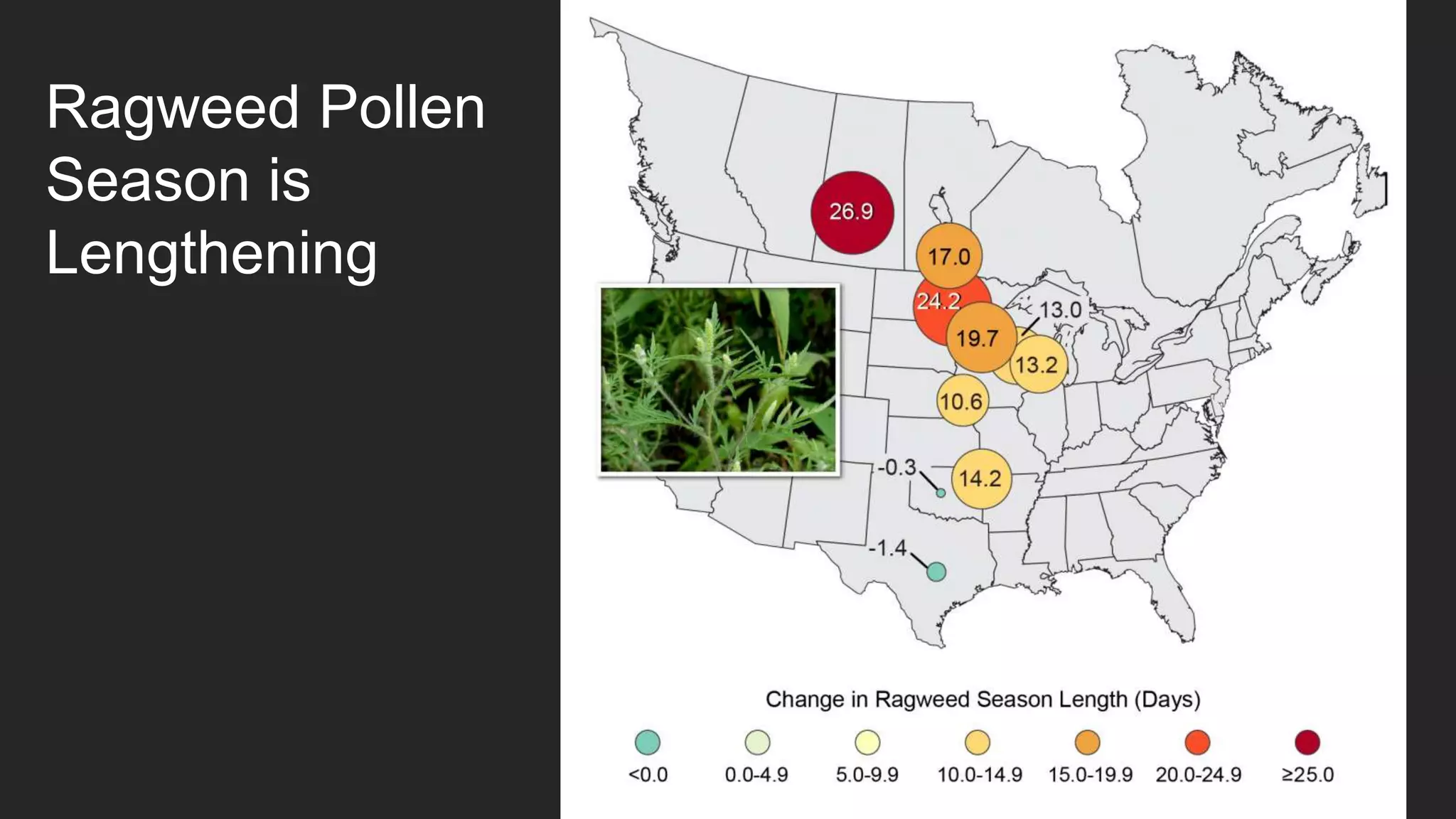
Ragweed Pollen
Season is
Lengthening
17
How can physicians engage in
education and advocacy efforts?
1. Keep Learning
2. Support Public Policy Action
3. Speak Out
18
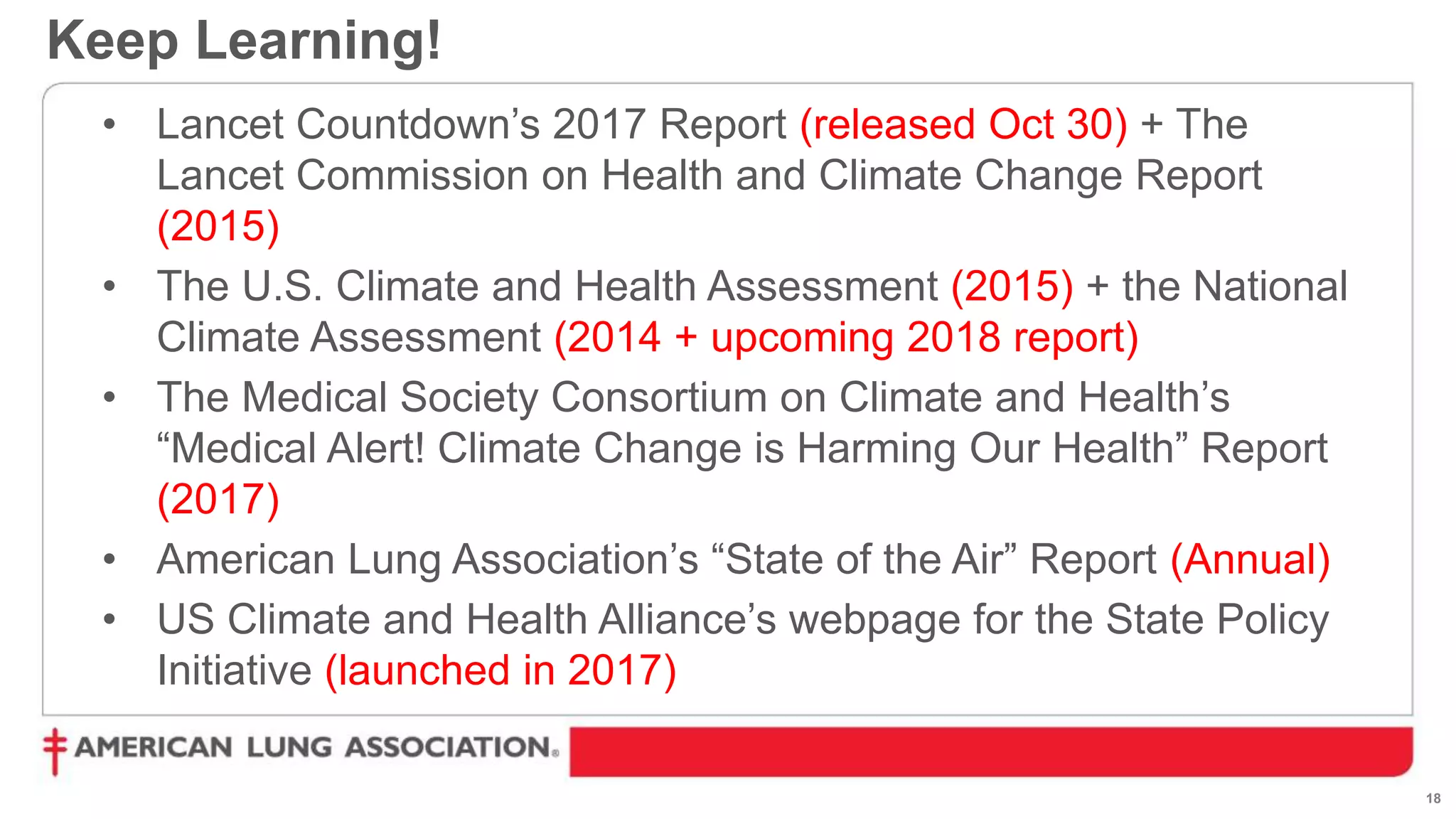
Keep Learning!
• Lancet Countdown’s 2017 Report (released Oct 30) + The
Lancet Commission on Health and Climate Change Report
(2015)
• The U.S. Climate and Health Assessment (2015) + the National
Climate Assessment (2014 + upcoming 2018 report)
• The Medical Society Consortium on Climate and Health’s
“Medical Alert! Climate Change is Harming Our Health” Report
(2017)
• American Lung Association’s “State of the Air” Report (Annual)
• US Climate and Health Alliance’s webpage for the State Policy
Initiative (launched in 2017)
19
For More Information….
20
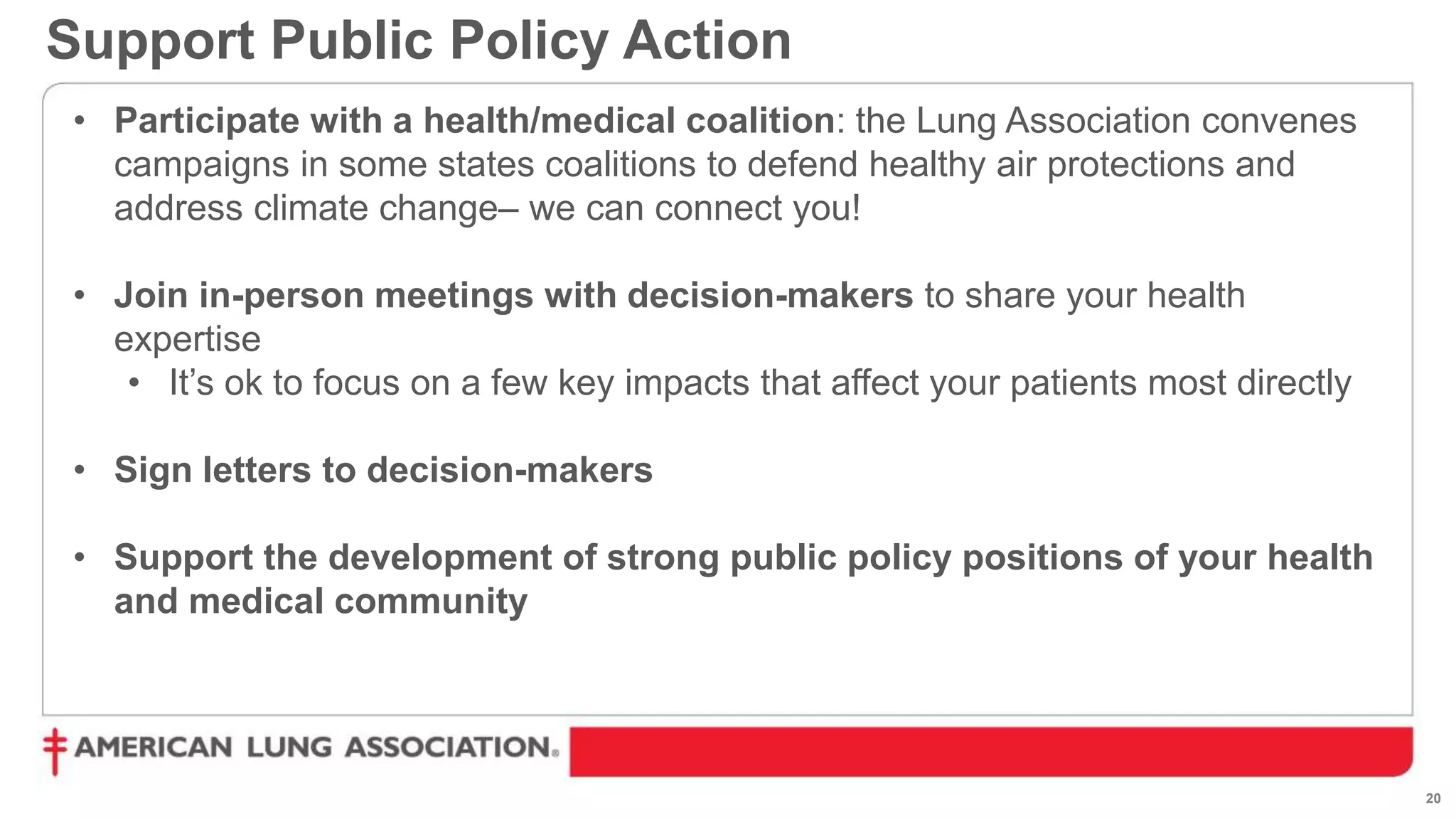
Support Public Policy Action
• Participate with a health/medical coalition: the Lung Association convenes
campaigns in some states coalitions to defend healthy air protections and
address climate change– we can connect you!
• Join in-person meetings with decision-makers to share your health
expertise
• It’s ok to focus on a few key impacts that affect your patients most directly
• Sign letters to decision-makers
• Support the development of strong public policy positions of your health
and medical community
21
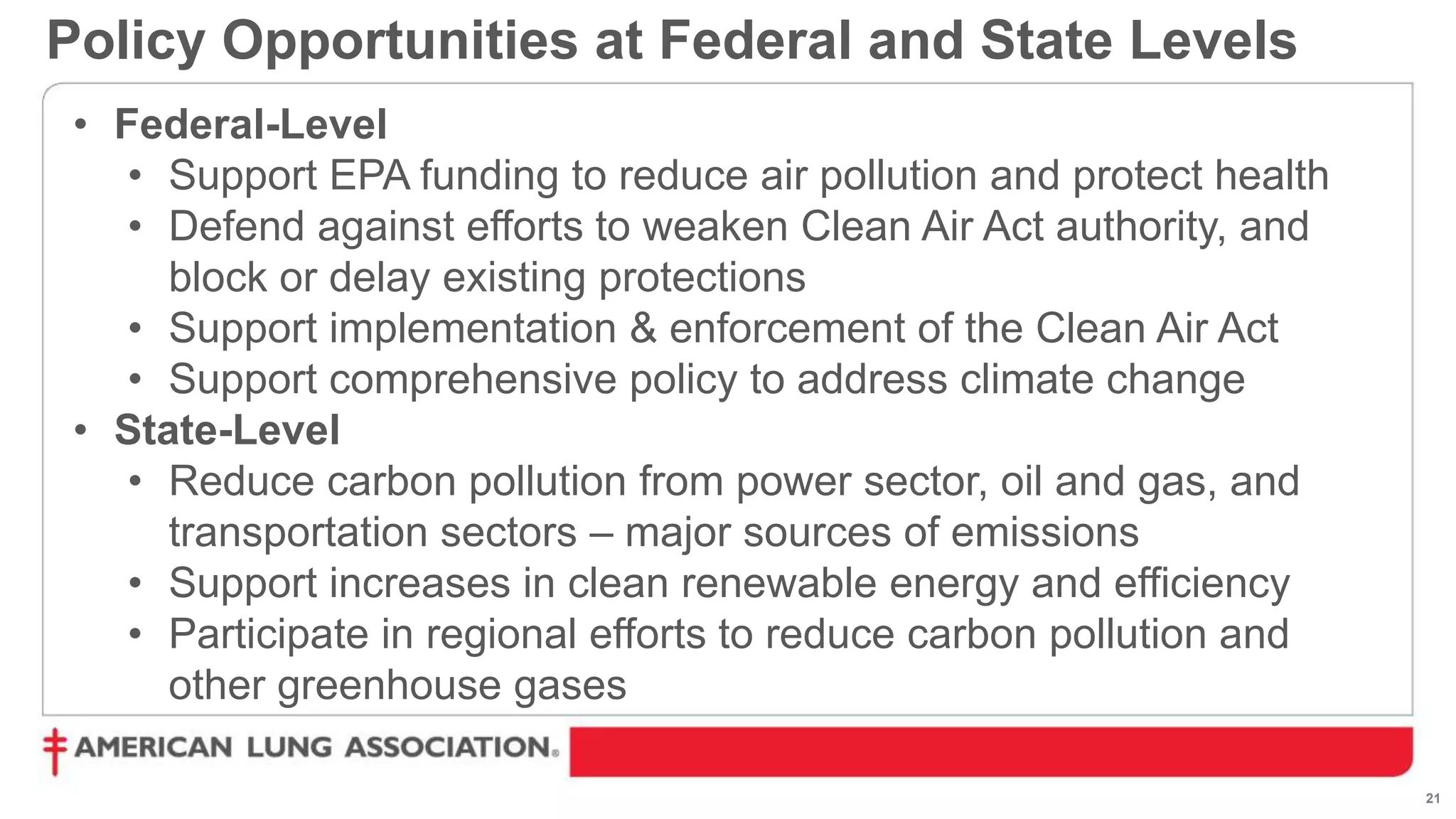
Policy Opportunities at Federal and State Levels
• Federal-Level
• Support EPA funding to reduce air pollution and protect health
• Defend against efforts to weaken Clean Air Act authority, and
block or delay existing protections
• Support implementation & enforcement of the Clean Air Act
• Support comprehensive policy to address climate change
• State-Level
• Reduce carbon pollution from power sector, oil and gas, and
transportation sectors – major sources of emissions
• Support increases in clean renewable energy and efficiency
• Participate in regional efforts to reduce carbon pollution and
other greenhouse gases
22
• Climate, Health, and Equity 101: How does climate change
impact health?
• Policy 101: How are policies made? Where does the health
voice come in? Who should I talk to?
• Communicating With Legislators: How do I get a meeting?
What do I say to make sure my message gets across? What is
my message?
• Op-Eds: Templates, examples, and tips for writing and placing
effective op-eds, specifically for professionals like you.
• State Climate Policy Tools: How do I find policies to act on?
“State Policy Initiative” Resources
23
24
Speak Out: Your Voice Matters
What is Media Advocacy? It’s is a way to influence
decision-makers through the media outlets that matter
to them.
25
• Media interview
• Examples: Print/TV/radio
• Earned Media
• Examples: Authoring an opinion piece or letter to the
editor
• Speaking event
• Examples: Congressional hearing or briefing
• Reporter briefing
• Social Media
Getting the Message Out: Tactics & Tools
26
• Lancet Countdown’s 2017 Report (released Oct 30) + The
Lancet Commission on Health and Climate Change Report
(2015)
• The U.S. Climate and Health Assessment (2015) + the National
Climate Assessment (2014 + upcoming 2018 report)
• The Medical Society Consortium on Climate and Health’s
“Medical Alert! Climate Change is Harming Our Health” Report
(2017)
• American Lung Association’s “State of the Air” Report (Annual)
• US Climate and Health Alliance’s webpage for the State Policy
Initiative (launched in 2017)
27
28
• Focus on specific health impacts that will resonate with your
community
• Share patient stories, i.e., a patient with asthma who struggles on
high ozone days, or someone affected by wildfires or extreme
weather
• Where possible and appropriate, make the climate connection
explicit
• Statistics can be powerful, but should be kept limited.
• Call for action to protect public health and the health of your
patients
Messaging Tips
29
• Sign “A Health Professionals’ Declaration
on Climate Change”
What Can You Do Right Now?
30
Questions?
• Diana Van Vleet, Director of Media Advocacy, Healthy Air
Campaign
• Diana.VanVleet@Lung.org; 202.715.1863

Climate Change - Van Vleet

  • 1.
    1 Climate Change andOur Health Our Fight for Healthy Air
  • 2.
    2 American Lung Association Mission:To save lives by improving lung health and preventing lung disease Vision: A world free of lung disease Active nationally, and in all 50 states.
  • 3.
    3 State of theAir - 2017
  • 4.
    4 • Health andmedical leaders are trusted and influential voices. • Validate health impacts of climate change • Can help shape public perception and federal policy outcomes. Health and Medical Community Must Lead Lead By Example Educate Advocate Inform Policy
  • 5.
    5 Healthy Air Campaign Whatis the campaign? • Science-based campaign for clean air and climate protections • Coalition of health and medical organizations • Leverage medical experts and personal stories • National and state-based effort • Rooted in Lung Association’s historic fight for healthy air • Launched in 2011
  • 6.
    6 Integrated Approach: HealthyAir Campaign Media Advocacy Coalition Engagement Decision-Maker Advocacy Grassroots Rapid Response Research and Data Collection Litigation
  • 7.
    7 Health Impacts ofAir Pollution
  • 8.
    8 Health Effects ofOzone and Particle Pollution Ozone and particle pollution can shorten life.
  • 9.
    9 Someone in EveryFamily is at Increased Risk from Air Pollution Vulnerable Populations Include: • Infants and children • Older adults • People with asthma, COPD and other chronic lung health problems • People with diabetes and cardiovascular disease • Low income communities • People who work and exercise outdoors
  • 10.
    10 Climate Change HarmsHealth Greenhouse Gases • Trap heat in the atmosphere • Co-pollutants directly harm health Warmer Global Temperatures • Heat, Drought • Air Pollution • Extreme Weather • Many more Health Impacts • Heat related deaths • Asthma Attacks • Heart attacks, strokes • Allergic reactions • Spread of diseases
  • 11.
    11 3 Major WaysClimate Change Impacts Air Pollution • Hot, stagnant air Ozone Pollution (smog) • Wildfire smoke Particle Pollution (soot) • Longer allergy seasons & increased allergen count Worsened allergies symptoms
  • 12.
  • 13.
    13 Projected Change inTemperature, Ozone, and Ozone-Related Premature Deaths in 2030 •
  • 14.
    14 Projected Increases inVery Large Fires
  • 15.
    15 • Forest firesin Quebec, Canada, during July 2002 resulted in up to a 30-fold increase in airborne fine particle concentrations in Baltimore, Maryland • Smoke exposure increases respiratory disease hospitalizations and emergency department visits
  • 16.
  • 17.
    17 How can physiciansengage in education and advocacy efforts? 1. Keep Learning 2. Support Public Policy Action 3. Speak Out
  • 18.
    18 Keep Learning! • LancetCountdown’s 2017 Report (released Oct 30) + The Lancet Commission on Health and Climate Change Report (2015) • The U.S. Climate and Health Assessment (2015) + the National Climate Assessment (2014 + upcoming 2018 report) • The Medical Society Consortium on Climate and Health’s “Medical Alert! Climate Change is Harming Our Health” Report (2017) • American Lung Association’s “State of the Air” Report (Annual) • US Climate and Health Alliance’s webpage for the State Policy Initiative (launched in 2017)
  • 19.
  • 20.
    20 Support Public PolicyAction • Participate with a health/medical coalition: the Lung Association convenes campaigns in some states coalitions to defend healthy air protections and address climate change– we can connect you! • Join in-person meetings with decision-makers to share your health expertise • It’s ok to focus on a few key impacts that affect your patients most directly • Sign letters to decision-makers • Support the development of strong public policy positions of your health and medical community
  • 21.
    21 Policy Opportunities atFederal and State Levels • Federal-Level • Support EPA funding to reduce air pollution and protect health • Defend against efforts to weaken Clean Air Act authority, and block or delay existing protections • Support implementation & enforcement of the Clean Air Act • Support comprehensive policy to address climate change • State-Level • Reduce carbon pollution from power sector, oil and gas, and transportation sectors – major sources of emissions • Support increases in clean renewable energy and efficiency • Participate in regional efforts to reduce carbon pollution and other greenhouse gases
  • 22.
    22 • Climate, Health,and Equity 101: How does climate change impact health? • Policy 101: How are policies made? Where does the health voice come in? Who should I talk to? • Communicating With Legislators: How do I get a meeting? What do I say to make sure my message gets across? What is my message? • Op-Eds: Templates, examples, and tips for writing and placing effective op-eds, specifically for professionals like you. • State Climate Policy Tools: How do I find policies to act on? “State Policy Initiative” Resources
  • 23.
  • 24.
    24 Speak Out: YourVoice Matters What is Media Advocacy? It’s is a way to influence decision-makers through the media outlets that matter to them.
  • 25.
    25 • Media interview •Examples: Print/TV/radio • Earned Media • Examples: Authoring an opinion piece or letter to the editor • Speaking event • Examples: Congressional hearing or briefing • Reporter briefing • Social Media Getting the Message Out: Tactics & Tools
  • 26.
    26 • Lancet Countdown’s2017 Report (released Oct 30) + The Lancet Commission on Health and Climate Change Report (2015) • The U.S. Climate and Health Assessment (2015) + the National Climate Assessment (2014 + upcoming 2018 report) • The Medical Society Consortium on Climate and Health’s “Medical Alert! Climate Change is Harming Our Health” Report (2017) • American Lung Association’s “State of the Air” Report (Annual) • US Climate and Health Alliance’s webpage for the State Policy Initiative (launched in 2017)
  • 27.
  • 28.
    28 • Focus onspecific health impacts that will resonate with your community • Share patient stories, i.e., a patient with asthma who struggles on high ozone days, or someone affected by wildfires or extreme weather • Where possible and appropriate, make the climate connection explicit • Statistics can be powerful, but should be kept limited. • Call for action to protect public health and the health of your patients Messaging Tips
  • 29.
    29 • Sign “AHealth Professionals’ Declaration on Climate Change” What Can You Do Right Now?
  • 30.
    30 Questions? • Diana VanVleet, Director of Media Advocacy, Healthy Air Campaign • Diana.VanVleet@Lung.org; 202.715.1863

Editor's Notes

  • #3 My name is Diana Van Vleet and I am the Director of Media Advocacy for the HAC at the ALA. I will talk about media advocacy a little later, but let me give you a little background on the ALA. The American Lung Association is America’s oldest voluntary health organization. For more than 100 years, we have led the fight for healthy lungs and healthy air through research, education and advocacy. One of our key objectives is to improve the air we breathe so that it does not cause or worsen lung disease. In fact, since the 1970s, the American Lung Association has led efforts to ensure that federal and state clean air laws are implemented and enforced, because science shows that reducing air pollution helps to save lives and improve lung health. We are active nationally as well as at the state level.
  • #4 For 18 years, the American Lung Association has analyzed data from official air quality monitors to compile the "State of the Air" report. State of the Air gives counties a letter grade for ozone pollution and particle pollution, and ranks cities on these pollutants too. In addition to the finding here, last year’s report found that, thanks to the success of the Clean Air Act, the United States has experienced continued improvements in both ozone pollution and year-round particle pollution. However, increased spikes in particle pollution have offset some of those gains, and further progress may be made more difficult by an increase in frequency and intensity of wildfires, fueled by warmer temperatures related to climate change.
  • #5 The State of the Air Report has reinforced the fact that the health community can make a huge difference when it comes to framing air pollution and climate change issues as health issues, as well as identifying solutions and opportunities. Health is important to everyone – not political or partisan issues You folks are incredibly important messengers, and as you know, your voices can make a real impact! I will get back to that later, but I just wanted to remind you of that.
  • #6 So how is the American Lung Association using our role as a health organization to impact healthy air and climate policies? The Healthy Air Campaign. The Healthy Air Campaign our education and advocacy campaign to defend healthy air protections such as the Clean Air Act and to drive action to address climate change through coalition building, communications and grassroots organizing. The campaign is primarily focused on federal policy, but we also engage at the state level in some states.
  • #8 So why do we care about air pollution? Why is healthy air so important?
  • #9 Ozone and particle pollution – two of the most widespread and harmful air pollutants – are both impacted by climate change. These types of pollution can harm health in many ways, including causing asthma attacks, cardiovascular and respiratory harm and, as new evidence is showing, harm to new born babies. Particle pollution can cause lung cancer. The most serious impact is premature death.
  • #10 While everyone is at risk from breathing unhealthy air, some groups are especially vulnerable. These groups include:
  • #11 So how does air pollution relate to climate change? Mona went over the various ways that climate change harms health earlier, but here is a general breakdown as a refresher.
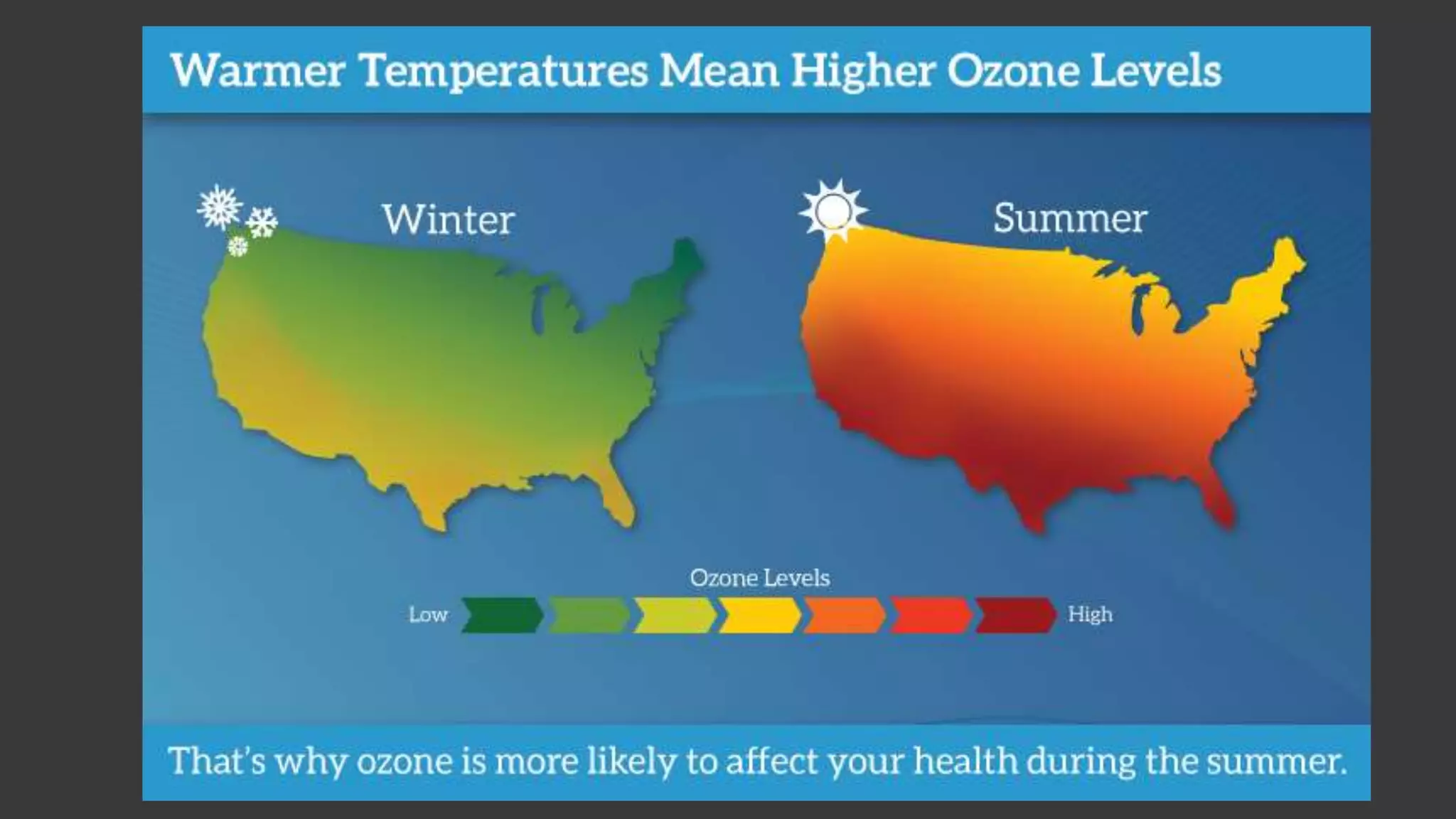
  • #13 We know when we have warmer, stagnant air, ozone pollution is more like to form. Ozone develops in the atmosphere from gases that come out of tailpipes, smokestacks and many other sources. When these gases come in contact with sunlight, they react and form ozone smog. The essential raw ingredients for ozone come from nitrogen oxides (NOx); hydrocarbons, also called volatile organic compounds (VOCs); and carbon monoxide (CO).
  • #14 The top is a higher emissions scenario, the bottom is a moderate emissions scenario
  • #15 These projected increases are based on 17 climate model simulations for the continental United States using a higher emissions pathway (RCP8.5). The map shows projected percentage increases in weeks with risk of very large fires by mid-century (2041-2070) compared to the recent past (1971-2000). 
  • #16 Just because you aren’t near a fire burning, it doesn't mean that you aren’t at risk from particle pollution from the smoke. Wildfire smoke can travel thousands of miles, like it did during this fire in Quebec in 2002 that traveled as far as Baltimore.
  • #17 Ragweed pollen season length has increased in central North America between 1995 and 2011 by as much as 11 to 27 days in parts of the United States and Canada, in response to rising temperatures.
  • #19 There are many ways to keep up to speed on the connection between climate change and the health of your patients; sessions like today are a great start, and there are some excellent resources for further education that can help you understand more local impacts to your state
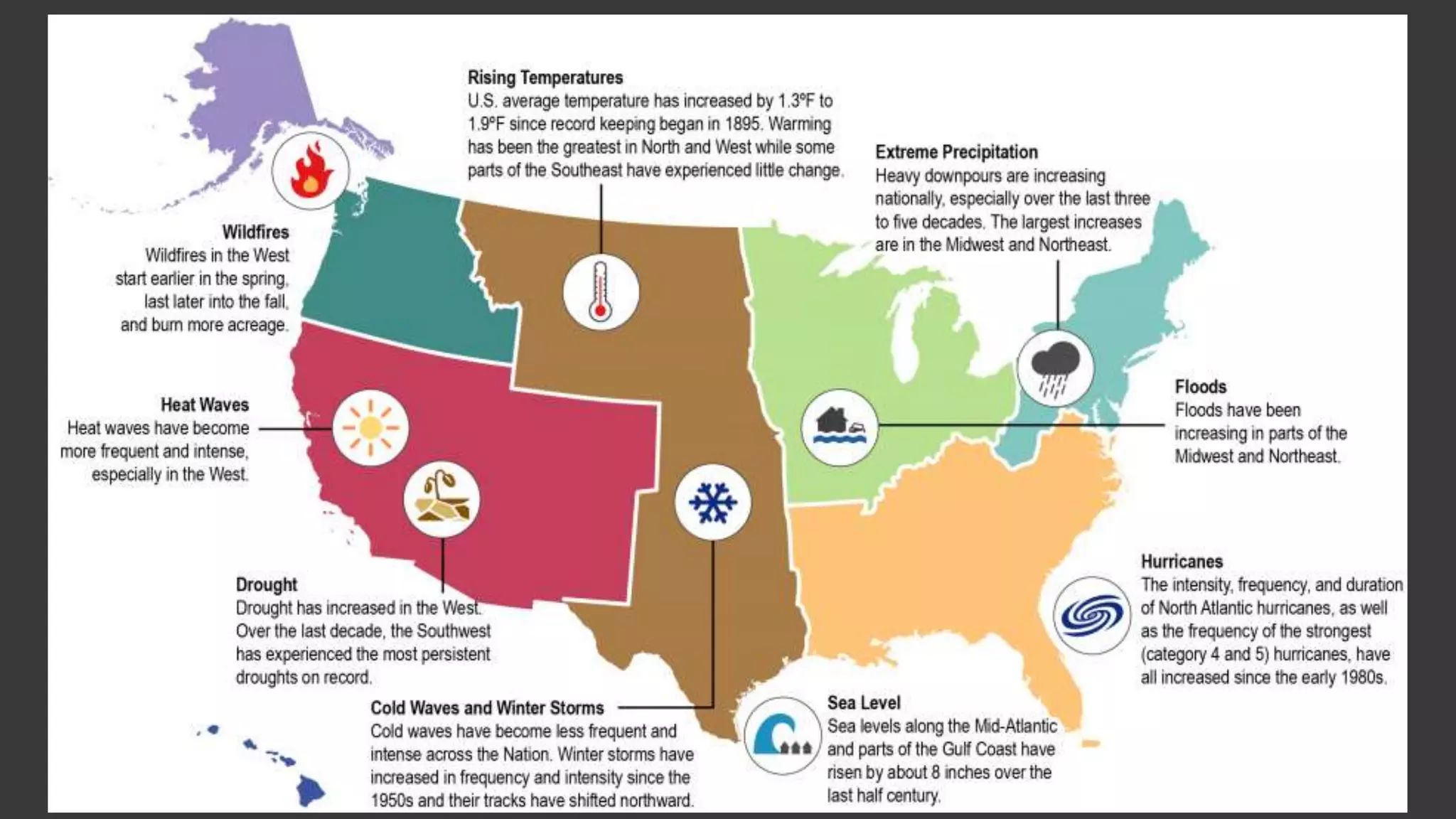
  • #20 Learn about climate impacts in your area: climate change doesn’t affect every area the same. Here we can see a snapshot of some regional trends captured in the U.S. National Climate Assessment from 2014
  • #21 Joining with likeminded others and participate in state health and medical coalition advocacy efforts to promote strong policy approaches For bullet “Join in-person meetings with decision-makers to share your health expertise” It’s ok to focus on a few key impacts that affect your patients most directly In the “Healthy Air Partners” coalition we convene, we focus on air quality impacts because they affect everyone, but we highlight other issues like extreme weather For example, we educate decision-makers and media on success of Clean Air Act and benefits of federal investments in their states/districts - State specific highlights and stories/ “State of the Air” report For bullet “Support the development of strong public policy positions of your health and medical community” Organize technical comments from the health community on federal safeguards
  • #23 US Climate and Health Alliance’s State Policy Initiative has some great resources to help you advocate on a state-level. Some of these resources are listed here.
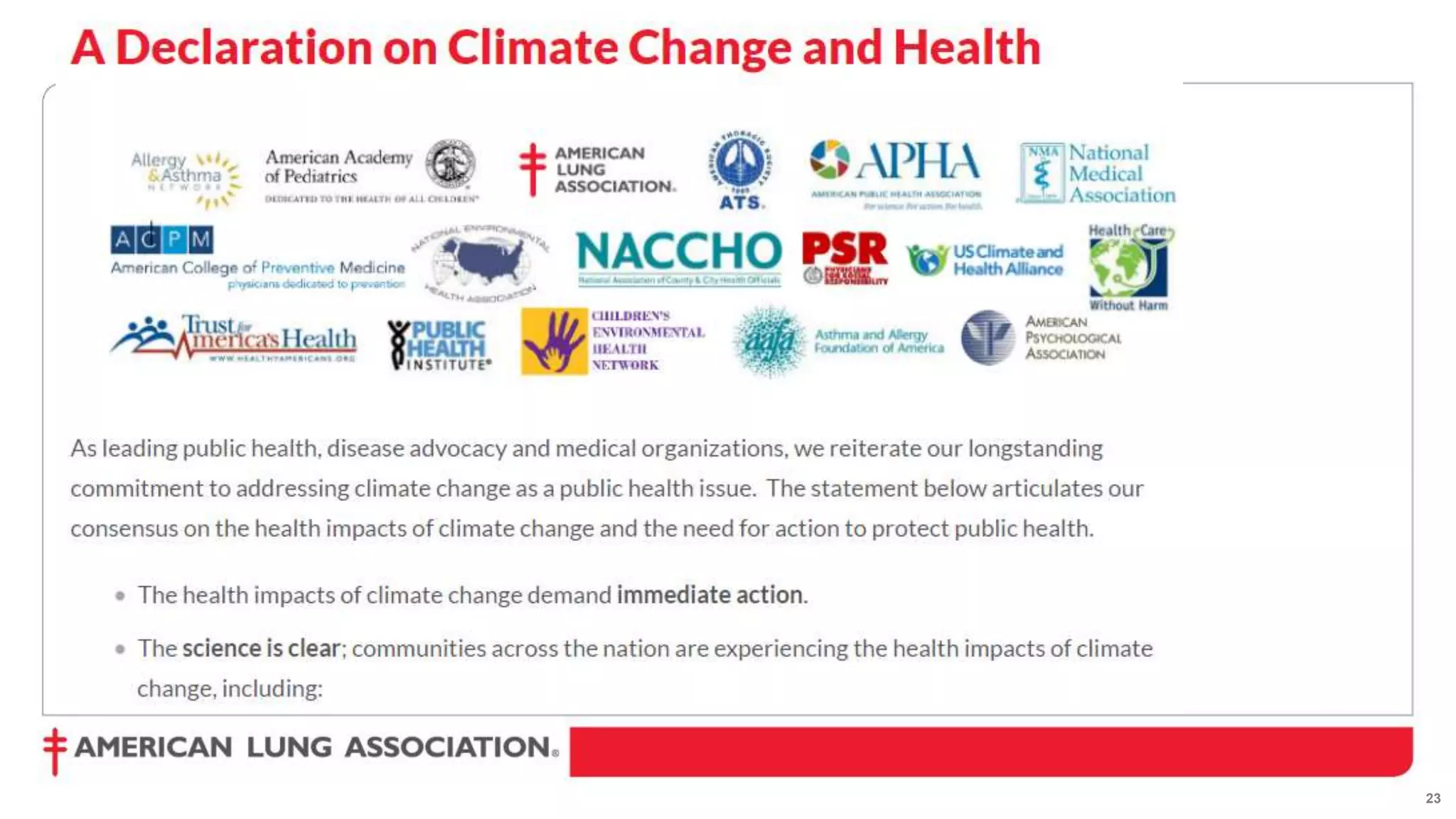
  • #24 Here is an example of decision-maker advocacy, and the health community supporting public policy action. This declaration was signed by 20 national health and medical organizations, and was delivered to EPA Administrator Scott Pruitt in person in a meeting we had with him this summer.
  • #25 Whereas decision-maker advocacy and public policy support are a more direct form of advocacy, media advocacy aims to reach decision-makers through the media. The goal here is to get your issue into the press in a way that provokes new or different thinking. And, it’s about getting that issue into the press that is read, watched, and listened to by your target decision-makers. As health professionals, being willing to talk to the media about the health impacts of climate change and the importance of prevention when it comes to protecting health can make a huge impact. Your credibility is vitally important to the public discourse – trusted health professionals can help sway public opinion and build support for action to address climate change. Media advocacy rarely feels like a “big hug”. Sometimes, when done well, it makes people really uncomfortable! It highlights a controversy and should prompt decision-makers to think (and act) differently about an issue that is important to you.
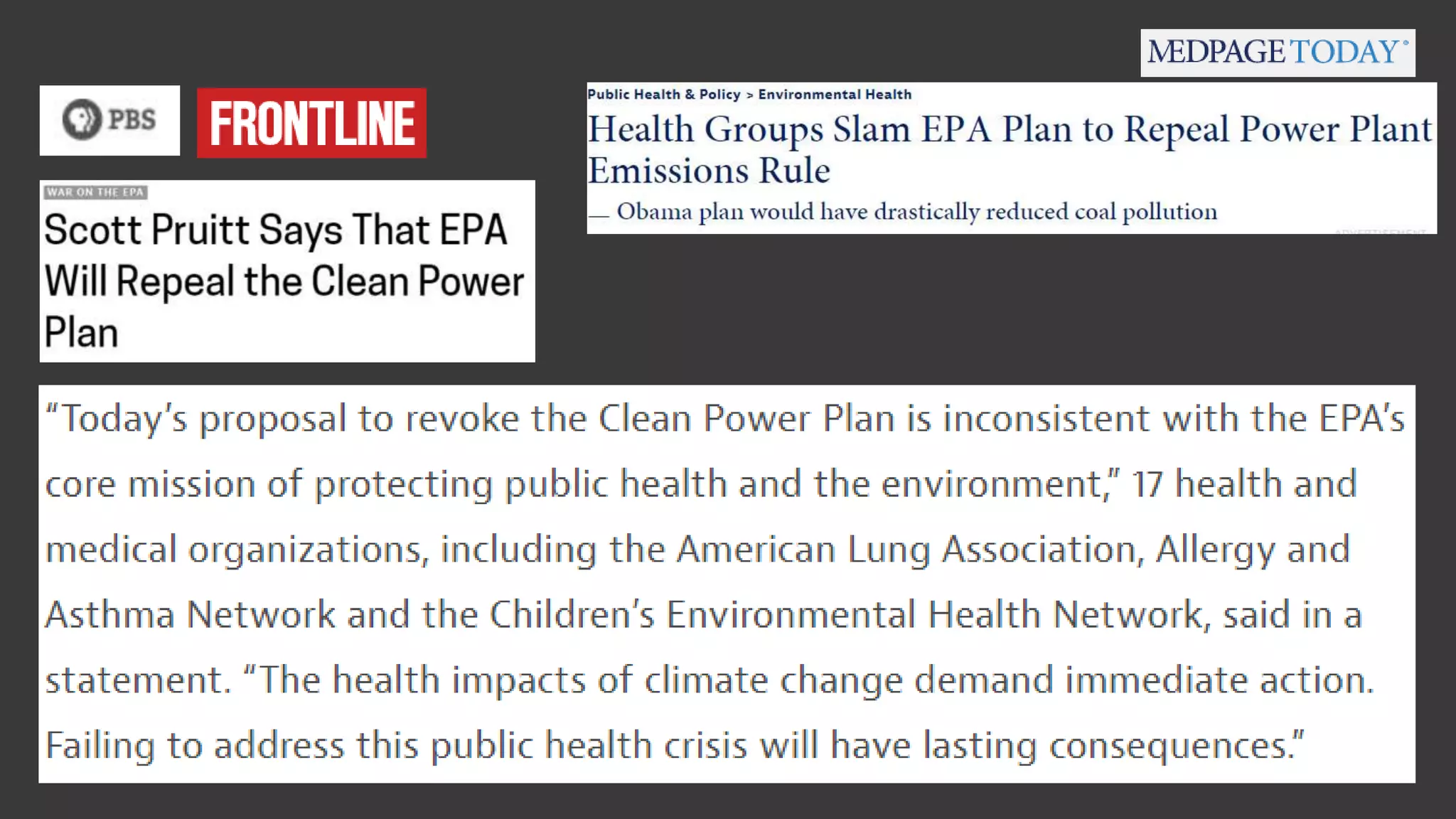
  • #27 Here are two stories covering a joint statement that the Lung Association issued with 16 other health and medical organizations opposing the recently-proposed repeal of the Clean Power Plan. The Clean Power Plan would be the first ever federal limit on carbon pollution from power plants. This joint statement was referenced in a number of news stories about the revoking of the plan, including coverage from Washington Post, CNN and Bloomberg.
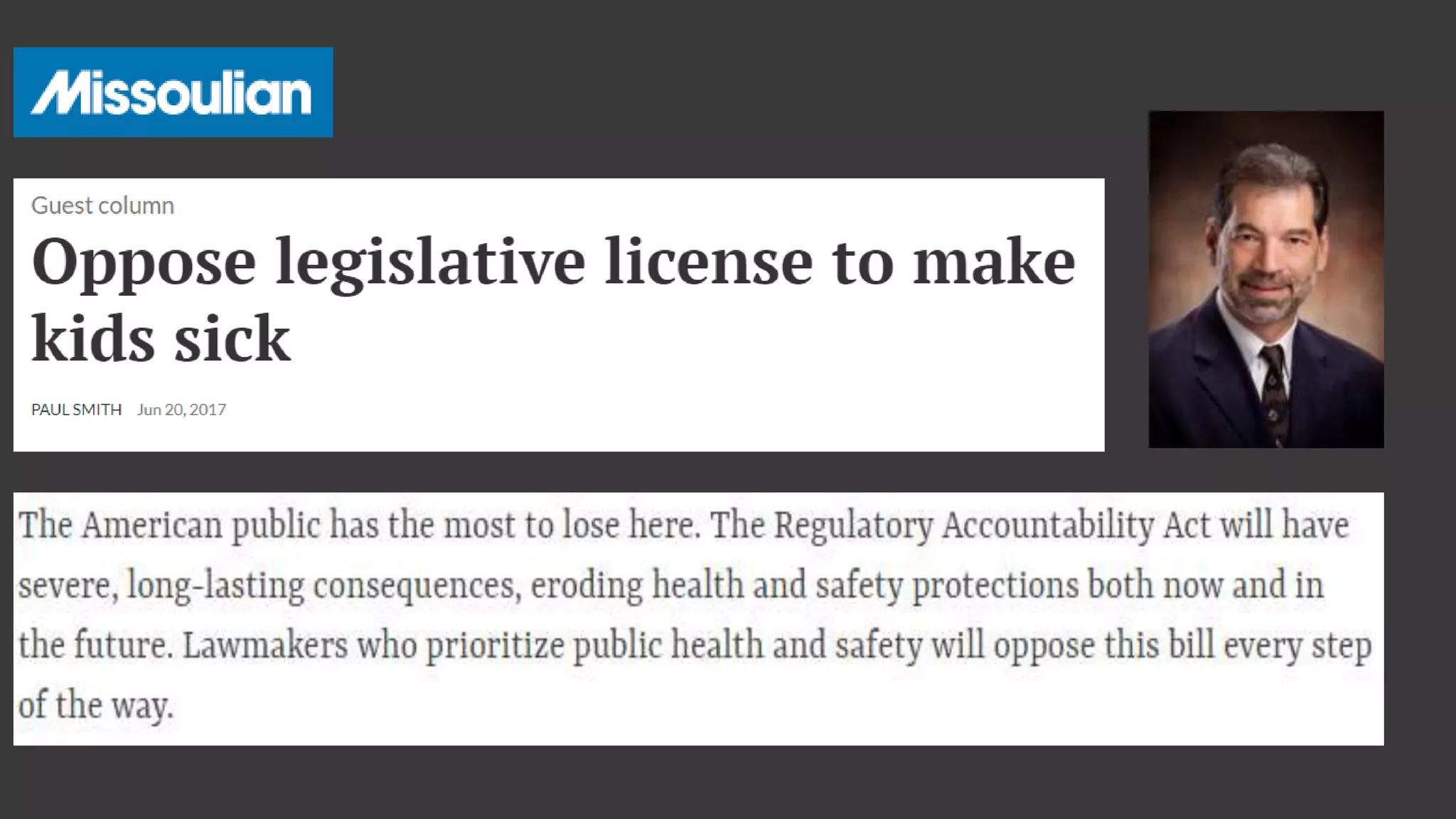
  • #28 Dr. Paul Smith, a pediatric pulmonologist, is a volunteer with the Lung Association and an advocate for healthy air protections at the federal and state levels. He frequently writes earned media pieces, like this op-ed, on healthy air issues. You can see here that he makes the health connection to this specific pieces of policy, and urges lawmakers to oppose it to protect health.
  • #29 Focus on specific health impacts that will resonate with your community Share patient stories, i.e., a patient with asthma who struggles on high ozone days, or someone affected by wildfires or extreme weather Stories resonate, use them! Where possible and appropriate, make the climate connection explicit Statistics can be powerful, but should be kept limited. Call for action to protect public health and the health of your patients “As a physician, I can provide excellent care for my patients but I cannot reduce air pollution in the air they breathe.” “That is why the Clean Air Act is so important.”
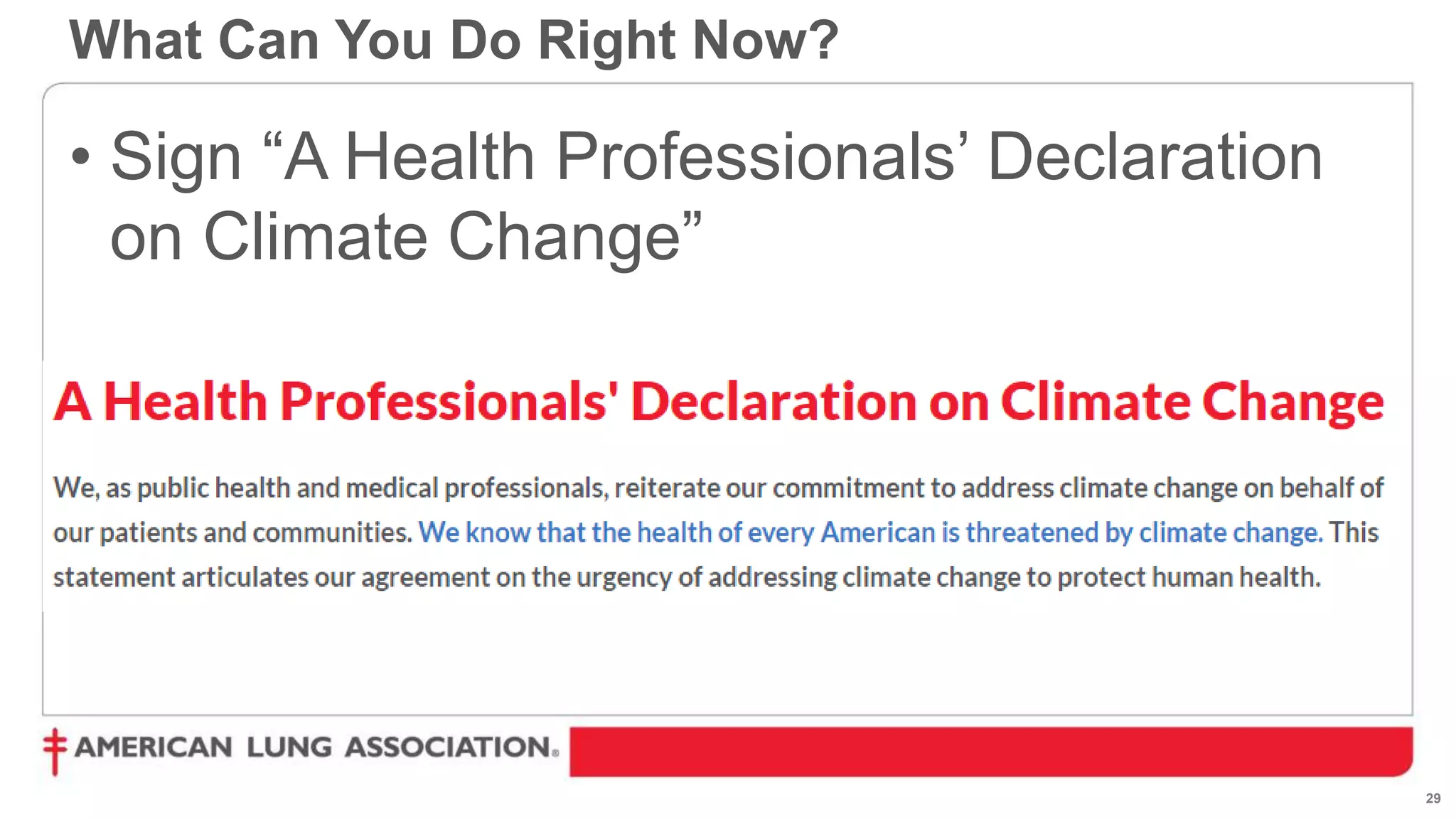
  • #30 This declaration, which is on our website, has been signed by almost 1000 health professionals. It’s very similar to the organizational sign-on declaration I showed earlier, which we delivered in person to Scott Pruitt. This version is for individual health and medical professionals. This declaration lays out the main ways that climate change harms health, and calls for action to address climate change. Our coalition of health and medical organizations have been gathering signatures on this. It only take a second to sign on to, and it’s a great evergreen resource to have on hand.
  • #31 We have staff in almost every US state, so if you would like to connect with Lung Association in your state or region, let me know!