Evolving
Healthcare
Delivery Models
Demand
Community
CareCoordination
US Health and Human Services
is in Transition
The cost of healthcare continues to rise without a
corresponding increase in patient outcomes
INCREASED
PROVIDER COSTS
POOR HEALTH
OUTCOMES
US Health and Human Services
is in Transition
Provider payments have shifted from
FEE-FOR-SERVICE OUTCOMES-BASED
TO
US Health and Human Services
is in Transition
TO
Communities are shifting from
TREATING HEALTH
PROBLEMS
TRYING TO
PREVENT THEM
Preventative Care
Some of the key areas of preventative care include:
Addressing all aspects of a
person’s health, including
primary care, behavioral health,
and social supports
Reforming the healthcare
delivery system
Holding providers
accountable for
sustainable outcomes
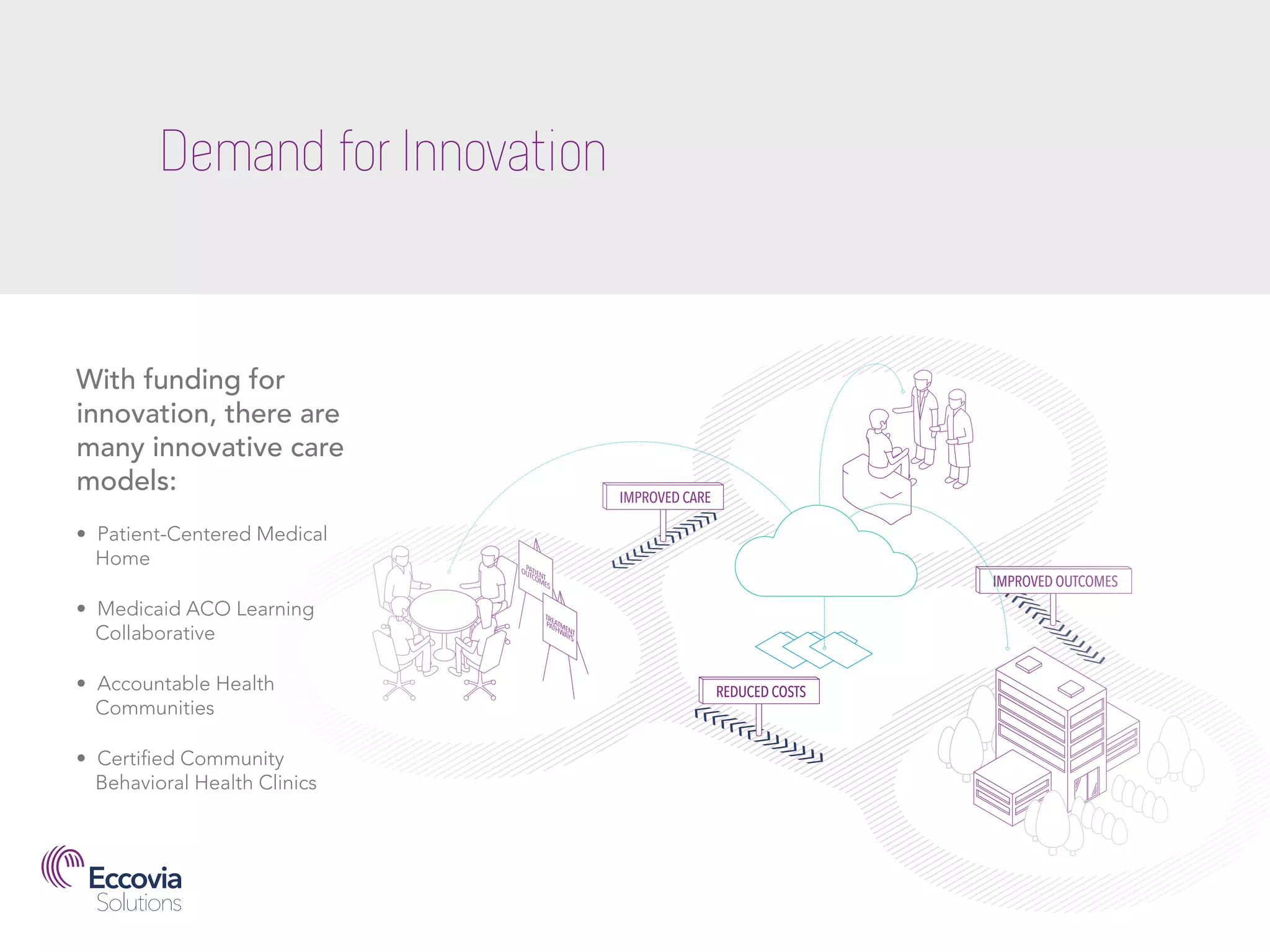
IMPROVED CARE
IMPROVED OUTCOMES
REDUCED COSTS
With funding for
innovation, there are
many innovative care
models:
• Patient-Centered Medical
Home
• Medicaid ACO Learning
Collaborative
• Accountable Health
Communities
• Certified Community
Behavioral Health Clinics
Demand for Innovation
Introducing Community
Care Coordination
What is community care coordination?
An array of providers in
the community treats the
full scope of patient
needs jointly
Providers share data
across multiple agencies
for a whole-person view
of patients
URGENT CARE HOSPITAL
HOME HEALTH PRIMARY CARE OFFICE
Value-based
Payment Models
Goals of Community Care Coordination
Support enhanced
access to
high-quality care
Improve patient
outcomes
Deliver
evidence-based care
and improved
community
population health
Ensure effective
communication,
coordination, and
integration with other
providers
New Care Models Require
a New Care Role
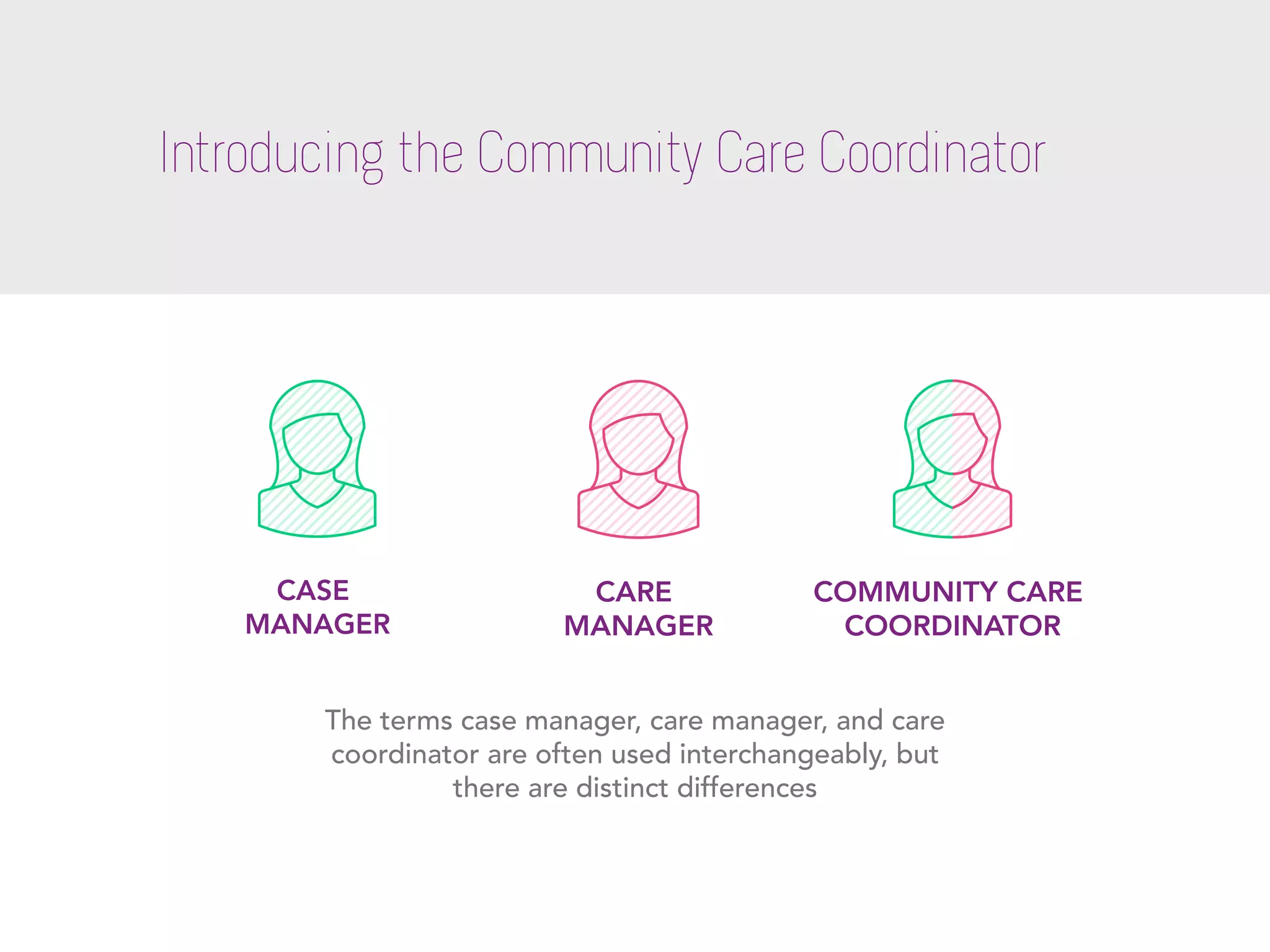
Introducing the Community Care Coordinator
The terms case manager, care manager, and care
coordinator are often used interchangeably, but
there are distinct differences
CASE
MANAGER
CARE
MANAGER
COMMUNITY CARE
COORDINATOR
Case Manager
Usually works on behalf of
human service programs such as:
• Housing
• Workforce services
• Food assistance
• Youth and family services
Care Manager
• Usually works in clinical settings
to address medical needs
• May refer patients to multiple
providers within a facility or
health system
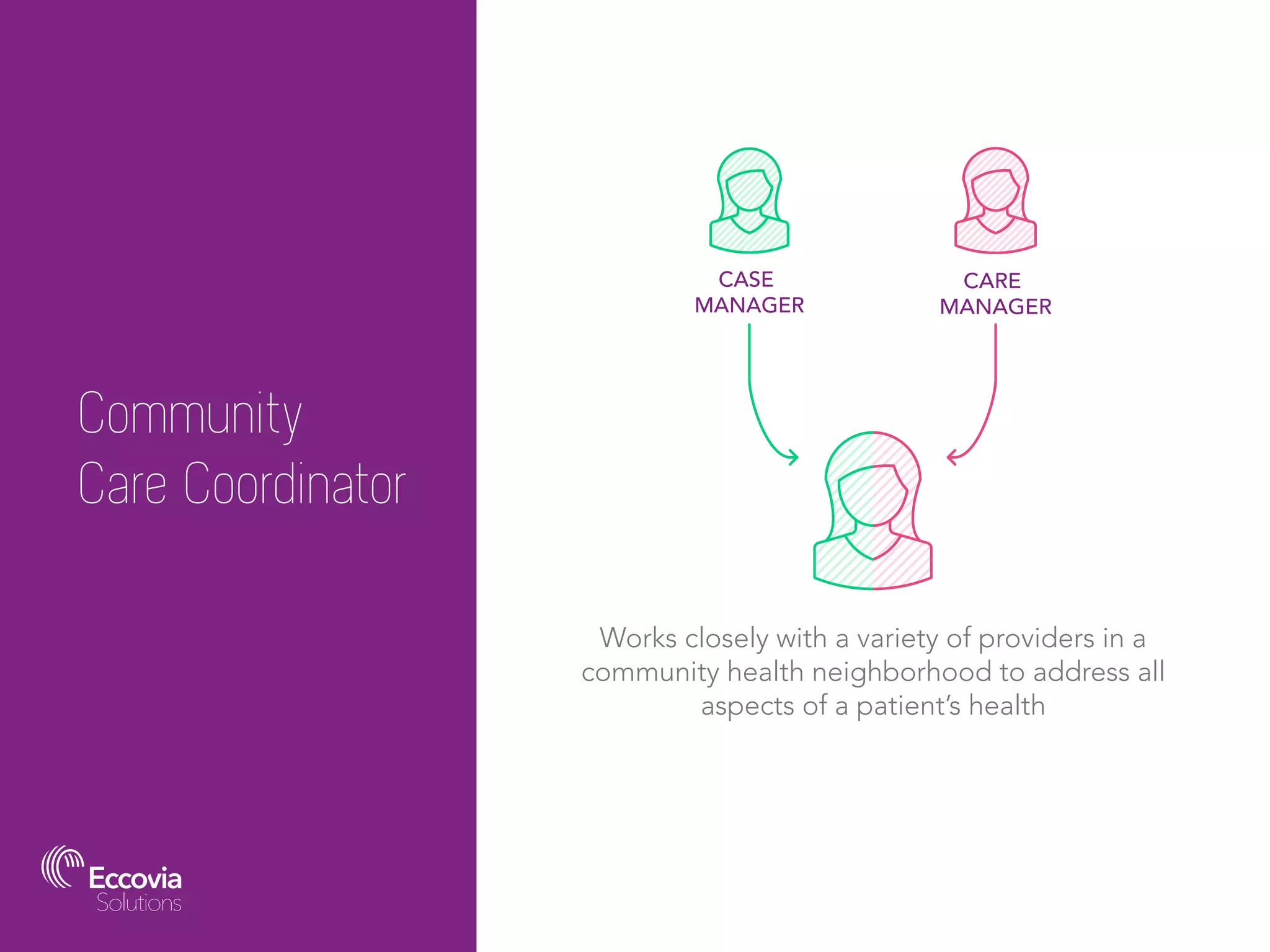
Community
Care Coordinator
Works closely with a variety of providers in a
community health neighborhood to address all
aspects of a patient’s health
CASE
MANAGER
CARE
MANAGER
What is a Community
Health Neighborhood?
Community Health Neighborhood is a network
of community caregivers and recipients of care
in a specific geographic area
Coordination across
multiple service
organizations from
multiple disciplines
Data sharing
and real-time
communication
A focus on improving
the overall well-being
of the community
A Connected Network of Services
Outpatient Substance
Use Treatment
Patient Centered
Medical Home
Primary Care Office
Home Health
Youth and
Family Services
Comprehensive
Care Clinic
Patient
Accountable Care
Organization
Workforce
Services
Hospital
Urgent Care
Benefits for Providers Participating
in a Community Health Neighborhood
Coordinated screenings Enhanced coordination
of patient care
Single point of entry
assessment and referral
for service
Increased treatment
adherence
Decreased duplication
of services
Increased understanding
by providers
Community Health Neighborhoods
Take Various Forms
Accountable Care
Organizations
Regional Health
Improvement
Collaboratives
County Medicaid
Whole Person
Care Programs
Coalitions of
community
providers
1 2 3 4
DATA
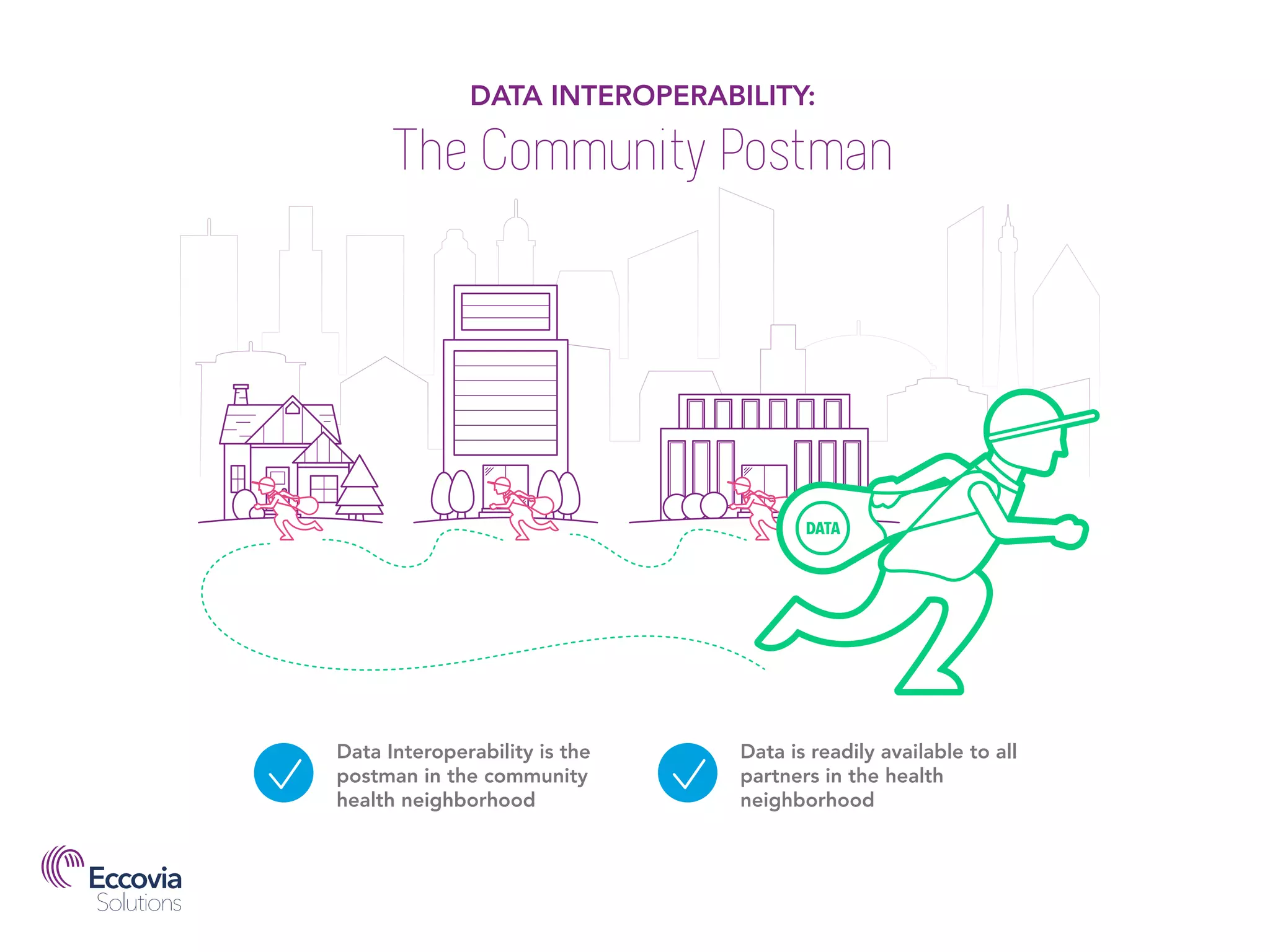
DATA INTEROPERABILITY:
The Community Postman
Data Interoperability is the
postman in the community
health neighborhood
Data is readily available to all
partners in the health
neighborhood
Importance of
Data Sharing
You can’t treat the whole person
with only part of the data
Data enables providers to collectively
address social determinants of health,
behavioral health, and primary care needs
HEALTH NEIGHBORHOOD IN ACTION:
Case Study
LA County Whole
Person Care
Medicaid care
coordination pilot
program targeted at
the county’s most
vulnerable residents
Homeless
Population
Residents involved
with the criminal
justice system
High-risk mental
health patients
High-risk medical
patients
Residents with
substance use
disorder
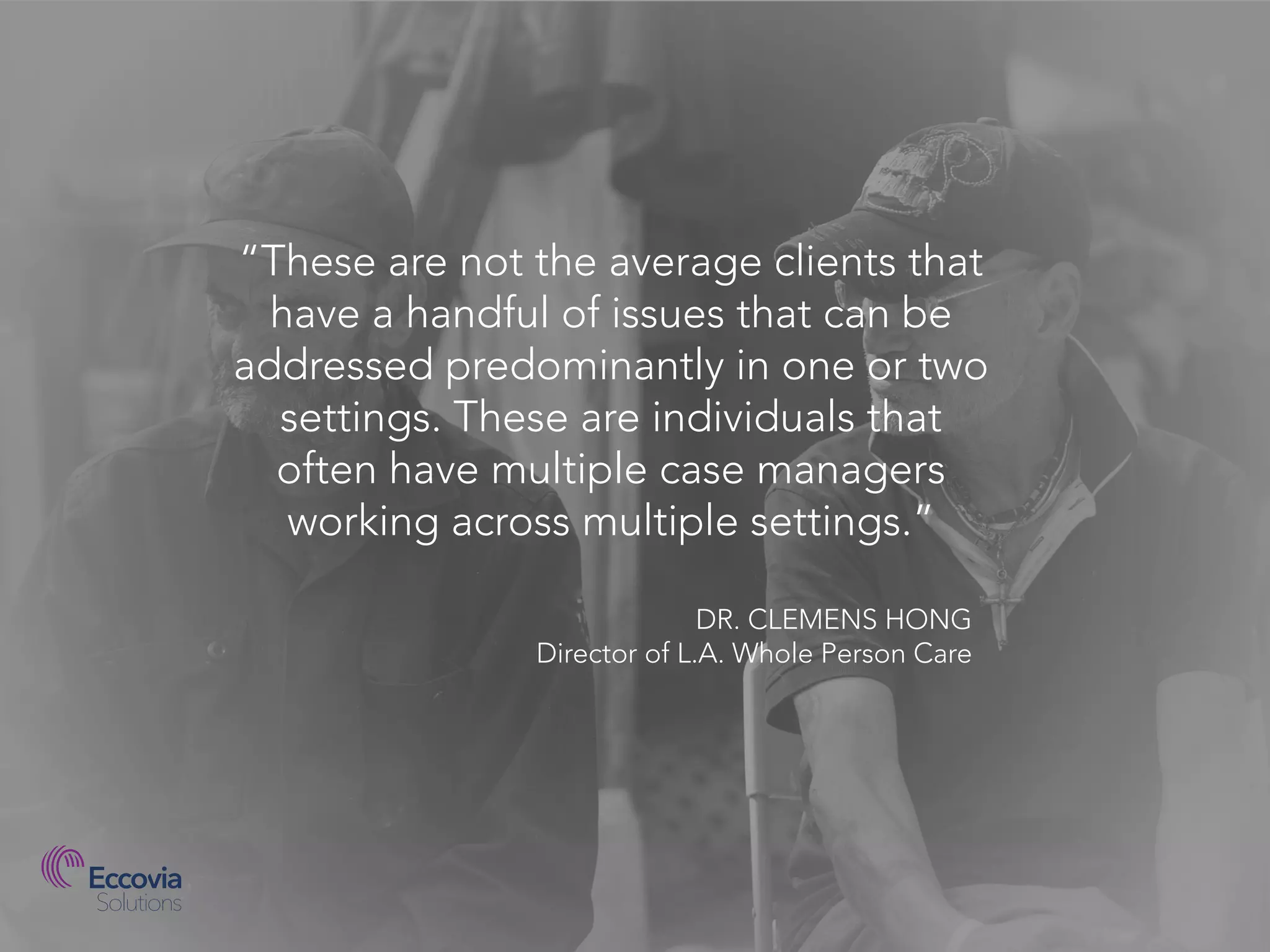
“These are not the average clients that
have a handful of issues that can be
addressed predominantly in one or two
settings. These are individuals that
often have multiple case managers
working across multiple settings.”
DR. CLEMENS HONG
Director of L.A. Whole Person Care
HEALTH NEIGHBORHOOD IN ACTION:
Case Study
LA County care
coordination
system
Medicaid care
coordination pilot
program targeted at
the county’s most
vulnerable residents
Simplifies data
collection
Streamlines data
presentation
Provides evidence-
based knowledge
Stores and transmits
thousands of records
Gives providers a
longitudinal patient
care plan
Conclusion
A successful community care coordination
model includes:
• The capture and management of health and
social determinant data
• Interoperability to support the sharing of that
data among health and community providers
Conclusion
Click to Download the White Paper

Evolving healthcare delivery models

  • 1.
  • 2.
    US Health andHuman Services is in Transition The cost of healthcare continues to rise without a corresponding increase in patient outcomes INCREASED PROVIDER COSTS POOR HEALTH OUTCOMES
  • 3.
    US Health andHuman Services is in Transition Provider payments have shifted from FEE-FOR-SERVICE OUTCOMES-BASED TO
  • 4.
    US Health andHuman Services is in Transition TO Communities are shifting from TREATING HEALTH PROBLEMS TRYING TO PREVENT THEM
  • 5.
    Preventative Care Some ofthe key areas of preventative care include: Addressing all aspects of a person’s health, including primary care, behavioral health, and social supports Reforming the healthcare delivery system Holding providers accountable for sustainable outcomes
  • 6.
    IMPROVED CARE IMPROVED OUTCOMES REDUCEDCOSTS With funding for innovation, there are many innovative care models: • Patient-Centered Medical Home • Medicaid ACO Learning Collaborative • Accountable Health Communities • Certified Community Behavioral Health Clinics Demand for Innovation
  • 7.
  • 8.
    What is communitycare coordination? An array of providers in the community treats the full scope of patient needs jointly Providers share data across multiple agencies for a whole-person view of patients URGENT CARE HOSPITAL HOME HEALTH PRIMARY CARE OFFICE Value-based Payment Models
  • 9.
    Goals of CommunityCare Coordination Support enhanced access to high-quality care Improve patient outcomes Deliver evidence-based care and improved community population health Ensure effective communication, coordination, and integration with other providers
  • 10.
    New Care ModelsRequire a New Care Role
  • 11.
    Introducing the CommunityCare Coordinator The terms case manager, care manager, and care coordinator are often used interchangeably, but there are distinct differences CASE MANAGER CARE MANAGER COMMUNITY CARE COORDINATOR
  • 12.
    Case Manager Usually workson behalf of human service programs such as: • Housing • Workforce services • Food assistance • Youth and family services
  • 13.
    Care Manager • Usuallyworks in clinical settings to address medical needs • May refer patients to multiple providers within a facility or health system
  • 14.
    Community Care Coordinator Works closelywith a variety of providers in a community health neighborhood to address all aspects of a patient’s health CASE MANAGER CARE MANAGER
  • 15.
    What is aCommunity Health Neighborhood?
  • 16.
    Community Health Neighborhoodis a network of community caregivers and recipients of care in a specific geographic area Coordination across multiple service organizations from multiple disciplines Data sharing and real-time communication A focus on improving the overall well-being of the community
  • 17.
    A Connected Networkof Services Outpatient Substance Use Treatment Patient Centered Medical Home Primary Care Office Home Health Youth and Family Services Comprehensive Care Clinic Patient Accountable Care Organization Workforce Services Hospital Urgent Care
  • 18.
    Benefits for ProvidersParticipating in a Community Health Neighborhood Coordinated screenings Enhanced coordination of patient care Single point of entry assessment and referral for service Increased treatment adherence Decreased duplication of services Increased understanding by providers
  • 19.
    Community Health Neighborhoods TakeVarious Forms Accountable Care Organizations Regional Health Improvement Collaboratives County Medicaid Whole Person Care Programs Coalitions of community providers 1 2 3 4
  • 20.
    DATA DATA INTEROPERABILITY: The CommunityPostman Data Interoperability is the postman in the community health neighborhood Data is readily available to all partners in the health neighborhood
  • 21.
    Importance of Data Sharing Youcan’t treat the whole person with only part of the data Data enables providers to collectively address social determinants of health, behavioral health, and primary care needs
  • 22.
    HEALTH NEIGHBORHOOD INACTION: Case Study LA County Whole Person Care Medicaid care coordination pilot program targeted at the county’s most vulnerable residents Homeless Population Residents involved with the criminal justice system High-risk mental health patients High-risk medical patients Residents with substance use disorder
  • 23.
    “These are notthe average clients that have a handful of issues that can be addressed predominantly in one or two settings. These are individuals that often have multiple case managers working across multiple settings.” DR. CLEMENS HONG Director of L.A. Whole Person Care
  • 24.
    HEALTH NEIGHBORHOOD INACTION: Case Study LA County care coordination system Medicaid care coordination pilot program targeted at the county’s most vulnerable residents Simplifies data collection Streamlines data presentation Provides evidence- based knowledge Stores and transmits thousands of records Gives providers a longitudinal patient care plan
  • 25.
    Conclusion A successful communitycare coordination model includes: • The capture and management of health and social determinant data • Interoperability to support the sharing of that data among health and community providers
  • 26.