


1
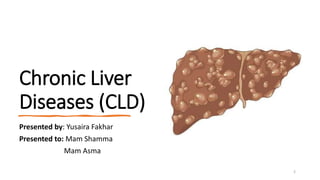
Chronic Liver
Diseases (CLD)
Presented by: Yusaira Fakhar
Presented to: Mam Shamma
Mam Asma
2
Introduction
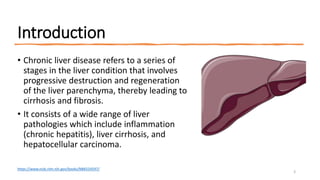
• Chronic liver disease refers to a series of
stages in the liver condition that involves
progressive destruction and regeneration
of the liver parenchyma, thereby leading to
cirrhosis and fibrosis.
• It consists of a wide range of liver
pathologies which include inflammation
(chronic hepatitis), liver cirrhosis, and
hepatocellular carcinoma.
https://www.ncbi.nlm.nih.gov/books/NBK554597/
3
Etiology
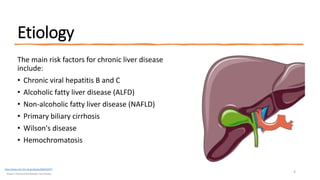
The main risk factors for chronic liver disease
include:
• Chronic viral hepatitis B and C
• Alcoholic fatty liver disease (ALFD)
• Non-alcoholic fatty liver disease (NAFLD)
• Primary biliary cirrhosis
• Wilson's disease
• Hemochromatosis
https://www.ncbi.nlm.nih.gov/books/NBK554597/
Krause 's Food and the Nutrition Care Process
4
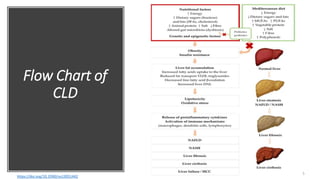
Flow Chart of
CLD
https://doi.org/10.3390/nu13051442
5
Clinical Manifestation of CLD
• Fatigue and weakness
• Nausea and vomiting
• Portal hypertension (increase blood flow in portal venous system)
• Ascites (accumulation of fluid in abdomen)
• Upper GI bleeding, Melana
• Hepatocellular insufficiency (e.g., jaundice, hepatic encephalopathy)
• Acute variceal bleeding and spontaneous bacterial peritonitis (SBP)
https://www.ncbi.nlm.nih.gov/books/NBK554597/
https://emedicine.medscape.com/article/182098-overview 6
Investigation &
Clinical findings
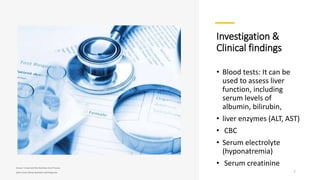
• Blood tests: It can be
used to assess liver
function, including
serum levels of
albumin, bilirubin,
• liver enzymes (ALT, AST)
• CBC
• Serum electrolyte
(hyponatremia)
• Serum creatinine
Krause 's Food and the Nutrition Care Process
Sylvia Escot Stump Nutrition and Diagnosis 7
Fatty Liver
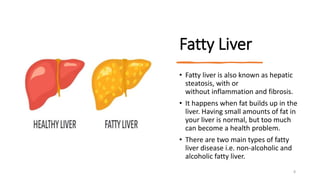
• Fatty liver is also known as hepatic
steatosis, with or
without inflammation and fibrosis.
• It happens when fat builds up in the
liver. Having small amounts of fat in
your liver is normal, but too much
can become a health problem.
• There are two main types of fatty
liver disease i.e. non-alcoholic and
alcoholic fatty liver.
8
Symptoms
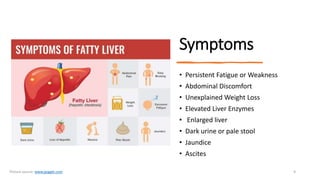
• Persistent Fatigue or Weakness
• Abdominal Discomfort
• Unexplained Weight Loss
• Elevated Liver Enzymes
• Enlarged liver
• Dark urine or pale stool
• Jaundice
• Ascites
Picture source: www.goggle.com 9
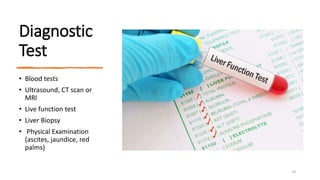
Diagnostic
Test
• Blood tests
• Ultrasound, CT scan or
MRI
• Live function test
• Liver Biopsy
• Physical Examination
(ascites, jaundice, red
palms)
10
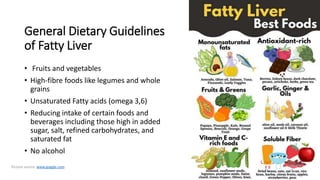
General Dietary Guidelines
of Fatty Liver
• Fruits and vegetables
• High-fibre foods like legumes and whole
grains
• Unsaturated Fatty acids (omega 3,6)
• Reducing intake of certain foods and
beverages including those high in added
sugar, salt, refined carbohydrates, and
saturated fat
• No alcohol
Picture source: www.goggle.com
11
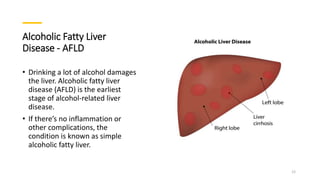
Alcoholic Fatty Liver
Disease - AFLD
• Drinking a lot of alcohol damages
the liver. Alcoholic fatty liver
disease (AFLD) is the earliest
stage of alcohol-related liver
disease.
• If there’s no inflammation or
other complications, the
condition is known as simple
alcoholic fatty liver.
12
Risk factors
• Heavy and regular alcohol use
• Genetics
• Obesity
• Smoking
• Gender ( mostly men)
• Not having a balanced diet
• Co-existing liver diseases (hepatitis C history)
Krause's Food and the Nutrition Care Process 13
Alcoholic steatohepatitis (ASH)
• Alcoholic steatohepatitis (ASH) is a type of AFLD.
• It’s when a buildup of excess fat in the liver is accompanied by
inflammation, which is also known as alcoholic hepatitis.
• Signs:
Excess fat in liver
Inflammation in liver
Increased alcohol use
When left untreated, ASH can cause liver fibrosis. In severe cases, this
can progress to cirrhosis and liver failure.
Krause 's Food and the Nutrition Care Process
Sylvia Escot Stump Nutrition and Diagnosis
14
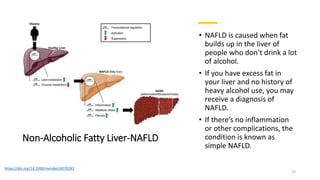
Non-Alcoholic Fatty Liver-NAFLD
• NAFLD is caused when fat
builds up in the liver of
people who don’t drink a lot
of alcohol.
• If you have excess fat in
your liver and no history of
heavy alcohol use, you may
receive a diagnosis of
NAFLD.
• If there’s no inflammation
or other complications, the
condition is known as
simple NAFLD.
https://doi.org/10.3390/metabo10070283
15
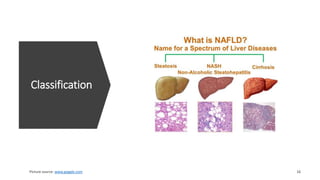
Classification
www.goggle.com
Non-Alcoholic Steatohepatitis
• Non-alcoholic steatohepatitis (NASH) is a type of NAFLD.
• It’s when buildup of excess fat in the liver is accompanied by
inflammation.
Signs:
• Excess fat in liver
• Inflammation in liver
• Have no history of heavy alcohol use
• When left untreated, NASH can cause liver fibrosis. In severe cases,
this can progress to cirrhosis and liver failure.
https://www.ncbi.nlm.nih.gov/books/NBK554597/ 17
Risk factors
• Obesity
• Unhealthy diet
• Dyslipidaemia
• Type II diabetes
• Metabolic syndrome
• Certain medications
18
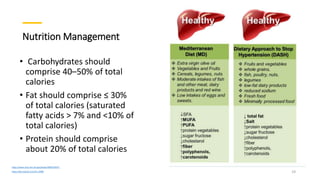
Nutrition Management
• Carbohydrates should
comprise 40–50% of total
calories
• Fat should comprise ≤ 30%
of total calories (saturated
fatty acids > 7% and <10% of
total calories)
• Protein should comprise
about 20% of total calories
https://www.ncbi.nlm.nih.gov/books/NBK554597/
https://doi.org/10.1111/liv.14360 19
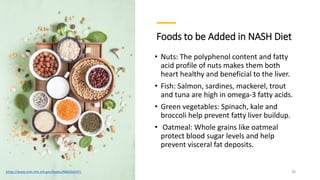
Foods to be Added in NASH Diet
• Nuts: The polyphenol content and fatty
acid profile of nuts makes them both
heart healthy and beneficial to the liver.
• Fish: Salmon, sardines, mackerel, trout
and tuna are high in omega-3 fatty acids.
• Green vegetables: Spinach, kale and
broccoli help prevent fatty liver buildup.
• Oatmeal: Whole grains like oatmeal
protect blood sugar levels and help
prevent visceral fat deposits.
https://www.ncbi.nlm.nih.gov/books/NBK554597/ 20
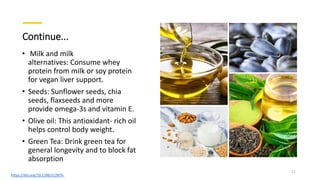
Continue...
• Milk and milk
alternatives: Consume whey
protein from milk or soy protein
for vegan liver support.
• Seeds: Sunflower seeds, chia
seeds, flaxseeds and more
provide omega-3s and vitamin E.
• Olive oil: This antioxidant- rich oil
helps control body weight.
• Green Tea: Drink green tea for
general longevity and to block fat
absorption
https://doi.org/10.1186/s12876-
21
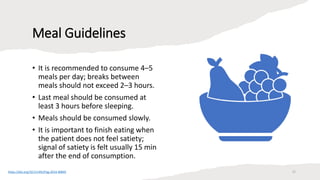
Meal Guidelines
• It is recommended to consume 4–5
meals per day; breaks between
meals should not exceed 2–3 hours.
• Last meal should be consumed at
least 3 hours before sleeping.
• Meals should be consumed slowly.
• It is important to finish eating when
the patient does not feel satiety;
signal of satiety is felt usually 15 min
after the end of consumption.
https://doi.org/10.5114%2Fpg.2014.40845 22
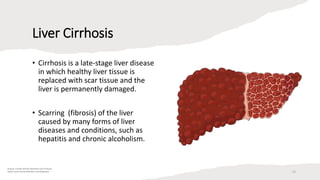
Liver Cirrhosis
• Cirrhosis is a late-stage liver disease
in which healthy liver tissue is
replaced with scar tissue and the
liver is permanently damaged.
• Scarring (fibrosis) of the liver
caused by many forms of liver
diseases and conditions, such as
hepatitis and chronic alcoholism.
Krause 's Food and the Nutrition Care Process
Sylvia Escot Stump Nutrition and Diagnosis 23
Krause 's Food and the Nutrition Care Process
24
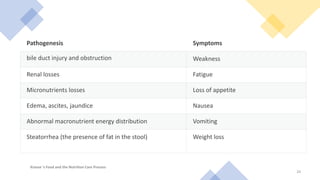
Pathogenesis Symptoms
bile duct injury and obstruction Weakness
Renal losses Fatigue
Micronutrients losses Loss of appetite
Edema, ascites, jaundice Nausea
Abnormal macronutrient energy distribution Vomiting
Steatorrhea (the presence of fat in the stool) Weight loss
Dietary requirement in
Cirrhosis
• Carbohydrates (45-55%): Complex CHO for
liver cell regeneration,
improve glucose production)
• Protein: 0.8 g of protein/kg/day (for
nitrogen balance, muscle building by
reducing the risk of malnutrition). In
situations of stress (sepsis, infection,
gastrointestinal bleeding, or severe ascites),
at least 1.2-1.5 g of protein per kg per day
should be provided.
• Fats (30%): PUFA's and MUFA's
recommended to reduce lipolysis and lipid
deposits.
Krause 's Food and the Nutrition Care Process
Sylvia Escot Stump Nutrition and Diagnosis
25
Conti..
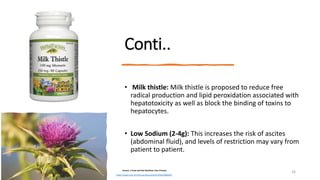
• Milk thistle: Milk thistle is proposed to reduce free
radical production and lipid peroxidation associated with
hepatotoxicity as well as block the binding of toxins to
hepatocytes.
• Low Sodium (2-4g): This increases the risk of ascites
(abdominal fluid), and levels of restriction may vary from
patient to patient.
Krause 's Food and the Nutrition Care Process
https://www.ncbi.nlm.nih.gov/pmc/articles/PMC3586829/
26
DIET MANUAL OF PAKISTAN
KRAUSE'S FOOD & NUTRITION (12TH EDITION) 2008
27
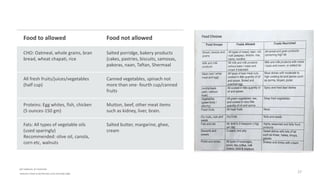
Food to allowed Food not allowed
CHO: Oatmeal, whole grains, bran
bread, wheat chapati, rice
Salted porridge, bakery products
(cakes, pastries, biscuits, samosas,
pakoras, naan, Taftan, Shermaal
All fresh fruits/juices/vegetables
(half cup)
Canned vegetables, spinach not
more than one- fourth cup/canned
fruits
Proteins: Egg whites, fish, chicken
(5 ounces-150 gm)
Mutton, beef, other meat items
such as kidney, liver, brain.
Fats: All types of vegetable oils
(used sparingly)
Recommended: olive oil, canola,
corn etc, walnuts
Salted butter, margarine, ghee,
cream
Hepatic
Encephalopathy/ PSE
• Portal-systemic encephalopathy is
considered as an temporary
neurological disorder due to
chronic severe liver disease.
• A diseased liver struggles to filter
toxins from the blood affects
brain function and causes cognitive
impairment.
• It occurs often in patient with
cirrhosis but also seen in patient
with hepatitis C.
MANUAL OF CLINICAL NUTRITION MANAGEMENT, MORRISON: 2001
KRAUSE'S FOOD & NUTRITION (12TH EDITION) 2008
28
Pathophysiology
The damaged liver cells fail to detoxify and convert the ammonia to urea. This
results in accumulation of ammonia.
It increase serum ammonia levels precipitate or aggravate hepatic
encephalopathy (indigestion of dietary and blood proteins)
The brain dysfunction and damage occurs due to this increased ammonia
concentration in the blood which resulting in hepatic encephalopathy and coma.
29
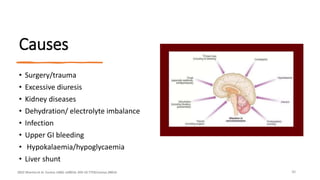
Causes
• Surgery/trauma
• Excessive diuresis
• Kidney diseases
• Dehydration/ electrolyte imbalance
• Infection
• Upper GI bleeding
• Hypokalaemia/hypoglycaemia
• Liver shunt
2022 Sharma et al. Cureus 14(8): e28016. DOI 10.7759/cureus.28016 30
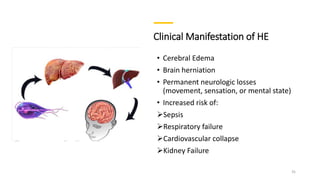
Clinical Manifestation of HE
• Cerebral Edema
• Brain herniation
• Permanent neurologic losses
(movement, sensation, or mental state)
• Increased risk of:
Sepsis
Respiratory failure
Cardiovascular collapse
Kidney Failure
31
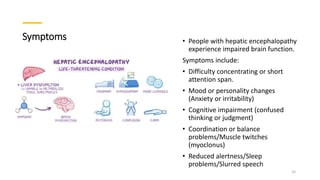
Symptoms • People with hepatic encephalopathy
experience impaired brain function.
Symptoms include:
• Difficulty concentrating or short
attention span.
• Mood or personality changes
(Anxiety or irritability)
• Cognitive impairment (confused
thinking or judgment)
• Coordination or balance
problems/Muscle twitches
(myoclonus)
• Reduced alertness/Sleep
problems/Slurred speech
32
Conti...
• Acute HE: Acute hepatic encephalopathy may occur in the setting of
chronic liver disease due to some precipitating factor it may also
occur suddenly in the absence of previous liver disease.
 It is characterized by development of an acute confusional state,
neuromuscular abnormalities resulting in problems maintaining
posture, and increased rate of breathing.
Patients usually recover when the precipitating factor is removed or
with improvement of liver function.
33
Continue...
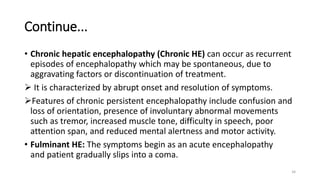
• Chronic hepatic encephalopathy (Chronic HE) can occur as recurrent
episodes of encephalopathy which may be spontaneous, due to
aggravating factors or discontinuation of treatment.
 It is characterized by abrupt onset and resolution of symptoms.
Features of chronic persistent encephalopathy include confusion and
loss of orientation, presence of involuntary abnormal movements
such as tremor, increased muscle tone, difficulty in speech, poor
attention span, and reduced mental alertness and motor activity.
• Fulminant HE: The symptoms begin as an acute encephalopathy
and patient gradually slips into a coma.
34
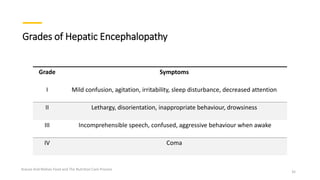
Grades of Hepatic Encephalopathy
Krause And Mahan Food and The Nutrition Care Process
35
Grade Symptoms
I Mild confusion, agitation, irritability, sleep disturbance, decreased attention
II Lethargy, disorientation, inappropriate behaviour, drowsiness
III Incomprehensible speech, confused, aggressive behaviour when awake
IV Coma
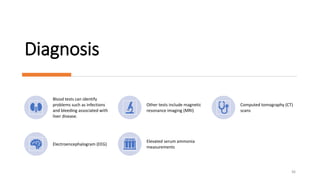
Diagnosis
Blood tests can identify
problems such as infections
and bleeding associated with
liver disease.
Other tests include magnetic
resonance imaging (MRI)
Computed tomography (CT)
scans
Electroencephalogram (EEG)
Elevated serum ammonia
measurements
36
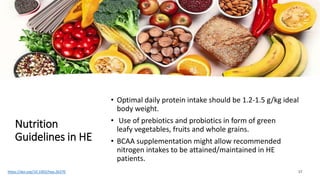
Nutrition
Guidelines in HE
• Optimal daily protein intake should be 1.2-1.5 g/kg ideal
body weight.
• Use of prebiotics and probiotics in form of green
leafy vegetables, fruits and whole grains.
• BCAA supplementation might allow recommended
nitrogen intakes to be attained/maintained in HE
patients.
https://doi.org/10.1002/hep.26370 37
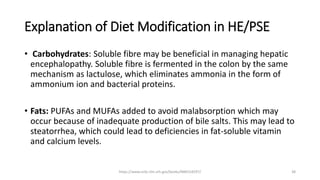
Explanation of Diet Modification in HE/PSE
• Carbohydrates: Soluble fibre may be beneficial in managing hepatic
encephalopathy. Soluble fibre is fermented in the colon by the same
mechanism as lactulose, which eliminates ammonia in the form of
ammonium ion and bacterial proteins.
• Fats: PUFAs and MUFAs added to avoid malabsorption which may
occur because of inadequate production of bile salts. This may lead to
steatorrhea, which could lead to deficiencies in fat-soluble vitamin
and calcium levels.
https://www.ncbi.nlm.nih.gov/books/NBK554597/ 38
Conti...
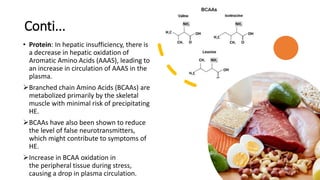
• Protein: In hepatic insufficiency, there is
a decrease in hepatic oxidation of
Aromatic Amino Acids (AAAS), leading to
an increase in circulation of AAAS in the
plasma.
Branched chain Amino Acids (BCAAs) are
metabolized primarily by the skeletal
muscle with minimal risk of precipitating
HE.
BCAAs have also been shown to reduce
the level of false neurotransmitters,
which might contribute to symptoms of
HE.
Increase in BCAA oxidation in
the peripheral tissue during stress,
causing a drop in plasma circulation. 39
Foods to Eat in HE
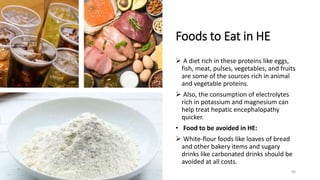
 A diet rich in these proteins like eggs,
fish, meat, pulses, vegetables, and fruits
are some of the sources rich in animal
and vegetable proteins.
 Also, the consumption of electrolytes
rich in potassium and magnesium can
help treat hepatic encephalopathy
quicker.
• Food to be avoided in HE:
 White-flour foods like loaves of bread
and other bakery items and sugary
drinks like carbonated drinks should be
avoided at all costs.
40
41

cld complete.pptx

  • 1.
  • 2.
    Chronic Liver Diseases (CLD) Presentedby: Yusaira Fakhar Presented to: Mam Shamma Mam Asma 2
  • 3.
    Introduction • Chronic liverdisease refers to a series of stages in the liver condition that involves progressive destruction and regeneration of the liver parenchyma, thereby leading to cirrhosis and fibrosis. • It consists of a wide range of liver pathologies which include inflammation (chronic hepatitis), liver cirrhosis, and hepatocellular carcinoma. https://www.ncbi.nlm.nih.gov/books/NBK554597/ 3
  • 4.
    Etiology The main riskfactors for chronic liver disease include: • Chronic viral hepatitis B and C • Alcoholic fatty liver disease (ALFD) • Non-alcoholic fatty liver disease (NAFLD) • Primary biliary cirrhosis • Wilson's disease • Hemochromatosis https://www.ncbi.nlm.nih.gov/books/NBK554597/ Krause 's Food and the Nutrition Care Process 4
  • 5.
  • 6.
    Clinical Manifestation ofCLD • Fatigue and weakness • Nausea and vomiting • Portal hypertension (increase blood flow in portal venous system) • Ascites (accumulation of fluid in abdomen) • Upper GI bleeding, Melana • Hepatocellular insufficiency (e.g., jaundice, hepatic encephalopathy) • Acute variceal bleeding and spontaneous bacterial peritonitis (SBP) https://www.ncbi.nlm.nih.gov/books/NBK554597/ https://emedicine.medscape.com/article/182098-overview 6
  • 7.
    Investigation & Clinical findings •Blood tests: It can be used to assess liver function, including serum levels of albumin, bilirubin, • liver enzymes (ALT, AST) • CBC • Serum electrolyte (hyponatremia) • Serum creatinine Krause 's Food and the Nutrition Care Process Sylvia Escot Stump Nutrition and Diagnosis 7
  • 8.
    Fatty Liver • Fattyliver is also known as hepatic steatosis, with or without inflammation and fibrosis. • It happens when fat builds up in the liver. Having small amounts of fat in your liver is normal, but too much can become a health problem. • There are two main types of fatty liver disease i.e. non-alcoholic and alcoholic fatty liver. 8
  • 9.
    Symptoms • Persistent Fatigueor Weakness • Abdominal Discomfort • Unexplained Weight Loss • Elevated Liver Enzymes • Enlarged liver • Dark urine or pale stool • Jaundice • Ascites Picture source: www.goggle.com 9
  • 10.
    Diagnostic Test • Blood tests •Ultrasound, CT scan or MRI • Live function test • Liver Biopsy • Physical Examination (ascites, jaundice, red palms) 10
  • 11.
    General Dietary Guidelines ofFatty Liver • Fruits and vegetables • High-fibre foods like legumes and whole grains • Unsaturated Fatty acids (omega 3,6) • Reducing intake of certain foods and beverages including those high in added sugar, salt, refined carbohydrates, and saturated fat • No alcohol Picture source: www.goggle.com 11
  • 12.
    Alcoholic Fatty Liver Disease- AFLD • Drinking a lot of alcohol damages the liver. Alcoholic fatty liver disease (AFLD) is the earliest stage of alcohol-related liver disease. • If there’s no inflammation or other complications, the condition is known as simple alcoholic fatty liver. 12
  • 13.
    Risk factors • Heavyand regular alcohol use • Genetics • Obesity • Smoking • Gender ( mostly men) • Not having a balanced diet • Co-existing liver diseases (hepatitis C history) Krause's Food and the Nutrition Care Process 13
  • 14.
    Alcoholic steatohepatitis (ASH) •Alcoholic steatohepatitis (ASH) is a type of AFLD. • It’s when a buildup of excess fat in the liver is accompanied by inflammation, which is also known as alcoholic hepatitis. • Signs: Excess fat in liver Inflammation in liver Increased alcohol use When left untreated, ASH can cause liver fibrosis. In severe cases, this can progress to cirrhosis and liver failure. Krause 's Food and the Nutrition Care Process Sylvia Escot Stump Nutrition and Diagnosis 14
  • 15.
    Non-Alcoholic Fatty Liver-NAFLD •NAFLD is caused when fat builds up in the liver of people who don’t drink a lot of alcohol. • If you have excess fat in your liver and no history of heavy alcohol use, you may receive a diagnosis of NAFLD. • If there’s no inflammation or other complications, the condition is known as simple NAFLD. https://doi.org/10.3390/metabo10070283 15
  • 16.
  • 17.
    Non-Alcoholic Steatohepatitis • Non-alcoholicsteatohepatitis (NASH) is a type of NAFLD. • It’s when buildup of excess fat in the liver is accompanied by inflammation. Signs: • Excess fat in liver • Inflammation in liver • Have no history of heavy alcohol use • When left untreated, NASH can cause liver fibrosis. In severe cases, this can progress to cirrhosis and liver failure. https://www.ncbi.nlm.nih.gov/books/NBK554597/ 17
  • 18.
    Risk factors • Obesity •Unhealthy diet • Dyslipidaemia • Type II diabetes • Metabolic syndrome • Certain medications 18
  • 19.
    Nutrition Management • Carbohydratesshould comprise 40–50% of total calories • Fat should comprise ≤ 30% of total calories (saturated fatty acids > 7% and <10% of total calories) • Protein should comprise about 20% of total calories https://www.ncbi.nlm.nih.gov/books/NBK554597/ https://doi.org/10.1111/liv.14360 19
  • 20.
    Foods to beAdded in NASH Diet • Nuts: The polyphenol content and fatty acid profile of nuts makes them both heart healthy and beneficial to the liver. • Fish: Salmon, sardines, mackerel, trout and tuna are high in omega-3 fatty acids. • Green vegetables: Spinach, kale and broccoli help prevent fatty liver buildup. • Oatmeal: Whole grains like oatmeal protect blood sugar levels and help prevent visceral fat deposits. https://www.ncbi.nlm.nih.gov/books/NBK554597/ 20
  • 21.
    Continue... • Milk andmilk alternatives: Consume whey protein from milk or soy protein for vegan liver support. • Seeds: Sunflower seeds, chia seeds, flaxseeds and more provide omega-3s and vitamin E. • Olive oil: This antioxidant- rich oil helps control body weight. • Green Tea: Drink green tea for general longevity and to block fat absorption https://doi.org/10.1186/s12876- 21
  • 22.
    Meal Guidelines • Itis recommended to consume 4–5 meals per day; breaks between meals should not exceed 2–3 hours. • Last meal should be consumed at least 3 hours before sleeping. • Meals should be consumed slowly. • It is important to finish eating when the patient does not feel satiety; signal of satiety is felt usually 15 min after the end of consumption. https://doi.org/10.5114%2Fpg.2014.40845 22
  • 23.
    Liver Cirrhosis • Cirrhosisis a late-stage liver disease in which healthy liver tissue is replaced with scar tissue and the liver is permanently damaged. • Scarring (fibrosis) of the liver caused by many forms of liver diseases and conditions, such as hepatitis and chronic alcoholism. Krause 's Food and the Nutrition Care Process Sylvia Escot Stump Nutrition and Diagnosis 23
  • 24.
    Krause 's Foodand the Nutrition Care Process 24 Pathogenesis Symptoms bile duct injury and obstruction Weakness Renal losses Fatigue Micronutrients losses Loss of appetite Edema, ascites, jaundice Nausea Abnormal macronutrient energy distribution Vomiting Steatorrhea (the presence of fat in the stool) Weight loss
  • 25.
    Dietary requirement in Cirrhosis •Carbohydrates (45-55%): Complex CHO for liver cell regeneration, improve glucose production) • Protein: 0.8 g of protein/kg/day (for nitrogen balance, muscle building by reducing the risk of malnutrition). In situations of stress (sepsis, infection, gastrointestinal bleeding, or severe ascites), at least 1.2-1.5 g of protein per kg per day should be provided. • Fats (30%): PUFA's and MUFA's recommended to reduce lipolysis and lipid deposits. Krause 's Food and the Nutrition Care Process Sylvia Escot Stump Nutrition and Diagnosis 25
  • 26.
    Conti.. • Milk thistle:Milk thistle is proposed to reduce free radical production and lipid peroxidation associated with hepatotoxicity as well as block the binding of toxins to hepatocytes. • Low Sodium (2-4g): This increases the risk of ascites (abdominal fluid), and levels of restriction may vary from patient to patient. Krause 's Food and the Nutrition Care Process https://www.ncbi.nlm.nih.gov/pmc/articles/PMC3586829/ 26
  • 27.
    DIET MANUAL OFPAKISTAN KRAUSE'S FOOD & NUTRITION (12TH EDITION) 2008 27 Food to allowed Food not allowed CHO: Oatmeal, whole grains, bran bread, wheat chapati, rice Salted porridge, bakery products (cakes, pastries, biscuits, samosas, pakoras, naan, Taftan, Shermaal All fresh fruits/juices/vegetables (half cup) Canned vegetables, spinach not more than one- fourth cup/canned fruits Proteins: Egg whites, fish, chicken (5 ounces-150 gm) Mutton, beef, other meat items such as kidney, liver, brain. Fats: All types of vegetable oils (used sparingly) Recommended: olive oil, canola, corn etc, walnuts Salted butter, margarine, ghee, cream
  • 28.
    Hepatic Encephalopathy/ PSE • Portal-systemicencephalopathy is considered as an temporary neurological disorder due to chronic severe liver disease. • A diseased liver struggles to filter toxins from the blood affects brain function and causes cognitive impairment. • It occurs often in patient with cirrhosis but also seen in patient with hepatitis C. MANUAL OF CLINICAL NUTRITION MANAGEMENT, MORRISON: 2001 KRAUSE'S FOOD & NUTRITION (12TH EDITION) 2008 28
  • 29.
    Pathophysiology The damaged livercells fail to detoxify and convert the ammonia to urea. This results in accumulation of ammonia. It increase serum ammonia levels precipitate or aggravate hepatic encephalopathy (indigestion of dietary and blood proteins) The brain dysfunction and damage occurs due to this increased ammonia concentration in the blood which resulting in hepatic encephalopathy and coma. 29
  • 30.
    Causes • Surgery/trauma • Excessivediuresis • Kidney diseases • Dehydration/ electrolyte imbalance • Infection • Upper GI bleeding • Hypokalaemia/hypoglycaemia • Liver shunt 2022 Sharma et al. Cureus 14(8): e28016. DOI 10.7759/cureus.28016 30
  • 31.
    Clinical Manifestation ofHE • Cerebral Edema • Brain herniation • Permanent neurologic losses (movement, sensation, or mental state) • Increased risk of: Sepsis Respiratory failure Cardiovascular collapse Kidney Failure 31
  • 32.
    Symptoms • Peoplewith hepatic encephalopathy experience impaired brain function. Symptoms include: • Difficulty concentrating or short attention span. • Mood or personality changes (Anxiety or irritability) • Cognitive impairment (confused thinking or judgment) • Coordination or balance problems/Muscle twitches (myoclonus) • Reduced alertness/Sleep problems/Slurred speech 32
  • 33.
    Conti... • Acute HE:Acute hepatic encephalopathy may occur in the setting of chronic liver disease due to some precipitating factor it may also occur suddenly in the absence of previous liver disease.  It is characterized by development of an acute confusional state, neuromuscular abnormalities resulting in problems maintaining posture, and increased rate of breathing. Patients usually recover when the precipitating factor is removed or with improvement of liver function. 33
  • 34.
    Continue... • Chronic hepaticencephalopathy (Chronic HE) can occur as recurrent episodes of encephalopathy which may be spontaneous, due to aggravating factors or discontinuation of treatment.  It is characterized by abrupt onset and resolution of symptoms. Features of chronic persistent encephalopathy include confusion and loss of orientation, presence of involuntary abnormal movements such as tremor, increased muscle tone, difficulty in speech, poor attention span, and reduced mental alertness and motor activity. • Fulminant HE: The symptoms begin as an acute encephalopathy and patient gradually slips into a coma. 34
  • 35.
    Grades of HepaticEncephalopathy Krause And Mahan Food and The Nutrition Care Process 35 Grade Symptoms I Mild confusion, agitation, irritability, sleep disturbance, decreased attention II Lethargy, disorientation, inappropriate behaviour, drowsiness III Incomprehensible speech, confused, aggressive behaviour when awake IV Coma
  • 36.
    Diagnosis Blood tests canidentify problems such as infections and bleeding associated with liver disease. Other tests include magnetic resonance imaging (MRI) Computed tomography (CT) scans Electroencephalogram (EEG) Elevated serum ammonia measurements 36
  • 37.
    Nutrition Guidelines in HE •Optimal daily protein intake should be 1.2-1.5 g/kg ideal body weight. • Use of prebiotics and probiotics in form of green leafy vegetables, fruits and whole grains. • BCAA supplementation might allow recommended nitrogen intakes to be attained/maintained in HE patients. https://doi.org/10.1002/hep.26370 37
  • 38.
    Explanation of DietModification in HE/PSE • Carbohydrates: Soluble fibre may be beneficial in managing hepatic encephalopathy. Soluble fibre is fermented in the colon by the same mechanism as lactulose, which eliminates ammonia in the form of ammonium ion and bacterial proteins. • Fats: PUFAs and MUFAs added to avoid malabsorption which may occur because of inadequate production of bile salts. This may lead to steatorrhea, which could lead to deficiencies in fat-soluble vitamin and calcium levels. https://www.ncbi.nlm.nih.gov/books/NBK554597/ 38
  • 39.
    Conti... • Protein: Inhepatic insufficiency, there is a decrease in hepatic oxidation of Aromatic Amino Acids (AAAS), leading to an increase in circulation of AAAS in the plasma. Branched chain Amino Acids (BCAAs) are metabolized primarily by the skeletal muscle with minimal risk of precipitating HE. BCAAs have also been shown to reduce the level of false neurotransmitters, which might contribute to symptoms of HE. Increase in BCAA oxidation in the peripheral tissue during stress, causing a drop in plasma circulation. 39
  • 40.
    Foods to Eatin HE  A diet rich in these proteins like eggs, fish, meat, pulses, vegetables, and fruits are some of the sources rich in animal and vegetable proteins.  Also, the consumption of electrolytes rich in potassium and magnesium can help treat hepatic encephalopathy quicker. • Food to be avoided in HE:  White-flour foods like loaves of bread and other bakery items and sugary drinks like carbonated drinks should be avoided at all costs. 40
  • 41.