Mandibular Defects and Algorithms for
Mandibular Reconstruction
1
Waheed Murad
PGR, Maxillofacial
Surgery
Professor Noor Ul Wahab
Consultant Oral & Maxillofacial
Reconstructive Surgeon
2
Mandibular Defects
• Cancer
• Trauma
• Osteonecrosis (medication related or after radiotherapy )
3
Table of Contents
• Classification of Mandibular Defects
• Algorithms to Approach Reconstruction of Mandibular Defects
• Clinical cases
• Points to consider for treatment plan
• Possible reconstruction options
• Pros
• Cons
• Take home message
4
Learning 0bjectives
• Describe the different mandibular defects
• Choose an appropriate reconstruction for each defect
5
Classification of Mandibular Defects
• AOCMF Classification
• Jewer’s HCL classification
• Peter G. Cordeiro Classification
6
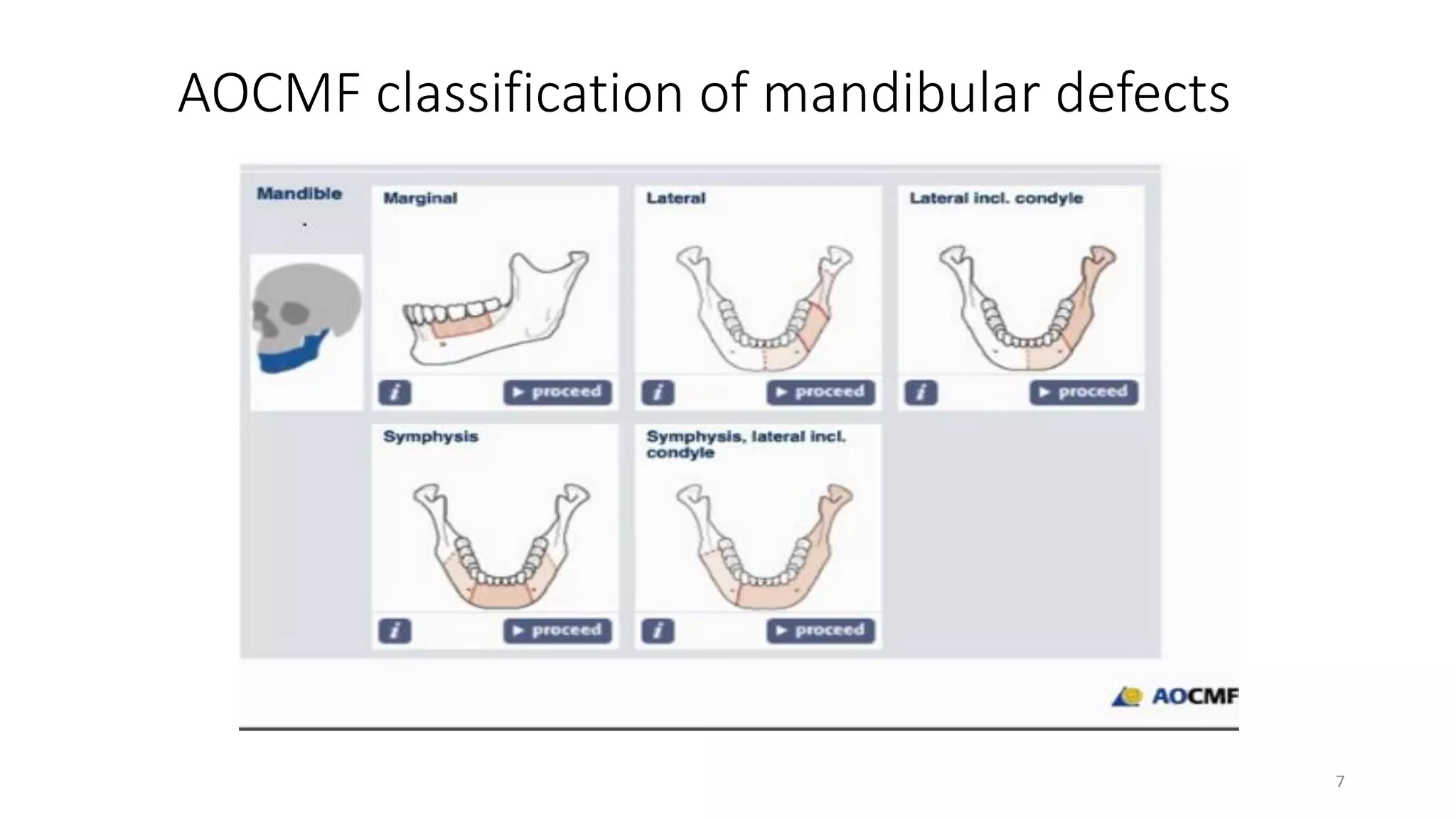
AOCMF classification of mandibular defects
7
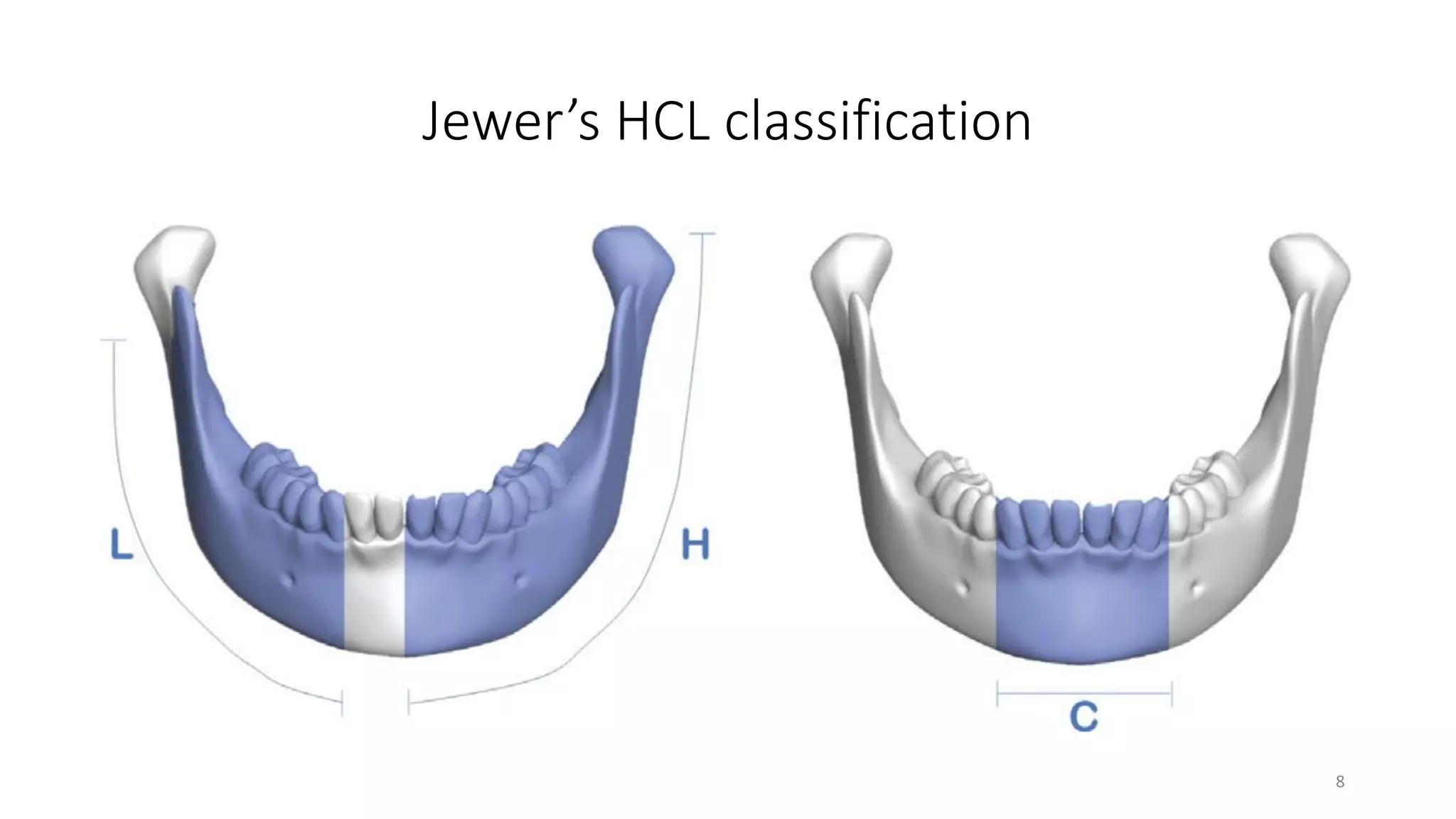
Jewer’s HCL classification
8
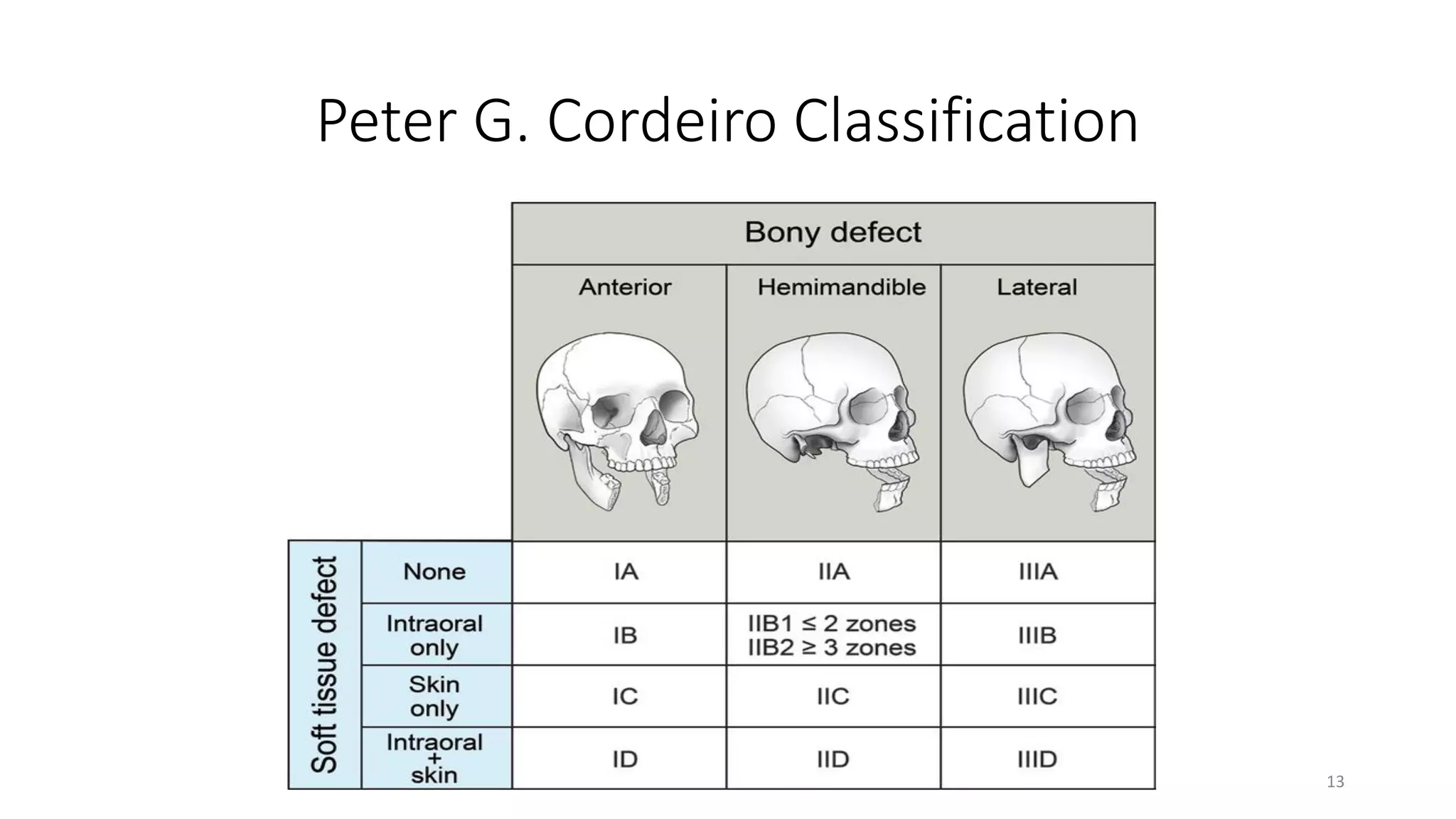
Peter G. Cordeiro Classification
• Consists of 13 primary types of defects
• Addresses both soft tissue and bony defects
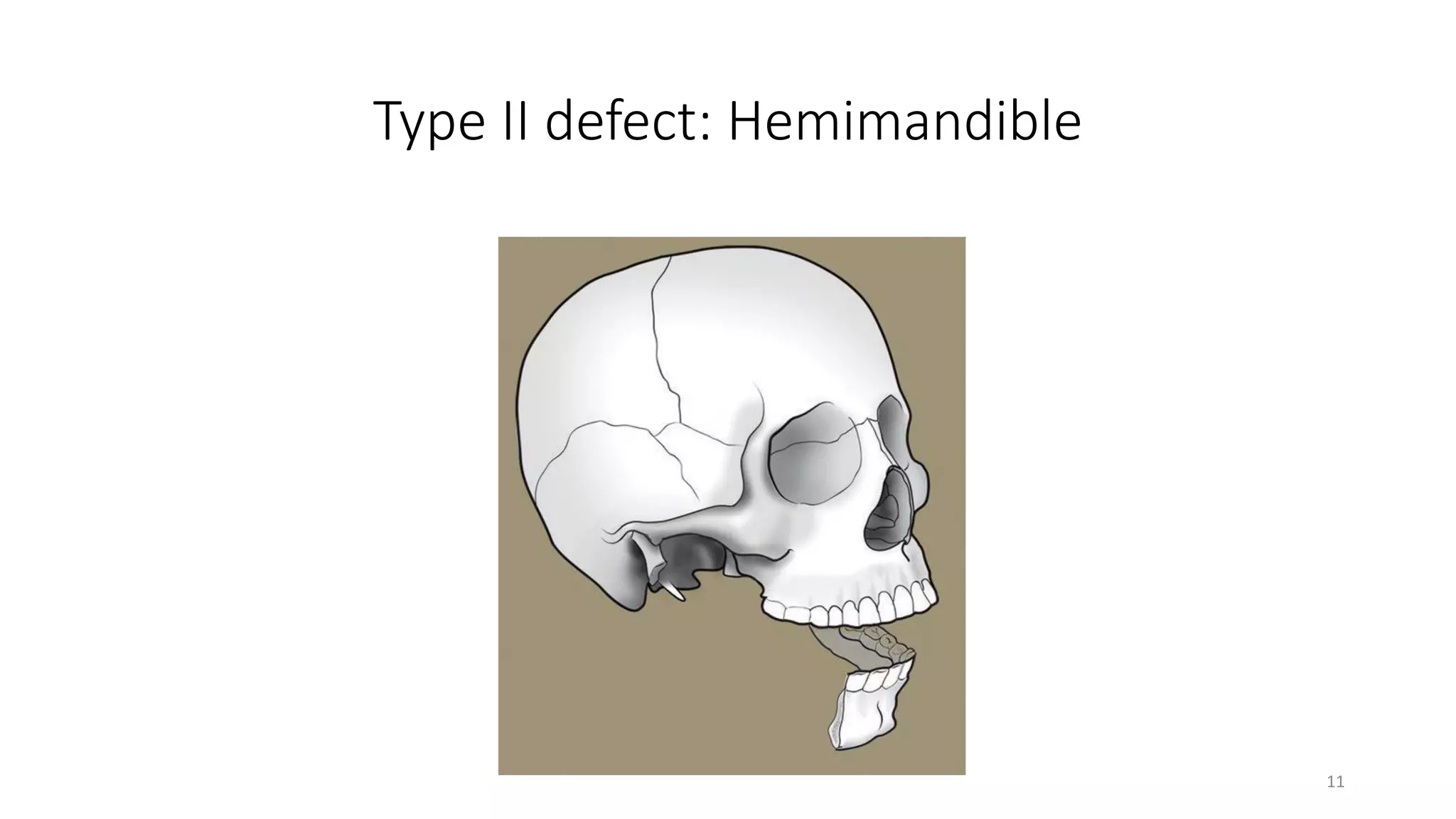
• Roman numeral (I, II, III) describes the bony defects
• Letter (A, B, C, D) describes soft tissue defects
• Reconstruction of mandibular defects
9
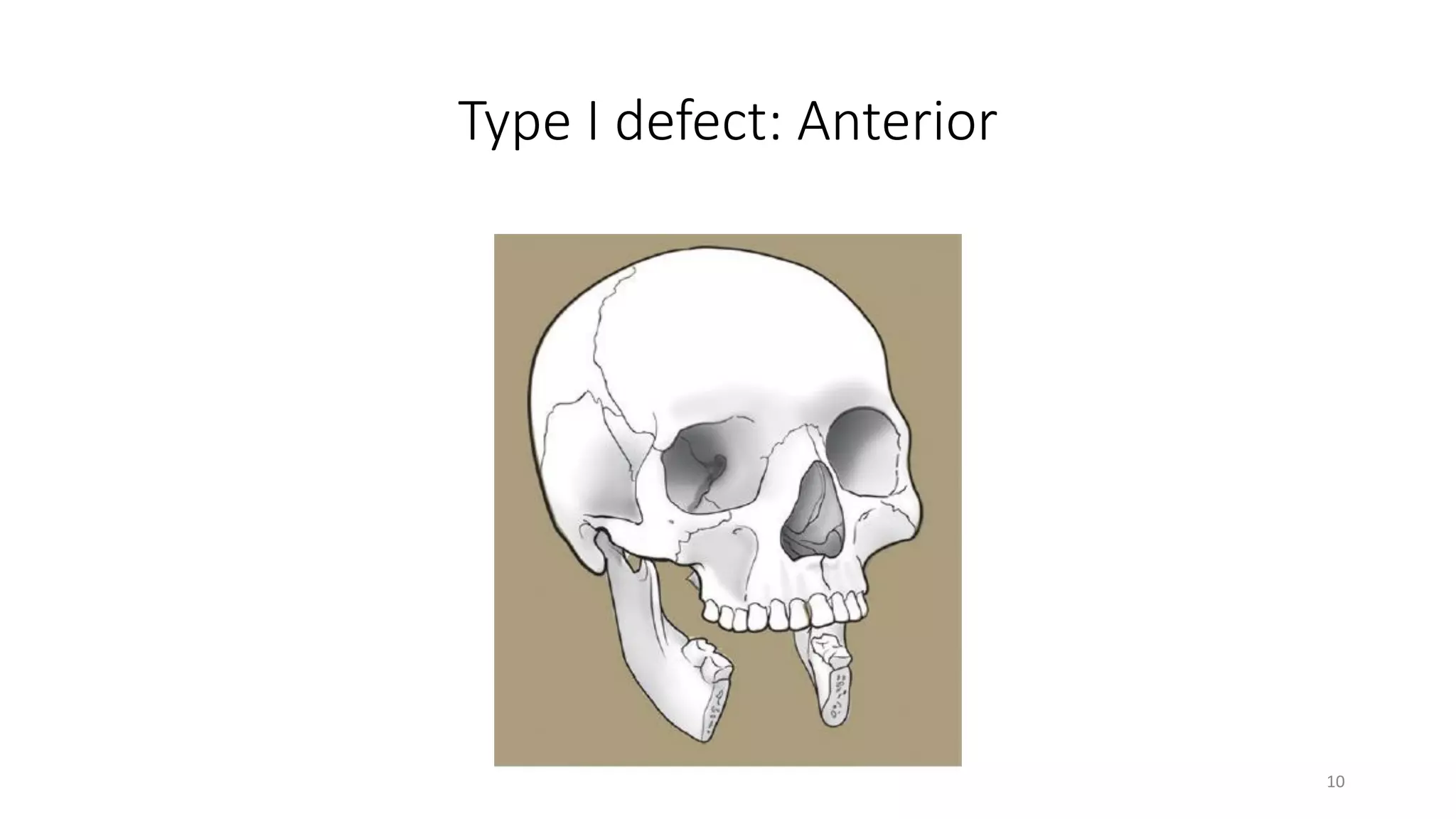
Type I defect: Anterior
10
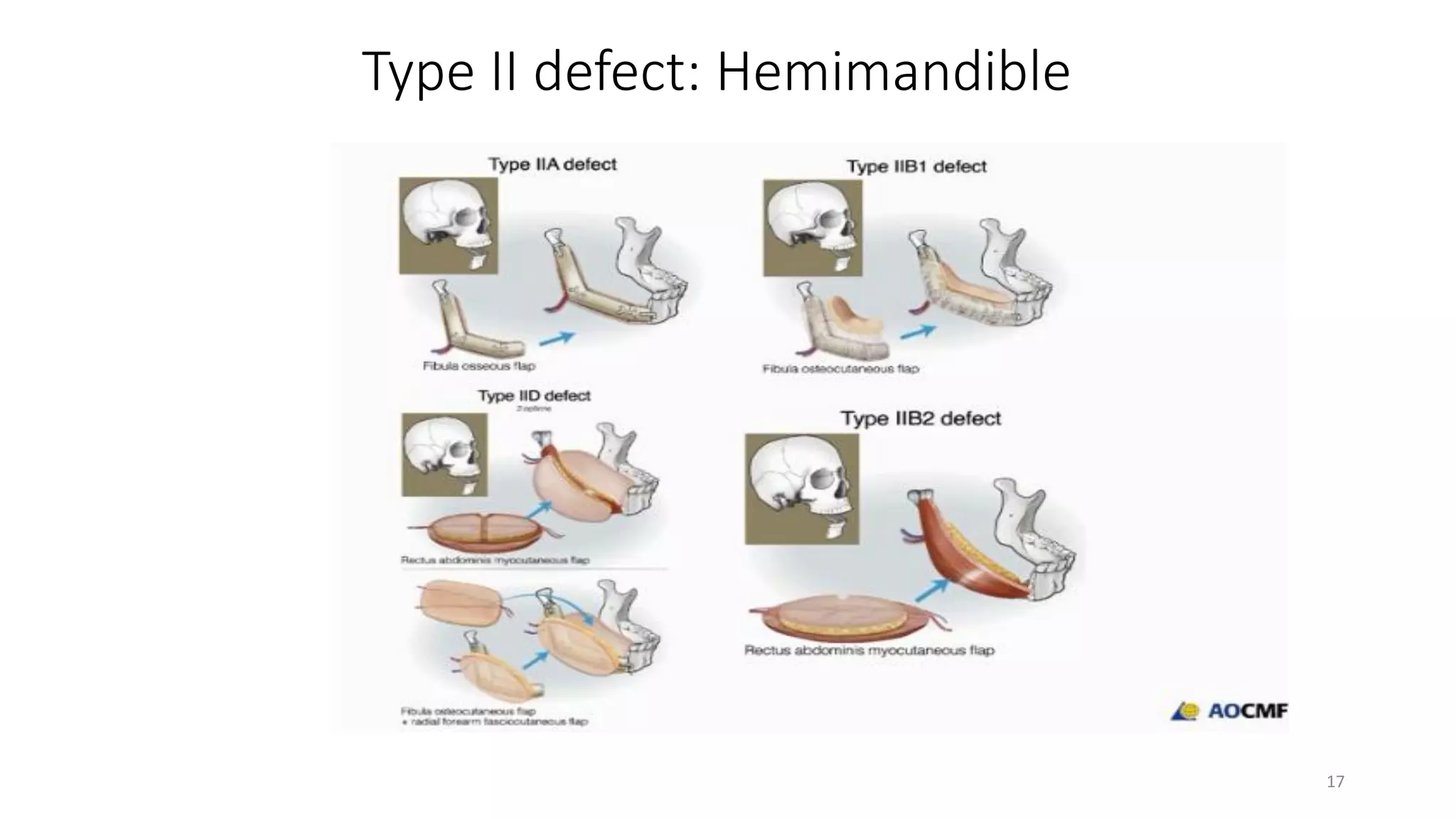
Type II defect: Hemimandible
11
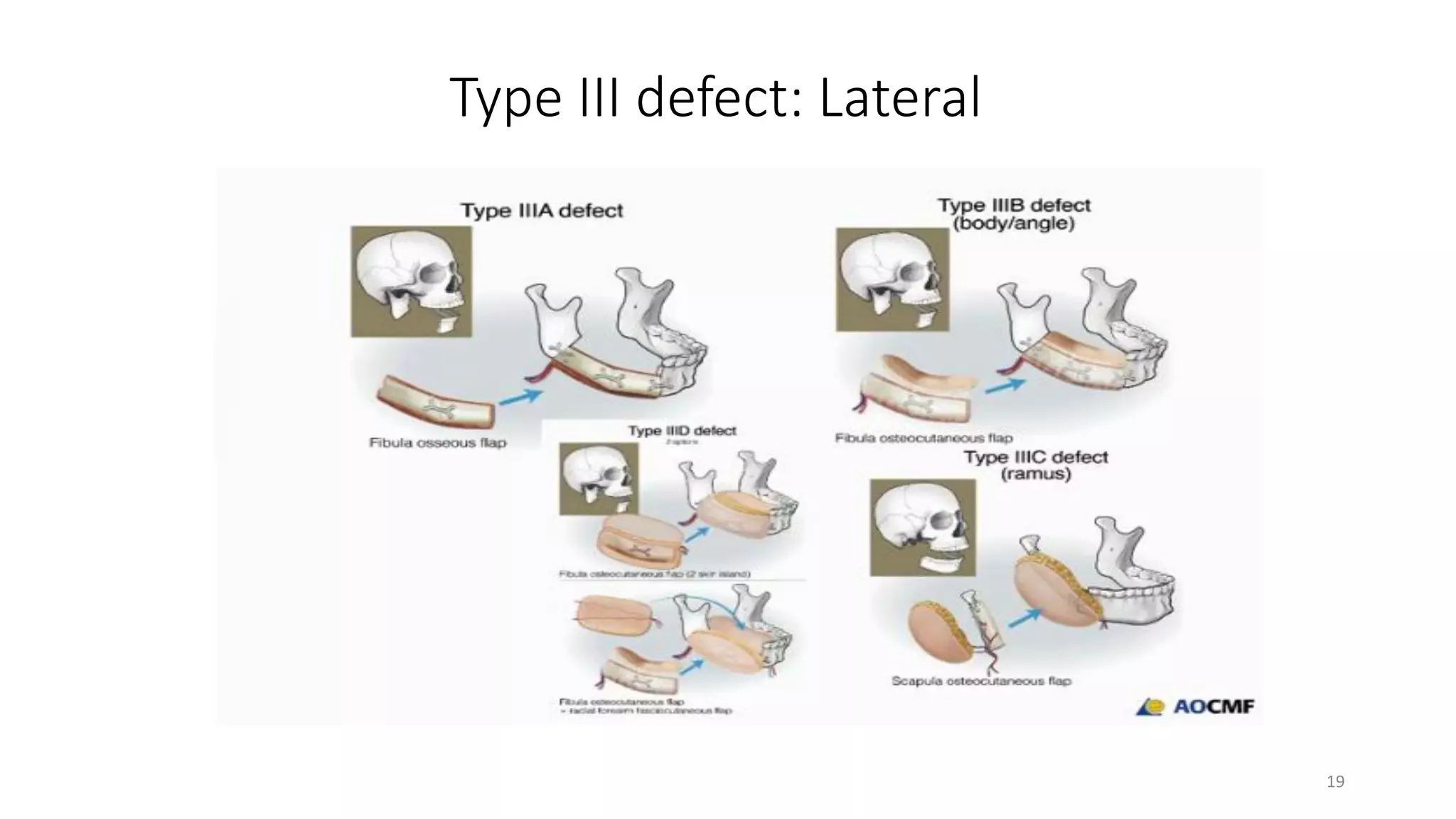
Type III defect: Lateral
12
Peter G. Cordeiro Classification
13
Algorithms to Approach Reconstruction of
Mandibular Defects
14
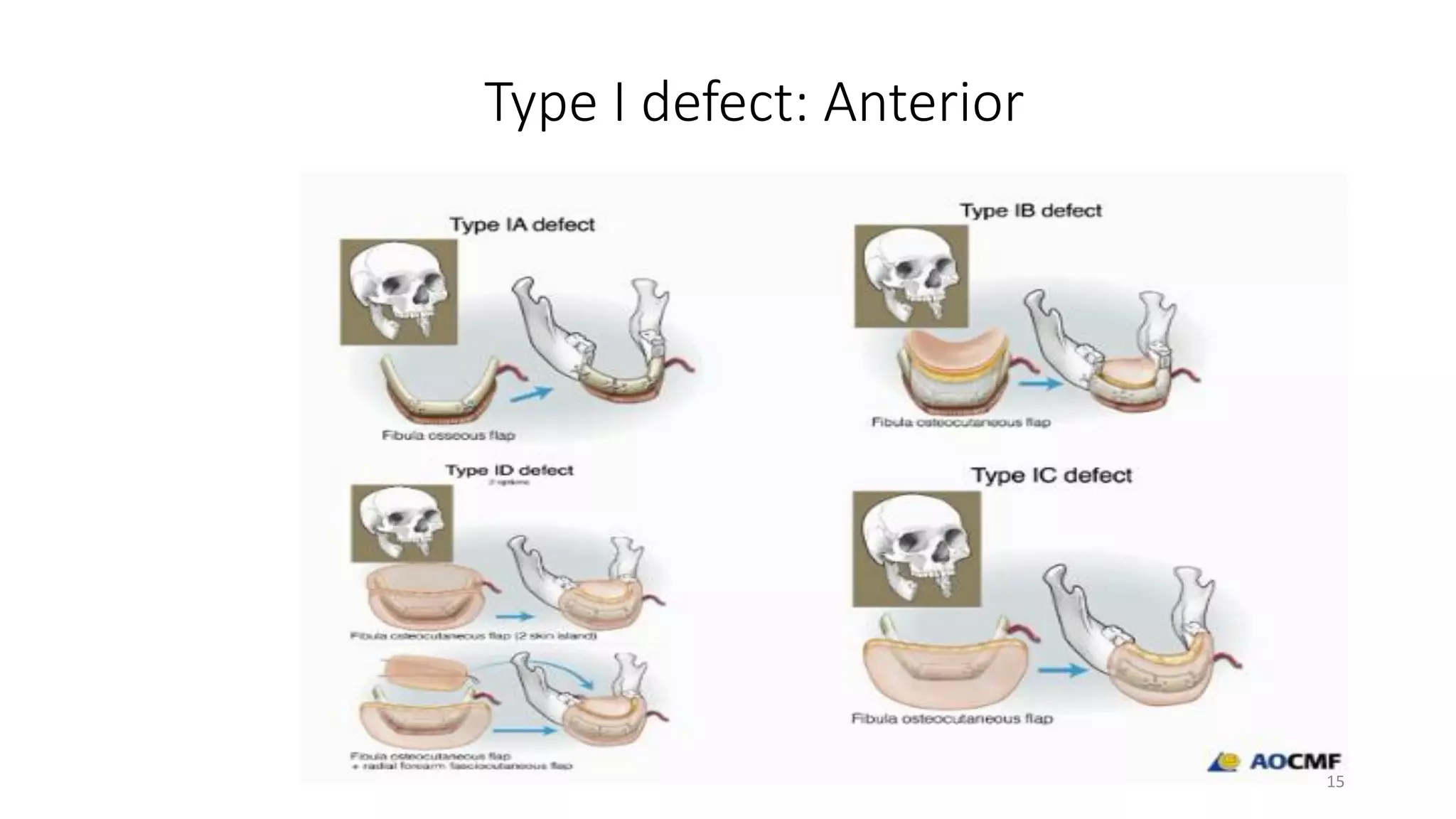
Type I defect: Anterior
15
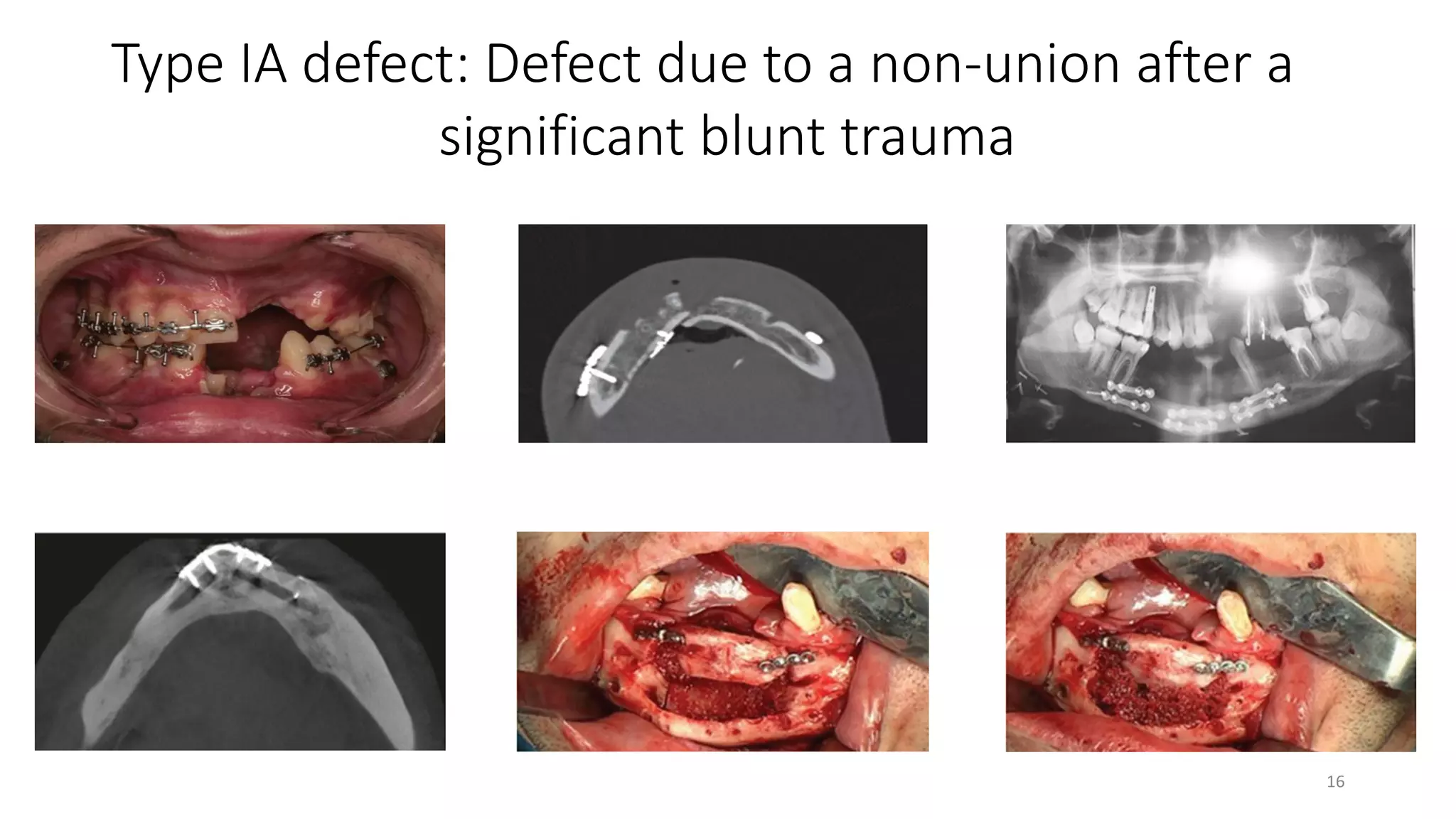
Type IA defect: Defect due to a non-union after a
significant blunt trauma
16
Type II defect: Hemimandible
17
Type IIB2 defect : Adenoid cystic carcinoma
18
Type III defect: Lateral
19
Type IIID defect: Recurrent OSCC
20
Points to consider
Regarding surgery
• No bony reconstruction temporary solution
difficult dental rehabilitation
• Free bone graft limitation regarding size
Depending up recipient site
• Micro vascular osseous flap technically demanding
more resources
Donor site morbidity
21
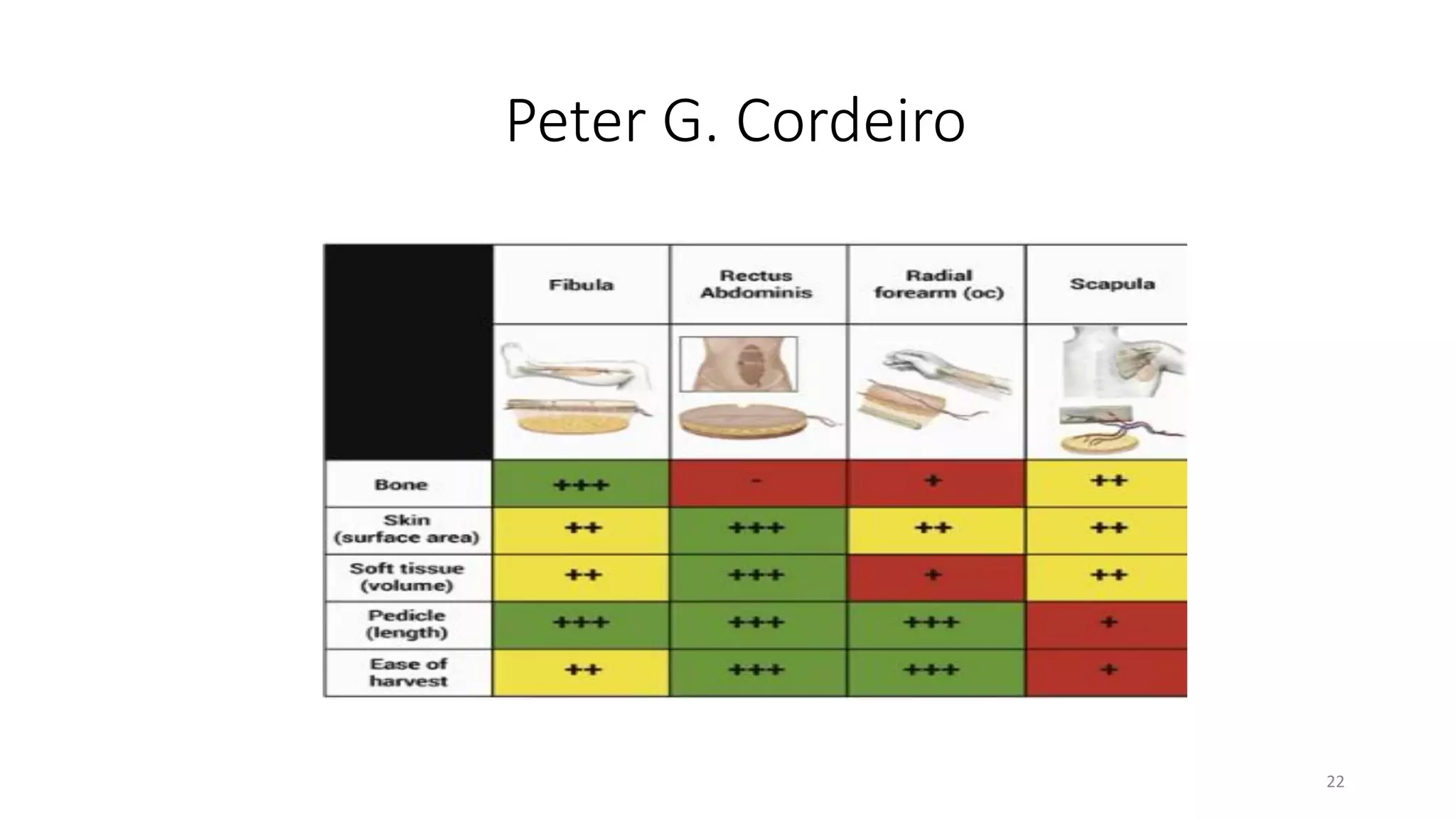
Peter G. Cordeiro
22
Possible Reconstruction Options
• Fibula
• DCIA
• Scapula
• Free soft tissue flaps (ALT, Rectus abdominus, Latissmus Dorsi)
• Combination flaps
• Regional flaps (pect major , DP)
• Customized titanium prosthesis
• Plate followed by secondary reconstruction with free iliac graft 23
Fibula Free Flap
Pros:
• Length up to 25 cm
• Two skin islands possible
• Long and large vascular pedicle
• Different shapes due to variety of osteotomies possible
• Low level donor site morbidity
• Two team approach possible
Cons:
• Small height
• Donor site skin graft
• Preoperative imaging of vessels of lower leg
• Compartment syndrom
24
Addressing bone height discrepancy
Double barrel fibula
Vertical distraction of fibula
Custom plate with fibula placed superiorly
Fibula split + Iliac bone graft
25
Problems that rule out fibula
26
DCIA
• Inconstant cutaneous vessels
• Short vascular pedicle
• Good quality and quantity of bone
27
Free scapular flap
• Combination with free latissmus dorsi flap possible
• Long or short vascular pedicle
• Intraoperative patient shifting needed
• No two team approach
28
Conclusion
• Vascularized Free Fibula is gold standered for reconstruction of large mandibular defects
• DCIA is good alternative of fibula graft
• Free soft tissue flaps are good options for large lateral and hemi mandible defects
• Regional flaps can be used for mandibular reconstruction in patients not fit for extensive
reconstructive surgery
29
Take home message
If You Fail To Plan, You Plan To Fail
Benjamin Franklin
30

Classification of mandibular defects

  • 1.
    Mandibular Defects andAlgorithms for Mandibular Reconstruction 1
  • 2.
    Waheed Murad PGR, Maxillofacial Surgery ProfessorNoor Ul Wahab Consultant Oral & Maxillofacial Reconstructive Surgeon 2
  • 3.
    Mandibular Defects • Cancer •Trauma • Osteonecrosis (medication related or after radiotherapy ) 3
  • 4.
    Table of Contents •Classification of Mandibular Defects • Algorithms to Approach Reconstruction of Mandibular Defects • Clinical cases • Points to consider for treatment plan • Possible reconstruction options • Pros • Cons • Take home message 4
  • 5.
    Learning 0bjectives • Describethe different mandibular defects • Choose an appropriate reconstruction for each defect 5
  • 6.
    Classification of MandibularDefects • AOCMF Classification • Jewer’s HCL classification • Peter G. Cordeiro Classification 6
  • 7.
    AOCMF classification ofmandibular defects 7
  • 8.
  • 9.
    Peter G. CordeiroClassification • Consists of 13 primary types of defects • Addresses both soft tissue and bony defects • Roman numeral (I, II, III) describes the bony defects • Letter (A, B, C, D) describes soft tissue defects • Reconstruction of mandibular defects 9
  • 10.
    Type I defect:Anterior 10
  • 11.
    Type II defect:Hemimandible 11
  • 12.
    Type III defect:Lateral 12
  • 13.
    Peter G. CordeiroClassification 13
  • 14.
    Algorithms to ApproachReconstruction of Mandibular Defects 14
  • 15.
    Type I defect:Anterior 15
  • 16.
    Type IA defect:Defect due to a non-union after a significant blunt trauma 16
  • 17.
    Type II defect:Hemimandible 17
  • 18.
    Type IIB2 defect: Adenoid cystic carcinoma 18
  • 19.
    Type III defect:Lateral 19
  • 20.
    Type IIID defect:Recurrent OSCC 20
  • 21.
    Points to consider Regardingsurgery • No bony reconstruction temporary solution difficult dental rehabilitation • Free bone graft limitation regarding size Depending up recipient site • Micro vascular osseous flap technically demanding more resources Donor site morbidity 21
  • 22.
  • 23.
    Possible Reconstruction Options •Fibula • DCIA • Scapula • Free soft tissue flaps (ALT, Rectus abdominus, Latissmus Dorsi) • Combination flaps • Regional flaps (pect major , DP) • Customized titanium prosthesis • Plate followed by secondary reconstruction with free iliac graft 23
  • 24.
    Fibula Free Flap Pros: •Length up to 25 cm • Two skin islands possible • Long and large vascular pedicle • Different shapes due to variety of osteotomies possible • Low level donor site morbidity • Two team approach possible Cons: • Small height • Donor site skin graft • Preoperative imaging of vessels of lower leg • Compartment syndrom 24
  • 25.
    Addressing bone heightdiscrepancy Double barrel fibula Vertical distraction of fibula Custom plate with fibula placed superiorly Fibula split + Iliac bone graft 25
  • 26.
    Problems that ruleout fibula 26
  • 27.
    DCIA • Inconstant cutaneousvessels • Short vascular pedicle • Good quality and quantity of bone 27
  • 28.
    Free scapular flap •Combination with free latissmus dorsi flap possible • Long or short vascular pedicle • Intraoperative patient shifting needed • No two team approach 28
  • 29.
    Conclusion • Vascularized FreeFibula is gold standered for reconstruction of large mandibular defects • DCIA is good alternative of fibula graft • Free soft tissue flaps are good options for large lateral and hemi mandible defects • Regional flaps can be used for mandibular reconstruction in patients not fit for extensive reconstructive surgery 29
  • 30.
    Take home message IfYou Fail To Plan, You Plan To Fail Benjamin Franklin 30