Classical Dances of India
presented by
p.sreeramathayalan
civil dept
922014103065
Types of Classical Dances
•Bharatanatyam
•Kathak
•Kathakali
•Odissi
•Kuchipudi
•Manipuri
•Mohiniattam
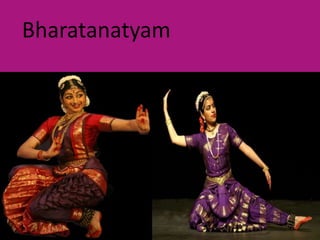
Bharatanatyam
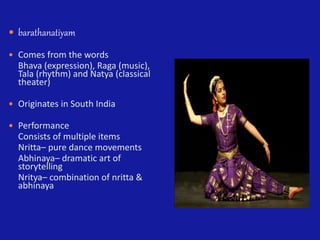
ď‚— barathanatiyam
ď‚— Comes from the words
Bhava (expression), Raga (music),
Tala (rhythm) and Natya (classical
theater)
ď‚— Originates in South India
ď‚— Performance
Consists of multiple items
Nritta– pure dance movements
Abhinaya– dramatic art of
storytelling
Nritya– combination of nritta &
abhinaya
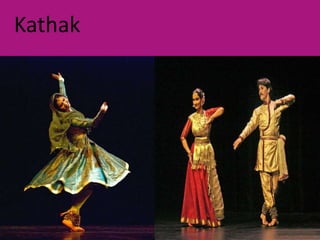
Kathak
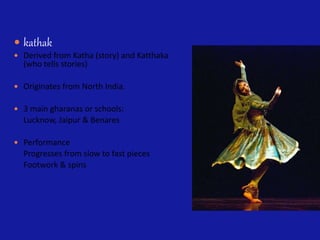
ď‚— kathak
ď‚— Derived from Katha (story) and Katthaka
(who tells stories)
ď‚— Originates from North India.
ď‚— 3 main gharanas or schools:
Lucknow, Jaipur & Benares
ď‚— Performance
Progresses from slow to fast pieces
Footwork & spins
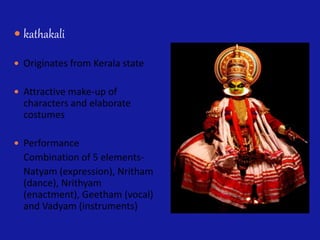
Kathakali
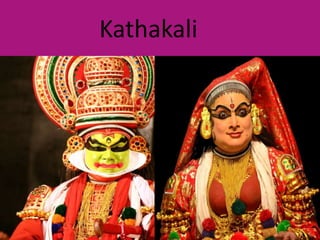
ď‚— kathakali
ď‚— Originates from Kerala state
ď‚— Attractive make-up of
characters and elaborate
costumes
ď‚— Performance
Combination of 5 elements-
Natyam (expression), Nritham
(dance), Nrithyam
(enactment), Geetham (vocal)
and Vadyam (instruments)
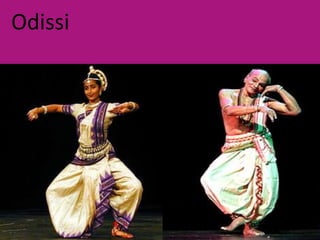
Odissi
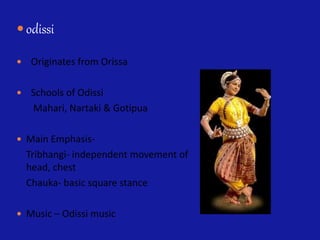
ď‚— odissi
ď‚— Originates from Orissa
ď‚— Schools of Odissi
Mahari, Nartaki & Gotipua
ď‚— Main Emphasis-
Tribhangi- independent movement of
head, chest
Chauka- basic square stance
 Music – Odissi music
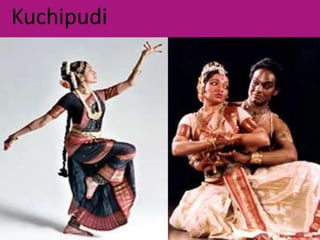
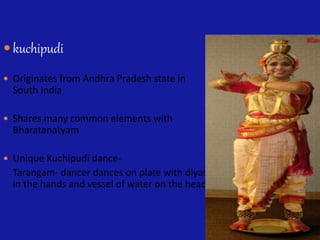
Kuchipudi
ď‚— kuchipudi
ď‚— Originates from Andhra Pradesh state in
South India
ď‚— Shares many common elements with
Bharatanatyam
ď‚— Unique Kuchipudi dance-
Tarangam- dancer dances on plate with diyas
in the hands and vessel of water on the head
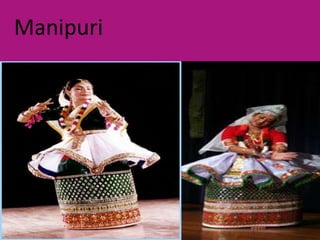
Manipuri
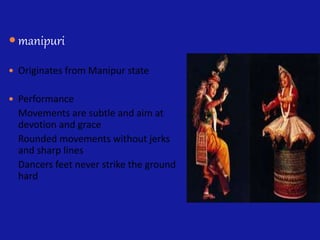
ď‚— manipuri
ď‚— Originates from Manipur state
ď‚— Performance
Movements are subtle and aim at
devotion and grace
Rounded movements without jerks
and sharp lines
Dancers feet never strike the ground
hard
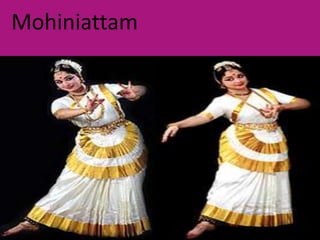
Mohiniattam
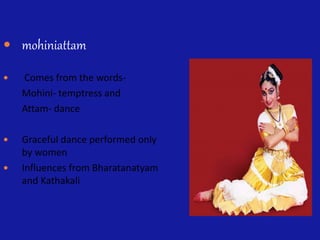
ď‚— mohiniattam
ď‚— Comes from the words-
Mohini- temptress and
Attam- dance
ď‚— Graceful dance performed only
by women
ď‚— Influences from Bharatanatyam
and Kathakali
Thank You

dance by sreeramathayalan

  • 1.
    Classical Dances ofIndia presented by p.sreeramathayalan civil dept 922014103065
  • 2.
    Types of ClassicalDances •Bharatanatyam •Kathak •Kathakali •Odissi •Kuchipudi •Manipuri •Mohiniattam
  • 3.
  • 4.
     barathanatiyam  Comesfrom the words Bhava (expression), Raga (music), Tala (rhythm) and Natya (classical theater)  Originates in South India  Performance Consists of multiple items Nritta– pure dance movements Abhinaya– dramatic art of storytelling Nritya– combination of nritta & abhinaya
  • 5.
  • 6.
    ď‚— kathak ď‚— Derivedfrom Katha (story) and Katthaka (who tells stories) ď‚— Originates from North India. ď‚— 3 main gharanas or schools: Lucknow, Jaipur & Benares ď‚— Performance Progresses from slow to fast pieces Footwork & spins
  • 7.
  • 8.
    ď‚— kathakali ď‚— Originatesfrom Kerala state ď‚— Attractive make-up of characters and elaborate costumes ď‚— Performance Combination of 5 elements- Natyam (expression), Nritham (dance), Nrithyam (enactment), Geetham (vocal) and Vadyam (instruments)
  • 9.
  • 10.
     odissi  Originatesfrom Orissa  Schools of Odissi Mahari, Nartaki & Gotipua  Main Emphasis- Tribhangi- independent movement of head, chest Chauka- basic square stance  Music – Odissi music
  • 11.
  • 12.
    ď‚— kuchipudi ď‚— Originatesfrom Andhra Pradesh state in South India ď‚— Shares many common elements with Bharatanatyam ď‚— Unique Kuchipudi dance- Tarangam- dancer dances on plate with diyas in the hands and vessel of water on the head
  • 13.
  • 14.
    ď‚— manipuri ď‚— Originatesfrom Manipur state ď‚— Performance Movements are subtle and aim at devotion and grace Rounded movements without jerks and sharp lines Dancers feet never strike the ground hard
  • 15.
  • 16.
    ď‚— mohiniattam ď‚— Comesfrom the words- Mohini- temptress and Attam- dance ď‚— Graceful dance performed only by women ď‚— Influences from Bharatanatyam and Kathakali
  • 17.