Welcome to
CUIN 3323
Donna Robinson
dyrobinson@gmail.com
robinsond@uhv.edu


                       By PresenterMedia.com
Distribution List

Your email address


                     By PresenterMedia.com
Establishing Ground Rules
Classroom Management Benefits Students as well as Teachers.

 • Be   respectful and track speakers.
 • Be   on time and prepared for class.
 • Refrain    from side-bar conversations.
 • Take   notes and ask questions.
 • Silence    cell phones, but not yet!
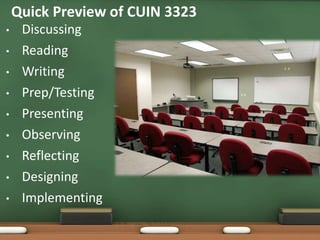
Quick Preview of CUIN 3323
•    Discussing
•    Reading
•    Writing
•    Prep/Testing
•    Presenting
•    Observing
•    Reflecting
•    Designing
•    Implementing
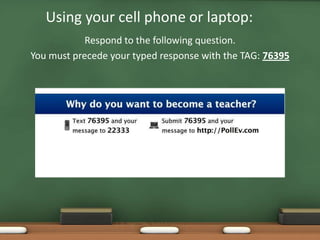
A Classroom Response Strategy: PollEverywhere.com
Using your cell phone or laptop:
            Respond to the following question.
You must precede your typed response with the TAG: 76395
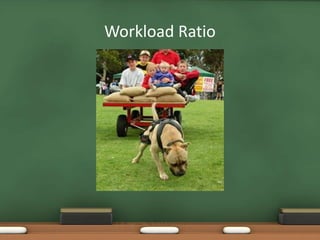
Workload Ratio
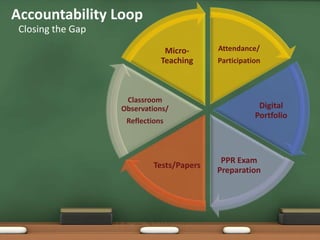
Accountability Loop
 Closing the Gap
                               Micro-      Attendance/
                              Teaching     Participation


                    Classroom
                   Observations/                       Digital
                                                      Portfolio
                    Reflections


                                            PPR Exam
                            Tests/Papers
                                           Preparation
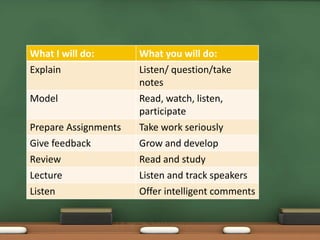
What I will do:       What you will do:
Explain               Listen/ question/take
                      notes
Model                 Read, watch, listen,
                      participate
Prepare Assignments   Take work seriously
Give feedback         Grow and develop
Review                Read and study
Lecture               Listen and track speakers
Listen                Offer intelligent comments
Carefully Read the Syllabus

                QA Next Week: Bring Your
                Questions and Concerns
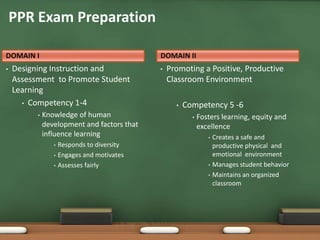
PPR Exam Preparation

DOMAIN I                                     DOMAIN II
•   Designing Instruction and                •   Promoting a Positive, Productive
    Assessment to Promote Student                Classroom Environment
    Learning
      • Competency 1-4                             •   Competency 5 -6
          •   Knowledge of human                         •   Fosters learning, equity and
              development and factors that                   excellence
              influence learning                                •   Creates a safe and
                 •   Responds to diversity                          productive physical and
                 •   Engages and motivates                          emotional environment
                 •   Assesses fairly                            •   Manages student behavior
                                                                •   Maintains an organized
                                                                    classroom
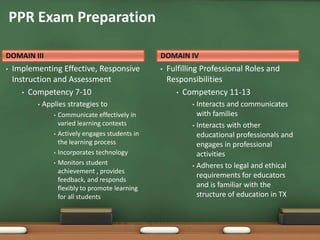
PPR Exam Preparation

DOMAIN III                                          DOMAIN IV
•   Implementing Effective, Responsive              •   Fulfilling Professional Roles and
    Instruction and Assessment                          Responsibilities
       • Competency 7-10                                   • Competency 11-13
          •   Applies strategies to                            • Interacts and communicates
                 •   Communicate effectively in                  with families
                     varied learning contexts                  • Interacts with other
                 •   Actively engages students in                educational professionals and
                     the learning process                        engages in professional
                 •   Incorporates technology                     activities
                 •   Monitors student                          • Adheres to legal and ethical
                     achievement , provides
                                                                 requirements for educators
                     feedback, and responds
                     flexibly to promote learning                and is familiar with the
                     for all students                            structure of education in TX
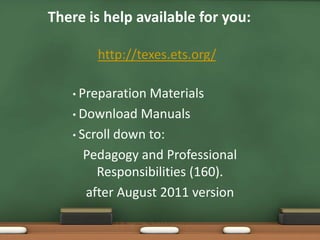
There is help available for you:

       http://texes.ets.org/

   • Preparation Materials
   • Download Manuals

   • Scroll down to:

      Pedagogy and Professional
        Responsibilities (160).
      after August 2011 version
TeXes Prep. Wiki
PPR EC-12
Vocabulary Slideshow
http://uhvtexespreparation.pbworks.com
/w/page/7883753/FrontPage
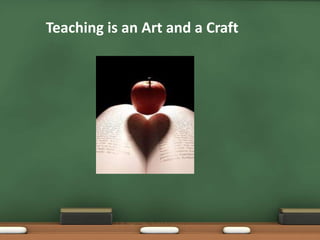
Teaching is an Art and a Craft
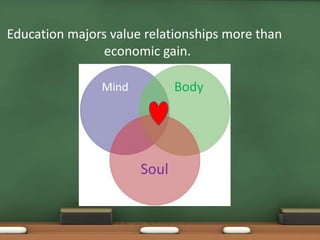
Education majors value relationships more than
                economic gain.

               Mind          Body


                      Soul
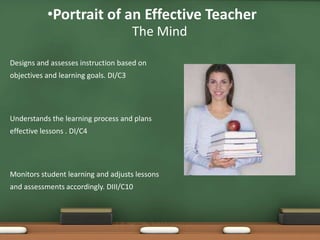
•Portrait of an Effective Teacher
                                       The Mind

Designs and assesses instruction based on
objectives and learning goals. DI/C3


Understands the learning process and plans
effective lessons . DI/C4


Monitors student learning and adjusts lessons
and assessments accordingly. DIII/C10
•Portrait of an Effective Teacher
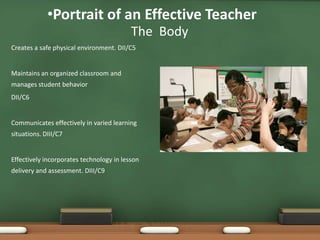
                                          The Body
Creates a safe physical environment. DII/C5


Maintains an organized classroom and
manages student behavior
DII/C6


Communicates effectively in varied learning
situations. DIII/C7


Effectively incorporates technology in lesson
delivery and assessment. DIII/C9
•Portrait of an Effective Teacher
                                            The Heart
Responds to developmental characteristics and
needs of students. DI/C1


Understands and is responsive to student diversity
and promotes all students’ learning. DI/C2


Actively engages all students in the learning process.
DIII/C8


Communicates with and respects families. DIV/C11


Seeks professional relationships. DIV/C12
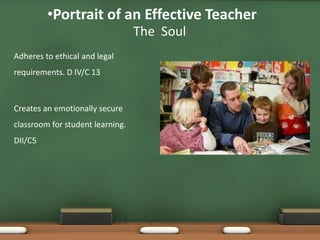
•Portrait of an Effective Teacher
                                  The Soul
Adheres to ethical and legal
requirements. D IV/C 13


Creates an emotionally secure
classroom for student learning.
DII/C5
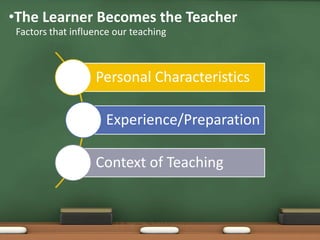
•The Learner Becomes the Teacher
 Factors that influence our teaching


                   Personal Characteristics

                      Experience/Preparation

                   Context of Teaching
•The Learner Becomes the Teacher
 Factors that influence our teaching


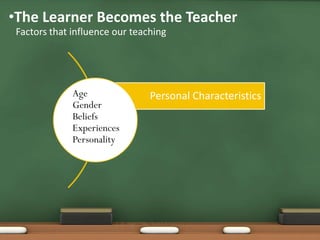
              Age               Personal Characteristics
              Gender
              Beliefs
              Experiences
              Personality
•The Learner Becomes the Teacher
 Factors that influences our teaching


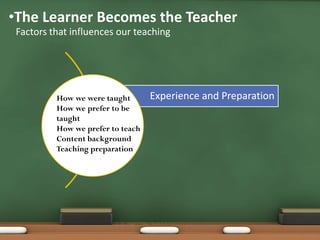
          How we were taught       Experience and Preparation
          How we prefer to be
          taught
          How we prefer to teach
          Content background
          Teaching preparation
•The Learner Becomes the Teacher
 Factors that influence our teaching


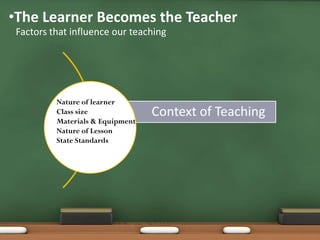
          Nature of learner
          Class size              Context of Teaching
          Materials & Equipment
          Nature of Lesson
          State Standards
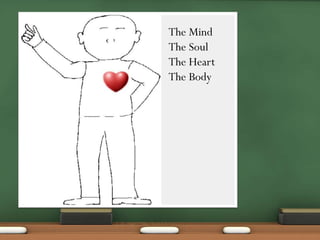
The Mind
The Soul
The Heart
The Body

Class Meeting 1

  • 1.
    Welcome to CUIN 3323 DonnaRobinson dyrobinson@gmail.com robinsond@uhv.edu By PresenterMedia.com
  • 2.
    Distribution List Your emailaddress By PresenterMedia.com
  • 3.
    Establishing Ground Rules ClassroomManagement Benefits Students as well as Teachers. • Be respectful and track speakers. • Be on time and prepared for class. • Refrain from side-bar conversations. • Take notes and ask questions. • Silence cell phones, but not yet!
  • 4.
    Quick Preview ofCUIN 3323 • Discussing • Reading • Writing • Prep/Testing • Presenting • Observing • Reflecting • Designing • Implementing
  • 5.
    A Classroom ResponseStrategy: PollEverywhere.com
  • 6.
    Using your cellphone or laptop: Respond to the following question. You must precede your typed response with the TAG: 76395
  • 7.
  • 8.
    Accountability Loop Closingthe Gap Micro- Attendance/ Teaching Participation Classroom Observations/ Digital Portfolio Reflections PPR Exam Tests/Papers Preparation
  • 9.
    What I willdo: What you will do: Explain Listen/ question/take notes Model Read, watch, listen, participate Prepare Assignments Take work seriously Give feedback Grow and develop Review Read and study Lecture Listen and track speakers Listen Offer intelligent comments
  • 10.
    Carefully Read theSyllabus QA Next Week: Bring Your Questions and Concerns
  • 11.
    PPR Exam Preparation DOMAINI DOMAIN II • Designing Instruction and • Promoting a Positive, Productive Assessment to Promote Student Classroom Environment Learning • Competency 1-4 • Competency 5 -6 • Knowledge of human • Fosters learning, equity and development and factors that excellence influence learning • Creates a safe and • Responds to diversity productive physical and • Engages and motivates emotional environment • Assesses fairly • Manages student behavior • Maintains an organized classroom
  • 12.
    PPR Exam Preparation DOMAINIII DOMAIN IV • Implementing Effective, Responsive • Fulfilling Professional Roles and Instruction and Assessment Responsibilities • Competency 7-10 • Competency 11-13 • Applies strategies to • Interacts and communicates • Communicate effectively in with families varied learning contexts • Interacts with other • Actively engages students in educational professionals and the learning process engages in professional • Incorporates technology activities • Monitors student • Adheres to legal and ethical achievement , provides requirements for educators feedback, and responds flexibly to promote learning and is familiar with the for all students structure of education in TX
  • 13.
    There is helpavailable for you: http://texes.ets.org/ • Preparation Materials • Download Manuals • Scroll down to: Pedagogy and Professional Responsibilities (160). after August 2011 version
  • 14.
    TeXes Prep. Wiki PPREC-12 Vocabulary Slideshow http://uhvtexespreparation.pbworks.com /w/page/7883753/FrontPage
  • 15.
    Teaching is anArt and a Craft
  • 16.
    Education majors valuerelationships more than economic gain. Mind Body Soul
  • 18.
    •Portrait of anEffective Teacher The Mind Designs and assesses instruction based on objectives and learning goals. DI/C3 Understands the learning process and plans effective lessons . DI/C4 Monitors student learning and adjusts lessons and assessments accordingly. DIII/C10
  • 19.
    •Portrait of anEffective Teacher The Body Creates a safe physical environment. DII/C5 Maintains an organized classroom and manages student behavior DII/C6 Communicates effectively in varied learning situations. DIII/C7 Effectively incorporates technology in lesson delivery and assessment. DIII/C9
  • 20.
    •Portrait of anEffective Teacher The Heart Responds to developmental characteristics and needs of students. DI/C1 Understands and is responsive to student diversity and promotes all students’ learning. DI/C2 Actively engages all students in the learning process. DIII/C8 Communicates with and respects families. DIV/C11 Seeks professional relationships. DIV/C12
  • 21.
    •Portrait of anEffective Teacher The Soul Adheres to ethical and legal requirements. D IV/C 13 Creates an emotionally secure classroom for student learning. DII/C5
  • 22.
    •The Learner Becomesthe Teacher Factors that influence our teaching Personal Characteristics Experience/Preparation Context of Teaching
  • 23.
    •The Learner Becomesthe Teacher Factors that influence our teaching Age Personal Characteristics Gender Beliefs Experiences Personality
  • 24.
    •The Learner Becomesthe Teacher Factors that influences our teaching How we were taught Experience and Preparation How we prefer to be taught How we prefer to teach Content background Teaching preparation
  • 25.
    •The Learner Becomesthe Teacher Factors that influence our teaching Nature of learner Class size Context of Teaching Materials & Equipment Nature of Lesson State Standards
  • 26.
    The Mind The Soul TheHeart The Body

Editor's Notes

  • #2 Spring 2012
  • #3 Spring 2012
  • #6 Modeling strategies for classroom use is an important goal of mine this semester.We will start today with some ways to infuse engagement in lessons. Even very young students can use this first strategy that is a way to include technology in your lessons.
  • #9 Two Critical Components for this semester:Classroom Observations/ 12 hours with written reflections for about half of those hours.For next week you have three requirements:Read and familiarize yourself with the syllabus documents. Bring questionsRead the first chapter of the text which is available online at www.mhhe.com/cruickshank5eWrite a 350-500 word essay about why you want to teach and what kind of teacher you want to be.PPR Exam preparation: we will begin today familiarizing ourselves with the domains and competencies that you will be tested on.
  • #10 A Double Plan:This model is an excellent example of what this course is about: your planning mechanism, what you will do to present the content and measure learning in your classroom, and what strategies you can utilize so that your students can be successful in fulfilling your lesson plan ideas. We tend to focus too often on what we as teachers are doing; kids must be involved and engaged every step of the way.
  • #11 Read carefully and bring any questions to class next week. We will begin with an orientation QA for the course.
  • #12 copy of PPR Domains and competencies.
  • #16 The competencies actually reflect the knowledge necessary to become an effective teachers, but also the intuitive nature that must be present if we are to be become great teachers. Teachers do tend to lead with their hearts.
  • #18 I take inspiration for lessons from all kinds of resources. I enjoy poetry and have always loved the interesting perspective presented in this poem.Billy Collins seems to be saying in this poem that we are more than our bodies; our existence is like a house and within that house lives many voices or aspects of our being: our bodies, yes, but also our minds, our soul or conscience and our heart.His poem The Night House inspires me to think about how as teachers we answer to these many voices. Teaching requires us to respond to all aspects of our personalities Read the poem
  • #19 Let’s just take a moment to think about how the competencies for effective teaching might relate to the 4 voices that dwell within us, within our bodies, our house.Content is so important. We must pursue knowledge never compromise the importance of knowing our subject matter.
  • #20 Each of these competencies require active engagement on your part; requires you to be “present” and circulate among students.Teachers bodies take a beating for sure: being on your feet all day is difficult; plus we never have time to sit down.A recent study of capable teachers comments that teachers sprint all day, working against time to get it all done!They burn out and look for a way to just sit down.As teachers we have to maintain a high energy level. That requires taking care of ourselves.
  • #21 Many of us will learn that we indeed lead with the heart in our classrooms.Having knowledge of developmental stages is critical, but we must also be intuitive about our students as individuals who need our understanding and sensitivity.Teaching is about building relationships; the joy factor cannot be underestimated.Trust is a key factor for success.
  • #22 The soul is the moral compass; moral conscience.The role of the soul cannot be underestimated: teachers are role models, they possess great power over children’s lives. They are privy to so much personal information and their decisions on how to use that information AND that power is vital to the kind of learning experience a student has and the kind of relationship parents have with a community school. Teachers actions must be driven by what is legally and ethically sound.
  • #25 Read the essay about a school experience. What did this person learn about teachers and principals? How do you think this experience might influence the kind of teacher this person could become if she chose teaching as a career?
  • #26 While the PPR exam tends to choose answers based on perfect classroom environments, NaNaLand, Dr. Freeman calls it, reality can look quite different for us. We may not get the kinds of learners that we feel we can relate to, we may find we can’t teach the way we want to, but have to follow a strict curriculum laid out by our principal, we may not be comfortable in the neighborhood or with the subject we have been assigned.All of these factors influence the kind of teacher we will become. The Context in the physical environment or our first classroom.
  • #27 Assignment for this week.