


Class 6: Putting It All Together
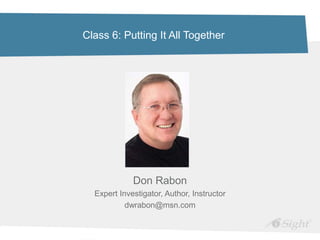
Don Rabon
Expert Investigator, Author, Instructor
dwrabon@msn.com
Introduction
Don Rabon
Don Rabon, CFE, author, speaker, instructor and former investigative
director, has more than 34 years of experience conducting training in
interviewing techniques, detecting deception and investigative disclosure
analysis. Rabon is the author of many books, including Interviewing and
Interrogation 2nd Edition and Fraud Related Interviewing. Rabon is
retired from the North Carolina Justice Academy, North Carolina
Department of Justice, where he served as Deputy Director.
Joe Gerard
Joe Gerard is the VP of Sales & Marketing at i-Sight, a leading provider
of web-based case management software for corporate investigations.
He’s worked with companies like Dell, Coke, Allstate, BP and more than
100 others to implement improved investigative processes that leverage
best practices and case management.
Putting It All Together
Previously
• Investigative interview preparation
• Establishing a baseline and building rapport
• Detecting deception and understanding
motives
• Question types and when to use them
• Telephone interviews
And now…
• Investigative interview preparation
• Establishing a baseline and building rapport
• Detecting deception and understanding
motives
• Question types and when to use them
• Telephone interviews
• Putting it all together
Putting It All Together
Taking notes is most assuredly a critical
element of an:
• Inquiry
• Investigation
• Audit
Putting It All Together
All else aside, it indicates to the interviewee that
you’re listening to them
Putting It All Together
Let’s start with some participant assessments:
Are you required to take notes during the
conduct of your interviews?
A. Yes
B. No
If you answered “Yes” to question number one,
are you required to maintain your notes?
A. Yes
B. No
Do you submit your notes with your final report?
A. Yes
B. No
Are your notes subject to discovery?
A. Yes
B. No
Within the process of inquiry, how do you utilize
your notes?
A. To write the subsequent report
B. Briefing
C. Testimony
D. Other
Are you required to maintain your notes after
final disposition?
A. Yes
B. No
Written policy?
A. Yes
B. No
Some note-taking context
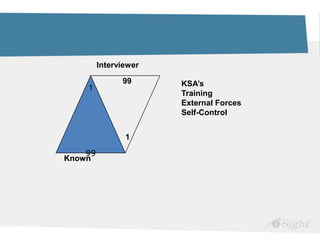
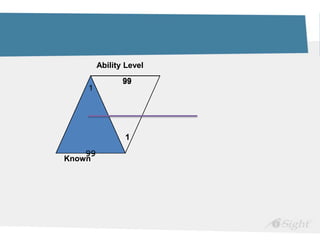
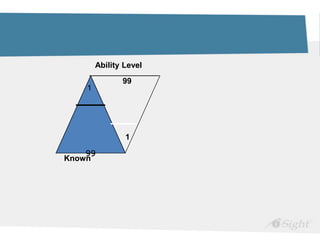
The Interview Flow Dynamic
I F D
Notes are more than notes
The Interview is not an isolated event;
It is part of the inquiry dynamic;
It flows with the inquiry, can change the direction
of the inquiry and loop around.
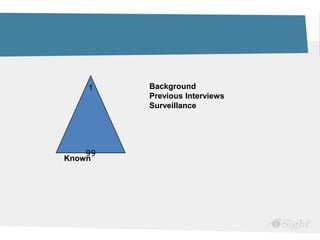
99
1
Known
Background
Previous Interviews
Surveillance
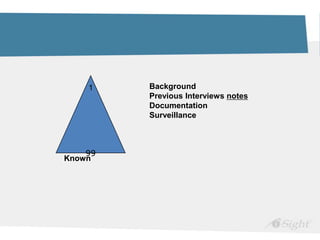
99
1
Known
Background
Previous Interviews notes
Documentation
Surveillance
99
1
Known
99
1
Known
1
99
Interviewer
KSA’s
Training
External Forces
Self-Control
99
1
99
1
1
99
99
1
Known
1
99
Ability Level
99
1
Known
99
1
1
99
99
1
Ability Level
99
1
Known
99
1
1
99
99
1
Ability Level
99
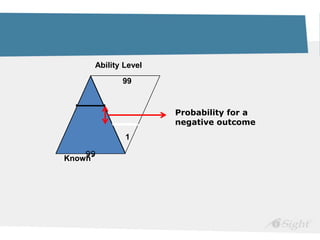
Probability for a
negative outcome
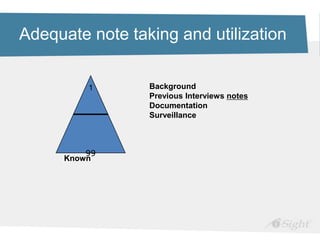
Adequate note taking and utilization
99
1
Known
Background
Previous Interviews notes
Documentation
Surveillance
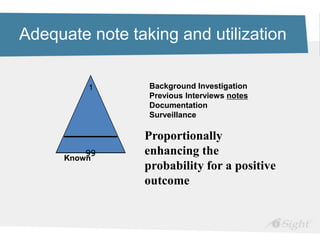
Adequate note taking and utilization
99
1
99
1
Known
Background Investigation
Previous Interviews notes
Documentation
Surveillance
Proportionally
enhancing the
probability for a positive
outcome
99
1
99
1
99
1
Known
1
99
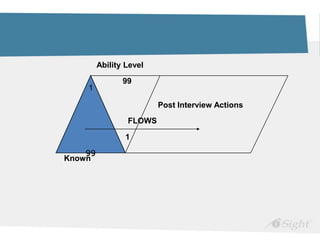
Ability Level
Post Interview Actions
FLOWS
99
1
99
1
99
1
Ability Level
99
1
99
1
Known
1
99
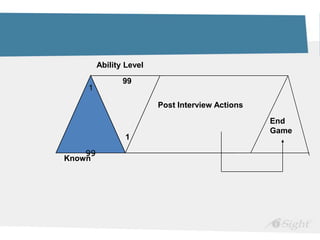
Post Interview Actions
End
Game
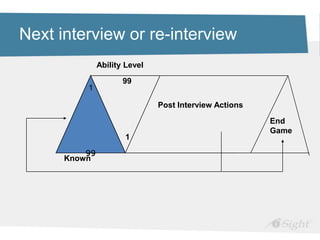
Next interview or re-interview
99
1
99
1
99
1
Ability Level
99
1
99
1
Known
1
99
Post Interview Actions
End
Game
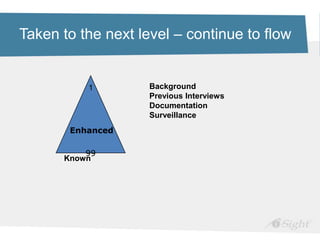
Taken to the next level – continue to flow
99
1
Known
Background
Previous Interviews
Documentation
Surveillance
Enhanced
Notes are MORE than notes
They are not the end
but rather a means to the end
How to organize interview notes
• Type your notes
• Donut knowledge - the ability to see what
isn’t there
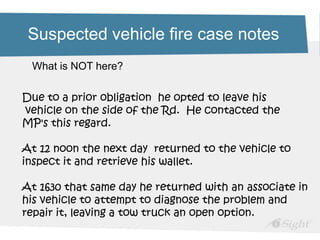
Suspected vehicle fire case notes
Due to a prior obligation he opted to leave his
vehicle on the side of the Rd. He contacted the
MP's this regard.
At 12 noon the next day returned to the vehicle to
inspect it and retrieve his wallet.
At 1630 that same day he returned with an associate in
his vehicle to attempt to diagnose the problem and
repair it, leaving a tow truck an open option.
What is NOT here?
• Type your notes
• Donut knowledge
• Read the hard copy
• Identify quotations and solid facts
• Type your notes
• “Donut” knowledge
• Read the hard copy
• Identify quotations and solid facts
• Pinpoint what catches your attention
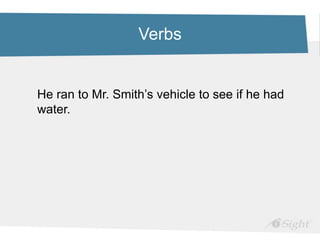
Verbs
He ran to Mr. Smith’s vehicle to see if he had
water.
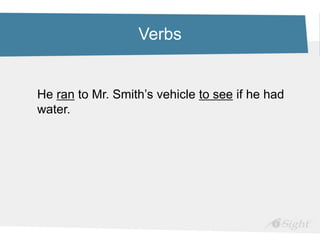
Verbs
He ran to Mr. Smith’s vehicle to see if he had
water.
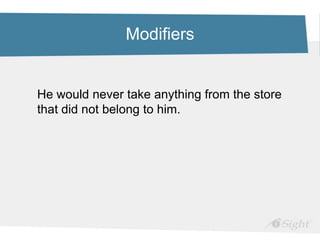
Modifiers
He would never take anything from the store
that did not belong to him.
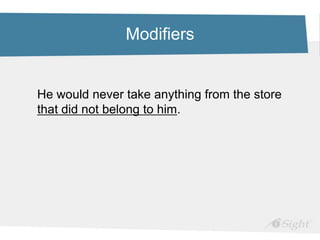
Modifiers
He would never take anything from the store
that did not belong to him.
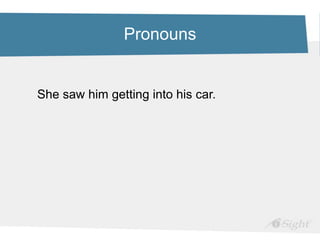
Pronouns
She saw him getting into his car.
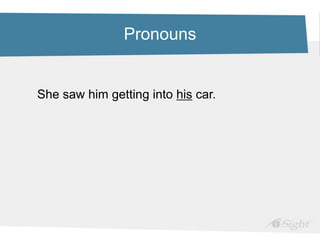
Pronouns
She saw him getting into his car.
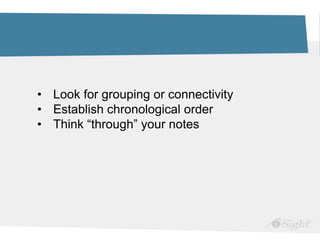
• Look for grouping or connectivity
• Establish chronological order
• Think “through” your notes
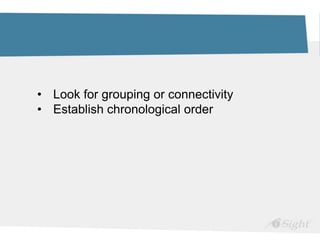
• Look for grouping or connectivity
• Establish chronological order
What not to write down and why
• Avoid writing down any of your thoughts or
impressions
“I don’t believe this”.
• Can indicate that the inquiry is not
objective
What to do when the interviews are
finished
The interviewer may be required to produce a
report, but will often not until they have a draft
version of the interview notes in hand.
It is therefore important that notes are written
up quickly.
Again, depending upon policy(?)
Have the interviewee confirm the written notes
and to make any additional comments as
necessary.
Any disparity regarding the content is noted
and have the interviewee sign and date the
notes of the interview.
Examining the interviews
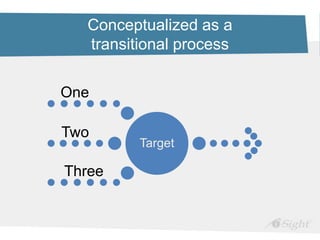
Conceptualized as a
transitional process
Target
One
Two
Three
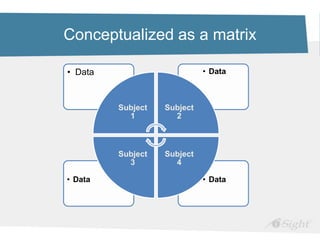
Conceptualized as a matrix
• Data• Data
• Data• Data
Subject
1
Subject
2
Subject
4
Subject
3
What to do with interview notes (and
recordings
What to do if you’re called to testify
Challenge:
Can you solve it with your notes?
Challenge:
Can you solve it with your notes?
Missing Person Report
Mary Smith, age 18, missing for two days;
Anonymous tip indicated she was in room
115 at the Star Light motel;
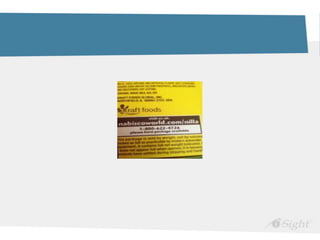
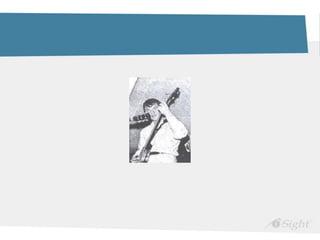
Searched empty motel room. Found box of
Nilla wafers and a picture of a male.
Utilizing and thinking through your notes:
What are the steps you can take to solve the
case?
The first person to correctly identify and
submit the steps…
Wins a nice prize
dwrabon@msn.com
Summary
Questions
If you have any questions, please submit them now.
Thank you for taking the time to attend today’s webinar.
If you have any questions about the information covered in the webinar,
please contact:
Joe Gerard
j.gerard@i-sight.com
Don Rabon
dwrabon@msn.com

Class 6 Putting It All Together

  • 1.
    Class 6: PuttingIt All Together Don Rabon Expert Investigator, Author, Instructor dwrabon@msn.com
  • 2.
    Introduction Don Rabon Don Rabon,CFE, author, speaker, instructor and former investigative director, has more than 34 years of experience conducting training in interviewing techniques, detecting deception and investigative disclosure analysis. Rabon is the author of many books, including Interviewing and Interrogation 2nd Edition and Fraud Related Interviewing. Rabon is retired from the North Carolina Justice Academy, North Carolina Department of Justice, where he served as Deputy Director. Joe Gerard Joe Gerard is the VP of Sales & Marketing at i-Sight, a leading provider of web-based case management software for corporate investigations. He’s worked with companies like Dell, Coke, Allstate, BP and more than 100 others to implement improved investigative processes that leverage best practices and case management.
  • 3.
  • 4.
    Previously • Investigative interviewpreparation • Establishing a baseline and building rapport • Detecting deception and understanding motives • Question types and when to use them • Telephone interviews
  • 5.
    And now… • Investigativeinterview preparation • Establishing a baseline and building rapport • Detecting deception and understanding motives • Question types and when to use them • Telephone interviews • Putting it all together
  • 7.
    Putting It AllTogether Taking notes is most assuredly a critical element of an: • Inquiry • Investigation • Audit
  • 8.
    Putting It AllTogether All else aside, it indicates to the interviewee that you’re listening to them
  • 9.
    Putting It AllTogether Let’s start with some participant assessments:
  • 10.
    Are you requiredto take notes during the conduct of your interviews? A. Yes B. No
  • 11.
    If you answered“Yes” to question number one, are you required to maintain your notes? A. Yes B. No
  • 12.
    Do you submityour notes with your final report? A. Yes B. No
  • 13.
    Are your notessubject to discovery? A. Yes B. No
  • 14.
    Within the processof inquiry, how do you utilize your notes? A. To write the subsequent report B. Briefing C. Testimony D. Other
  • 15.
    Are you requiredto maintain your notes after final disposition? A. Yes B. No
  • 16.
  • 17.
  • 18.
    The Interview FlowDynamic I F D Notes are more than notes
  • 19.
    The Interview isnot an isolated event; It is part of the inquiry dynamic; It flows with the inquiry, can change the direction of the inquiry and loop around.
  • 20.
  • 21.
  • 22.
  • 23.
  • 24.
  • 25.
  • 26.
    Adequate note takingand utilization 99 1 Known Background Previous Interviews notes Documentation Surveillance
  • 27.
    Adequate note takingand utilization 99 1 99 1 Known Background Investigation Previous Interviews notes Documentation Surveillance Proportionally enhancing the probability for a positive outcome
  • 28.
  • 29.
  • 30.
    Next interview orre-interview 99 1 99 1 99 1 Ability Level 99 1 99 1 Known 1 99 Post Interview Actions End Game
  • 31.
    Taken to thenext level – continue to flow 99 1 Known Background Previous Interviews Documentation Surveillance Enhanced
  • 32.
    Notes are MOREthan notes They are not the end but rather a means to the end
  • 33.
    How to organizeinterview notes
  • 34.
    • Type yournotes • Donut knowledge - the ability to see what isn’t there
  • 35.
    Suspected vehicle firecase notes Due to a prior obligation he opted to leave his vehicle on the side of the Rd. He contacted the MP's this regard. At 12 noon the next day returned to the vehicle to inspect it and retrieve his wallet. At 1630 that same day he returned with an associate in his vehicle to attempt to diagnose the problem and repair it, leaving a tow truck an open option. What is NOT here?
  • 36.
    • Type yournotes • Donut knowledge • Read the hard copy • Identify quotations and solid facts
  • 37.
    • Type yournotes • “Donut” knowledge • Read the hard copy • Identify quotations and solid facts • Pinpoint what catches your attention
  • 38.
    Verbs He ran toMr. Smith’s vehicle to see if he had water.
  • 39.
    Verbs He ran toMr. Smith’s vehicle to see if he had water.
  • 40.
    Modifiers He would nevertake anything from the store that did not belong to him.
  • 41.
    Modifiers He would nevertake anything from the store that did not belong to him.
  • 42.
    Pronouns She saw himgetting into his car.
  • 43.
    Pronouns She saw himgetting into his car.
  • 44.
    • Look forgrouping or connectivity • Establish chronological order • Think “through” your notes
  • 45.
    • Look forgrouping or connectivity • Establish chronological order
  • 46.
    What not towrite down and why • Avoid writing down any of your thoughts or impressions “I don’t believe this”. • Can indicate that the inquiry is not objective
  • 47.
    What to dowhen the interviews are finished The interviewer may be required to produce a report, but will often not until they have a draft version of the interview notes in hand. It is therefore important that notes are written up quickly.
  • 48.
    Again, depending uponpolicy(?) Have the interviewee confirm the written notes and to make any additional comments as necessary. Any disparity regarding the content is noted and have the interviewee sign and date the notes of the interview.
  • 49.
  • 50.
    Conceptualized as a transitionalprocess Target One Two Three
  • 51.
    Conceptualized as amatrix • Data• Data • Data• Data Subject 1 Subject 2 Subject 4 Subject 3
  • 52.
    What to dowith interview notes (and recordings
  • 53.
    What to doif you’re called to testify
  • 54.
    Challenge: Can you solveit with your notes?
  • 55.
    Challenge: Can you solveit with your notes? Missing Person Report Mary Smith, age 18, missing for two days; Anonymous tip indicated she was in room 115 at the Star Light motel; Searched empty motel room. Found box of Nilla wafers and a picture of a male.
  • 60.
    Utilizing and thinkingthrough your notes: What are the steps you can take to solve the case? The first person to correctly identify and submit the steps… Wins a nice prize dwrabon@msn.com
  • 61.
  • 62.
    Questions If you haveany questions, please submit them now. Thank you for taking the time to attend today’s webinar. If you have any questions about the information covered in the webinar, please contact: Joe Gerard j.gerard@i-sight.com Don Rabon dwrabon@msn.com